Most first-time goat owners spend weeks researching breeds and feed — then throw together whatever shelter happens to be available.
A few months later, they’re dealing with respiratory illness, foot rot, or a goat that keeps escaping because the structure wasn’t designed with goat behavior in mind.
The shelter you build — or convert — has a bigger impact on your herd’s health than most people realize. Before you even think about breeds, it’s worth understanding what makes a goat house actually work.
If you’re just getting started, our guide to dairy goats for beginners is a great companion read to this one.
Below are 10 practical goat house ideas — from full builds to quick conversions — along with everything you need to know to make any shelter work for your specific situation.
10 Simple Goat House Ideas for Any Herd Size
Whether you have two Nigerian Dwarfs or a dozen Nubians, one of these setups can be made to work. Each idea is scalable, budget-friendly, and based on what goats actually need — not just what looks good in photos.
1. Repurposed Wood Shed Conversion
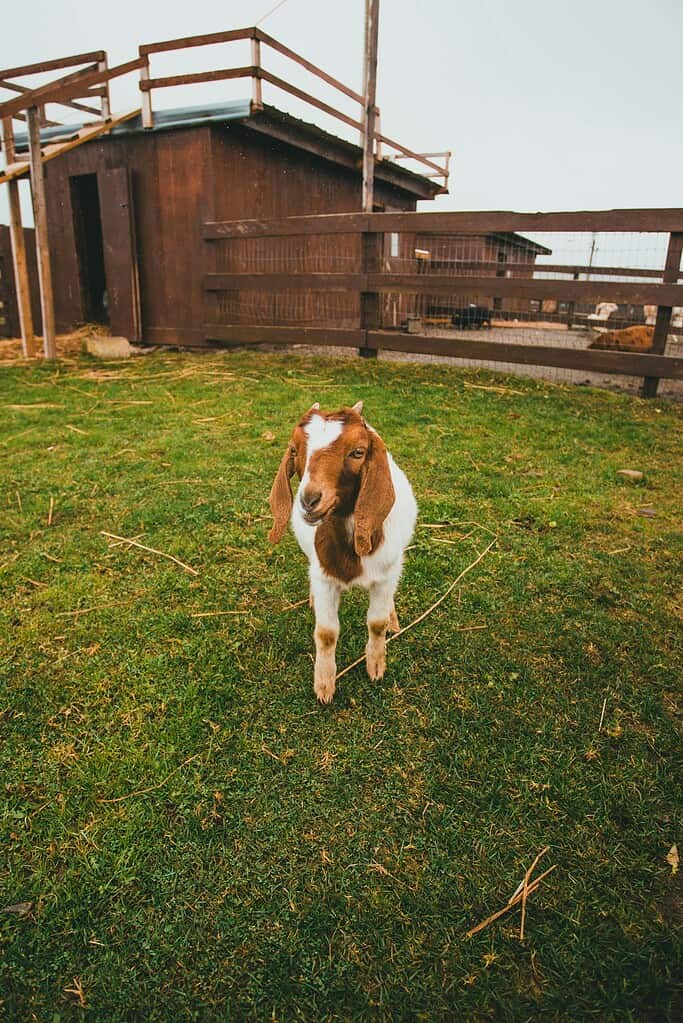
An existing garden shed is one of the fastest and most cost-effective starting points. The structure is already there — you just need to retrofit it for goats. Here’s what that actually involves:
- Replace solid doors with a Dutch door (split top and bottom) so goats can poke their heads out without escaping
- Add ridge vents or cut in louvered soffit vents near the roofline for airflow without drafts at ground level
- Install a hayrack on an interior wall at chest height — goats waste less hay and it keeps the floor drier
- Raise the floor by 2–3 inches using wooden pallets covered with rubber mats to improve drainage
Best for: Homesteaders who already have a shed and want a quick, low-cost conversion without building from scratch.
2. Three-Sided Lean-To Shelter
Often called a run-in shed, a three-sided lean-to is one of the simplest structures you can build and works surprisingly well for goats in mild to moderate climates. It’s open on one side — typically facing away from prevailing winds — which allows goats to come and go freely.
What makes this design underrated is that goats actually prefer it. They don’t like being fully enclosed, and a run-in gives them the choice to be inside or outside at any time.
For cold climates, hang a heavy canvas curtain across the open side in winter — goats can push through it, and it cuts wind significantly without trapping moisture inside.
Minimum recommended size: 8×10 feet for up to 4 goats. Add 4 feet of depth for every additional 2 goats.
3. A-Frame Mini Barn
A-frames are structurally sound, shed rain and snow efficiently, and can be built with basic carpentry skills and minimal materials.
The sloped walls do limit usable space near the edges, so they work best for smaller breeds like Nigerian Dwarfs, Pygmies, or Kinders.
One tip most guides skip: frame the interior with horizontal 2×4 rails along the walls at 18-inch intervals. Goats love to climb on everything, including walls, and those rails give them a built-in activity structure while protecting the framing underneath.
4. Old Carport or Metal Canopy Conversion
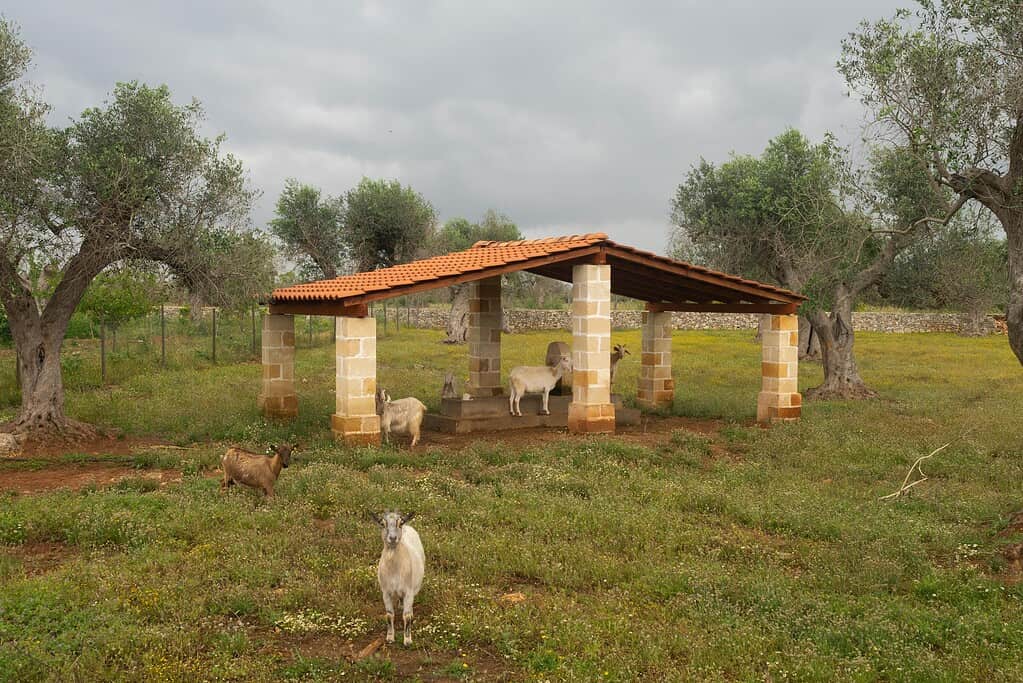
Carports are underused on most homesteads. With some basic modifications, a metal carport frame can become an excellent goat shelter in a weekend.
The open design naturally provides ventilation, and you can enclose it incrementally based on your climate and herd size.
- Enclose two or three sides with cattle panels or wooden boards, leaving the most sheltered side open
- Add metal roofing panels if the carport came with a flimsy fabric canopy
- Anchor the legs into concrete footings or clip them to a wooden base frame — goats will test every weak point
- Run a strand of electric wire along the inside perimeter at chest height to discourage rubbing against the walls
Cost advantage: A used 20×20 carport frame often sells for $150–$300 on Facebook Marketplace. Fully enclosed, it can comfortably house 8–12 medium-sized goats.
5. Pallet Wood Goat House
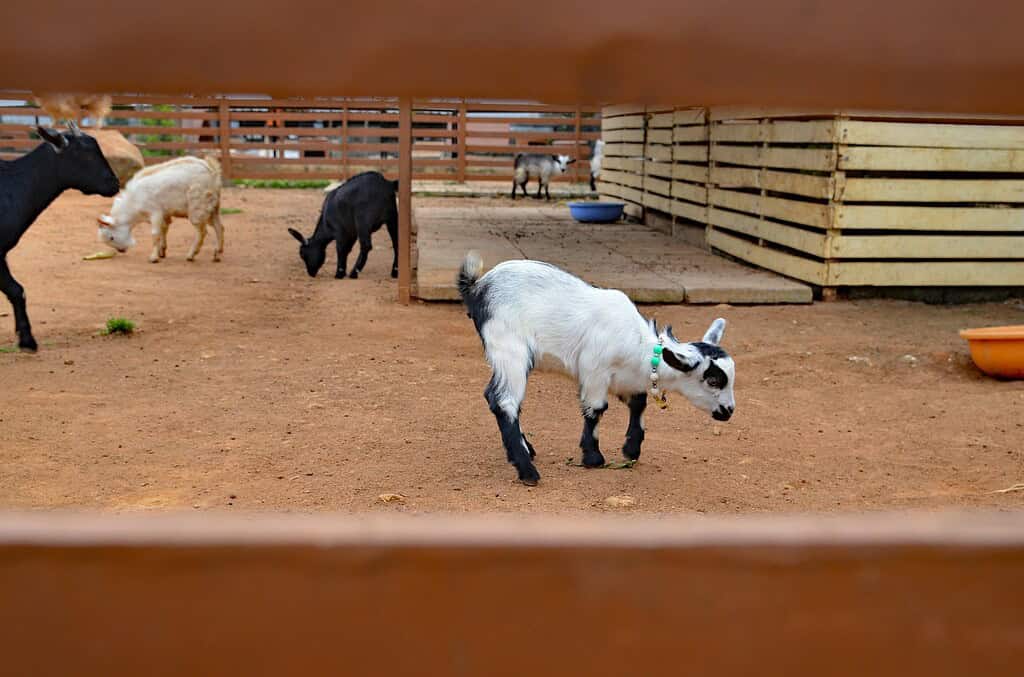
Free pallets are available at most farm stores, garden centers, and lumber yards — and they can be stacked and bolted together into a reasonably solid small shelter in a day.
This works best as a starter shelter for 2–4 mini goats while you plan something more permanent.
The key is choosing heat-treated (HT) pallets only — look for the HT stamp on the side. Avoid pallets marked MB (methyl bromide treated), which can off-gas chemicals harmful to animals.
Once assembled, seal all interior surfaces with a non-toxic wood sealant or barn lime to prevent moisture absorption and bacterial buildup in the crevices.
Pallet builds pair perfectly with a small backyard mini farm setup where space and budget are both tight.
6. Hoop-Style Goat Shelter
Cattle panel hoop shelters have become a go-to option for homesteaders because they’re cheap, portable, and can be built in a few hours.
A standard setup uses two 16-foot cattle panels bent into an arch over a 10-foot wide frame, covered with a heavy-duty tarp or greenhouse plastic.
What most people don’t mention: goats will headbutt and chew the tarp edges relentlessly. Use bungee cords or zip ties to secure the cover, and replace the tarp with greenhouse poly film (6-mil, UV-stabilized) if you want something that lasts more than one season.
Add wooden end walls with a small door cut in to improve wind protection and add security.
7. Portable Panel Shelter
If you rotate your goats through pastures, a portable shelter makes sense. These are typically built on wooden skids (think: two 4×4 beams) with a small framed structure on top — lightweight enough to be dragged by a tractor or ATV.
Keep the total footprint under 10×12 feet to stay maneuverable. Use metal roofing and pressure-treated lumber for the skids.
The real advantage here is that you can move the shelter to wherever the goats are grazing, which reduces overgrazing in one area and naturally manages parasite loads by preventing goats from re-ingesting larvae from their own waste.
8. Shelter With an Integrated Milk Stand
If you’re keeping dairy goats, building the milk stand into or directly adjacent to the shelter saves enormous time and makes milking more hygienic.
Instead of dragging your doe across the yard every morning, you can milk her in a protected, covered space without exposure to weather or mud.
The practical layout: extend the shelter’s roof by 6–8 feet on one side to create a covered lean-to area. Mount the milk stand in that extension, with a small storage cabinet for milking supplies.
Keep a hose bib nearby for easy cleanup. This is especially useful if you’re managing a half-acre homestead layout where every square foot needs to pull double duty.
9. Converted Dog Kennel Run
Chain-link dog kennels — especially the large 10×20 or 10×30 versions — can be repurposed into an enclosed goat area with a small attached shelter.
The kennel provides the secure perimeter, and a small wooden or metal shelter is installed inside or attached to one end.
This setup works particularly well for small herds in urban or suburban settings where full barn construction isn’t practical.
Reinforce the bottom 18 inches of the chain link with 2×4 welded wire fencing — goats are surprisingly good at pushing through standard chain link when motivated.
Add a tarp or solid roof panel over the entire kennel to protect against rain and predator birds.
10. Modular Stall-Style Mini Barn
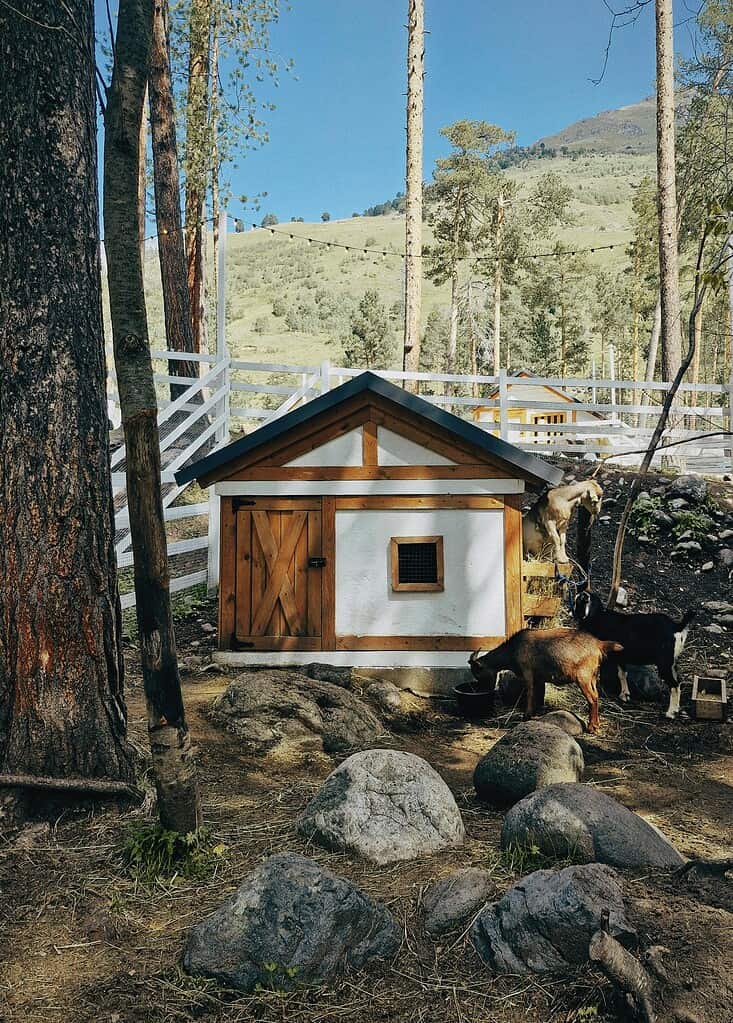
For a longer-term setup, a modular stall-style barn gives you the most flexibility. Instead of one open room, you build individual stalls — typically 4×6 feet minimum per goat — with removable dividers. This lets you:
- Separate a doe in late pregnancy or with a new kid
- Isolate a sick goat without removing it from the barn entirely
- House a buck in an adjacent but separated stall during non-breeding season
- Expand your herd without building an entirely new structure
Use T&G (tongue and groove) boards for interior walls to reduce gaps where moisture and bacteria accumulate.
The same principles that make a well-designed inside chicken coop layout work so well — easy cleaning, good airflow, smart storage — apply directly to goat barn design.
Garden Planner
The 24-page planner timed to your county's real frost dates. Planting windows, monthly checklists, and a harvest log you'll fill with pride by August.
Your Free 24-Page Garden Planner
Built for your exact ZIP code — planting dates, harvest log, and a month-by-month plan. 15-second sign-up.
What Goats Actually Need in a Shelter (That Most People Skip)
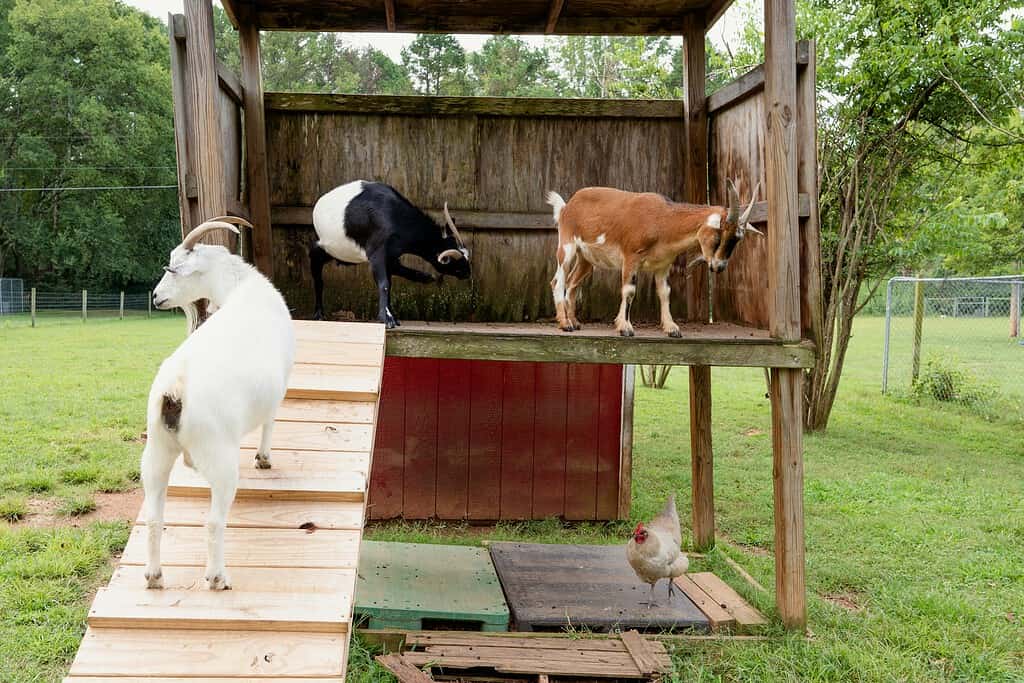
Goats have specific shelter requirements that often surprise new owners. Understanding these before you build saves you from expensive fixes later.
The three things most beginners get wrong:
- Treating it like a chicken coop: Goats need significantly more vertical space (minimum 6 feet of ceiling height) because they rear up, climb, and need room to express natural behaviors without injuring themselves. Unlike chickens, who roost at height, goats sleep on the ground and move constantly. If you’re also keeping poultry, our breakdown of raising ducks and chickens together illustrates how different species require tailored housing approaches.
- Underestimating chew damage: Goats will strip bark from wooden structures, chew on wiring, and dismantle poorly fastened hardware in a matter of days. Use metal brackets, recessed hardware, and avoid exposed lumber edges wherever possible.
- Forgetting about the buck: If you have or plan to have a buck, he needs his own separate shelter — even if it’s small. Bucks have a strong odor that affects milk flavor in nearby does, and they become aggressive during rut. Build his space into your original plan, not as an afterthought.
The Right Flooring Can Prevent Injuries and Disease
Flooring is one of the most overlooked decisions in goat shelter design — and one of the most consequential. Here’s how the main options stack up:
| Flooring Type | Pros | Cons | Best For |
|---|---|---|---|
| Packed Dirt | Free, natural, easy to manage with lime | Holds moisture, can harbor parasites over time | Dry climates with good natural drainage |
| Concrete | Easy to clean, durable, predator-proof | Hard on hooves, cold in winter, slippery when wet | Milking areas, feeding areas — not sleeping |
| Wood with Slats | Elevated drainage, dry sleeping surface | Can rot, splinters if not maintained, hoof trapping risk | Elevated goat platforms inside shelter |
| Deep Bedding (Straw) | Insulating, compostable, cushioning | Requires consistent management, can become ammonia-heavy | Cold climates — the composting generates heat |
| Rubber Mats + Shavings | Easy on joints, absorbent, easier to clean | Initial cost, mats must be pulled for deep cleaning | Year-round use in most climates |
The most practical combination for most homesteaders: rubber mats over a concrete base in the milking/feeding area, and a deep bedding system (straw over packed dirt or concrete) in the sleeping area, refreshed with a thin layer of agricultural lime weekly to manage ammonia and parasite pressure.
Miss it by a week and you lose the crop. The free 24-page planner pins down your exact dates — last frost, first frost, and the weekly steps between — so you plant on the days that actually work for your ZIP.
Ventilation vs. Drafts: There’s a Big Difference
Goats are surprisingly cold-hardy — a dry, healthy adult goat in good body condition can tolerate temperatures well below freezing. What they cannot tolerate is dampness combined with cold.
This is where most people go wrong: they seal up the shelter too tightly in an effort to keep goats warm, and instead trap moisture that leads to respiratory illness.
The rule of thumb: ventilation should come from above, not at goat level. Ridge vents, high soffit vents, or louvered gable openings allow moist air and ammonia to escape without creating a cold draft across the animals at floor level.
If you can see your breath inside the shelter on a cold morning but the goats aren’t shivering and the bedding isn’t wet, your ventilation is working correctly.
Signs your shelter is under-ventilated:
- Strong ammonia smell when you open the door
- Walls or ceiling dripping with condensation
- Wet or matted bedding even after a dry night
- Persistent coughing or nasal discharge in your herd
How Much Space Does Each Goat Actually Need?
Most basic guidelines give you a single number — 15 to 20 square feet per goat — but that doesn’t account for breed size, whether goats have outdoor access, or how much time they spend confined indoors.
Here’s a more nuanced breakdown:
- Mini breeds (Nigerian Dwarf, Pygmy): 8–12 sq ft per goat inside; 25–30 sq ft per goat in an attached outdoor run
- Medium breeds (LaMancha, Oberhasli, Saanen): 15–20 sq ft inside; 40–50 sq ft outdoor access
- Large breeds (Boer, Nubian): 20–25 sq ft inside; 50–60 sq ft minimum outdoor
- Doe with kids: Add 10 sq ft minimum for the kidding area, separated from the general population
- Buck: Housed separately — plan a minimum 10×10 ft shelter with its own 20×20 ft pen
Overcrowding is a primary driver of disease spread, respiratory illness, and social stress in goat herds. When in doubt, build bigger than you think you need — especially if you plan to breed.
A smart half-acre homestead layout can accommodate a goat shelter, pasture rotation, and other livestock without feeling cramped if it’s planned from the start.
Best gardening planner I've used in 10 years — and I keep coming back to it every season.
Integrating Feed and Hay Storage Into Your Goat Shelter
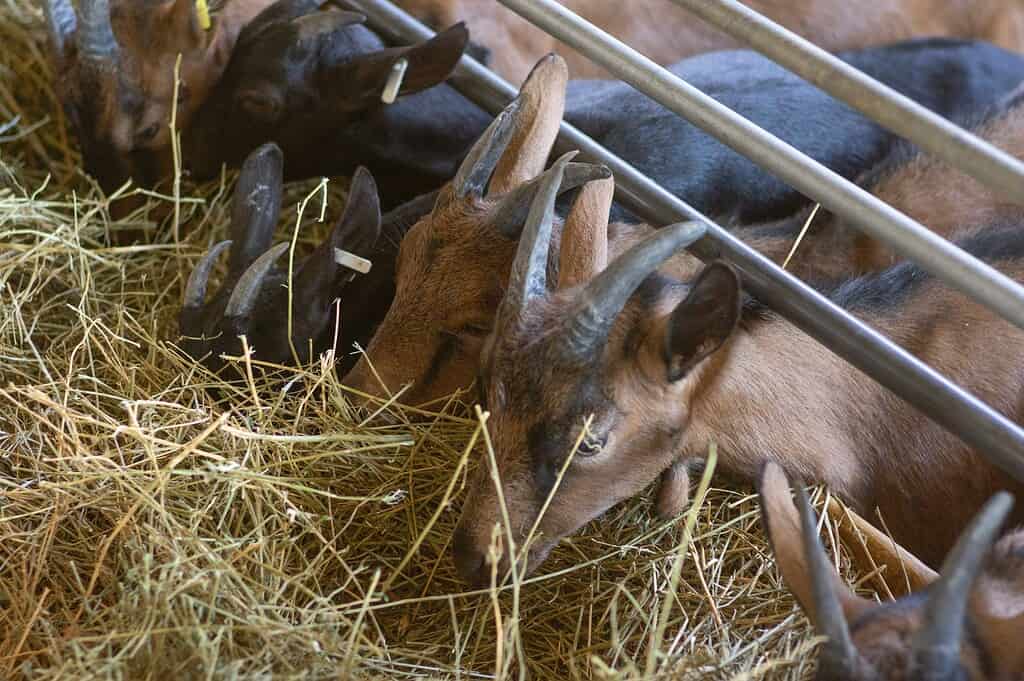
One of the most practical things you can do when designing a goat shelter is to incorporate dedicated feed and hay storage directly into the structure — or immediately adjacent to it.
Hauling hay across a muddy yard in the middle of winter gets old fast.
Here’s what a smart storage integration looks like:
- Hay storage room: A small 6×8 ft enclosed area attached to the barn, accessible from the outside but with an interior door or hayrack that feeds directly into the goat area. Keep it elevated off the floor on pallets to prevent moisture wicking from the ground.
- Grain lockbox: Goats that get into unsecured grain bins can gorge themselves to the point of bloat or enterotoxemia — both life-threatening. Use a metal trash can with a locking lid or a purpose-built grain bin with a goat-proof latch.
- Wall-mounted hayrack: Position hayracks at shoulder height for the breed you’re keeping. Ground-level hay feeding increases parasite ingestion significantly, since goats can’t help but drag hay toward their feet and then graze near their own waste.
- Mineral feeder: A dedicated mineral station mounted on the wall keeps loose minerals dry, accessible, and off the floor where they’d be contaminated or wasted.
Adjusting Your Goat Shelter Seasonally
A goat shelter that works perfectly in summer can become dangerously inadequate in winter — and vice versa. Planning for seasonal adjustments from the start saves you from scrambling when temperatures drop.
Winter adjustments:
- Add a canvas or heavy plastic curtain across open shelter faces — goats can push through it, but it cuts wind dramatically
- Switch to a deep litter bedding system (8–12 inches of straw) — the composting action generates gentle heat from below
- Install a heat lamp over the kidding area only — avoid heating the entire barn, as it creates temperature shock when goats go in and out
- Check water twice daily; insulated buckets or low-wattage tank heaters prevent freezing without overheating
Summer adjustments:
- Open all vents and create cross-ventilation by removing temporary panels on the sheltered side
- Install a reflective radiant barrier on the roof interior — this alone can drop interior temperature by 10–15°F
- Ensure shade is accessible both inside and in the outdoor pen throughout the entire day as the sun shifts
- Increase bedding change frequency — heat accelerates ammonia buildup and bacteria growth
Goats that are comfortable and stress-free year-round produce better, stay healthier, and are far easier to work with — whether you’re milking them daily or simply maintaining a small meat herd.
The same attention to animal comfort applies across your entire homestead, whether you’re working with quail housing ideas, choosing the right chicken breeds, or even expanding into backyard beekeeping.
- Tomatoes
- Peppers
- Beans
- Squash
- Cucumbers
- Basil
How Hard Is It to Garden in Your County?
Every county has a unique Gardening Difficulty Score based on frost risk, soil quality, drought, altitude, and climate trends. Find yours — plus personalized frost dates, planting calendars, and soil data.
Check Your County's Score →Start Building the Goat Shelter Your Herd Actually Deserves
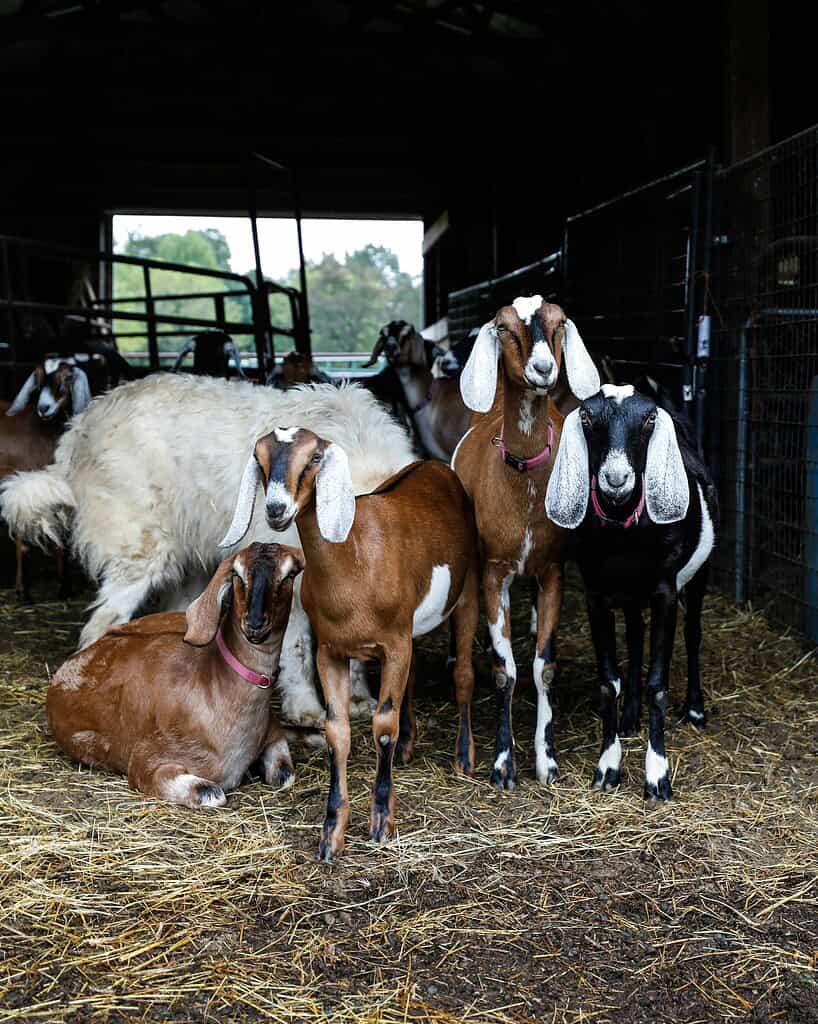
You don’t need a picture-perfect barn to keep goats happy and healthy. What you need is a shelter that’s dry, ventilated, sized correctly, and designed to work with goat behavior — not against it.
Whether you’re converting an old shed this weekend or planning a proper modular barn over the next few months, start with the basics: airflow, dry bedding, predator security, and enough space per animal.
The 10 ideas in this post are starting points, not rigid blueprints. Adapt them to your land, your climate, and your herd — and don’t be afraid to modify as you learn what your goats respond to best.
Have you built or converted a goat shelter? Drop a comment below and tell us what worked, what you’d do differently, and what materials saved you the most time and money. Your real-world experience could be exactly what another homesteader needs to see before they start their own build.
Plan Your Garden With Confidence!

Ever start planting… and then realize halfway through that things feel a little scattered?
A simple plan changes everything.
When you sketch your layout first, you can see what fits, what flows, and what actually makes sense for your space. It saves time, money, and a whole lot of second-guessing later.
Our free Garden Planner helps you map out beds, organize plant spacing, rotate crops, and keep track of seasonal tasks – all in a clean, printable format you can actually use.
Whether you’re designing a low maintenance front yard or planning your full homestead garden, this gives you a clear starting point.
Less chaos. More clarity. A garden that works.
Frequently Asked Questions
Do goats need a fully enclosed shelter, or is an open-sided structure okay?
An open-sided or three-sided shelter works well for most goats in temperate climates, as long as the open face is positioned away from prevailing winds and the structure provides full protection from rain and direct sun.
Fully enclosed shelters are only necessary in regions with sustained extreme cold (below -10°F), during kidding season, or when housing a sick animal that needs temperature-controlled recovery space. Most goats actually prefer having the choice to move in and out freely rather than being locked inside.
Can I house goats and chickens in the same shelter?
Technically yes, but it comes with trade-offs. Chickens roost above goats and will drop droppings directly onto them and into shared feed — which increases disease transmission risk. Goats can also accidentally injure chickens, especially kids who are playful and unpredictable around small birds.
If you must house them together due to space constraints, physically separate the sleeping and feeding areas using wire panels, and ensure chickens roost in an elevated, fully separate section with their own feeder access. A shared outdoor run is more feasible than a shared sleeping space.
How do I predator-proof a goat shelter without spending a fortune?
The most cost-effective approach is layered security rather than expensive single solutions. Start with a solid latch system — a spring-loaded barrel bolt plus a carabiner on the outside is nearly impossible for predators to defeat and costs under $10.
For the perimeter, bury 12 inches of hardware cloth or welded wire fencing horizontally outward from the base of the shelter walls to deter digging.
A single strand of electric wire running 6 inches off the ground around the outside perimeter is highly effective against coyotes and dogs. Finally, close goats inside the shelter at night rather than leaving them in an open run — most losses happen between dusk and dawn.
What’s the best way to clean out a goat shelter without it becoming an all-day project?
The deep litter method significantly reduces how often you need to fully clean out the shelter.
Instead of removing bedding daily, add fresh straw on top of existing material every few days, and apply a thin dusting of agricultural lime to the surface weekly to control ammonia and bacteria.
Full cleanouts are only needed every 4–8 weeks depending on herd size, season, and moisture levels.
When it’s time for a full cleanout, a flat-bladed manure fork is far more efficient than a standard pitchfork for scraping compacted material from corners.
If you design the shelter with a wide door (at least 4 feet), you can use a small garden cart or even a wheelbarrow directly inside, which cuts cleaning time in half.
How do I keep my goat shelter from smelling even with regular cleaning?
Persistent odor in a goat shelter almost always traces back to one of three causes: inadequate ventilation, wet bedding that’s not being managed frequently enough, or a buck housed too close to does.
Address ventilation first — even adding two or three louvered vents near the roofline makes a dramatic difference in ammonia buildup.
For bedding, the moisture you can’t see is just as much a problem as the moisture you can — use the palm test (press your hand flat into the bedding; if it comes away damp, it needs fresh material and lime).
If you’re keeping a buck and he’s anywhere within 30 feet of the main shelter, his natural musk will permeate everything regardless of how clean the interior is. Distance is the only real solution for buck odor.
Level Up Your Garden
Our most popular gardening guides