A backyard orchard is one of the most rewarding long-term investments a homesteader or home gardener can make — and the good news is that you do not need acres of land or professional training to pull it off.
With the right planning, the right trees, and a few key habits, even a modest backyard can become a productive, beautiful orchard that feeds your family for decades.
This guide walks you through every step of building a backyard orchard from the ground up — from choosing your site and selecting fruit tree varieties to pollination, pruning, and harvesting your first crop.
Why a Backyard Orchard Is Worth Every Bit of Effort
Before we get into the how, let’s talk about the why — because understanding the value of a backyard orchard will keep you motivated through the slower early years.
- Long-term food security: A single mature apple tree can produce 400–800 pounds of fruit per year. Planting even three or four trees dramatically reduces your grocery bill over time.
- Homegrown flavor: Store-bought fruit is picked underripe for shipping. Homegrown fruit ripens on the tree and tastes completely different — richer, sweeter, and far more satisfying.
- Ecological benefits: Fruit trees attract pollinators, provide habitat for birds, improve soil structure, and create natural shade — all wins for your backyard ecosystem.
- Generational value: Unlike vegetables, which are replanted each season, fruit trees grow stronger and more productive every year. Plant them now and they will still be producing long after you have forgotten the effort it took to get started.
If you are already thinking about how your whole property fits together as a food-producing system, pairing your orchard with a smart overall layout makes a huge difference.
Take a look at this guide to planning a productive half-acre homestead layout for ideas on how an orchard fits alongside gardens, coops, and other growing zones.
Garden Planner
The 22-page planner timed to your county's real frost dates. Planting windows, monthly checklists, and a harvest log you'll fill with pride by August.
Your Free 22-Page Garden Planner
Built for your exact ZIP code — planting dates, harvest log, and a month-by-month plan. 15-second sign-up.
Planning Your Backyard Orchard: Where to Start
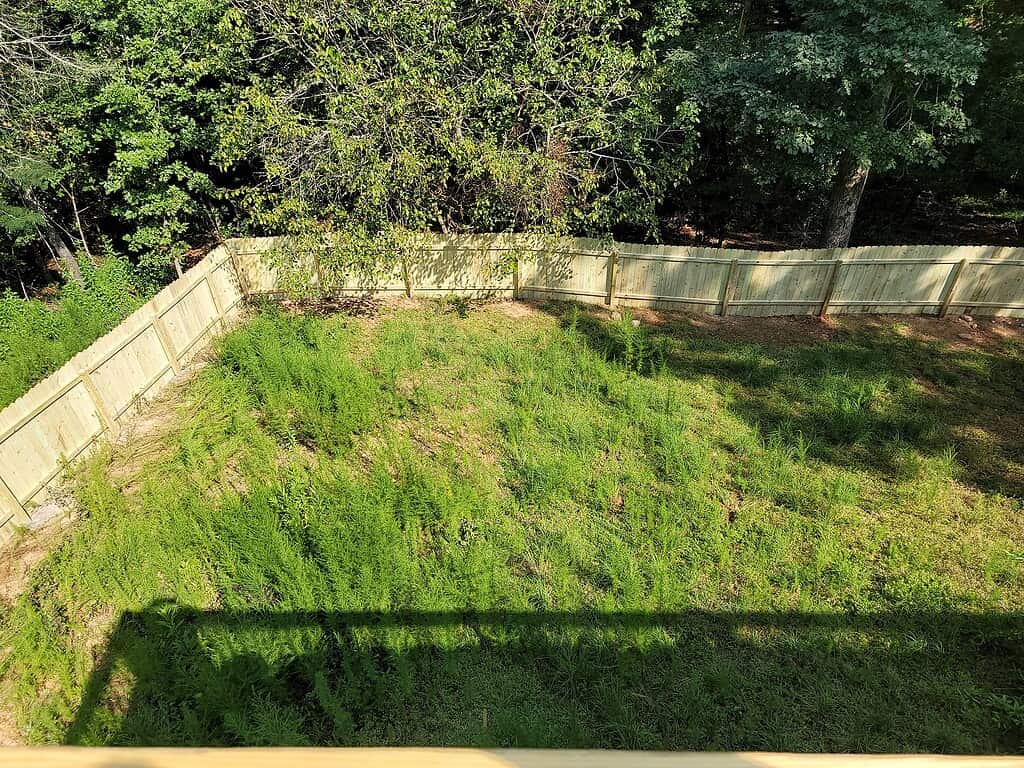
Most people jump straight to picking trees. Resist that urge. The most successful backyard orchards are planned before a single tree is purchased.
A few hours of upfront thinking will save you years of frustration.
Choosing the Right Location
Fruit trees have strong opinions about where they live. Get location right and nearly everything else becomes easier. Here is what to look for:
- Full sun: Most fruit trees need a minimum of 6–8 hours of direct sunlight per day. South- or west-facing spots are ideal in the Northern Hemisphere. Shaded trees produce smaller, less flavorful fruit and are far more prone to fungal disease.
- Good air circulation: Avoid low-lying areas where cold air pools (frost pockets) and where stagnant moisture encourages disease. A gentle slope is ideal.
- Well-draining soil: Fruit trees despise standing water around their roots. If your yard has clay-heavy soil or areas that stay wet after rain, address drainage before planting.
- Distance from structures: Keep trees far enough from fences, walls, and buildings to allow full canopy development and air movement — typically at least 10–15 feet for standard trees.
How Much Space Do You Actually Need?
Less than you think, especially with modern rootstocks. Here is a general spacing guide based on tree size:
| Tree Type | Mature Height | Spacing Needed | Years to First Fruit |
|---|---|---|---|
| Dwarf | 8–10 ft | 8–10 ft apart | 2–3 years |
| Semi-Dwarf | 12–15 ft | 12–15 ft apart | 3–5 years |
| Standard | 18–25 ft | 20–25 ft apart | 5–7 years |
A backyard of just 20 x 30 feet can comfortably hold 4–6 dwarf trees.
Even a smaller suburban lot can support a starter orchard if you choose the right rootstocks and train the trees using space-efficient methods like espalier.
Choosing the Best Fruit Trees for Your Backyard Orchard
This is where most beginners get overwhelmed — and understandably so. The key is to start with what your climate supports, then narrow down to what your family will actually eat.
Top Fruit Trees for Small Backyards
These are the most beginner-friendly and reliably productive options for home orchardists:
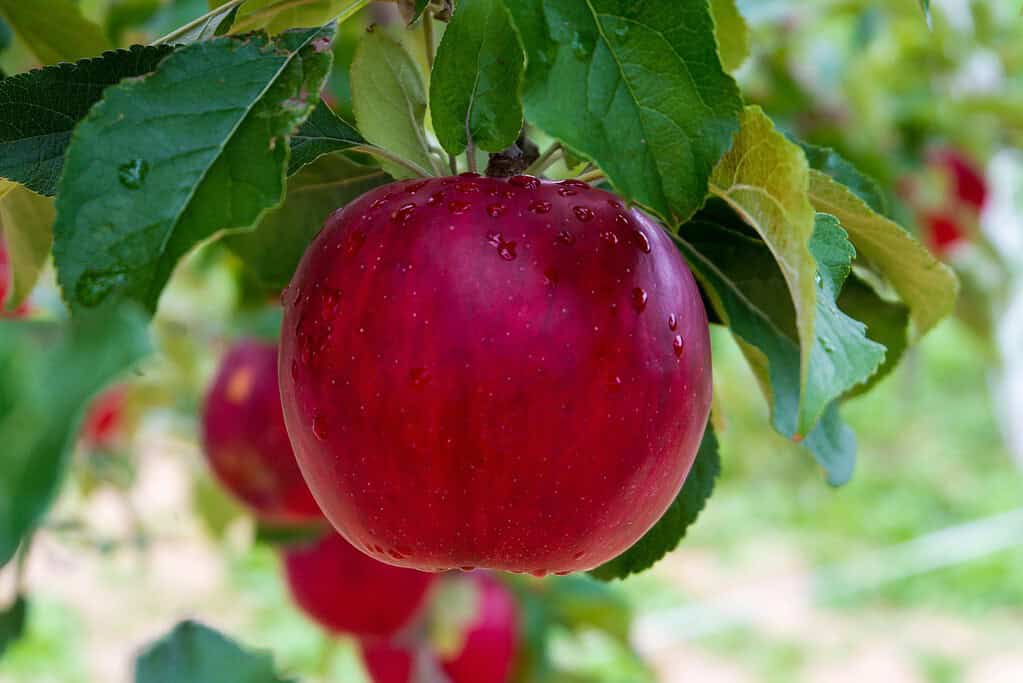
- Apple: One of the most adaptable fruit trees, with varieties suited to nearly every climate. ‘Honeycrisp,’ ‘Fuji,’ and ‘Gala’ are popular choices. Most need a pollination partner.
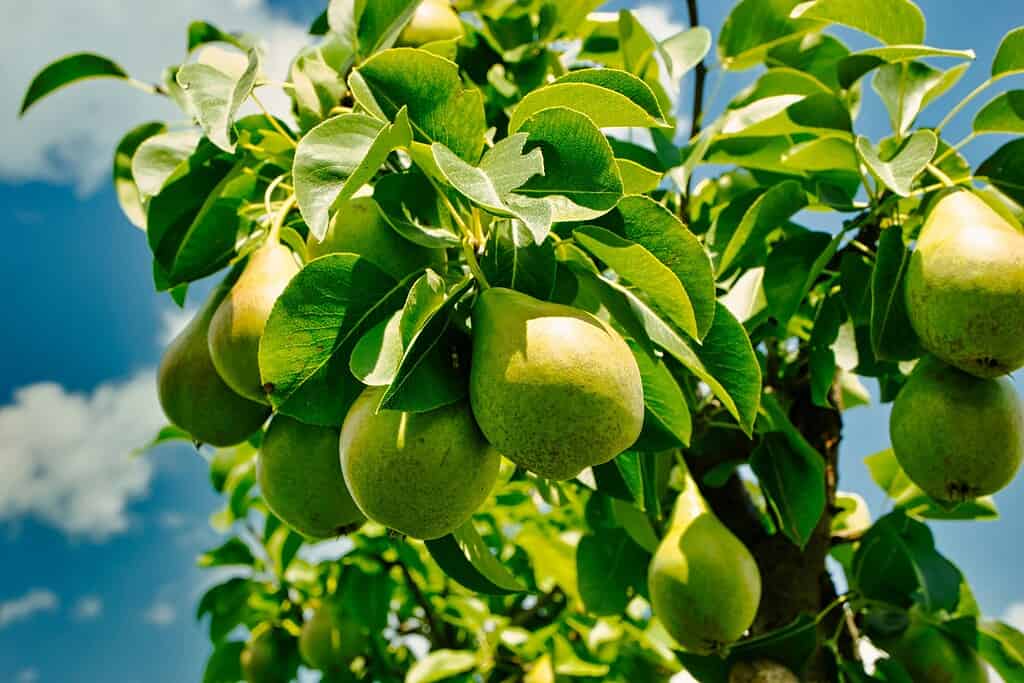
- Pear: Relatively low-maintenance, with European varieties like ‘Bartlett’ and ‘Bosc’ producing abundantly. Asian pears are even easier and great for beginners.
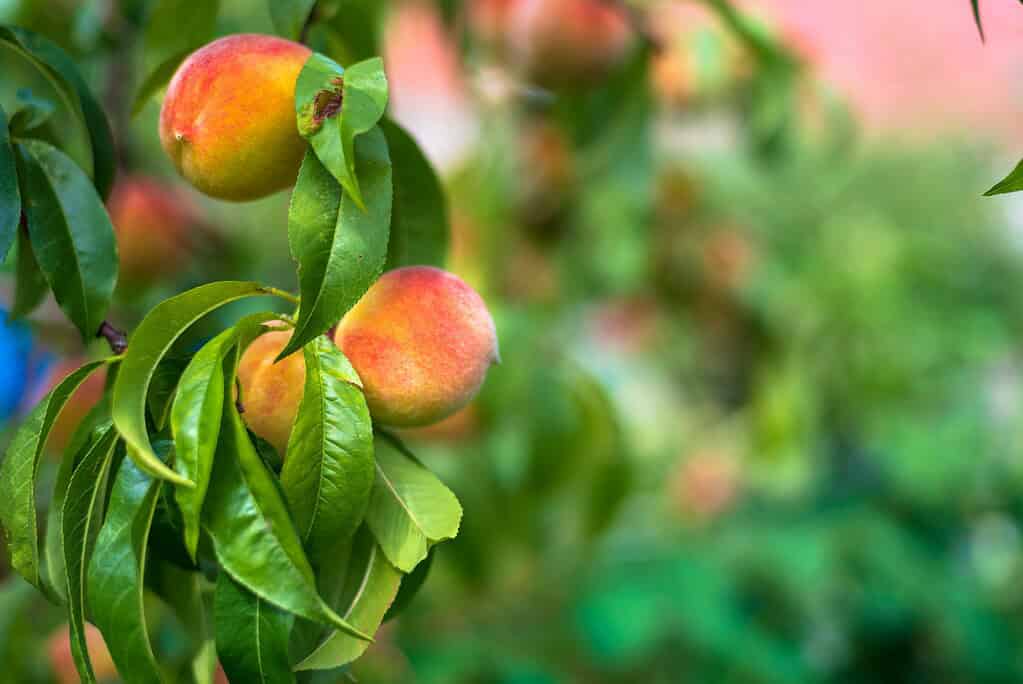
- Peach and nectarine: Fast to bear fruit (often in 2–3 years), and a dwarf peach tree is one of the most productive small-space options you can plant. Require full sun and good drainage.
- Plum: Hardy, productive, and often self-fertile, making plums an excellent choice for first-time growers. Both European and Japanese types are worth exploring.
- Fig: Exceptionally easy in warm climates, and containerized figs can be brought indoors in colder zones. Bears fruit without cross-pollination.
- Cherry: Sweet cherries need space and a pollination partner, but sour cherries like ‘Montmorency’ are self-fertile, compact, and incredibly productive.
Do not overlook the value of adding cane fruits and berries at the edges of your orchard.
Plants like raspberries make excellent understory companions that fill in gaps between trees and extend your harvest season. This guide on growing raspberries at home is a great place to start if you want to add them to the mix.
Always Match Varieties to Your Hardiness Zone
Check your USDA Hardiness Zone (or equivalent in your country) and the chill hour requirements of any tree you are considering.
Chill hours are the number of hours below 45°F (7°C) that a variety needs during dormancy to fruit well. Plant a low-chill-hour variety in a cold climate or a high-chill variety in a warm region and you will wait years for fruit that never arrives.
Miss it by a week and you lose the crop. The free 22-page planner pins down your exact dates — last frost, first frost, and the weekly steps between — so you plant on the days that actually work for your ZIP.
Understanding Pollination — The Factor That Makes or Breaks Your Harvest
You can do everything else perfectly and still end up with near-zero fruit if you get pollination wrong. This is one of the most misunderstood aspects of home orcharding.
Self-Pollinating vs. Cross-Pollinating Trees
Some trees can fertilize themselves (self-fertile or self-pollinating), while others require pollen from a different variety of the same species. Here is a quick breakdown:
- Self-fertile (no partner needed): Most peaches, nectarines, figs, sour cherries, and European plums. These are perfect for small backyards with room for only one tree.
- Require cross-pollination: Most apples, pears, sweet cherries, and Japanese plums. You need at least two compatible varieties blooming at the same time.
Even self-fertile trees produce significantly heavier crops when a pollination partner is nearby.
And all of that cross-pollination is only possible with the help of bees and other pollinators visiting your flowers.
This is one of the strongest reasons to consider starting your own beehive alongside your backyard orchard — it is a pairing that benefits both projects enormously.
Even without bees of your own, you can encourage wild pollinators by planting flowering herbs and wildflowers throughout and around your orchard. Diversity on the ground supports diversity in the air.
Soil, Planting, and Getting Your Trees in the Ground
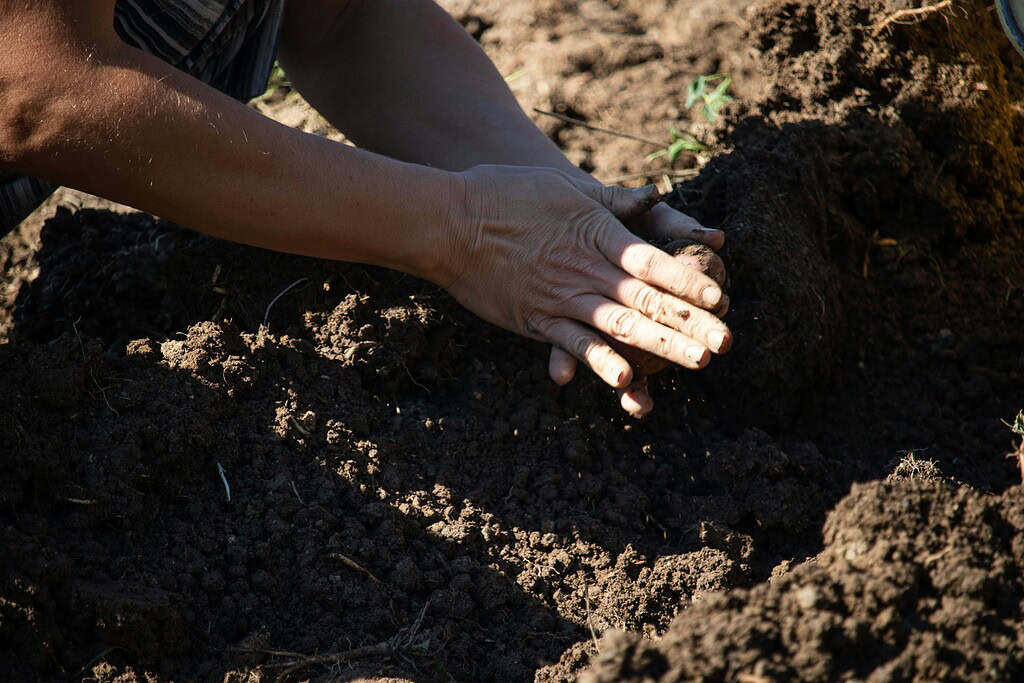
Best Soil Conditions for Fruit Trees
Fruit trees are not as fussy as vegetables, but soil quality still matters enormously. Aim for:
- pH: Most fruit trees prefer slightly acidic to neutral soil — a pH of 6.0 to 7.0. Test your soil before planting and amend accordingly.
- Drainage: Roots sitting in waterlogged soil will rot. If your ground stays soggy, plant on a raised berm or in raised beds to elevate the root zone.
- Organic matter: Work compost generously into the planting hole and the surrounding area. This improves drainage in clay soils, water retention in sandy soils, and feeds soil biology everywhere.
When and How to Plant
The best planting window is late winter to early spring for bare-root trees, while the ground is workable and before bud break.
Container-grown trees can be planted spring through early fall, though spring and fall plantings avoid the stress of summer heat.
Follow these steps for every tree:
- Dig a hole twice as wide as the root ball and only as deep as the root system – you want the
graft union (the swollen bump near the base of the trunk) to sit at least 2 inches above soil
level. - Place the tree in the hole, spreading roots naturally without bending or circling them.
- Backfill with native soil amended with compost. Avoid adding heavy fertilizer into the planting
hole, which can burn new roots. - Water deeply and thoroughly immediately after planting.
- Apply a 3-4 inch layer of mulch in a wide circle around the base, keeping it a few inches away
from the trunk to prevent rot.
Best gardening planner I've used in 10 years — and I keep coming back to it every season.
Watering, Fertilizing, and Mulching Your Orchard
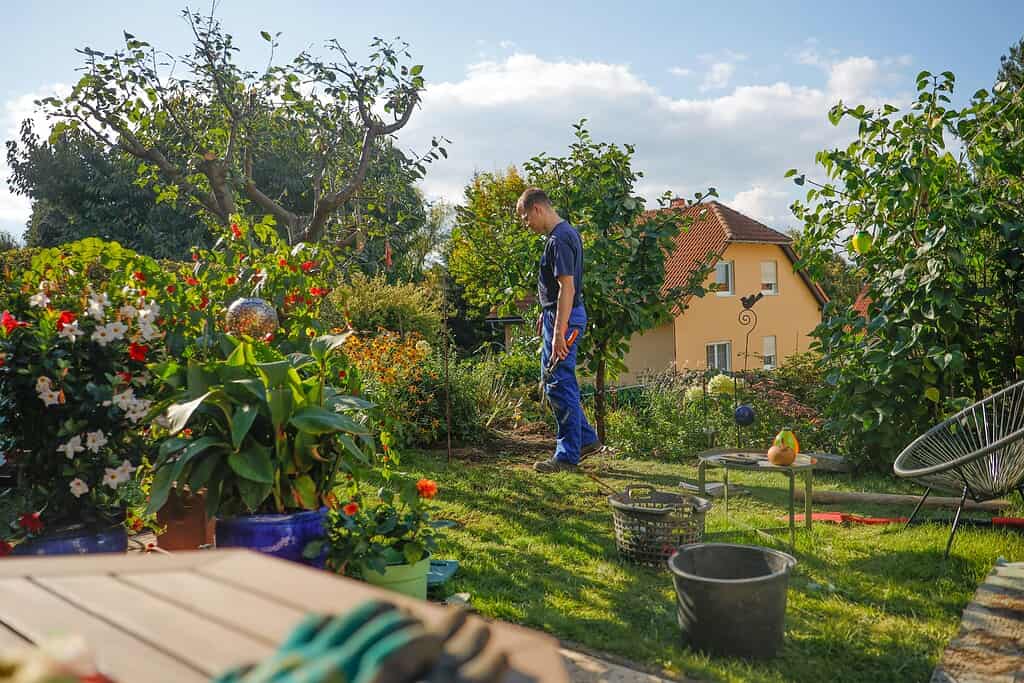
Once your trees are in the ground, consistent care in the first two to three years is what separates a thriving orchard from a struggling one.
Watering
Young trees need deep, infrequent watering rather than shallow, frequent irrigation. Deep watering — soaking the soil to at least 12–18 inches — trains roots to grow downward, making trees more drought-tolerant over time.
For the first season, plan on watering newly planted trees every 7–10 days in dry weather, more during heat spells. Established trees (3+ years old) generally only need supplemental watering during extended droughts.
Fertilizing
Feed young trees lightly in spring with a balanced organic fertilizer or well-aged compost. Avoid high-nitrogen fertilizers, which push lush leafy growth at the expense of fruit production.
Once trees are established and fruiting, let a soil test guide your fertilizing rather than guessing — over-fertilized fruit trees are surprisingly common and counterproductive.
Mulching
Mulch is one of the highest-return investments you can make in your orchard.
A generous layer of wood chips, straw, or leaf mulch around each tree suppresses weeds, retains soil moisture, moderates soil temperature, and slowly feeds the soil as it breaks down. Refresh your mulch layer every spring and fall, and always keep a clear zone right at the base of the trunk.
Free Planting Guides for This Article
Get exact planting dates, frost schedules, and growing tips for your zone:
Pruning Your Fruit Trees the Right Way
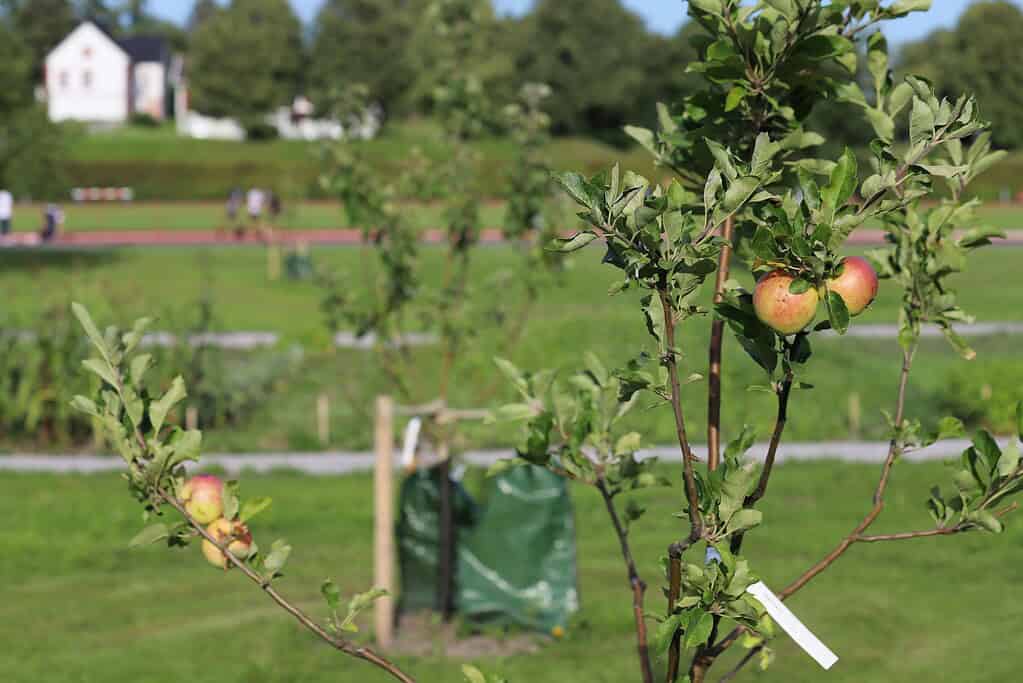
Pruning is the skill that most new orchardists are afraid of — and the one that makes the biggest difference in long-term productivity.
The goal is not just to control size; it is to shape trees that receive maximum light, produce quality fruit, and stay healthy for decades.
Here are the core principles to internalize:
- Prune in late winter or early spring while trees are dormant, just before buds begin to swell. This timing minimizes disease risk and allows the tree to push energy into new growth as the season opens.
- Open up the canopy. The goal is a structure where light can penetrate to all parts of the tree. Remove crossing branches, inward-growing shoots, and any branches that create a dense, closed center.
- Remove dead, diseased, or damaged wood first, then step back and assess what shaping cuts are needed.
- Never remove more than 25–30% of the canopy in a single year. Heavy pruning stresses the tree and triggers excessive, unproductive water sprout growth.
- Training young trees (years 1–3) is more important than pruning mature ones. The scaffold structure you establish in the first few years determines the tree’s productivity for its entire life.
- Beans
- Carrots
- Beets
- Lettuce
- Spinach
- Brassicas
Managing Pests and Diseases in Your Backyard Orchard
Pest and disease pressure is real in a home orchard, but it is absolutely manageable without heavy chemical spraying. The key is preventive, systems-based thinking rather than reactive treatment.
Common issues to watch for by crop:
- Apples and pears: Codling moth (the classic “worm in the apple”), fire blight (a bacterial disease), apple scab fungus. Kaolin clay sprays, pheromone traps, and selecting resistant varieties go a long way.
- Peaches and nectarines: Peach leaf curl (a fungal disease), brown rot, and oriental fruit moth. A single dormant copper spray before bud break prevents most leaf curl issues.
- Plums and cherries: Brown rot and black knot fungus are the main concerns. Good sanitation — removing mummified fruit and cutting out diseased wood — is the most effective prevention.
Overall, healthy trees in good soil with proper pruning and airflow will naturally resist most pest and disease pressure. Stressed, overcrowded, or poorly located trees will constantly fight battles you cannot win with spray alone.
Companion Planting to Boost Your Orchard’s Health and Productivity
The space beneath and around your fruit trees is not wasted ground — it is prime real estate for a whole ecosystem of support plants.
Strategic companion planting in an orchard can suppress weeds, attract beneficial insects, deter pests, and improve soil fertility simultaneously.
Some of the best companions for a backyard orchard include:
- Comfrey: A deep-rooted dynamic accumulator that mines minerals from subsoil and deposits them at the surface when leaves are cut and left to decompose. Plant several around each tree.
- Chives and garlic: Strong aromatics that confuse and repel aphids and other soft-bodied pests that love fruit trees. Easy to tuck in anywhere.
- Nasturtiums: These act as a trap crop, luring aphids away from your trees while their flowers attract predatory insects that keep pest populations in check.
- Clover and phacelia: Low-growing nitrogen-fixers that feed the soil and keep pollinators active in your orchard even between bloom seasons.
- Strawberries: A living ground cover that suppresses weeds, retains moisture, and gives you a bonus harvest at the orchard floor level. For details on getting the most out of a strawberry patch, this resource on maximizing your strawberry harvest is packed with practical tips.
If you already have a vegetable garden nearby and want to deepen your companion planting knowledge, the principles transfer well — reading about how companion planting works for beans and other heavy feeders gives you a solid framework for thinking about plant relationships throughout your whole growing space.
Your First Harvest — What to Expect and How to Know When Fruit Is Ready
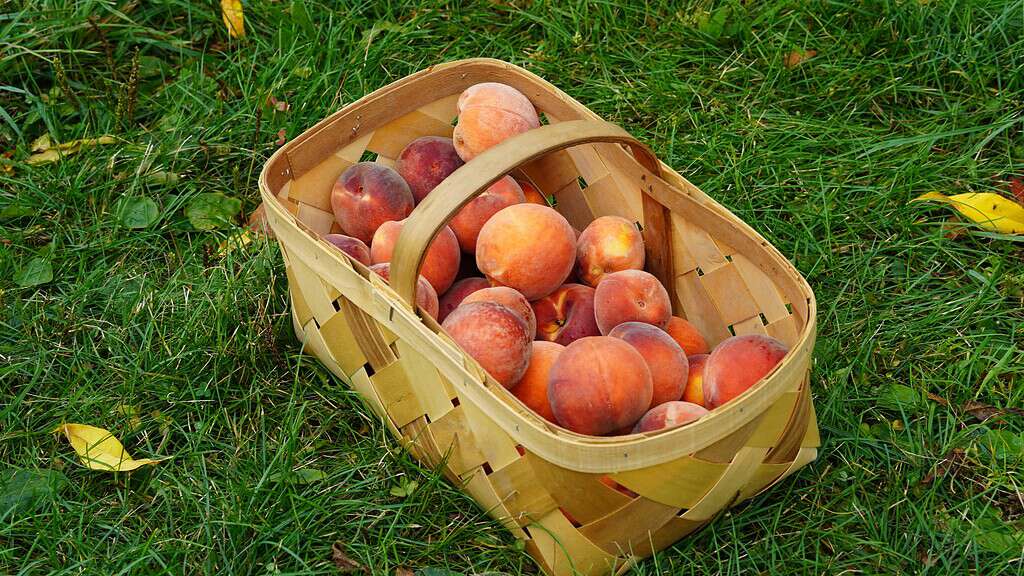
Nothing beats the anticipation of your first real harvest, and there is a bit of a learning curve to knowing exactly when to pick.
Picking too early leaves fruit starchy and flavorless; picking too late means soft, overripe, or split fruit that drops before you get to it.
Here are the signs to look for by fruit type:
- Apples: Check color (variety-dependent), ease of separation from the branch with a gentle twist, and seed color — brown seeds typically indicate maturity. Taste is your final confirmation.
- Peaches: Background skin color shifts from green to yellow. The fruit will give very slightly under gentle thumb pressure. A ripe peach practically falls into your hand.
- Pears: Most pears (especially European varieties) are harvested before they are fully ripe on the tree — they ripen better off the branch. Lift a pear and rotate it 90 degrees; if it separates cleanly, it is ready.
- Plums and cherries: Color, firmness, and flavor are your guides. Taste test a fruit before committing to a full harvest — your palate is the most reliable tool you have.
In the early years, do not be discouraged by light harvests. A young tree putting energy into root and branch development will not produce heavily right away, and that is completely normal.
By year 4 or 5, most well-cared-for trees will begin rewarding you with harvests that make the wait feel more than worthwhile.
If you find yourself with more fruit than you can eat fresh, learning the basics of food preservation will let you enjoy your harvest all year long.
How Hard Is It to Garden in Your County?
Every county has a unique Gardening Difficulty Score based on frost risk, soil quality, drought, altitude, and climate trends. Find yours — plus personalized frost dates, planting calendars, and soil data.
Check Your County's Score →Designing Your Orchard to Be Beautiful, Not Just Productive
A backyard orchard does not have to look utilitarian. With a little thought, your fruit trees can become the backbone of a gorgeous, layered garden that looks as good as it produces.
Think about blossom color in spring, foliage texture in summer, and fruit color in autumn when choosing your varieties and layout.
Many homesteaders blend their orchard with cottage-style planting beneath the trees — a mix of herbs, edible flowers, and low-growing perennials that fills in the space beautifully.
If you want inspiration for how to weave productive planting into a relaxed, naturalistic design, our roundup of dreamy cottage garden designs for the backyard is a wonderful visual starting point.
You might also consider adding climbing plants or espaliered trees along fences and walls to maximize growing space without sacrificing aesthetics.
Trained fruit trees are genuinely beautiful garden features — and every inch of wall or fence becomes productive growing space.
Start Your Backyard Orchard This Season — One Tree at a Time
Building a thriving backyard orchard is one of the most satisfying projects a homesteader can take on — and it does not require a massive commitment to get started.
Plant one tree this year. Learn what it needs. Watch it grow. Then plant another. The homesteaders who end up with the most abundant orchards are rarely the ones who planted twenty trees at once and burned out — they are the ones who started small, stayed curious, and kept adding to their vision season by season.
By following the guidance in this post — choosing the right location, matching varieties to your climate, understanding pollination, building healthy soil, and committing to a few key maintenance habits — you are giving your orchard every advantage it needs to succeed.
The best time to plant a fruit tree was ten years ago. The second best time is today.
Are you starting your first backyard orchard, or adding to an existing one? What fruit trees are you growing or planning to plant? We would love to hear what is growing in your backyard!
Ready to Design Your Dream Garden Bed?
Feeling inspired to build something beautiful?
If you’re ready to go beyond just one garden bed and truly design a space that feels intentional, productive, and charming, I put together something special for you.
Inside 101 Garden Bed Ideas, you’ll find creative layouts, raised bed designs, space-saving solutions, and inspiring setups you can actually recreate in your own yard – whether you’re working with a tiny backyard or a full homestead.
Start planning your dream garden today.

Frequently Asked Questions
Can I grow fruit trees in containers or raised beds if my soil is poor?
Yes — dwarf fruit trees grown in large containers (half wine barrels or 25–30 gallon pots) can be surprisingly productive.
The key is using a well-draining potting mix amended with compost, ensuring the container has excellent drainage holes, and watering and fertilizing more frequently than you would in-ground trees (containers dry out and lose nutrients faster).
Some homesteaders even grow small orchard trees this way deliberately, as it allows them to move trees to protected spots during extreme weather. For a raised-bed approach, using deep raised beds for small fruit crops shows how this strategy works brilliantly for fruiting plants.
How do I protect my fruit trees from late spring frosts that hit after blossom?
Late frost hitting open blossoms is one of the most heartbreaking events in the orchard calendar — a single frost event can wipe out an entire year’s harvest.
Your best defenses are: choosing planting sites with good cold-air drainage (avoid frost pockets), selecting late-blooming varieties in frost-prone areas, and keeping frost cloth or old bedsheets on hand to drape over small trees on nights when a hard frost is forecast.
Running a sprinkler overnight to coat blossoms in a thin layer of ice is also an effective (if counterintuitive) commercial technique — the latent heat released as water freezes actually protects the flowers.
Do I need to thin fruit even when the tree sets a large crop?
Absolutely — fruit thinning is one of the most important and most skipped steps in home orcharding. When a tree sets more fruit than it can fully develop, you end up with a large number of small, poor-quality fruits rather than a smaller number of exceptional ones.
Worse, heavy crop years stress the tree and often trigger biennial bearing — a pattern where the tree produces heavily one year and almost nothing the next.
Thin apples and pears to one fruit per cluster and 6–8 inches apart; peaches and plums to one fruit every 4–6 inches. Thin when fruit is marble-sized, typically 4–6 weeks after full bloom.
What is the best way to deal with fruit drop and fallen fruit in the orchard?
Fallen and rotting fruit on the ground is one of the primary sources of pest and disease carry-over from one season to the next.
Codling moth pupates in the soil beneath apple trees; brown rot fungus overwinters in mummified fruit. The single most impactful sanitation habit you can develop is collecting and removing all dropped fruit promptly — at least weekly during the season.
Do not compost diseased or pest-damaged fruit; instead, bury it deeply, run it through a hot compost system, feed it to chickens (they are remarkable fruit-drop processors), or bag it for disposal. Clean ground equals a much healthier orchard the following season.
Can chickens or ducks free-range under fruit trees, and is it beneficial?
Poultry under fruit trees is a genuinely brilliant combination — one of the classic permaculture pairings for good reason.
Chickens scratch through leaf litter, consuming overwintering pest pupae and larvae that would otherwise emerge the following spring. They eat fallen fruit before it rots and harbors disease, and their manure feeds the soil around your trees.
The main caution is timing: keep chickens out during blossom season (they will eat blossoms and disturb soil at a critical time) and while fruit is low on the branch (they may peck developing fruit).
Outside those windows, free-ranging poultry in an orchard is a genuinely productive and low-effort pest management system.
Level Up Your Garden
Our most popular gardening guides