Most beginners pick tomatoes and peppers for their first garden — and then spend three months wondering why nothing has happened yet.
Here’s a better approach: start with vegetables that actually deliver results fast, so you can learn, adjust, and keep going without losing motivation.
These 15 fast-growing vegetables don’t just tolerate beginner mistakes — they practically shrug them off.
Whether you’re working with a small raised bed, containers on a porch, or a fresh patch of backyard soil, these are the crops that go from seed to plate in the shortest time possible. Some of them are ready in under two weeks.
15 Fast-Growing Vegetables That Go from Seed to Table in Record Time
Below are 15 fast-growing vegetables that don’t keep you waiting long for fresh food.
1. Radishes — Ready in 20 to 30 Days
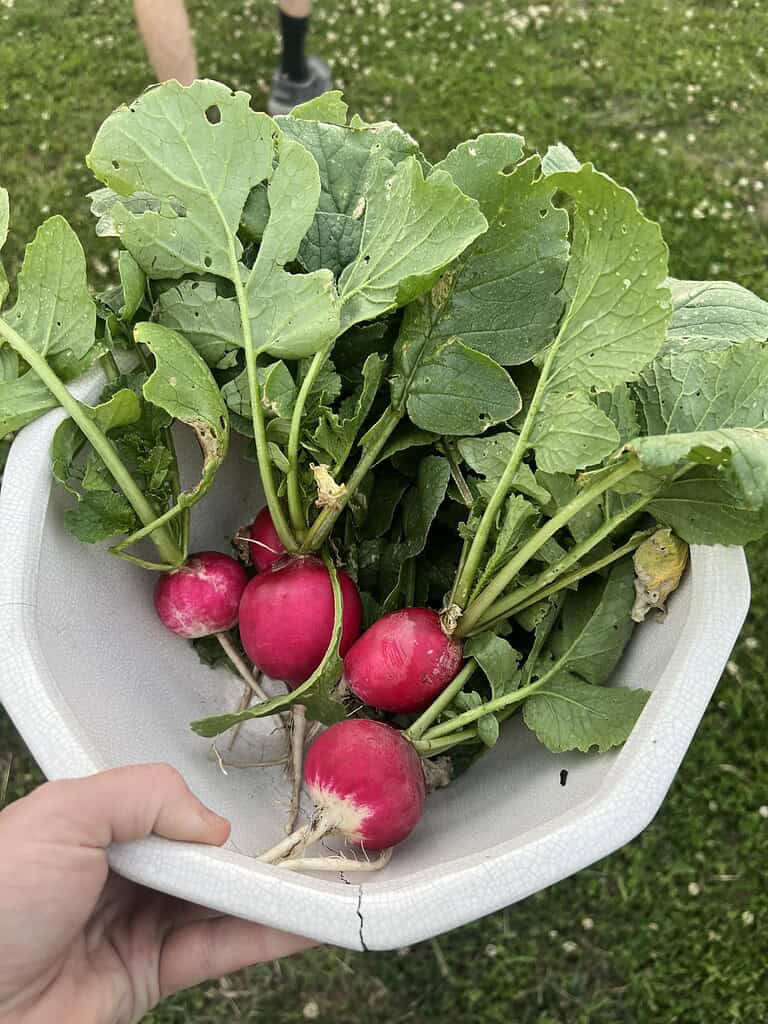
Radishes are arguably the fastest maturing vegetable you can grow in real soil — not a sprouting jar, not a windowsill tray. Drop a seed in the ground, and 20 days later you’re pulling something edible. That’s not an exaggeration.
What most beginners don’t realize is that radishes are also a great use of otherwise “dead” garden space. Tuck them between slower crops like carrots or tomatoes — they’ll be gone before those plants need the room.
The one thing that will ruin them: heat and inconsistent watering, which causes them to bolt and turn spicy-hollow instead of crisp.
- Days to harvest: 20–30 days
- Best varieties for beginners: Cherry Belle, French Breakfast, Easter Egg Mix
- Pro tip: Sow a new row every 7–10 days so you don’t get a flood of radishes all at once
2. Microgreens — Ready in 7 to 14 Days
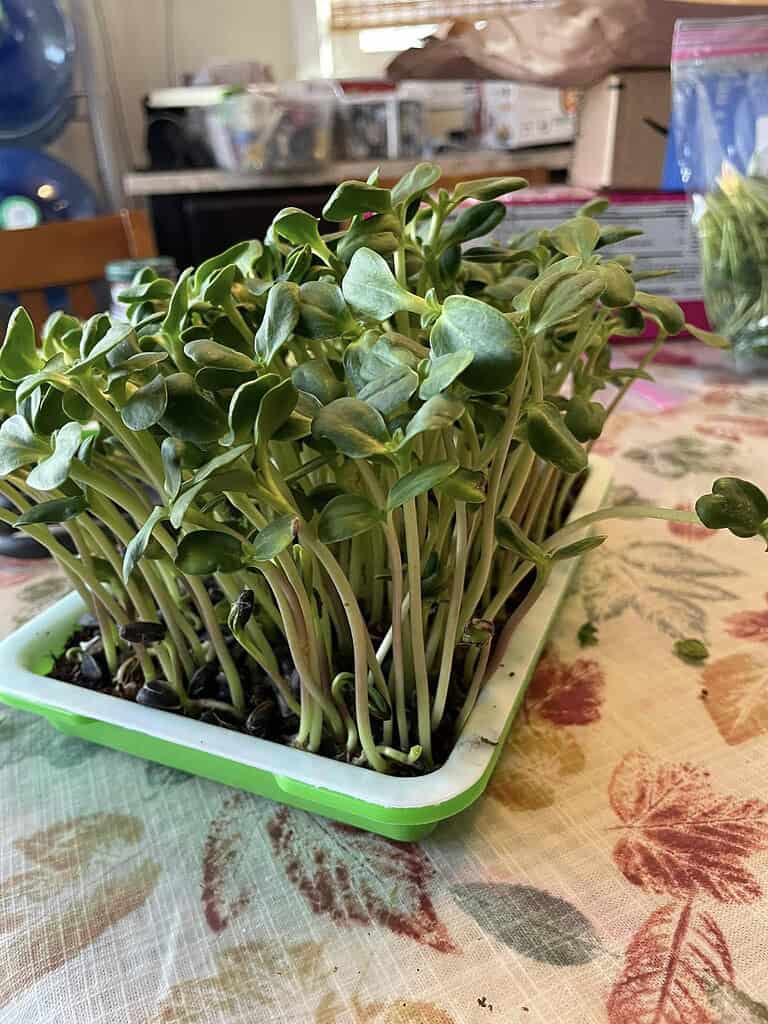
If radishes are fast, microgreens are absurd. You can go from seed to harvest in a week.
Microgreens are just the seedling stage of vegetables like sunflower, pea, radish, and broccoli — but at that stage, they’re actually more nutrient-dense than the mature plant and have intense flavors that punch well above their size.
No garden bed needed. A shallow tray, a sunny windowsill, and a bit of moisture is all it takes. This is also a great entry point for apartment growers or anyone who wants to grow something edible right now, indoors, regardless of the season.
- Days to harvest: 7–14 days
- Best varieties to start with: Sunflower, pea shoots, broccoli, radish
- Pro tip: Pre-soak larger seeds like sunflower and peas overnight for faster germination
3. Baby Spinach — Ready in 25 to 35 Days
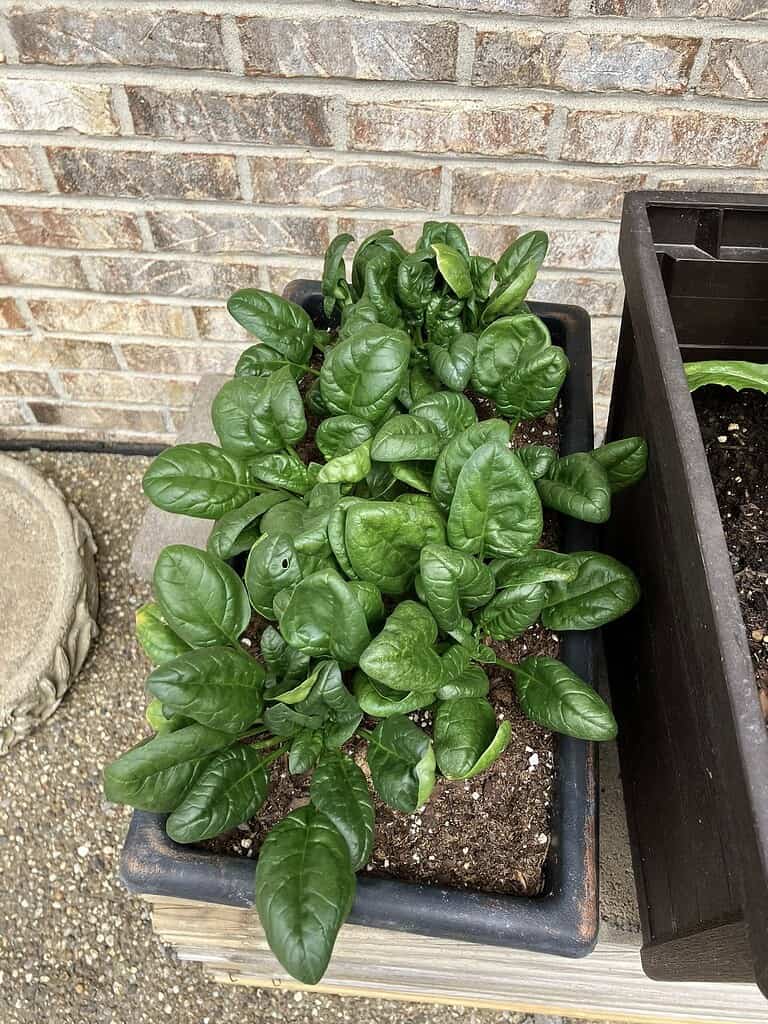
Spinach is a cool-season overachiever. Plant it in early spring or fall and it’s one of the first things you’ll harvest. The key word here is “baby” — you don’t need to wait for full-sized mature leaves.
As soon as leaves are 2–3 inches long, they’re ready to cut. Harvest the outer leaves and the plant will keep producing for weeks.
Spinach is also sensitive to day length, not just temperature. As days get longer in late spring, it bolts — meaning it sends up a flower stalk and the leaves turn bitter almost overnight. Grow it early and harvest it often.
- Days to harvest: 25–35 days for baby leaves
- Best varieties: Bloomsdale, Space, Tyee
- Pro tip: Direct sow outside 4–6 weeks before your last frost date — spinach can handle a light freeze and often germinates better in cool soil
4. Arugula — Ready in 30 to 40 Days
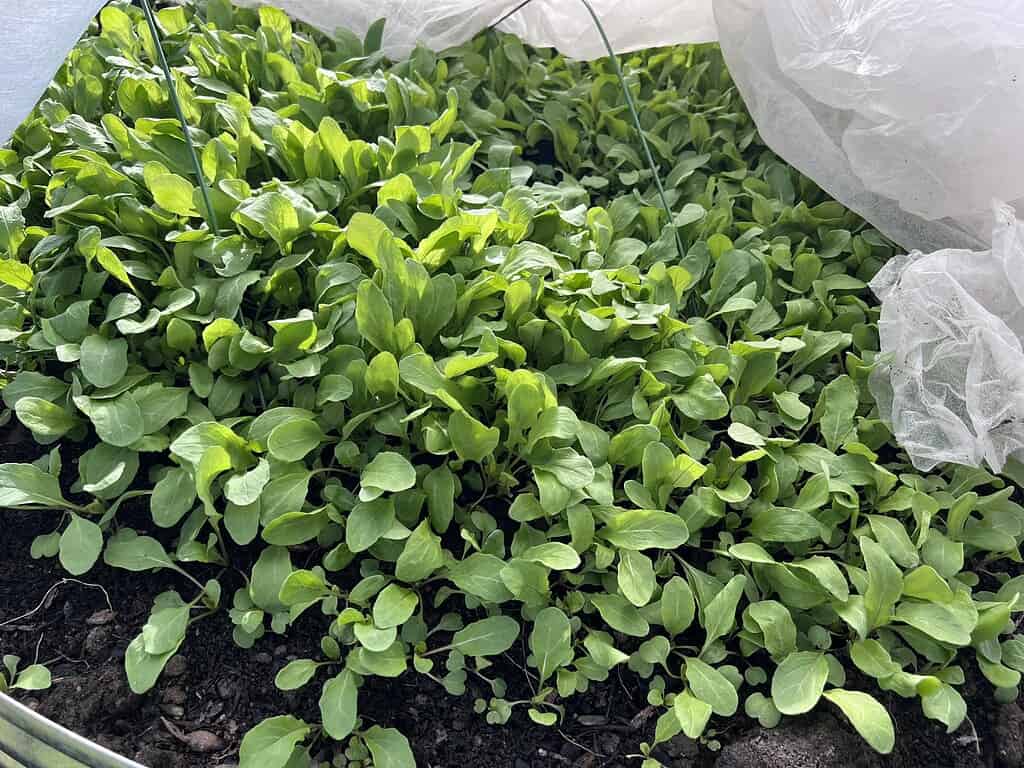
Arugula is one of those crops most beginner gardeners overlook because it sounds fancy.
But it’s one of the most forgiving, fastest-growing greens you can grow — and homegrown arugula has a peppery punch that the store-bought version rarely matches.
Scatter the seeds, barely press them in, water, and step back. That’s genuinely the whole process. Like spinach, harvest the young leaves early and cut-and-come-again. It will bolt in heat, but in spring and fall it’s practically unstoppable.
- Days to harvest: 30–40 days
- Best varieties: Astro, Runway, Wild Arugula (slower but more bolt-resistant)
- Pro tip: Let a few plants bolt and self-seed — you’ll have arugula coming back year after year with zero effort
5. Green Onions (Scallions) — Ready in 21 to 30 Days From Sets
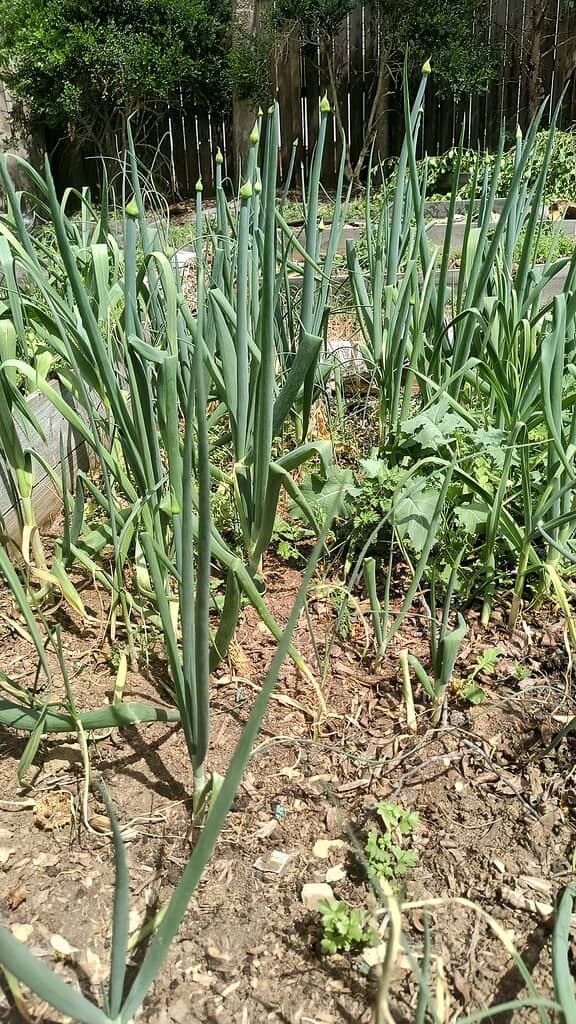
Green onions are one of those vegetables where speed depends a lot on how you start them. From onion sets (small bulbs), you’re looking at 3–4 weeks.
From seed, closer to 8 weeks. From scraps? You can regrow the root end of a store-bought bunch in a glass of water in less than a week.
They’re compact, grow well in containers, and you’ll clip and use them throughout the season. Plant them in a cluster and snip from the outside as needed — the center keeps pushing out new growth.
- Days to harvest: 21–30 days from sets
- Best varieties: Evergreen Hardy White, Tokyo Long White, White Lisbon
- Pro tip: Grow in a deep pot alongside herbs — their shallow root system leaves plenty of room below for companion plants
6. Baby Lettuce Mix — Ready in 30 to 45 Days
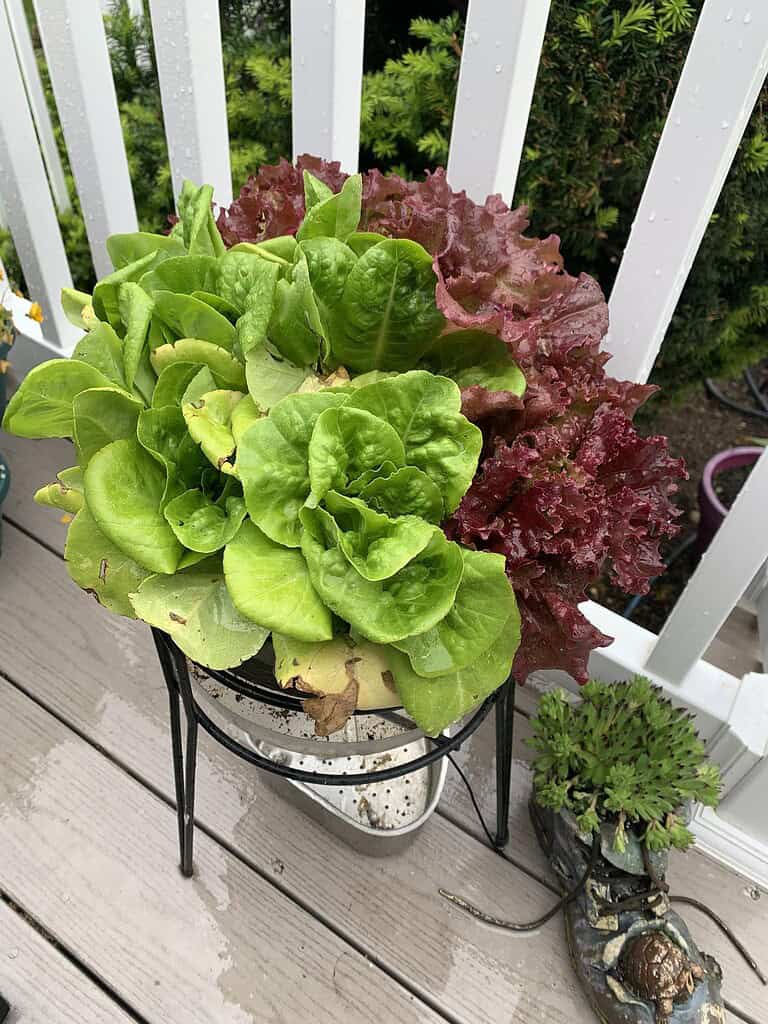
Loose-leaf lettuce varieties are some of the most productive crops for their footprint. A 1-foot row of cut-and-come-again lettuce can supply salad greens for a family for weeks if harvested correctly.
The trick is to cut leaves from the outside, leaving the center growing point intact.
Mixing several varieties — oakleaf, red romaine, butterhead, lollo rosso — not only looks beautiful but creates layers of flavor. Mesclun mixes sold in seed packets do this automatically and are perfect for beginners.
If you’re thinking about growing lettuce alongside other plants, check out the best lettuce companion plants to maximize your bed space.
- Days to harvest: 30–45 days for baby leaves
- Best varieties: Salanova, Black Seeded Simpson, Red Sails, Buttercrunch
- Pro tip: Provide afternoon shade in warmer weather — lettuce grows faster and stays sweeter when it doesn’t overheat
7. Beet Greens — Ready in 30 to 40 Days for Greens (Roots in 55–70)
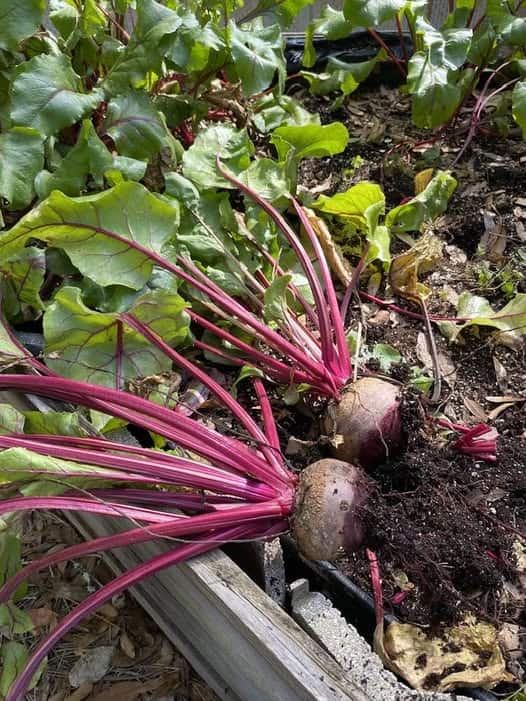
Most beginners don’t know that beet greens are a separate harvest from the actual beet root.
The young leaves are edible — and delicious, think chard with a slightly sweeter flavor — and they’re ready in about a month.
You can thin your beet seedlings and eat the thinnings immediately, which gives you food while also improving spacing for the remaining plants.
This makes beets one of the most efficient crops in a beginner garden — you get two harvests from one planting. Eat the greens early, then wait for the roots.
- Days to harvest greens: 30–40 days
- Best varieties: Bull’s Blood (grown mainly for greens), Detroit Dark Red, Chioggia
- Pro tip: Soak beet seeds in water for 2–4 hours before planting to soften the outer hull — this alone can cut germination time by 2–3 days
8. Bok Choy — Ready in 45 to 60 Days
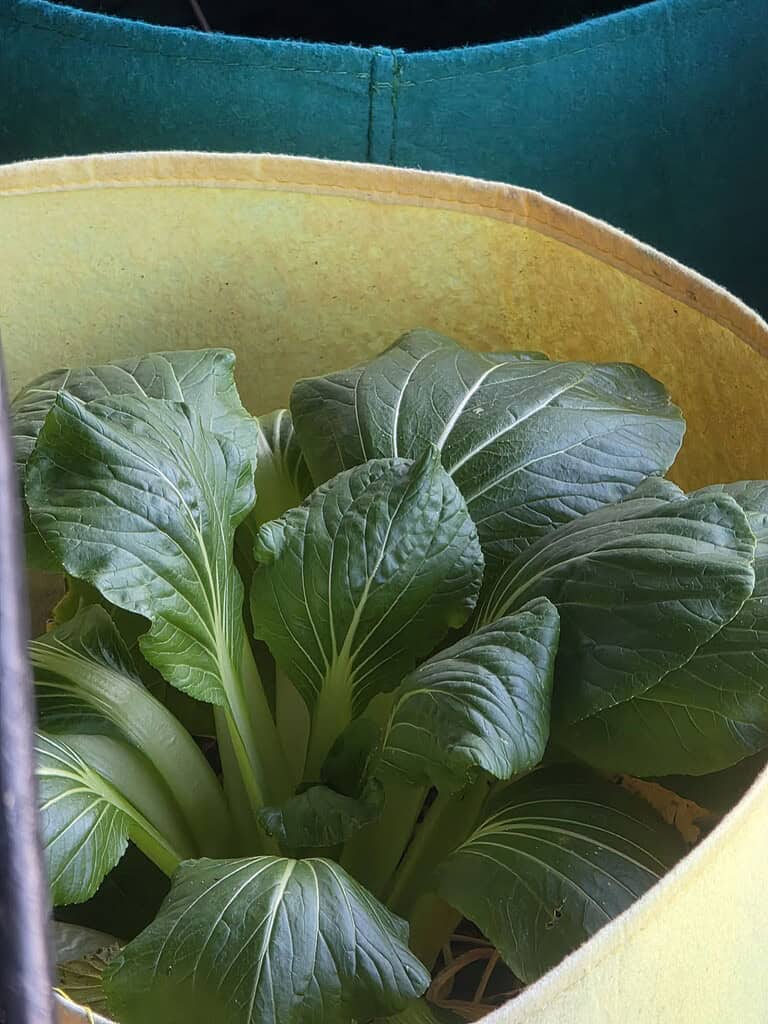
Bok choy is criminally underused in home gardens. It’s a fast-growing brassica that handles light frost, tolerates partial shade, and is versatile in the kitchen.
Baby bok choy varieties like Toy Choi can be harvested even earlier — sometimes at 30–35 days — and are perfect for stir-fries, soups, and roasted with olive oil and garlic.
It also has very few pest problems compared to other brassicas like broccoli or cabbage, making it genuinely beginner-friendly in a way that’s not just marketing fluff.
- Days to harvest: 45–60 days (30–35 for baby varieties)
- Best varieties: Toy Choi, Joi Choi, Pak Choi
- Pro tip: Grow bok choy in early spring or fall — the sweet spot is soil temperatures between 45°F and 75°F
9. Turnips — Ready in 35 to 60 Days
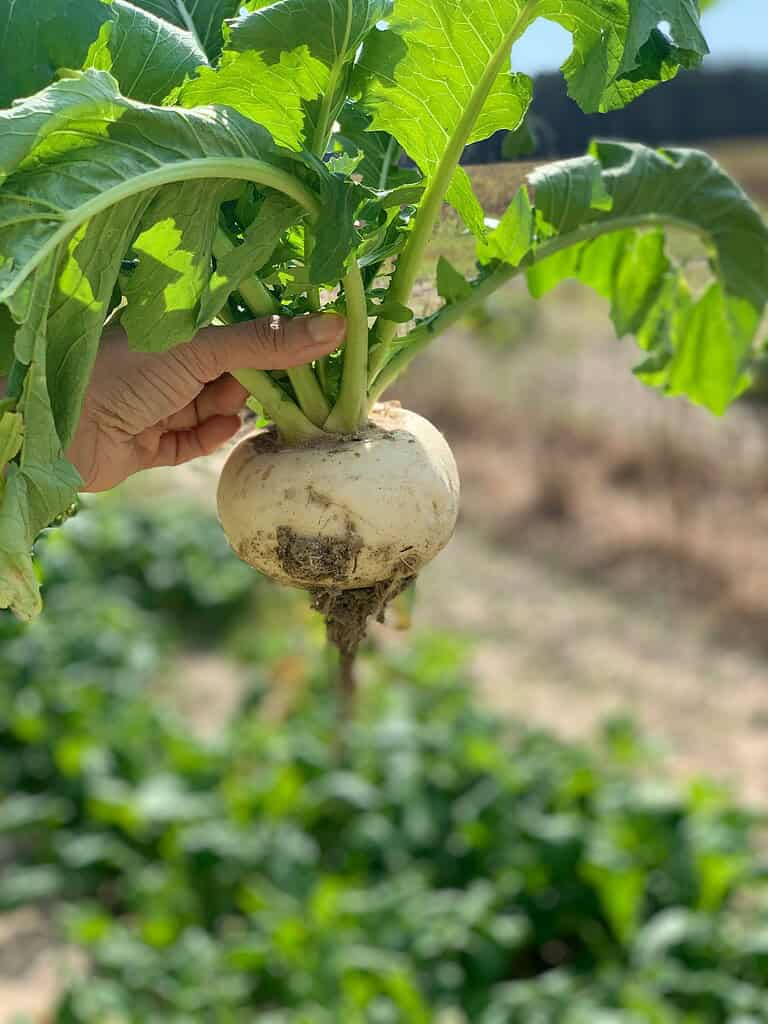
Turnips have an image problem — people assume they’re bland, old-fashioned vegetables.
But young turnips harvested small (golf ball-sized or smaller) are sweet and tender, nothing like the mealy giants sold in grocery stores in autumn. And the greens? Excellent sautéed — every bit as good as mustard greens.
Like beets, you get two crops. The thinnings pulled at 3–4 weeks are edible greens, and the roots are ready in 5–6 weeks if harvested young. Turnips also have the useful property of improving as temperatures drop — a light frost actually sweetens the roots.
- Days to harvest: 35–60 days depending on size
- Best varieties: Purple Top White Globe, Hakurei (Japanese salad turnip — the sweetest), Tokyo Market
- Pro tip: Hakurei turnips can be eaten raw like an apple — they’re that sweet when harvested small
10. Swiss Chard — Ready in 45 to 60 Days
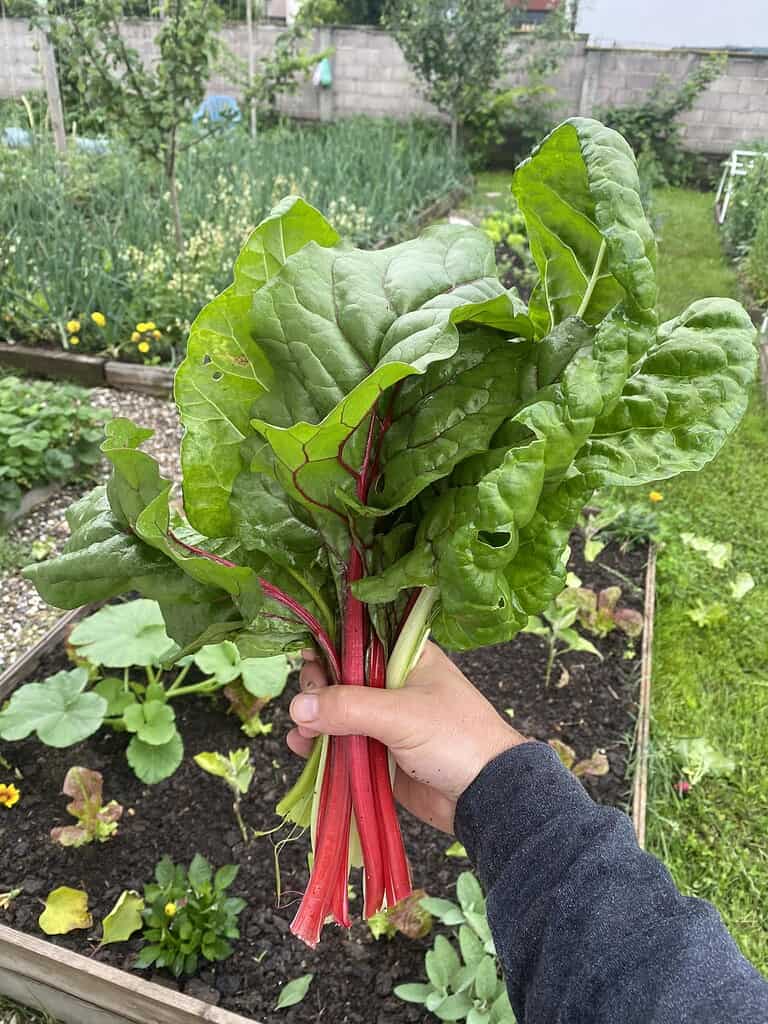
Swiss chard is the workhorse of the summer-into-fall garden. It handles both heat and frost with unusual grace — not many vegetables span that temperature range.
Start harvesting outer leaves as soon as they’re large enough to use (about 6–8 inches), and the plant will keep producing all the way until a hard freeze.
Rainbow chard varieties like Bright Lights are also genuinely gorgeous in the garden — deep reds, bright yellows, and electric orange stems. It’s one of those vegetables that earns its space both visually and practically.
- Days to harvest: 45–60 days, then continuous cut-and-come-again
- Best varieties: Bright Lights, Fordhook Giant, Peppermint
- Pro tip: Chard is a biennial — it won’t bolt in its first year, which means no bitter surprise in mid-summer like you’d get with lettuce or spinach
11. Kale (Baby Leaf Harvest) — Ready in 25 to 35 Days for Young Leaves
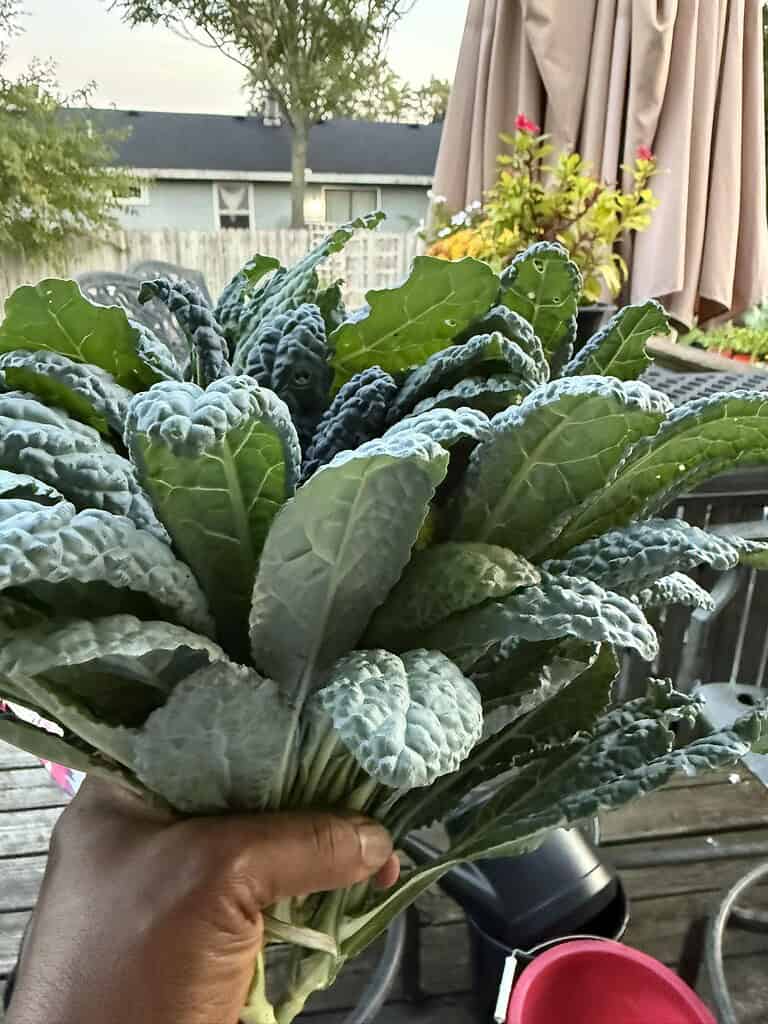
Most people grow kale for a full-season harvest of large, tough leaves. But kale grown for baby leaves — planted densely and harvested young — is a completely different experience.
Baby kale leaves are tender, mild, and ready in under 35 days. Sow thickly, cut at 2–3 inches, and the plants will regrow for multiple harvests.
Red Russian kale is particularly fast-growing and tender at the young stage, and Lacinato (dinosaur) kale makes excellent baby greens too. Both handle cool weather well and can be direct-seeded earlier in spring than most warm-season crops.
- Days to harvest: 25–35 days for baby leaves; 55–75 for full size
- Best varieties for baby leaf: Red Russian, Lacinato, Dwarf Blue Curled
- Pro tip: Frost makes kale sweeter by converting starches to sugars — fall kale is almost always better-tasting than spring kale
12. Peas — Ready in 55 to 70 Days
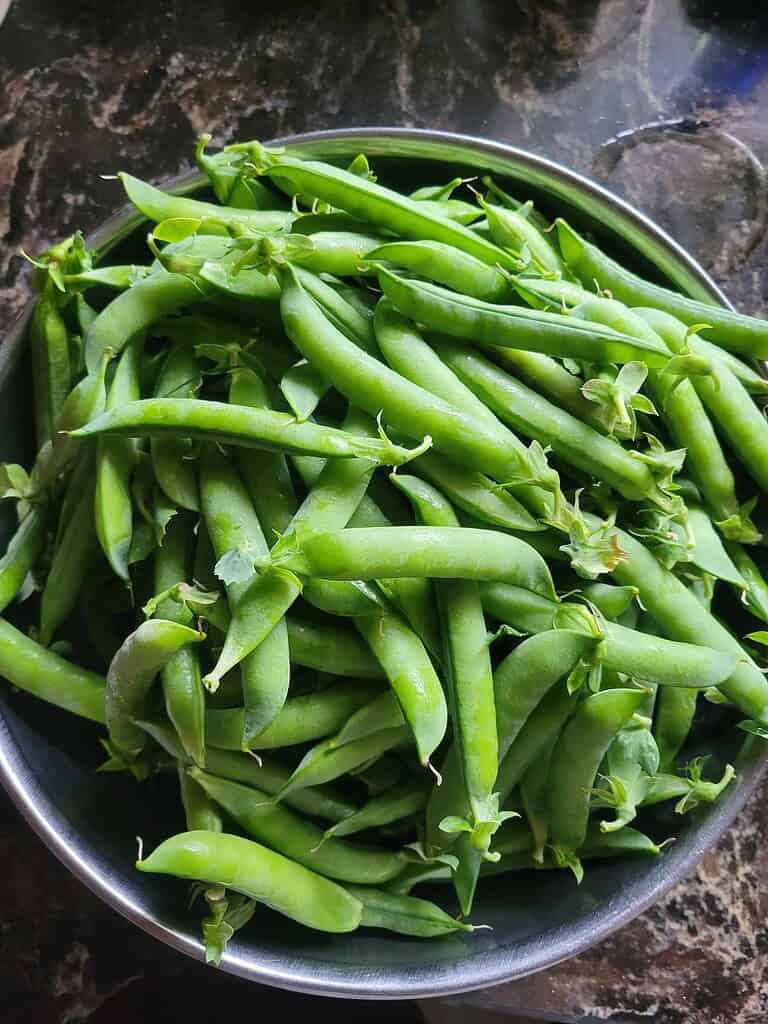
Peas are the earliest warm-ish-season crop you can get into the ground — often 4–6 weeks before the last frost. They need cool soil to germinate well and will stop producing once summer heat arrives, making timing critical.
Plant them in early spring and you’ll be harvesting before many of your other crops are even established.
Sugar snap peas are especially rewarding for beginners because you eat the whole pod — no shelling required — and they’re incredibly productive for their space. Grow them vertically on a trellis or fence and you can fit a surprising amount in a small area.
- Days to harvest: 55–70 days
- Best varieties: Sugar Snap (the original, still one of the best), Super Sugar Snap, Oregon Sugar Pod (snow pea)
- Pro tip: Inoculate pea seeds with rhizobium bacteria powder before planting — it’s inexpensive, takes 30 seconds, and significantly increases nitrogen fixation and plant vigor
13. Bush Beans — Ready in 50 to 60 Days
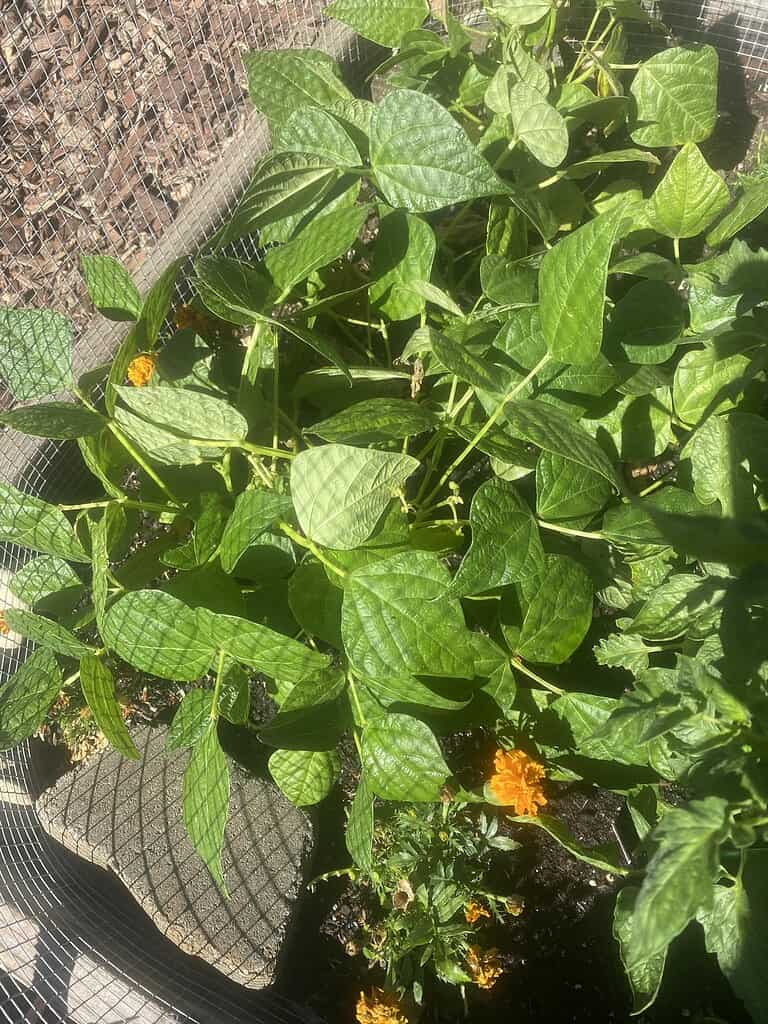
Bush beans are the beginner’s reward crop — direct sow after the last frost, water regularly, and step back. They don’t need trellising, they fix nitrogen into the soil as a bonus, and they produce a satisfying flush of pods all at once.
Unlike pole beans which produce continuously, bush beans front-load their harvest — most pods ripen within a 2-week window, making them ideal for preserving or batch cooking.
If you want a continuous supply, succession planting every 2–3 weeks is the move. To get even more from your bean bed, explore which companion plants for beans can help protect and boost your harvest.
- Days to harvest: 50–60 days
- Best varieties: Provider (the most reliable), Blue Lake Bush, Dragon Tongue (a gorgeous wax bean)
- Pro tip: Pick beans when they’re finger-width — pods left too long get stringy and signal the plant to stop producing new flowers
14. Cucumbers — Ready in 50 to 65 Days
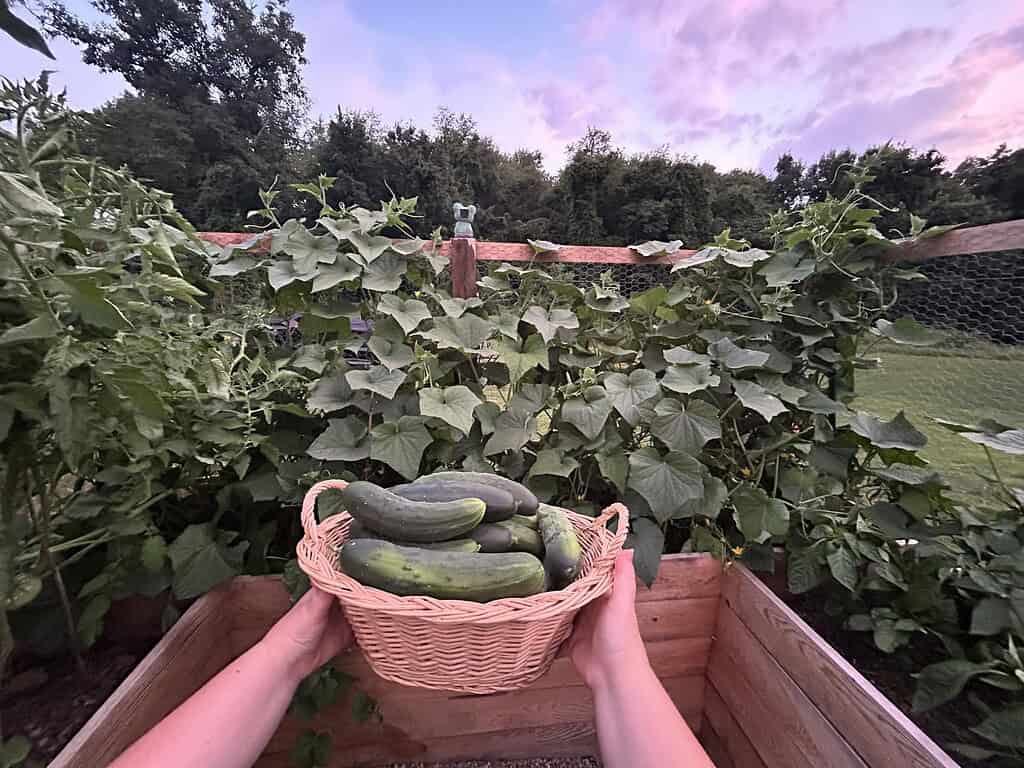
Cucumbers have a reputation for being tricky — usually because people start them in cold soil when they should wait.
Give them warm soil (above 60°F, ideally 70°F+), consistent moisture, and something to climb, and they’ll produce more cucumbers than most families know what to do with.
Bush varieties like Spacemaster or Patio Snacker work well in containers or small beds. Vining types need vertical support but produce longer into the season.
For the best results, grow cucumbers alongside the right neighbors — discover the top companion plants for cucumbers that help repel pests and encourage pollination.
- Days to harvest: 50–65 days
- Best varieties: Marketmore 76, Straight Eight, Spacemaster (bush), Diva (seedless, virtually no bitterness)
- Pro tip: Harvest every 1–2 days when plants are producing — a single overripe cucumber left on the vine signals the plant to dramatically slow down production
15. Zucchini — Ready in 50 to 65 Days
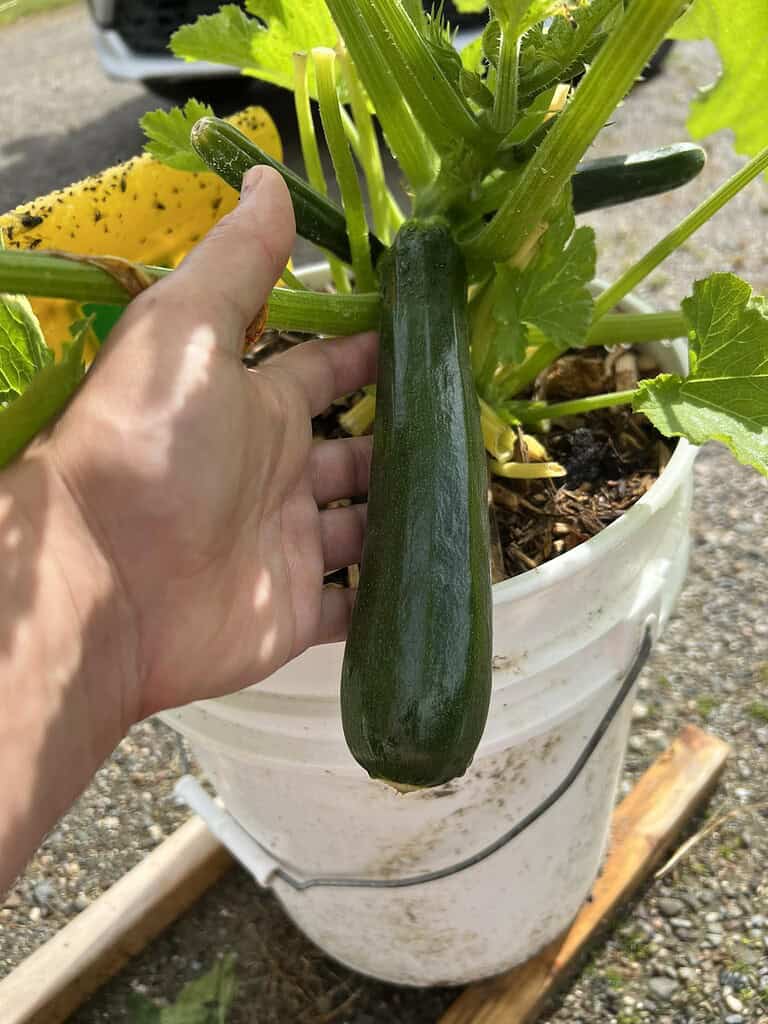
Zucchini is famously, notoriously productive — to the point where experienced gardeners joke about leaving bags of it on neighbors’ doorsteps.
But for a beginner, that level of production is genuinely exciting. One or two plants is almost always enough — seriously, start with two at most.
The plants are large so they need space, but they grow fast, are disease-resistant in most climates, and are easy to cook with. Harvest the fruits when they’re 6–8 inches long. Leave them to grow larger and they become watery, seedy marrows — good for composting, not much else.
- Days to harvest: 50–65 days
- Best varieties: Black Beauty, Costata Romanesco (Italian heirloom with a nutty flavor), Patio Star (compact)
- Pro tip: Hand-pollinate early-season flowers with a small paintbrush if you’re not seeing fruit set — pollinators can be slow in cool spring weather
Garden Planner
The 24-page planner timed to your county's real frost dates. Planting windows, monthly checklists, and a harvest log you'll fill with pride by August.
Your Free 24-Page Garden Planner
Built for your exact ZIP code — planting dates, harvest log, and a month-by-month plan. 15-second sign-up.
The Real Secret to Getting the Fastest Germination Possible
Every vegetable on this list can be slowed down significantly by one factor most beginners ignore: soil temperature. Not air temperature — soil temperature. A radish can germinate in as little as 3 days in 65°F soil. In 50°F soil, that same seed might take 2 weeks. In 40°F soil, it might rot before it sprouts.
A cheap soil thermometer (around $10–15 from any garden center) takes the guesswork out completely. Check the temperature 2–3 inches down before you plant. Here are the minimum and optimal soil temperatures for the fastest crops on this list:
| Vegetable | Min Soil Temp | Optimal Soil Temp |
|---|---|---|
| Radishes | 45°F (7°C) | 65–85°F (18–29°C) |
| Spinach | 35°F (2°C) | 45–65°F (7–18°C) |
| Lettuce | 40°F (4°C) | 60–65°F (15–18°C) |
| Arugula | 40°F (4°C) | 55–65°F (13–18°C) |
| Peas | 40°F (4°C) | 55–65°F (13–18°C) |
| Bush Beans | 60°F (15°C) | 70–80°F (21–27°C) |
| Cucumbers | 60°F (15°C) | 70–95°F (21–35°C) |
| Zucchini | 60°F (15°C) | 70–95°F (21–35°C) |
One more trick: for warm-season crops like beans, cucumbers, and zucchini, lay black landscape fabric or even dark cardboard over your bed a week before planting.
It absorbs heat and can raise soil temperature by 5–10°F. In a cool spring, that’s the difference between seeds sprouting in 5 days and seeds sitting dormant for two weeks.
The Best Soil Setup for Getting Fast Growth Right Out of the Gate
Fast-growing vegetables don’t require perfect soil — but they do need soil that isn’t working against them. The single biggest issue in most beginner gardens is compacted, dense soil that roots can’t move through quickly. A radish that has to fight through clay isn’t going to be ready in 25 days.
Here’s what actually matters for speed:
- Loose, well-draining soil: Roots need to penetrate easily. If you’re starting with native soil, add a generous layer of compost and work it in 6–8 inches deep. For root vegetables like radishes, turnips, and beets, this is non-negotiable.
- Moderate nitrogen: High-nitrogen fertilizers push fast, lush leaf growth — great for spinach and lettuce. For root crops and fruiting vegetables, too much nitrogen produces big plants with small harvests. Balanced slow-release fertilizer at planting time is usually enough.
- Consistent moisture: Not wet, not dry. The top inch of soil should feel like a wrung-out sponge. Inconsistent moisture is the #1 cause of split radishes, tough lettuce, and bitter greens.
- pH between 6.0 and 7.0: Most fast-growing vegetables are forgiving of pH within this range. If your soil is very acidic (below 6.0) or alkaline (above 7.5), nutrient uptake slows dramatically regardless of how much fertilizer you add.
If you’re working with raised beds, a mix of 60% topsoil, 30% compost, and 10% perlite or coarse sand gives most fast-growing vegetables everything they need from day one.
For a deeper look at organizing your growing space efficiently, these square foot gardening plans are designed for maximum harvests in small spaces and work beautifully with the crops on this list.
Miss it by a week and you lose the crop. The free 24-page planner pins down your exact dates — last frost, first frost, and the weekly steps between — so you plant on the days that actually work for your ZIP.
Free Planting Guides for This Article
Get exact planting dates, frost schedules, and growing tips for your zone:
Succession Planting: The Simple Strategy That Keeps Your Kitchen Stocked All Season
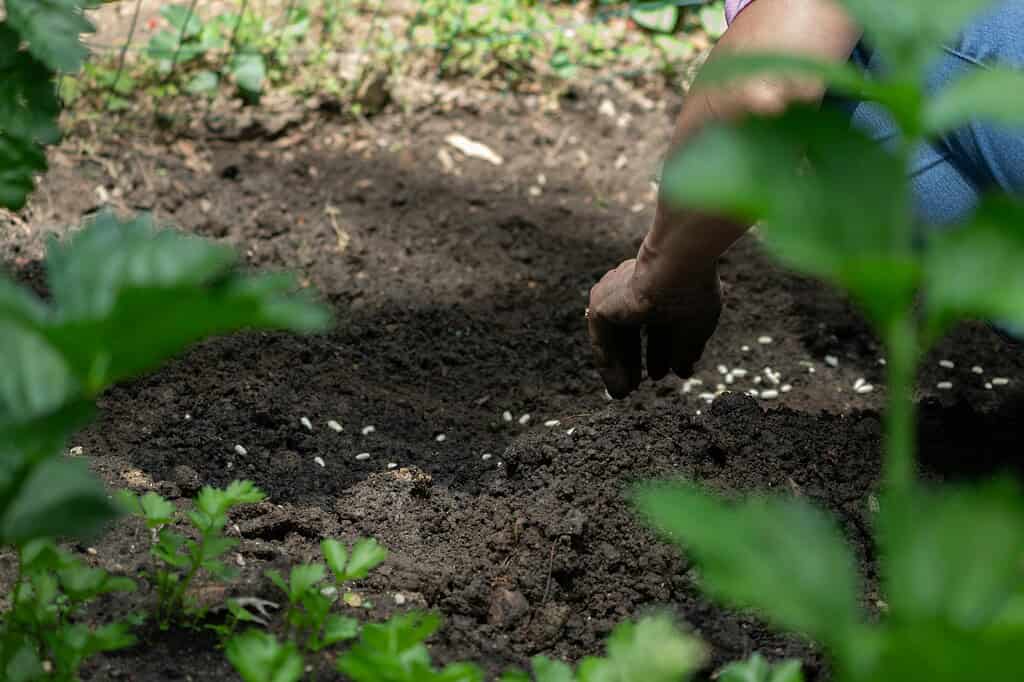
Fast-growing vegetables can create a glut problem just as bad as a shortage.
If you plant an entire row of radishes at once, you’ll have 30 radishes ready on the same Tuesday in April — more than any family can eat before they turn soft and pithy.
Succession planting solves this elegantly. Instead of planting everything at once, you sow small amounts every 1–2 weeks.
- For radishes: a short row every week.
- For lettuce: half a packet every 2 weeks from early spring through late fall.
- For beans: a 3-foot section every 3 weeks through summer.
The result is a continuous, manageable harvest rather than a feast-or-famine cycle. This is especially powerful when you pair succession planting with a vegetable planting calendar — knowing the exact date windows for each crop in your climate takes all the guesswork out of timing.
A few more succession planting tips that most beginners skip:
- Interplant fast and slow growers: Sow radishes between rows of slower crops like carrots. The radishes will be harvested before the carrots need the space.
- Keep a small nursery tray going: Start the next batch of seedlings (lettuce, bok choy, chard) indoors 2–3 weeks before a bed opens up. You’ll never have an empty bed.
- Think in seasons, not just spring: Many fast-growing vegetables — spinach, arugula, kale, turnips — actually perform better in fall than spring. A September planting can often outproduce a March one.
Common Beginner Mistakes That Slow Everything Down
Even the fastest vegetables won’t perform if you’re unknowingly making one of these mistakes. Most of them aren’t obvious until you know to look for them.
- Planting too deep: Small seeds like lettuce, arugula, and carrots need light to germinate. Bury them more than ¼ inch and they may not sprout at all. Rule of thumb: plant seeds at a depth of 2–3x their width, not their length.
- Skipping thinning: Crowded seedlings compete for nutrients and light, and none of them develop properly. Thinning feels wasteful, but it’s one of the highest-ROI tasks in the garden. Use scissors to snip extras at the soil line rather than pulling, which disturbs neighbors.
- Watering at the wrong time: Early morning watering gives leaves time to dry before nightfall, reducing fungal problems. Evening watering on leaves is an invitation for mildew, blight, and rot — especially on cucumbers and zucchini.
- Misreading the seed packet date: “Days to maturity” counts from transplant date (for transplanted starts) or emergence date (for direct-sown seeds), not the date you put the seed in the ground. If you’re calculating backward from your first frost, make sure you’re using the right starting point.
- Waiting too long to harvest: Most beginners wait for the “perfect” moment. Pick early and often — harvesting frequently signals the plant to produce more. Leaving produce on the plant past peak tells the plant its job is done, and it starts to wind down.
If you’re planning out your beds more strategically, it’s worth spending time learning how to plan your vegetable garden layout before a single seed goes in — it makes a surprisingly large difference in yields and ease of maintenance.
And if structure isn’t really your style, the chaos gardening method is a more spontaneous approach that still produces real results, especially with fast-growing, forgiving crops.
Best gardening planner I've used in 10 years — and I keep coming back to it every season.
How Hard Is It to Garden in Your County?
Every county has a unique Gardening Difficulty Score based on frost risk, soil quality, drought, altitude, and climate trends. Find yours — plus personalized frost dates, planting calendars, and soil data.
Check Your County's Score →Start Small, Harvest Fast, and Build the Garden Confidence That Sticks
The biggest mistake in beginner gardening is starting with crops that take too long to give you any feedback. These 15 fast-growing vegetables change that equation completely.
Whether you start with a tray of microgreens on your windowsill or a raised bed full of radishes, spinach, and bok choy, you’ll be harvesting real food within weeks, not months.
Pick two or three from this list for your first attempt. Get a feel for how they grow in your specific conditions. Then expand. The confidence you build from those early, quick wins is what makes the difference between a gardener who gives up in year one and one who’s still at it twenty years later.
Your garden doesn’t need to be perfect to produce food. It just needs to get started.
Which of these fast-growing vegetables are you most excited to try first? Drop your picks — and any questions you have — in the comments below. We’d love to hear what you’re growing this season!
Plan Your Garden With Confidence!

Ever start planting… and then realize halfway through that things feel a little scattered?
A simple plan changes everything.
When you sketch your layout first, you can see what fits, what flows, and what actually makes sense for your space. It saves time, money, and a whole lot of second-guessing later.
Our free Garden Planner helps you map out beds, organize plant spacing, rotate crops, and keep track of seasonal tasks – all in a clean, printable format you can actually use.
Whether you’re designing a low maintenance front yard or planning your full homestead garden, this gives you a clear starting point.
Less chaos. More clarity. A garden that works.
- Tomatoes
- Peppers
- Beans
- Squash
- Cucumbers
- Basil
Frequently Asked Questions
Can I grow fast-growing vegetables in containers on a balcony or small patio?
Yes — and several of the vegetables on this list were practically designed for container growing. Radishes, baby lettuce, spinach, arugula, green onions, and microgreens all thrive in pots, window boxes, or shallow trays.
For containers, the key factors are depth (at least 6 inches for most greens, 8–12 inches for root crops), drainage holes, and a high-quality potting mix — not garden soil, which compacts in containers and restricts root growth. Zucchini and cucumbers can also be grown in containers, but you’ll need a large pot (at least 5–7 gallons) and a vertical support structure.
What does “days to maturity” on a seed packet actually mean?
This trips up a lot of beginners. “Days to maturity” is measured from when the plant emerges from the soil (for direct-sown crops) or from transplant date (for crops started indoors as seedlings). It also assumes optimal conditions — correct soil temperature, consistent moisture, and adequate sunlight.
In real-world beginner conditions, add 20–30% to whatever number the packet says, especially early in the season when temperatures are unpredictable. A 25-day radish might take 35 days in cool, cloudy spring weather, and that’s completely normal.
Do fast-growing vegetables need fertilizer, or is compost enough?
For most of the cool-season greens on this list — lettuce, spinach, arugula, kale, bok choy, chard — compost-amended soil is genuinely enough in most cases. These are relatively light feeders and their short growing season doesn’t require heavy nutrition.
For fast fruiting crops like cucumbers and zucchini, a liquid fertilizer (fish emulsion or a balanced NPK like 5-5-5) applied every 2–3 weeks once plants are established makes a noticeable difference in production. Root crops like radishes and turnips actually perform worse with too much nitrogen — it promotes lush leaf growth at the expense of the root you’re trying to eat.
Can I grow these vegetables year-round, or are they only seasonal?
It depends on your climate, but many of them can be extended well beyond the typical season with simple tools. Row covers (fabric frost blankets) extend cool-season crops like spinach, lettuce, and kale into late fall and even winter in zones 6 and above. Cold frames push that window even further.
In warmer climates (zones 9–10), cool-season greens can be grown through winter without any protection at all. For year-round production in most climates, the strategy is to rotate between cool-season crops in spring and fall, and warm-season crops through summer — you’re essentially growing different vegetables in the same space across the seasons.
Why did my radishes or lettuce bolt before I could harvest them?
Bolting is the plant’s response to stress — usually heat, but also drought, crowding, or (in the case of lettuce and spinach) lengthening day length in late spring. Once a plant bolts, it redirects all energy into producing flowers and seeds rather than edible leaves or roots — the leaves become bitter and the root turns hollow.
Prevention is easier than fixing it: plant cool-season crops early enough that they mature before temperatures consistently exceed 75°F, keep soil evenly moist, and thin seedlings so they’re not competing. Choosing bolt-resistant varieties — Slow Bolt arugula, Jericho lettuce, Space spinach — also buys significant extra time in marginal weather.
Level Up Your Garden
Our most popular gardening guides