A cottage garden is all about that relaxed, natural look that doesn’t try too hard. It feels a bit wild, a bit cozy, and very lived in, like the garden has been growing and changing on its own over time.
The good news is, you do not need a centuries-old stone cottage in the English countryside to pull off the look. Whether you have a small suburban backyard, a sunny patio, or a rambling rural lot, the cottage garden style is endlessly adaptable.
Below are 12 dreamy cottage garden designs, plus practical tips on layout, plant pairings, and the small mistakes that can drain the charm out of an otherwise gorgeous space.
What Makes a Cottage Garden Feel So Enchanting
A cottage garden is less about a strict plant list and more about a feeling — abundant, layered, and just a touch wild.
The defining traits show up in every gorgeous version you have ever pinned: dense plantings with very little visible soil, a generous mix of heights from creeping ground covers to towering blooms, soft and overlapping color palettes, and at least one humble structure (a wooden arbor, a curving stone path, a low picket fence) to anchor all that beautiful chaos.
Cottage gardens also lean heavily on classic, hardworking plants that have been winning hearts for centuries — think roses, lavender, foxgloves, peonies, hollyhocks, and herbs.
If you plan to make roses the heart of your garden, this guide on What to Plant With Roses for a Lush, Cottage Garden Look will save you a lot of trial and error before you start digging.
Garden Planner
The 22-page planner timed to your county's real frost dates. Planting windows, monthly checklists, and a harvest log you'll fill with pride by August.
Your Free 22-Page Garden Planner
Built for your exact ZIP code — planting dates, harvest log, and a month-by-month plan. 15-second sign-up.
12 Dreamy Cottage Garden Designs to Inspire Your Backyard
Every cottage garden starts with the same romantic foundation but gets shaped by the yard, the climate, and the gardener’s personality. Pick the design that fits your space, or borrow elements from a few and make it your own.
1. The Classic English Border Cottage Garden
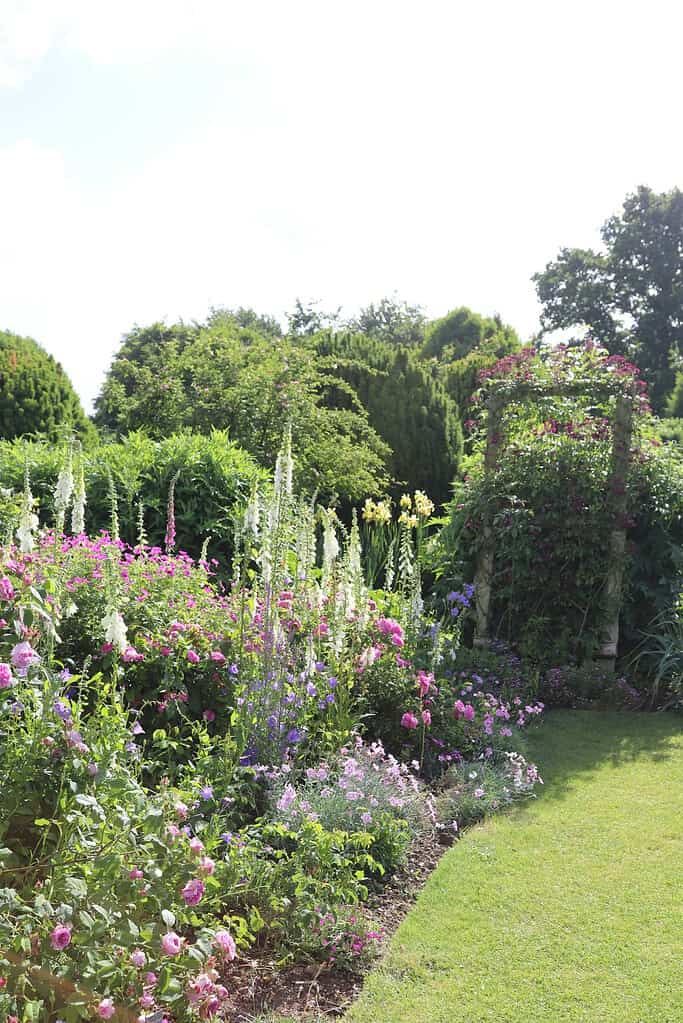
This is the design most people picture when they think “cottage garden.” A long, deep border runs along a fence, wall, or path, packed with layered plantings — tall hollyhocks and delphiniums at the back, roses and peonies in the middle, and a soft front edge of catmint, lady’s mantle, and lamb’s ear.
Stick to a timeless palette of pinks, blues, purples, and creamy whites for that quintessential English country look. The trick is depth — at least 3 feet, ideally 5 or 6 — so you can plant in three full layers without anything feeling crowded against the back.
2. The Romantic Rose-and-Clematis Arbor Garden
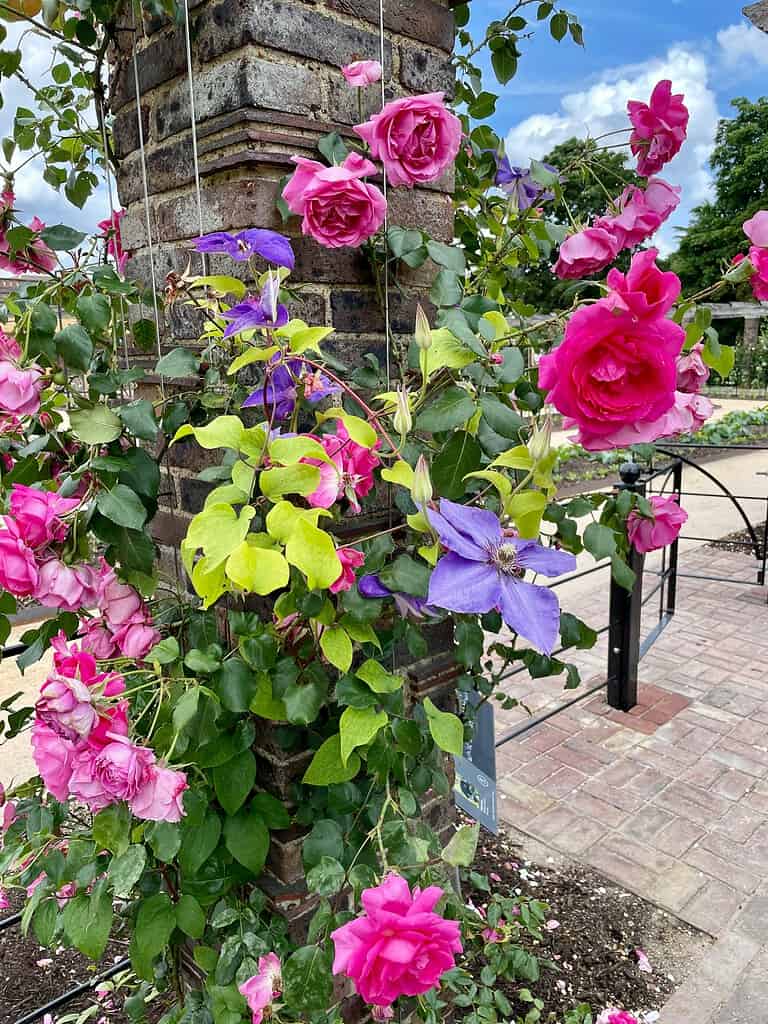
Few things say “cottage garden” louder than walking under a wooden arbor dripping with climbing roses and clematis.
Place an arch at the entrance of your yard, the start of a path, or framing a gate, and let two climbers grow up the sides and twist together over the top.
Pair a soft-pink climber like ‘New Dawn’ with a deep-purple clematis for instant fairy-tale energy. For more arbor and trellis inspiration before you build yours, browse these 10 Charming Clematis Trellis Ideas You’ll Want in Your Yard.
3. The Wildflower Meadow Cottage
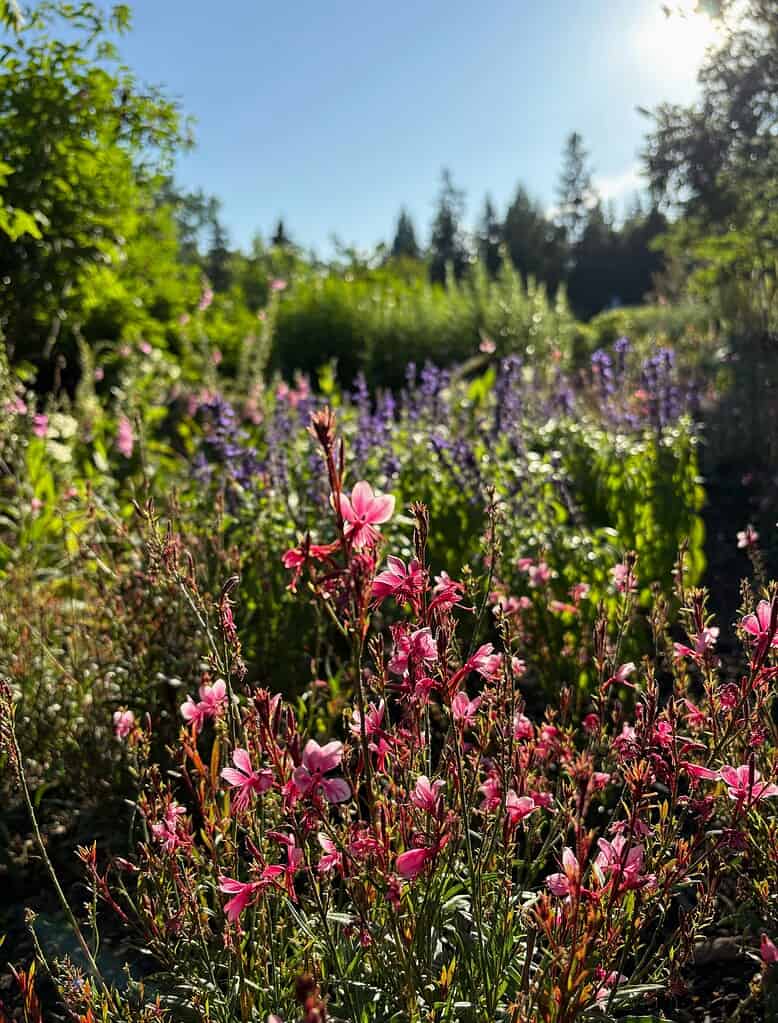
If a tightly planned border feels too fussy, a wildflower meadow style is the cottage garden of your dreams. Picture drifts of cosmos, larkspur, bachelor’s buttons, poppies, and Queen Anne’s lace, all swaying together with very little input from you.
This style works beautifully along the back of a yard, around a shed, or in any patch where mowing already feels like a chore.
The relaxed “let it happen” approach is at the heart of How to Start Chaos Gardening for an Easy, Abundant Backyard Garden — a perfect companion read for this design.
4. The Edible Cottage Kitchen Garden
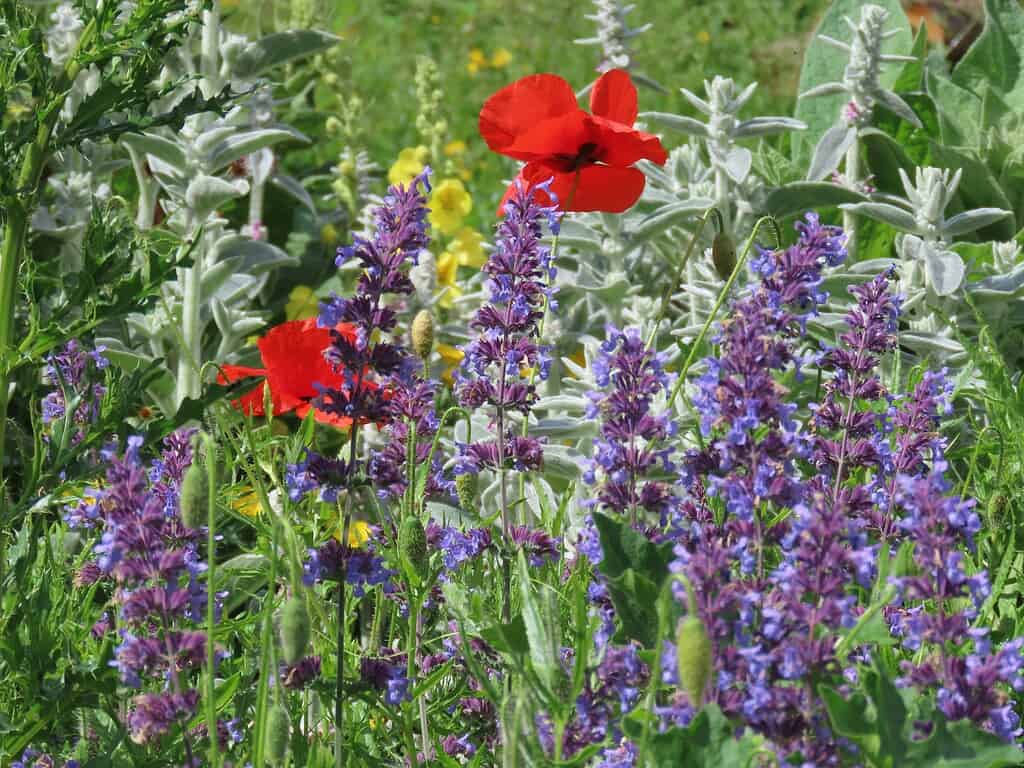
Traditional cottage gardens were never just for show — they fed the household. Lean into that heritage with a mixed garden of culinary herbs, edible flowers, and a few neat rows of vegetables, all woven among ornamentals.
Anchor the bed with rosemary and sage as woody backbones, soften the front with parsley and thyme, brighten everything with calendula and nasturtiums, and add a rustic teepee of climbing beans or peas for vertical drama. The result is a garden that earns its keep in both flavor and beauty.
5. The Soft Pastel Dreamscape
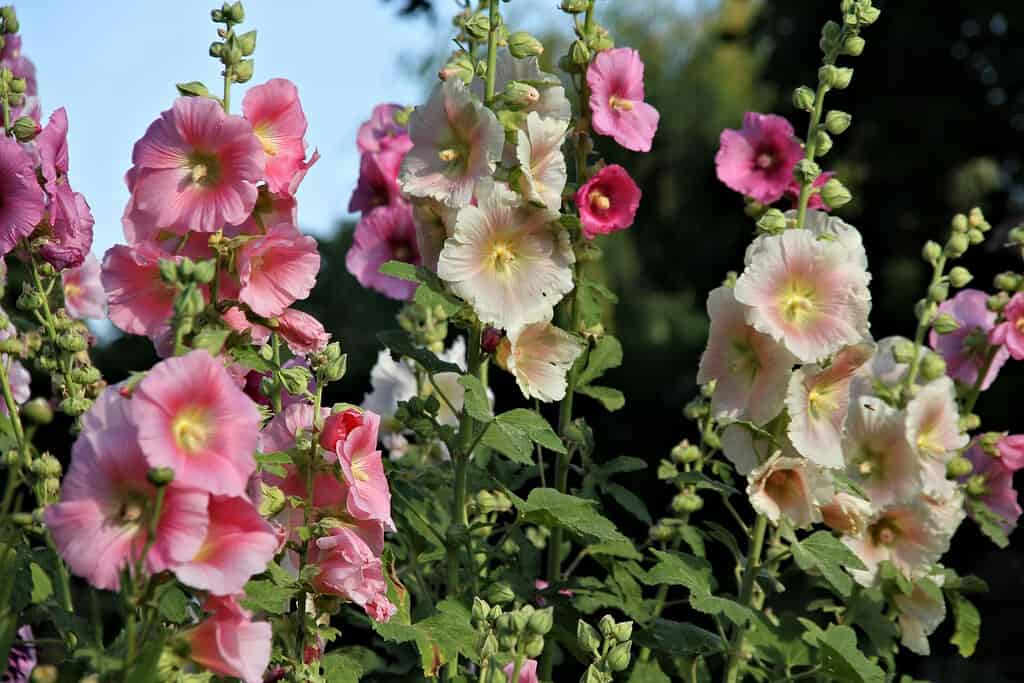
For a calming, almost storybook version of the cottage style, build your design around a strict pastel palette — blush pink, soft lavender, butter yellow, peach, and white. Skip hot reds and oranges, which tend to break the dreamy mood.
Plants like ‘Sarah Bernhardt’ peony, ‘Munstead’ lavender, pale-pink foxgloves, white shasta daisies, and creamy yarrow play together beautifully. The garden looks especially magical in soft morning light or under a string of warm bistro lights at dusk.
6. The Picket Fence Front Yard Cottage
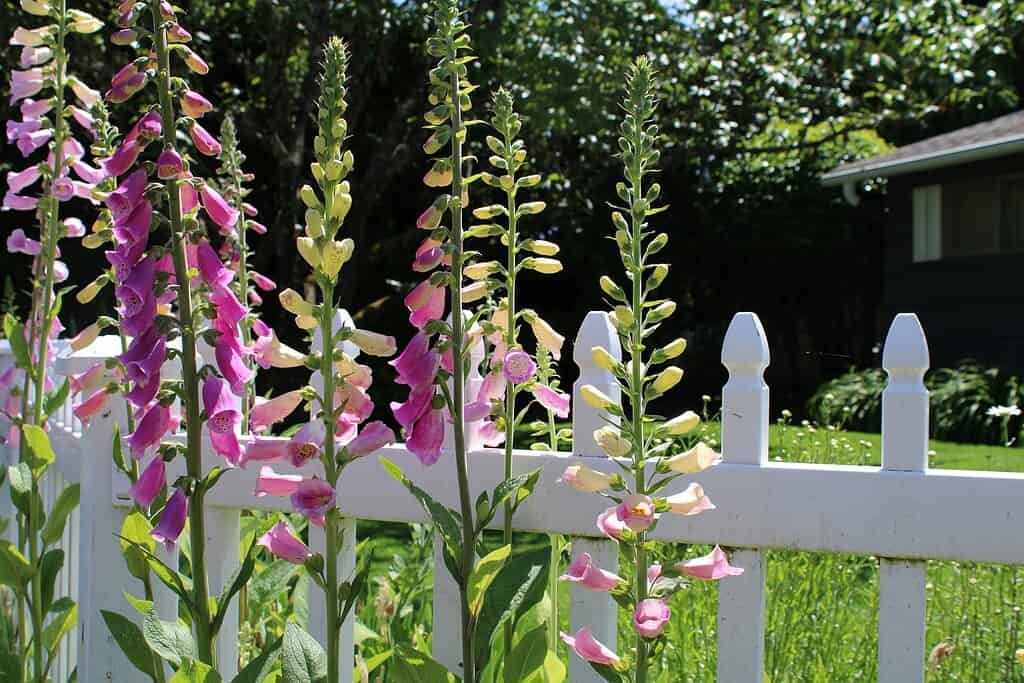
A white picket fence with flowers spilling through and over the slats is a cliché for a reason — it just works. Use the fence as your backdrop and plant tall flowers like hollyhocks, phlox, and delphiniums right up against it, then layer shorter blooms in front for a tumbling effect.
Add a simple gate flanked by matching shrubs or a pair of weathered planters for a hint of symmetry. The contrast between the crisp white fence and the soft, overflowing planting is exactly what makes this design feel curated and cozy at the same time.
7. The Cut-Flower Cottage Garden
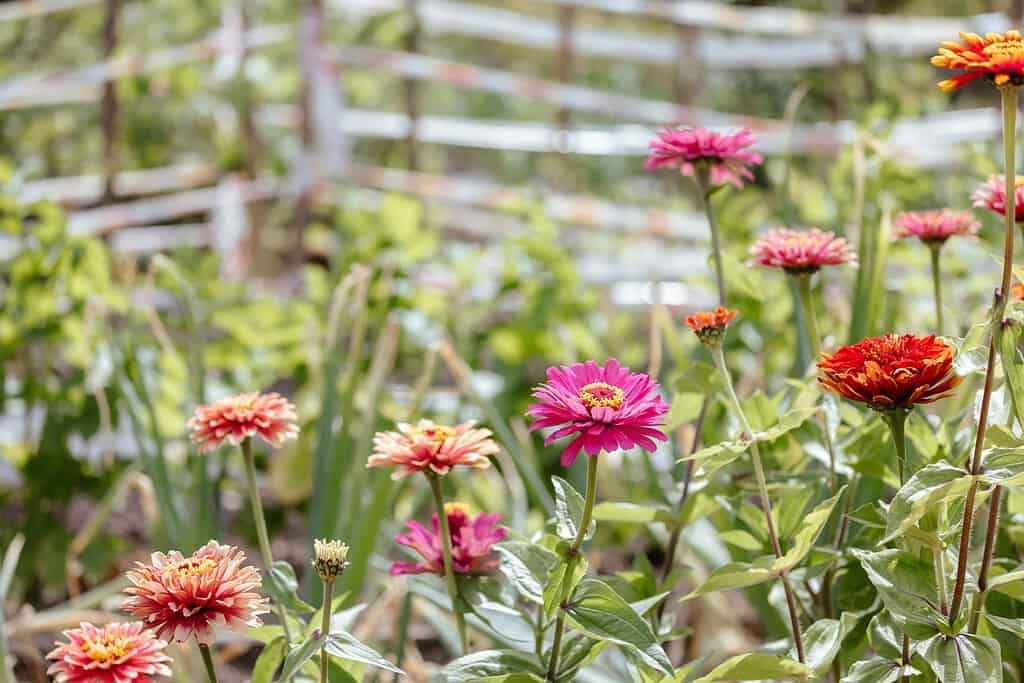
If you love fresh bouquets in the kitchen, design your cottage garden as a working cutting garden. Plant in long, generous rows or rectangular blocks so you can harvest without stepping on neighboring plants or flattening flowers as you go.
Zinnias, dahlias, snapdragons, sweet peas, cosmos, and marigolds are reliable cutters that keep producing as long as you snip regularly. A small bench or worktable nearby makes the whole experience feel intentional and a little romantic — exactly the cottage garden vibe.
8. The Drought-Friendly Gravel Cottage Garden
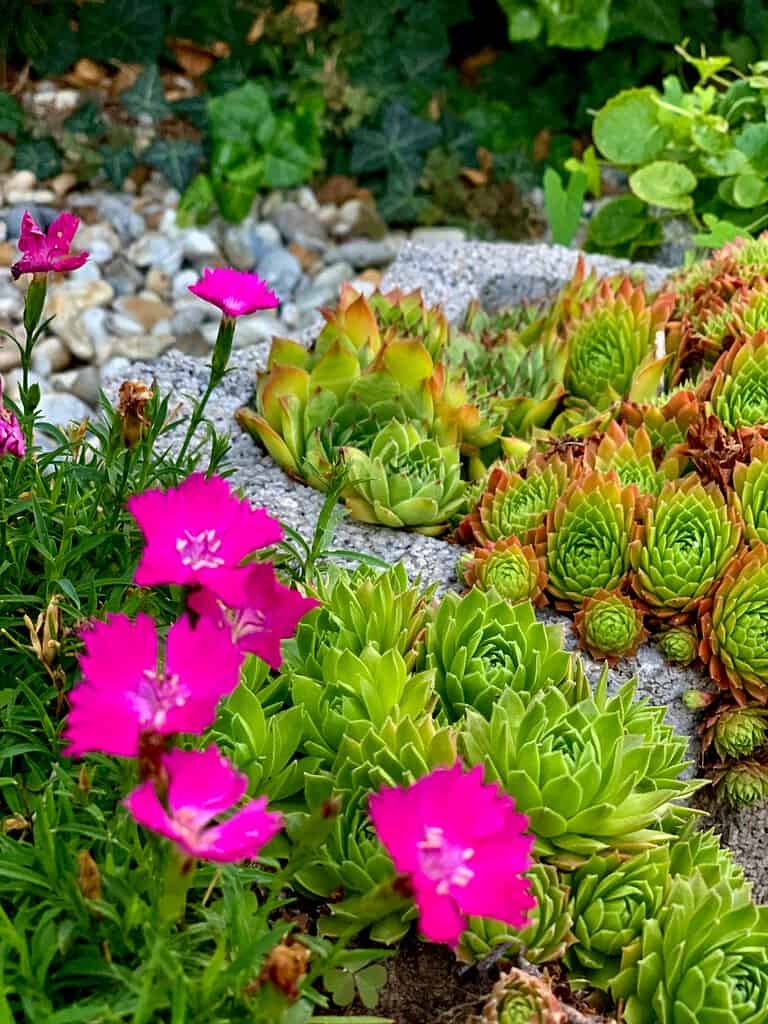
Cottage gardens do not have to be water-hungry. A gravel garden swaps thirsty lawn for a soft layer of pea gravel or fine stone, with drought-tolerant cottage favorites tucked into pockets — lavender, sea holly, salvia, alliums, ornamental grasses, and creeping thyme.
This design is forgiving, low-maintenance, and stunning in hot or dry climates where traditional cottage borders would struggle. The gravel itself reflects light beautifully and shows off plant silhouettes in a way mulch never can.
9. The Pollinator Cottage Garden

The cottage style is naturally pollinator-friendly because it relies on heirloom and open-pollinated flowers rather than overbred doubles. Lean into that with a design built specifically for bees, butterflies, and hummingbirds.
Bee balm, echinacea, salvia, agastache, foxglove, and single-flowered roses are all heavy hitters. Tuck in a small bird bath or a flat stone for puddling butterflies, and you have built a tiny ecosystem.
For a deeper dive into building one of these from the ground up, this guide on How to Make a Pollinator Garden That Supports Local Wildlife is full of practical layouts.
10. The Tiered Hillside Cottage Garden

If your yard slopes, do not fight it — turn the slope into a tiered cottage garden masterpiece. Build a few low, informal stone or timber retaining walls and let plants spill over the edges to soften every line.
Plant trailing rosemary, alyssum, and creeping phlox along the wall edges, then fill the tiers with classic cottage plants. Use winding, soft pathways between the levels rather than rigid steps, so every part of the garden invites you to slow down and wander.
11. The Cottage Garden Around a Water Feature
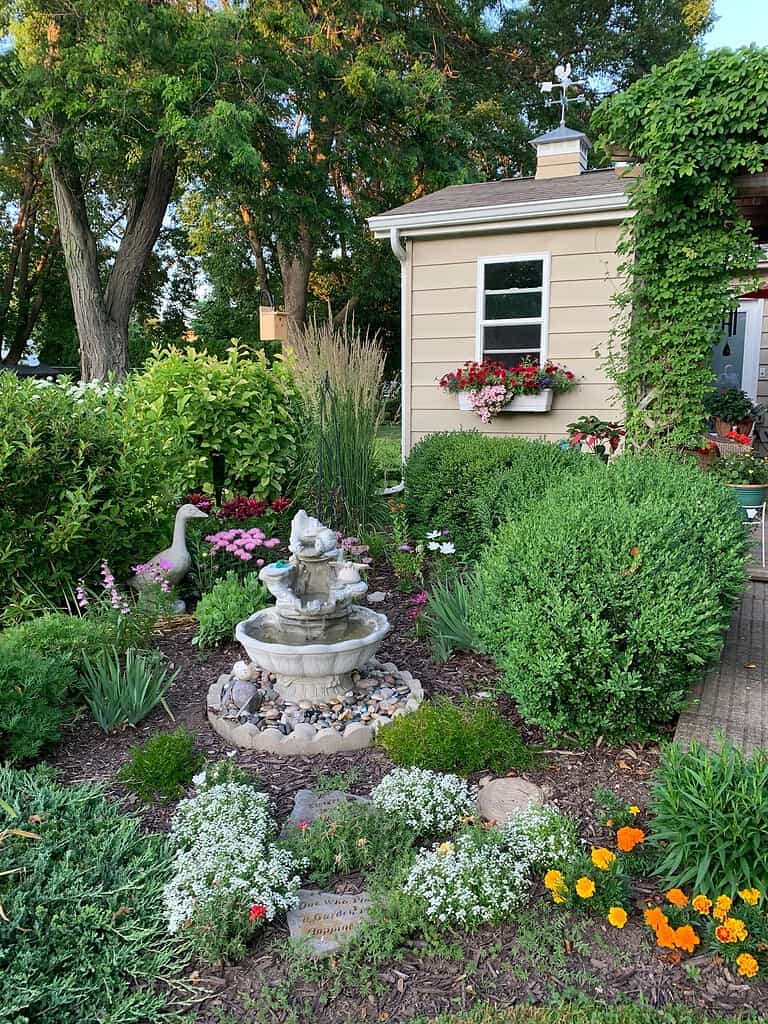
A small water feature — a half barrel pond, a tucked-in lily pool, or a simple bubbling urn — gives your cottage garden a focal point that draws both the eye and the wildlife.
Surround it with moisture-loving cottage plants like astilbe, ferns, hostas, and Japanese iris, then weave classic cottage flowers into the drier outer edges.
If you have ever assumed a pond was out of reach, How to Make a DIY Mini Pond in a Small Space will quickly change your mind — most builds take a single weekend.
12. The Container Cottage Garden
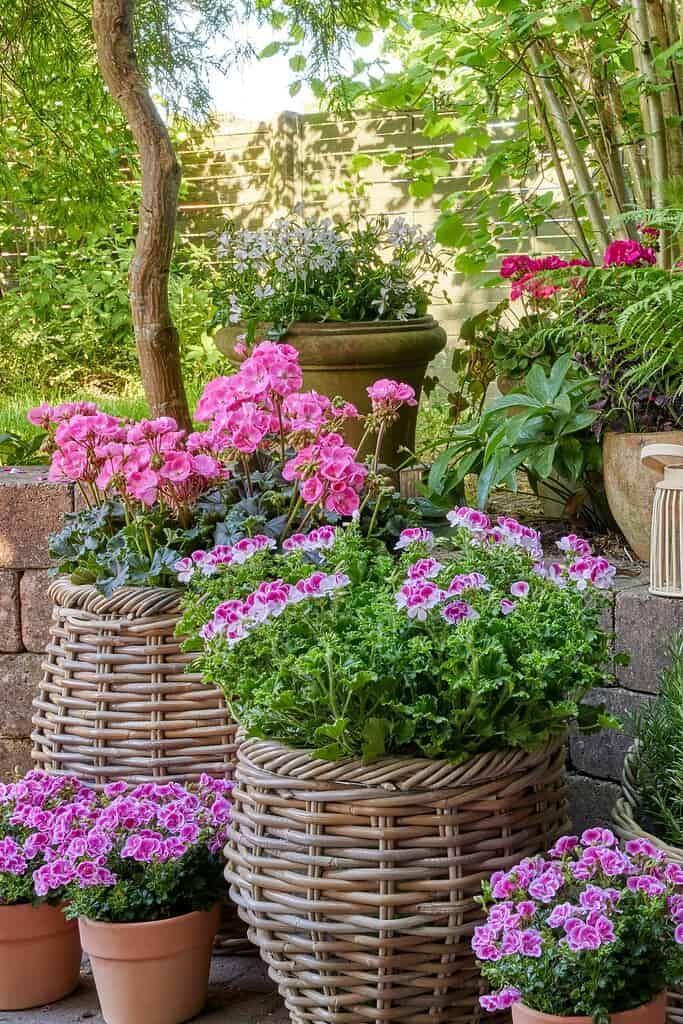
No yard? No problem. The cottage style translates beautifully to a small patio, deck, or balcony when you cluster mismatched containers — weathered terra cotta, vintage tin buckets, wooden crates — and fill them with romantic plantings.
Layer trailing lobelia, nasturtiums, sweet alyssum, and dwarf roses with herbs like basil, thyme, and oregano.
Group containers in odd numbers, vary the heights with a few overturned crates or plant stands, and you can create the feeling of a tucked-away cottage corner even in a 4 by 6 foot space.
How to Plan Your Cottage Garden Layout Without Overthinking It
The biggest mistake new cottage gardeners make is treating “wild and abundant” as an excuse to skip planning. The best cottage gardens look spontaneous because someone quietly thought them through.
Start with a focal point — an arbor, a bench, a rose-covered fence, or a water feature — and design outward from there.
Plant in layers of three: tall plants at the back, mid-height in the middle, and low edging plants in front. Then repeat key plants like lavender, catmint, or Russian sage every few feet so the eye reads cohesion instead of clutter.
Curving paths look more natural than straight ones, so plan with gentle bends. Aim for paths at least 24 to 36 inches wide so spilling plants can drift over the edges without blocking traffic.
Stepping stones between plant pockets feel softer than poured concrete — and they pair beautifully with these 11 Tough Yet Pretty Walkable Ground Covers You’ll Wish You Planted Sooner tucked between them.
Miss it by a week and you lose the crop. The free 22-page planner pins down your exact dates — last frost, first frost, and the weekly steps between — so you plant on the days that actually work for your ZIP.
Free Planting Guides for This Article
Get exact planting dates, frost schedules, and growing tips for your zone:
Foundation Plants Every Cottage Garden Should Include
If you are not sure where to start, build your design around a small, dependable cast of foundation plants. These are the workhorses that show up in nearly every cottage garden style, in nearly every climate, and rarely disappoint.
For structure and height, lean on roses, hollyhocks, foxgloves, and delphiniums. For mid-layer color, plant peonies, salvia, lavender, catmint, yarrow, and echinacea.
For soft front edges, choose lady’s mantle, lamb’s ear, hardy geraniums, and creeping thyme. For vertical drama, train climbing roses, clematis, and sweet peas up arbors, fences, and trellises.
The real secret is to plant in groups — three peonies in a clump look more intentional than one peony scattered alone. Repeat the same combinations in two or three spots across the garden, and even a brand-new bed will read as established within one growing season.
Common Mistakes That Drain the Charm From a Cottage Garden
Cottage gardens look forgiving, but a handful of common slip-ups can quickly drag the whole look down. Avoid these and your design will feel intentional from the very first season.
The first mistake is under-planting. A cottage garden needs to feel full. Bare soil reads as neglected, not romantic. Plant more densely than you think you should, and let plants gently overlap each other at the edges.
The second is scattering one of every plant. A single salvia next to a single foxglove next to a single rose looks like a plant collection, not a garden. Plant in groups of three, five, or seven of the same variety for that natural drift effect.
The third is too much lawn. Big rectangles of grass interrupt the soft, abundant feel of cottage style. Carve curving beds into the lawn or replace whole sections with paths and ground covers — your garden will instantly look more romantic and less suburban.
The fourth, and most underrated, is forgetting fall and winter interest. A cottage garden that peaks in June and fades to mush in October will leave you cold for months.
Add evergreen herbs like rosemary and lavender, ornamental grasses that hold their shape into winter, and a few seedheads (echinacea, sedum, Russian sage) you intentionally leave standing through the cold months.
Best gardening planner I've used in 10 years — and I keep coming back to it every season.
How Hard Is It to Garden in Your County?
Every county has a unique Gardening Difficulty Score based on frost risk, soil quality, drought, altitude, and climate trends. Find yours — plus personalized frost dates, planting calendars, and soil data.
Check Your County's Score →Plant Your First Cottage Garden Bed This Weekend
The truth about cottage gardens is they are far less intimidating than they look in photos. You do not need rare varieties, a giant budget, or years of design school — just a clear vision, a few reliable plants, and the patience to let your garden settle into itself.
Pick one design from the list above, sketch out a rough plan this weekend, and start with three or four foundation plants in a single bed. Add an arbor next year, a water feature the year after, and let the garden grow into itself one season at a time.
Which of these 12 cottage garden designs feels most like home for your backyard — and what plants are you most excited to start with?
Drop your favorite design, your questions, or your own cottage garden tips in the comments below. Your idea might be exactly what another reader needs to finally get started.
Plan Your Garden With Confidence!

Ever start planting… and then realize halfway through that things feel a little scattered?
A simple plan changes everything.
When you sketch your layout first, you can see what fits, what flows, and what actually makes sense for your space. It saves time, money, and a whole lot of second-guessing later.
Our free Garden Planner helps you map out beds, organize plant spacing, rotate crops, and keep track of seasonal tasks – all in a clean, printable format you can actually use.
Whether you’re designing a low maintenance front yard or planning your full homestead garden, this gives you a clear starting point.
Less chaos. More clarity. A garden that works.
- Beans
- Carrots
- Beets
- Lettuce
- Spinach
- Brassicas
Frequently Asked Questions
How much does it actually cost to start a cottage garden from scratch?
You can start a small cottage garden for under $100 if you grow annuals like cosmos, zinnias, and bachelor’s buttons from seed and buy just one or two anchor perennials (a rose, a peony, a lavender) per season.
A more established mid-size cottage bed of 50 to 75 square feet typically runs $300 to $600 the first year if you buy mostly potted perennials. The good news is cottage gardens get cheaper over time — most perennials can be divided every few years, giving you free plants for the next bed.
How long does it take a cottage garden to look full and established?
Most cottage gardens reach that magical “lived-in” look between year two and year three. The first year, perennials focus on roots and put up modest top growth. By year two, they double or triple in size.
By year three, they typically meet their neighbors and start spilling over the edges. To shortcut the wait, mix in fast-growing annuals (cosmos, larkspur, sweet peas) and biennials (foxgloves, hollyhocks) for instant height while the perennials bulk up.
Do I need to add edging or borders to my cottage garden beds?
You do not need formal edging, but defining the bed line in some way is one of the easiest ways to make a wild-looking garden feel intentional. The simplest option is a clean spade-cut edge between lawn and bed, refreshed once a year.
Other low-key options include a thin row of bricks set flush with the soil, a strip of weathered timber, or a soft band of low ground cover. Skip plastic landscape edging — it tends to clash with the romantic, organic feel of cottage style.
What soil prep do cottage garden plants actually need before I plant?
Most cottage staples (roses, peonies, lavender, salvias) want well-drained soil with decent fertility — nothing exotic. Before planting, work 2 to 3 inches of finished compost into the top 8 to 10 inches of soil, and break up any compacted spots with a digging fork.
If your soil is heavy clay, also add a few inches of coarse sand or pine bark fines to improve drainage. After planting, top with 1 to 2 inches of mulch and you have done the heaviest part of the work for the next several years.
How do I overwinter my cottage garden so it bounces back strong each spring?
Most cottage perennials are tougher than they look, but a little fall prep makes a big difference. Stop fertilizing by late summer so plants harden off naturally. After the first hard frost, cut back any plants prone to disease (peonies, bee balm, phlox), but leave seedheads on echinacea, rudbeckia, and sedum for winter interest and bird food.
Add a fresh 2-inch layer of mulch after the ground freezes — this prevents freeze-thaw heaving more than it adds warmth. In spring, simply pull back the mulch a bit, cut down any leftover stalks, and let the garden wake up on its own schedule.
Level Up Your Garden
Our most popular gardening guides