If you’ve ever stared at the sad strip of grass running between your stepping stones – the one that’s half mud, half weeds, and absolutely nothing like the lush green carpet you pictured – you’re not alone.
Grass just isn’t built for foot traffic in narrow spaces. It thins out, gets compacted, and before long, you’re squishing through bare dirt every time you walk to the shed.
The good news? There’s a whole world of tough, low-growing plants that actually love being walked on. Some smell amazing when crushed underfoot.
Others bloom in soft pinks, purples, and whites that turn a plain path into something out of a cottage garden magazine. And most are far less work than a lawn once they fill in.
If you're just starting to explore lawn alternatives, our guide on the 15 best ground cover plants for full sun is a great companion read.
Here are 11 tough, pretty options worth planting this season.
Why Walkable Ground Covers Beat a Patchy Lawn
Grass is one of the most demanding plants you can grow. It needs constant mowing, watering, fertilizing, and weeding, and it still gives up the moment foot traffic gets serious. In narrow strips between pavers, grass almost always loses.
Walkable ground covers solve a handful of problems at once.
They handle light to moderate foot traffic without complaining, suppress weeds by forming a dense mat, hold moisture in the soil, prevent erosion on slopes, and many of them flower beautifully or release fragrance when stepped on.
Most spread on their own, filling in gaps you didn’t even realize you had.
They’re also far more drought-tolerant than turf. Once established, most need very little water, no mowing, and only an occasional trim – a huge win if you’d rather spend less time on maintenance and more time enjoying your yard.
For more ways to give your yard a curb-appeal upgrade without endless upkeep, check out these front yard landscaping ideas that make a big first impression.
Garden Planner
The 24-page planner timed to your county's real frost dates. Planting windows, monthly checklists, and a harvest log you'll fill with pride by August.
Your Free 24-Page Garden Planner
Built for your exact ZIP code — planting dates, harvest log, and a month-by-month plan. 15-second sign-up.
11 Best Walkable Ground Covers for Pathways and Stepping Stones
Each of these plants has been chosen because it can handle being stepped on – some occasionally, some daily – while still looking great.
Pay attention to your hardiness zone and sun conditions before you buy. A plant that thrives in dry, sunny spots will struggle in shady, soggy soil, and vice versa.
1. Creeping Thyme (Thymus serpyllum)

Creeping thyme is the gold standard of walkable ground covers, and for good reason.
It forms a dense, mat-like carpet covered in tiny pink, purple, or white flowers all summer, releases a wonderful herbal scent when stepped on, and asks for almost nothing in return.
It thrives in full sun, well-drained soil, and dry conditions, making it perfect for pathways, patios, and the gaps between pavers. It also draws bees and butterflies like a magnet.
If you want a deeper dive on this one, our complete guide on how to grow and care for creeping thyme walks you through everything from spacing to soil prep.
2. Corsican Mint (Mentha requienii)
Tiny, bright green leaves and a sweet peppermint scent that hits you the moment you step on it – that’s Corsican mint in a nutshell.
It only grows about half an inch tall, which makes it ideal for stepping stones and tight cracks.
It prefers part shade and consistently moist soil, so it’s a better fit for cooler, woodland-style yards than baking-hot pathways. Just be aware that, like all mints, it spreads.
3. Roman Chamomile (Chamaemelum nobile)
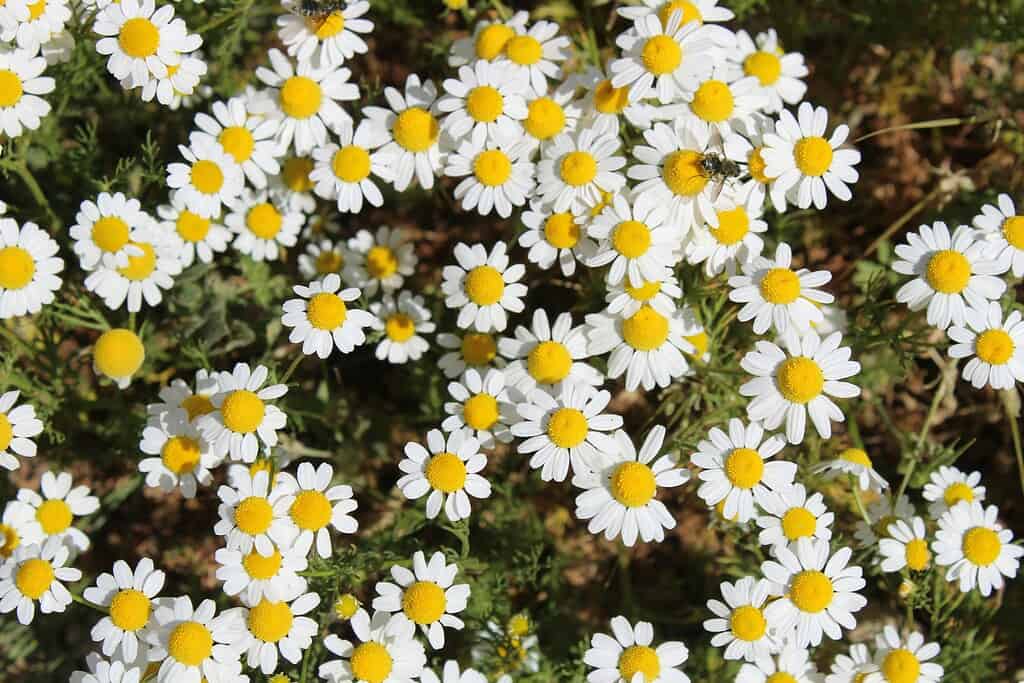
If you’ve ever heard the phrase “chamomile lawn,” this is the plant they’re talking about. Roman chamomile forms a soft, fern-like carpet that smells like apples when crushed, and it can actually replace grass in low-traffic areas.
White daisy-like flowers appear in summer. It prefers full sun and sandy, well-drained soil, and it stays low without needing to be mowed.
4. Irish Moss (Sagina subulata)
Don’t let the name fool you – Irish moss isn’t actually a moss.
It’s a low-growing perennial that forms a lush, bright green cushion just an inch or two tall, dotted with tiny white star-shaped flowers in spring.
It tolerates light foot traffic, looks fantastic between flagstones, and prefers moist (but not soggy) soil with morning sun. It’s a top pick if you want that storybook fairy-garden feel.
5. Blue Star Creeper (Isotoma fluviatilis)

True to its name, blue star creeper produces a generous spray of pale blue, star-shaped flowers from late spring through summer over a low, dense mat of small green leaves.
It handles light to moderate foot traffic, thrives in full sun to part shade, and likes regular moisture.
It’s an excellent grass substitute for small lawn areas and looks especially stunning weaving through stepping stones.
6. Brass Buttons (Leptinella squalida)
Brass buttons offers something most ground covers don’t: striking, fern-like foliage in shades of bronze, green, and almost black, depending on the variety.
It hugs the ground at about an inch tall, takes light foot traffic well, and produces small yellow button-shaped flowers in summer.
It does best in part shade with consistent moisture and gives any path an instantly upscale, designed look.
7. Dymondia (Dymondia margaretae)
If you live somewhere hot and dry, dymondia is your friend. This tough little plant has silvery-green leaves with white undersides and yellow daisy flowers in summer.
It tolerates drought, salty air, and surprisingly heavy foot traffic once established. It’s a popular grass alternative in warm climates (zones 9–11) and looks beautiful sprawling between pavers.
8. Elfin Thyme (Thymus serpyllum ‘Elfin’)
A miniature cousin of standard creeping thyme, Elfin thyme is even tighter and more compact, growing just an inch tall and forming a dense, soft mat.
It’s perfect for tucking between stones, edging small paths, and creating that polished, refined look in narrow spaces. It’s drought-tolerant, fragrant, and pollinator-friendly.
Same low-maintenance personality as its bigger cousin – just smaller.
9. Mazus (Mazus reptans)
Mazus is a fast-spreading, mat-forming perennial with bright green leaves and pretty purple-blue flowers (or white, depending on variety) in late spring.
It tolerates light foot traffic, handles part sun to part shade, and prefers moist soil. It’s a great option for damp, shadier spots where many other walkable ground covers struggle.
10. Sweet Woodruff (Galium odoratum)
For shady, leafy areas where grass refuses to grow, sweet woodruff is a quiet hero.
It forms a soft green carpet with delicate white flowers in spring and gives off a hay-like, vanilla scent when crushed or dried. It tolerates light foot traffic, spreads readily, and thrives under trees.
If you've been struggling with bare dirt around mature trees, our guide on effortless landscaping ideas around trees pairs perfectly with this plant.
11. Creeping Wire Vine (Muehlenbeckia axillaris)
Creeping wire vine is the toughest plant on this list. It forms a dense, dark-green mat of tiny round leaves on wiry stems and can handle moderate to heavy foot traffic without missing a beat.
It thrives in full sun to part shade, tolerates poor soil, and stays evergreen in milder climates. If you need something that can handle the kids and the dog, this is your plant.
Where to Plant Walkable Ground Covers in Your Yard
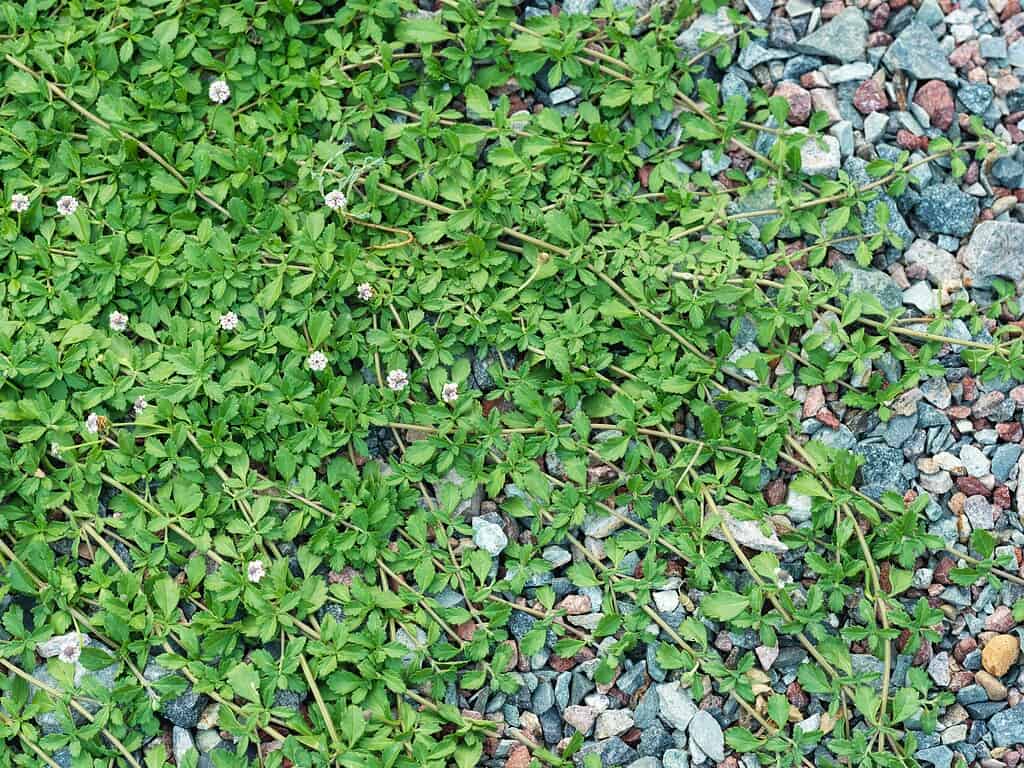
Walkable ground covers shine in spots where regular grass struggles.
The classic placement is between stepping stones or pavers, where their soft texture and seasonal color turn a plain hardscape into a living feature.
They’re also fantastic along narrow garden paths, around patios, and in driveway strips where mowing is a hassle.
Slopes are another great spot. A dense ground cover holds soil in place, prevents erosion, and looks far better than a struggling patch of turf trying to grow on a hill.
The same goes for that awkward strip between the sidewalk and the street, or the shaded area beneath a tree where grass thins out year after year.
Don’t overlook fence lines, either. A low, fragrant carpet of creeping thyme or chamomile along the base of a fence ties the whole yard together.
For more inspiration on transforming that often-ignored boundary, browse these 12 jaw-dropping ways to landscape along your fence.
Miss it by a week and you lose the crop. The free 24-page planner pins down your exact dates — last frost, first frost, and the weekly steps between — so you plant on the days that actually work for your ZIP.
Free Planting Guides for This Article
Get exact planting dates, frost schedules, and growing tips for your zone:
Common Mistakes to Avoid With Walkable Ground Covers
The most common mistake is planting the wrong plant for the spot. Corsican mint will fry in baking sun. Dymondia will rot in wet shade. Always match the plant to the conditions, not the other way around.
The second mistake is overwatering. Once established, most of these plants prefer to be on the dry side. Too much water leads to root rot, fungal issues, and floppy growth. Let the soil dry between waterings unless the species specifically needs constant moisture.
Skipping ground prep is another big one. Planting into a weedy, compacted bed almost always ends in disappointment.
So is overestimating how much foot traffic a plant can handle – “walkable” usually means occasional steps, not a daily route for kids and dogs. Save your high-traffic zones for stepping stones with ground covers tucked between.
Finally, some of these plants spread aggressively. Mints, mazus, and creeping wire vine will all wander outside their assigned area without root barriers.
Plan for it before it becomes a problem. If you'd rather pick something edible while you're at it, take a look at these 15 edible ground covers that look good and feed you too.
Plant a Pathway You Actually Want to Walk On
A patchy lawn between stepping stones isn’t something you have to live with.
Pick one or two of the ground covers above, prep the bed properly, and within a season or two, you’ll have a soft, fragrant, low-maintenance carpet that looks better the more you use it.
Start small – even a single strip between pavers can transform how your yard feels – and let the results convince you to keep going.
Which of these walkable ground covers are you most excited to try? Have you already planted one that worked beautifully (or one that didn’t)?
Drop a comment below and share your experience – we’d love to hear what’s working in your zone, and your tips might help someone else turn their muddy path into a living one.
Best gardening planner I've used in 10 years — and I keep coming back to it every season.
How Hard Is It to Garden in Your County?
Every county has a unique Gardening Difficulty Score based on frost risk, soil quality, drought, altitude, and climate trends. Find yours — plus personalized frost dates, planting calendars, and soil data.
Check Your County's Score →Ready to Design Your Dream Garden Bed?
Feeling inspired to build something beautiful?
If you’re ready to go beyond just one garden bed and truly design a space that feels intentional, productive, and charming, I put together something special for you.
Inside 101 Garden Bed Ideas, you’ll find creative layouts, raised bed designs, space-saving solutions, and inspiring setups you can actually recreate in your own yard – whether you’re working with a tiny backyard or a full homestead.
Start planning your dream garden today.

Frequently Asked Questions
Can walkable ground covers really replace a lawn entirely?
In low to moderate traffic areas, yes – but it’s usually best to think of them as a partial replacement rather than a full one. Tough varieties like creeping thyme, dymondia, and creeping wire vine can handle being walked on regularly, but no ground cover holds up to the kind of constant pounding a backyard football game gives a lawn. A common approach is to keep a small play-grade lawn for high-traffic zones and use walkable ground covers everywhere else.
How long does it take walkable ground covers to fill in completely?
Most walkable ground covers reach full coverage in their second growing season, though you’ll see noticeable spreading within the first few months if conditions are right. Spacing matters a lot – plants set 8 inches apart will close gaps much faster than ones spaced 12 inches apart. Patience in year one pays off in year two when the carpet really thickens.
Are walkable ground covers safe for pets and kids to play on?
Most of the plants on this list are non-toxic and pet-safe, including creeping thyme, Roman chamomile, Irish moss, and blue star creeper. That said, always double-check the specific variety with a reliable plant database before planting if you have curious pets. Pets and kids can absolutely walk on these plants – just keep heavy daily wear concentrated on stepping stones and let the plants live in the gaps.
Will walkable ground covers attract bees and wasps to my pathways?
Flowering varieties like creeping thyme, chamomile, and blue star creeper do attract bees, especially when in full bloom. For most people that’s a feature, not a bug – pollinators help the whole yard. If you have a bee allergy or worry about stings on bare feet, choose non-flowering or less floriferous options like brass buttons, dymondia, or creeping wire vine, or simply mow off the flowers during peak bloom.
Do I need to mow walkable ground covers like grass?
In most cases, no. The whole point of these plants is that they stay short on their own. A light shearing once a year (early spring is ideal) keeps the planting tidy and encourages denser growth, but daily or weekly mowing isn’t necessary. A handheld grass shears or even a string trimmer set on a high setting works fine for the occasional touch-up.
Level Up Your Garden
Our most popular gardening guides