Summer is arguably the most spectacular season in the garden.
The days are long, the sun is warm, and with the right flowers, your outdoor space can become a riot of color, fragrance, and life.
Whether you’re designing a dedicated cutting garden, filling raised beds, or simply adding some seasonal cheer to your front yard, choosing the right summer bloomers makes all the difference.
If you're new to growing flowers and want a solid foundation, start with our guide on planting flowers for beginners before diving into this list.
In this post, we’re walking you through 15 of the most stunning summer flowers you can grow, complete with care tips and design ideas to help you build the bloom-filled garden of your dreams.
15 Best Summer Flowers to Plant for a Bloom-Filled Garden
These summer flowers are known for thriving in warm weather, offering long-lasting blooms, rich color, and easy care for gardeners of all levels.
1. Sunflower (Helianthus annuus)
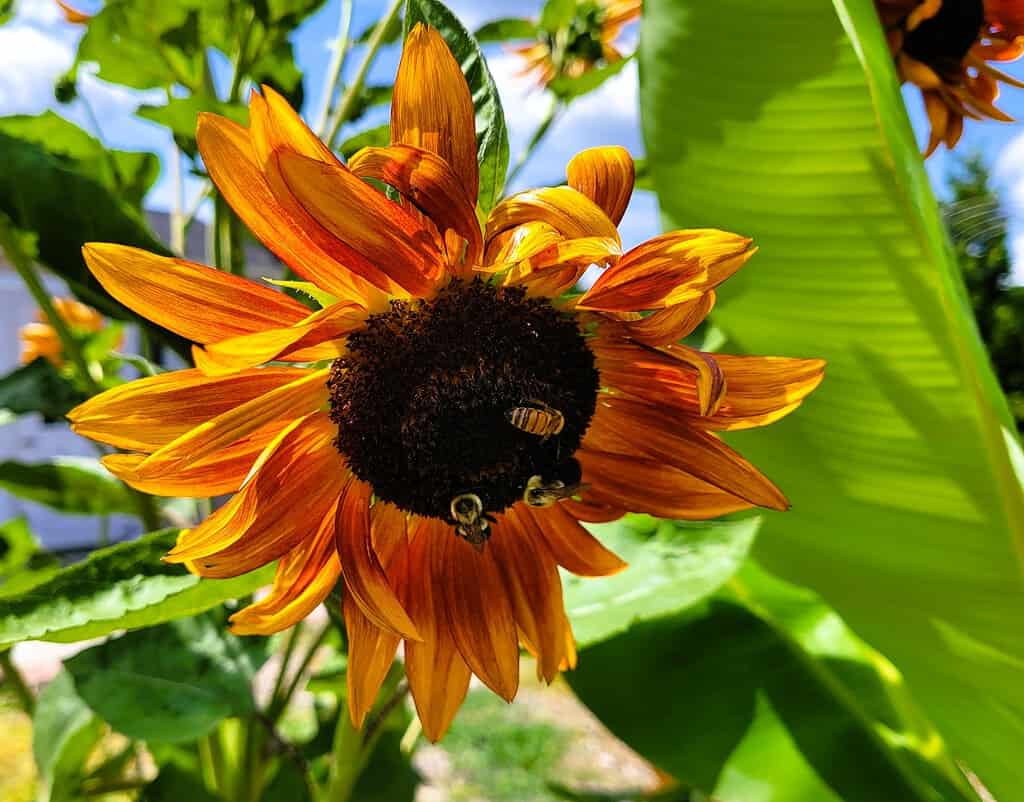
Few flowers embody summer quite like the sunflower. These cheerful giants can grow anywhere from 2 to 12 feet tall, making them showstopping focal points in any garden.
They thrive in full sun and well-draining soil, and they’re remarkably easy to grow from seed.
If you’re already growing sunflowers and want to take your technique further, there are some excellent tips waiting for you.
Sunflowers attract pollinators in droves and their seeds are a favorite food for birds in late summer. For maximum impact, plant them in staggered rows along a fence or wall.
2. Zinnia (Zinnia elegans)
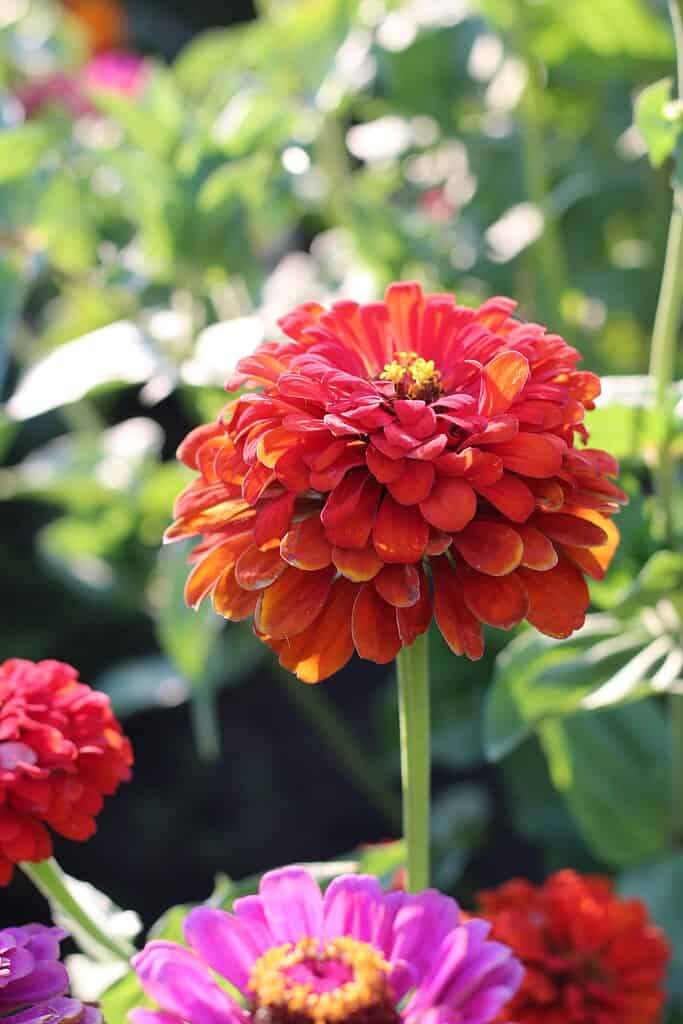
Zinnias are the workhorses of the summer cutting garden.
They come in virtually every color of the rainbow — red, orange, yellow, pink, purple, white, and bicolors — and they bloom prolifically from midsummer right through the first frost.
Direct sow seeds in a sunny spot with good air circulation, and deadhead regularly to keep the blooms coming. Zinnias are also excellent for attracting butterflies and are surprisingly drought tolerant once established.
Plant them in large sweeps for the most dramatic effect, and consider pairing them with other sun-lovers like marigolds for a companion-planting approach that also helps deter pests.
3. Marigold (Tagetes spp.)
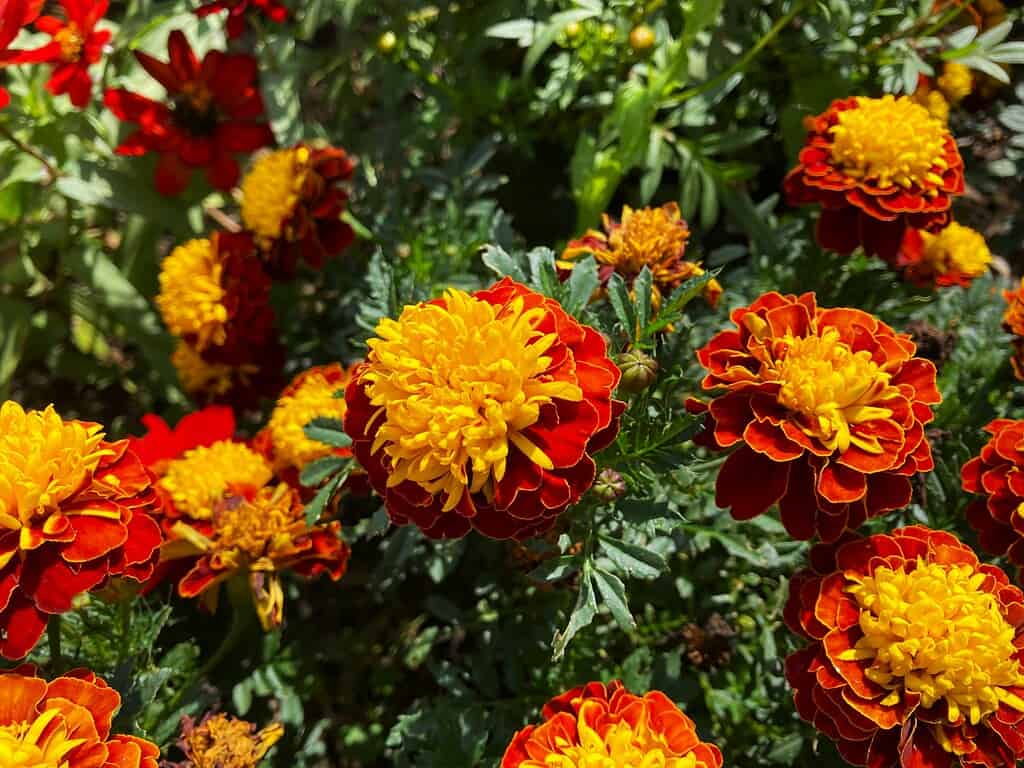
Marigolds deserve their own spotlight as one of the most hardworking flowers you can grow.
Beyond their cheerful orange and yellow blooms, marigolds are legendary in the gardening world for their pest-deterring properties.
They’re a top companion plant for vegetables, particularly tomatoes and squash, because they repel nematodes and certain harmful insects.
Our detailed guide on how to grow marigolds covers everything from seed starting to deadheading.
Marigolds bloom all summer long and thrive in heat and full sun, making them one of the most reliable summer bloomers you can add to your garden.
4. Lavender (Lavandula spp.)

Lavender is the multitasker of the summer garden — it’s stunning to look at, gloriously fragrant, beloved by bees, and incredibly useful for drying and crafting.
It loves full sun and excellent drainage, and in the right conditions, a well-established lavender plant will reward you with dense purple spikes all summer long.
For growing success, our complete guide on how to plant lavender walks you through soil prep, spacing, and seasonal care.
5. Coneflower / Echinacea (Echinacea purpurea)

Coneflowers are a native perennial powerhouse that bloom generously from midsummer into fall.
Their daisy-like petals in shades of purple, pink, orange, and white surround a distinctive raised center cone that gives them their name.
They’re drought tolerant, low maintenance, and absolutely magnetic for butterflies and bees.
These are excellent plants for a pollinator garden, bringing in beneficial insects while adding long-lasting summer color.
They naturalize beautifully and spread over time, filling garden borders with minimal effort.
6. Black-Eyed Susan (Rudbeckia hirta)
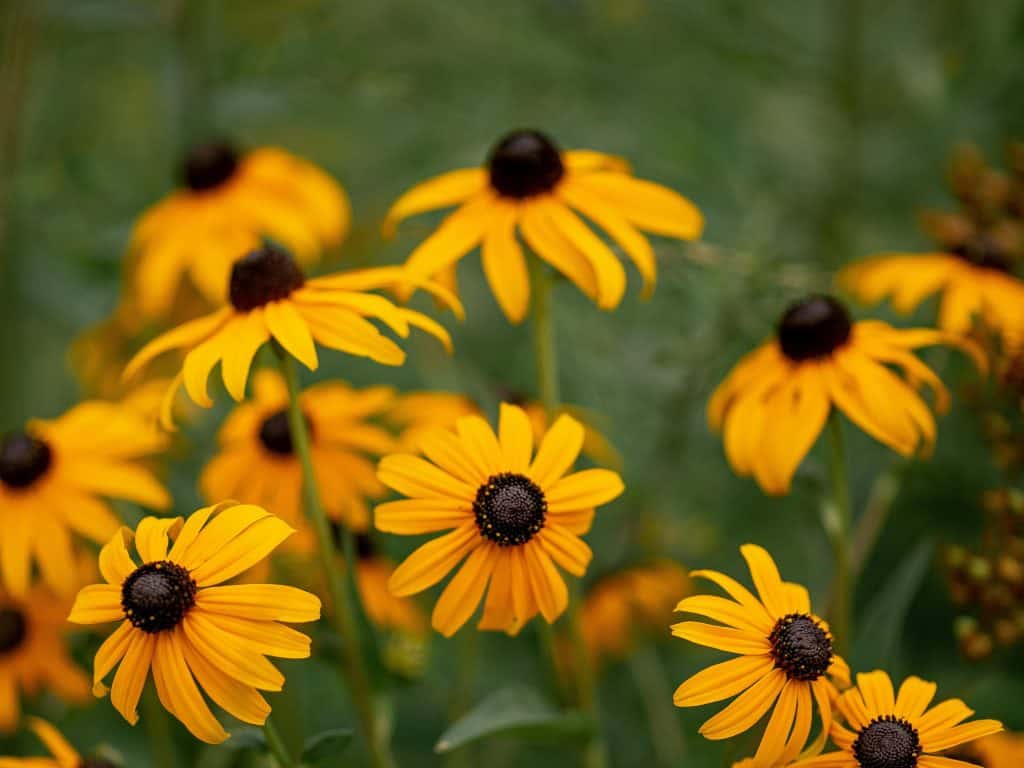
Black-eyed Susans are a classic wildflower with golden yellow petals and a dark center that lights up summer borders and meadow gardens.
They’re incredibly tough — tolerating heat, drought, and poor soil — and they bloom from midsummer well into fall.
These native plants are fantastic for attracting pollinators and finches who feast on the seeds after flowering.
Black-eyed Susans work beautifully in naturalistic garden designs alongside coneflowers and ornamental grasses. They spread readily via self-seeding, so you get more plants each year with zero effort.
7. Hibiscus (Hibiscus rosa-sinensis)

Tropical hibiscus brings a lush, exotic feel to the summer garden with enormous blooms in shades of red, pink, orange, yellow, and white.
They love heat and full sun, making them perfect for long, hot summers.
Our comprehensive guide on how to grow hibiscus flowers covers container growing, soil requirements, and overwintering tips.
Hardy hibiscus varieties can produce dinner-plate-sized blooms up to 12 inches across, making them dramatic focal points in any summer garden.
8. Peony (Paeonia lactiflora)
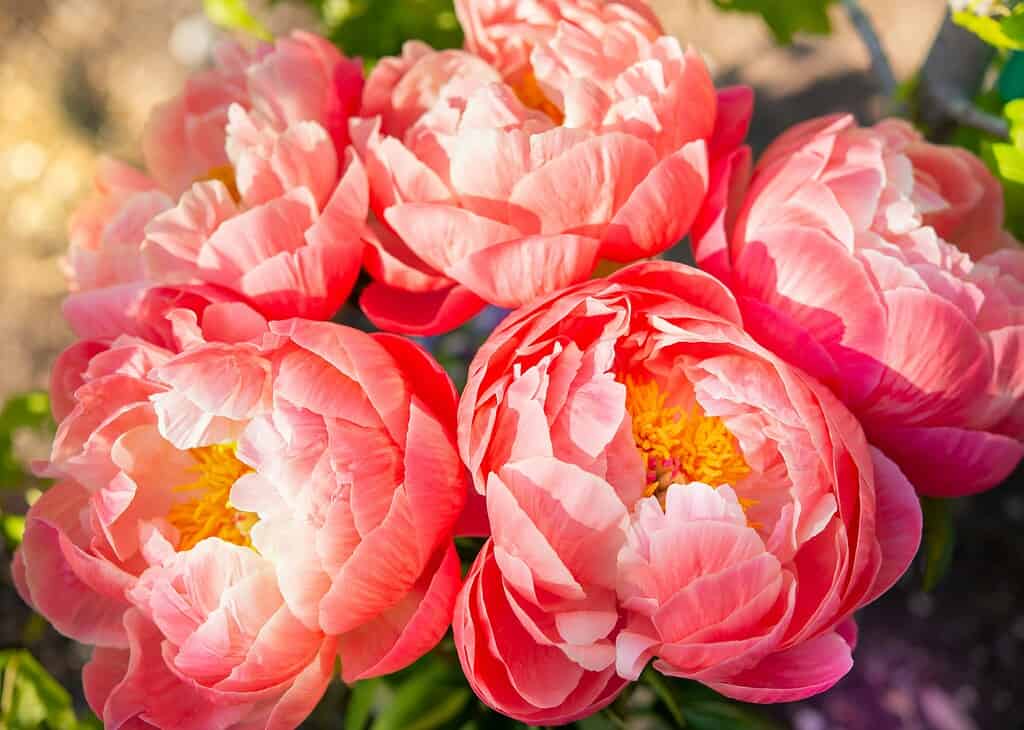
While peonies are technically late spring bloomers, many varieties extend their flowering season well into early summer.
Their lush, full blooms come in shades of white, cream, pink, coral, and deep burgundy, and their fragrance is intoxicating.
Peonies are remarkably long-lived perennials — some plants remain productive for 50 years or more.
For in-depth planting and care advice, our post on growing peony flowers is an excellent resource. Plant them where they'll get at least six hours of full sun and excellent drainage.
9. Lily (Lilium spp.)
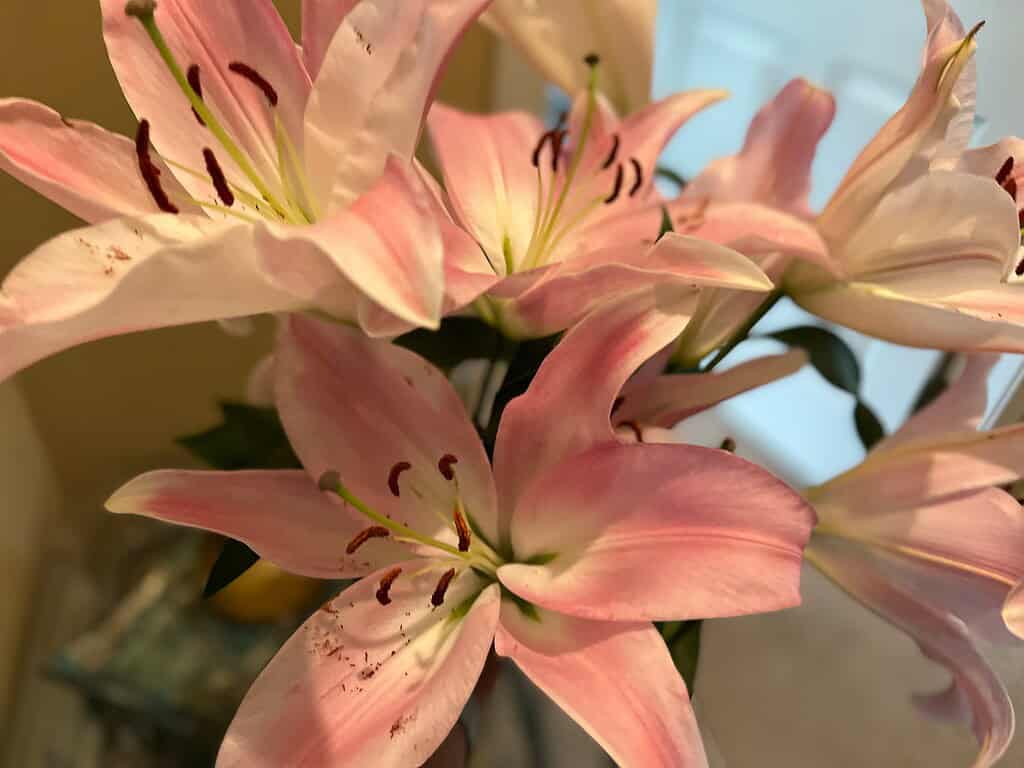
Lilies are one of the most majestic summer flowers you can grow, with trumpet-shaped blooms in an incredible array of colors and markings.
Asiatic lilies bloom earliest in summer, followed by Oriental lilies, which carry that unforgettable spicy-sweet fragrance.
Plant lily bulbs in fall or early spring in a spot with full sun to partial shade and well-draining soil.
Our complete guide on how to grow lilies details bulb planting depths, watering schedules, and how to keep them coming back stronger each year.
10. Dahlia (Dahlia spp.)
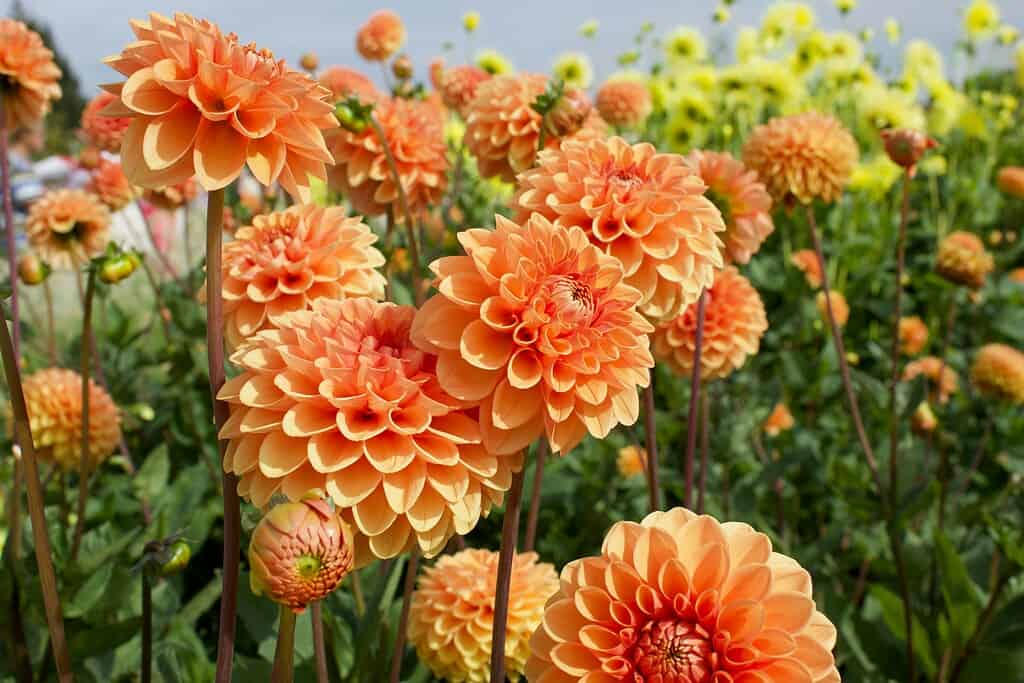
Dahlias are the queens of the late summer garden.
They begin blooming in midsummer and go strong until the first hard frost, producing an almost endless parade of intricate blooms in every size and color imaginable.
They perform best in full sun with consistently moist, well-draining soil. Dahlias are exceptional for cut flower gardens and add structure and sophistication to mixed borders.
If you're building a dedicated cut flower space, our post on how to start a cut flower garden has everything you need to get started.
11. Calibrachoa / Million Bells
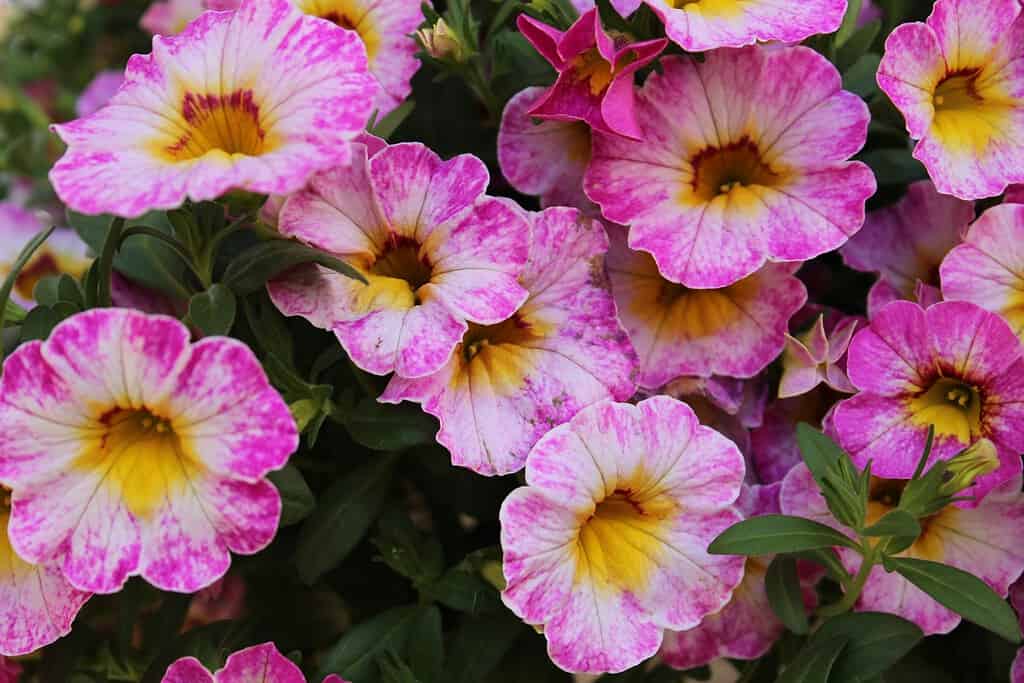
Calibrachoa — commonly known as Million Bells — is a trailing annual that produces masses of small, petunia-like flowers in vivid shades of purple, pink, yellow, red, and coral.
They’re among the best flowers for hanging baskets, window boxes, and container gardens because they spill beautifully over the edges and bloom continuously all summer.
Our guide on best flowers for container gardening offers more ideas for creating stunning outdoor displays in pots and planters.
12. Salvia (Salvia splendens / Salvia nemorosa)
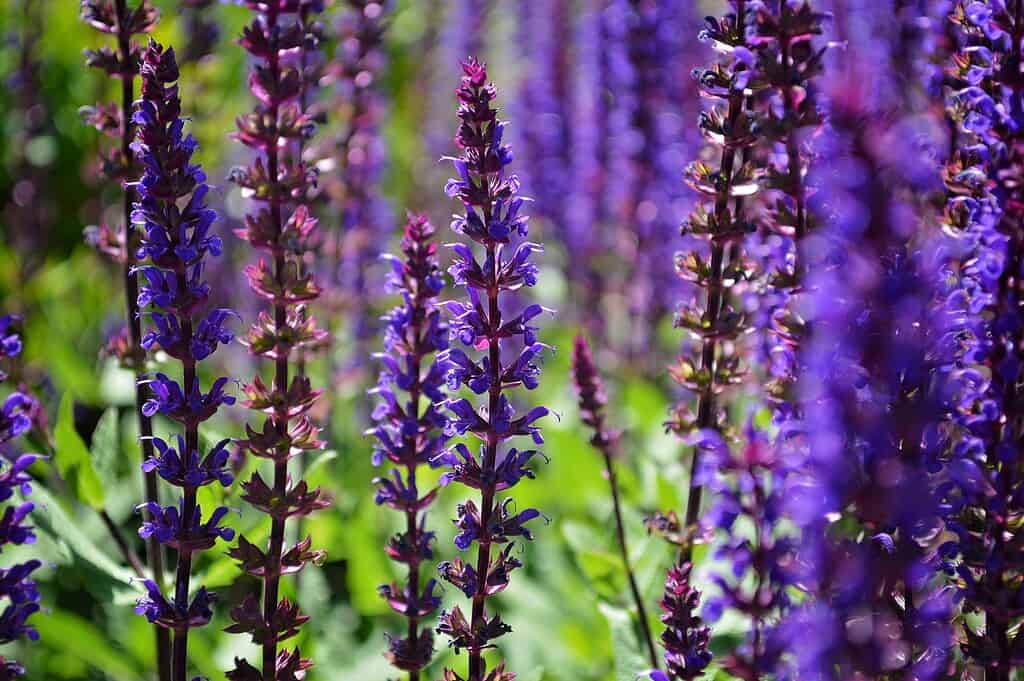
Salvias are some of the most underrated summer flowers in the garden.
Annual salvias (Salvia splendens) produce vivid spikes of red, purple, pink, or white blooms that are irresistible to hummingbirds and bees.
Perennial salvias (like Salvia nemorosa) are incredibly drought tolerant once established and bloom in waves throughout summer if cut back after each flush.
They’re ideal for the front of borders, in rock gardens, and paired with ornamental grasses for a textural contrast.
Salvias also make excellent companion plants — their fragrant foliage helps deter certain pests and they bring in the pollinators that benefit your entire garden.
13. Cosmos (Cosmos bipinnatus)
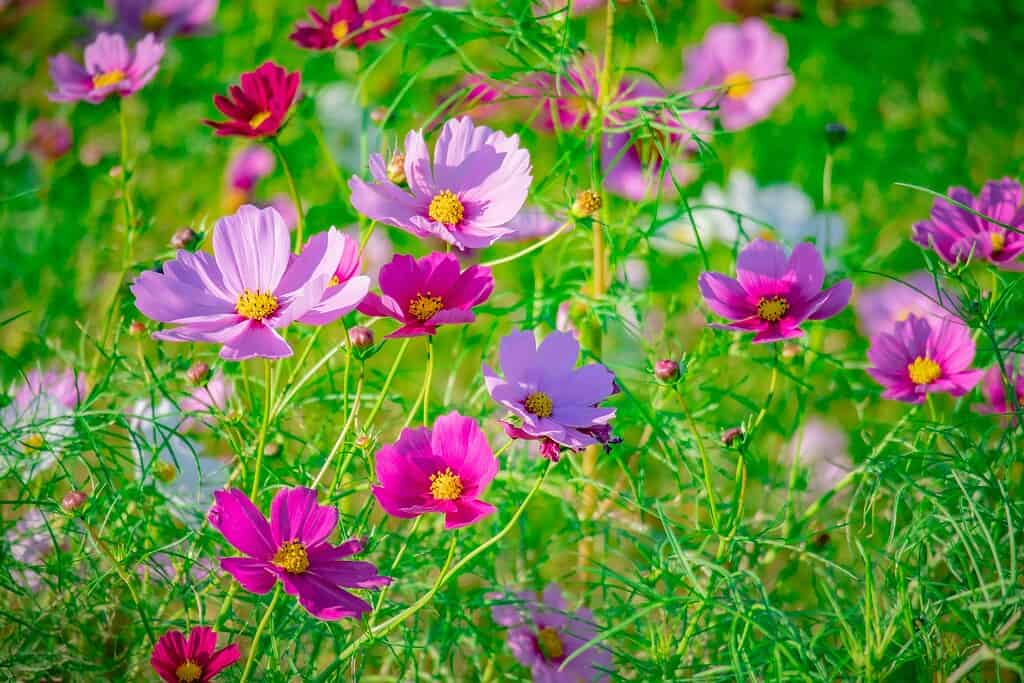
Cosmos are the definition of effortless summer beauty.
These feathery-leaved annuals produce delicate, daisy-like flowers in shades of pink, white, magenta, and bicolor on tall, airy stems that sway gracefully in the breeze.
Direct sow seeds in poor-to-average soil after frost — cosmos actually prefer lean conditions. They’re phenomenal for filling gaps in the border and attracting butterflies and beneficial insects.
Our post on annuals that bloom all summer features more great options to pair with them.
14. Agapanthus / Lily of the Nile
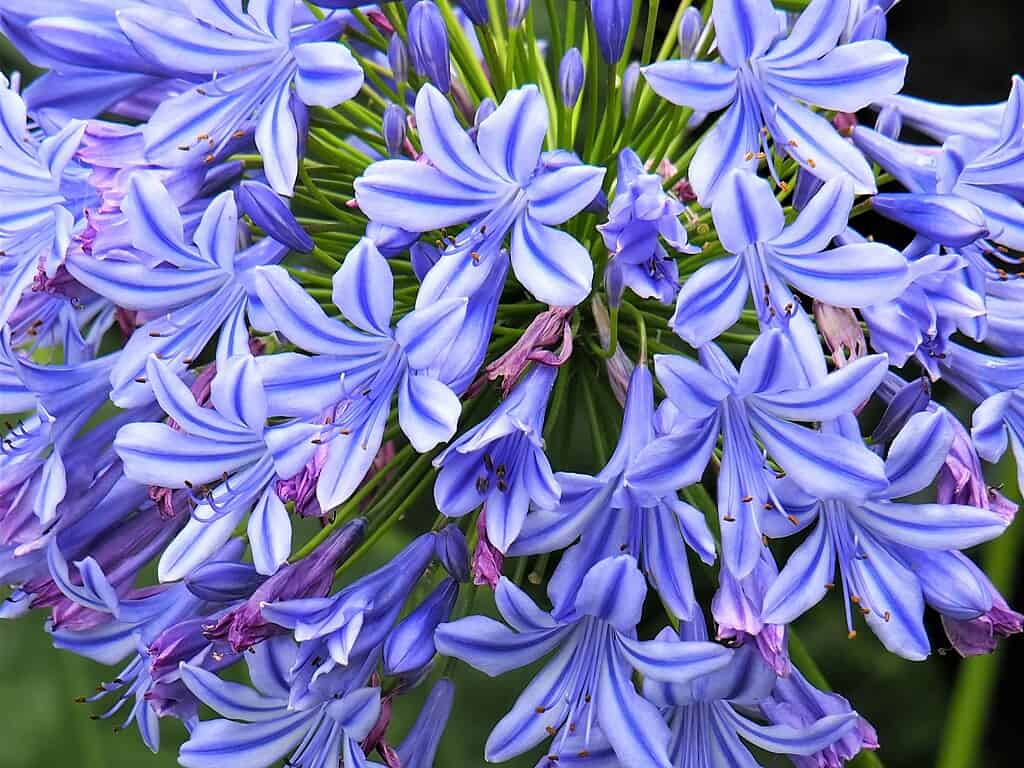
Agapanthus is a bold, architectural summer flower that sends up tall stalks topped with globe-shaped clusters of blue, purple, or white tubular flowers.
Native to South Africa, it thrives in full sun, tolerates some drought once established, and is remarkably low maintenance.
In milder climates, agapanthus is an evergreen perennial that naturalizes over time; in cooler zones, it can be grown in containers and brought indoors for winter.
Combine it with ornamental grasses or white flowers for a sophisticated, modern garden palette.
15. Creeping Thyme (Thymus serpyllum)
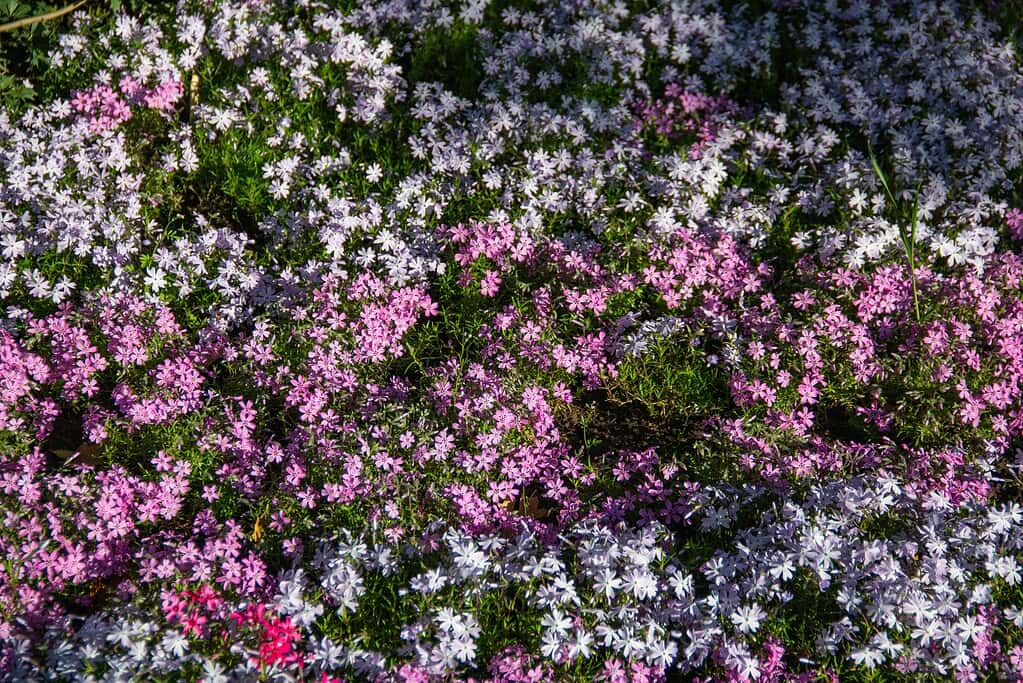
While creeping thyme is technically a herb, it’s absolutely stunning as a flowering ground cover during summer.
It produces a dense carpet of tiny flowers in shades of pink, purple, or white that practically smother the foliage, making it look like a living tapestry.
It’s tough, drought tolerant, fragrant underfoot, and beloved by bees. Creeping thyme works wonderfully between stepping stones, along borders, and in rock gardens.
Our guide on how to grow and care for creeping thyme has all the practical details you need.
Garden Planner
The 24-page planner timed to your county's real frost dates. Planting windows, monthly checklists, and a harvest log you'll fill with pride by August.
Your Free 24-Page Garden Planner
Built for your exact ZIP code — planting dates, harvest log, and a month-by-month plan. 15-second sign-up.
How to Design a Summer Garden That Blooms All Season Long
Growing beautiful summer flowers is only half the battle — the real magic comes from thoughtful garden design that ensures something is always in bloom from June through September.
The key is to think in bloom sequences: pair early summer bloomers like peonies and lavender with midsummer stars like zinnias and dahlias, then let coneflowers, black-eyed Susans, and salvias carry you through late summer and into fall.
Layering heights is equally important: use taller sunflowers and dahlias at the back of borders, mid-height cosmos and agapanthus in the middle, and low-growing calibrachoa, creeping thyme, and marigolds at the front edges.
Color theory also matters — consider hot palettes of reds, oranges, and yellows for a vibrant tropical feel, or cool palettes of purples, whites, and blues for a more serene, cottage aesthetic.
If you're starting from scratch and want a structured framework, our post on how to create a planting plan is an excellent starting point.
Watering Summer Flowers the Smart Way
Summer heat means your flowers will need consistent moisture, but overwatering is just as damaging as underwatering — and one of the most common beginner mistakes.
Most summer flowers prefer deep, infrequent watering over frequent shallow sprinkles. Aim to water deeply once or twice a week, allowing the top inch or two of soil to dry out between waterings.
Early morning is the best time to water, giving foliage time to dry before evening and reducing the risk of fungal disease.
Setting up an irrigation system can save enormous amounts of time and water while keeping your blooms consistently healthy.
Our guides on drip irrigation and garden irrigation systems walk you through the different options available, from simple soaker hoses to automated drip systems.
Mulching around your flowers with 2-3 inches of organic mulch is another powerful strategy — it locks in moisture, regulates soil temperature, and suppresses weeds all at once.
Miss it by a week and you lose the crop. The free 24-page planner pins down your exact dates — last frost, first frost, and the weekly steps between — so you plant on the days that actually work for your ZIP.
Free Planting Guides for This Article
Get exact planting dates, frost schedules, and growing tips for your zone:
Using Summer Flowers to Attract Pollinators and Beneficial Insects
A bloom-filled summer garden isn’t just beautiful to look at — it’s also an ecosystem hub that supports bees, butterflies, hummingbirds, and countless beneficial insects.
Many of the flowers on this list — coneflowers, zinnias, black-eyed Susans, salvias, lavender, and cosmos — are particularly high-value pollinator plants.
The more diverse your flower selection, the more diverse the wildlife you’ll attract, which in turn benefits the health of your entire garden.
A thriving pollinator population improves fruit and vegetable yields and reduces pest pressure by attracting beneficial insects that prey on aphids and other garden pests.
If you want to take your pollinator garden to the next level, our guide on how to make a pollinator garden walks you through design principles, plant selection, and habitat features that will turn your yard into a genuine wildlife haven.
Plant Your Best Summer Garden This Season
There’s no better time than now to start planning and planting your most stunning summer garden yet.
Whether you’re a seasoned homesteader or a first-time gardener, the 15 flowers on this list offer something for every skill level, every garden size, and every design style.
Start by choosing three to five flowers from this list that excite you most, then build outward from there each season. Pay attention to what thrives in your specific microclimate, and don’t be afraid to experiment.
Gardening is always a learning process, and every season teaches you something new.
Which summer flower is your absolute favorite to grow? Drop a comment below and share your top pick — we’d love to hear what’s blooming in your garden this season!
Best gardening planner I've used in 10 years — and I keep coming back to it every season.
How Hard Is It to Garden in Your County?
Every county has a unique Gardening Difficulty Score based on frost risk, soil quality, drought, altitude, and climate trends. Find yours — plus personalized frost dates, planting calendars, and soil data.
Check Your County's Score →Plan Your Garden With Confidence!

Ever start planting… and then realize halfway through that things feel a little scattered?
A simple plan changes everything.
When you sketch your layout first, you can see what fits, what flows, and what actually makes sense for your space. It saves time, money, and a whole lot of second-guessing later.
Our free Garden Planner helps you map out beds, organize plant spacing, rotate crops, and keep track of seasonal tasks – all in a clean, printable format you can actually use.
Whether you’re designing a low maintenance front yard or planning your full homestead garden, this gives you a clear starting point.
Less chaos. More clarity. A garden that works.
Frequently Asked Questions
What summer flowers grow best in containers or pots?
Several summer flowers on this list thrive beautifully in containers, making them ideal for balconies, patios, and small spaces where in-ground planting isn’t an option.
Calibrachoa (Million Bells) is one of the top performers in hanging baskets and window boxes. Dwarf zinnias, petite marigolds, salvia, and hibiscus (especially tropical varieties) all do exceptionally well in large pots.
The key is to use a high-quality potting mix, ensure your containers have drainage holes, and water more frequently than you would for in-ground plantings since containers dry out much faster.
Feeding container flowers with a water-soluble fertilizer every two weeks during the growing season makes a significant difference in bloom quantity and longevity.
How do I keep summer flowers blooming longer throughout the season?
Deadheading (the practice of removing spent blooms) is the single most effective technique for prolonging flowering in annuals and many perennials.
When a flower finishes blooming and begins to set seed, the plant’s energy shifts toward seed production rather than making new flowers.
By removing the faded bloom before seeds form, you signal to the plant to keep producing new blooms. Zinnias, marigolds, dahlias, cosmos, and calibrachoa all respond exceptionally well to regular deadheading.
Beyond deadheading, consistent watering, appropriate fertilizing, and ensuring your plants get adequate sunlight are the other key factors in keeping summer flowers blooming from early summer right through the first frost.
Can I grow summer flowers from seed, or is it better to buy transplants?
Both approaches work well, and the best choice depends on your timeline and budget.
Growing from seed is significantly more economical and gives you access to a much wider range of varieties than you’ll typically find at garden centers.
Easy-to-direct-sow summer flowers include sunflowers, zinnias, cosmos, and marigolds. Flowers like dahlias, hibiscus, and lavender benefit from being started indoors weeks or months ahead of time or purchased as transplants for faster results.
If you’re new to starting seeds, our guide on how to start gardening for beginners covers the seed-starting process in a straightforward, approachable way.
Which summer flowers are the most drought tolerant for hot, dry climates?
If you garden in a region with hot, dry summers and limited rainfall, you’ll want to prioritize flowers with proven drought tolerance.
The best performers from this list for dry conditions include lavender (exceptionally drought tolerant once established), coneflower (Echinacea), black-eyed Susan, salvia (particularly perennial varieties), creeping thyme, and cosmos.
Agapanthus also shows good drought tolerance in warm climates after its first season.
How do I protect summer flowers from common pests without using harsh chemicals?
Organic pest management for summer flowers centers on a few key strategies.
First, plant diversity is your best defense — a garden full of varied plant species is naturally more resilient than a monoculture and hosts a wider range of predatory beneficial insects that keep pest populations in check.
Second, plant marigolds throughout your garden as a natural pest deterrent; their root secretions and scent repel nematodes and many harmful insects.
Third, use physical barriers like row cover for vulnerable seedlings, and hand-pick larger pests like caterpillars when you spot them.
For aphid infestations, you can make a simple insecticidal soap recipe at home using castile soap and water for a safe, effective spray that won’t harm beneficial insects when used correctly.
Level Up Your Garden
Our most popular gardening guides