If your squash plants are sprawling across every inch of your garden bed and taking over paths, you already know the struggle.
Squash vines are vigorous, space-hungry, and left to their own devices, they will happily swallow your entire growing area. The good news? A well-chosen trellis changes everything.
Going vertical not only saves precious ground space but also improves airflow, reduces disease pressure, makes harvesting easier, and can even boost your yield — all without needing a bigger plot.
Before you decide on a structure, it helps to know everything you need to grow squash successfully — from soil prep to watering — so your trellised vines get the best possible start. Once you have the growing basics dialed in, picking the right support structure is the next big win.
12 Genius Squash Trellis Ideas to Maximize Your Garden Space
Below are 12 creative, practical squash trellis ideas that work for all kinds of gardens, budgets, and skill levels.
1. A-Frame Trellis
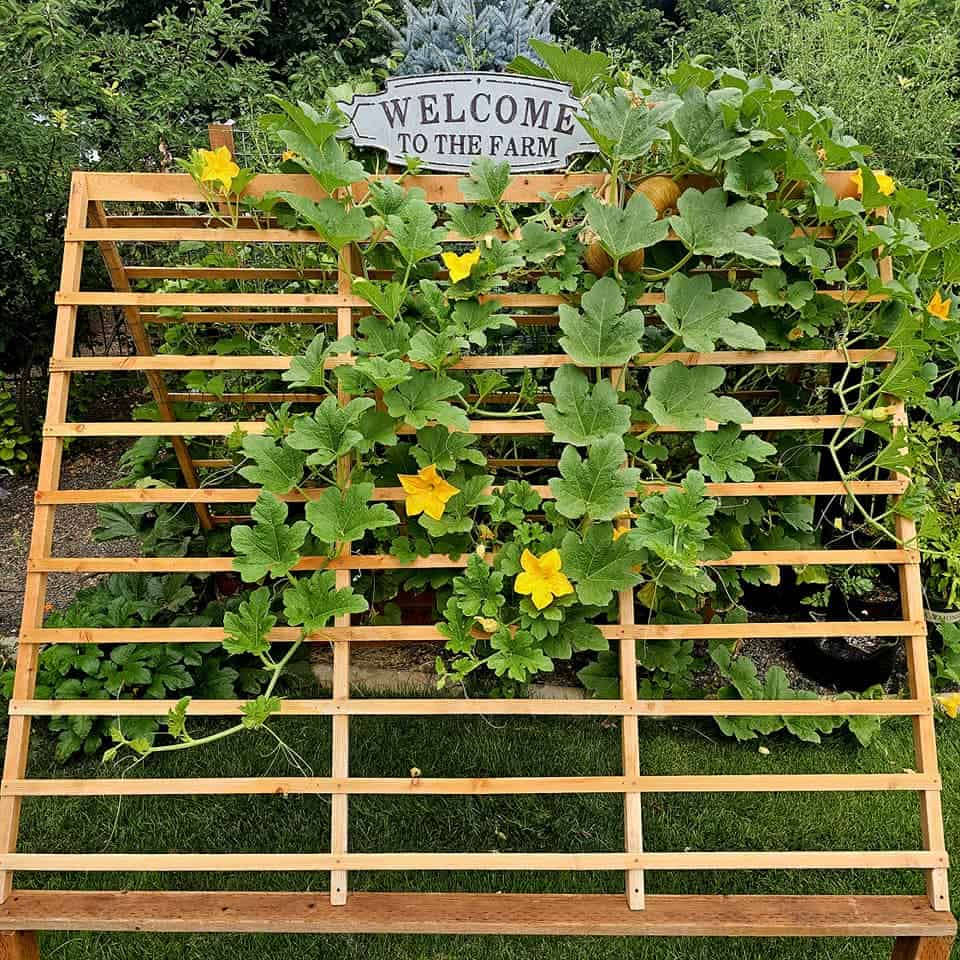
The A-frame trellis is one of the most popular and versatile options for squash gardeners. Two panels of wire mesh, wood lattice, or livestock fencing are leaned together at the top and secured, forming an A-shape.
Squash vines climb up both sides naturally, and the shaded tunnel underneath is perfect for growing lettuce or spinach in the cooler microclimate.
This setup works well in both raised beds and in-ground plots and holds up impressively even with heavy winter squash attached.
- Best for: Summer and winter squash, pumpkins
- Materials: Wood posts or metal conduit, wire mesh or cattle panel sections
- Tip: Angle each side at roughly 45–60 degrees for maximum stability
2. Cattle Panel Arch Trellis
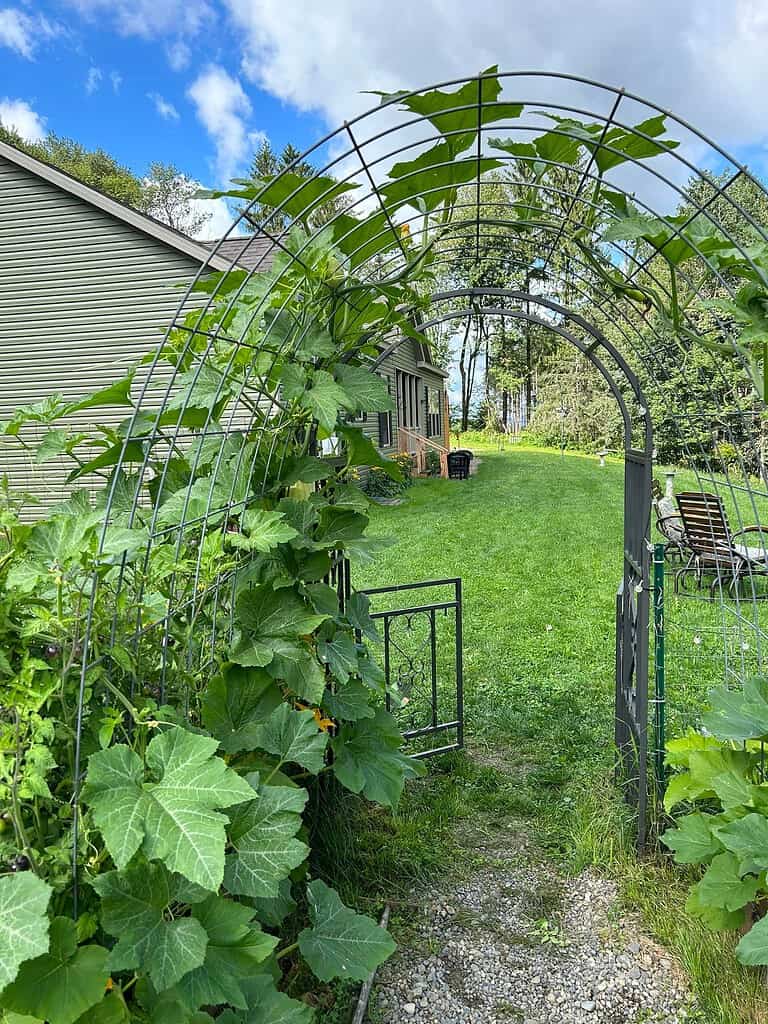
Cattle panel arches have become a staple in productive homestead gardens, and for good reason.
A single 16-foot cattle panel bent into an arch and anchored at both ends creates a strong, beautiful tunnel that squash vines absolutely love.
The rigid galvanized wire grid supports even the heaviest fruit without sagging, and the open design promotes excellent airflow — a big deal when you’re trying to prevent powdery mildew.
You can plant squash along both base edges and harvest while walking through the tunnel.
- Best for: Butternut, acorn, spaghetti squash
- Materials: One 16-ft cattle panel, rebar or T-posts for anchoring
- Tip: Use zip ties to secure the panel to the rebar stakes for extra wind resistance
3. Repurposed Tomato Cage Trellis
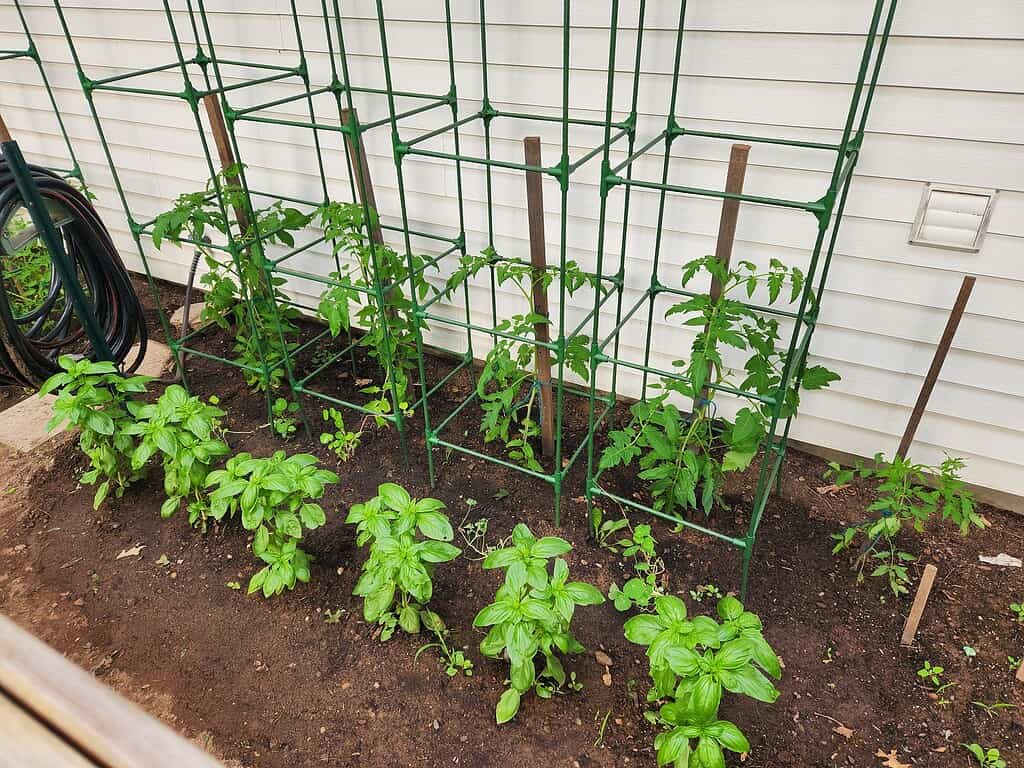
Used From Our Raised Beds Facebook Group
Got a few heavy-duty tomato cages sitting unused in your shed? They make surprisingly effective trellis supports for compact squash varieties.
Simply place the cage over or beside a young squash plant and guide the vine to climb up the rings.
This works best with bush-type or compact summer squash, though you can link two or three cages together for longer vine varieties.
It is a zero-cost solution if you already have the cages and takes less than five minutes to set up.
- Best for: Compact summer squash, patio or container squash
- Materials: Heavy-duty tomato cages (not the flimsy wire kind)
- Tip: Stake the cage into the ground securely before the plant gets heavy
4. DIY PVC Pipe Trellis
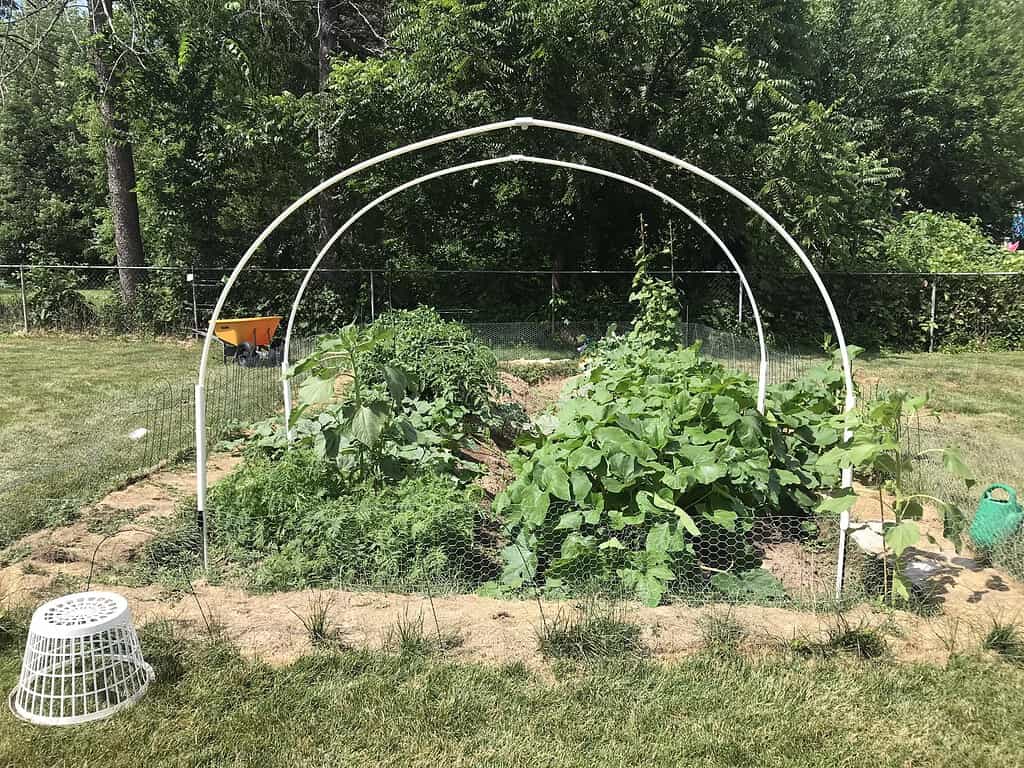
A PVC pipe trellis is lightweight, rust-proof, and incredibly customizable. You can build a simple arch, a flat panel frame, or even a double-row structure depending on your space.
PVC is easy to cut and connect with standard elbow and T-joints, and you can string it with jute twine, zip ties, or garden netting for the vines to grip.
This is a great budget-friendly weekend project that you can disassemble and store flat at the end of the season.
- Best for: Summer squash, small winter squash varieties
- Materials: ¾-inch PVC pipe, PVC fittings, garden netting or jute twine
- Tip: Use UV-resistant zip ties instead of regular plastic ones so they don’t degrade mid-season
5. Wooden Stake and Twine Trellis
Sometimes the simplest approach is the best one. A row of sturdy wooden stakes with horizontal lines of jute or garden twine strung between them gives squash vines plenty to grip and costs almost nothing.
Run your stakes every 4 to 5 feet down the row and tie twine at 8-inch intervals going up the height. This style blends beautifully into a cottage-style garden and is especially attractive when the vines are in full growth.
If you’re already using this approach for other crops, check out these easy garden trellis ideas that work across your whole vegetable plot.
- Best for: Summer squash, smaller vining varieties
- Materials: 6-foot wooden stakes, jute twine or garden string
- Tip: Opt for natural jute over plastic twine so it breaks down in your compost at season’s end
6. Ladder Trellis
An old wooden or bamboo ladder propped against a wall, fence, or stake makes a charming and surprisingly functional squash trellis.
The rungs give vines natural handholds, and the vertical lean allows fruit to hang freely on the outside. This is a fantastic option if you’re working with a small backyard and need your garden to look intentional rather than chaotic.
It works especially well leaned against a south-facing fence where squash gets maximum sun exposure. If you’re building out a mini farm in a small backyard, this kind of dual-purpose thinking is exactly the approach that makes it work.
- Best for: Summer squash, small pumpkins
- Materials: Old wooden ladder or DIY bamboo ladder frame
- Tip: Angle the ladder slightly rather than going fully vertical — it’s more stable and easier for vines to grip
7. Chain-Link Fence Trellis
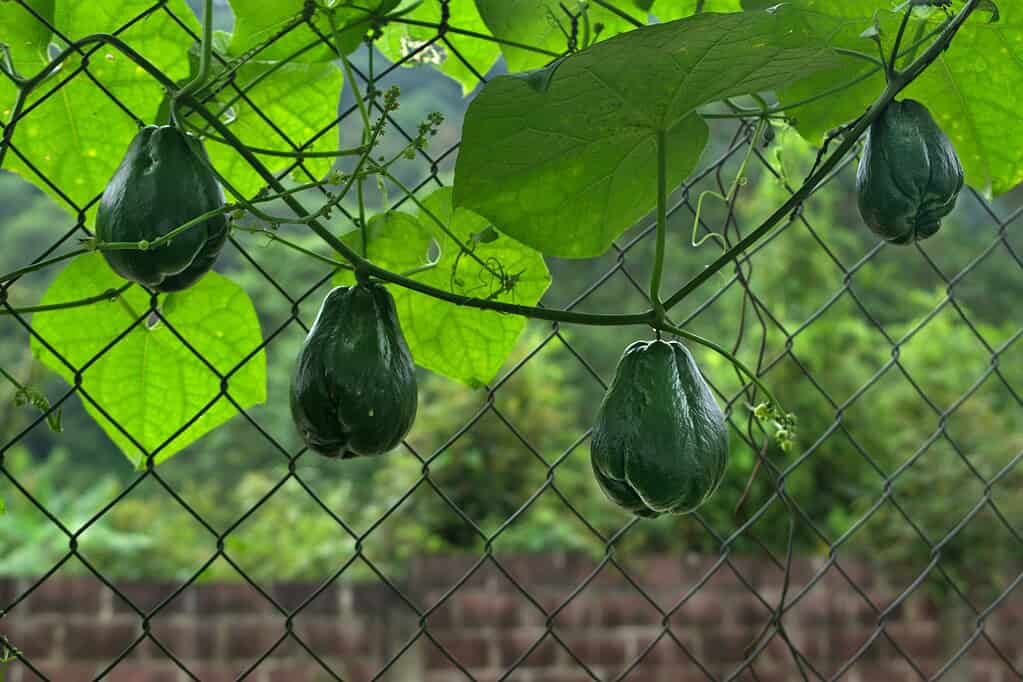
If your garden is already bordered by a chain-link fence, you have a ready-made trellis at zero cost. Chain-link provides an excellent grid for squash vines to weave through, and its height (usually 4 to 6 feet) is ideal for most vining varieties.
Simply plant your squash at the base of the fence and train the first few feet of vine manually. The plants take it from there. This setup also doubles as a privacy screening solution once the vines fill in for the season.
- Best for: Any vining squash
- Materials: Existing chain-link fence (no additional cost)
- Tip: Add slings made from old pantyhose or mesh bags to support large fruit that may otherwise strain the vine
8. Pallet Trellis
Repurposed wooden pallets are a beloved fixture in the homestead garden, and they make genuinely effective squash trellises when set upright.
Stand one or two pallets on end, secure them with T-posts or wooden stakes, and you have an instant slatted climbing frame.
The gaps between the slats are a perfect size for squash tendrils to grip, and the flat surface means you can also weave twine horizontally for extra support. Always use heat-treated (HT) pallets rather than chemically treated ones to keep your food safe.
- Best for: Summer squash, compact winter squash
- Materials: HT-stamped wooden pallets, T-posts or rebar
- Tip: Check the pallet stamp before using — “HT” means heat-treated and safe; “MB” means methyl bromide and should be avoided for food gardens
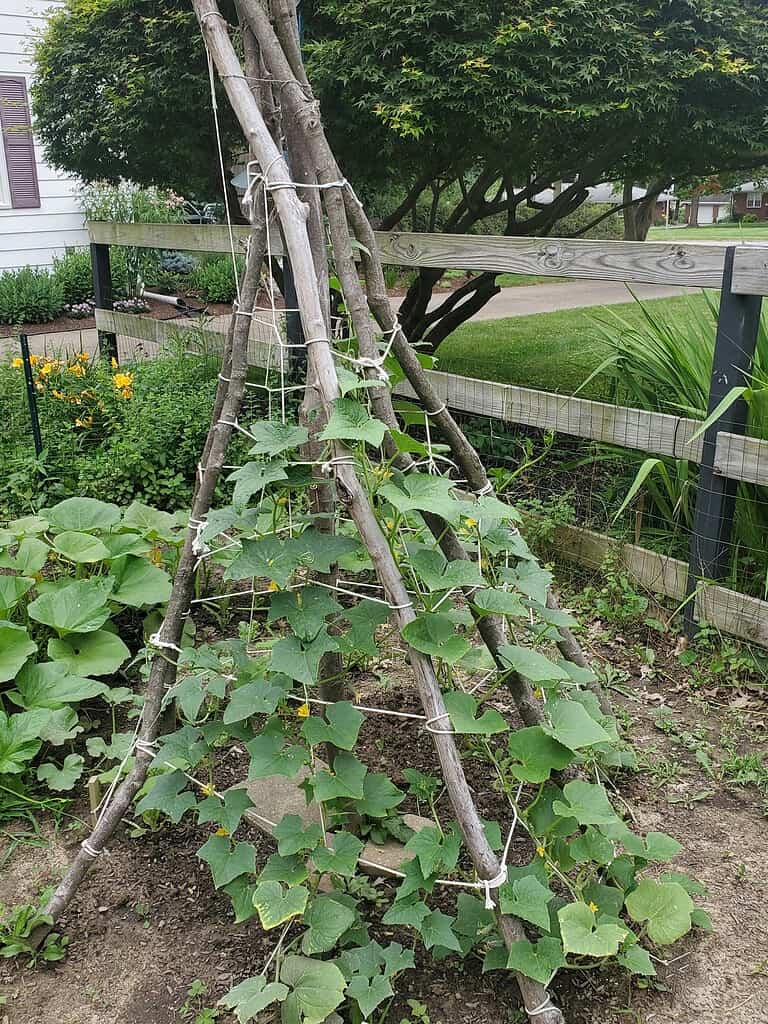
9. Bamboo Teepee Trellis
Used From Our Raised Beds Facebook Group
A bamboo teepee is a beautiful, natural structure that works wonderfully for compact squash varieties — and it’s a conversation starter in any garden.
Simply push 5 to 8 bamboo poles into the ground in a circle around your squash plant and tie the tops together with twine. As the vine grows, guide it around the poles in a spiral.
This design works especially well in raised beds and gives your garden a striking focal point. It’s also one of the most budget-friendly options you can build in under 15 minutes.
- Best for: Bush or compact vining squash varieties
- Materials: 5–8 bamboo poles (6–8 feet long), jute twine
- Tip: Soak bamboo poles in water for an hour before use to make them easier to push into the ground without splitting
10. T-Post and Wire Mesh Trellis
For a sturdy, long-lasting setup that can handle even the heaviest squash without flinching, a T-post and wire mesh trellis is hard to beat.
Drive two or three metal T-posts into the ground, stretch a section of concrete reinforcing mesh (rebar wire) or welded wire fencing between them, and you have an incredibly strong structure that will last for years.
The rigid grid means no sagging mid-season, even when loaded with fruit. This is the go-to choice for serious homestead gardeners who grow a lot of winter squash.
- Best for: Heavy winter squash, acorn squash, butternut
- Materials: Steel T-posts, concrete remesh or welded wire fencing
- Tip: Space T-posts no more than 4 feet apart to prevent the mesh from bowing outward under the weight of the plants and fruit
11. Hog Wire Panel Trellis
Hog wire panels (also called livestock panels) are similar to cattle panels but come in different grid sizes and are incredibly durable.
Set up as a flat vertical trellis between two sturdy posts, a hog wire panel creates a generous climbing surface that handles vigorous squash varieties with ease.
Because the grid spacing is often around 4 by 4 inches, it’s easy for you to reach through and harvest fruit without disturbing the vines. This is also one of the most visually tidy trellis options — your garden will look neat and organized even at the height of the season.
- Best for: All vining squash varieties
- Materials: Hog wire livestock panel, two 4×4 wooden posts or T-posts
- Tip: Use this style in a raised bed paired with square foot gardening spacing to maximize productivity in every square inch
12. Arched Garden Tunnel Trellis
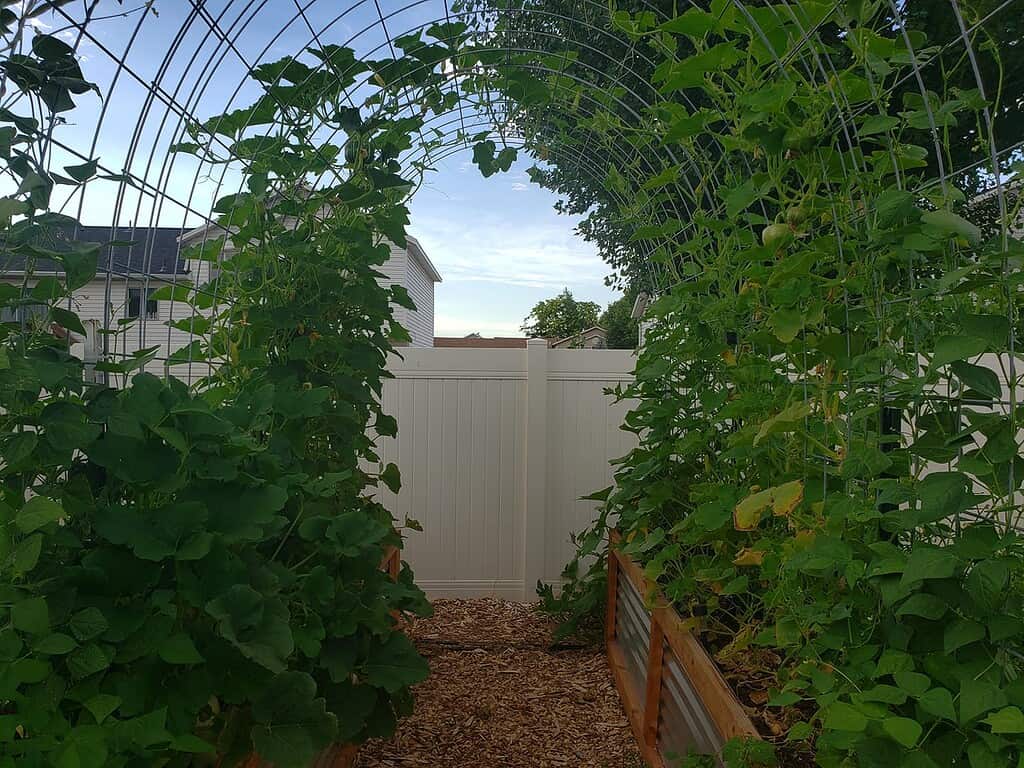
An arched garden tunnel made from flexible conduit, bent rebar, or PVC hoops strung with netting creates one of the most productive squash setups you can build.
Plant squash down both sides of the tunnel and let the vines meet overhead. Fruit hangs down inside the tunnel for easy harvesting, airflow is excellent, and the whole structure looks incredible once fully covered in lush green leaves.
This works beautifully as the centerpiece of a small backyard vegetable garden where you want vertical drama and productivity in one place.
- Best for: Zucchini, summer squash, butternut
- Materials: Flexible metal conduit or bent rebar, shade cloth or garden netting
- Tip: Install weed barrier fabric under the tunnel before planting to keep the ground tidy and moisture-retentive throughout the season
Garden Planner
The 24-page planner timed to your county's real frost dates. Planting windows, monthly checklists, and a harvest log you'll fill with pride by August.
Your Free 24-Page Garden Planner
Built for your exact ZIP code — planting dates, harvest log, and a month-by-month plan. 15-second sign-up.
Why Growing Squash Vertically Is Worth the Effort
A lot of gardeners skip trellising because they assume squash just grows on the ground — and technically it does. But growing squash vertically is genuinely worth the setup time, especially if you’re working with limited space or dealing with recurring disease problems.
Here’s why going vertical makes such a big difference:
- Space savings: Ground-sprawling squash vines can spread 10 to 15 feet in every direction. A trellis keeps that footprint to just a few feet while the vine grows up instead of out.
- Better airflow: When leaves and fruit are lifted off the ground, air circulates freely through the canopy. This is one of the most effective ways to reduce powdery mildew, a common squash problem.
- Easier pest management: Squash vine borers, aphids, and squash bugs are much easier to spot (and remove) when your plants are growing vertically and you can see all sides of the stem and leaves.
- Fruit stays cleaner: Squash that hangs in the air never rests on wet soil, which means less rot, fewer slug problems, and cleaner skin at harvest.
- Easier harvesting: No more bending and hunting under broad leaves on the ground — vertically grown squash is visible and accessible at a glance.
Whether you’re managing a raised bed or an in-ground garden, adding a vertical structure to your squash growing plan is one of the best decisions you can make each season.
The Best Squash Varieties for Vertical Growing
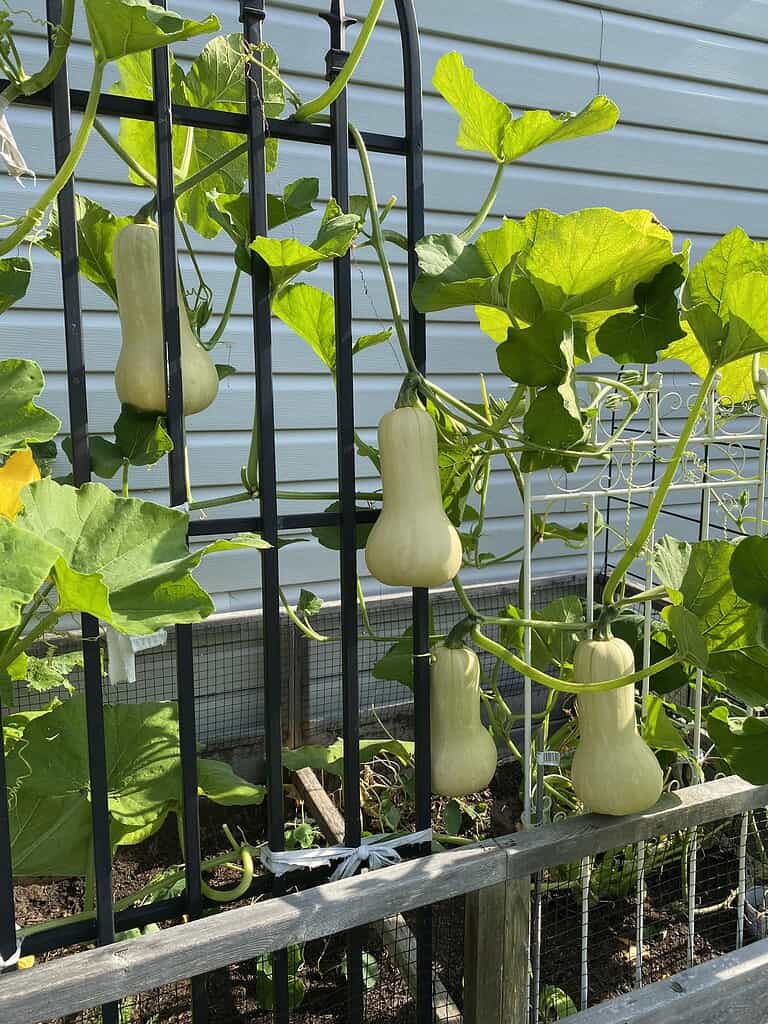
Not every squash is equally suited to trellis growing, though most will do just fine with the right support. Smaller and medium-sized varieties are always easier to manage, while very large types (like giant pumpkins) may need extra sling support for the fruit.
Great options for trellis growing include:
- Butternut squash — one of the best vertical growers; vines are long but the fruit is manageable in size
- Acorn squash — compact fruit that hangs well without needing slings
- Zucchini — while typically grown as a bush, vining zucchini varieties perform well on a trellis
- Spaghetti squash — medium-sized and well suited to arched or flat-panel trellises
- Delicata squash — small, lightweight fruit that’s ideal for beginners trying vertical growing for the first time
- Pattypan squash — bush types can be guided up a trellis cage for a compact, tidy setup
Planning ahead and timing your squash planting properly makes a big difference in how quickly vines take to the trellis. A solid vegetable planting calendar can help you figure out exactly when to start seeds or transplant so your vines are reaching for the trellis at just the right moment.
Miss it by a week and you lose the crop. The free 24-page planner pins down your exact dates — last frost, first frost, and the weekly steps between — so you plant on the days that actually work for your ZIP.
How to Train Squash Vines Up a Trellis Without Damaging Them
Squash vines do not automatically climb the way beans or peas do. They tend to sprawl outward unless you give them a little direction, especially in the early weeks. The good news is that training squash up a trellis is genuinely simple once you know the approach.
- Start early. Begin guiding the vine toward the trellis when it’s still young and flexible, usually when it’s 12 to 18 inches long. Mature stems become brittle and can snap if you try to redirect them.
- Use soft ties. Loop strips of old pantyhose, soft plant ties, or torn fabric loosely around the vine and through the trellis grid. Never use wire or zip ties directly against the stem — they cut into the plant as it grows.
- Redirect weekly. During peak growing season, squash vines can extend several inches in a single day. Check on them every few days and gently tuck or tie new growth back toward the trellis before it sprawls away in a direction you don’t want.
- Encourage tendrils to grip. Squash plants produce small curling tendrils that naturally grip onto surfaces. Weave the vine lightly through the trellis grid so tendrils have something nearby to latch onto.
- Prune side shoots if needed. If the vine is producing a lot of lateral growth that pulls away from the trellis, prune those side shoots to keep the main vine focused and upward-growing.
Free Planting Guides for This Article
Get exact planting dates, frost schedules, and growing tips for your zone:
How to Support Heavy Squash Fruit on a Trellis
One of the biggest concerns gardeners have about vertical squash growing is whether the fruit will stay put — or snap off the vine before it’s ripe.
The stem connection point between fruit and vine is strong but not indestructible, especially as fruit reaches full size. The solution is a fruit sling.
A fruit sling is simply a small hammock for your squash that distributes the weight of the fruit across the trellis structure rather than relying entirely on the stem. Here are the most common and effective sling options:
- Old pantyhose or nylon stockings — the most commonly recommended option; they stretch as the fruit grows, are gentle on the skin, and breathe well
- Mesh produce bags — repurpose the bags onions or citrus come in; the open mesh allows airflow while cradling the fruit securely
- Old T-shirt strips — cut strips of stretchy fabric and tie them into a cradle around the fruit, securing both ends to the trellis
- Commercial fruit bags or netting hammocks — available at garden supply stores; particularly useful if you’re growing a lot of fruit on the trellis
Attach the sling to the fruit when it reaches roughly softball size, before the weight becomes a problem. Tie the sling to the trellis at two points so the load is evenly distributed. Check the sling every week to make sure it hasn’t tightened or shifted as the squash grew.
Best gardening planner I've used in 10 years — and I keep coming back to it every season.
Common Mistakes to Avoid When Trellising Squash
Trellising squash is straightforward, but a few easy-to-avoid mistakes can trip you up, especially in your first season. Watch out for these:
- Building a trellis that’s too flimsy. Squash plants are heavy. A lightweight tomato cage or thin bamboo stake isn’t going to cut it for most varieties by mid-season. Always build sturdier than you think you need.
- Setting the trellis up too late. Trying to install a trellis after the plant is already sprawling is frustrating and risks damaging stems. Set your trellis up at planting time or shortly after.
- Forgetting to sling the fruit. Many gardeners successfully get vines climbing the trellis but skip the sling step, then lose fruit to snapped stems in the final weeks before harvest. Don’t skip this part.
- Placing the trellis in the wrong spot. Make sure your trellis won’t shade out neighboring plants that need full sun. Position it on the north side of your garden so the shadow falls behind the bed rather than onto your other crops.
- Overcrowding plants at the base. When growing squash vertically, it’s tempting to plant more at the base of a trellis than the structure can realistically support. Stick to the recommended spacing — usually one plant every 18 to 24 inches — for healthy results.
How Hard Is It to Garden in Your County?
Every county has a unique Gardening Difficulty Score based on frost risk, soil quality, drought, altitude, and climate trends. Find yours — plus personalized frost dates, planting calendars, and soil data.
Check Your County's Score →Start Growing Up — Which Squash Trellis Will You Try First?
Squash trellises are one of the most impactful upgrades you can make to a productive vegetable garden.
Whether you spend an afternoon building a cattle panel arch or simply prop up an old pallet and string some twine, the payoff — in space savings, disease reduction, and easier harvests — is well worth it.
Start simple if you’re new to vertical growing, and don’t be afraid to experiment as you learn what works best for your particular setup and squash varieties.
If you’re still working out the basics of your growing space, the debate between a raised bed vs in-ground garden and how each affects your trellis options is a great place to explore next.
And for gardeners who want to get their entire vegetable patch working in harmony, don’t miss these easy garden trellis ideas that go beyond squash to support everything from cucumbers to climbing beans.
Have you tried growing squash on a trellis? Drop a comment below and tell us which setup worked best for you — or share any creative DIY ideas we didn’t mention. Your tip might be just what another gardener needs this season!
- Tomatoes
- Peppers
- Beans
- Squash
- Cucumbers
- Basil
Plan Your Garden With Confidence!

Ever start planting… and then realize halfway through that things feel a little scattered?
A simple plan changes everything.
When you sketch your layout first, you can see what fits, what flows, and what actually makes sense for your space. It saves time, money, and a whole lot of second-guessing later.
Our free Garden Planner helps you map out beds, organize plant spacing, rotate crops, and keep track of seasonal tasks – all in a clean, printable format you can actually use.
Whether you’re designing a low maintenance front yard or planning your full homestead garden, this gives you a clear starting point.
Less chaos. More clarity. A garden that works.
Frequently Asked Questions
Can all types of squash be grown on a trellis?
Most vining squash varieties can be trellised successfully, including butternut, acorn, spaghetti, delicata, and summer squash. Bush-type squash like standard zucchini can also be trained up a trellis cage with a little encouragement, though they are naturally more compact.
The main exception is very large, heavy varieties like giant Atlantic pumpkins or Hubbard squash — these produce fruit that can weigh 20 pounds or more, which puts too much stress on both the trellis and the vine stem unless you build an exceptionally sturdy support structure and use very strong slings.
How tall should a squash trellis be?
A squash trellis should be at least 5 to 6 feet tall for most vining varieties. Some vigorous growers like butternut can send vines 10 to 15 feet long, so if you want to keep the plant contained to the trellis rather than letting it cascade down the other side, aim for at least 6 feet.
For most home gardeners, a 6-foot-tall trellis hits the sweet spot between being manageable to harvest from and tall enough to handle a full season of growth without the vines running out of room.
Do squash vines climb on their own, or do I need to tie them?
Squash vines produce tendrils that can grip onto surfaces, but unlike peas or beans they do not reliably self-direct onto a trellis — especially in the early weeks. Plan to manually guide and loosely tie the main vine to the trellis every few days for the first 3 to 4 weeks.
Once the vine has several attachment points and its tendrils have gripped the grid, it typically becomes more self-sustaining. In later weeks you’ll mostly just be tucking stray side shoots rather than doing major redirecting.
What is the best material to use for a beginner squash trellis?
For beginners, a cattle panel or hog wire panel trellis between two T-posts is one of the best starting points. It requires minimal building skill, holds up extremely well through wind and rain, supports heavy fruit without sagging, and lasts for many seasons.
If budget is a concern, wooden stakes with horizontal jute twine or a repurposed pallet are excellent low-cost alternatives that still perform well for lighter squash varieties. Avoid flimsy wire tomato cages for vigorous vining types — they will bend or topple partway through the season.
Can I use a squash trellis inside a raised bed?
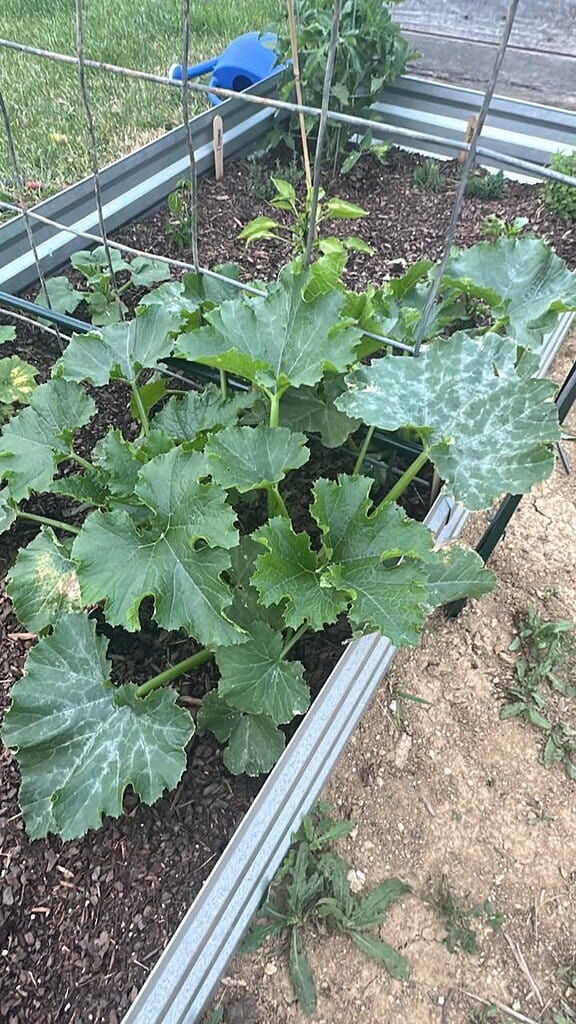
Absolutely — raised beds and vertical trellising are a natural pairing. The key is anchoring the trellis properly so it doesn’t topple when the bed gets watered and the weight of growing plants increases. Drive your posts or stakes through the raised bed soil and into the ground beneath it rather than just into the bed itself.
For beds with solid bottoms or shallow soil, attach the trellis to an external post or fence just outside the bed frame. Raised bed squash growing with a vertical trellis is one of the most space-efficient combinations in the vegetable garden.
Level Up Your Garden
Our most popular gardening guides