If you’ve ever stepped into your backyard only to lock eyes with a neighbor across the fence, you already know why backyard privacy matters so much.
A truly private backyard isn’t just about blocking sightlines — it’s about creating a space where you can actually relax, garden, host friends, or just sip your morning coffee in peace.
And while privacy fences certainly do the job, they often look harsh, age poorly, and add zero life to your outdoor space. The smarter, more beautiful solution? Privacy shrubs.
The right shrubs can give you all the seclusion of a tall fence while bringing color, fragrance, wildlife, and serious curb appeal to your yard.
In this guide, you’ll discover the best privacy shrubs to plant in your backyard, why they outperform traditional fencing in almost every way, and how to use them to design a private retreat you’ll never want to leave.
If you're already dreaming about transforming your outdoor space into a relaxing escape, our guide on How to Create a Backyard Oasis You'll Never Want to Leave pairs perfectly with the privacy shrub strategies in this article.
Why Privacy Shrubs Beat Traditional Fences for Backyard Privacy
Before we get into the best shrub varieties, it’s worth understanding why so many homeowners are skipping the wood or vinyl fence and choosing living privacy instead.
For starters, a tall, well-grown shrub line is significantly taller than your average six-foot fence. Many privacy shrubs reach 10 to 20 feet at maturity, which means they shield not only ground-level sightlines but also second-story windows from neighboring homes.
That alone is a game-changer for anyone in a tightly packed neighborhood.
Privacy shrubs also dampen sound, filter dust, and act as a natural windbreak — three things a fence simply cannot do.
They cool the air around your patio in summer, soften traffic noise from nearby roads, and create a habitat for songbirds, butterflies, and pollinators that bring your yard to life.
And let’s be honest: a thoughtfully designed shrub border looks far more elegant than fence panels. It also adds real value to your property, where mature landscaping can boost home appraisals and create that “lived-in luxury” feel buyers love.
If you've already got a fence and want to soften it, you can absolutely combine the two. For inspiration on layering plants along an existing fence line, check out our post on 12 Jaw-Dropping Ways to Landscape Along Your Fence — it's packed with ideas that work beautifully alongside the shrubs in this guide.
Garden Planner
The 24-page planner timed to your county's real frost dates. Planting windows, monthly checklists, and a harvest log you'll fill with pride by August.
Your Free 24-Page Garden Planner
Built for your exact ZIP code — planting dates, harvest log, and a month-by-month plan. 15-second sign-up.
10 Gorgeous Privacy Shrubs to Transform Your Backyard
Choose based on your USDA hardiness zone, sun exposure, and how fast you want full coverage. A mix of two or three of these often creates the most natural-looking screen.
1. Emerald Green Arborvitae (Thuja occidentalis ‘Smaragd’)
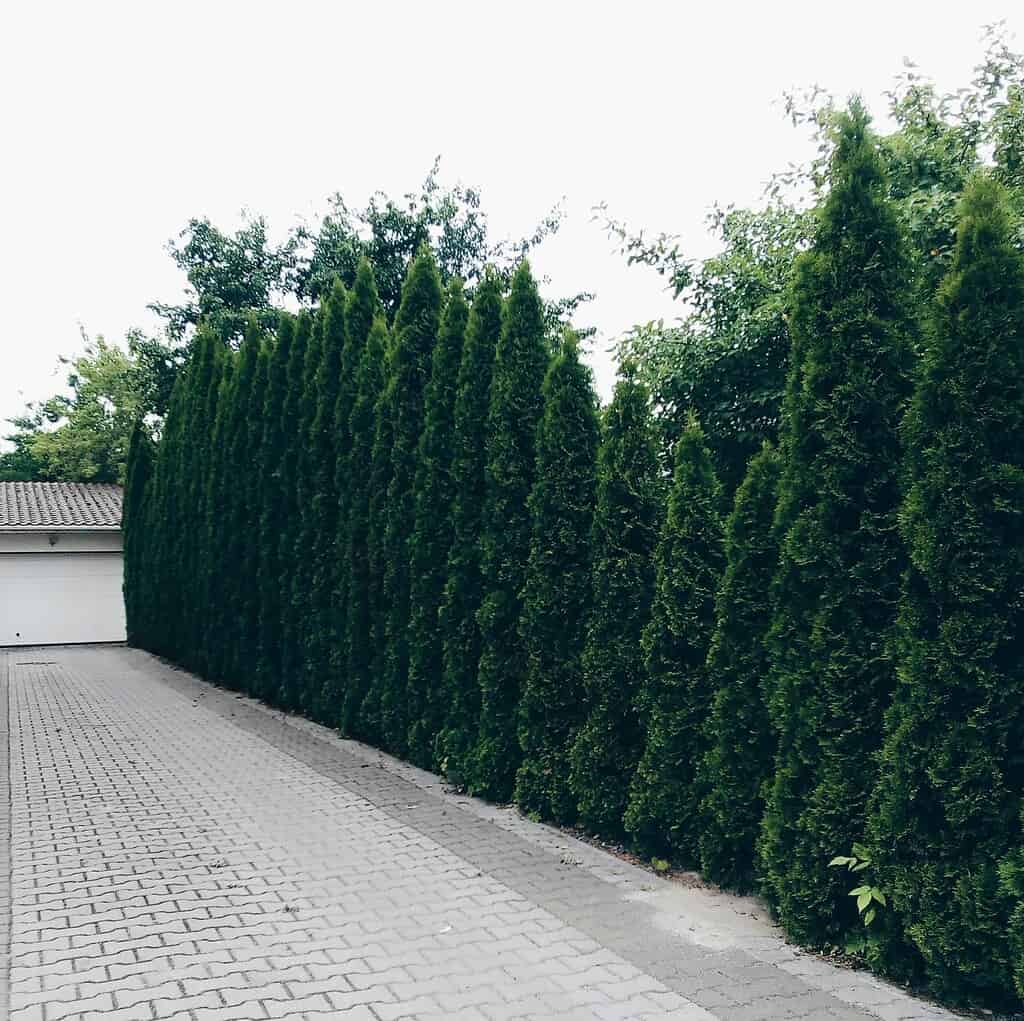
If you want a tall, narrow privacy wall fast, Emerald Green Arborvitae is the go-to. These evergreens grow 10 to 15 feet tall and just 3 to 4 feet wide, making them perfect for tight property lines.
They hold their rich green color through winter, never drop their leaves, and grow about a foot per year once established.
Plant them 3 to 4 feet apart for a solid hedge effect within a few seasons. They thrive in zones 3 through 7 and tolerate most soil types as long as drainage is decent.
Best of all, deer tend to leave them alone — a major win compared to many other evergreens.
2. Boxwood (Buxus sempervirens)
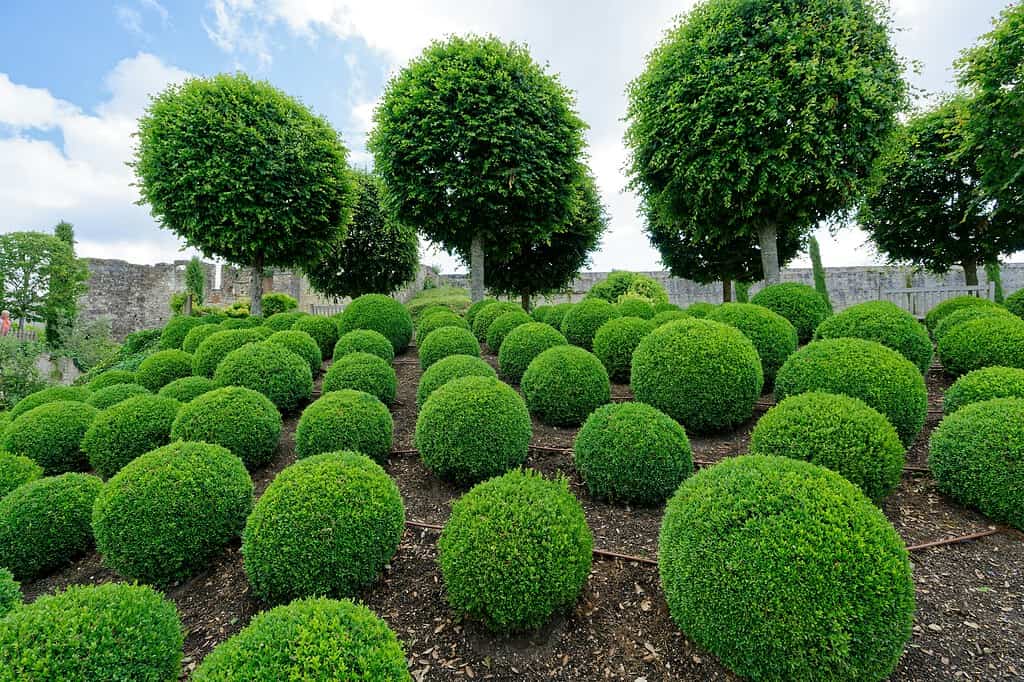
For classic, polished elegance, nothing beats a boxwood hedge.
While boxwoods grow more slowly than many privacy shrubs, they’re prized for their dense foliage, formal look, and ability to be shaped into clean geometric hedges or relaxed mounded forms.
They typically reach 5 to 10 feet at maturity, depending on the variety, and respond beautifully to pruning.
If you’re aiming for a refined, manicured backyard with a touch of European garden feel, boxwoods are an unbeatable choice. They’re also evergreen, so your privacy stays intact year-round.
For more shrub varieties that work beautifully in front yards too, see our guide on 12 Beautiful Shrubs to Make Your Home the Talk of the Street.
3. Privet (Ligustrum)
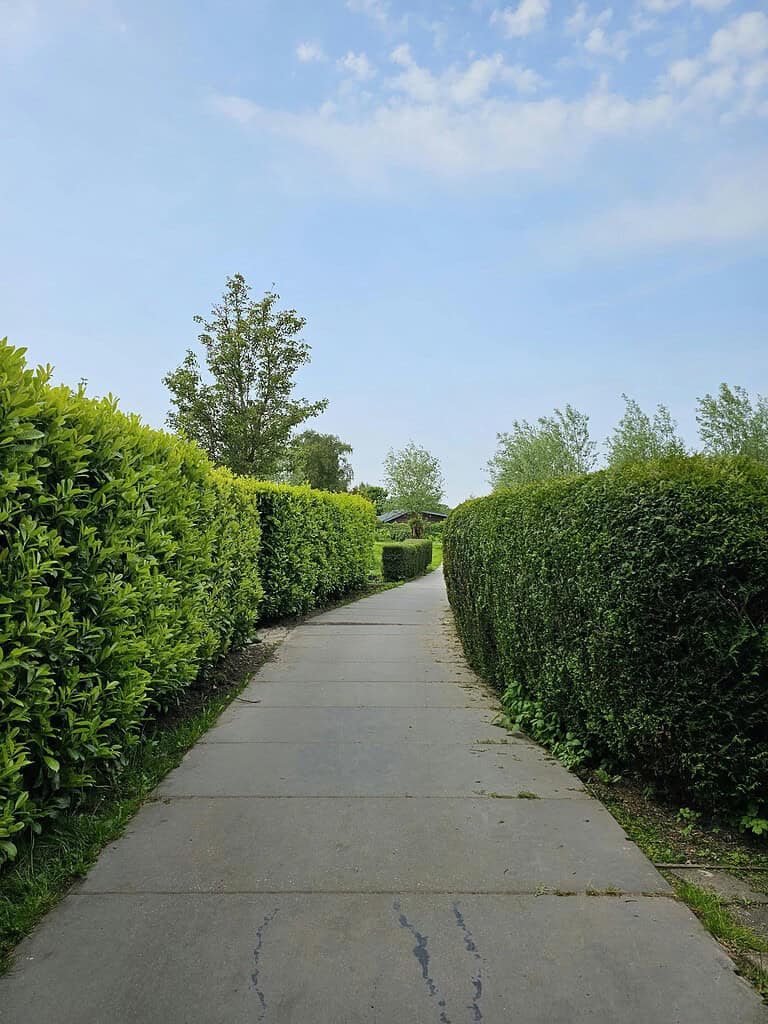
Privet is the workhorse of privacy hedging — fast-growing, dense, affordable, and incredibly forgiving. A privet hedge can shoot up 2 to 3 feet per year and reach 10 to 15 feet tall.
In late spring and early summer, it produces small, fragrant white flowers that pollinators absolutely love.
The trade-off is that privet needs regular pruning to stay tidy and prevent it from spreading where you don’t want it. But if speed and budget are top priorities, few shrubs deliver privacy quite as quickly as a privet hedge.
4. Holly (Ilex)
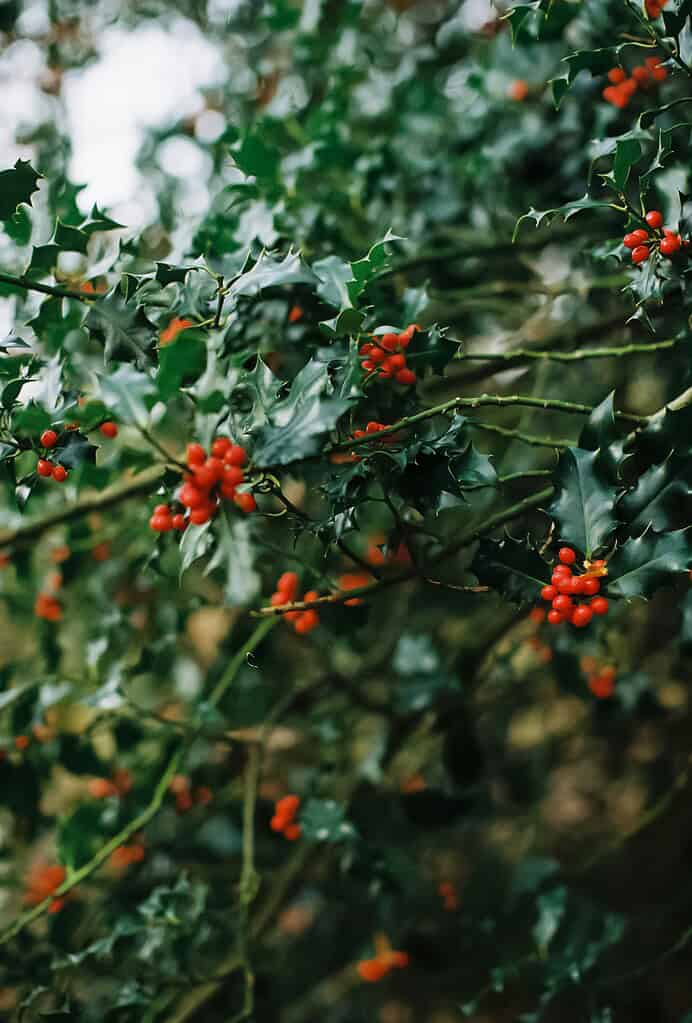
Holly shrubs deliver privacy with serious year-round visual impact. The deep glossy leaves and bright red winter berries make holly one of the most decorative privacy options around.
Varieties like Nellie R. Stevens grow 15 to 25 feet tall and form a dense, almost impenetrable barrier — perfect if you also want to deter foot traffic from cutting through your yard.
Holly is evergreen, low-maintenance once established, and pairs beautifully with flowering shrubs and trees.
For a layered look, consider planting holly behind seasonal bloomers like those featured in our guide on 10 Beautiful Flowering Trees That Bring Your Yard to Life.
5. Camellia (Camellia japonica)
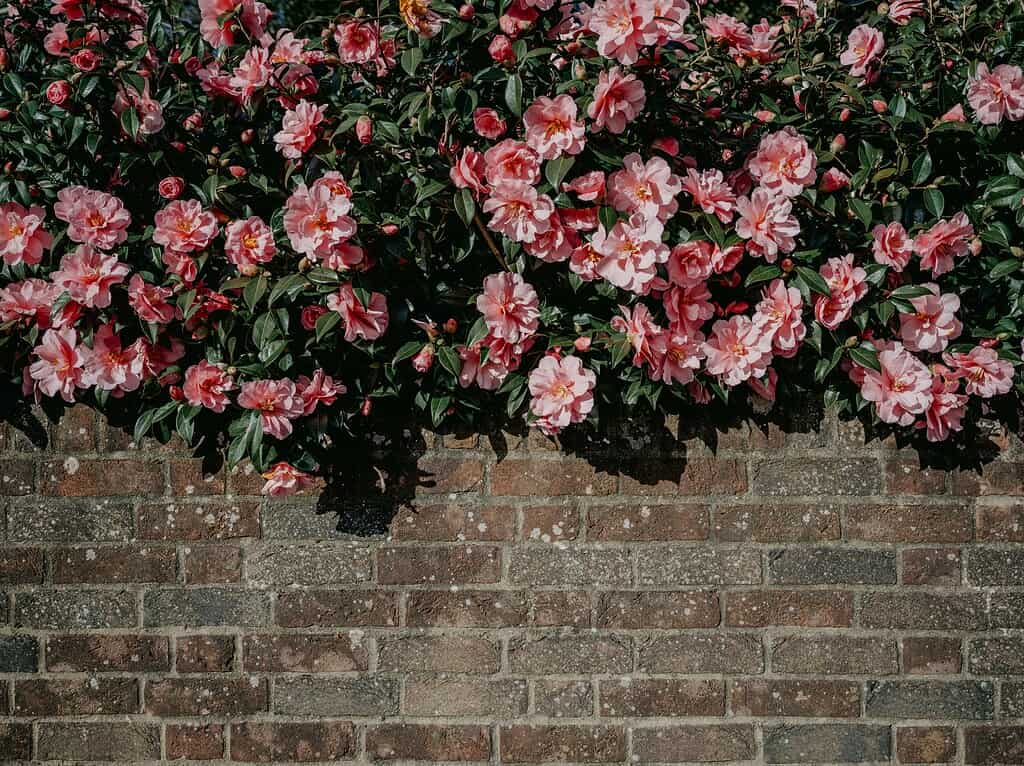
If you want a privacy shrub that doubles as a flowering showpiece, camellia is hard to beat.
These evergreen beauties produce large, rose-like blooms in white, pink, or red — often when most other shrubs are dormant in late winter or early spring.
Camellias grow 6 to 12 feet tall and prefer partial shade with rich, slightly acidic soil. They’re a fantastic option if part of your yard sits under tall trees and traditional sun-loving privacy shrubs would struggle. Their dense foliage also blocks sightlines beautifully even when they’re not in bloom.
6. Panicle Hydrangea (Hydrangea paniculata)
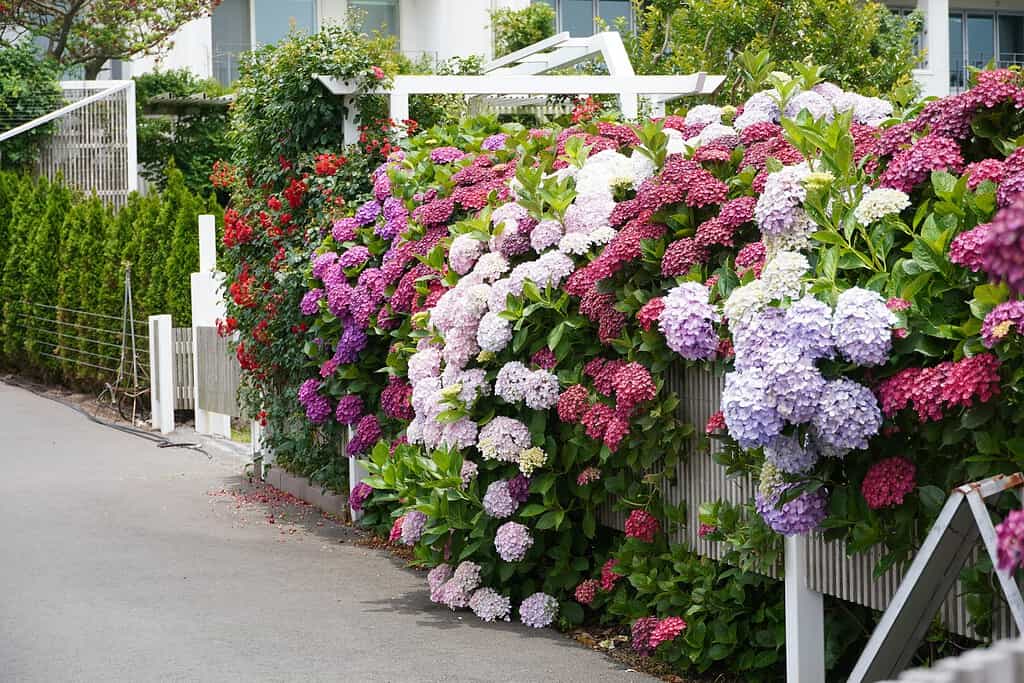
Panicle hydrangeas are the showstopping privacy option for anyone who wants drama and softness in equal measure.
Varieties like Limelight and Pinky Winky grow 6 to 10 feet tall and produce massive cone-shaped flower clusters from midsummer through fall.
While they’re deciduous (meaning they lose leaves in winter), the dried flower heads stay on through the cold months and provide visual interest even when the leaves are gone.
Plant them in a row along a sitting area or property line for an unforgettable backdrop that changes character with every season.
7. Skip Laurel (Prunus laurocerasus ‘Schipkaensis’)
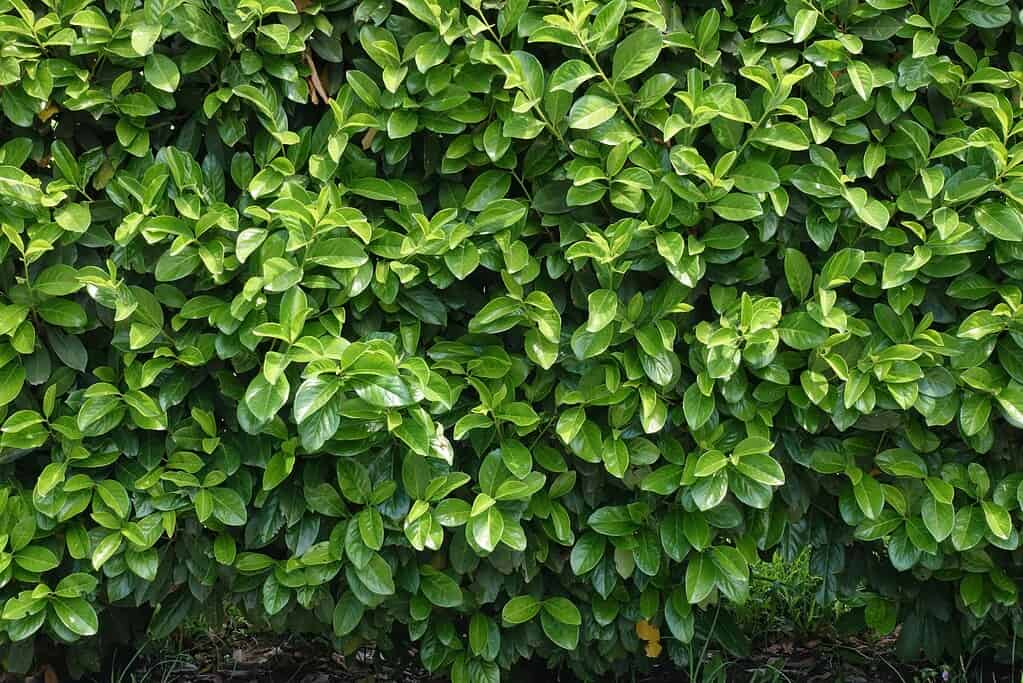
Skip laurel is one of the best evergreen privacy shrubs for shady or partly shaded yards.
It grows 10 to 18 feet tall, has glossy dark green leaves, and produces fragrant white flower spikes in spring that bees adore. Compared to other laurels, skip laurel handles cold winters better and resists most pests and diseases.
It’s a particularly smart pick if your yard has dappled light from mature trees overhead — and it pairs beautifully with the kinds of shade-loving plants we cover in our post on 12 Beautiful Shade Garden Ideas You’ll Want to Copy.
8. Wax Myrtle (Myrica cerifera)
Wax myrtle is a southern favorite that doesn’t get enough attention nationally. This semi-evergreen shrub grows quickly to 10 to 20 feet, tolerates poor soil, salt spray, drought, and even occasional flooding.
The aromatic gray-green leaves give off a soft bayberry scent when brushed, and the small waxy berries attract birds throughout fall and winter.
If you live in the southeastern United States or any zone 7 through 11 climate, wax myrtle is one of the most resilient privacy shrubs you can plant — and one of the most underrated.
9. Lilac (Syringa vulgaris)
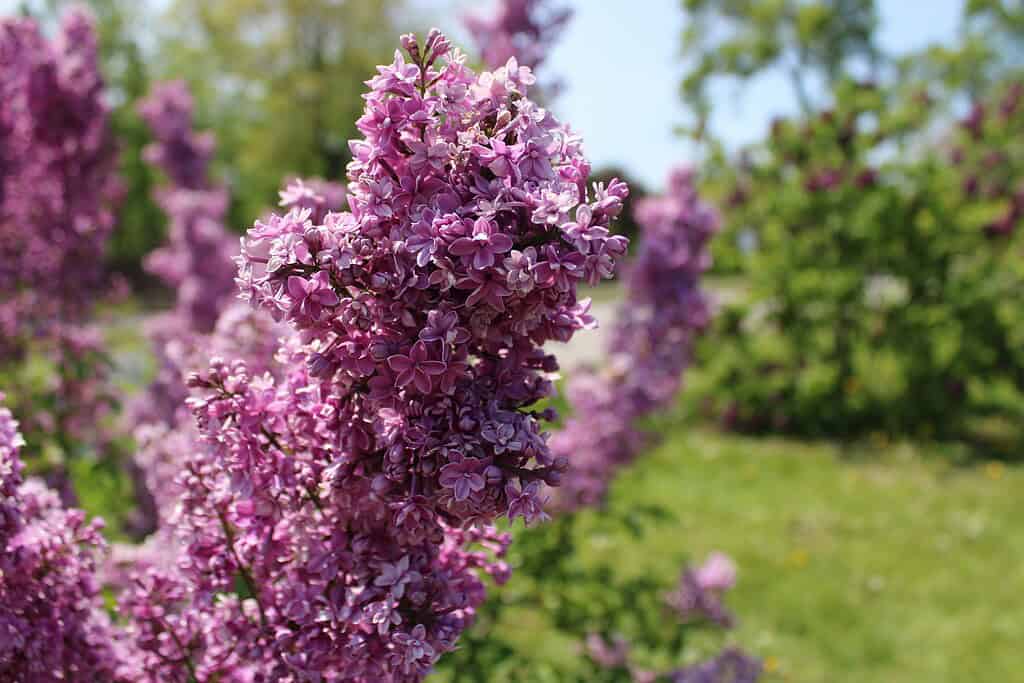
For sheer charm, lilac shrubs are unmatched.
They grow 8 to 15 feet tall, fill out into a soft, full hedge, and produce iconic purple, white, or lavender flower clusters every spring with a fragrance that perfumes the entire yard.
Lilacs are deciduous, so they offer their best privacy from mid-spring through fall.
They’re cold-hardy down to zone 3, making them an excellent choice for northern homesteaders who want a privacy hedge that doubles as a sensory experience every May.
10. Forsythia (Forsythia x intermedia)
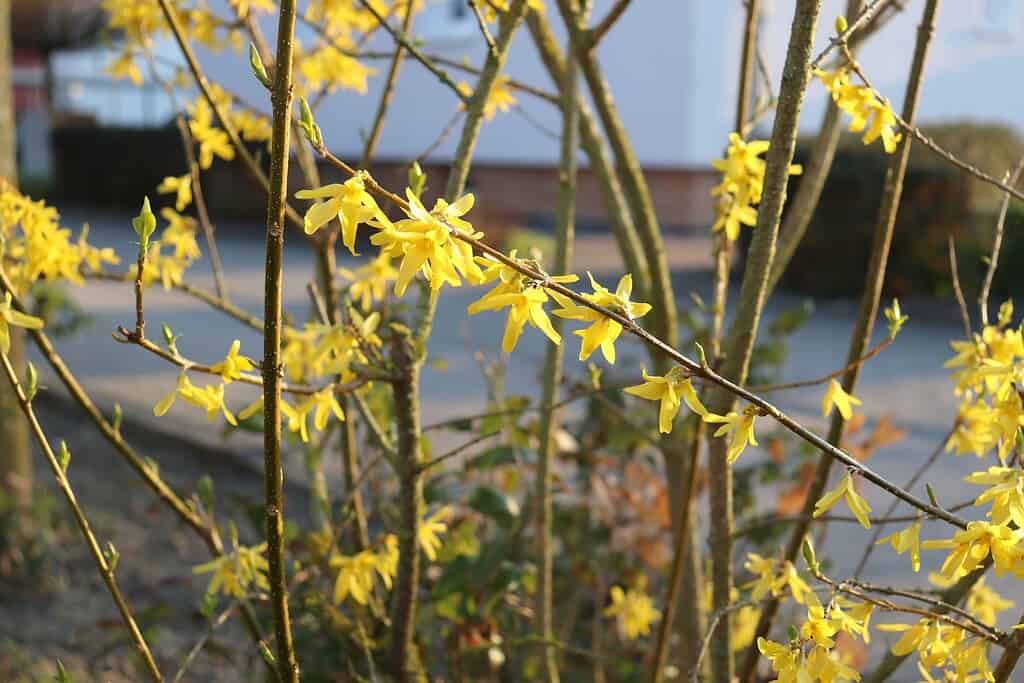
Forsythia is the shrub that announces spring with a wall of brilliant yellow blooms before its leaves even emerge.
It grows 8 to 10 feet tall and roughly the same wide, forming a relaxed, fountain-like privacy hedge that’s especially stunning along a back property line.
Forsythia is one of the most low-maintenance privacy shrubs you can plant — it grows in almost any soil, tolerates drought once established, and rarely has pest problems.
Pair it with the colorful blooms featured in our Azalea Flowers: Planting, Care, and Tips for Gorgeous Blooms guide for a knockout layered border.
How to Plant Privacy Shrubs for Maximum Effect
Choosing the right shrub is only half the equation. How you plant them determines whether you end up with a Pinterest-worthy privacy screen or a patchy, awkward row that takes years to fill in.
The first principle is spacing.
Most privacy shrubs need to be planted at roughly two-thirds of their mature width apart.
So a shrub that grows 6 feet wide should be planted around 4 feet from its neighbor. Plant too close and the shrubs compete for light and water; plant too far apart and you’ll have visible gaps for years.
The second principle is staggering.
For thicker coverage, plant in two offset rows rather than one straight line. The back row fills the gaps between the front row, creating a denser, more natural-looking hedge that reads as instantly mature.
Always prepare the soil deeply with compost or aged manure before planting, water generously for the first season, and mulch around the base to retain moisture.
For broader planning advice, our guide on How to Plan Your Backyard Landscaping: A Step-by-Step Guide walks through how to integrate privacy shrubs into a complete yard design.
Miss it by a week and you lose the crop. The free 24-page planner pins down your exact dates — last frost, first frost, and the weekly steps between — so you plant on the days that actually work for your ZIP.
Caring for Your Privacy Shrubs Year-Round
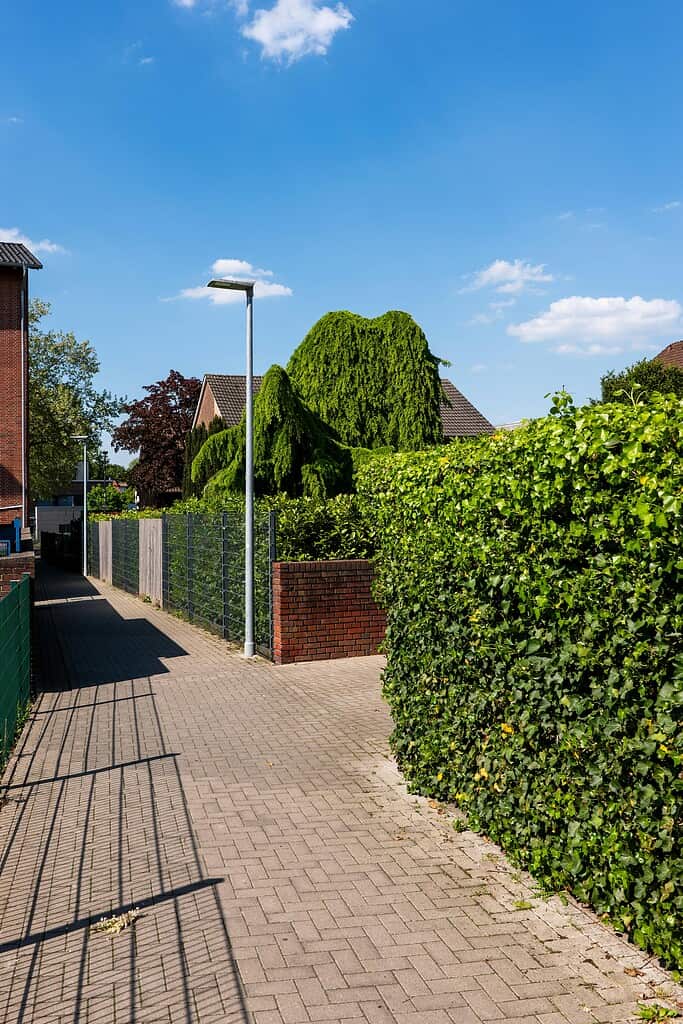
Privacy shrubs aren’t a “plant it and forget it” project — at least not in the first few years. But once they’re established, most require surprisingly little upkeep.
In year one, focus on consistent watering.
Deep watering once or twice a week is far more effective than light daily sprinkles, because it encourages the roots to grow downward and become drought-tolerant.
A 2 to 3-inch layer of mulch around the base helps lock in moisture and suppress weeds.
By year two, most shrubs need only a deep watering during dry spells.
Pruning becomes the main task.
Evergreens like arborvitae and boxwood benefit from a light shaping in late spring, while flowering shrubs like lilac, forsythia, and hydrangea should be pruned right after they bloom to protect next year’s flowers.
Feed your shrubs with a slow-release organic fertilizer in early spring and again in midsummer if growth seems slow.
If you’d rather lean toward a hands-off approach, build your screen with the same low-effort principles outlined in our How to Design a Low Maintenance Front Yard Garden post — every one of those strategies translates beautifully to a backyard privacy hedge.
Start Building Your Private Backyard Sanctuary Today
The truth is, the most beautiful private backyards aren’t built with concrete and fence panels.
They’re built with living, breathing plants that get more impressive every year. Privacy shrubs reward patience with shade, fragrance, color, wildlife, and a sense of seclusion no fence can match.
Start small if you need to — even one row of fast-growing shrubs along your most exposed property line will transform how it feels to spend time outside. From there, you can expand each season, layering different varieties for year-round coverage and curb appeal.
The key is to start now. Every shrub you plant today is one growing season closer to the private backyard you’ve always wanted.
Looking for more ways to bring your outdoor space to life this season? Our post on 15 Backyard Garden Ideas You'll Actually Want to Copy This Season is full of inspiration that works beautifully with the privacy shrubs covered here.
Which privacy shrub are you planning to add to your backyard first? Drop your favorite picks, questions, or planting stories in the comments below — we’d love to hear which ones you’ve tried and what worked best in your zone!
Best gardening planner I've used in 10 years — and I keep coming back to it every season.
How Hard Is It to Garden in Your County?
Every county has a unique Gardening Difficulty Score based on frost risk, soil quality, drought, altitude, and climate trends. Find yours — plus personalized frost dates, planting calendars, and soil data.
Check Your County's Score →Ready to Design Your Dream Garden Bed?
Feeling inspired to build something beautiful?
If you’re ready to go beyond just one garden bed and truly design a space that feels intentional, productive, and charming, I put together something special for you.
Inside 101 Garden Bed Ideas, you’ll find creative layouts, raised bed designs, space-saving solutions, and inspiring setups you can actually recreate in your own yard – whether you’re working with a tiny backyard or a full homestead.
Start planning your dream garden today.

Frequently Asked Questions
How fast will privacy shrubs actually grow tall enough to block neighbors?
Most fast-growing privacy shrubs add 1 to 3 feet of height per year once established. That means you’ll usually have meaningful coverage at eye level within 2 to 3 growing seasons and full mature privacy in 4 to 6 years.
To speed things up, buy larger nursery stock (5 to 7 gallon containers or 5-foot-tall balled-and-burlapped plants), space them tightly, and water deeply during the first year. If you need instant privacy while you wait, pair young shrubs with a temporary lattice and climbing vines as a stopgap.
Do I need a permit or HOA approval to plant a privacy hedge?
City and county rules generally don’t require permits for planting shrubs on your own property, but height and setback restrictions can apply — especially within a few feet of a property line, sidewalk, or street corner where visibility matters.
Homeowners’ associations often have stricter rules, including approved plant lists or maximum heights.
Always check your municipal code and HOA covenants before planting a long hedge so you don’t have to dig up mature shrubs later. A quick call to your local zoning office is the safest first step.
Will privacy shrub roots damage my fence, foundation, or underground utilities?
Most privacy shrubs have fibrous, shallow root systems that are unlikely to damage solid foundations, fences, or properly buried utility lines — unlike large trees, which can cause issues.
That said, you should plant shrubs at least 3 to 5 feet away from foundations and fence lines to allow for mature growth and airflow.
Before digging, always call 811 (or your country’s equivalent) to have underground utility lines marked. Free, fast, and it prevents an expensive accident.
Which privacy shrubs work best in cold-winter climates (USDA zones 3 to 5)?
For very cold zones, your most reliable picks are Emerald Green Arborvitae (hardy to zone 3), lilac (zone 3), forsythia (zone 4), and panicle hydrangea (zone 3). These shrubs handle harsh winters, heavy snow loads, and freeze-thaw cycles without significant damage.
Avoid more tender options like camellia, wax myrtle, and most hollies in these regions. To protect young plants in their first winter, water deeply just before the ground freezes and apply a thick mulch layer to insulate the roots.
How many privacy shrubs do I need to buy for my yard?
To estimate, measure the length of the area you want to screen in feet and divide by the recommended spacing for your chosen shrub.
For example, if you have a 60-foot property line and you’ve chosen Emerald Green Arborvitae spaced 3 feet apart, you’ll need 20 plants for a single row. Add roughly 50 percent more if you plan to plant a staggered double row for thicker coverage.
It’s wise to order a couple of extra plants for replacements in case any fail in the first season — most reputable nurseries offer a one-year guarantee on shrubs purchased in bulk.
Level Up Your Garden
Our most popular gardening guides