Container gardening is perfect for beginners or anyone with limited outdoor space.
With the right plants, even a small balcony or patio can burst into bloom.
We’ve gathered the 10 easiest flowering plants for pots – classic annuals that are forgiving, colorful, and prolific.
They’ll thrive in containers, rewarding you with vibrant blooms and minimal fuss. Read on for details on each plant, plus tips on containers, soil, watering, and care.
Container gardening flowers like marigolds, petunias, and geraniums are not only beautiful but also very easy to grow.
Top 10 Flowers for Container Gardening
Below you’ll find our top picks for best flowers for containers – each with notes on light, water, and why it’s a great choice for beginners.
We’ve also included tips on soil, containers, and maintenance so your flowering plants for pots will flourish all season.
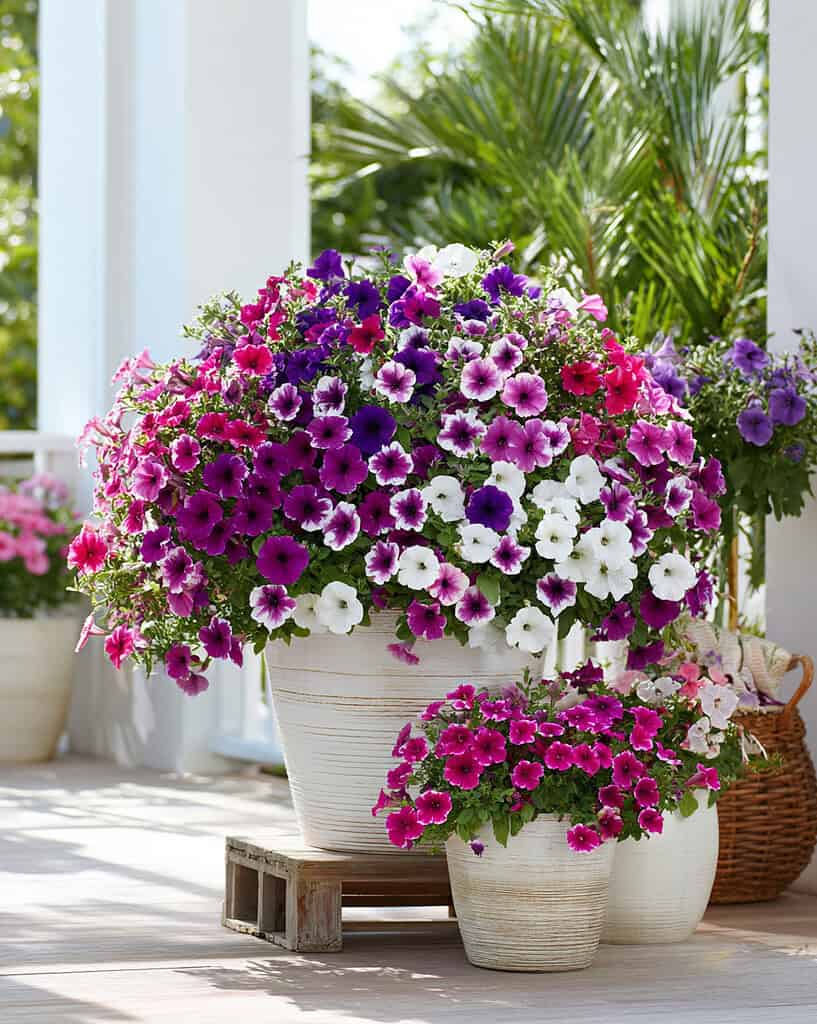
1. Petunias
Sun: Full sun to light shade.
Water: Regular.
Petunias are a container-garden staple. They offer a rainbow of colors and bloom relentlessly through summer.
These cheerful annuals handle heat well and tolerate full sun or part shade. Keep them watered and deadhead spent blooms to encourage more flowers.
They do best in a rich, well-draining potting mix. Petunias will happily trail or spill over the edges of hanging baskets and tubs, making them a top pick for easy container gardening.
2. Geraniums
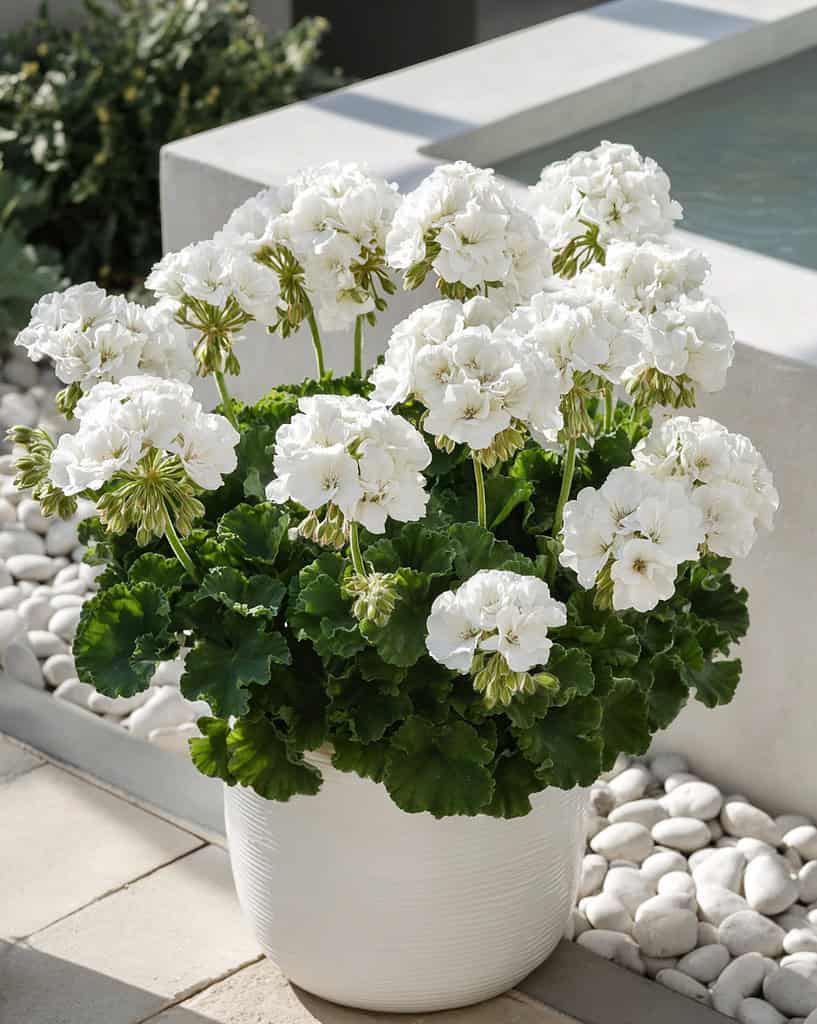
Sun: Full sun to afternoon shade.
Water: Moderate.
Geraniums (zonal pelargoniums) are famous for their rounded clumps of bright blooms in red, pink, white, or bi-colors.
They’re very beginner-friendly – geraniums are “easy to grow” and bloom all season long. They prefer plenty of sunshine but will tolerate some afternoon shade, especially in hot climates.
In pots, give geraniums regular watering (keeping soil evenly moist) and feed them occasionally; they will reward you with continuous flower clusters.
Trailing geranium varieties are excellent for hanging planters or as a cascading edge in mixed containers.
3. Marigolds
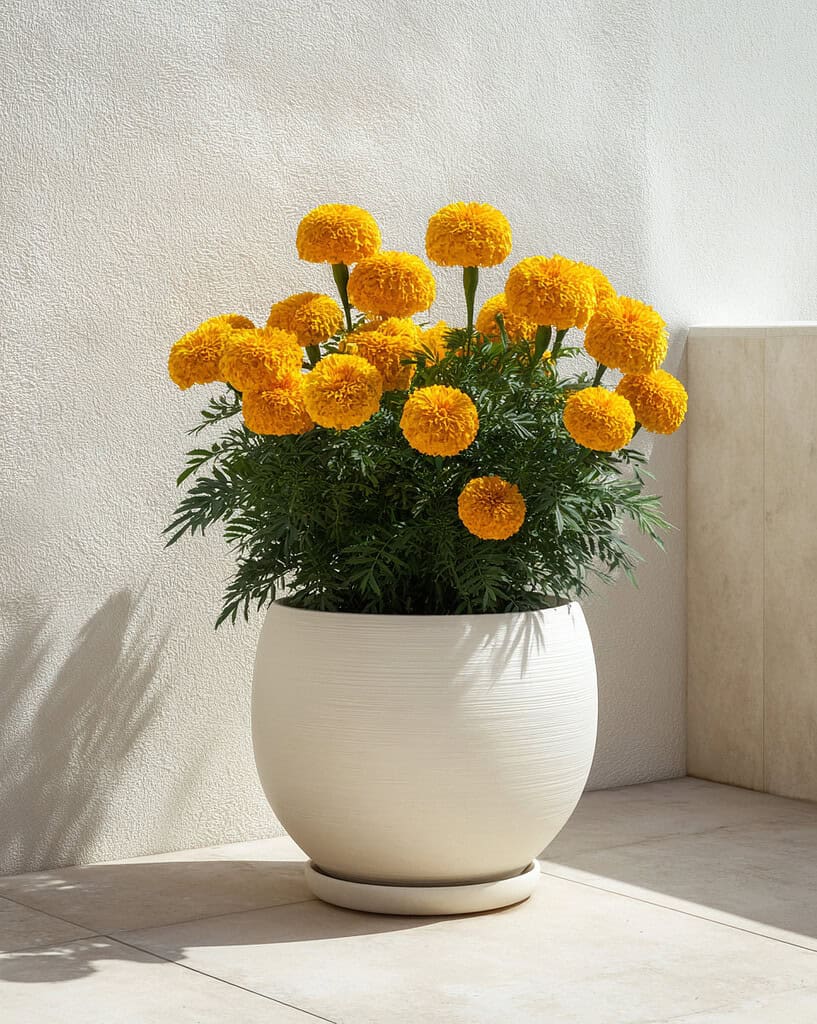
Sun: Full sun. Water:
Low to moderate.
Marigolds bring bold yellow, orange, and red color to any container. They are very easy and forgiving – marigolds thrive in heat and bloom nonstop in summer.
These annuals do best in full sun but will tolerate a bit of afternoon shade.
One great advantage is their drought tolerance: once established, marigolds won’t mind short dry periods (although regular watering will boost flowering).
They grow well in most potting mixes and even smaller containers, making them ideal for beginners who want bright color with minimal effort.
If you’re looking for full sun perennials to complement your containers, check out our list to best full sun perennials for easy-care, long-blooming options.
4. Zinnias
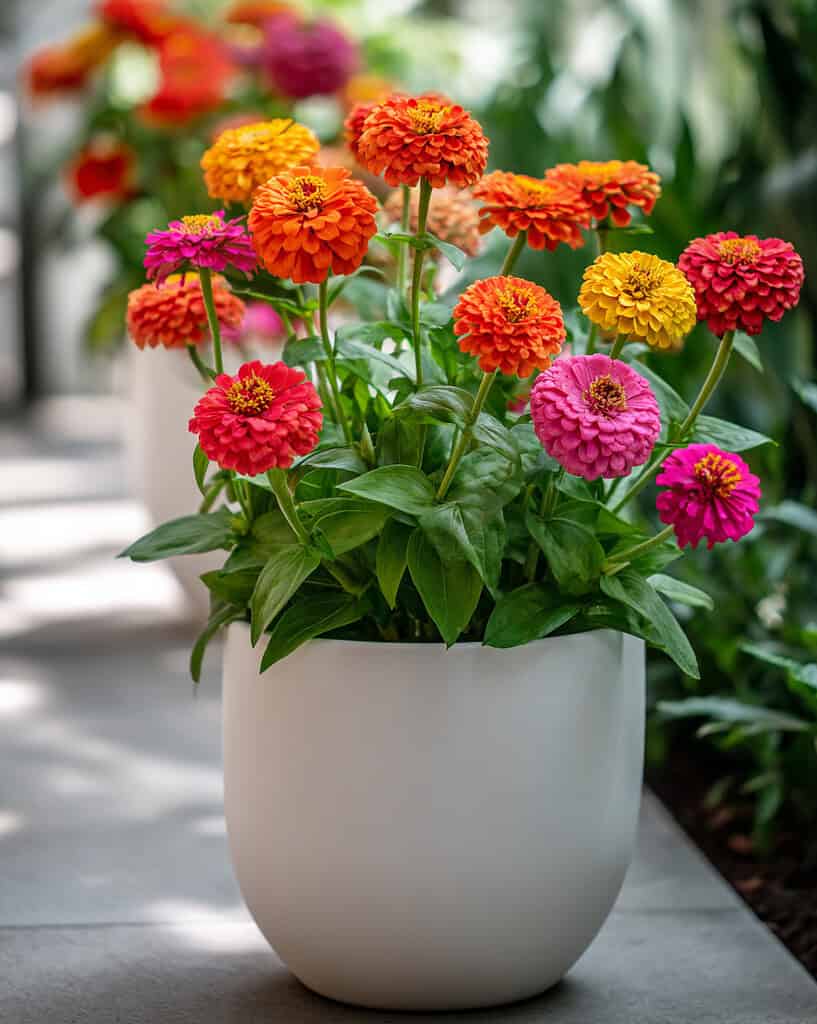
Sun: Full sun (6+ hours).
Water: Moderate.
Zinnias are heat-loving annuals that bring a burst of color in shades of pink, red, orange, yellow, and white. They grow easily from seed and do very well in containers.
Zinnias love the sun and will tolerate very hot conditions, making them perfect for sunny patios. They attract bees and butterflies to your containers.
Water regularly (they like moist soil) and remove spent blooms to encourage continuous flowering.
Because they can get a foot or more tall depending on variety, choose a deep container (at least 8-10 inches) to allow room for their roots.
5. Pansies
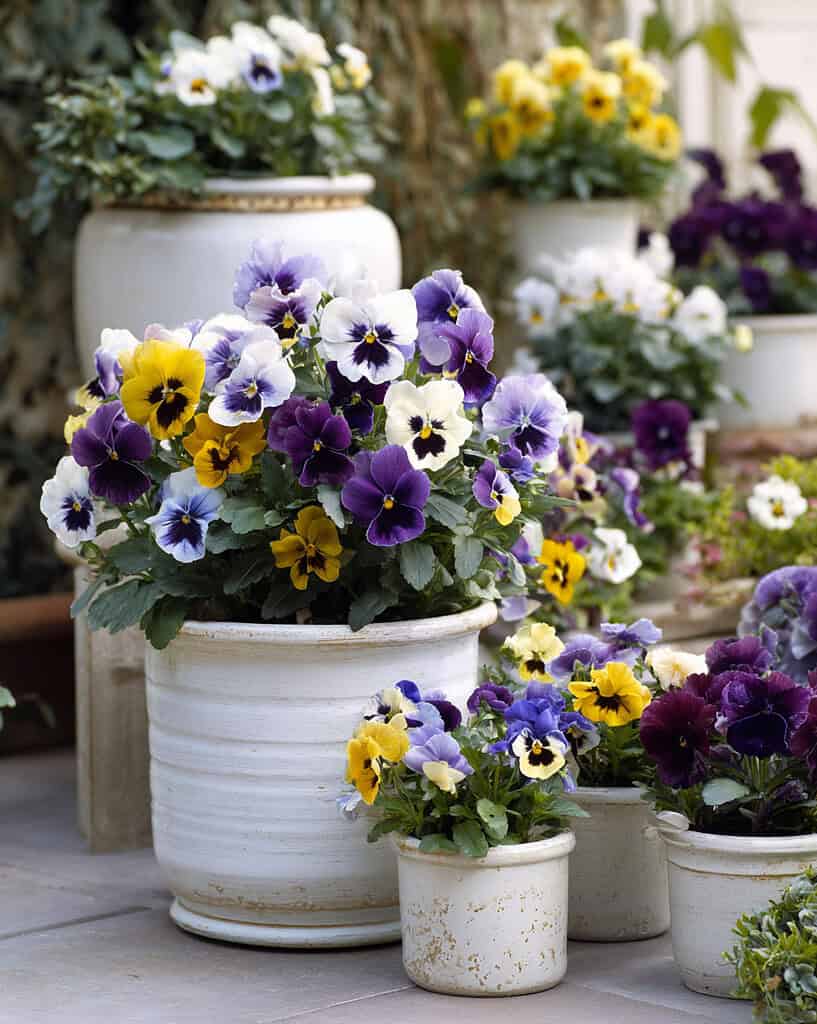
Sun: Part sun/part shade (cooler seasons).
Water: Moderate.
Pansies are cool-season favorites known for their “faces” and wide color variety. They bloom best in the cooler weather of spring or fall.
Pansies “like to be in part shade/part sun conditions” – too much hot sun can make them wilt, so morning sun and afternoon shade is ideal.
They thrive in a light, well-draining potting mix rich in organic matter. Keep pansies evenly moist (but not waterlogged) and pinch out faded flowers to prolong bloom.
Their cheerful blooms can last for weeks in a container, and when they fade in warm weather, you can swap in summer annuals.
6. Nasturtiums

Sun: Full sun.
Water: Low (drought tolerant).
Nasturtiums are trailers with vibrant orange, red, yellow, or mahogany blooms and round leaves. They are one of the easiest flowers to grow in pots – perfect for beginners.
“Growing nasturtiums in a container couldn’t be easier, even for kids or beginning gardeners”.
They do best in poor to average soil (too rich soil encourages foliage, not flowers) and full sun.
Nasturtiums are quite drought-tolerant once established – only water them when the top soil feels dry.
In a container, nasturtiums will spill over the edges or trail nicely if given support; their flowers are also edible, adding bonus charm to your pots.
For more inspiration on arranging flowers, see our guide to lovely raised flower bed ideas to bring your containers and garden to life.
7. Impatiens
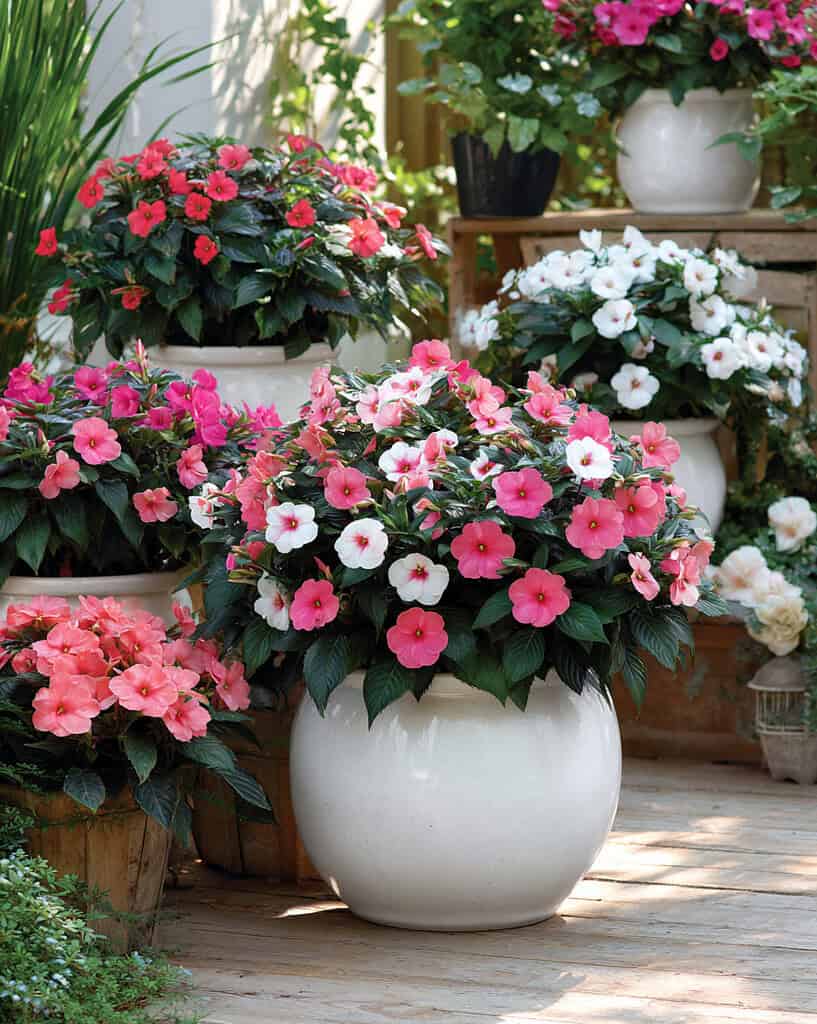
Sun: Part shade to full shade.
Water: High.
Impatiens are the go-to choice for shady spots. They come in bright pinks, reds, whites, and oranges and fill in gaps with lush color. Impatiens will grow up to about 12–18 inches tall in a pot.
They love consistent moisture and usually need more watering than sun-lovers – keep the soil evenly damp, and avoid letting it dry out completely.
These annuals “prefer partial to full shade”, making them ideal for balconies or patios that get only morning light.
Look for varieties like New Guinea impatiens for more sun tolerance, but generally they brighten any shady container garden effortlessly.
8. Begonias
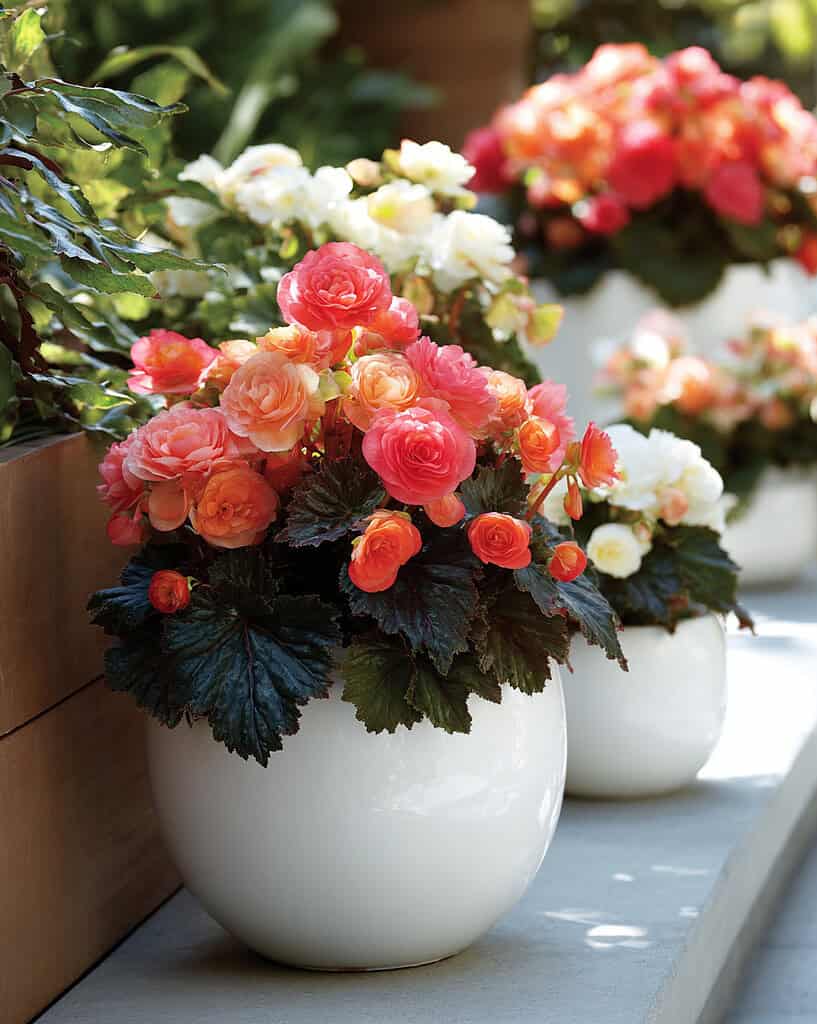
Sun: Part shade to full shade.
Water: Moderate.
Begonias offer showy blooms and attractive foliage in shady containers. Wax begonias (with glossy leaves and clusters of pink or white flowers) and tuberous begonia varieties are very popular in pots.
They do well in lightly shaded to partially shaded spots and need regular watering to keep the soil moist (but not waterlogged).
Many begonias are “relatively low maintenance” and will keep flowering from spring through fall.
In cooler climates, you can even bring tuberous begonias indoors in winter to preserve them for next year.
Their colorful blooms and foliage textures add interest and are forgiving of novice container gardeners.
9. Cosmos
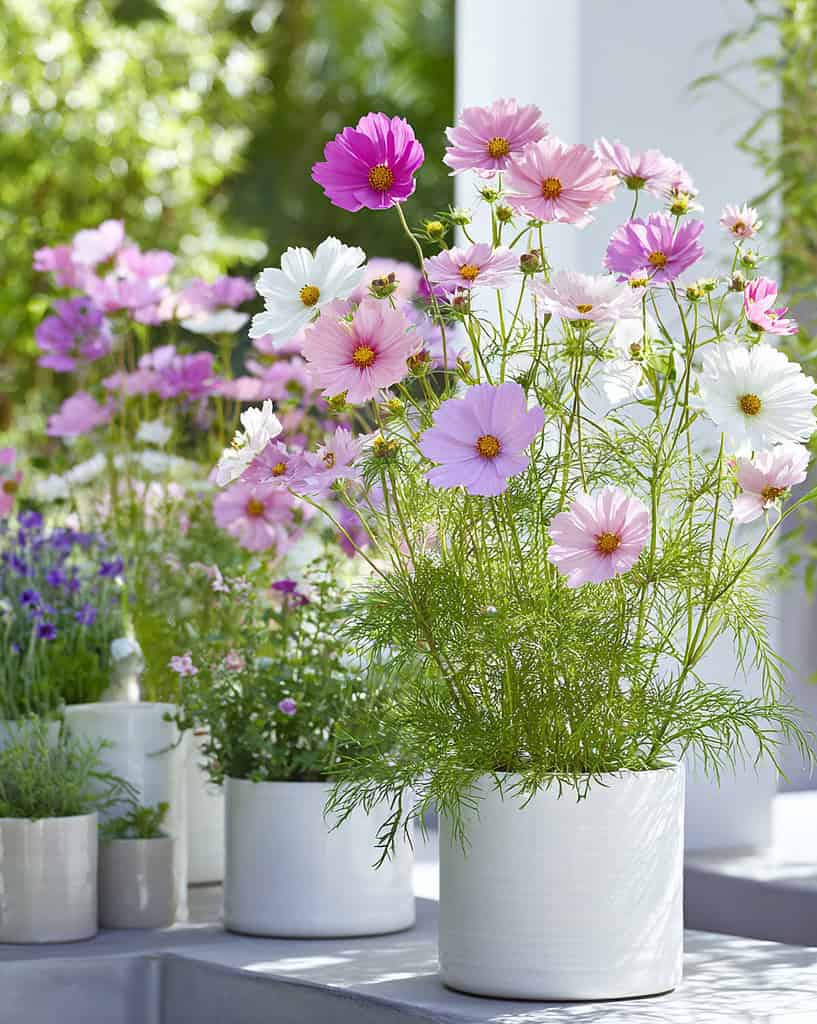
Sun: Full sun.
Water: Low to moderate.
Cosmos are tall, airy annuals with feathery foliage and daisy-like flowers in pink, white, red, yellow, or orange.
Easy to grow from seed or transplants, they quickly fill a container with blooms in summer. Cosmos love sun and heat, and they even tolerate light drought, so they’re great for a hot, sunny deck.
These plants will self-sow easily if you let spent flowers mature. They do need regular watering when first establishing, but once grown they survive dry spells.
Cosmos also attract butterflies and bees, adding life to your container garden. (Tip: stake taller varieties or choose a stout container so they don’t tip.).
10. Snapdragons
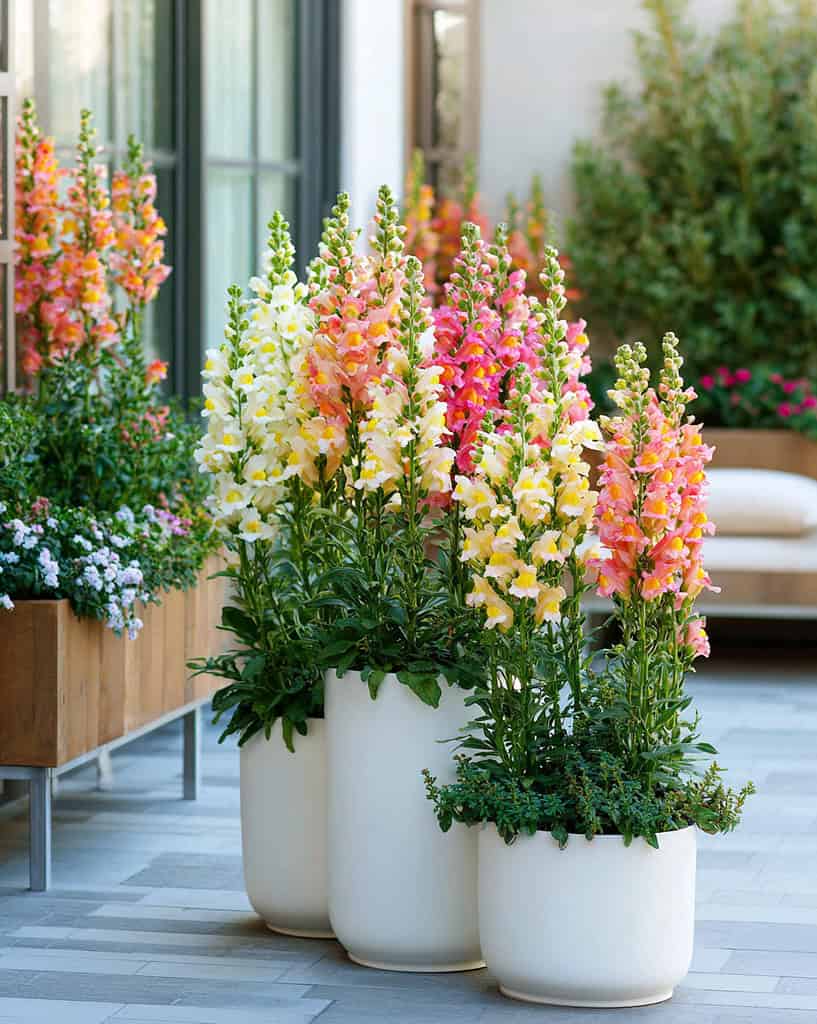
Sun: Full sun.
Water: Moderate.
Snapdragons (Antirrhinums) are classic cottage-garden flowers known for their vertical spires of colorful blooms.
They are surprisingly “versatile and tolerant of container life”. Snapdragons do best in a sunny spot (8+ hours of sun per day) but can handle a little shade.
They prefer rich, well-draining soil and regular water. Because they can reach 12–36 inches tall (depending on variety), choose a large pot (at least 10–12 inches across and deep) to support their roots.
Once planted, snapdragons will bloom from spring through fall in cool climates (and often rebloom if cut back after flowering).
Their tall flower spikes add vertical interest and are delightful in mixed containers or as a lone dramatic display.
Garden Planner
The 22-page planner timed to your county's real frost dates. Planting windows, monthly checklists, and a harvest log you'll fill with pride by August.
Your Free 22-Page Garden Planner
Built for your exact ZIP code — planting dates, harvest log, and a month-by-month plan. 15-second sign-up.
Choosing Containers and Soil
The right pot can make or break your container garden. Container material affects moisture: plastic and glazed pots retain water, while unglazed terracotta or wood pots dry out faster.
For beginners, a non-porous plastic or resin pot is forgiving because it holds moisture longer. Always ensure drainage holes – standing water will rot the roots of even the easiest plants.
Size matters. A small six-inch pot may work for a single pansy or marigold, but most flowering plants need more room as they grow.
As the NC State Extension notes, a container’s size should match the plant’s growth needs: “Restricted root growth results in decreased plant growth” and even reduced flowering if the pot is too small.
In practice, use at least an 8–10 inch diameter pot for medium plants like petunias or zinnias, and larger (12+ inches) for multi-plant or taller combos.
Fill your pot with a good-quality, all-purpose potting mix (not garden soil). Potting mix is lighter and drains much better than heavy garden dirt.
You can enrich it with compost or a bit of slow-release fertilizer if you like, but avoid mixes that are overly rich in fertilizer (some plants, like nasturtiums, bloom better in poorer soil).
A well-draining mix allows roots to breathe and prevents waterlogging.
Finally, consider container color and weight. Dark-colored pots heat up more in summer, which can dry plants faster. Light-colored or terracotta pots stay cooler.
Also, a heavy pot (clay or ceramic) is sturdier for tall top-heavy plants, while lightweight plastic is easier to move and is fine for smaller annuals.
Free Planting Guides for This Article
Get exact planting dates, frost schedules, and growing tips for your zone:
Watering, Sunlight, and Feeding Your Flowers
Watering
Containers dry out much faster than garden beds. As a rule, check your pots daily, especially on hot or windy days.
Water thoroughly whenever the top inch of soil feels dry.
For example, nasturtiums need watering only “when the top two inches (5 cm.) of soil feels dry to the touch” and may need water every day during hot weather.
Other plants like impatiens and begonias prefer consistently moist soil. Always water deeply until it runs out the drainage holes; shallow watering will not encourage deep root growth.
During very hot spells you may indeed be watering daily, whereas in cooler weeks twice or thrice a week might suffice.
Sunlight
Most container flowers on this list need plenty of light. Aim for at least 6 hours of sun for sun-loving annuals (petunias, marigolds, zinnias, cosmos, snapdragons).
Shade-tolerant flowers like impatiens, begonias, and pansies (in summer) do better with filtered light or afternoon shade.
Observe your space: place sun-lovers on a bright balcony or in a south-facing spot. If a plant blooms poorly or looks leggy, try moving it to a sunnier location or trimming back straggly growth.
Feeding
Flowering containers benefit from regular feeding because potted soil has limited nutrients.
Use a balanced water-soluble fertilizer (for example, a 10-10-10 or 20-20-20 formula) every 2–4 weeks during the growing season.
Alternatively, mix a slow-release fertilizer granule into the potting mix at planting. Many annuals (geraniums, petunias, etc.) will bloom more heavily if fed.
For instance, zonal geraniums “do well with occasional fertilization”. Be careful not to over-fertilize edible flowers like nasturtiums (too much fertilizer there can lead to lush leaves but fewer blooms).
Maintenance
Deadheading (removing spent flowers) keeps most annuals producing more blooms. Petunias, for example, bloom best when you “pluck off the old flowers” so they keep flowering.
Pinch or snip off faded blossoms on cosmos, snapdragons, impatiens, and others to encourage new buds.
Keep an eye out for pests: container plants are less prone to underground pests, but aphids and whiteflies can still appear.
If you need tips, check out our guide on how to get rid of aphids naturally for safe, effective solutions.
Finally, dilute and flush your pots occasionally (run water through to remove mineral buildup) especially if you see white crust on the soil.
Miss it by a week and you lose the crop. The free 22-page planner pins down your exact dates — last frost, first frost, and the weekly steps between — so you plant on the days that actually work for your ZIP.
How Hard Is It to Garden in Your County?
Every county has a unique Gardening Difficulty Score based on frost risk, soil quality, drought, altitude, and climate trends. Find yours — plus personalized frost dates, planting calendars, and soil data.
Check Your County's Score →Get Growing with Container Flowers!
With these easy-care flowers, even a complete beginner can have a gorgeous container garden.
Start by choosing one or two from our list – for example, plant petunias or zinnias in a sunny pot, or begonias and impatiens in a shady one – and follow the simple tips above.
Container gardening lets you grow big color in small spaces, transforming a balcony, deck, or even a windowsill into a blooming paradise.
The flowers we’ve listed are all hardy performers in pots; give them well-draining soil, the right light, and regular water and food, and they’ll do the rest.
Which flowers will you grow in your containers this season? Share your plans or ask questions in the comments below – we’d love to hear from you!
FAQs
How often should I water container flowers?
Water when the soil feels slightly dry. Check daily, especially in hot weather. Water deeply until it drains out the bottom. In cooler weather, 2–3 times a week is usually enough.
What size container should I use for flowering plants?
Choose a pot that gives roots room to grow. Most annuals need at least 8–10 inches in diameter and depth. Taller plants like cosmos or snapdragons need deeper pots. For multiple flowers, use 12+ inch containers.
Can I mix different flowers in one container?
Yes! Group plants with similar needs (sun-lovers with sun-lovers, shade-lovers with shade-lovers). Mix trailing and upright plants for variety, and ensure the pot is large enough to support them all.
How do I fertilize container flowers?
Feed regularly, about every 2–4 weeks. Use balanced liquid fertilizer or slow-release granules. Flush soil occasionally to prevent salt buildup and avoid over-fertilizing.
How do I care for container flowers in winter?
Trim and compost annuals at season’s end. Cool-season flowers like pansies can last into fall. Tender perennials like geraniums can be brought indoors. Store bulbs or tubers frost-free and refresh soil each spring.
Level Up Your Garden
Our most popular gardening guides