If your strawberry patch has been delivering disappointing yields — small fruits, sparse pickings, or plants that just sit there — you are not alone.
Most home gardeners are unknowingly making a handful of fixable mistakes that quietly rob them of a bigger harvest every single season.
The good news is growing great strawberries does not require a green thumb or a huge garden. It requires the right approach.
Whether you are starting from scratch or trying to improve an existing patch, these tested hacks will help you grow more strawberries — sweeter and bigger than you thought possible.
And if you are already experimenting with growing strawberries in raised beds, many of these tips will slot right in and amplify what you are already doing.
Why Most Strawberry Patches Underperform (And How to Fix Yours)
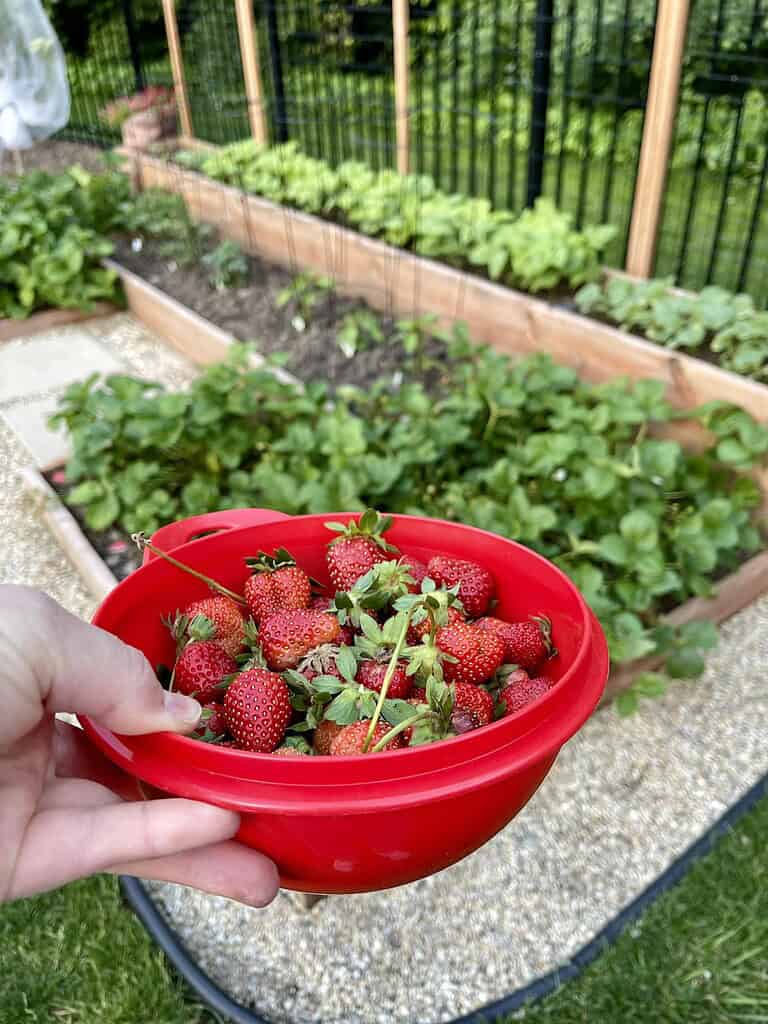
Before we get into the hacks, it helps to understand why most home strawberry patches never reach their potential. The most common culprits are:
- Wrong variety chosen for the local climate
- Soil that is too compact, too alkaline, or too low in organic matter
- Overcrowding that starves plants of light and nutrients
- Inconsistent watering — too much or too little
- Fertilizing at the wrong times or with the wrong ratios
- Neglecting runner management during the fruiting season
Fix even two or three of these and you will notice a visible difference in your harvest within the same season.
Fix all of them and your strawberry bed becomes one of the most productive spots in your entire garden.
Garden Planner
The 22-page planner timed to your county's real frost dates. Planting windows, monthly checklists, and a harvest log you'll fill with pride by August.
Your Free 22-Page Garden Planner
Built for your exact ZIP code — planting dates, harvest log, and a month-by-month plan. 15-second sign-up.
Choose the Right Strawberry Variety From the Start
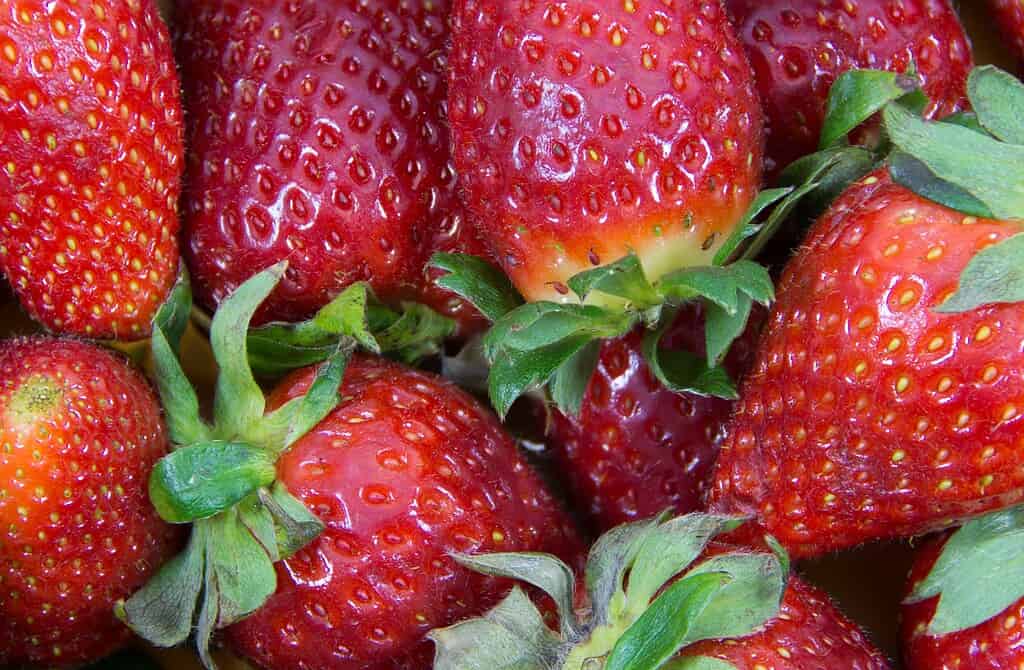
Matching the right variety to your climate is the first hack that separates thriving patches from struggling ones. There are three main categories to understand:
- June-bearing varieties — such as Chandler, Allstar, and Earliglow — produce one massive flush of fruit in late spring or early summer. They tend to yield the biggest, most flavorful berries and are ideal if you want to preserve, jam, or freeze large quantities all at once.
- Everbearing varieties — such as Quinault and Fort Laramie — produce two smaller harvests, one in spring and one in fall. Great for fresh eating over a longer window.
- Day-neutral varieties — such as Seascape and Albion — produce fruit almost continuously from late spring through fall as long as temperatures stay between 35°F and 85°F. Perfect for mild-climate homesteads.
The hack here is simple: do not just grab whatever your local garden center has on hand. Research what varieties perform best in your USDA hardiness zone.
Cold-climate growers do best with hardy options like Honeoye or Jewel, while warm-climate growers see better results from heat-tolerant picks like Camarosa or Seascape.
A little homework at planting time pays off in pounds of fruit later.
Soil Prep: The Secret Foundation of a Bigger Harvest
If there is one thing experienced homesteaders agree on, it is this: the real work of a great strawberry harvest happens underground.
Strawberries are shallow-rooted plants that demand well-draining, nutrient-rich, slightly acidic soil. Get this right and everything else becomes easier.
Get the pH Right (6.0–6.5)
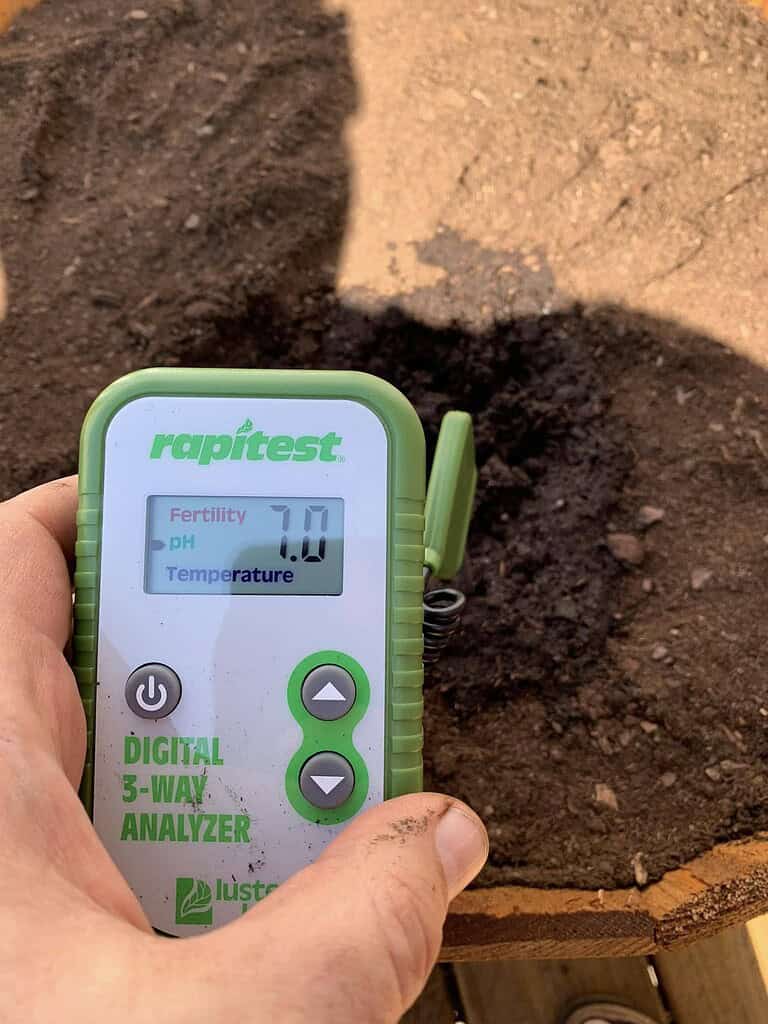
Strawberries thrive in soil with a pH between 6.0 and 6.5. Outside this range — even slightly — they struggle to absorb nutrients efficiently, leading to yellow leaves, poor fruit set, and small berries.
Test your soil before planting using a simple home test kit.
If it is too alkaline, amend with sulfur or peat moss. If it is too acidic, a small amount of garden lime will bring it back up. This one-time prep step is a game-changer that most first-time growers skip entirely.
Load Up on Organic Matter Before Planting
Before planting, work generous amounts of aged compost, well-rotted manure, or leaf mold into the top 8–10 inches of soil.
Organic matter improves drainage in clay soils, helps sandy soils retain moisture, feeds beneficial soil microbes, and slowly releases nutrients throughout the growing season.
This single step does more for your yield than almost any fertilizer you could buy.
This same principle is the backbone of any productive food garden — whether you are growing strawberries or planning a larger mini farm in your backyard.
Miss it by a week and you lose the crop. The free 22-page planner pins down your exact dates — last frost, first frost, and the weekly steps between — so you plant on the days that actually work for your ZIP.
Sunlight, Spacing, and Smart Site Selection
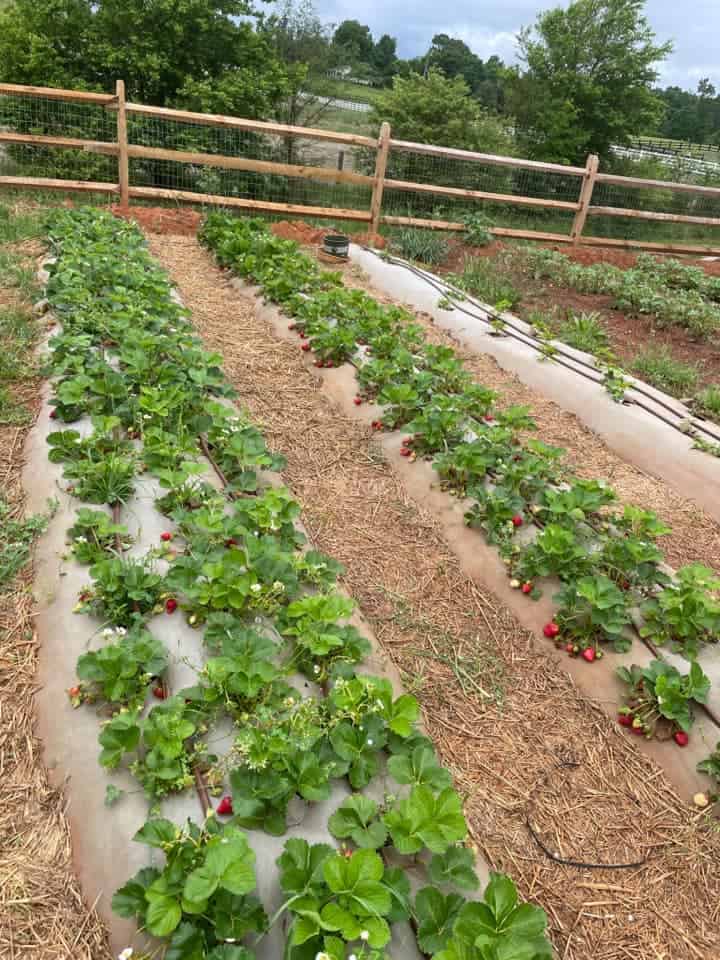
Strawberries are sun-hungry plants.
They need a minimum of 6–8 hours of direct sunlight per day to produce sweet, abundant fruit. Less than that and you will get plenty of leafy growth but disappointing berries.
If you are choosing a new planting spot, pick the sunniest area of your garden and resist the temptation to tuck them into a partially shaded corner.
Spacing is equally critical and often overlooked. Too close together means competition for water, nutrients, and light — all three of which directly affect fruit size and quantity.
Here are the main planting systems and their ideal spacing:
- Matted row system: Space plants 18–24 inches apart in rows 3–4 feet apart and allow runners to fill in naturally. Best for June-bearing varieties grown in the ground.
- Hill system: Space plants 12 inches apart in all directions and remove all runners. Best for everbearing and day-neutral varieties where you want maximum fruiting on each plant.
- Spaced row system: A middle ground — space mother plants 24 inches apart and allow only 2–3 daughter plants per runner to root in designated spots.
Also think about airflow. Crowded plants trap moisture against the foliage, which invites fungal disease. Wider spacing means drier leaves and healthier plants season after season.
Smart Watering Hacks for Sweeter, Bigger Berries
Water is where many home growers go wrong — either not enough during critical growth windows, or so much that root rot and disease become constant battles. Here is what actually works:
- Water at the base, never overhead. Wet foliage is an open invitation for gray mold and other fungal issues. Use a soaker hose or drip irrigation system to deliver water directly to the roots.
- Water deeply and less frequently. About 1–1.5 inches per week is ideal. Deep, infrequent watering encourages roots to grow down rather than staying shallow and stress-prone.
- Mulch heavily to lock in moisture. A 2–3 inch layer of straw around your plants dramatically reduces evaporation, keeps soil temperatures cool in summer, and protects developing berries from soil splash-back.
- Prioritize watering during fruit swell. The window between pollination and harvest is when berries are actively growing in size. Consistent moisture during this period is the single biggest driver of large fruit.
Best gardening planner I've used in 10 years — and I keep coming back to it every season.
Free Planting Guides for This Article
Get exact planting dates, frost schedules, and growing tips for your zone:
Fertilizing Strategically — More Is Not Always Better
Many growers default to applying a general-purpose fertilizer on their strawberries and hoping for the best. But strawberries have different nutrient needs at different stages, and fertilizing at the wrong time can actually reduce your yield.
Here is a practical homestead-friendly fertilizing schedule:
- At planting: Mix a balanced slow-release fertilizer or generous compost into each planting hole. This gives new plants a gentle start without burning tender roots.
- Early spring for established beds: Apply a balanced fertilizer (10-10-10) as new growth emerges to support leaf development and flowering.
- After the main harvest (June-bearing types): A light dose of balanced fertilizer fuels runner production and next year’s flower bud formation.
- Late summer to early fall: Switch to a low-nitrogen, higher-potassium option to harden plants before winter and set up next year’s blooms.
Avoid heavy nitrogen feeding during flowering and fruiting — it pushes leafy growth at the direct expense of berry production.
Bonemeal, fish emulsion, and kelp meal are excellent organic alternatives that feed plants more gently and predictably than synthetic options.
Runner Management: The Underrated Hack for Record Yields
Here is a truth most beginner growers learn too late: every runner a strawberry plant sends out redirects energy away from fruit production.
Runners are how strawberries reproduce vegetatively, and left completely unchecked, they will turn a productive patch into a crowded, low-yield tangle within a single season.
The hack is knowing when to cut and when to keep:
- During the fruiting season: Remove all runners immediately as they appear. Every bit of energy the plant saves from runner production goes directly into producing larger, sweeter berries.
- After the main harvest: Allow a select few healthy runners to root into daughter plants for next year. Always choose the first daughter plant on each runner — she is the strongest and most productive.
- The three-year renovation rule: Strawberry plants decline noticeably in productivity after their third or fourth year. Refresh your bed every three years by replacing older plants with vigorous young daughters to keep yields high.
- Beans
- Carrots
- Beets
- Lettuce
- Spinach
- Brassicas
The Best Companion Plants for Strawberries
Strategic companion planting can boost your strawberry harvest in ways that genuinely surprise first-time growers — fewer pests, better pollination, improved soil health, and in some cases even better flavor.
The best companions for strawberries include:
- Borage: Repels aphids and tomato hornworms, attracts pollinators, and is widely reported to improve the flavor of nearby strawberries. A true multi-tasker in the berry bed.
- Basil: Growing basil near your strawberry plants helps deter thrips, aphids, and flies while drawing in pollinators. Plus, you will have fresh herbs a few steps from your berry harvest — a win on both counts.
- Marigolds: Their roots release a natural compound that repels soil nematodes, which are a common underground enemy of strawberry plants that most growers never even suspect.
- Garlic and chives: The pungent scent deters spider mites, aphids, and Japanese beetles — all regular visitors to unprotected strawberry beds.
- Thyme and low-growing herbs: Excellent as living ground cover between rows — they suppress weeds, retain soil moisture, and attract beneficial insects.
Avoid planting brassicas, fennel, or nightshade family members (tomatoes, peppers, eggplant) near strawberries — they can share diseases or chemically inhibit berry growth.
Beating Pests and Disease Before They Take Over
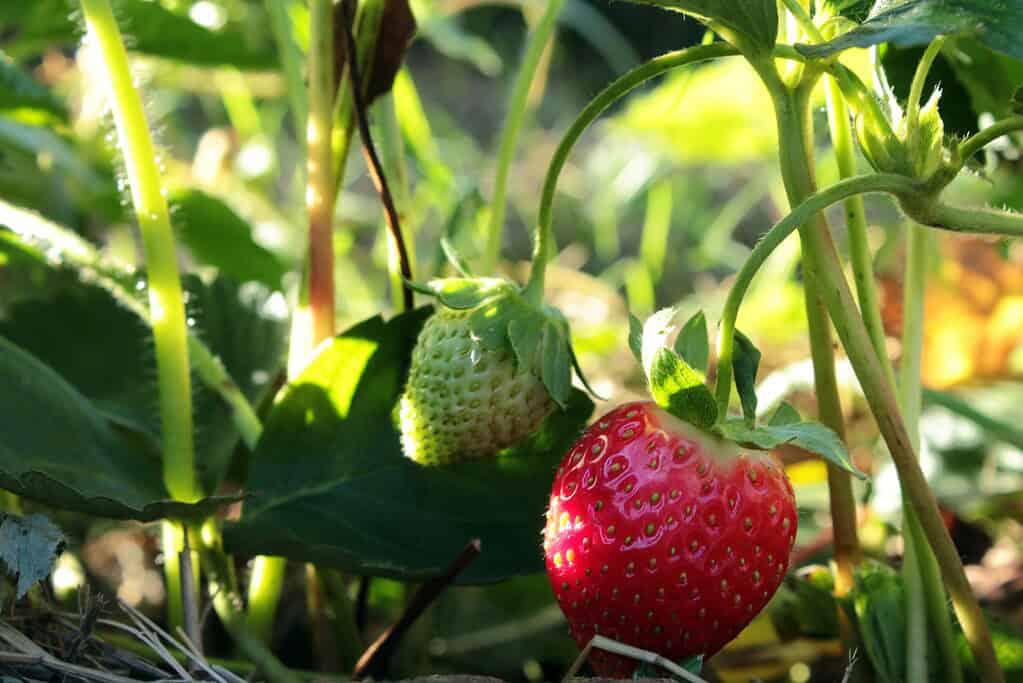
Strawberries have their share of enemies, but with the right habits already in place, most problems are very manageable without reaching for chemical sprays.
Common strawberry pests and natural solutions:
- Slugs and snails: Keep straw mulch away from the crown of the plant where these pests hide. Diatomaceous earth sprinkled around the base works as an effective barrier.
- Birds: Cover your patch with bird netting once berries start to color. This simple step alone can double the amount of fruit you actually get to eat.
- Aphids: A strong blast of water from a hose usually dislodges them. Companion plants like garlic and chives help prevent infestations from establishing in the first place.
- Spider mites: Most common in hot, dry weather. Keep plants well-watered and use a neem oil spray as a preventative measure during dry spells.
On the disease front, powdery mildew is one of the most common fungal threats in strawberry beds, especially in humid conditions. The best prevention is always good airflow through proper spacing and avoiding overhead watering.
Gray mold (Botrytis) is another frequent problem that strikes in wet, cool weather — remove any infected fruit or leaves the moment you spot them to stop the spread.
How Hard Is It to Garden in Your County?
Every county has a unique Gardening Difficulty Score based on frost risk, soil quality, drought, altitude, and climate trends. Find yours — plus personalized frost dates, planting calendars, and soil data.
Check Your County's Score →Growing Strawberries in Every Space: Containers, Vertically, in Gutters, and Indoors
No yard? No problem. One of the most exciting things about strawberries is how well they adapt to creative, space-saving setups.
Whether you are working with a balcony, a sunny windowsill, or a narrow fence line, there is a method that fits your situation.
Growing Strawberries in Containers
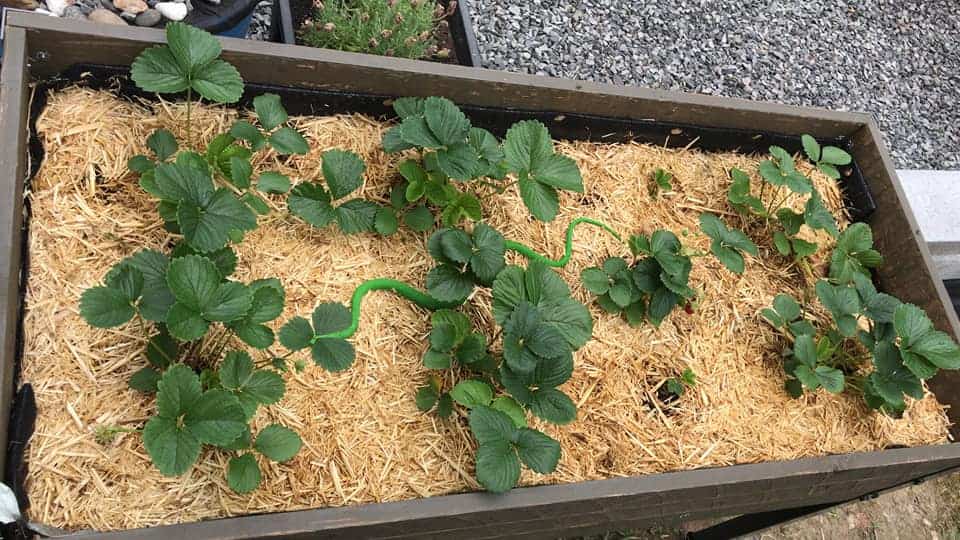
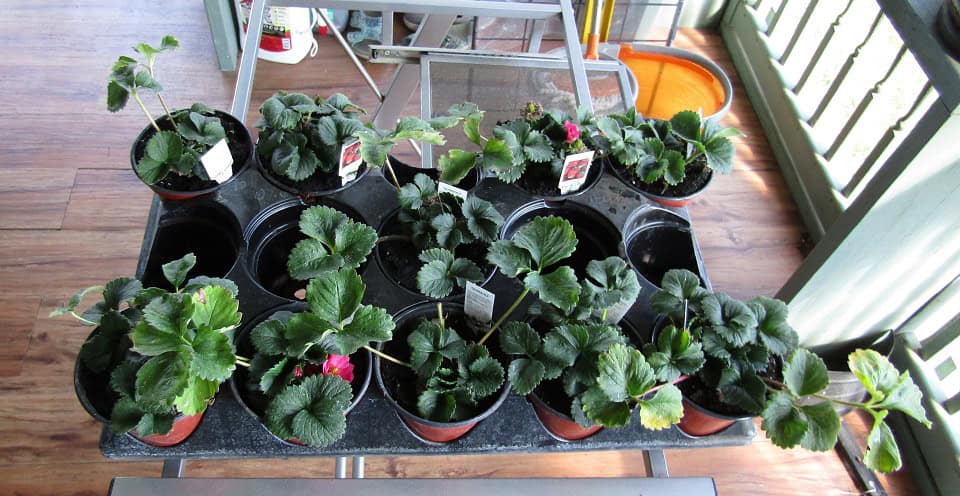
Growing strawberries in containers is one of the most accessible ways to start, and a well-set-up container garden can be surprisingly productive.
If you have already explored using buckets and containers for your vegetable garden, strawberries fit seamlessly into that same setup.
- Size matters. Each plant needs at least 8 inches of soil depth and 12 inches of diameter. Our full guide to choosing the right garden containers covers everything from materials to drainage to sizing for different crops.
- Use high-quality, well-draining potting mix. Never use plain garden soil in pots — it compacts and drains poorly. Mix in perlite or coarse sand to keep it airy and root-friendly.
- Water and feed more often. Containers dry out much faster than in-ground beds. Check moisture daily in summer and feed with a balanced liquid fertilizer every 2–3 weeks during the growing season.
- Protect pots in winter. In cold climates, move containers to an unheated garage or wrap them in insulating material — container roots are far more vulnerable to freeze damage than roots in the ground.
Growing Strawberries Vertically
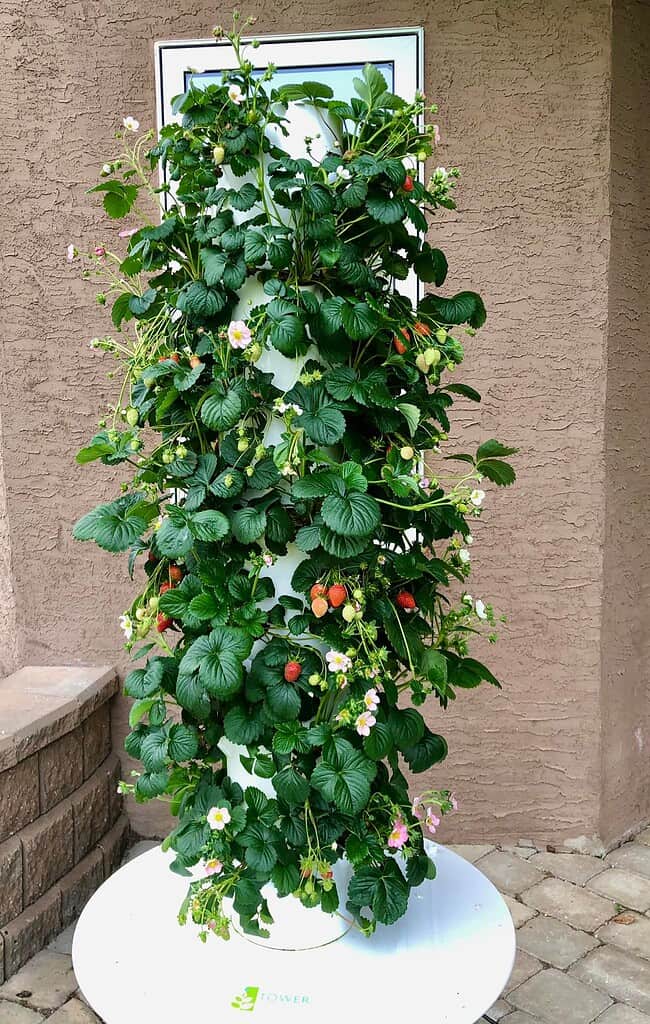
Growing strawberries vertically is a game-changer when horizontal space is limited.
Strawberry towers, vertical pallet planters, and tiered hanging pocket systems let you fit dozens of plants into a fraction of the footprint a traditional bed would require.
The trailing habit of strawberry plants actually makes them naturals for vertical setups — runners cascade beautifully over the edges, and berries hang freely where they are easy to spot and pick without bending down.
When setting up a vertical system, keep these points in mind:
- Choose a day-neutral variety like Albion or Seascape for the most continuous production at every level of the structure.
- Position the tower or vertical planter where the top plants are not blocking light from the lower pockets — rotating the tower weekly if needed ensures even sun exposure.
- Water slowly and deeply so moisture reaches the lower pockets, not just the top. A slow-drip system threaded through the center of a tower works exceptionally well here.
Growing Strawberries in Gutters
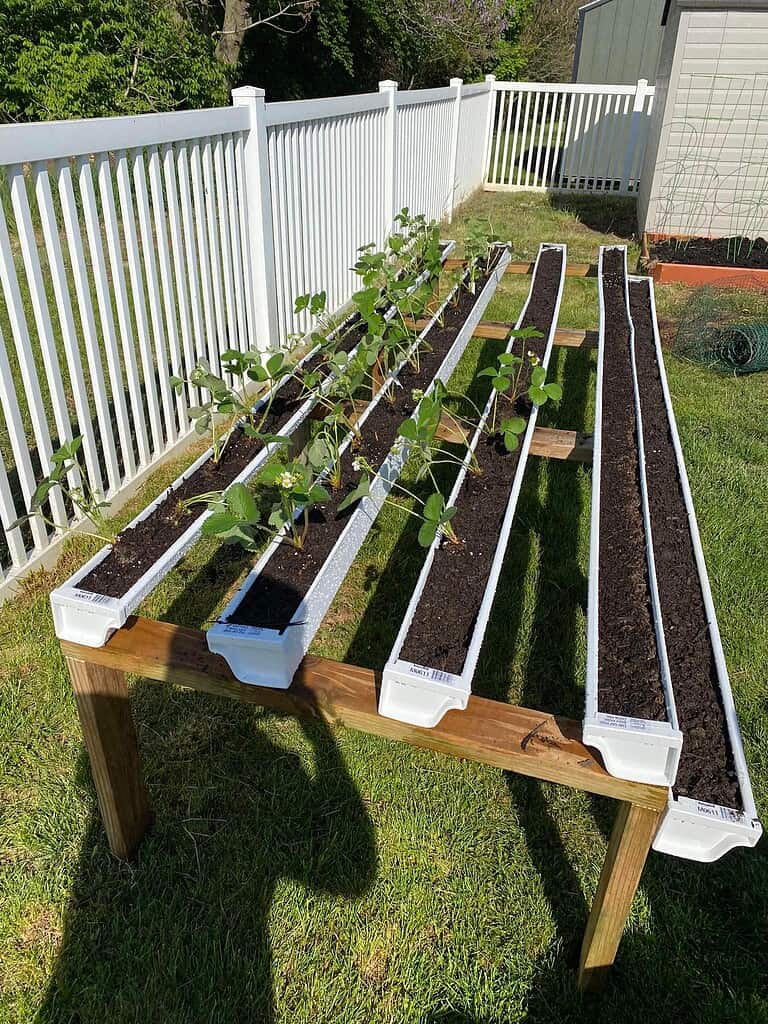
Growing strawberries in gutters has become one of the most popular DIY hacks in the homestead community — and for good reason.
Vinyl rain gutters mounted to a fence, shed wall, or freestanding frame create long, shallow growing channels that are inexpensive, easy to drain-drill, and surprisingly productive.
The key considerations for gutter growing:
- Use gutters at least 4 inches deep and drill drainage holes every 6–8 inches along the bottom before filling.
- Because the soil volume is small, moisture management is critical — gutter planters dry out fast in warm weather and may need watering once or even twice daily during peak summer.
- Mount gutters on a slight angle (about half an inch of drop per foot) so excess water drains to one end rather than pooling.
- This setup works best with compact everbearing or day-neutral varieties rather than large June-bearing plants that develop extensive root systems.
Gutters mounted in tiered rows on a south-facing wall essentially combine vertical growing with container growing — maximizing yield from a very small footprint.
Growing Strawberries Indoors
Growing strawberries indoors is entirely possible and a wonderful project for the off-season or for gardeners without any outdoor space at all.
The biggest challenge indoors is light. Strawberries need the equivalent of 6–8 hours of direct sun, which most windows simply cannot deliver year-round. A full-spectrum LED grow light positioned 6–12 inches above the plants for 12–14 hours per day resolves this completely and makes indoor strawberry growing genuinely productive.
A few additional tips for success indoors:
- Choose day-neutral varieties like Seascape or Albion — they fruit reliably without the cold-period cues that June-bearing types require.
- Since there are no bees indoors, you will need to hand-pollinate blossoms. A small soft paintbrush dabbed gently from flower to flower mimics what bees do outdoors and dramatically improves fruit set.
- Keep plants away from heating vents, which dry out both the air and soil rapidly. A small humidifier nearby or a pebble tray with water under the pot helps maintain appropriate humidity.
- Containers indoors dry out quickly — check soil moisture every day and do not let plants sit in standing water.
Start Filling Your Harvest Basket This Season
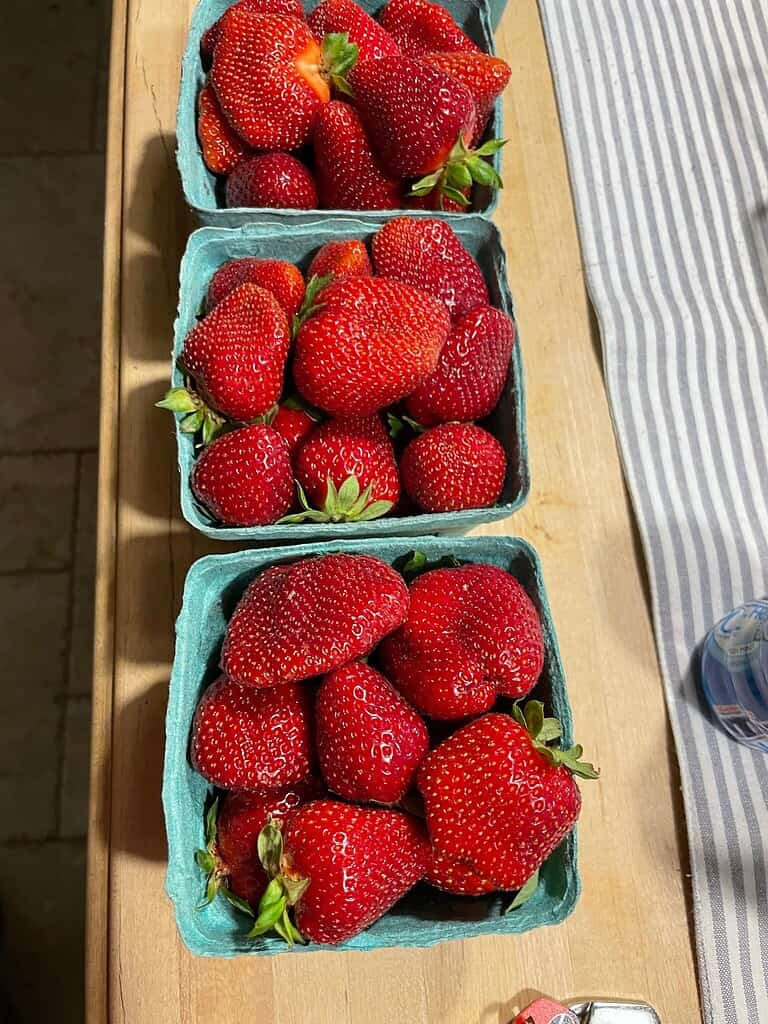
Growing strawberries well is not about luck — it is about a handful of intentional choices made at the right time.
- Choose a variety suited to your climate.
- Build your soil before the first plant goes in. Space plants properly for airflow and nutrient access.
- Water deeply at the base, mulch generously, and manage runners during the fruiting season.
- Bring in companion plants that work with nature rather than against it.
- And when pests and disease show up — because they will — you will already have the defenses in place to handle them without stress.
Start with even one or two of these hacks this season and watch what happens to your yields. Then layer in more next year.
That is exactly how a modest patch of strawberry plants transforms into something that genuinely feeds your household — and gives you something to brag about at the homestead.
Have you tried any of these hacks in your own strawberry patch? Do you have a secret tip that has transformed your harvest? Share it in the comments below — we would love to hear what is working for you!
Plan Your Garden With Confidence!

Ever start planting… and then realize halfway through that things feel a little scattered?
A simple plan changes everything.
When you sketch your layout first, you can see what fits, what flows, and what actually makes sense for your space. It saves time, money, and a whole lot of second-guessing later.
Our free Garden Planner helps you map out beds, organize plant spacing, rotate crops, and keep track of seasonal tasks – all in a clean, printable format you can actually use.
Whether you’re designing a low maintenance front yard or planning your full homestead garden, this gives you a clear starting point.
Less chaos. More clarity. A garden that works.
Frequently Asked Questions
How do I get my strawberries to produce more fruit in their second year?
Second-year strawberry plants are typically your most productive — but only if you set them up correctly after the first harvest.
The key is renovation: mow or cut foliage back to about 1 inch above the crown immediately after fruiting ends, thin plants to 6 inches apart, remove all weeds, and apply a balanced fertilizer.
This stimulates vigorous new growth and allows plants to put maximum energy into forming flower buds for next spring. Skip renovation and plants become crowded and disease-prone heading into year two.
Why are my strawberries small and bland even though the plants look healthy?
Small, flavorless berries usually come down to three things: inconsistent moisture during fruit development, too much nitrogen in the soil (which pushes leafy growth at the expense of sugar), or overloaded plants with too many fruits competing for the same resources.
The fix is to thin fruit clusters during heavy-set years, switch to a lower-nitrogen fertilizer once plants are established, and maintain steady, deep watering from flowering through harvest.
Warm days and cool nights naturally concentrate sugars — if your climate runs very hot during fruiting season, choosing a heat-tolerant variety matched to your region will make a noticeable difference.
Can I grow strawberries from seeds, or should I always use transplants?
Technically yes, but growing from seed is slow and rarely worth the effort for most home growers.
Seeds take 2–3 weeks to germinate, and the resulting plants generally will not fruit until their second year. In contrast, bare-root transplants or potted starts purchased in spring will often give you some fruit in their very first season.
The main exception is alpine strawberries (Fragaria vesca) — these grow well from seed, are more shade-tolerant, and make a wonderful low-maintenance option for borders, containers, and spots where regular varieties struggle.
Should I remove strawberry flowers in the first year after planting?
Yes — and this is one of the hardest but most rewarding things you can do for June-bearing varieties in their first season.
By pinching off all flowers as they appear for the first 4–6 weeks after transplanting, you prevent the plant from putting energy into fruit before its root system is properly established. The result is a much stronger, larger plant that produces significantly more in years two and three.
For everbearing and day-neutral types, you can allow flowers from midsummer onward in the first year since these varieties do not rely on the same extended establishment period.
How do I protect strawberry blossoms from a late spring frost?
Late spring frosts are one of the most frustrating threats to a strawberry harvest because the damage happens right at bloom time — and killed blossoms mean no fruit.
The classic homestead solution is floating row cover fabric, which you drape directly over plants on nights when frost is forecast and remove the following morning once temperatures rise. Straw mulch also buffers root-level temperature.
If frost is predicted while plants are in full bloom, even a light sheet laid over the bed overnight can protect enough flowers to save most of your harvest. Keep a few yards of frost cloth within easy reach from mid-March onward and watch your local forecast closely during bloom time.
Level Up Your Garden
Our most popular gardening guides