
Fresh basil is one of those ingredients that can transform an entire dish — and once you grow it yourself, you’ll never go back to the flavorless supermarket bunches.
The good news is that basil is one of the easiest herbs to grow, even if you’ve never gardened before.
With the right setup, a little know-how, and some basic care, you can have lush, aromatic basil all season long — and even year-round if you grow it indoors.
This guide covers everything from choosing a variety and planting your seeds to pruning, harvesting, and storing your basil like a pro. Whether you’re working with a backyard garden bed, containers on a patio, or a sunny kitchen window, there’s a method here that will work for you.
If this is your very first time growing anything, our step-by-step guide on how to start a garden for beginners will give you a solid foundation before you dive in.
Why You Should Grow Your Own Basil

Basil from the store is a pale shadow of what you can grow at home. Here’s why it’s worth growing your own:
- Unbeatable flavor and aroma. Freshly picked basil has volatile oils that start breaking down the moment it’s cut. Homegrown and harvested on the spot means you capture that flavor at its peak.
- Significant cost savings. A single packet of basil seeds costs less than one bunch at the grocery store — and it’ll keep you in basil for the entire season.
- It’s extremely beginner-friendly. Basil is fast-growing, responsive to care, and very forgiving of beginner mistakes (within reason).
- Year-round availability. Growing basil indoors means fresh leaves in January, not just July.
- Health benefits. Basil is packed with vitamin K, antioxidants, and anti-inflammatory compounds — a genuinely nutritious addition to your meals.
Choosing the Right Basil Variety
Not all basil is the same. There are dozens of varieties, each with distinct flavors, growth habits, and best uses. Here are the most popular and practical options for home growers:
Genovese Basil
The gold standard for Italian cooking. Genovese basil has large, flat, deeply fragrant leaves and is the classic choice for pesto, caprese salads, and pasta sauces.
It’s the most widely available variety and an excellent starting point for beginners.
Sweet Basil
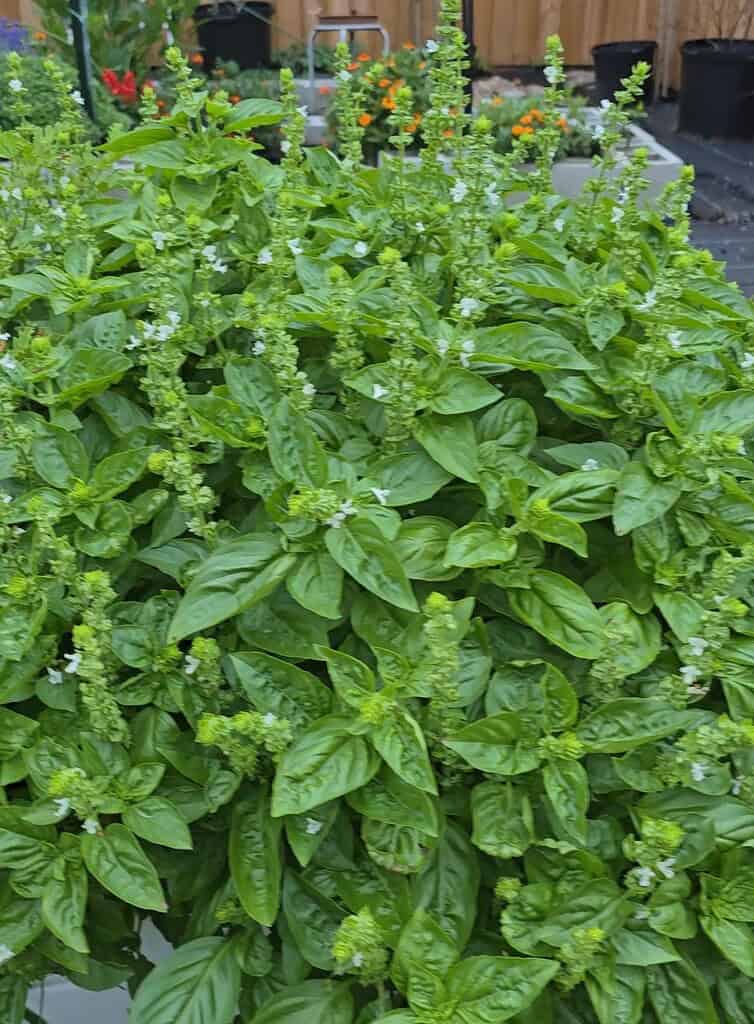
Similar to Genovese, sweet basil is a reliable all-rounder with a slightly milder flavor. If your seed packet just says “basil,” it’s probably this variety.
Thai Basil
Thai basil has a spicy, anise-like flavor with sturdy, glossy leaves and purple stems. It holds up better to heat in cooking and in the garden, making it ideal for stir-fries and curries.
Lemon Basil
Lemon basil has a fresh citrusy scent that pairs beautifully with fish, chicken, and light summer salads. It’s more compact, making it great for containers.
Purple (Dark Opal) Basil
Purple basil offers a striking visual element with slightly spicier notes than sweet basil. It’s commonly used to infuse vinegars and oils and adds gorgeous color to any herb bed.
Holy Basil (Tulsi)
Holy basil has a clove-like, peppery flavor distinct from culinary basil. It’s widely used in herbal teas and traditional medicine.
If you’re curious about the broader world of plant-based remedies, our introduction to herbalism for beginners is a great companion read.
When to Plant Basil
Timing is everything with basil. This is a warm-season herb that despises frost and will stall or die if planted too early.
- Outdoors: Plant after your last frost date, when nighttime temperatures consistently stay above 50°F and soil temperatures are at least 60°F. In most of the continental US, this means late April through early June.
- Starting indoors: Sow seeds 6–8 weeks before your last expected frost date, giving you transplant-ready seedlings by the time the weather warms.
- Successive sowing: For a continuous supply, sow a new batch of seeds every 3–4 weeks through midsummer to prevent gaps when your first plant bolts.
Pro tip: Basil planted in cold soil (below 60°F) will often turn yellow or black at the leaf edges — a sure sign of cold stress. Patience pays off here.
Soil, Containers, and Planting Depth
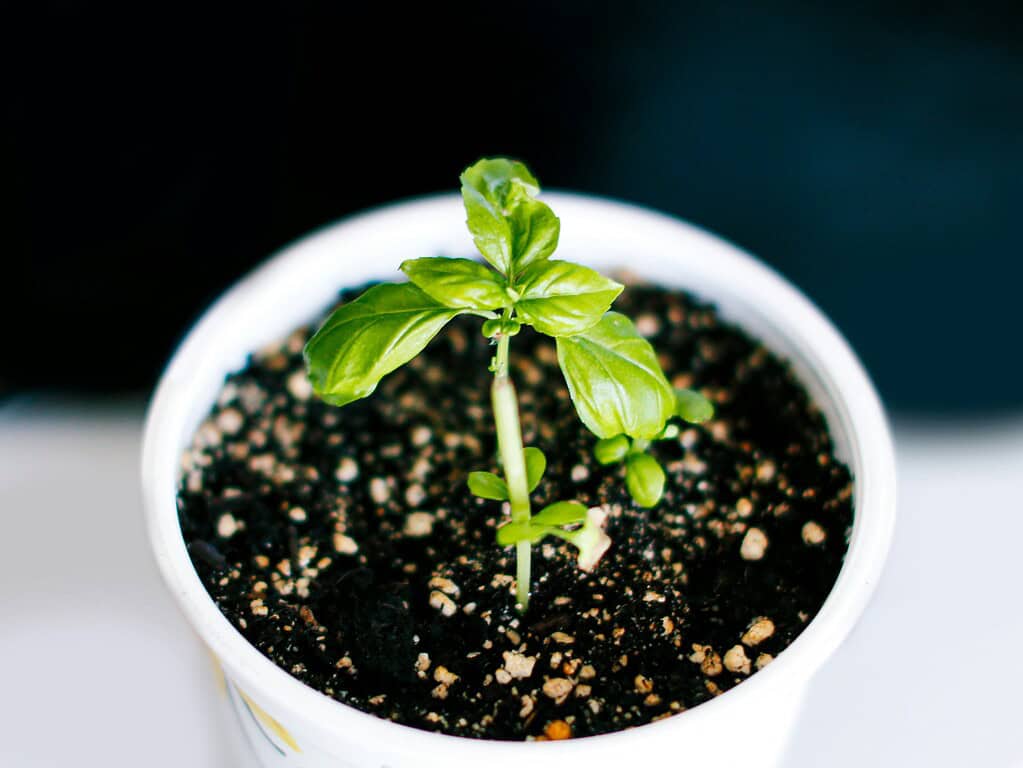
Best Soil for Basil
- Well-draining and fertile. Basil hates waterlogged roots. Use loamy, nutrient-rich soil that drains quickly.
- pH between 6.0 and 7.0. Slightly acidic to neutral is the sweet spot. A simple pH tester from any garden center will confirm this.
- Amend with compost. Mix in a generous amount of compost before planting to boost nutrients and improve drainage.
Container Growing
Basil is one of the best herbs for containers. A few key things:
- Use a pot at least 8–12 inches deep and wide — basil’s root system needs room to spread.
- Drainage holes are non-negotiable. Standing water is a fast track to root rot.
- Use a high-quality potting mix rather than garden soil, which compacts in containers.
- Terra cotta pots dry out faster than plastic, which can benefit basil — just water more frequently in summer.
If you’re looking for setup inspiration, our roundup of creative herb garden ideas has great options for every size of space.
Planting Depth
Sow basil seeds no deeper than ¼ inch. They need light to germinate, so a light covering of soil or vermiculite is ideal. Seeds typically germinate in 5–10 days in warm conditions (70–80°F).
Sunlight and Temperature Requirements
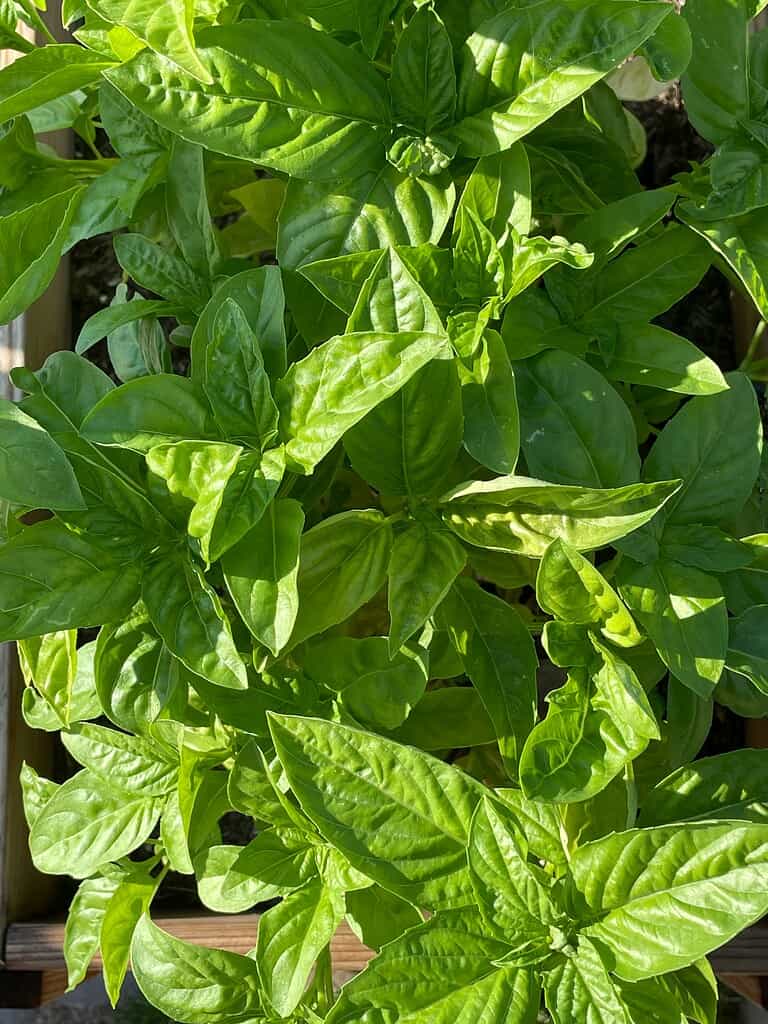
Basil is a sun-lover. No amount of good soil or careful watering compensates for inadequate light.
- Full sun: Basil needs a minimum of 6 hours of direct sunlight per day — 8 hours is even better.
- Ideal temperature: 70–90°F. Basil thrives in heat and slows its growth when temperatures dip below 60°F.
- Below 50°F is dangerous. Even a light frost will kill basil. Temperatures in the 40s cause black spots on leaves.
- Protect from cold wind. A sheltered south-facing spot is ideal in most climates.
How to Water Basil Properly
More basil plants die from overwatering than from any other cause. Getting your watering right is one of the most critical skills to develop.
The Right Technique
- Check the soil first. Stick your finger an inch into the soil. Water only if it feels dry at that depth.
- Water deeply and less frequently. Shallow watering encourages shallow roots. Water until it drains from the bottom, then wait for the top inch to dry out before watering again.
- Water in the morning. This gives foliage time to dry during the day, reducing the risk of fungal disease.
- Avoid wetting the leaves. Water at soil level. Wet foliage sitting overnight invites downy mildew.
Signs of Overwatering vs. Underwatering
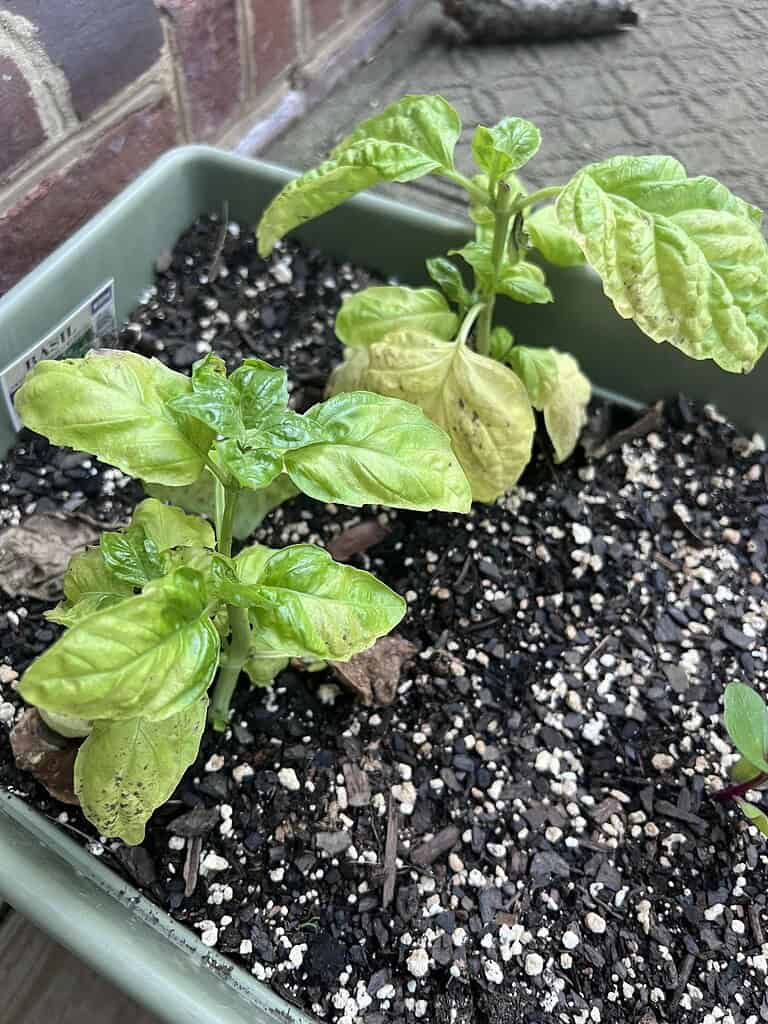
- Overwatered basil: Yellow leaves, drooping despite wet soil, mushy stem at the base.
- Underwatered basil: Wilting that perks up after watering, dry soil pulling away from the pot, brown leaf edges.
Fertilizing Basil for Maximum Growth
Basil is not a heavy feeder, but it benefits from some supplemental nutrients — especially in containers.
- In-ground or raised bed: A single application of balanced compost at planting time is often all you need. Top-dress every 4–6 weeks if growth slows.
- Container basil: Apply a diluted liquid fertilizer (balanced NPK or fish emulsion) every 3–4 weeks during the growing season.
- Don’t over-fertilize. Too much nitrogen produces lush growth but significantly reduces the aromatic oils responsible for basil’s flavor. Less is more.
- Avoid fertilizing stressed plants. Fix the underlying problem first.
The Art of Pinching and Pruning Basil
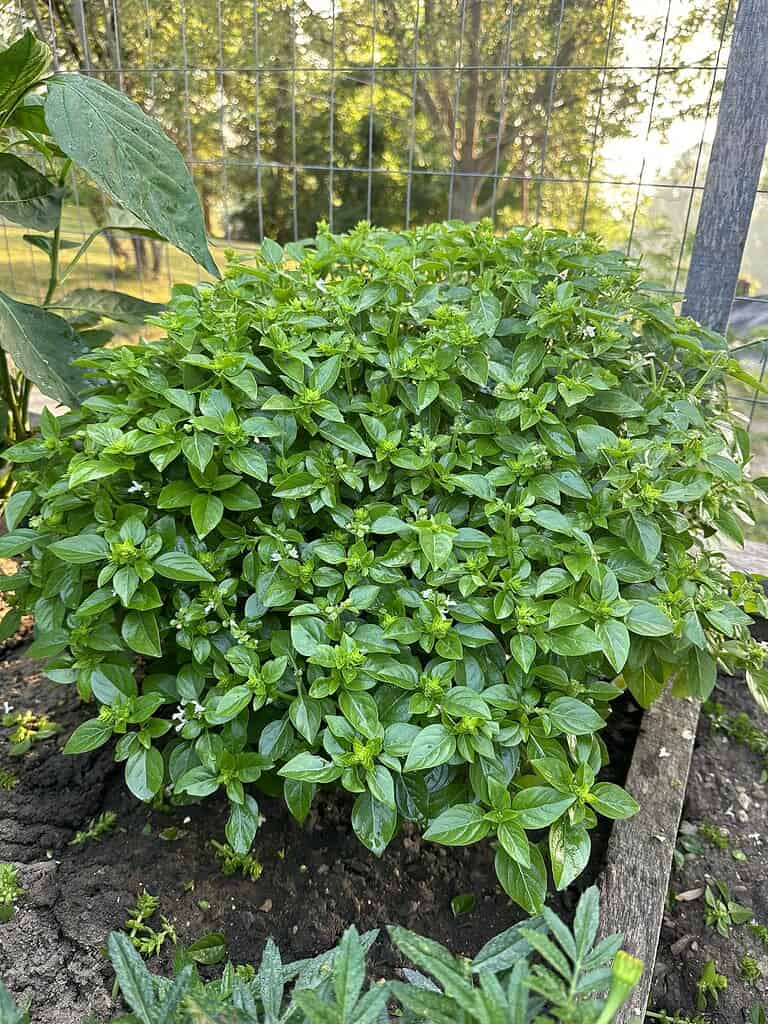
This is the single most important skill for keeping basil productive all season. Done correctly, pruning transforms a scraggly seedling into a lush, bushy plant.
How to Pinch Basil
- Once your plant has grown 6 leaves (3 pairs), it’s ready for its first pinch.
- Using clean scissors or your fingers, snip the stem just above a leaf node — the point where two leaves meet the stem.
- The plant will send out two new shoots from that node, doubling its branching.
- Repeat every 2–3 weeks. Never remove more than one-third of the plant at a time.
Why You Must Remove Flower Buds
When basil flowers (bolts), it switches energy from leaf production to seed production. Leaves become smaller, thicker, and noticeably more bitter.
The moment you see flower buds forming, pinch them off immediately to redirect the plant’s energy back into producing flavorful leaves.
Don’t panic if it flowers. Simply pinch off all flower spikes and give the plant a good watering. It will usually recover and start producing quality leaves again within a week.
Growing Basil Indoors vs. Outdoors
Growing Basil Outdoors
- Outdoor basil typically produces more vigorous plants with more intense flavor, thanks to natural sunlight and airflow.
- It’s seasonal in most climates, so plan to preserve your harvest before the first frost.
- Basil grows exceptionally well in raised beds with full control over soil quality and drainage.
Growing Basil Indoors
Growing basil inside is absolutely possible and great for year-round fresh leaves. The key challenges are light and airflow — both easily addressed:
- South-facing window: A south-facing window that gets 6+ hours of direct sun is ideal.
- Grow lights: A simple LED grow light positioned 2–4 inches above the plant for 12–16 hours a day works brilliantly if natural light is limited.
- Air circulation: Stagnant air encourages fungal problems. A small fan nearby or an open window periodically will keep air moving.
For a full walkthrough on growing herbs inside, our complete guide to starting an indoor herb garden covers every detail from setup to harvest.
And if you want a plug-and-play solution, we’ve also reviewed the best indoor garden kits that make growing basil on your countertop even simpler.
Common Basil Pests and Problems (and How to Fix Them)
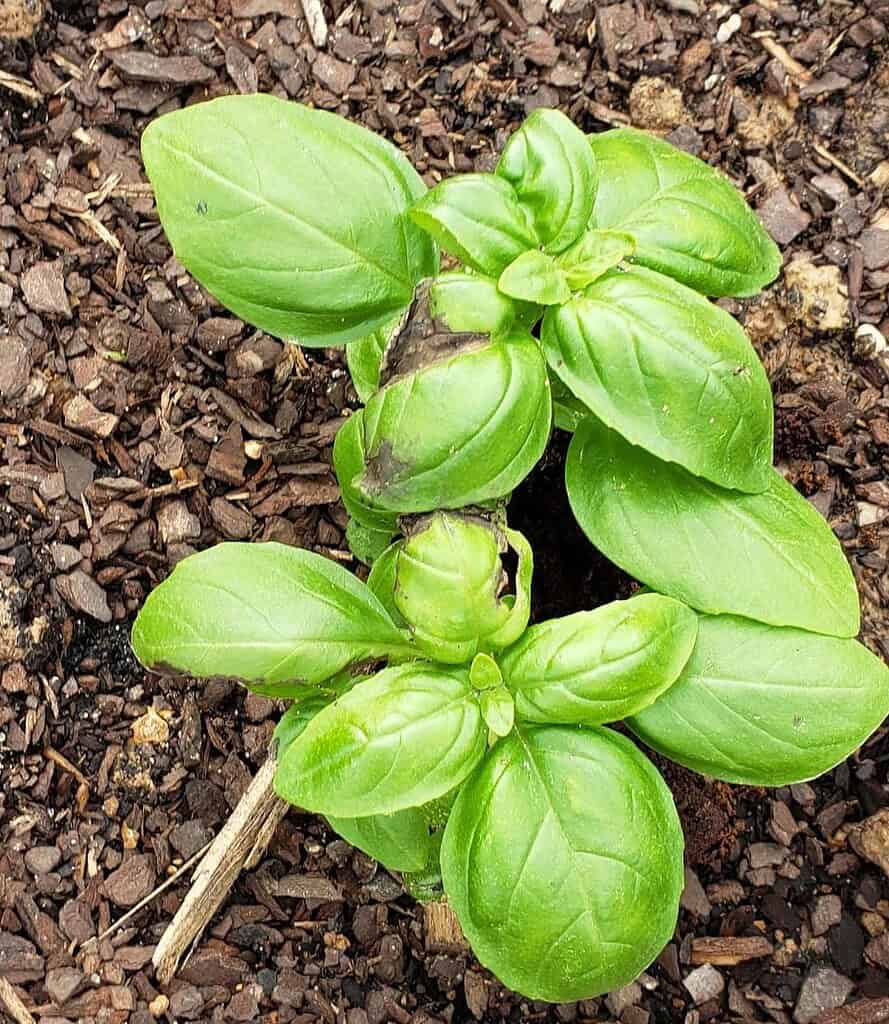
Aphids
Small, soft-bodied insects that cluster on new growth and the undersides of leaves. Blast them off with a strong jet of water, or apply neem oil or insecticidal soap. Repeat weekly until the population collapses.
Downy Mildew
A fungal disease appearing as yellowing on leaf tops with grayish-purple fuzz underneath. It spreads rapidly in humid, warm conditions with poor airflow.
Prevention is the best strategy: space plants well, water at the base, and ensure good circulation. Affected plants are difficult to save — remove and dispose of them promptly.
Fusarium Wilt
A soil-borne fungus causing sudden wilting, yellowing, and browning, often on one side of the plant. There is no cure; remove affected plants and replace the soil.
Choose fusarium-resistant varieties like ‘Nufar’ if this is a recurring problem.
Chewing Insects (Japanese Beetles, Caterpillars)
These leave irregular holes in leaves. Hand-pick beetles in the morning when they’re sluggish. Floating row covers protect plants before an infestation takes hold.
Neem oil is an effective organic deterrent for a range of chewing pests.
Root Rot
Caused by overwatering or poor drainage. It turns roots brown and mushy, causing the plant to collapse.
Prevention is the only real solution: well-draining soil, pots with drainage holes, and disciplined watering. Check your habits immediately at the first sign of stem mushiness at the base.
How to Harvest Basil the Right Way
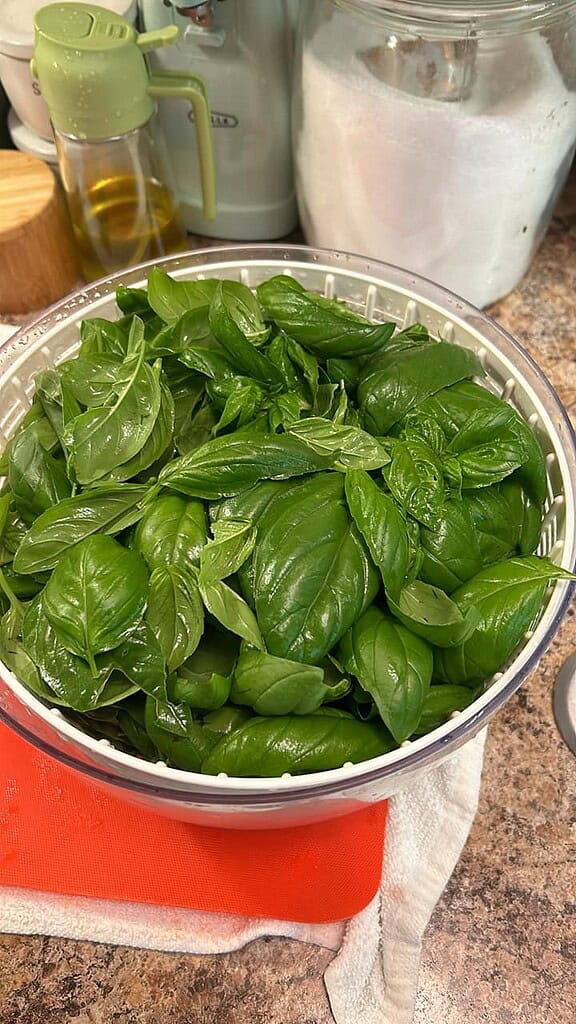
Harvesting basil is an art that directly influences how productive your plant remains for the rest of the season.
- Always harvest from the top down. Removing the topmost leaves and stems encourages the plant to branch outward and produce more growth below.
- Cut above a leaf node. Just as with pruning, cutting above a leaf pair stimulates two new branches to form.
- Harvest in the morning, after dew has dried but before midday heat. This is when essential oils are most concentrated in the leaves.
- Never strip a plant bare. Always leave at least two-thirds of the plant intact.
- Start harvesting early and often. Small, frequent harvests keep the plant in peak productive form far better than waiting for a massive trim.
How to Store and Preserve Your Basil Harvest
Short-Term Storage (1–2 Weeks)
Treat fresh basil like a bouquet of flowers. Trim the stems, place them in a jar with an inch of water, and leave on your kitchen counter.
Cover loosely with a plastic bag and change the water every couple of days. Do not refrigerate fresh basil — cold turns the leaves black within hours.
Freezing Basil
Two popular methods for longer preservation:
- Basil ice cubes: Blend fresh basil with a little olive oil, pour into an ice cube tray, and freeze. Drop cubes straight into soups, sauces, and sautés throughout winter.
- Blanch and freeze: Briefly blanch leaves in boiling water for 2–3 seconds, transfer to ice water, pat dry, and freeze flat on a baking sheet before storing in a freezer bag. This preserves color and flavor better than freezing raw leaves.
Drying Basil
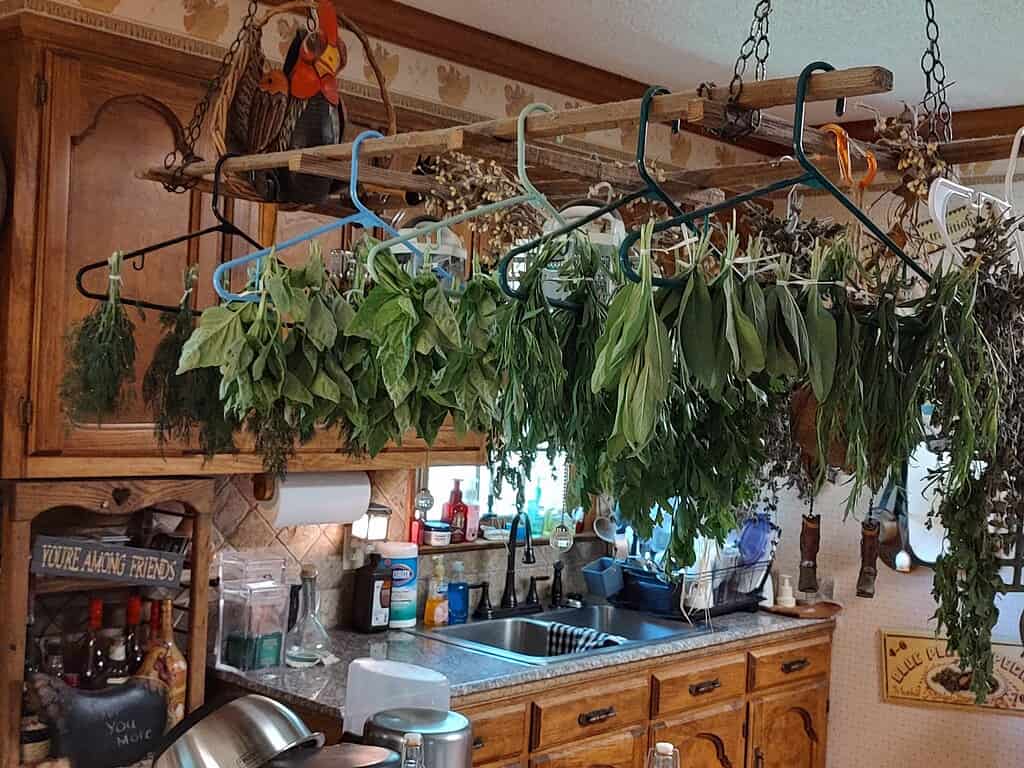
- Tie stems in small bundles and hang upside-down in a warm, well-ventilated spot away from direct sunlight.
- Alternatively, spread leaves on a baking sheet and dry in the oven at 170°F for 1–2 hours with the door slightly ajar.
- Store in an airtight glass jar away from heat and light. Use within 6–12 months for best flavor.
Basil Pesto
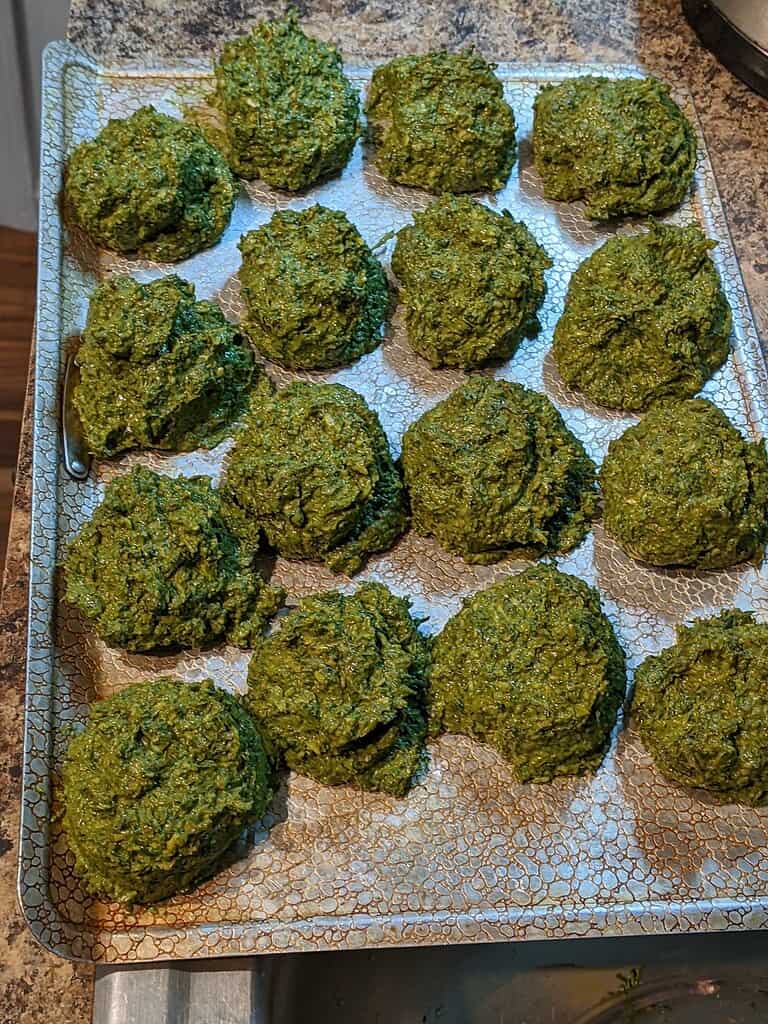
Turning surplus basil into pesto is one of the most satisfying preservation methods.
Classic pesto keeps in the fridge for up to a week or in the freezer for several months. Make a big batch at peak season and you’ll have summer’s flavor all winter.
Companion Planting with Basil
Basil isn’t just good for your kitchen — it can benefit the plants growing around it.
For a full exploration of plant communities and pairing strategies, our companion planting guide is an excellent resource.
Basil’s Best Garden Neighbors
- Tomatoes: The classic pairing. Basil is widely believed to repel aphids, whiteflies, and tomato hornworms, and many gardeners swear the two growing together improve each other’s flavor. Plant basil at the base of your tomato plants.
- Peppers: Similar benefits to tomatoes — basil can help deter common pepper pests while thriving in the same warm, sunny conditions.
- Oregano: A practical pairing that shares the same water, light, and soil preferences, making them easy to grow side by side in a mixed herb bed.
What NOT to Plant Near Basil
- Sage: Sage prefers dry conditions that would stress basil. Keep them in separate pots or beds.
- Fennel: Fennel is famously antagonistic to most garden plants, including basil. Keep it well away from your herb bed.
- Mint: Mint spreads aggressively and can overwhelm nearby plants. Always grow mint in its own container.
Start Growing Basil at Home and Taste the Difference This Season
There’s a reason basil appears in virtually every culinary tradition on earth — it’s one of the most rewarding plants you can grow, and once you taste the difference between homegrown and store-bought, there’s no going back.
The skills covered in this guide — choosing the right variety, planting at the right time, watering correctly, pruning regularly, and harvesting smartly — are everything you need to go from nervous beginner to confident basil grower this season.
Start with one pot, one variety, and one simple goal: keep it alive, keep it pruned, and harvest often. The rest will follow naturally.
Have you grown basil before, or are you just getting started? Drop a comment below — we’d love to hear which variety you’re growing, where you’re growing it, and any tips or questions you have. Your experience might be exactly what another beginner needs to read!
Ready to Design Your Dream Garden Bed?
Feeling inspired to build something beautiful?
If you’re ready to go beyond just one garden bed and truly design a space that feels intentional, productive, and charming, I put together something special for you.
Inside 101 Garden Bed Ideas, you’ll find creative layouts, raised bed designs, space-saving solutions, and inspiring setups you can actually recreate in your own yard – whether you’re working with a tiny backyard or a full homestead.
Start planning your dream garden today.

Frequently Asked Questions
Can I regrow basil from a store-bought bunch?
Yes! Take a stem cutting that’s 4–6 inches long and hasn’t yet flowered, strip the lower leaves, and place it in a glass of water on a sunny windowsill. Change the water every 2 days. Within 1–2 weeks, you should see roots forming.
Once roots are about an inch long, pot the cutting in soil and treat it like any other basil plant. This works best with fresh, healthy cuttings — not wilted refrigerated bunches.
Why does my grocery store basil plant keep dying?
Grocery store basil plants are grown intensively with many seedlings crammed into a small pot, designed to be used quickly rather than grown long-term. They’re often stressed from cold storage and low-light shipping conditions.
To save one: split it into smaller clumps, repot each into its own larger container with fresh potting mix, place it in your sunniest spot, and water consistently. Some will recover and thrive.
How do I know if my basil is getting too much or too little water?
Check the soil, not just the leaves — both overwatering and underwatering can cause wilting. If the soil is wet but the plant wilts, you’re overwatering; ease back and check drainage.
If the soil is bone dry, it needs water. Also: overwatered basil tends to yellow and drop leaves, while underwatered basil leaves turn brown and crispy at the edges before curling in.
Can basil survive winter, and how do I keep it going after summer ends?
Basil is an annual and will not survive frost outdoors. You can extend its life indefinitely by moving it indoors before your first fall frost. Place it near your sunniest window or supplement with a grow light, and reduce watering slightly as growth slows.
Alternatively, take cuttings from outdoor plants in late summer and root them in water — these become fresh indoor plants for the winter months.
Is it safe to eat basil that has already flowered?
Yes, bolted basil is completely safe to eat. The leaves just become slightly more bitter and tougher once the plant flowers. The flowers themselves are also edible and make a pretty garnish.
If your basil has bolted, pinch off all flower spikes, harvest the remaining leaves for cooked dishes (where bitterness is less noticeable), and the plant should produce a flush of milder new growth within a week.