If you’ve ever walked past a beautifully designed garden and felt instantly calmer, there’s a good chance a water feature had something to do with it.
Outdoor water fountains have become one of the most sought-after additions to backyard spaces, patios, and garden landscapes.
They add visual interest, create a relaxing atmosphere, attract birds and wildlife, and can even help mask the noise of a busy street.
Whether you have a sprawling backyard or a small courtyard, there is a fountain style that fits your space and your vision.
If you’ve been thinking about adding a water feature to your outdoor space but aren’t sure where to start, this guide is for you.
Below, you’ll find 11 gorgeous outdoor water fountains that will inspire your next backyard upgrade — along with everything you need to know to choose, place, and maintain one.
And if you love the idea of going the DIY route, be sure to check out our guide on 10 DIY Solar Water Fountains You Can Make for Your Backyard for some budget-friendly inspiration.
11 Stunning Outdoor Water Fountains to Elevate Your Backyard
Here are 11 of the most gorgeous options to consider:
1. Classic Three-Tiered Stone Fountain
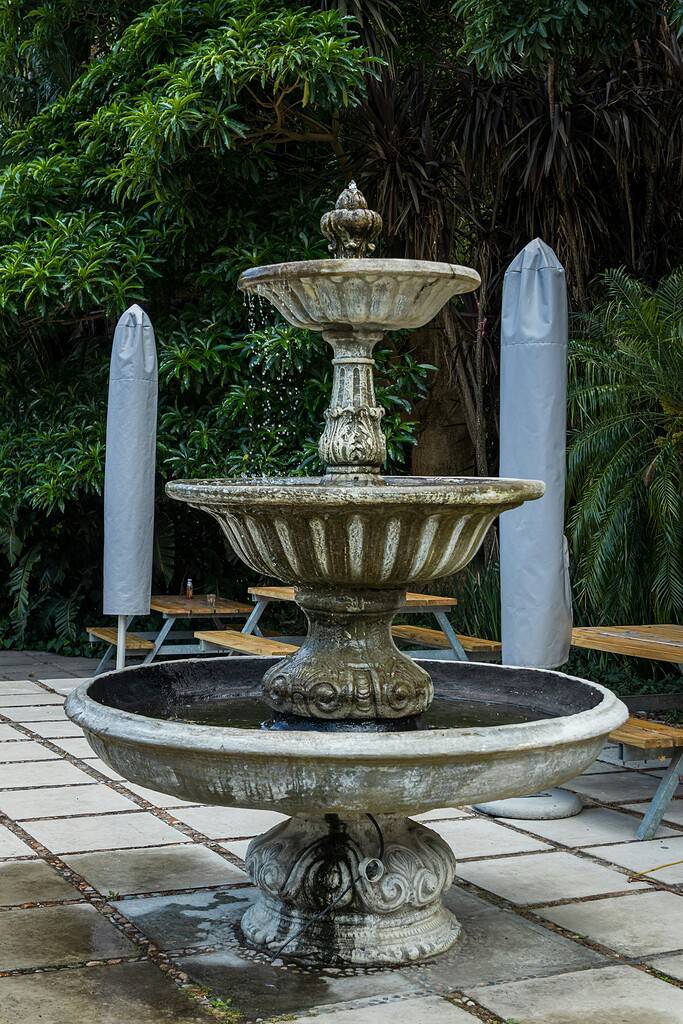
Few designs are as timeless as the classic three-tiered stone fountain. Inspired by European courtyard gardens, these fountains feature stacked basins where water cascades gracefully from one level to the next.
They work beautifully as a focal point in formal garden layouts or centered in a circular flower bed. Choose natural stone for an aged, authentic look, or opt for cast concrete if you want similar aesthetics at a lower price point.
Pair it with climbing roses or lavender around the base to create a truly show-stopping display.
2. Modern Concrete Wall Fountain
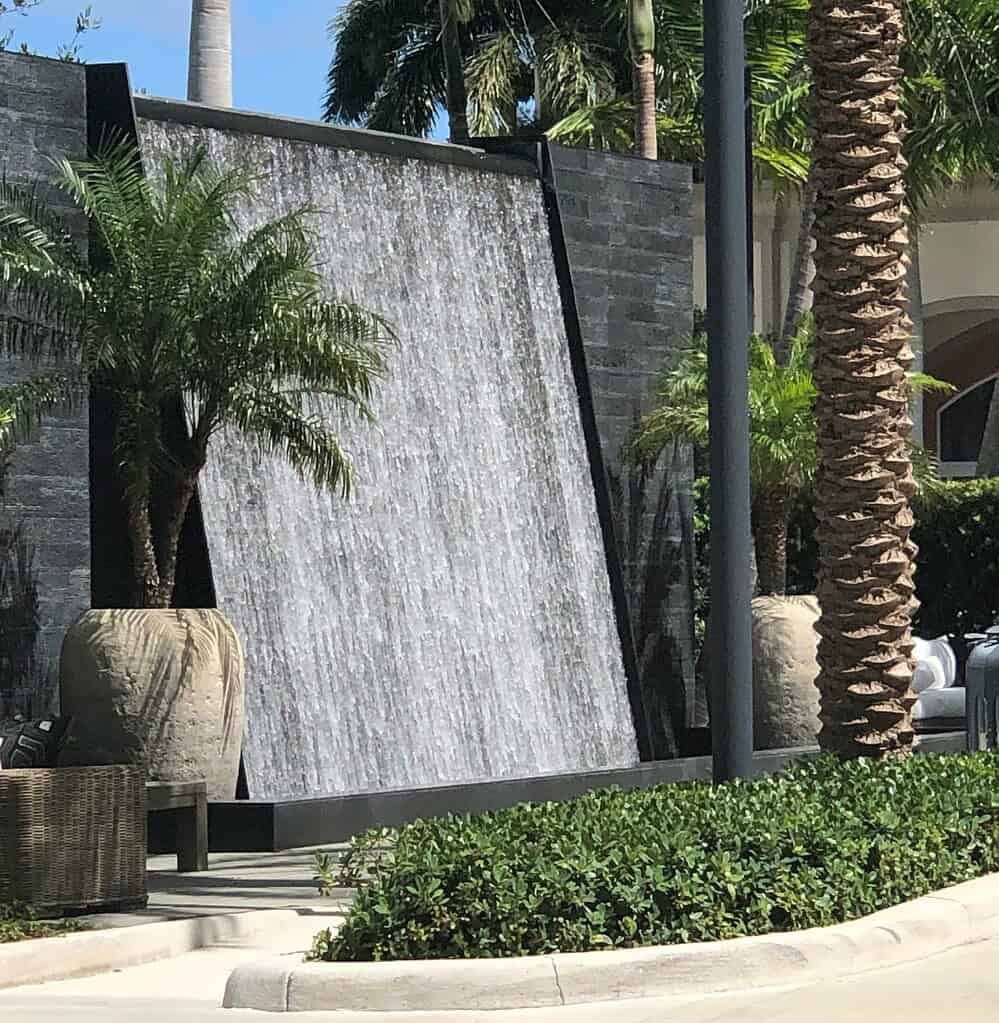
If your outdoor space leans contemporary, a sleek concrete wall fountain delivers dramatic impact without taking up valuable floor space.
Mounted directly to a fence, garden wall, or exterior wall of the home, these fountains feature a flat or slightly contoured face with water running in a thin, even sheet into a basin below.
The minimalist look pairs perfectly with clean-lined patios, modern landscaping, and architectural plantings like ornamental grasses or succulents.
For those who love combining water features with thoughtful outdoor design, our post on The Ultimate Summer Garden Guide for a Lush Backyard Glow Up has even more ideas to complement your space.
3. Rustic Barrel Fountain
For homesteaders and cottage garden lovers, a rustic wooden barrel fountain is pure charm.
An old wine or whiskey barrel can be repurposed into a self-contained water feature by adding a submersible pump and a simple spout or decorative spitter.
Fill the barrel with aquatic plants like water lilies or lotus, and you’ve got a mini water garden that doubles as a fountain.
These work especially well on porches, decks, and small patios where space is limited but style is non-negotiable.
4. Japanese Bamboo Shishi-Odoshi Fountain
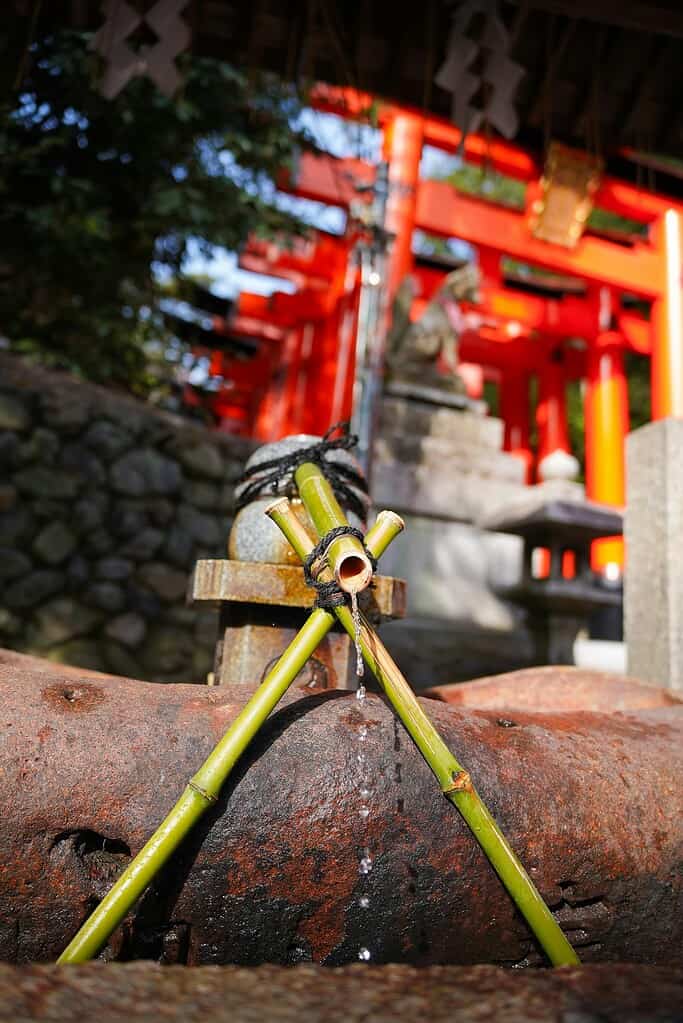
Rooted in Japanese garden tradition, the shishi-odoshi — or “deer scarer” — is a bamboo pipe fountain that fills with water until it tips and empties with a satisfying clack.
While the original purpose was to startle deer away from gardens, today they serve as meditative, rhythmic accents in zen-inspired outdoor spaces.
These fountains are elegant in their simplicity and work particularly well alongside moss, ferns, bamboo groves, and stone lanterns.
They’re ideal for shaded garden corners where you want to create a sense of quiet contemplation.
5. Bubbling Rock or Boulder Fountain
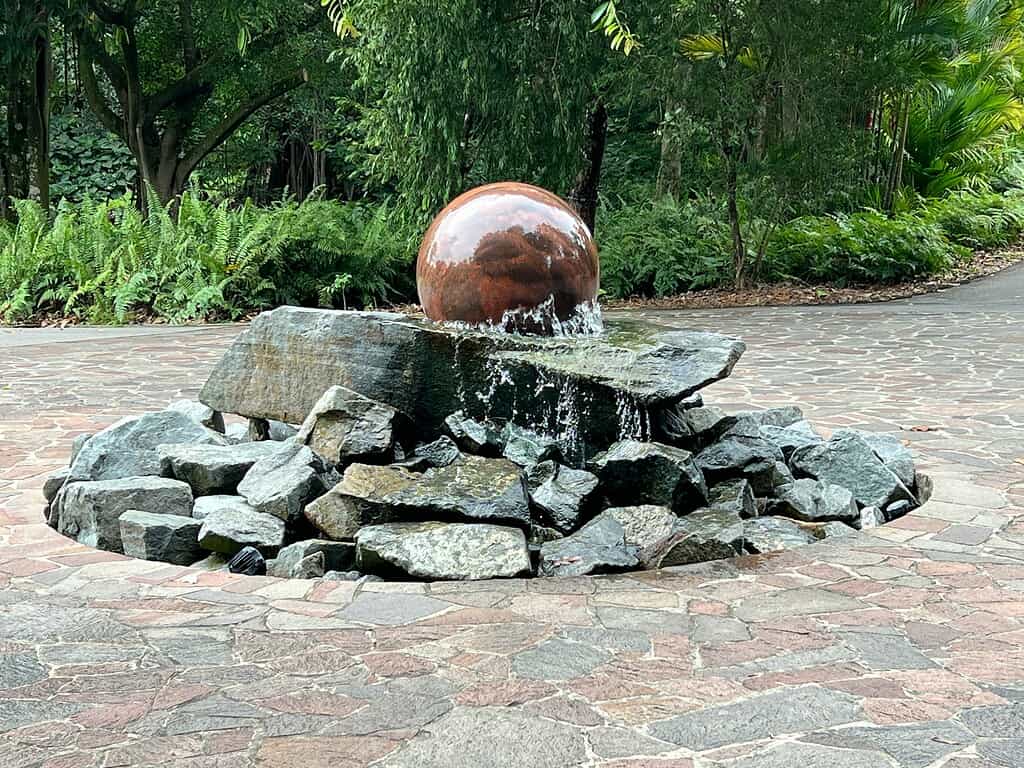
One of the most naturalistic fountain options available, the bubbling rock or boulder fountain features water welling up through a drilled hole in a large stone and cascading down its sides into a hidden reservoir below.
Because there’s no exposed pool of standing water, these fountains are a safer choice for households with young children or curious pets.
They blend seamlessly into naturalistic garden designs, rock gardens, and woodland settings.
If you love the idea of combining natural stone with your landscaping, our post on 11 Rock Garden Landscaping Ideas So Good You’ll Want to Redo Your Whole Yard is essential reading.
6. Solar-Powered Bird Bath Fountain
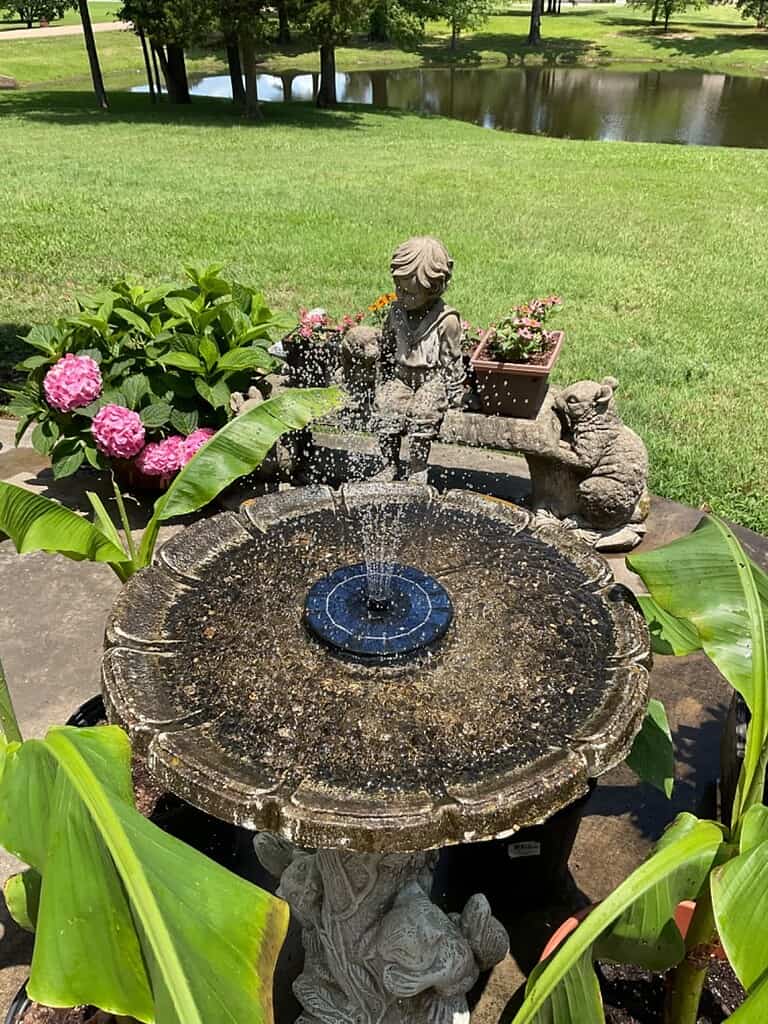
Combining the appeal of a bird bath with the motion of a fountain, solar-powered bird bath fountains are one of the most practical and eco-friendly options you can choose.
A small solar panel powers the pump that keeps water moving — and moving water is far more attractive to birds than stagnant pools.
Place one in a sunny spot in your garden and you’ll quickly find yourself with regular feathered visitors. These are also extremely low-cost to run since they require no electricity.
They pair beautifully with wildlife-friendly garden plantings and are a natural complement to the kind of backyard habitat described in our post on 11 Backyard Bird House Ideas That Birds Can’t Resist.
7. Stacked Slate Fountain
Stacked slate fountains have a sculptural quality that makes them feel like art as much as a water feature.
Thin slabs of slate are arranged in an irregular, organic stack with water flowing down the surfaces and pooling into a base reservoir.
The dark tones of the slate create a dramatic contrast against green foliage, and the texture catches light beautifully at different times of day.
These fountains work well in both shaded and sunny spots and are a popular choice for modern cottage and naturalistic garden styles.
8. Formal Urn or Pot Fountain
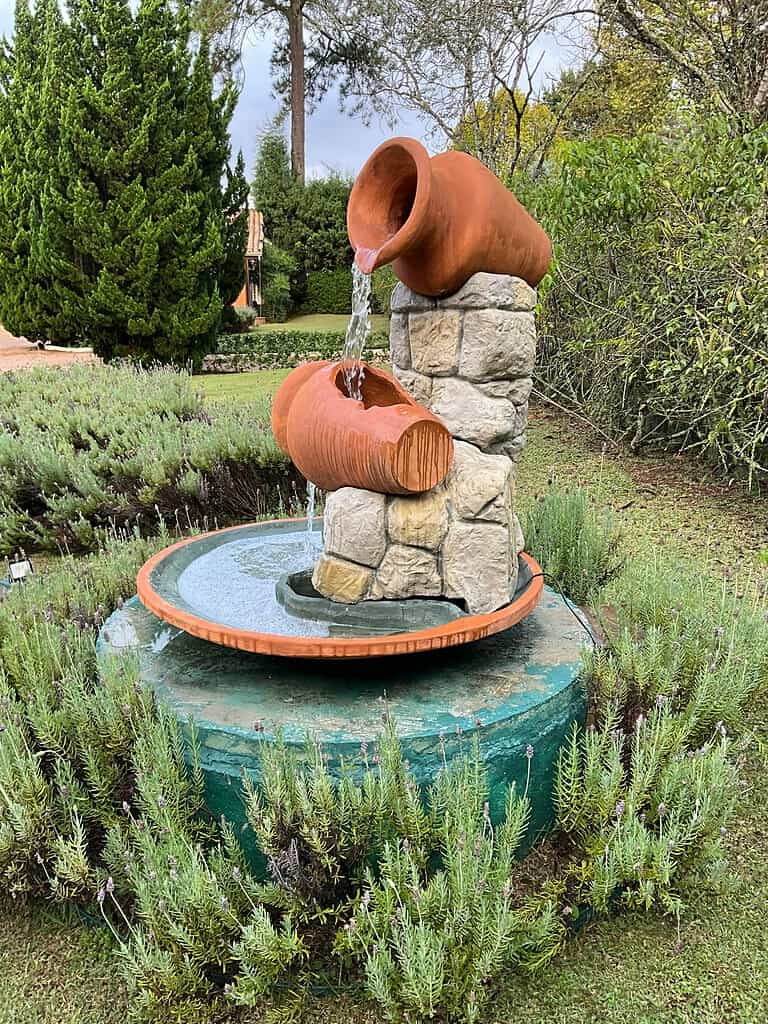
Large decorative urns and ceramic pots make stunning self-contained fountains when fitted with a submersible pump and a simple spout.
Water wells up through the top of the urn and cascades down the sides before being collected in a basin or hidden reservoir.
They’re incredibly versatile — you can use a terracotta pot for a Mediterranean feel, a glazed ceramic for an Asian-inspired look, or a cast stone urn for classic European elegance.
Place one on a patio, at the end of a garden path, or as a centerpiece in a courtyard for maximum impact.
For more ways to make your patio beautiful, explore our post on Gorgeous Patio Plants for planting ideas that complement a water feature perfectly.
9. Reflecting Pool with Waterfall Feature
For larger outdoor spaces, a reflecting pool with an integrated waterfall is one of the most breathtaking water features you can install.
A shallow rectangular or organic-shaped pool catches the sky and surrounding landscape in its glassy surface, while a gently flowing waterfall at one end keeps the water fresh and oxygenated.
These work beautifully in formal garden designs, contemporary landscapes, and naturalistic settings alike. Surround the edges with moisture-loving plants like irises, hostas, or papyrus for a lush, resort-like effect.
10. Copper or Bronze Spitter Fountain
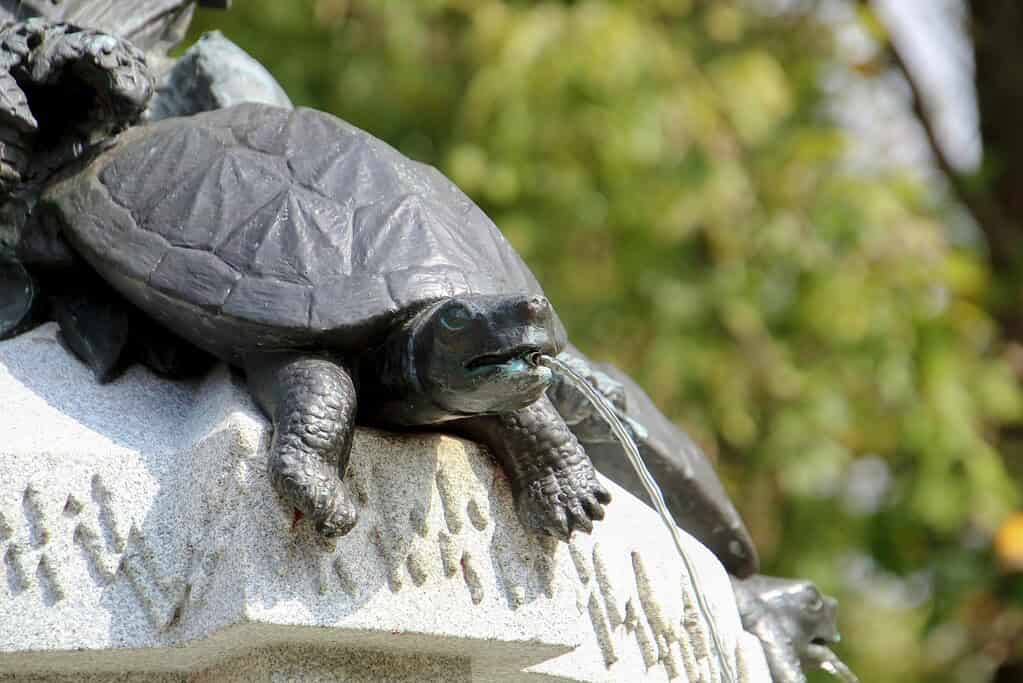
Spitter fountains feature a sculptural element (often an animal, fish, frog, or abstract shape) mounted on a wall or pedestal, with water flowing from the spout into a basin below.
Copper and bronze versions develop a gorgeous patina over time, giving the fountain even more character and visual interest as it ages.
These are particularly charming in cottage gardens, English-style borders, and enclosed courtyard spaces.
They’re compact enough to fit nearly anywhere and are endlessly customizable depending on the sculptural figure you choose.
11. Freestanding Column Fountain
Tall, slender column fountains make a bold vertical statement in any outdoor space.
Water spills from the top of the column and flows down the sides in rivulets or sheets, creating a striking visual and auditory effect.
They work especially well in narrow spaces where floor space is limited but vertical impact is desired, such as along garden walls, beside gates, or flanking an entryway.
Available in stone, resin, metal, and concrete finishes, column fountains can suit almost any design aesthetic from rustic to ultra-modern.
Garden Planner
The 22-page planner timed to your county's real frost dates. Planting windows, monthly checklists, and a harvest log you'll fill with pride by August.
Your Free 22-Page Garden Planner
Built for your exact ZIP code — planting dates, harvest log, and a month-by-month plan. 15-second sign-up.
How to Choose the Right Outdoor Water Fountain for Your Space
Here are the key factors to consider before you buy.
Start by assessing the size of your outdoor space.
A large three-tiered stone fountain will look completely out of place in a small courtyard, just as a tiny bubbling pot will get lost in a vast garden.
Measure your space and think about scale before falling in love with a specific design. As a general rule, your fountain should be proportional to its surroundings — neither dominating the space nor disappearing into it.
Next, consider your garden’s overall aesthetic.
A Japanese bamboo fountain will feel at home in a naturalistic or zen-inspired garden but might look out of place in a formal English-style landscape.
Choosing a fountain that complements your existing plantings, hardscaping, and architectural style will always produce a more cohesive and satisfying result.
If you’re still developing your garden’s overall look, our post on 12 Front Yard Landscaping Ideas That Make a Big First Impression can help you establish a strong design foundation to build from.
Power source is another important consideration.
Hardwired electric fountains offer reliability and consistent flow but require professional installation and a nearby power outlet.
Solar-powered fountains are eco-friendly and installation-free but depend on sunlight and may run inconsistently on cloudy days.
Battery-operated fountains offer the most placement flexibility but require regular battery changes. Think carefully about which setup best suits your situation before committing.
Where to Place Your Outdoor Water Fountain for Maximum Impact
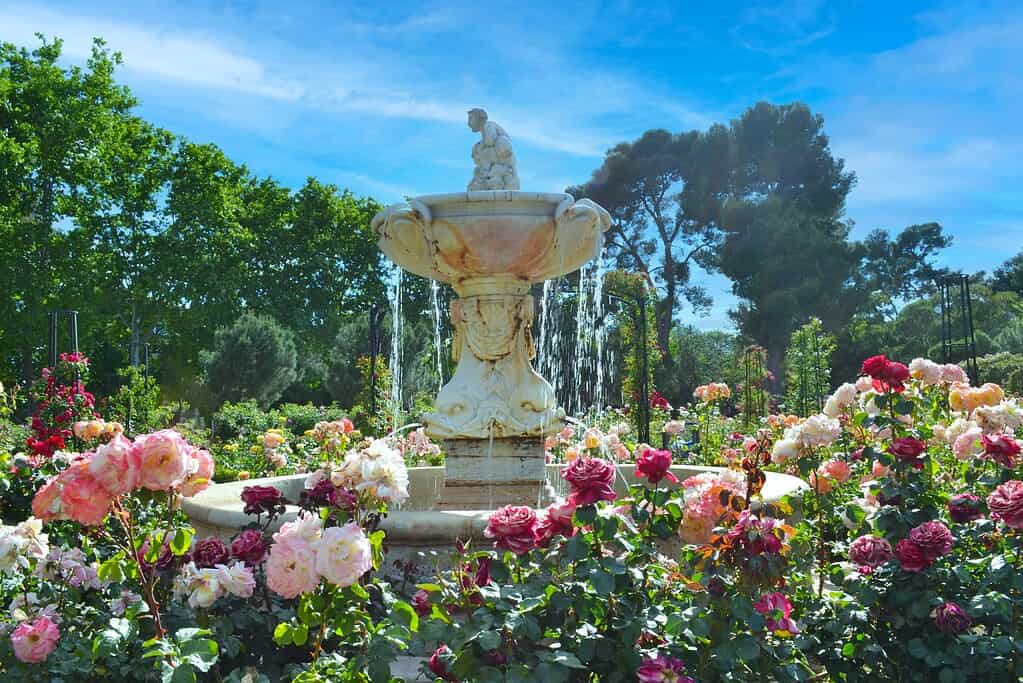
Placement can make or break a water fountain. A beautiful fountain placed in the wrong spot will always feel a little off, while a well-positioned fountain can transform an entire garden.
Here are some placement strategies that consistently deliver stunning results.
Focal points are the most natural home for a water fountain. The end of a garden path, the center of a circular bed, the corner of a patio, or a blank garden wall are all powerful focal point locations that will showcase your fountain to its best advantage.
When you approach a garden from a distance, your eye should naturally be drawn to the fountain — so think about sightlines from key vantage points like windows, doorways, and seating areas.
Consider the relationship between your fountain and seating. One of the greatest pleasures of a garden fountain is being able to sit beside it and enjoy the sound of moving water.
If you’re creating an outdoor lounge or dining area, positioning a fountain within earshot — but not so close that conversation becomes difficult — will significantly enhance the atmosphere.
This kind of thoughtful outdoor design is at the heart of how to create a backyard oasis, where every element works together to create a space that feels like a true retreat.
Finally, practical placement matters too. Keep fountains away from large trees that will drop leaves and debris into the water.
Ensure there’s a power source nearby if needed. In colder climates, think about whether the fountain can be easily drained and stored for winter, or whether it needs to be winter-proofed in place.
A little forethought about practical logistics will save you significant headaches down the road.
Miss it by a week and you lose the crop. The free 22-page planner pins down your exact dates — last frost, first frost, and the weekly steps between — so you plant on the days that actually work for your ZIP.
Free Planting Guides for This Article
Get exact planting dates, frost schedules, and growing tips for your zone:
Outdoor Water Fountain Maintenance Tips You Need to Know
One of the most common concerns people have about outdoor water fountains is maintenance.
The good news is that modern fountains are designed to be relatively low-maintenance, especially if you set them up correctly from the start and stay on top of a few simple tasks.
Water top-ups are the most frequent task.
Fountains lose water through evaporation, especially in hot and sunny weather, so checking and topping up the water level every few days is important to protect the pump from running dry.
Most pumps are permanently damaged if they run without water, so this is not a step to skip. Many homeowners add an automatic top-up valve connected to their garden water supply to make this completely hands-off.
Algae control is another routine maintenance concern.
Moving water is naturally less prone to algae than stagnant water, but algae growth can still occur — especially in warm, sunny conditions.
Adding a small amount of pond-safe algaecide or beneficial bacteria product to the water every few weeks will keep algae at bay without harming birds or wildlife.
Regular cleaning of the fountain basin and pump filter will also help.
Pump maintenance is essential for the long-term health of your fountain. Remove and clean the pump filter every month or two, removing any accumulated debris, algae, or mineral deposits.
If you live in an area with hard water, descaling the pump with a diluted vinegar solution a couple of times per year will prevent calcification and extend the pump’s lifespan significantly.
Most fountain pumps will last for many years with proper care.
Start Planning Your Water Fountain Today
An outdoor water fountain is one of the most rewarding investments you can make in your garden. It adds beauty, tranquility, and a sense of polish that elevates every other element around it.
Whether you choose a grand reflecting pool, a charming barrel fountain, or a sleek modern wall feature, the right fountain will become the heart of your outdoor space (the thing you walk toward first thing in the morning and linger beside at the end of a long day).
The 11 gorgeous options in this list cover every style, budget, and garden type, so there’s truly something here for everyone.
The key is to choose a fountain that fits your space, complements your existing landscape, and suits your maintenance capacity. Get those three things right, and you genuinely cannot go wrong.
Have you added a water fountain to your outdoor space? Which style is your favorite from this list? Drop a comment below — we’d love to hear about your experience and see what you’re creating in your garden!
Best gardening planner I've used in 10 years — and I keep coming back to it every season.
How Hard Is It to Garden in Your County?
Every county has a unique Gardening Difficulty Score based on frost risk, soil quality, drought, altitude, and climate trends. Find yours — plus personalized frost dates, planting calendars, and soil data.
Check Your County's Score →Ready to Design Your Dream Garden Bed?
Feeling inspired to build something beautiful?
If you’re ready to go beyond just one garden bed and truly design a space that feels intentional, productive, and charming, I put together something special for you.
Inside 101 Garden Bed Ideas, you’ll find creative layouts, raised bed designs, space-saving solutions, and inspiring setups you can actually recreate in your own yard – whether you’re working with a tiny backyard or a full homestead.
Start planning your dream garden today.

Frequently Asked Questions
How much electricity does an outdoor water fountain use?
Most outdoor fountain pumps are surprisingly energy-efficient. Small to medium-sized fountain pumps typically use between 10 and 50 watts of electricity — roughly the same as a standard LED light bulb.
Running a 20-watt pump continuously for a month would cost only a few dollars on a typical electricity tariff. If energy costs are a concern, a solar-powered fountain eliminates electricity costs entirely, though performance will depend on available sunlight.
Can outdoor water fountains attract mosquitoes?
Mosquitoes breed in still, stagnant water — not moving water. A properly functioning fountain with a pump keeping water circulating should not create a mosquito breeding ground. In fact, the moving water can actively deter mosquitoes from laying eggs.
The key is to keep the pump running consistently and avoid any areas of standing water pooling around the fountain’s base. Adding mosquito dunks (biological larvicide) to the water provides extra insurance if you’re in a high-mosquito area.
What type of outdoor water fountain is best for cold climates?
In cold climates where freezing temperatures are common, you’ll need a fountain that can be either fully drained and stored indoors for winter or one that is made from freeze-resistant materials.
Cast resin and fiberglass fountains are generally the most freeze-resistant options, while natural stone and ceramic fountains can crack if water freezes inside them.
The safest approach is to drain your fountain completely before the first hard frost, remove the pump, and store both indoors until spring.
How do I stop my outdoor fountain water from turning green?
Green water in a fountain is caused by algae growth, which thrives in warm, nutrient-rich, sunlit water. To prevent it, keep your fountain out of direct all-day sun if possible, clean the basin regularly, and use a pond-safe algaecide or beneficial bacteria treatment every few weeks.
Partial shade significantly slows algae growth. If your fountain is in full sun and green water is a persistent problem, consider planting some taller nearby plants to cast dappled shade over the water during the hottest part of the day.
How long does an outdoor fountain pump typically last?
A well-maintained fountain pump can last anywhere from three to seven years, and sometimes longer.
The key factors that affect pump lifespan are how often the pump runs dry (even briefly), how regularly the filter is cleaned, and whether the pump is stored indoors during winter or left exposed to freezing conditions.
Descaling the pump periodically in hard water areas also dramatically extends its life. Always choose a pump from a reputable brand and keep a spare on hand so you can replace it quickly without your fountain going dormant for an extended period.
Level Up Your Garden
Our most popular gardening guides