River rocks are one of those landscaping materials that look like they cost a fortune but are actually incredibly affordable.
Whether you pick them up from a local landscape supply yard, a big-box store, or even a nearby riverbed (where permitted), river rocks can instantly elevate the look of your outdoor space without blowing your budget. The secret is in how you use them.
If you’ve been eyeing polished, high-end yards with sleek stone features and wondering how homeowners pull it off without a professional landscape crew, the answer is usually simple: smart material choices and intentional design. River rock landscaping checks both boxes.
It’s low-maintenance, drought-tolerant, and versatile enough to work in almost any yard style — from rustic homestead to modern minimalist.
Why River Rock Landscaping Looks High-End on a Budget
The reason river rock landscaping works so well as a budget landscaping solution comes down to three things: texture, contrast, and permanence.
Unlike wood chips, annuals, or painted surfaces, river rocks have a natural, timeless quality that reads as expensive because it mimics what you’d see in high-end resort landscaping, Japanese garden design, and upscale residential projects.
When you pair them with clean edges, intentional plant choices, and good weed control, the combination looks professionally designed regardless of how little you spent on materials.
River rocks are also incredibly versatile. A single material can serve as a ground cover, a drainage solution, a decorative accent, a fire pit surround, and a container topper — meaning you’re getting more design utility per dollar than almost any other landscaping material available.
Buying in bulk from a local landscape supply yard typically brings the cost down significantly compared to pre-bagged options at home improvement stores, so always price out both options before purchasing.
If you're working on building out a more complete homestead yard or property, check out our guide on How to Build a Mini Farm in a Small Backyard Space — many of those strategies pair beautifully with the river rock landscaping ideas here to create a yard that's both functional and beautiful.
Garden Planner
The 22-page planner timed to your county's real frost dates. Planting windows, monthly checklists, and a harvest log you'll fill with pride by August.
Your Free 22-Page Garden Planner
Built for your exact ZIP code — planting dates, harvest log, and a month-by-month plan. 15-second sign-up.
11 Budget-Friendly River Rock Landscaping Ideas That Look Expensive
Before we dive in, if you’re also considering other stone-based landscaping ideas, be sure to check out our post on 11 Rock Garden Landscaping Ideas — there’s a lot of overlap with what works beautifully in a river rock setup.
1. Dry River Bed Drainage Path
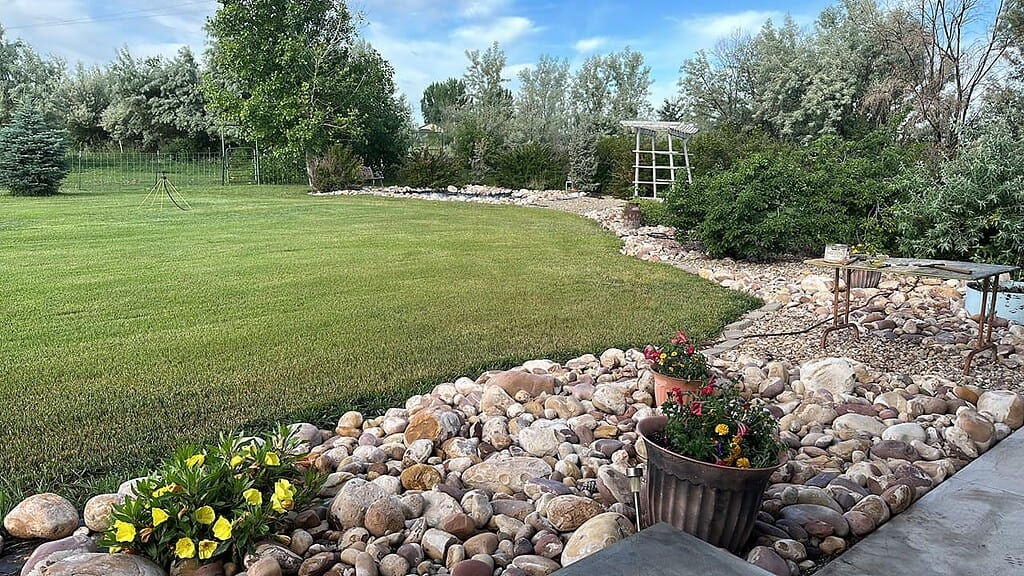
One of the most stunning uses of river rock is creating a dry river bed that doubles as a functional drainage channel. This works especially well in yards that get pooling water after rainstorms.
By digging a shallow trench, lining it with landscape fabric, and filling it with medium to large river rocks, you create a naturalistic stream effect that guides water away from your home or garden beds.
Use a mix of rock sizes to make it look organic and realistic — smaller pebbles at the edges, larger stones in the center.
The result looks like a professional landscape architect designed it, but it costs only a fraction of a formal drainage system.
2. River Rock Mulch Replacement Around Garden Beds
Traditional wood mulch needs to be replaced every one to two years, which adds up fast.
Swapping it out for river rocks around your flower beds or shrubs gives you a permanent, low-maintenance alternative that actually looks more polished.
Light-colored river rocks contrast beautifully with dark soil and green foliage, giving your beds a clean, finished edge. Unlike wood mulch, river rock won’t break down, attract pests, or wash away in heavy rain.
Lay down landscape fabric beneath the rocks to block weeds, and you’ll barely need to touch those beds again. This is a one-time investment that pays off for years.
3. Stepping Stone Paths with River Rock Borders
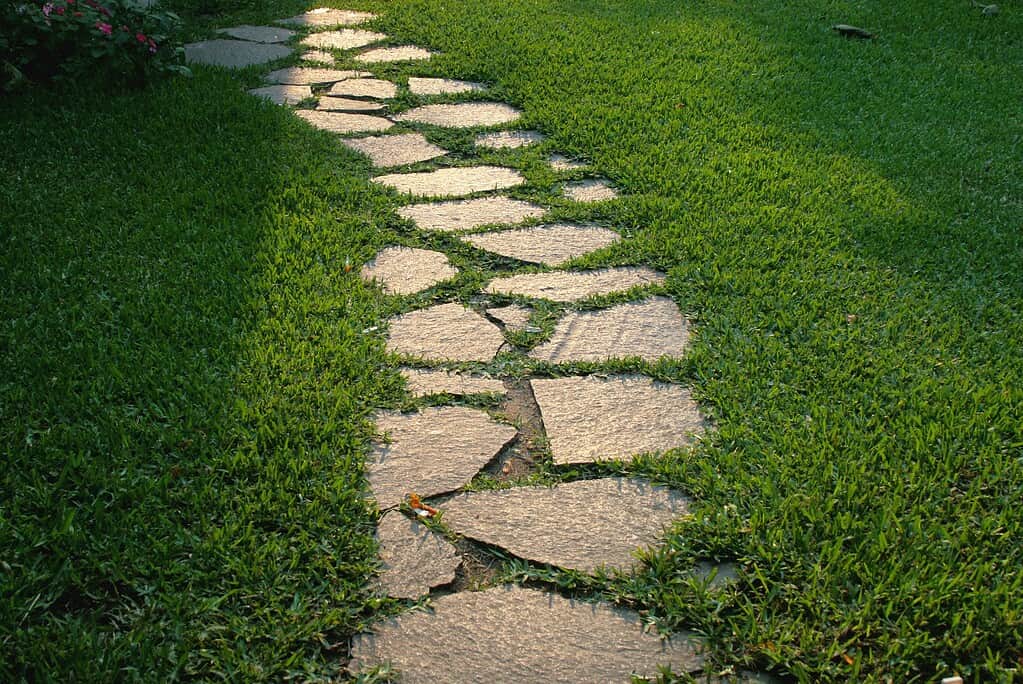
A stepping stone path instantly gives a yard a curated, intentional look. To stretch your budget further, use larger flat stones for the actual steps and fill in the gaps with river rock instead of mortar, pavers, or concrete.
The river rock border softens the look and ties the path into the surrounding landscape naturally. This combination works especially well through garden beds or between raised planting areas.
You’ll get the visual impact of a professional pathway at a fraction of the cost because you’re using river rock — a relatively inexpensive bulk material — for the infill and accent.
4. River Rock Fire Pit Surround
Building a fire pit area doesn’t have to mean expensive hardscaping or a contractor.
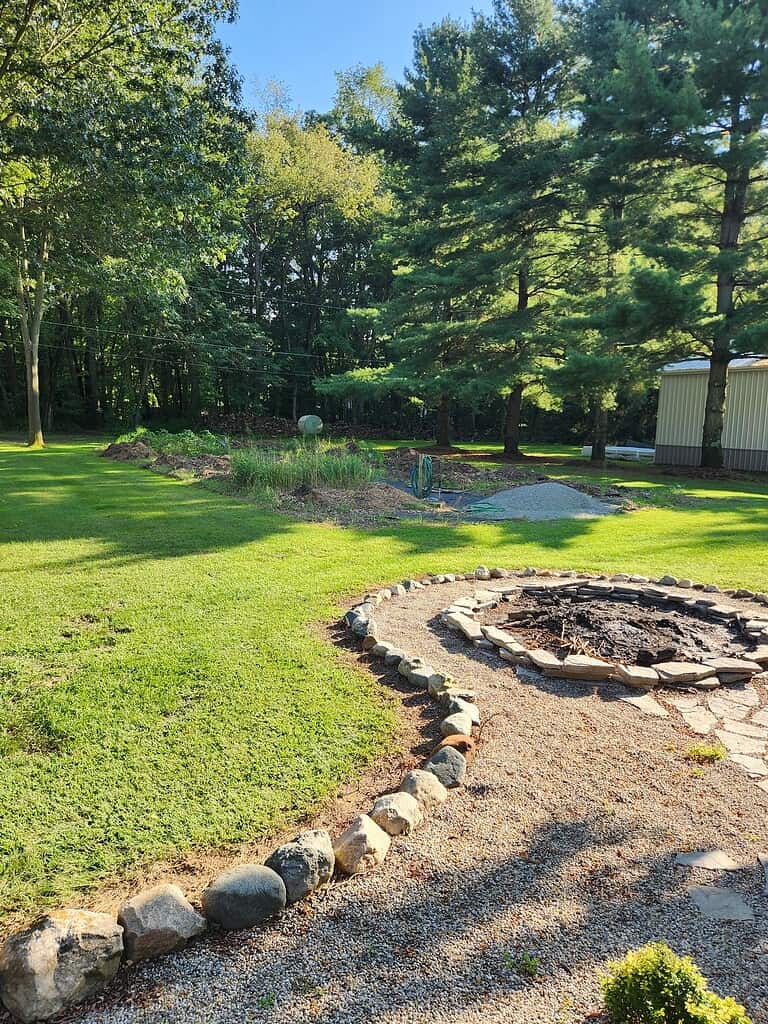
A circle of large river rocks can form the pit wall itself, while a surrounding ring of smaller river rock pebbles creates a clean, heat-resistant ground cover that keeps the area looking tidy and intentional.
This setup is fire-safe (river rocks don’t typically contain the trapped moisture that can cause some stones to crack), looks cohesive, and requires almost no maintenance beyond occasionally raking the stones back into place.
Pair it with a few simple outdoor chairs and you’ve got a backyard gathering spot that looks resort-level.
5. Xeriscape Front Yard with River Rock Ground Cover
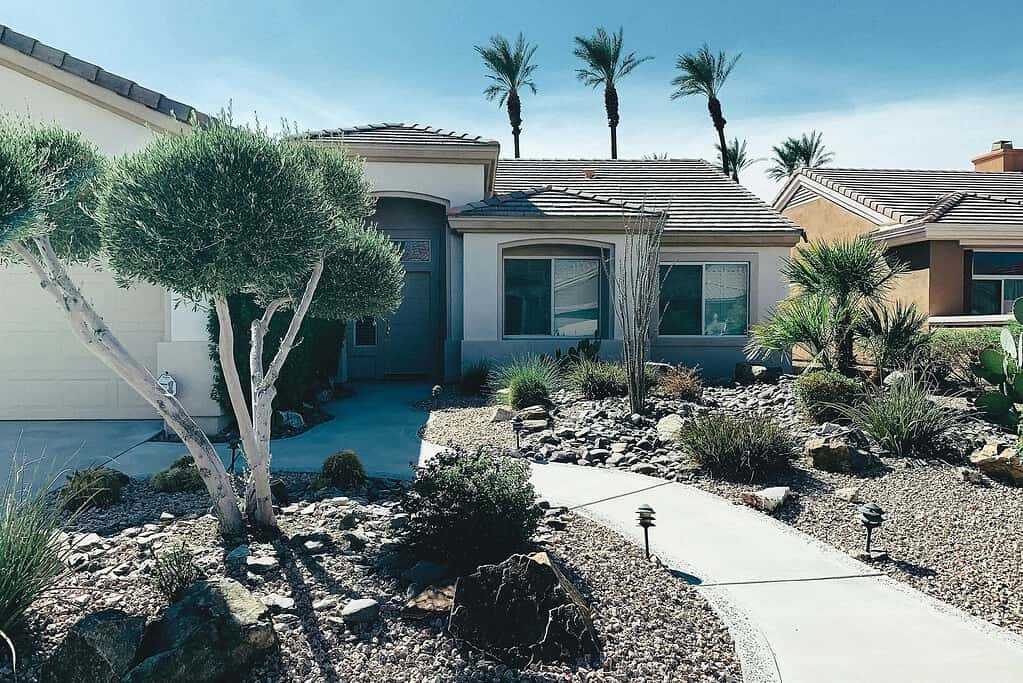
If your front yard struggles with patchy grass, dry soil, or high water bills, a xeriscape design using river rock as the primary ground cover is a game-changer.
Replace your lawn with a layer of river rocks over weed barrier fabric, and intersperse drought-tolerant plants like ornamental grasses, lavender, sedum, or succulents throughout.
The contrast between the smooth stones and the textured plants creates a visually layered look that’s both elegant and eco-friendly.
Many homeowners assume xeriscaping looks sparse or industrial, but with the right plant selection and river rock sizing, it can look lush and intentional.
6. Decorative River Rock Edging Along Fences or Driveways
One of the simplest and most affordable ways to use river rock is as a border along fences, driveways, or the base of your home.
A six to twelve-inch border of river rocks tucked against a fence line or the foundation of your house creates a clean, finished edge that elevates the entire look of your property.
It also serves a practical purpose — keeping mulch or soil from washing onto hard surfaces and reducing weed growth along edges that are hard to mow or maintain.
You can do an entire fence line for under $100 in materials depending on your yard size, yet the visual improvement is dramatic.
7. River Rock Water Feature Surround
A water feature doesn’t have to be elaborate or expensive to look stunning — and river rocks are the perfect companion to any water element you add to your yard.
Whether you have a small birdbath, a bubbling urn fountain, or a pond, surrounding it with river rocks creates a natural, seamless look that ties the water feature into the landscape.
The rocks anchor the feature visually and eliminate the need for grass or mulch around it that would look out of place near water.
If you’re thinking about adding a water feature to your yard, our post on 11 Gorgeous Outdoor Water Fountains You’ll Want Right Now has some beautiful, budget-friendly options worth exploring.
8. River Rock Planter Bed Fillers for Containers
If you have large outdoor containers or planters, topping the soil with a thin layer of smooth river rocks instantly makes them look more polished and intentional.
It’s a trick professional landscapers and nurseries use all the time to make display plants look elevated.
Beyond aesthetics, the rock layer helps retain soil moisture, keeps the top of the planter from drying out too quickly, and discourages cats or birds from digging in the pots.
A small bag of river pebbles goes a long way across multiple containers, making this one of the cheapest upgrades you can make to your patio or porch plant display.
9. River Rock Zen or Meditation Corner
Carve out a small section of your yard — even just a 6×6-foot corner — and transform it into a zen-inspired retreat using river rocks as the base.
Rake the rocks into circular or wave patterns for a Japanese zen garden effect, add one or two large statement boulders, and include a simple bamboo plant or dwarf evergreen shrub.
This kind of intentional “outdoor room” makes a yard feel thoughtfully designed and gives you a quiet space to decompress. It takes minimal materials (a bag or two of small river pebbles, a rake, and a few plants) but creates an atmosphere that feels like a luxury retreat.
Pair it with a backyard design approach like those in our 15 Backyard Garden Ideas You’ll Actually Want to Copy This Season post for a cohesive yard transformation.
10. Under-Deck or Under-Porch River Rock Fill
The space under a deck or raised porch is notoriously difficult to manage — weeds take over, moisture builds up, and the area looks neglected no matter what you do.
River rocks solve this problem elegantly. Fill the space under your deck with river rock after laying weed barrier fabric, and you’ll prevent weed growth, improve drainage, and give that awkward area a clean, finished appearance from any angle.
This is especially effective if your deck has open lattice or railing gaps where the ground beneath is visible. It’s a low-cost, once-and-done solution that many landscapers charge several hundred dollars to do professionally.
11. River Rock Accent Strips in Lawn or Between Pavers
For a modern, architectural look, consider adding narrow strips of river rock between pavers on a patio, walkway, or within a grass lawn as a decorative accent band.
These stone strips break up large expanses of pavement or turf and give the yard a designed, high-end feel. You’ll often see this technique in upscale landscape designs where it costs thousands to install.
With river rock and a bit of planning, you can achieve the same effect for the price of a few bags of stones and an afternoon of work.
The key is keeping the lines clean and consistent — use a garden edging strip on both sides of the river rock channel to hold the rocks in place and maintain a sharp edge.
Common Mistakes to Avoid with River Rock Landscaping
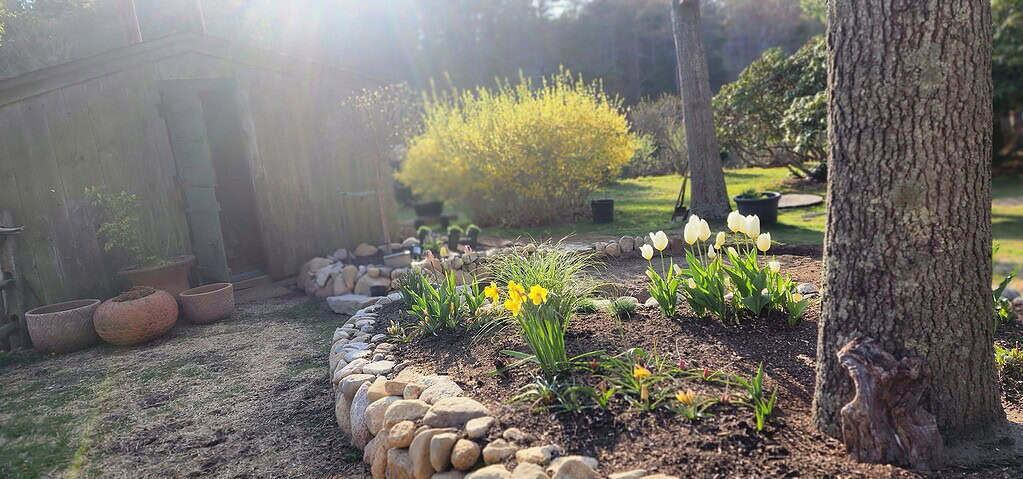
1. The biggest mistake homeowners make with river rock landscaping is skipping the weed barrier.
River rocks do not prevent weeds on their own — seeds blow in from the air, land on top of the rocks, and sprout roots down through the gaps.
Always lay a quality woven landscape fabric beneath your rocks before placing them.
Avoid cheap plastic sheeting, which tends to shift, tear, and create drainage problems. A good fabric barrier will block the vast majority of weeds for years and save you hours of maintenance.
2. The second common mistake is using rocks that are too small for the application.
Tiny pea gravel scattered across a large open area looks messy and gets tracked everywhere. Match your rock size to the scale of the project and the surrounding landscape. In a large open bed, use medium to large rocks. Reserve tiny pebbles for container tops and small accent areas.
3. Finally, avoid using river rocks in high-traffic areas without proper edging or containment.
Rocks shift underfoot and migrate into lawns over time if they’re not held in by edging strips, raised borders, or retaining structures.
The initial investment in proper edging pays off enormously in keeping your river rock areas looking clean and intentional over the long term.
For related low-maintenance garden ideas that complement river rock design, our Ultimate Summer Garden Guide for a Lush Backyard Glow Up is worth reading before you finalize your outdoor plan.
Miss it by a week and you lose the crop. The free 22-page planner pins down your exact dates — last frost, first frost, and the weekly steps between — so you plant on the days that actually work for your ZIP.
Start Transforming Your Yard with River Rock Today
River rock landscaping is one of the most rewarding DIY projects you can tackle because the results are immediate and dramatic. You don’t need a large budget, specialized skills, or a professional crew. What you need is a plan, the right materials, and a few hours on a weekend.
Start with one area — a garden bed border, a small dry river bed, or even just a container refresh — and see how quickly it transforms the look and feel of your outdoor space.
From there, you can expand your river rock design one section at a time, using the ideas in this post as your roadmap.
Whether you’re working toward a fully xeriscaped front yard, a low-maintenance backyard retreat, or simply a more polished garden bed setup, river rocks can carry you from point A to point B without breaking the bank. The key is to start and let the transformation build momentum.
Ready to explore more ways to make your outdoor space beautiful and productive? Check out our post on 15 Easy Backyard Vegetable Garden Ideas to Grow More in Less Space — because a great-looking yard and a productive one don't have to be mutually exclusive.
Have you used river rocks in your yard? Drop your experience or your favorite river rock landscaping idea in the comments below — we’d love to hear what’s worked for you!
How Hard Is It to Garden in Your County?
Every county has a unique Gardening Difficulty Score based on frost risk, soil quality, drought, altitude, and climate trends. Find yours — plus personalized frost dates, planting calendars, and soil data.
Check Your County's Score →Ready to Design Your Dream Garden Bed?
Feeling inspired to build something beautiful?
If you’re ready to go beyond just one garden bed and truly design a space that feels intentional, productive, and charming, I put together something special for you.
Inside 101 Garden Bed Ideas, you’ll find creative layouts, raised bed designs, space-saving solutions, and inspiring setups you can actually recreate in your own yard – whether you’re working with a tiny backyard or a full homestead.
Start planning your dream garden today.

Best gardening planner I've used in 10 years — and I keep coming back to it every season.
Frequently Asked Questions
How deep should river rock be for landscaping?
For most landscaping applications, a depth of 2 to 3 inches of river rock is ideal. This depth is sufficient to block light from reaching weed seeds beneath the fabric, provide adequate ground coverage, and give the area a visually full, finished look without requiring excessive material.
For dry river beds meant to handle water runoff, you may want to go deeper — 4 to 6 inches — in the center of the channel to ensure the rocks stay in place during heavy rain events.
Will river rocks get hot enough in summer to damage plants?
This is a valid concern, especially in hot climates. Light-colored river rocks reflect heat rather than absorbing it, making them a safer choice near plants in sunny locations.
Dark-colored rocks, like black river rock, can absorb significant heat and radiate it back onto surrounding plants, potentially stressing them in high-heat zones.
If you live in a warm climate and plan to use river rock around plants, opt for lighter tones and avoid placing rocks directly against plant stems or trunks where heat concentration is highest.
How do I clean river rocks that have turned green or dirty over time?
River rocks are very easy to clean. For surface algae, mold, or general grime, a solution of one part white vinegar to two parts water sprayed over the rocks and left for 10 to 15 minutes before rinsing with a garden hose works well.
For heavier buildup, a light scrub with a stiff brush before rinsing does the trick. Avoid using bleach near plants, as runoff can harm root systems. Periodic raking also keeps rocks looking fresh by redistributing them and exposing cleaner surfaces from below.
Can I use river rocks on a slope without them sliding or shifting?
Yes, but it requires some planning. On gradual slopes, larger river rocks (2 to 4 inches) stay in place much better than small pebbles, which tend to migrate downhill over time. Using a coir or jute erosion control mat beneath the rocks instead of standard landscape fabric provides extra grip on slopes.
For steeper grades, consider terracing the slope with simple timber or stone retaining walls to create flat pockets where river rocks can be contained, then use the rocks as the infill in each terraced section.
How much does river rock landscaping typically cost per square foot?
The cost of river rock landscaping varies depending on rock size and your location, but as a general guideline, bulk river rock from a landscape supply yard typically costs between $35 and $75 per ton, and one ton covers approximately 80 to 120 square feet at a 2-inch depth.
Pre-bagged river rock from a big-box store costs more per square foot — often $0.50 to $1.50 per square foot — but is more convenient for small projects.
Adding in landscape fabric and edging, a typical DIY river rock installation costs roughly $1 to $3 per square foot total, compared to $5 to $15 per square foot if you hire it out professionally.
Level Up Your Garden
Our most popular gardening guides