Pruning fruit trees directly affects how much and how well they produce.
With the right cuts at the right time, you can increase airflow, improve sunlight exposure, and help the tree focus its energy on producing larger, healthier fruit.
Many growers miss out on better harvests simply because they skip or mistime this crucial task.
In this article, I’ll walk you through proven pruning techniques that help boost fruit yield quickly, while keeping your trees healthy for seasons to come.
How Fruit Trees Grow

Fruit trees produce best when their internal energy is directed toward fruit-bearing wood, not excessive leaf or branch growth.
To understand how pruning affects fruit production, it’s important to first know how a fruit tree grows and distributes its energy.
Understanding Fruiting Wood vs Vegetative Growth
Fruit trees grow two types of shoots: vegetative (leaf-producing) and fruiting (flower/fruit-producing).
Fruiting wood is typically shorter and more compact, often located on older, established branches.
If a tree is left unpruned, it puts more energy into vegetative growth – creating dense foliage and water sprouts that don’t produce fruit. This leads to poor fruit quality and reduced yield.
Even dwarf fruit trees you can grow indoors follow the same growth pattern, though on a smaller scale. Pruning helps them channel energy into producing better-tasting, well-formed fruits instead of excess leaves.
Why Tree Energy Must Be Managed
Each tree has a limited amount of resources it can distribute through its roots, trunk, and branches. When a tree has too many shoots or fruits, it spreads its energy too thin. This results in:
- Small, underdeveloped fruits
- Lower sugar levels
- Weak branches that can break under fruit weight
By pruning selectively, you help the tree focus its energy on fewer, more productive areas, leading to a higher-quality harvest.
How Structure, Sunlight, and Airflow Affect Fruit Size
Dense, unpruned trees often block sunlight and restrict airflow – both of which are critical for flower development, pollination, and fruit ripening.
Poor airflow also increases the risk of fungal and bacterial diseases, especially in humid or rainy climates.
Strategic pruning opens up the canopy, improving:
- Light penetration to all parts of the tree
- Airflow between branches
- Fruit coloration and sweetness due to better sun exposure
Garden Planner
The 24-page planner timed to your county's real frost dates. Planting windows, monthly checklists, and a harvest log you'll fill with pride by August.
Your Free 24-Page Garden Planner
Built for your exact ZIP code — planting dates, harvest log, and a month-by-month plan. 15-second sign-up.
Best Time to Prune Fruit Trees for Maximum Harvest
Pruning at the wrong time can weaken a tree, reduce fruit production, or even introduce disease. Knowing when to prune depends on your tree type, climate, and pruning goals.
The timing can influence everything from the size of your fruit to the long-term health of the tree.
Dormant vs Summer Pruning: Which to Use and When
Most fruit trees are pruned during the dormant season, which is late winter to early spring before new growth begins.
This is the ideal time to shape the tree and encourage strong, healthy shoots. Pruning while the tree is dormant also allows for better visibility of the structure.
Summer pruning is best for reducing vigorous growth, thinning dense canopies, and redirecting energy into fruit development.
It’s often used in addition to dormant pruning, especially on trees that grow aggressively or need better airflow mid-season.
Timing Guidelines for Common Fruit Trees
- Sweet Cherries: These trees should be pruned in mid-summer after the leaves have fully grown. This reduces the risk of fungal and bacterial infections that commonly affect cherry cuts when pruned in cool, wet conditions.
- Citrus and Avocado Trees: These trees generally need minimal shaping. Once you’ve removed suckers, sprouts, and any damaged or diseased wood, further pruning is usually unnecessary.
- Raspberries and Blackberries: Prune in late winter or early spring before new growth begins. Tip newer canes to encourage branching, and cut spent canes back to the base after they finish fruiting.
Avoid Pruning During Rainy Periods
Always aim to prune during dry conditions. Pruning right after rain, or during a stretch of wet weather, increases the chances of fungal infections entering the fresh cuts.
If possible, wait for at least a week or two of dry weather before making any major cuts, especially on disease-prone trees like cherries, peaches, and apricots.
Healthy trees are less vulnerable to rot and disease, ensuring strong growth and better-quality fruit for uses like the best apricot jam recipe later on.
Remove Damaged or Diseased Wood Anytime
Dead, damaged, or diseased branches should be removed immediately, no matter the season.
These areas serve as entry points for pests and diseases, and delaying removal can compromise the health of the entire tree.
Must-Have Tools for Pruning Fruit Trees
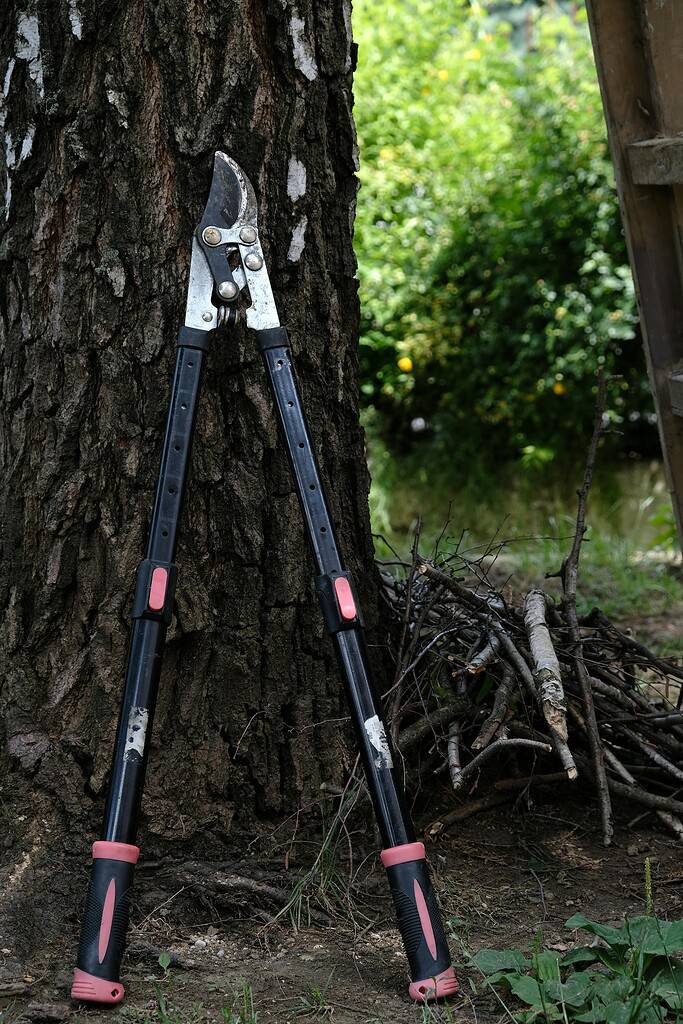
Here are the basic tools every grower should have. Many of these also belong to the list of essential gardening tools that make regular maintenance easier and more efficient.
- Bypass Pruners: Ideal for clean cuts on small branches (under ¾ inch thick). They make precise cuts without crushing the wood.
- Loppers: Great for medium-sized branches (up to 1½ inches). The long handles give extra leverage.
- Pruning Saw: Designed for larger branches. A curved pruning saw works well in tight spaces and gives more control.
- Pole Pruner or Pole Saw: Useful for reaching high branches without needing a ladder.
- Hand Shears (for berries or soft growth): Small shears help with delicate work like berry cane “tipping” or pinching soft shoots.
Each of these tools serves a different purpose, and using the wrong one can damage the tree or make the job harder than it needs to be.
How to Sanitize Tools to Prevent Disease
Fruit trees are vulnerable to bacteria and fungi, especially when cuts are fresh.
Sanitizing your tools between trees (or even between cuts, if disease is present) is one of the simplest ways to protect your orchard.
Effective sanitizing options:
- Rubbing alcohol (70%): Wipe or dip the blades before moving to another tree.
- Soapy water: Scrub with hot, soapy water and rinse thoroughly.
- Bleach solution (10%): Use cautiously – rinse well after use, as bleach can corrode metal over time.
- General disinfectants: Many commercial sprays work well if allowed to dry before reuse.
Sanitize especially after cutting diseased branches or working in damp conditions.
Miss it by a week and you lose the crop. The free 24-page planner pins down your exact dates — last frost, first frost, and the weekly steps between — so you plant on the days that actually work for your ZIP.
What to Cut and What to Keep When Pruning Fruit Trees

Knowing which parts of the tree to remove (and which to leave) has a direct impact on fruit production, tree health, and structural strength.
Cutting too much of the wrong growth can reduce yields or stimulate excessive vegetative shoots.
Identify Fruiting Wood vs Unproductive Growth
Fruiting wood tends to grow on older, well-exposed branches and produces spurs or short shoots where flowers and fruits develop.
These are the parts of the tree you want to encourage and preserve.
In contrast, vegetative growth (such as long, upright shoots) often draws energy away from fruit development.
Not all vegetative growth is bad, but it needs to be managed so it doesn’t overshadow productive areas.
Remove These Types of Growth Regularly
Suckers: These grow from the roots or base of the trunk. They drain nutrients from the rest of the tree and should be cut off as close to the source as possible.
Water Sprouts: These are tall, thin, vertical shoots that appear along older branches. They grow rapidly and rarely produce fruit. Left alone, they crowd the canopy and divert energy from fruiting wood.
Dead, Diseased, or Damaged Wood: These branches won’t produce and can invite pests or infections. Remove them right away to protect the tree’s health.
Whorls: This is when three or more small branches grow from the same spot. Keep only the strongest, healthiest branch and remove the rest, as the group will not develop well together.
Downward-Growing Limbs: Branches that grow toward the ground often can’t support fruit weight and limit airflow under the canopy.
Focus on Keeping Well-Spaced, Light-Exposed Branches
Preserve branches that:
- Grow outward, not inward
- Are well-spaced from each other (to reduce competition for light)
- Have wide angles (between 45° and 60°) from the trunk
- Show signs of previous fruiting (short, stubby spurs on apples, for example)
Good branch structure improves airflow, supports heavy fruit loads, and allows sunlight to reach all parts of the canopy – leading to sweeter, more evenly ripened fruit.
Free Planting Guides for This Article
Get exact planting dates, frost schedules, and growing tips for your zone:
How to Thin Fruits, Buds, and Flowers for Bigger Yields

Thinning may seem counterintuitive – removing fruit, flowers, or buds to increase harvest quality – but it’s one of the most effective ways to boost fruit size, improve flavor, and prevent damage.
Left unchecked, overcrowded fruit can drain a tree’s resources and leave you with a large number of small, underdeveloped fruits instead of a smaller number of high-quality ones.
Thinning Improves Fruit Size and Quality
Each fruit requires a share of the tree’s water, nutrients, and energy to grow properly. When too many fruits develop on a single branch, none of them receive enough resources to fully mature.
Thinning:
- Helps the remaining fruit grow larger
- Improves sweetness and texture
- Increases airflow around the fruit (reducing disease risk)
- Prevents fruit drop due to overcrowding
How to Thin Developing Fruits
Once fruits begin forming, examine clusters or crowded areas:
- Leave one fruit every 4 to 6 inches on a branch.
- Remove the smallest or damaged fruits in each cluster first.
- Focus on keeping the strongest fruit with good spacing and light access.
This technique is especially helpful for apples, peaches, plums, and pears, which often set more fruit than the tree can support.
Flower and Bud Thinning for Early Energy Control
Thinning doesn’t have to wait until fruit forms. Reducing the number of flowers or fruiting buds early in the season helps the tree allocate energy more efficiently from the beginning.
Here’s how:
- On trees that bloom heavily (like peaches), pinch or cut off some of the excess flowers.
- Space fruiting buds or flower clusters so they’re not tightly packed along a branch.
This limits how much fruit the tree sets and improves development for the flowers that remain.
Preventing Broken Branches from Fruit Overload
When fruit clusters are too heavy, especially on young or thin branches, the weight can cause limbs to crack or split. Thinning helps:
- Reduce stress on weak or narrow-angled branches
- Prevent sudden limb breakage mid-season
- Avoid losing fruit from damaged wood
For branches growing downward, pruning them entirely is often a better choice, since they rarely hold fruit well and are more likely to break.
Best gardening planner I've used in 10 years — and I keep coming back to it every season.
Smart Pruning Techniques to Redirect Tree Energy
Pruning isn’t just about removing unwanted growth – it’s also a way to redirect a tree’s energy toward fruit production.
When done correctly, specific pruning cuts can influence where and how the tree grows, which parts become more productive, and how strong the overall structure becomes.
These techniques help maintain balance between fruiting and vegetative growth, which is key for consistent harvests year after year.
Follow the One-Third Rule to Prevent Stress
One of the most important principles in pruning is the one-third rule:
Never remove more than one-third of the tree’s live canopy in a single season.
Cutting too much at once can shock the tree and trigger a survival response. This often results in a flush of vertical, non-fruiting shoots (known as water sprouts) the following year.
By keeping cuts moderate and consistent, you help the tree adjust without overreacting.
Thinning Cuts vs Heading Cuts: Know the Difference
Understanding the type of cut you’re making helps control how the tree responds:
- Thinning Cuts: Remove an entire shoot or branch back to its origin. These cuts open up the canopy, improve airflow, and help balance the shape without triggering excessive regrowth.
- Heading Cuts: Shorten a branch by cutting just above a bud. This stimulates new shoots near the cut and encourages denser growth in a specific area. It’s useful when shaping young trees or filling gaps.
Use heading cuts carefully – too many can crowd the interior of the tree with unwanted shoots.
Strengthen Branches by Cutting Them Back
When you cut back a branch by about one-third of its length, the remaining wood often becomes thicker and stronger. This also encourages the development of fruiting wood in that area.
Use this technique on branches that are:
- Too long and thin to support fruit
- Growing in the right direction but need strengthening
- Part of the tree’s main fruiting structure
Manage Water Sprouts Strategically
Water sprouts (vigorous vertical shoots) can be a drain on the tree’s energy if left alone. While most should be removed, a few can be headed back instead of cut entirely if you want to:
- Fill gaps in the canopy
- Encourage future fruit-bearing wood in that area
This approach helps convert what would be unproductive growth into useful structure over time.
More Plant Pruning Guides You’ll Love
If you’re in the mood to keep those pruning shears busy, here are a few other plants worth shaping up next:
How to Use Pinching to Control Tree Growth
Pinching is a simple, low-impact way to guide the growth of a fruit tree without making major cuts.
By using your fingers to remove the soft, growing tips of shoots, you can temporarily redirect the tree’s energy, encourage branching, and reduce the risk of unwanted vertical growth.
This is especially useful during the growing season when trees are actively producing new shoots.
What Is Pinching and When to Use It
Pinching involves removing the terminal bud (the tip of a shoot) while it’s still soft and flexible.
Unlike pruning with tools, this doesn’t damage the surrounding tissue and helps redirect energy into nearby lateral buds.
Use pinching when:
- New shoots are 4 to 8 inches long and still tender
- You want to reduce excessive upward growth
- You’re encouraging more lateral branching without heavy pruning
This method works best in spring and early summer when new growth is forming quickly.
How Pinching Redirects Tree Energy
The terminal bud is where the plant concentrates its growth hormones. By removing it:
- The shoot temporarily stops elongating
- Energy is redirected to side buds, which develop into lateral shoots
- The overall growth pattern becomes more balanced
This is especially helpful in shaping young trees or encouraging a fuller canopy without sacrificing fruiting potential.
Pinching vs Pruning: When to Choose Each
| Technique | When to Use | Result |
|---|---|---|
| Pinching | During active growth, on soft new shoots | Encourages side branching, reduces vertical growth |
| Pruning | For older wood or major structural changes | Removes large sections or redirects long-term growth |
Use pinching as a fine-tuning tool between regular pruning sessions. It’s quick, doesn’t require tools, and allows for subtle corrections in growth without causing stress to the tree.
- Tomatoes
- Peppers
- Beans
- Squash
- Cucumbers
- Basil
How Hard Is It to Garden in Your County?
Every county has a unique Gardening Difficulty Score based on frost risk, soil quality, drought, altitude, and climate trends. Find yours — plus personalized frost dates, planting calendars, and soil data.
Check Your County's Score →Best Pruning Methods for Specific Fruit Tree Types
Different fruit trees grow in different ways – and they respond to pruning differently, too. Pruning methods should match the growth habits, structural needs, and fruiting behavior of each tree type.
a. Pruning Stone Fruit Trees (Peach, Plum, Cherry, Apricot)
Stone fruits benefit from an open center form, where the middle of the tree is kept clear of upright branches. This shape:
- Increases airflow
- Improves light penetration
- Makes fruit easier to reach
- Reduces disease in humid conditions
Start shaping young trees early and maintain the open structure by removing:
- Vertical shoots growing toward the center
- Overlapping or crossing branches
- Downward-growing limbs that can’t support fruit
For cherry trees, prune only in mid-summer after the canopy is full. This reduces the chance of infection from open cuts.
b. How to Prune Apple and Pear Trees for High Yields

Apples and pears typically grow best with a central leader system – a single upright trunk with well-spaced horizontal branches. Prune to:
- Remove competing leaders
- Thin out dense interior growth
- Encourage strong lateral fruiting branches
In small spaces, consider using the espalier method by training branches flat against a fence or trellis. This structure:
- Saves space
- Improves sun exposure
- Encourages productive spurs along each horizontal tier
c. Pruning Blackberry and Raspberry Canes the Right Way
Brambles like blackberries and raspberries require annual cane management:
- In late winter or early spring, tip the new (first-year) canes to promote side branching.
- After the second year, once fruiting is complete, cut those old canes back to the base.
This keeps the plant productive, improves airflow, and reduces disease.
d. Grapevine Pruning Techniques for Better Fruit Production
Grapevines are vigorous growers and must be pruned aggressively to stay productive:
- Remove most of the previous year’s growth, leaving just a few strong canes or buds.
- As a rule of thumb, older, thicker vines produce less fruit – so cut them out in favor of newer growth.
Consistent yearly pruning helps maintain manageable size and high-quality grape clusters.
e. How to Prune Citrus and Avocado Trees Safely
Citrus and avocado trees don’t require much shaping. Focus on:
- Removing water sprouts and suckers
- Cutting out dead or damaged branches
After that, further pruning is often unnecessary. These trees naturally develop a dense, rounded canopy and should only be opened up if airflow or light becomes a problem.
f. Banana Tree Pruning: When to Cut the Stalk
Banana plants grow from a central stalk, which only produces fruit once. After harvest:
- Cut the fruiting stalk down to the base
- Let a nearby new stalk take over (this is called a “pup”)
Avoid removing green, healthy stalks before they finish producing, as this will stop fruit development.
Safely Removing Large Branches Without Damaging the Tree
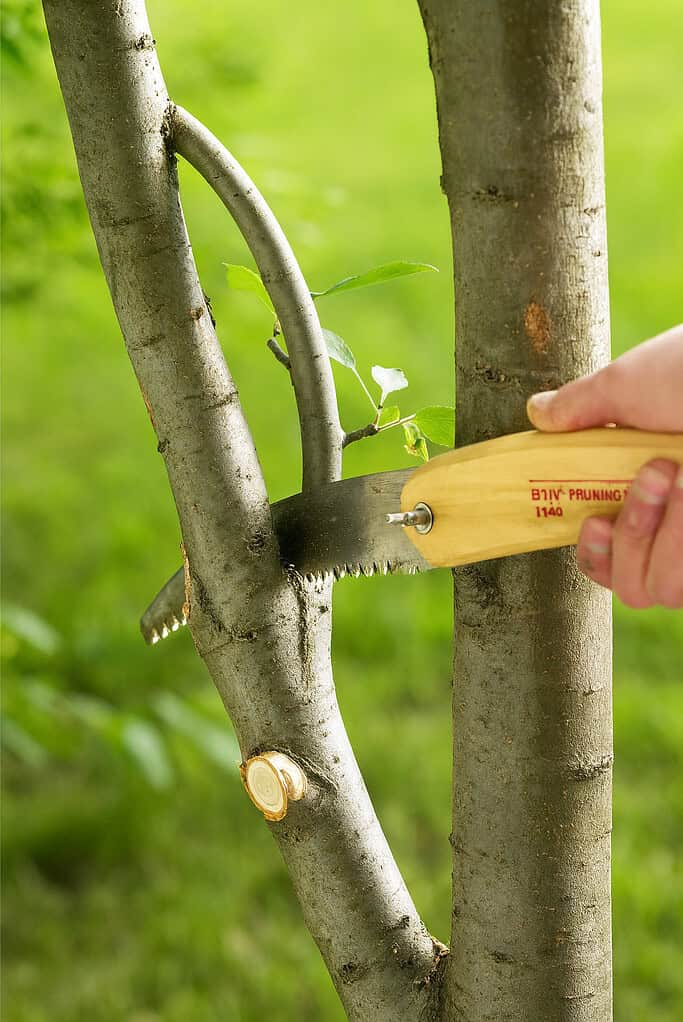
Removing a large branch from a fruit tree requires more care than simply cutting it off at the base.
If done the wrong way, it can cause the bark to tear down the trunk or main limb, leaving an open wound that takes longer to heal and increases the risk of disease.
When It’s Necessary to Remove Large Branches
Large branches should be removed if they are dead, damaged, diseased, or pose a risk to the overall structure of the tree.
Branches that grow at narrow angles, crowd the canopy, or grow downward often cause problems as the tree matures.
It’s also sometimes necessary to remove a large limb to improve light penetration or reduce weight in an overgrown area.
These cuts should always be planned and done intentionally – removing too much at once can stress the tree and trigger unwanted regrowth.
How to Use the Three-Cut Method
The safest way to remove a heavy branch is with the three-cut method, which prevents tearing and ensures a clean separation.
- The first cut is a shallow notch made on the underside of the branch, a few inches out from the trunk. This cut stops the bark from ripping downward when the branch begins to fall.
- The second cut is made slightly further out from the first and goes all the way through the branch from the top. This removes the bulk of the branch weight.
- The third and final cut is made just outside the branch collar—the slightly swollen area where the branch meets the trunk.
This final cut removes the stub while allowing the wound to heal naturally and efficiently.
Avoid cutting flush against the trunk, as this damages the branch collar and slows healing. Also avoid leaving long stubs, which can die back and become an entry point for rot or pests.
Letting the Tree Heal Naturally
There’s no need to apply paint or wound dressing after a proper cut. Trees are naturally capable of sealing off wounds, and using sealants can trap moisture and bacteria.
As long as cuts are clean and made in the right place, the tree will begin sealing the wound quickly and efficiently on its own.
Removing large branches should be done with sharp tools and steady movements to avoid accidental injury to the bark or surrounding wood.
Start Pruning with Purpose and See Better Harvests Fast
Pruning fruit trees is a practical, proven way to get more fruit, better quality, and a healthier tree.
By understanding how trees grow, choosing the right time to prune, and using the right techniques, you give your tree the best chance to thrive and produce reliably.
Whether you’re thinning fruit, redirecting growth, or removing damaged branches, every cut should serve a purpose.
These small adjustments add up to stronger limbs, sweeter fruit, and easier harvests year after year.
If you’ve started pruning or have questions about your specific fruit trees, comment down below – we’d love to hear what you’re working on.
FAQs
How do I prune an old fruit tree that hasn’t been maintained in years?
Start by removing any dead, damaged, or diseased wood first. Then thin out the canopy gradually over several seasons rather than all at once. Follow the one-third rule to avoid shocking the tree, and focus on restoring a strong shape and good airflow.
What should I do if my fruit tree produces a lot of leaves but no fruit?
This is often a sign of too much nitrogen, lack of sunlight, or excessive vegetative growth. Prune back vigorous shoots, open the canopy for more light, and avoid over-fertilizing. Redirect the tree’s energy into fruiting wood instead of leaf growth.
Can I prune fruit trees during flowering or just before fruit sets?
It’s best to avoid major pruning during flowering, as it can reduce the current season’s crop. However, light thinning of flowers or buds is helpful during this time to improve fruit quality. Save structural cuts for late winter or after the harvest.
How do I know if I’ve pruned too much?
If your tree sends up a large number of vertical water sprouts the following season, or shows signs of stress (wilting, slow growth), it may have been over-pruned. Stick to the one-third rule and focus on gradual adjustments over time.
Is there a difference between pruning dwarf and standard-size fruit trees?
The same basic techniques apply, but dwarf trees need lighter cuts and more precise shaping. Their smaller structure means aggressive pruning can quickly set them back. Focus on thinning and training, not heavy cuts.
Level Up Your Garden
Our most popular gardening guides