Most people think sweet potatoes need a Southern field and a long, lazy summer to grow. They don’t.
With one grocery-store tuber, a deep pot, and a sunny corner, you can grow a surprising harvest on a patio or in a small backyard — and the plant practically takes care of itself once it’s in the ground.
The catch is that almost everything that makes a sweet potato sweet happens in two stages people rarely talk about: how you start the plant, and what you do in the two weeks after you dig it up. Get those right and you’ll out-grow gardeners with twice your space.
This guide walks through both, plus the container, propagation, and spacing tricks that make the difference. If you’re just getting started with homesteading, sweet potatoes are one of the most forgiving, high-reward crops to begin with.
Why Sweet Potatoes Are Worth Growing at Home
Beyond the harvest itself, sweet potatoes earn their spot for reasons that don’t show up on a seed packet:
- You get two crops from one plant. The leaves and young shoots are edible — a tender cooked green that’s popular across Asia and the Caribbean. Snip a handful here and there all summer and you’re eating from the plant months before the tubers are ready.
- One tuber becomes a dozen plants. A single sweet potato can produce 10 to 50 sprouts (called “slips”), so your entire crop can come from one $2 purchase.
- They thrive on neglect. Once established, the sprawling vines smother weeds and shade their own soil, so you water and weed far less than with fussier vegetables.
- They’re tough in heat. When tomatoes wilt and lettuce bolts, sweet potatoes are just hitting their stride.
That last point matters: sweet potatoes are a tropical vine grown as a warm-season annual. They want warmth, not babying.
Garden Planner
The 22-page planner timed to your county's real frost dates. Planting windows, monthly checklists, and a harvest log you'll fill with pride by August.
Your Free 22-Page Garden Planner
Built for your exact ZIP code — planting dates, harvest log, and a month-by-month plan. 15-second sign-up.
How to Propagate Sweet Potatoes from a Single Tuber
If you’ve ever wondered how to propagate sweet potatoes, the answer is that you don’t plant the potato itself or buy seeds — you grow rooted sprouts from a parent tuber and plant those.
Turning one tuber into a tray of free plants is one of the cheapest ways to fill a bed, much like the other tricks for growing a whole garden on a budget.
Start with the right potato. Buy an organic sweet potato if you can. Conventional ones are often treated with a sprout inhibitor, which is exactly what you don’t want when you’re trying to make them sprout. A tuber that’s already showing tiny purple buds is a head start.
The Water-Glass vs. Soil Method
There are two reliable ways to coax out slips:
- Water-glass method: Suspend the tuber halfway in a jar of water using toothpicks, blunt end down. Keep it on a warm, bright windowsill. Sprouts appear in a few weeks.
- Soil/sand method: Lay the tuber on its side and half-bury it in a tray of damp potting mix or sand kept around 75–85°F. This method tends to produce more slips, faster, and they’re sturdier.
Whichever you choose, warmth is the real engine — a seedling heat mat dramatically speeds things up. Expect four to eight weeks from tuber to usable slips.
When and How to Remove Slips

Once a sprout is 4–6 inches tall with several leaves, gently twist or snap it off where it meets the tuber. Set the slips in a shallow glass of water with the leaves above the rim, and within a few days they’ll grow a tuft of white roots.
Plant them out only after your soil has warmed to at least 60°F (ideally 65°F+) and all danger of frost is gone — sweet potatoes will sulk and rot in cold ground.
Pro tip: Bury each slip deep, leaving only the top two or three leaves above the soil. The buried stem nodes will form extra roots, and that’s where your tubers develop.
Growing Sweet Potatoes in Containers

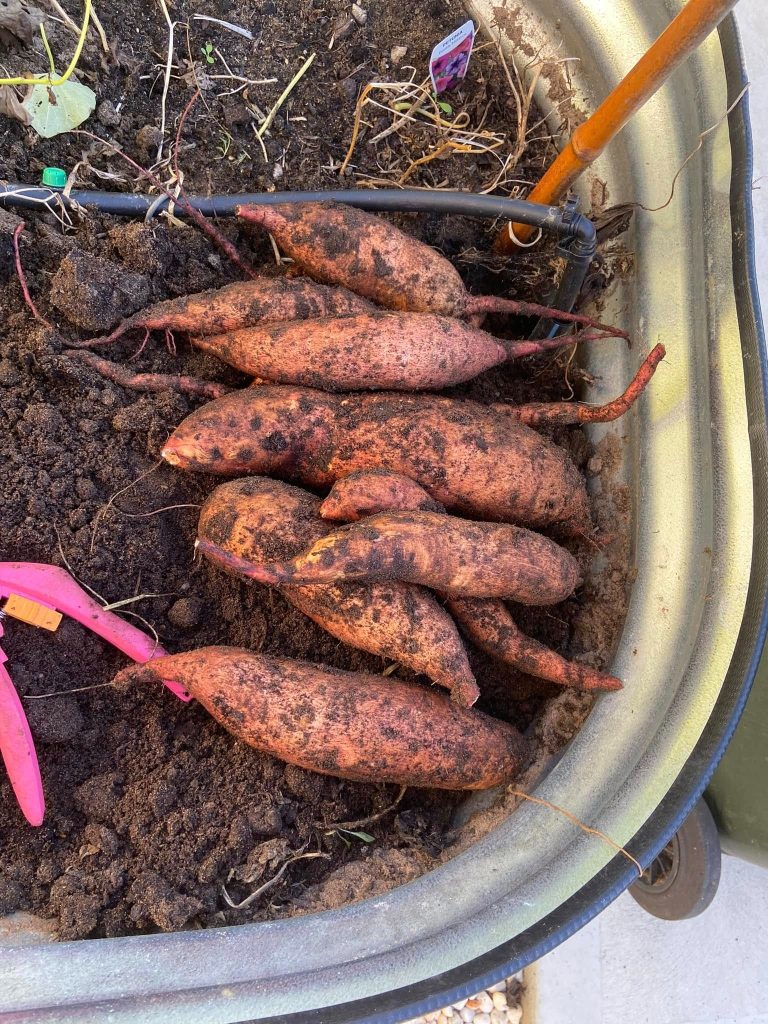
Growing sweet potatoes in containers is genuinely easy as long as you respect one rule: give the roots room to swell.
This is the same principle behind growing vegetables in small spaces — match the container to the crop and you can grow almost anything on a balcony.
Choosing the Right Pot and Soil
- Go big and go deep. A minimum of 12 inches deep, but a 10- to 20-gallon fabric grow bag is the sweet spot. Grow bags drain freely and “air-prune” the roots, which encourages a tidy cluster of tubers instead of a tangle.
- One or two slips per large pot. Crowding leads to lots of skinny roots and no real harvest.
- Use a loose, sandy mix. Heavy or compacted soil forces tubers to grow long, thin, and contorted. Blend potting mix with a few handfuls of coarse sand or perlite for drainage.
- A dark-colored container is an advantage in cooler climates — it absorbs heat and keeps the root zone warm, which sweet potatoes love.
Feeding Without Overdoing Nitrogen
Here’s the mistake that ruins more container sweet potatoes than any pest: too much nitrogen. High-nitrogen feed gives you a jungle of gorgeous vines and almost no tubers underneath. Instead:
- Mix some finished homemade compost into the pot at planting for slow, balanced nutrition.
- If you fertilize, lean toward something lower in nitrogen and higher in potassium (the “K” on the label) to push energy into root development.
- Ease off water in the final two to three weeks before harvest. Slightly drier soil concentrates flavor and helps prevent the tubers from splitting.
Miss it by a week and you lose the crop. The free 22-page planner pins down your exact dates — last frost, first frost, and the weekly steps between — so you plant on the days that actually work for your ZIP.
Growing Sweet Potatoes Vertically to Save Space
A single plant can throw out vines 6 to 10 feet long, which is a problem on a small patio — and an opportunity.
Growing sweet potatoes vertically on a trellis, cattle panel, or netting does two things at once: it reclaims your floor space and, counterintuitively, often gives you bigger tubers.
Why? When vines sprawl across the ground, they root at every node they touch and start forming small tubers all over the place, scattering the plant’s energy.
Train the vines up a support instead and that energy stays concentrated at the main crown, where the harvest you actually want is forming.
If you can’t trellis, do the next best thing and “lift” the vines every couple of weeks — just slide a rake under them and flip them back so they can’t re-root.
This kind of vertical thinking is one of the highest-leverage ways to squeeze more food out of a small backyard, and it works beautifully alongside other climbing crops.
Free Planting Guides for This Article
Get exact planting dates, frost schedules, and growing tips for your zone:
What to Plant with Sweet Potatoes
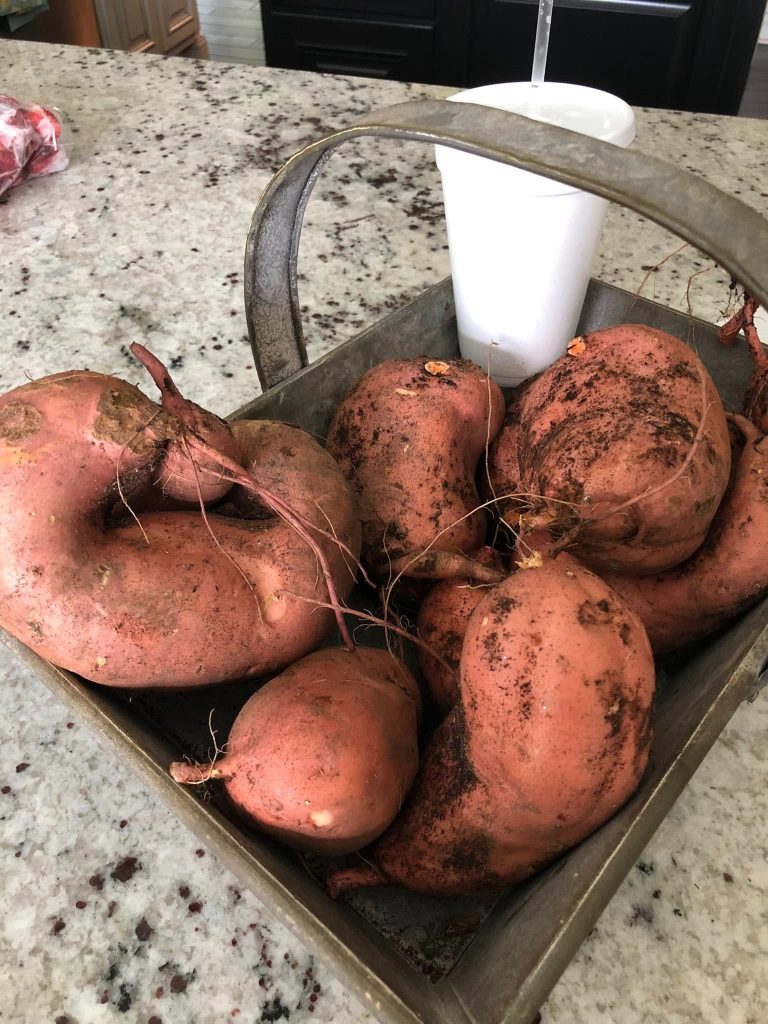
Deciding what to plant with sweet potatoes comes down to one idea: the vines are a living groundcover, so pair them with plants that grow up while sweet potatoes spread out. Good companion planting turns that sprawling habit from a nuisance into a weed-suppressing asset.
Good Companions
- Tall, upright crops like okra, corn, and pole beans rise above the vines while the sweet potatoes blanket the soil below and lock in moisture.
- Aromatic herbs such as thyme, oregano, and summer savory are traditional companions said to help deter the sweet potato weevil.
- Bush beans fix a little nitrogen and won’t compete for the same root zone.
- Marigolds planted nearby can help suppress root-knot nematodes in the soil over time.
Plants to Keep Away
- Sprawlers that fight for the same ground — squash, pumpkins, and melons will wrestle your sweet potatoes for territory and lose nobody any favors.
- Heavy feeders that cast deep shade, which starve the low vines of light.
Because the vines need elbow room, it’s worth checking how far apart to space your plants before you commit a bed — give each slip 12 to 18 inches, with rows about 3 feet apart.
Best gardening planner I've used in 10 years — and I keep coming back to it every season.
Watering, Harvesting, and the Curing Step Most People Skip
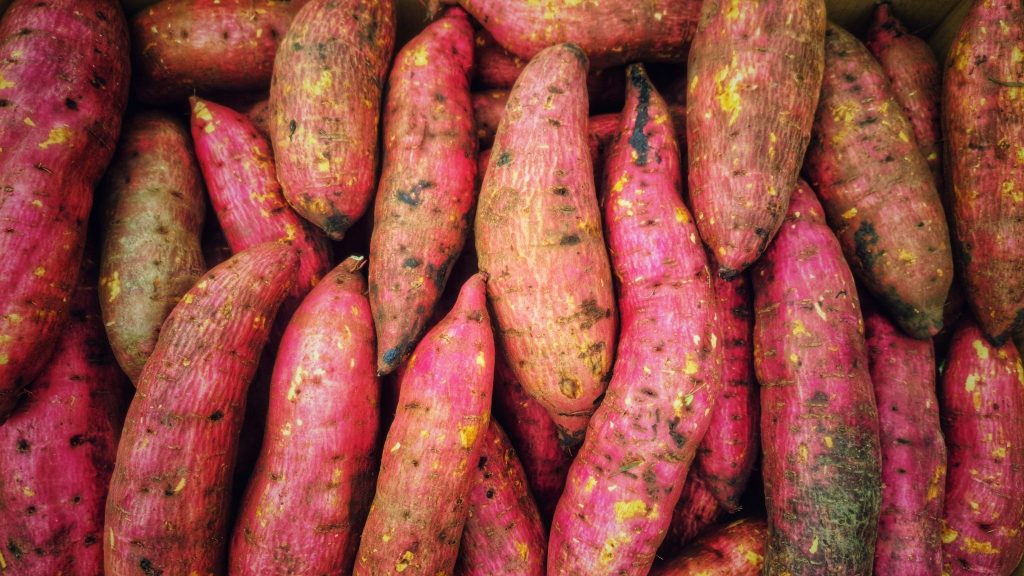
Sweet potatoes need steady moisture for the first month while they establish, then much less. Overwatering late in the season causes cracking and watery, bland tubers.
When to Harvest
Most varieties are ready 90 to 120 days after planting. Signs it’s time:
- The leaves begin to yellow.
- A test dig at the edge of the plant turns up tubers of a decent size.
- Frost is in the forecast — never let frost-killed vines sit on living tubers, as the rot travels down into the roots fast.
Dig with a garden fork well outside the crown and lift gently. Sweet potatoes bruise like fruit, and every nick is a doorway for rot in storage.
How to Cure and Store (the Real Secret to Sweetness)
Freshly dug sweet potatoes are starchy and bland. Curing is what turns them sweet and lets them store for months — and it’s the step beginners almost always skip.
- Keep the unwashed tubers somewhere warm and humid — about 80–85°F with high humidity — for 7 to 14 days. A closed cooler with a pan of water, or a warm bathroom, works at home.
- Curing heals the skin and converts starches into sugars, deepening the flavor.
- After curing, move them to a cool, dark spot around 55–60°F.
One crucial don’t: never refrigerate raw sweet potatoes. Temperatures below about 50°F cause chilling injury, giving you a hard core and an off taste no amount of baking will fix.
How Hard Is It to Garden in Your County?
Every county has a unique Gardening Difficulty Score based on frost risk, soil quality, drought, altitude, and climate trends. Find yours — plus personalized frost dates, planting calendars, and soil data.
Check Your County's Score →Plant Your First Slip This Weekend
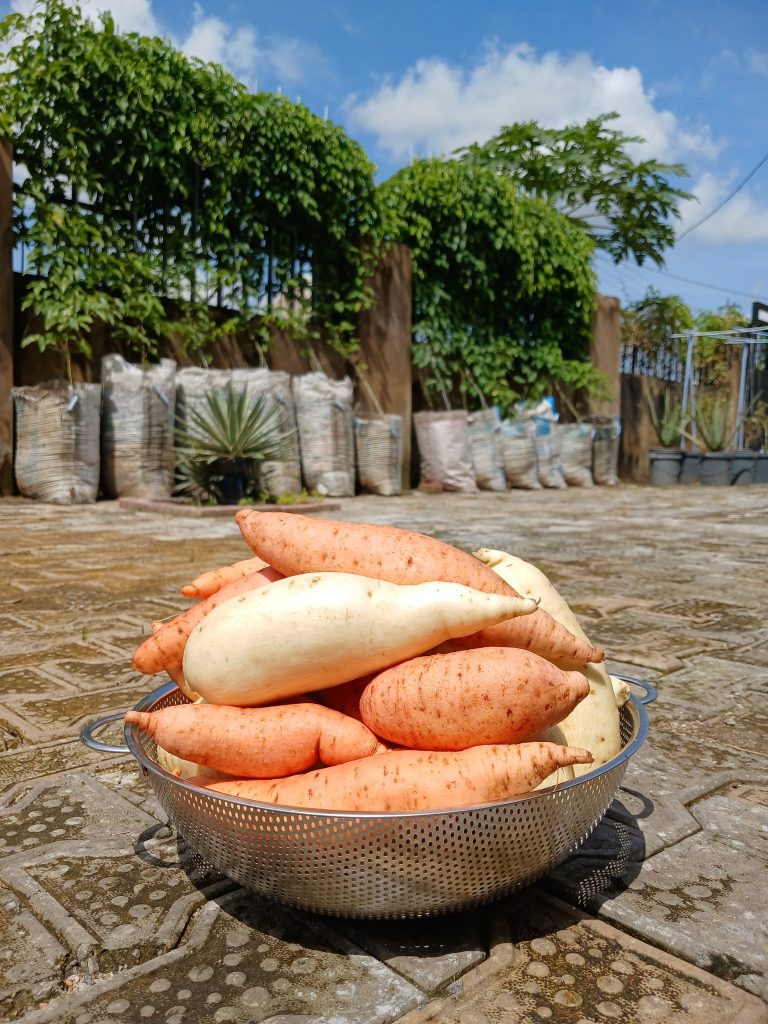
You don’t need acreage, a greenhouse, or years of experience — you need one organic sweet potato, a warm windowsill, and a deep pot.
Start a tuber sprouting this weekend, plant the slips once your soil warms, train the vines upward, and remember to cure the harvest.
That single sequence is the whole game, and it’s well within reach for a first-time grower. While you’re planning the bed, consider tucking in a few blooms too; planting a few flowers among the vines brings in pollinators and beneficial insects that keep the whole patch healthier.
Have you grown sweet potatoes before, or are you about to try for the first time? Drop a comment below and let me know which method you’re starting with — and if you’ve got a curing trick that works in your climate, share it so other readers can steal it!
- Beans
- Cucumbers
- Squash
- Sweet Corn
- Basil
- Okra
Plan Your Garden With Confidence!

Ever start planting… and then realize halfway through that things feel a little scattered?
A simple plan changes everything.
When you sketch your layout first, you can see what fits, what flows, and what actually makes sense for your space. It saves time, money, and a whole lot of second-guessing later.
Our free Garden Planner helps you map out beds, organize plant spacing, rotate crops, and keep track of seasonal tasks – all in a clean, printable format you can actually use.
Whether you’re designing a low maintenance front yard or planning your full homestead garden, this gives you a clear starting point.
Less chaos. More clarity. A garden that works.
Frequently Asked Questions
How many sweet potatoes will one plant produce?
In good conditions, expect roughly 3 to 8 usable tubers per plant, often totaling 1 to 2 pounds. A 20-gallon grow bag with one or two slips can yield a small grocery bag’s worth. Yields drop sharply if the plant gets too much nitrogen, too little sun, or sits in heavy, compacted soil that the roots can’t expand into.
Can I grow sweet potatoes in a cold or short-season climate?
Yes, with a few adjustments. Start your slips indoors early so they’re ready the moment the soil warms, and choose faster-maturing varieties like Beauregard or Georgia Jet that finish in around 90 days. Use dark containers or black plastic mulch to warm the root zone, and grow against a south-facing wall for extra reflected heat. In a genuinely short summer, container growing actually helps because you can move the pots to the warmest microclimate you’ve got.
Do sweet potato vines need pollination to form tubers?
No. The part you harvest is a swollen root, not a fruit, so it forms whether or not the plant ever flowers — and in most temperate climates the vines won’t bloom at all. You never need bees or hand-pollination to get a sweet potato crop, which is part of why they’re so beginner-friendly.
Are ornamental sweet potato vines edible?
Technically yes. The chartreuse and deep-purple “ornamental” sweet potatoes sold for hanging baskets are the same species and do form tubers underground. They’re safe to eat, but they’ve been bred for foliage rather than flavor, so the roots tend to be small and bland. If eating is the goal, plant a variety grown for its tubers and treat the ornamentals as a bonus, not a main crop.
What should I do if frost hits before I harvest?
Dig immediately — don’t wait. Once frost kills the foliage, decay can travel down the stems and into the tubers within a day or two, especially in wet soil. Cut away the blackened vines, lift the roots carefully the same day if you can, discard any that are soft or damaged, and cure the rest right away. Tubers caught early are usually still perfectly good.
Level Up Your Garden
Our most popular gardening guides