Eggplant is a rewarding warm-season vegetable, but it does come with its share of challenges — flea beetles, aphids, spider mites, and nutrient-hungry soil can all take a toll on your crop.
One of the most effective and natural ways to address all of these issues at once is through companion planting.
By strategically placing the right plants next to your eggplants, you can suppress pests, enrich the soil, attract pollinators, and even increase fruit production — all without reaching for a spray bottle.
If you’re new to this practice, our expert companion planting guide is a great starting point before you begin mapping out your beds.
In this article, we’ll walk you through the 15 best eggplant companion plants, share a few crops to keep well away, and offer practical tips for laying out your beds like a pro.
15 Best Companion Plants for Eggplant
Here are the best ones to grow alongside it.
1. Marigolds
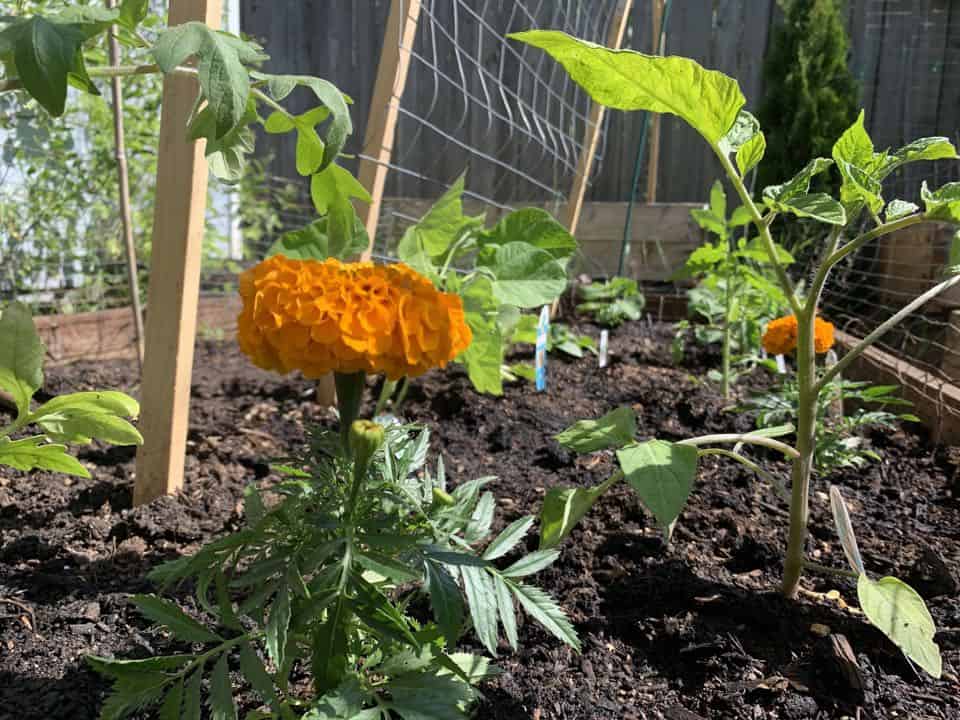
Marigolds are among the most powerful pest-fighting companions you can grow near eggplant.
Their roots release a natural chemical called alpha-terthienyl that kills root-knot nematodes — a soil pest that attacks eggplant root systems and stunts growth.
Above ground, their strong scent repels aphids, spider mites, and whiteflies before they can establish on your eggplant leaves. Plant French marigolds (Tagetes patula) in clusters along the perimeter of your eggplant bed and interplanted between rows for maximum coverage.
They also lure ladybugs and other beneficial predators into the garden. Marigolds are equally effective alongside many other crops — you can see them at work in our okra companion planting guide, where they rank as a top recommendation for keeping pest pressure low.
2. Basil
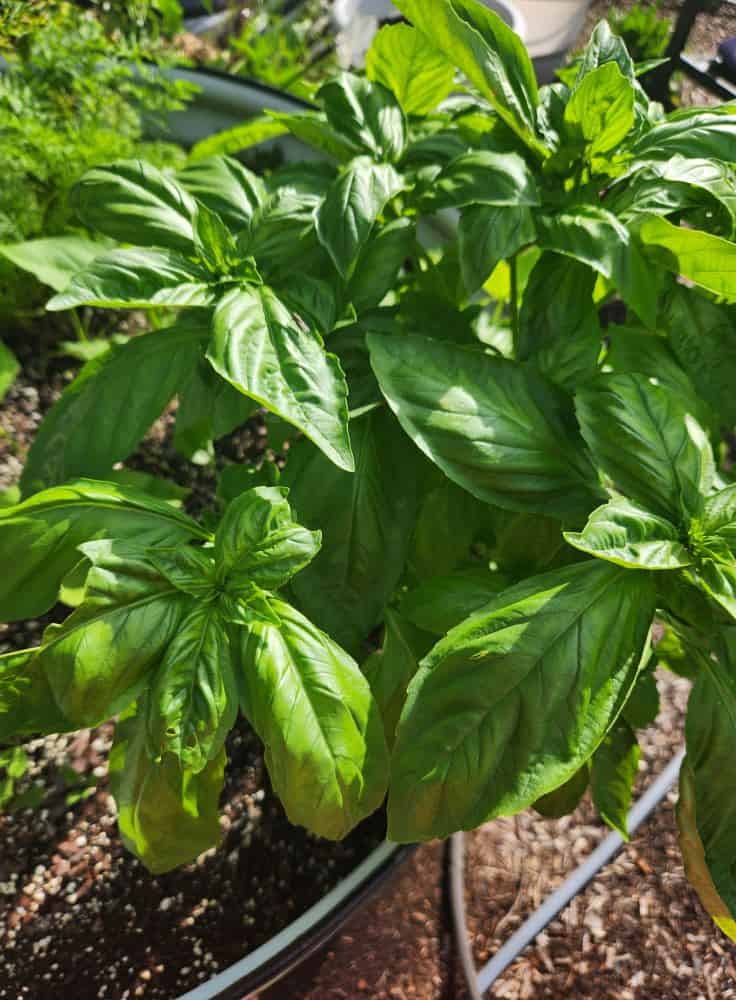
Basil is one of the single best companions you can grow next to eggplant.
The volatile oils in basil leaves — particularly linalool and eugenol — are highly effective at repelling flea beetles, which are the number one pest threat to eggplant.
These beetles chew dozens of tiny holes in eggplant leaves, weakening the plant and reducing its ability to photosynthesize and produce fruit. Basil also deters aphids and spider mites.
As a bonus, basil and eggplant thrive in identical growing conditions — both love full sun, warm temperatures, and well-drained soil — so they’re naturally compatible garden companions. Tuck basil plants 12–18 inches from your eggplants for best results.
3. Bush Beans
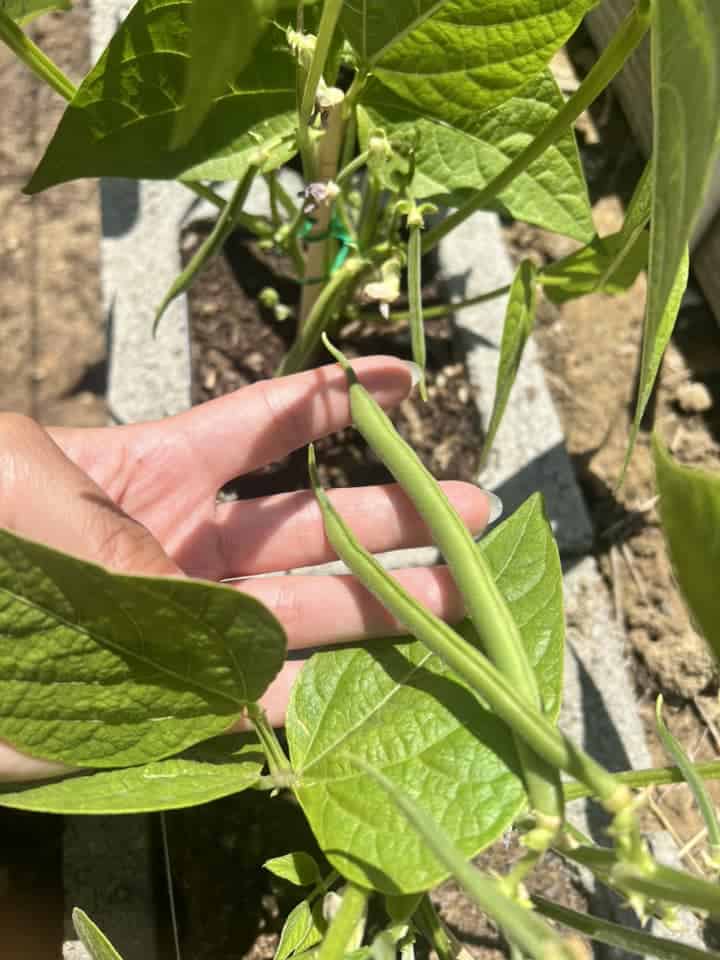
Bush beans are a practical, low-maintenance companion that improves the growing conditions for eggplant from the ground up.
As legumes, they fix atmospheric nitrogen into the soil in a form that neighboring plants can readily absorb — and since eggplant is a notoriously heavy nitrogen feeder, this is a meaningful benefit.
Bush beans stay compact and don’t shade eggplant, and their shallow root system avoids competition underground. They also help cover bare soil between rows, suppressing weeds and retaining moisture.
Nitrogen fixation is a benefit legumes bring to many garden pairings — you can read more about how this works across different vegetable beds in our guide to companion plants for carrots.
4. Nasturtiums
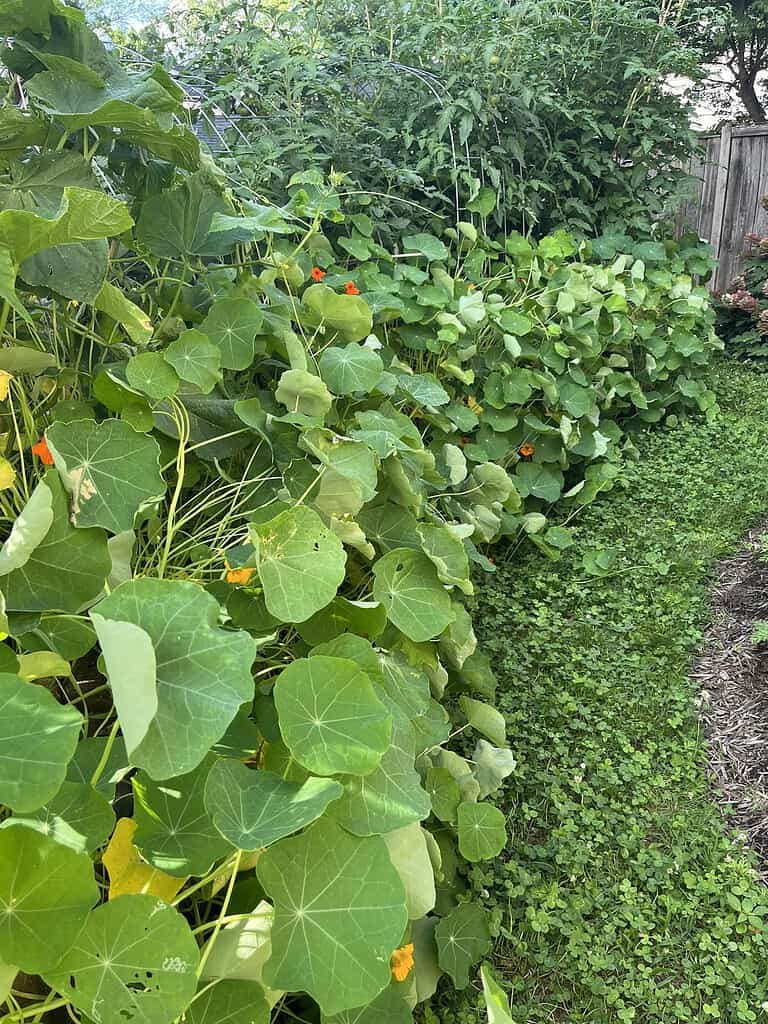
Nasturtiums are a classic trap crop, meaning they attract specific pests so strongly that those pests ignore your main crop entirely.
Aphids are irresistibly drawn to nasturtiums and will colonize them in large numbers — which means your eggplants get a free pass.
Once aphids concentrate on the nasturtiums, you can remove infested plants or apply a targeted treatment without touching your eggplants at all.
Nasturtiums also attract hoverflies and predatory wasps that actively hunt aphids and other soft-bodied pests. They spread casually along the ground, filling in gaps and suppressing weeds. Both the leaves and flowers are edible, making them a genuinely useful addition to the homestead garden.
5. Borage
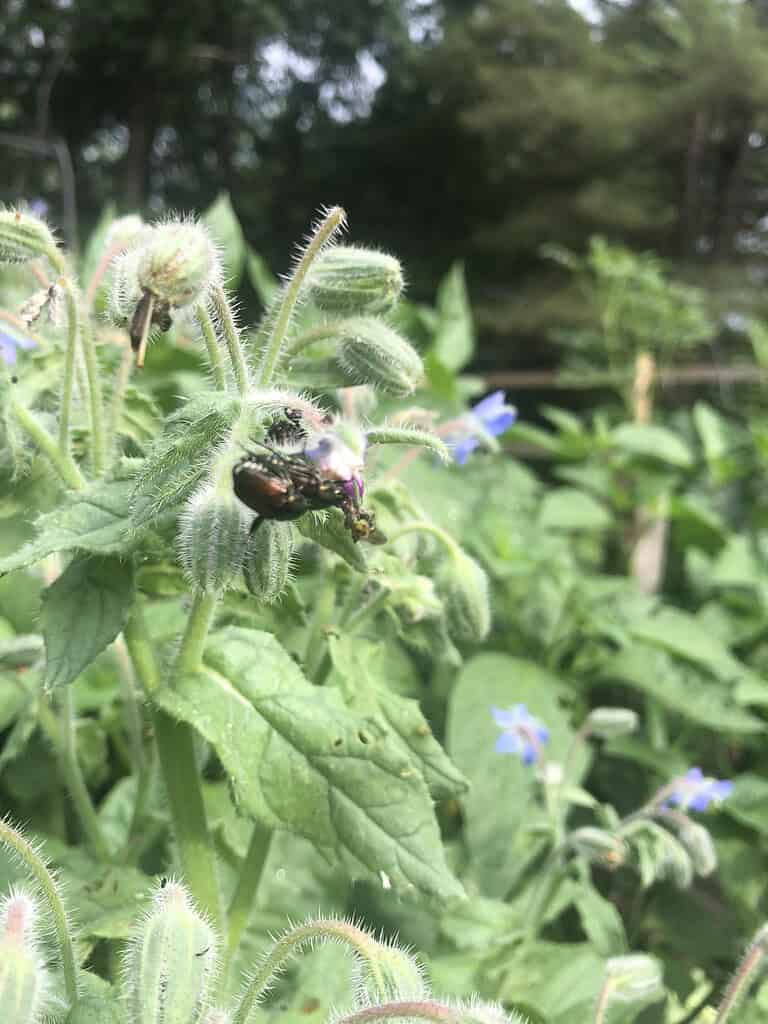
Borage is an underrated companion for eggplant that works on multiple fronts.
Its vivid blue star-shaped flowers are irresistible to bees, which dramatically increases pollination activity near your eggplant flowers — and better pollination means more fruit set per plant.
Borage is also known to deter tomato hornworms, a pest that occasionally moves onto eggplant as well. Some gardeners report that borage improves the overall vigor of nearby plants, though the mechanism isn’t fully understood.
It self-seeds freely, so once you plant it, it tends to return year after year with minimal effort. Give it some room since it can spread to 2–3 feet across.
6. Peppers
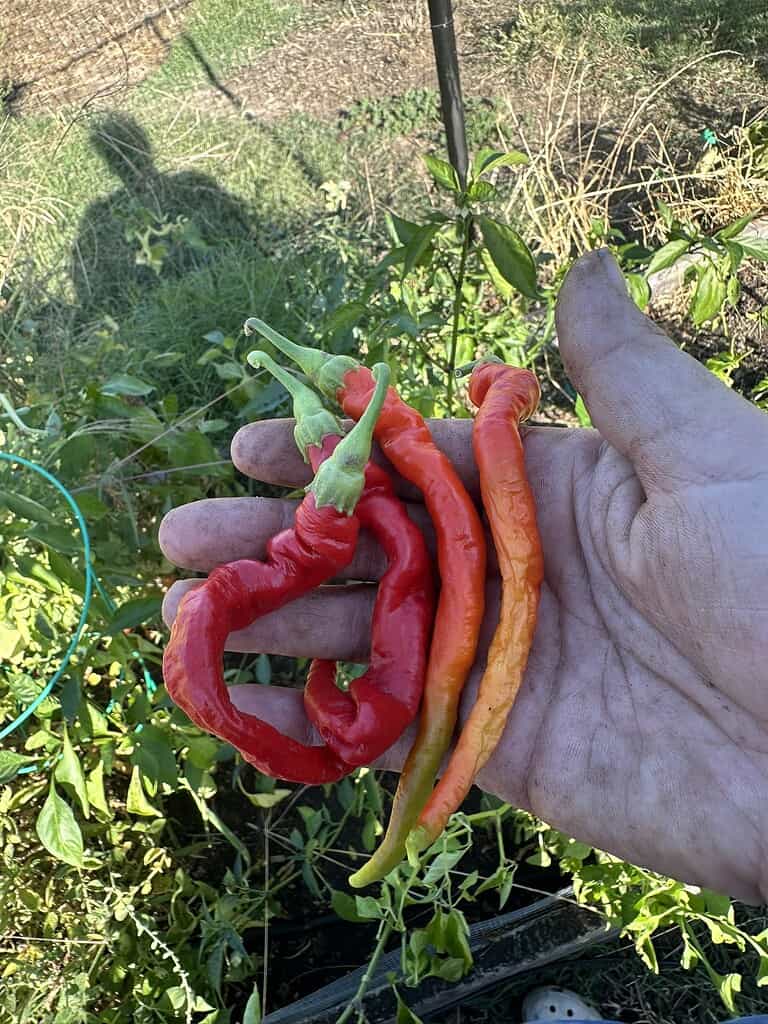
Peppers and eggplants are natural garden companions because they share nearly identical growing needs.
Both thrive in full sun, require warm soil temperatures above 65°F, prefer consistent watering, and respond well to similar fertilization schedules.
Growing them in the same bed simplifies garden management considerably. While both are nightshades, they don’t cross-pollinate or compete aggressively for resources, and they don’t tend to share the same pest vulnerabilities in practice.
The main caution is crop rotation — make sure to move the entire bed of peppers and eggplants to a new location each season to prevent disease buildup in the soil.
7. Thyme
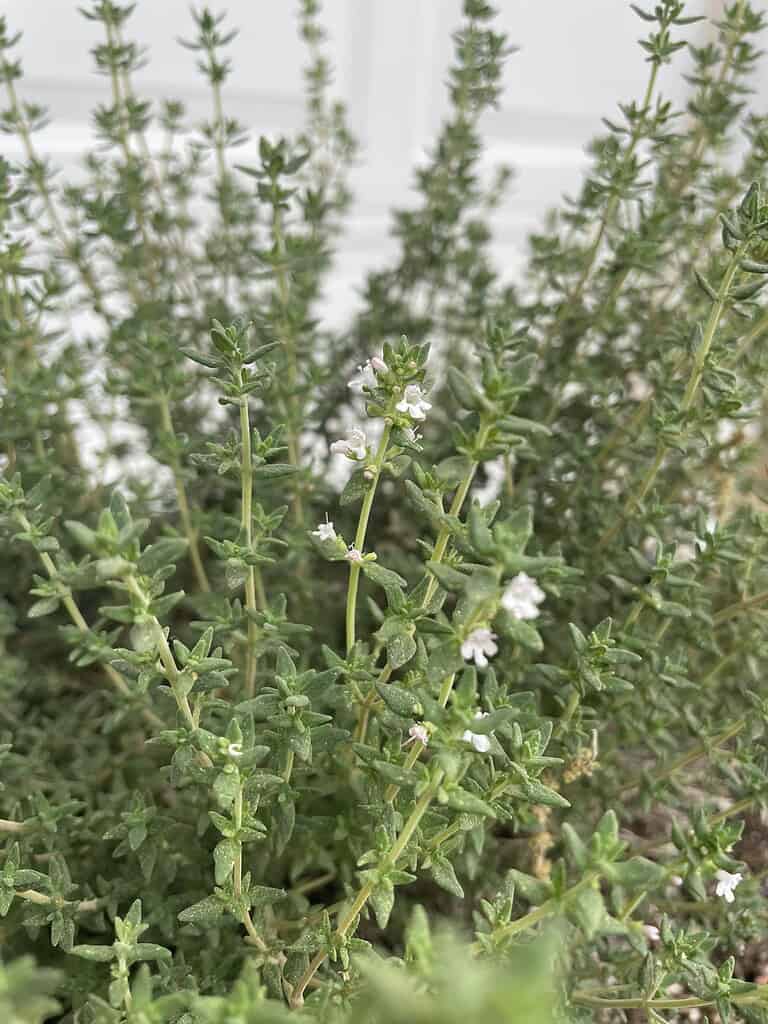
Thyme is one of the most targeted companions you can choose for eggplant, specifically because of its effectiveness against flea beetles.
The strong aromatic oils in thyme leaves mask the scent of eggplant from searching insects, making it far harder for flea beetles and other pests to locate your crop.
Creeping thyme also grows low and dense, functioning as a natural living mulch that conserves soil moisture, moderates soil temperature, and crowds out weeds between your eggplant rows.
It’s drought-tolerant, nearly maintenance-free, and thrives in the same full-sun, well-drained conditions your eggplants need. Plant it as a low border around eggplant rows for an effective scent barrier.
8. Oregano
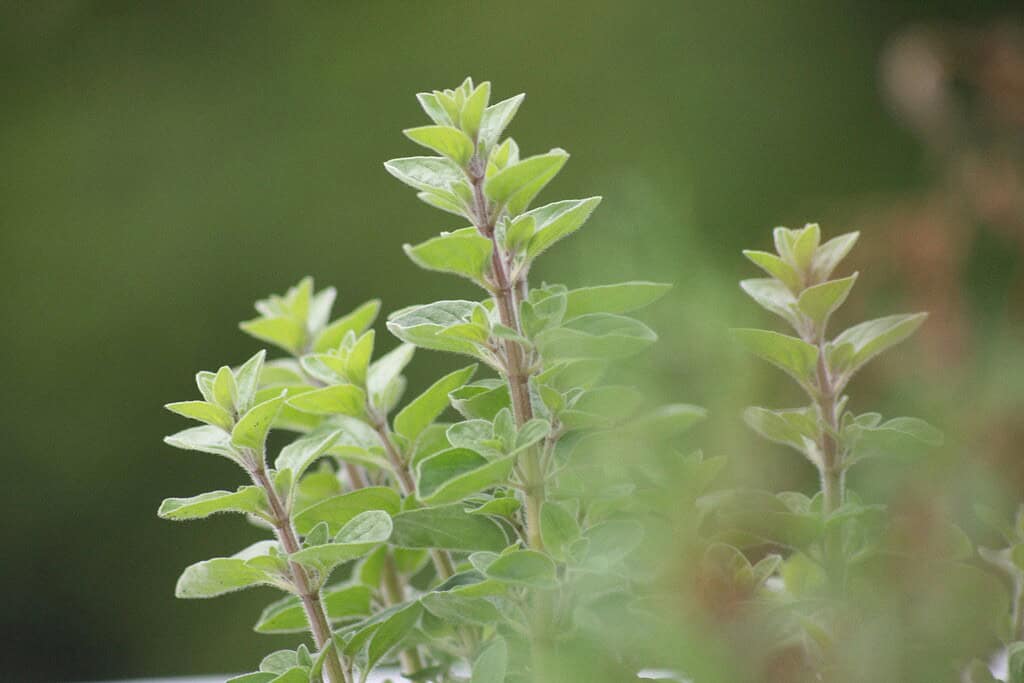
Oregano offers the eggplant garden a combination of pest suppression and beneficial insect attraction that few other herbs can match.
Its strong essential oils confuse and repel aphids, spider mites, and other soft-bodied insects that commonly attack eggplant.
When oregano blooms, its small clustered flowers attract hoverflies, parasitic wasps, and predatory beetles — all natural allies against garden pests. It spreads into a low mat along the ground that helps smother weeds and slow soil moisture evaporation.
Oregano is essentially maintenance-free and produces a harvest you can use in the kitchen alongside all the eggplant dishes you’ll be cooking up.
9. Dill
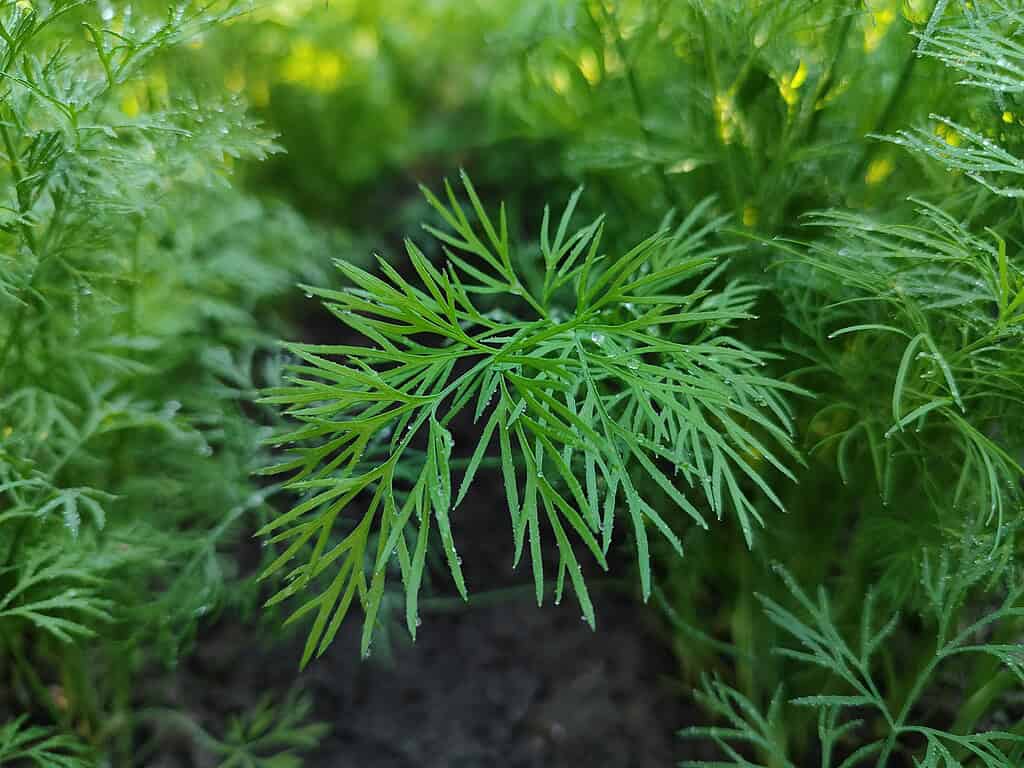
Dill is an exceptional attractor of beneficial predatory insects, particularly parasitic wasps and hoverflies that actively hunt and destroy the caterpillars and aphids that target eggplant.
When dill is in full flower, its umbrella-shaped blooms are covered in tiny beneficial insects that patrol the surrounding area.
For the best results, grow dill in successive short batches through the season — start a fresh planting every 3–4 weeks to keep a steady supply of flowering dill in the garden.
Avoid letting dill go completely to seed right next to eggplant, as very mature dill has occasionally been observed to mildly inhibit the growth of some neighboring vegetables.
10. Catnip
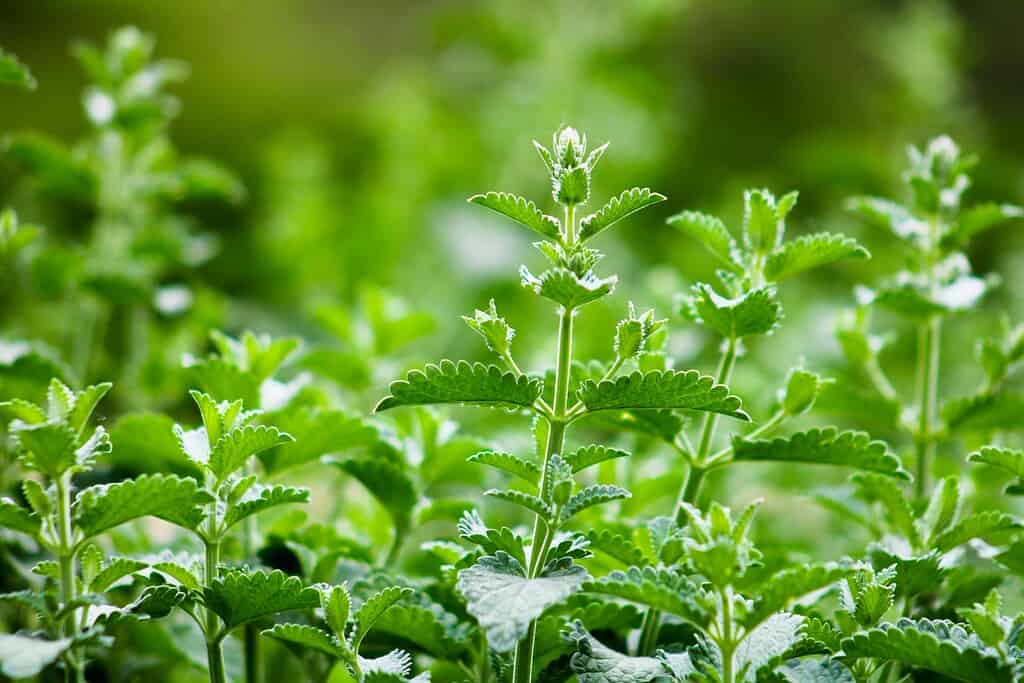
Catnip deserves a spot in any eggplant garden because of its exceptional ability to repel flea beetles.
Research has shown that nepetalactone — the same compound that affects cats — is a highly effective natural insect repellent, sometimes outperforming synthetic options against certain beetles and aphids.
Plant catnip around the perimeter of your eggplant bed or interplanted nearby for consistent protection through the growing season.
One practical note: if cats visit your garden regularly, they’ll flatten catnip plants by rolling in them. A simple wire cage around each plant solves this problem without reducing the pest-repelling benefit.
11. Spinach
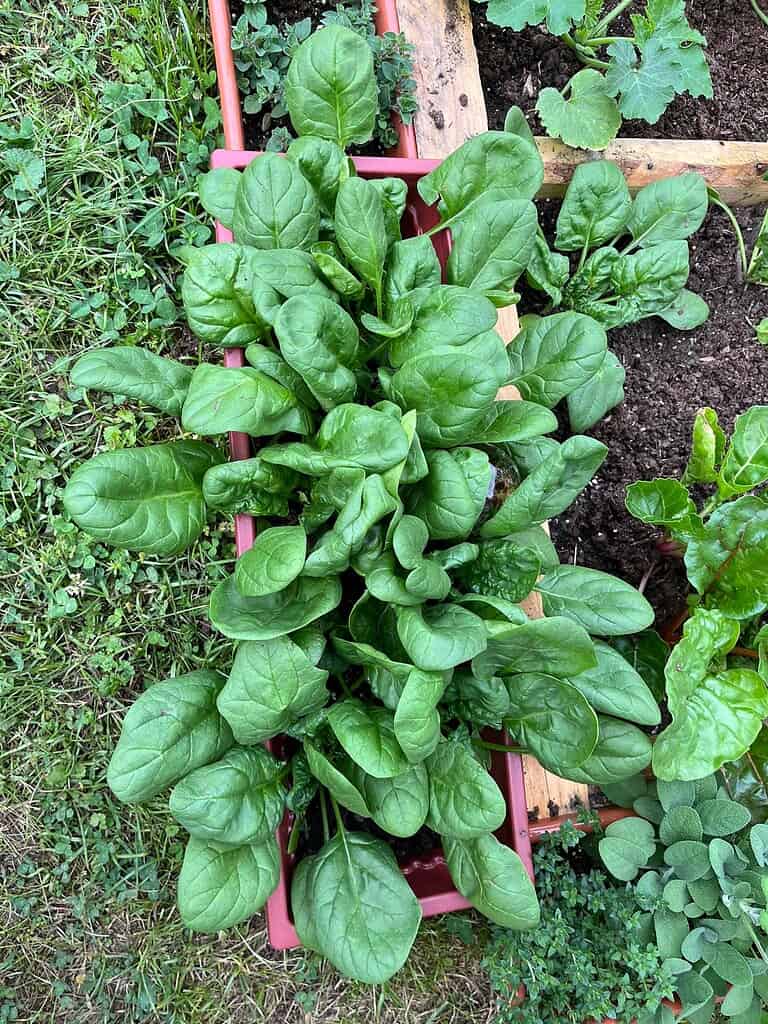
Spinach is an ideal early-season companion for eggplant because the two crops operate on complementary schedules. Spinach thrives in cool spring weather and can be planted in the same bed weeks before eggplant seedlings go in after the last frost.
As temperatures warm and eggplant gets established, its canopy provides partial shade that actually extends spinach’s growing season before it bolts.
The two plants also have non-competing root systems — eggplant roots reach deeper into the soil while spinach stays shallow — meaning neither competes with the other for water or nutrients. It’s a highly efficient use of bed space during the season transition.
12. Chives
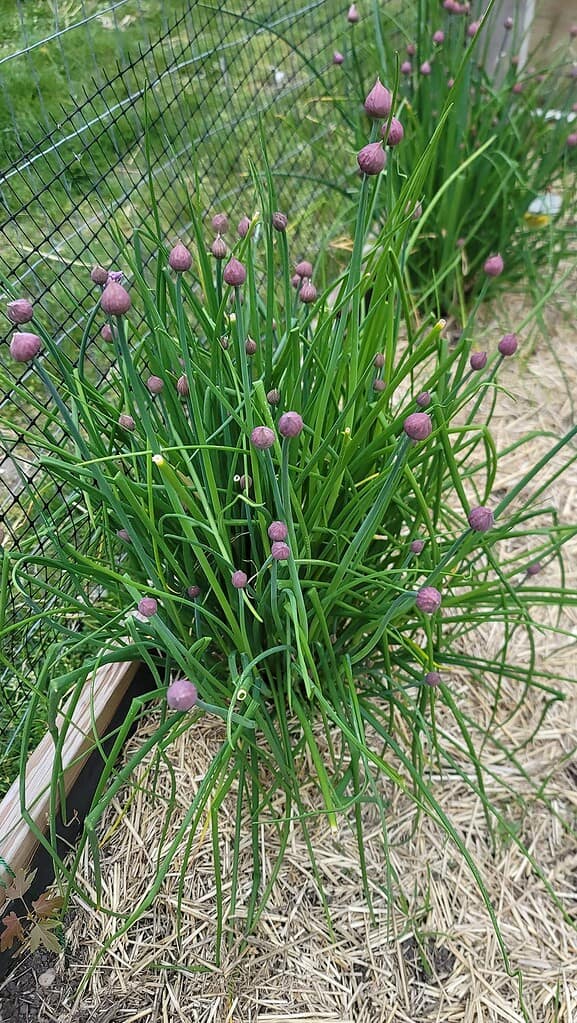
Chives bring allium power to the eggplant bed.
Their characteristic pungent scent — produced by sulfur compounds — effectively repels aphids, spider mites, and Japanese beetles that would otherwise zero in on your eggplants.
Planted as a border around an eggplant bed, chives create a natural scent barrier that discourages pests from landing. They return reliably as a perennial each year and require almost no care.
Alliums are consistently one of the best companion groups across many vegetable crops — the same pest-repelling logic behind chives is explored in depth in our onion companion plants guide, which covers how alliums protect a wide range of vegetable crops.
13. Amaranth
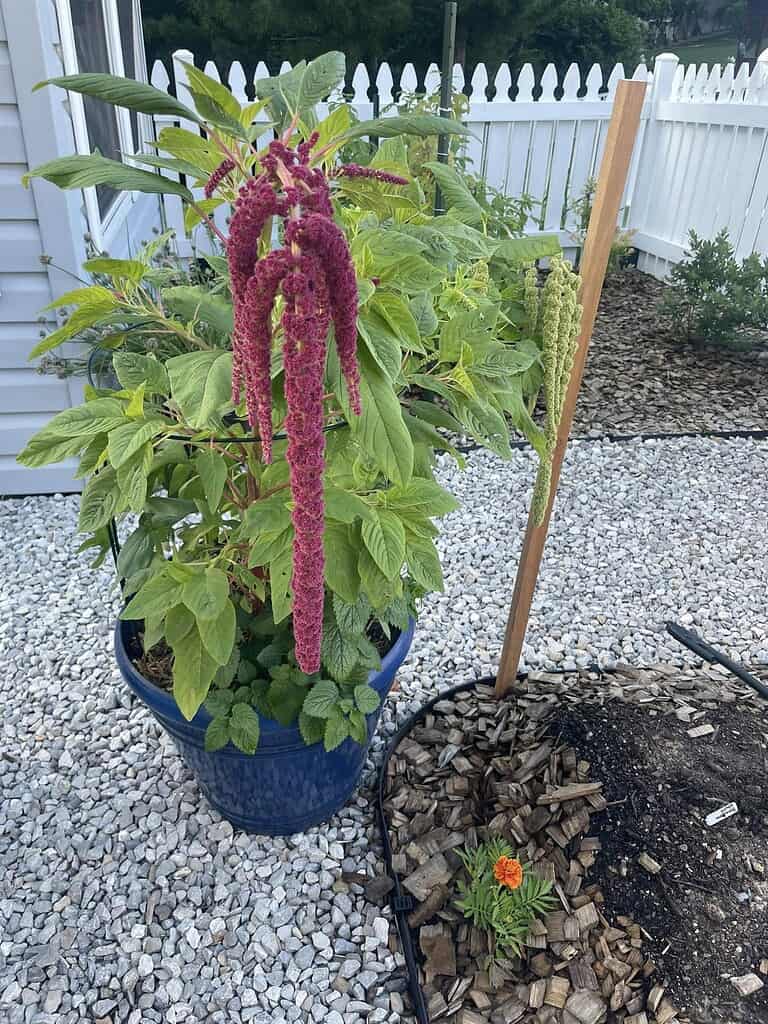
Amaranth serves as a trap crop for leafhoppers, insects that damage eggplant directly through feeding and also spread viral diseases between plants.
By drawing leafhoppers away from your eggplant onto themselves, amaranth reduces both the feeding damage and the disease risk simultaneously.
Amaranth grows tall and upright, which can also provide a light windbreak in exposed garden areas. Its deep taproot pulls nutrients from lower soil layers, improving overall soil structure over time without competing with eggplant’s shallower root zone.
As a bonus, young amaranth leaves are edible and highly nutritious — another productive plant for the working homestead.
14. Tarragon
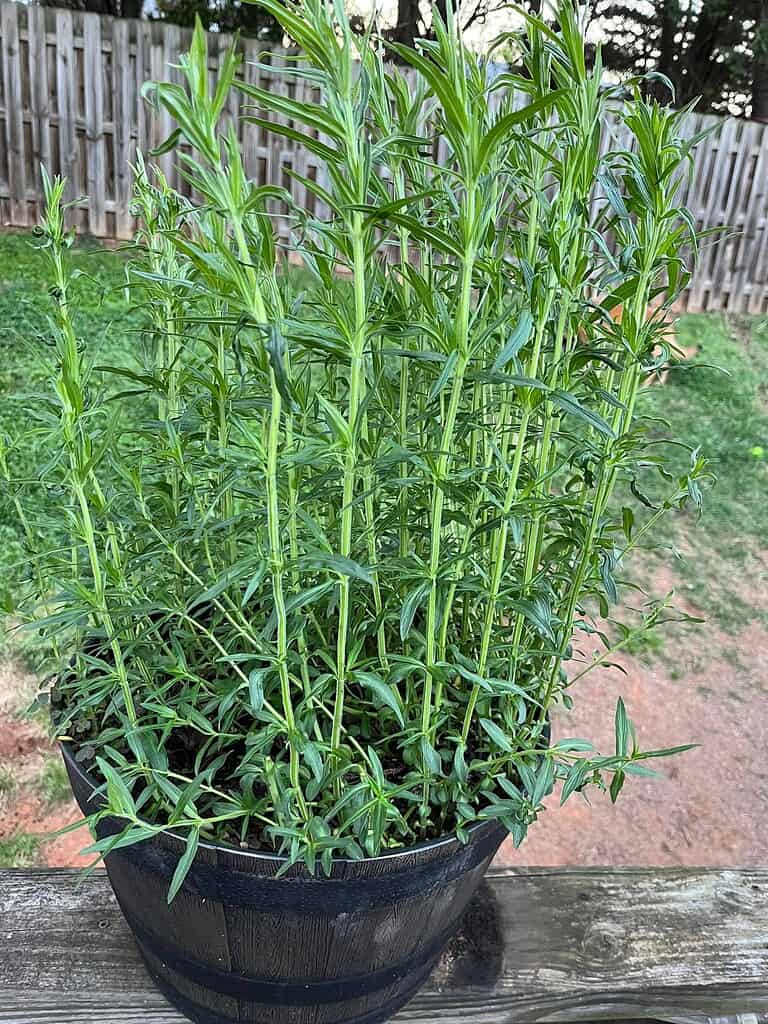
French tarragon is one of those companion plants that performs quietly but consistently. Its intense aromatic oils naturally deter aphids, whiteflies, and other soft-bodied pests that regularly target eggplant.
Some seasoned gardeners also report that tarragon improves the overall health and growth rate of neighboring vegetables, possibly through root secretions that benefit soil microbiology.
It grows in a compact, upright clump that won’t crowd surrounding plants and doesn’t compete aggressively for soil nutrients.
Always choose French tarragon (Artemisia dracunculus var. sativa) over Russian tarragon for companion planting — French tarragon has stronger essential oils and a significantly more pronounced effect.
15. Petunias
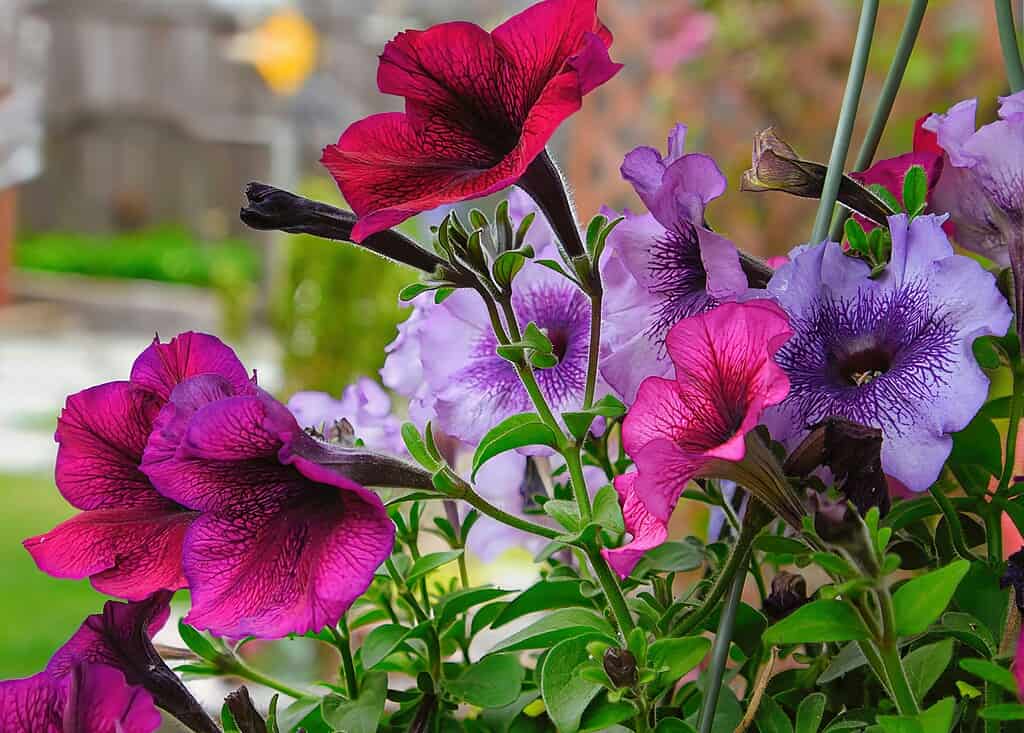
Petunias are an underappreciated companion plant that earns its keep in the eggplant garden. Their slightly sticky, aromatic foliage naturally repels aphids, tomato hornworms, and asparagus beetles.
At the same time, their colorful flowers attract bees and butterflies, which improves pollination for eggplant flowers nearby and increases fruit set.
Petunias are low-growing and easy to tuck along the border of an eggplant row without taking up significant space.
Varieties with a stronger fragrance tend to provide the best pest-repelling results — look for traditional open-pollinated types rather than the nearly scentless modern hybrids bred purely for appearance.
Garden Planner
The 22-page planner timed to your county's real frost dates. Planting windows, monthly checklists, and a harvest log you'll fill with pride by August.
Your Free 22-Page Garden Planner
Built for your exact ZIP code — planting dates, harvest log, and a month-by-month plan. 15-second sign-up.
Plants to Keep Away from Eggplant
Companion planting is just as much about avoiding the wrong pairings as it is about choosing the right ones. These common crops can cause real problems when planted too close to eggplant:
- Fennel: Fennel releases allelopathic compounds from its roots that suppress the growth of most neighboring vegetables, including eggplant. Always grow fennel in a completely separate, isolated area of your garden.
- Corn: Corn attracts corn earworms, which readily move onto eggplant once corn is harvested or declines. Keeping these crops apart reduces unnecessary pest pressure.
- Tomatoes: Both are heavy-feeding nightshades that deplete the same soil nutrients rapidly. They also share diseases like early blight and verticillium wilt, which can spread quickly between closely planted nightshade family crops.
- Geraniums (Pelargonium): Common garden geraniums can harbor Japanese beetles and leafhoppers, two pests that will gladly move from geraniums onto your eggplant.
Free Planting Guides for This Article
Get exact planting dates, frost schedules, and growing tips for your zone:
How to Lay Out Your Eggplant Companion Planting Bed
Selecting the right companions is only half the job — where you plant them matters just as much. Here are the key principles for building an eggplant companion planting bed that actually performs:
- Create scent borders: Place your strongest-smelling companions — marigolds, thyme, chives, and catnip — along the outer perimeter of the bed. They create a scent barrier that confuses approaching insects before they even reach your eggplant.
- Interplant low growers between rows: Basil, spinach, and oregano can be tucked efficiently between eggplant rows to maximize coverage at ground level without competing for light or vertical space.
- Position trap crops at the garden’s outer edge: Nasturtiums and amaranth work best at the outermost edges of your vegetable area, where they intercept pests before they migrate inward toward your main planting zone.
- Mind your spacing: Overcrowding — even with beneficial companions — restricts airflow and creates conditions for fungal diseases that eggplant is particularly susceptible to. Our guide on how far apart to space companion plants walks through real-world examples and practical spacing rules to help you avoid this common mistake.
- Consider raised beds: Eggplants thrive in raised beds where you control soil quality, drainage, and temperature. If you’re planning a new setup, our collection of practical raised garden bed layouts has designs that integrate companion planting naturally. For a compact setup, the 4×8 raised bed planting guide is especially useful for mapping exactly where each companion plant goes.
Miss it by a week and you lose the crop. The free 22-page planner pins down your exact dates — last frost, first frost, and the weekly steps between — so you plant on the days that actually work for your ZIP.
Start Planting Smarter – Your Best Eggplant Harvest Starts Here
The right companion plants can genuinely transform how your eggplant grows — fewer pest problems, healthier soil, better pollination, and a more productive harvest overall.
You don’t have to implement everything on this list at once. Start with two or three companions that address your biggest challenges this season, watch how your garden responds, and build from there.
Once you see the results in your eggplant bed, you’ll want to apply the same thinking across your whole garden.
Our guides to zucchini companion planting and the best companion plants for broccoli are great next reads if you want to keep expanding your companion planting knowledge crop by crop.
Which companion plants are you planning to grow alongside your eggplants this season? Share your setup or ask a question in the comments below — we’d love to hear what’s working in your garden!
How Hard Is It to Garden in Your County?
Every county has a unique Gardening Difficulty Score based on frost risk, soil quality, drought, altitude, and climate trends. Find yours — plus personalized frost dates, planting calendars, and soil data.
Check Your County's Score →Ready to Design Your Dream Garden Bed?
Feeling inspired to build something beautiful?
If you’re ready to go beyond just one garden bed and truly design a space that feels intentional, productive, and charming, I put together something special for you.
Inside 101 Garden Bed Ideas, you’ll find creative layouts, raised bed designs, space-saving solutions, and inspiring setups you can actually recreate in your own yard – whether you’re working with a tiny backyard or a full homestead.
Start planning your dream garden today.

Best gardening planner I've used in 10 years — and I keep coming back to it every season.
Frequently Asked Questions
Can I plant eggplant companions at the same time I transplant my seedlings?
Yes — and ideally, that’s exactly what you should do. Planting your companion herbs, flowers, and vegetables at the same time as your eggplant transplants means everything establishes together.
The companions start doing their pest-repelling and beneficial insect-attracting work from day one, when young eggplant seedlings are most vulnerable.
If anything, start your marigolds and basil indoors 4–6 weeks early so they’re already robust when transplant day arrives. Nasturtiums and dill can be direct-seeded at the same time as eggplant goes in, since they germinate quickly without needing a head start.
Do companion plants help with eggplant diseases, or just pests?
Companion plants primarily work on pest pressure, but pest control has an indirect effect on disease spread.
Many common eggplant diseases — including mosaic virus and certain bacterial infections — are transmitted by insects like aphids and leafhoppers.
When your companion plants reduce those insect populations, they also reduce the likelihood of disease being introduced to your plants.
Additionally, improving airflow through proper spacing and using ground-cover companions to prevent soil splash (which spreads soil-borne fungal spores) can help manage fungal diseases like Phytophthora blight.
How many different companion plants should I use at once?
Two to four well-chosen companions per bed is usually enough to make a meaningful difference without overcomplicating your garden layout.
A practical combination for most eggplant growers: marigolds along the perimeter, basil interplanted between rows, and nasturtiums at the garden’s edge as a trap crop.
That covers nematode suppression, flea beetle deterrence, and aphid control with minimal space requirements.
Once you’re comfortable with a simple base combination, you can layer in additional companions like thyme or borage in subsequent seasons as you learn how your specific garden responds.
Will eggplant companion plants attract unwanted wildlife like rabbits or deer?
Some companions, particularly nasturtiums, can attract rabbits since they’re palatable and tender. Ironically, the aromatic herbs recommended here — basil, thyme, oregano, chives, catnip, and tarragon — tend to be deer and rabbit resistant because of their strong scents and flavors.
If wildlife pressure is a concern in your garden, lean toward the aromatic herb companions rather than the more tender flowering plants.
Marigolds are also generally avoided by deer and rabbits due to their strong scent, making them doubly useful in gardens with wildlife traffic.
Should I remove companion plants at the end of the season or leave them in the soil?
It depends on the plant.
Annual companions like marigolds, nasturtiums, and basil should be removed and composted at the end of the season — leaving dead plant matter in the bed can harbor overwintering pests and disease spores.
Perennial companions like chives, thyme, oregano, and tarragon can be cut back and left in place; they’ll return the following spring.
Marigolds are worth pulling and composting even though they’re beneficial, since their nematode-suppressing root compounds are most effective when the roots are actively growing. Clearing the bed also gives you the opportunity to amend soil and plan your crop rotation for next year.
Level Up Your Garden
Our most popular gardening guides