Here’s the part most “zucchini trellis” articles skip right over: a standard bush zucchini doesn’t actually climb. It has no tendrils, no twining habit, and a thick hollow stem that snaps if you bend it wrong.
So when people say they “trellis” zucchini, what they usually mean is something more useful: standing that floppy plant upright, lifting its leaves off the soil, and giving the heavy fruit somewhere to hang.
Do that, and the whole bed changes. The sprawling mess turns into a tidy column you can walk around, air moves freely through the leaves, and the slugs lose their favorite hiding spot.
It’s one of the simplest ways to grow more food in less space without the jungle.
Below are 12 ideas that fit how zucchini really grows. Some are for bush types that need propping up. A few are true climbing structures for the vining summer squash that genuinely scrambles upward.
Can You Even Trellis Zucchini? (The Honest Answer)
There are two very different plants hiding under the word “zucchini,” and the trellis you need depends entirely on which one you have.
Bush zucchini (Black Beauty, Golden, most supermarket types) grows as a single thick stalk that gets top-heavy and flops sideways as it matures. It will never climb. What it needs is support: a stake or cage that holds the central stem vertical so the crown stays open to sun and air.
Vining summer squash is the climber people are thinking of. Tromboncino (also sold as Trombetta d’Albenga) is the classic one. It throws out long runners with grasping tendrils and will happily haul itself up an arch, behaving a lot like a cucumber.
If you’ve ever browsed cucumber trellis ideas, the same physics apply here, because both rely on tendrils that bush zucchini simply doesn’t have.
The quick test: if your plant grows from one central point and spreads its leaves out like a fountain, it’s a bush type. Stake it. If it sends out a long traveling vine, it’s a climber, and the same logic behind growing squash on a trellis works perfectly.
New to the crop entirely? It’s worth getting the fundamentals of how to grow zucchini down before you start sending it skyward.
Garden Planner
The 22-page planner timed to your county's real frost dates. Planting windows, monthly checklists, and a harvest log you'll fill with pride by August.
Your Free 22-Page Garden Planner
Built for your exact ZIP code — planting dates, harvest log, and a month-by-month plan. 15-second sign-up.
12 Clever Zucchini Trellis Ideas
These ideas are simple, practical, and mostly DIY-friendly using things you probably already have lying around. Let’s get into it.
1. The Single Center Stake (start here for bush types)
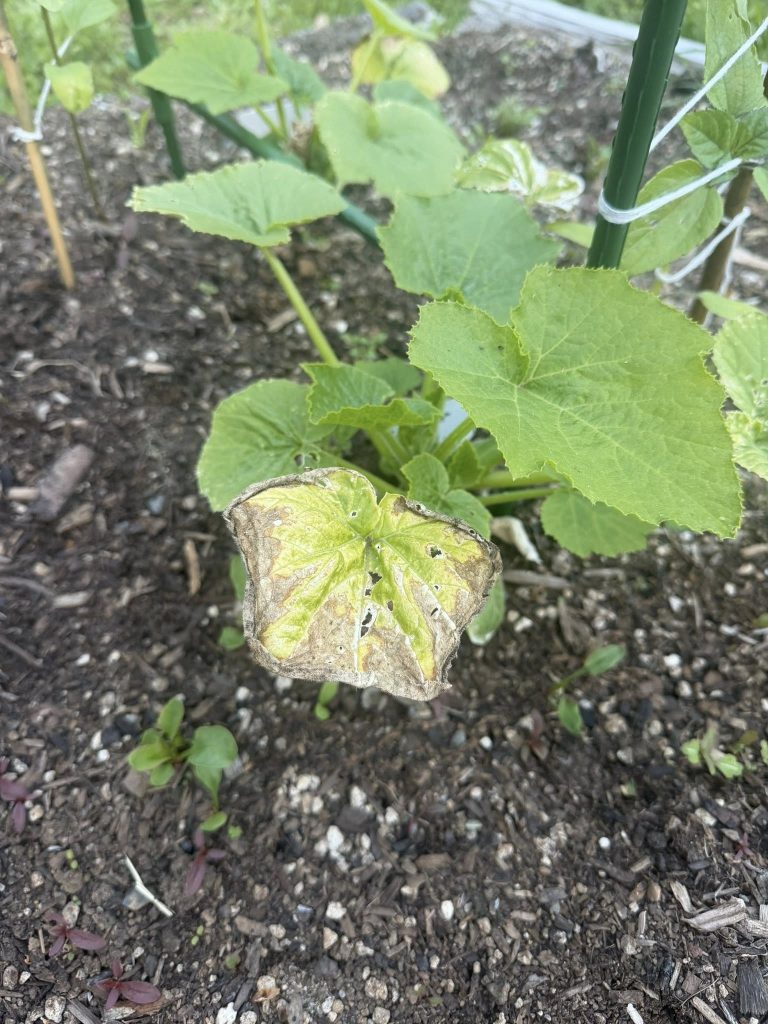
This is the foundation move, and it costs almost nothing. Drive one sturdy 4–5 ft stake an inch or two from the main stem at transplant time, then tie the stalk loosely as it grows.
A bush zucchini staked upright takes up roughly a third of the ground footprint of a sprawling one, and the open base dries out fast after rain. If you do only one thing on this list, do this.
2. The Upside-Down Tomato Cage Collar

Flip a cone-shaped tomato cage so the narrow end sits at the soil and the wide end points up.
Set it over a young plant and the expanding leaves grow up through the rings, which corral the stem without you tying a thing. It’s lazy in the best way and works beautifully for one plant per cage.
3. The Heavy-Duty Spiral Stake
Those corkscrew “tomato spirals” are underrated for zucchini. The stem nestles into the coil as it thickens, so you skip most of the tying.
Choose a thick galvanized one rather than the flimsy coated wire, since a fruiting zucchini gets surprisingly heavy near the top.
4. The Stake-and-Twine “Corset”
For a plant already starting to splay, ring it with three or four short stakes and wrap a band of soft twine around the outside at two heights.
It gently gathers the leaves inward like a corset, lifting the lower foliage off the dirt. Great for rescuing a zucchini that’s already gone floppy mid-season.
5. A Garden Obelisk for a Single Showpiece
If your zucchini lives in a front-yard bed or a big patio pot, a decorative metal or wood obelisk turns one plant into a vertical feature.
Tie the stem up the central spine and let the big leaves fan out through the frame. Pretty, sturdy, and it hides how unruly the plant actually is.
6. Fruit Hammocks and Slings (for the climbers)
Once a vining squash is up high, the fruit hangs in midair and can tear off under its own weight.
Cradle each developing squash in a sling: a loop of old pantyhose, a mesh produce bag, or a strip of stretchy fabric tied to the support. The stretch grows with the fruit and takes the strain off the stem.
7. The Cattle Panel Arch
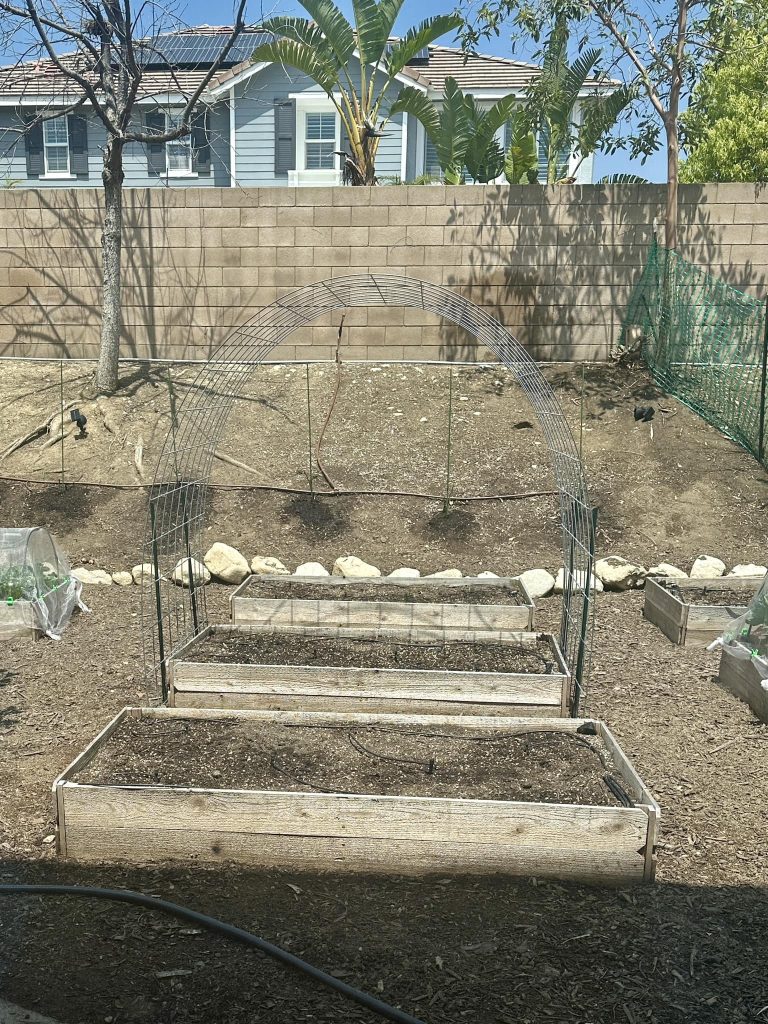
This is the homestead favorite for true vining types.
A 16 ft galvanized cattle panel bent into an arch between two beds makes a tunnel that vining squash will cover completely, with the fruit dangling down inside where it’s easy to pick.
The rigid grid holds serious weight and the open shape keeps air flowing. Anchor it well, since a loaded arch catches wind like a sail.
It’s one of the standout moves among broader raised bed garden ideas for a reason.
8. The A-Frame with a Shade Crop Underneath
Lean two panels of wire mesh or wooden lattice together into an A and let vining squash climb both sides.
The real trick: the shaded, cooler soil in the tunnel underneath is prime space for lettuce, spinach, or other greens that bolt in full summer sun. You get two harvests from one footprint.
9. The Hog Panel Wall Against a Fence
Wire a flat livestock or hog panel vertically against a fence or a row of T-posts.
It gives a vining squash a flat surface to climb and keeps the whole plant pressed into one tidy plane, which makes spotting (and squashing) pests far easier.
This setup shines in narrow side-yard beds where an arch won’t fit.
10. Trellis Netting on a Simple Wood Frame
Staple heavy nylon trellis netting (the wide-mesh kind, often called Hortonova) across a basic wooden frame.
The big openings let you reach a hand through to harvest, and at season’s end you can cut the netting away with the spent vines and start fresh. Cheap, light, and easy to store flat over winter.
11. The Repurposed Ladder or Pallet
An old wooden ladder leaned against a wall, or a pallet stood on end and secured to a stake, makes an instant rustic trellis for a climbing squash.
The rungs and slats give the tendrils plenty to grab. It’s the scrappy, zero-budget option, and it looks charming once the leaves fill in.
For more salvage-style builds, this roundup of easy garden trellis ideas is full of them.
12. The Living Sunflower Support
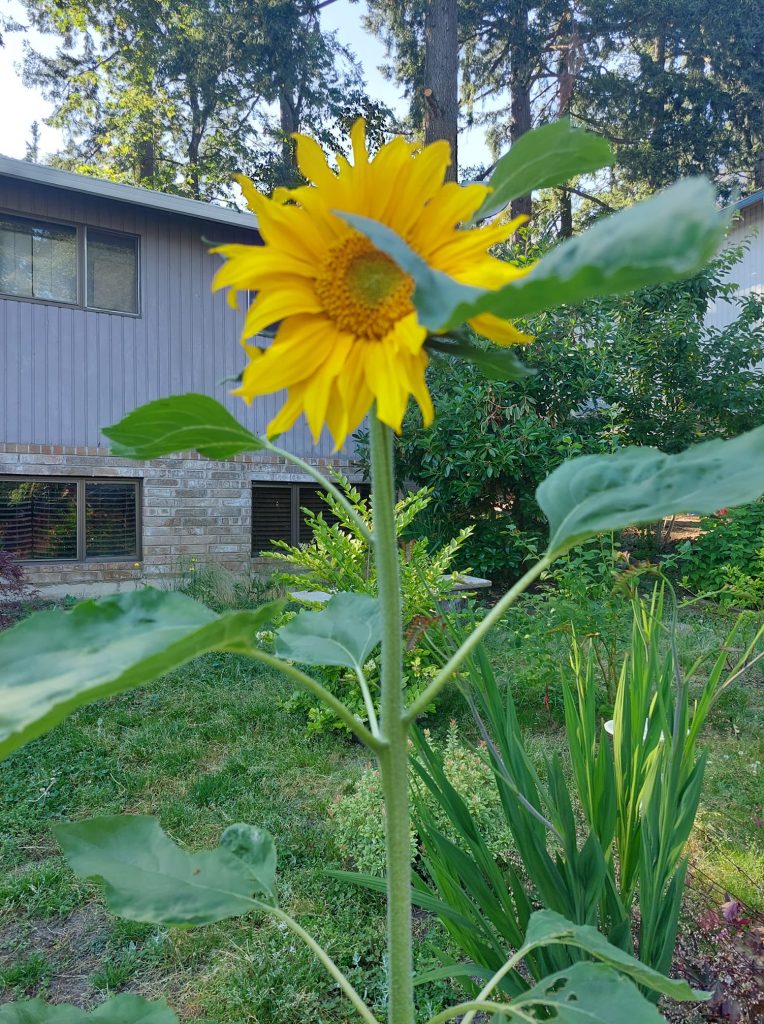
For trailing summer squash, borrow the Three Sisters idea.
A row of tall, sturdy sunflowers (or corn) gives a vining type something living to lean and ramble against, while the squash leaves shade the soil below like a living mulch.
Be honest with yourself here: this works for true ramblers, not for a stiff bush plant that has nothing to grab with.
How to Actually Train Zucchini Up a Support Without Snapping It

The number one way people kill a staked zucchini is by tying it like a tomato.
Zucchini stems are hollow and brittle, and a tight loop of wire or thin twine will cut straight through them as the stalk swells.
A few rules that keep the plant intact:
- Tie loose, tie soft. Use strips of old T-shirt, fabric Velcro tape, or soft garden ribbon. Leave a finger’s width of slack in every loop.
- Support, don’t bend. Guide the existing direction of growth. Never force a thick stem to curve, or you’ll hear the crack.
- Add ties as it grows. Every 6 to 8 inches of new height, add another loose tie. A bush zucchini puts on a lot of weight near the top fast.
- Remove the lower “skirt.” Once fruit is setting, snip off the oldest leaves below the lowest squash. This opens up the base, improves airflow, and lets you actually see the stem.
That last tip does double duty. A clear, visible stem base is how you catch squash vine borer early, because you can spot the sawdust-like frass at the entry hole before the plant collapses.
Miss it by a week and you lose the crop. The free 22-page planner pins down your exact dates — last frost, first frost, and the weekly steps between — so you plant on the days that actually work for your ZIP.
Free Planting Guides for This Article
Get exact planting dates, frost schedules, and growing tips for your zone:
The Mess-Free Payoff: Why Vertical Beats Sprawl
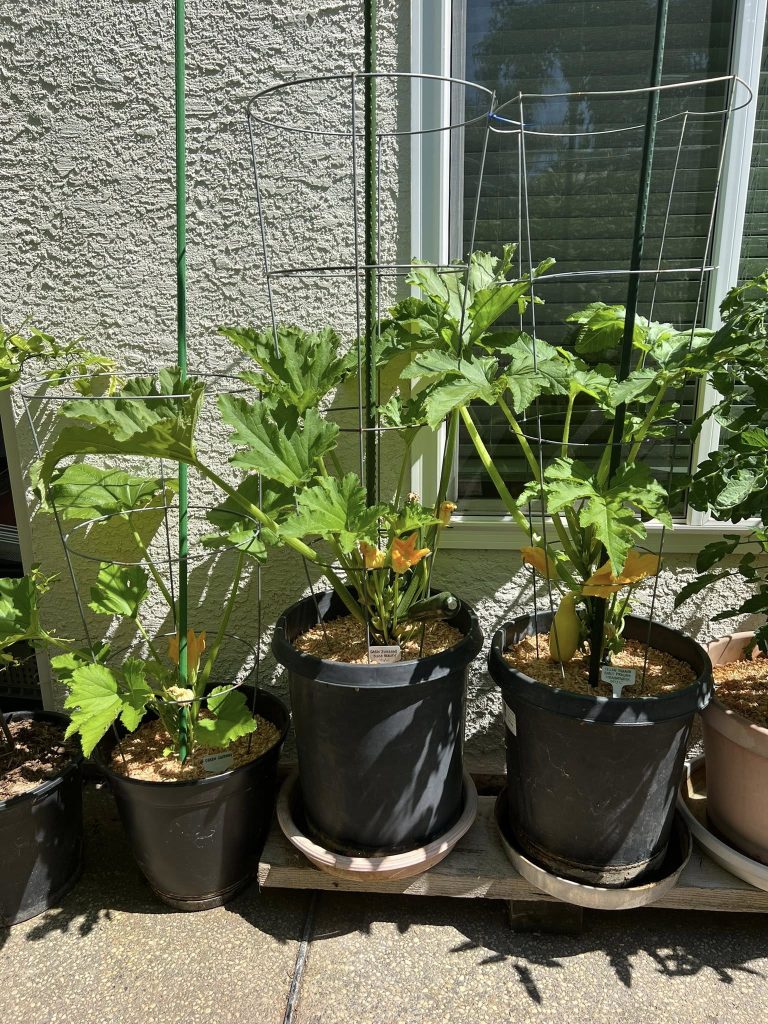
The tidiness is the obvious win. The real reasons to bother are underneath the leaves.
When a zucchini sits on the ground, the lower foliage stays damp, and damp leaves are an open invitation to powdery mildew, the white dusty coating that shuts these plants down by midsummer.
Lift the plant up and three things change at once:
- Airflow dries the leaves, so mildew spores struggle to take hold.
- Fruit stays clean and rot-free instead of developing soft, slug-chewed spots where it touches the soil.
- Pests lose cover. Slugs, pill bugs, and the like thrive in the dark, moist tent a sprawling zucchini creates. Take away the tent and you take away the buffet.
You also just see the plant better. Hidden zucchini are how you end up with a baseball-bat-sized monster you missed for a week.
Vertical plants put the fruit out in the open where you’ll actually harvest it small and tender.
A Few Trellising Mistakes That Quietly Backfire
Even a good idea goes sideways if you skip the details. Watch for these:
- Building a climbing structure for a bush plant. An arch does nothing for a plant with no tendrils. Match the method to the type.
- Staking too late. Drive the stake at planting. Push it in next to a mature root ball and you’ll slice through roots.
- Forgetting the wind. A tall, leafy zucchini on a stake is a lever. Use a thick stake, sink it deep, and anchor arches at both ends.
- Letting fruit dangle unsupported on climbers. A heavy squash hanging from a thin vine will rip it off. Sling the fruit (see idea 6).
Best gardening planner I've used in 10 years — and I keep coming back to it every season.
How Hard Is It to Garden in Your County?
Every county has a unique Gardening Difficulty Score based on frost risk, soil quality, drought, altitude, and climate trends. Find yours — plus personalized frost dates, planting calendars, and soil data.
Check Your County's Score →Pick One Idea and Get Your Zucchini Off the Ground This Week
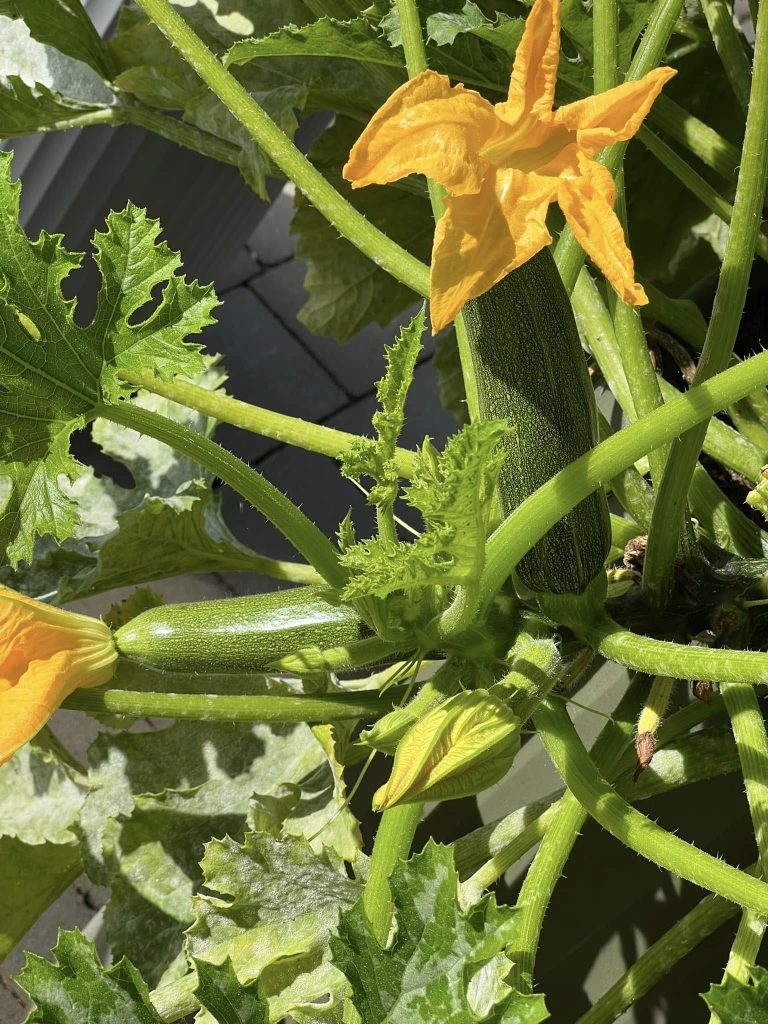
You don’t need a build day or a trip to the hardware store to start. If you’ve got bush zucchini, grab a stake and some fabric strips and try idea #1 this afternoon.
If you’re growing a vining type, the cattle panel arch or A-frame is worth the small effort for the harvest you’ll get back.
The plant that was eating your bed becomes a neat green column, and the powdery mildew that usually arrives in July may not show up at all.
Which method are you going to try first, or do you have a homemade zucchini support that’s worked wonders for you? Drop it in the comments below so other gardeners can steal the idea too.
Ready to Design Your Dream Garden Bed?
Feeling inspired to build something beautiful?
If you’re ready to go beyond just one garden bed and truly design a space that feels intentional, productive, and charming, I put together something special for you.
Inside 101 Garden Bed Ideas, you’ll find creative layouts, raised bed designs, space-saving solutions, and inspiring setups you can actually recreate in your own yard – whether you’re working with a tiny backyard or a full homestead.
Start planning your dream garden today.

- Beans
- Carrots
- Beets
- Lettuce
- Spinach
- Brassicas
Frequently Asked Questions
Can you trellis zucchini in a container or grow bag?
Yes, and it’s a smart pairing since vertical growth keeps a potted plant from flopping over the pot’s edge.
Use at least a 5-gallon container for bush types and push a single stout stake all the way to the bottom before you fill it with soil, so the support is anchored in the pot rather than in shallow surface roots.
For vining types in pots, a small obelisk or a wall-mounted net works better than a freestanding stake.
When should I set up the trellis, at planting or later?
At planting, every time. Driving a stake or setting a cage next to an established root ball tears through roots the plant depends on.
Put the support in first, plant beside it, and start loosely tying or guiding once the plant has a few inches of stem to work with.
Retrofitting support onto a plant that’s already collapsed is possible (try the corset in idea #4), but it’s always second-best.
Do trellised zucchini need more water or feeding?
A little more attention to water, yes, especially in containers, because exposed vertical plants dry out faster than ones shaded by their own sprawl. Water deeply at the base rather than overhead to keep the foliage dry and mildew-resistant.
Feeding stays the same as for any zucchini: these are hungry plants, so a steady supply of compost or a balanced feed keeps the fruit coming. Going vertical doesn’t change their appetite, only their footprint.
Will trellising hurt pollination?
Not at all, and it can actually help. Bees find vertically displayed flowers easily, and the open structure makes it simple for you to step in and hand-pollinate on cool or rainy mornings when bee activity is low.
To hand-pollinate, pick a male flower (the one on a thin stem with no tiny fruit behind it), peel back the petals, and brush its center against the center of a female bloom.
On a trellised plant you can see and reach every flower, which is half the battle.
Does getting zucchini off the ground protect against squash vine borer?
It helps in one important way: a staked plant with its lower skirt of leaves removed lets you see the base of the stem clearly, so you can catch the borer’s entry hole and sawdust-like frass early and act before the plant wilts.
Trellising won’t physically stop the adult moth from laying eggs at the stem base, so it’s not a cure. Pair it with wrapping the lower stem in foil or checking the base every few days during early summer for the best defense.
Level Up Your Garden
Our most popular gardening guides