
Successful gardens are not planted randomly. They are planted on purpose.
Seeds germinate faster. Transplants settle in without stress. Harvests feel steady instead of overwhelming. And your garden works with the seasons instead of against them.
If you’ve ever wondered:
- “Is it too early to plant tomatoes?”
- “Did I miss my window for fall crops?”
- “Why did my lettuce bolt so fast?”
The answer usually comes down to timing.
This vegetable planting calendar will give you a clear, month-by-month plan so you know exactly what to start indoors, what to direct sow, and when to prepare for the next season.
And if you’re still in the early planning phase, we recommend starting with my guide on how to plan a vegetable garden layout so your timing and spacing work together from the beginning.
Whether you grow in raised beds, containers, or in-ground rows, this guide will help you create a more productive garden year-round.
Understanding Your Growing Zone First
Before diving into the calendar, one thing matters most: your USDA hardiness zone (if you're in the U.S.) or your local climate pattern if you're elsewhere.
Your last spring frost date and first fall frost date determine your planting windows.
To find your zone, visit the official United States Department of Agriculture Plant Hardiness Zone Map online and enter your ZIP code.
If you’re outside the U.S., look up your region’s average frost dates through your local agricultural extension office.
Once you know your frost dates, everything else becomes much easier.
If you’re brand new to growing food, you may also want to read our breakdown of the easiest vegetables to grow so you’re not overwhelming yourself with tricky crops in your first season.
Month-by-Month Vegetable Planting Calendar (Zones 6–8)
This calendar is designed for temperate climates (Zones 6–8).
If you’re in a colder zone, shift everything 2–4 weeks later.
If you’re in a warmer zone, shift 2–4 weeks earlier.
January

Focus: Planning + Long-Season Indoor Crops
Start indoors:
- Onions (bulbing & bunching)
- Leeks
- Celery
- Celeriac
- Early herbs (parsley, thyme, oregano)
Do:
- Order seeds
- Map crop rotation
- Review last year’s notes
- Test soil (if ground isn’t frozen)
If you’re starting seeds indoors this early, having proper lighting makes a big difference.
We share what to look for in my guide to the best grow lights to buy for vegetable gardens so seedlings don’t get leggy.
February
Focus: Early Indoor Starts + Protected Sowing
Start indoors:
- Peppers (bell & hot)
- Eggplant
- Early cabbage
- Broccoli
- Cauliflower
- Brussels sprouts
- Head lettuce
Direct sow outdoors (late month if soil workable):
- Spinach
- Fava beans
- Peas
- Mache (corn salad)
Under protection (cold frame/row cover):
- Radishes
- Arugula
- Asian greens
March
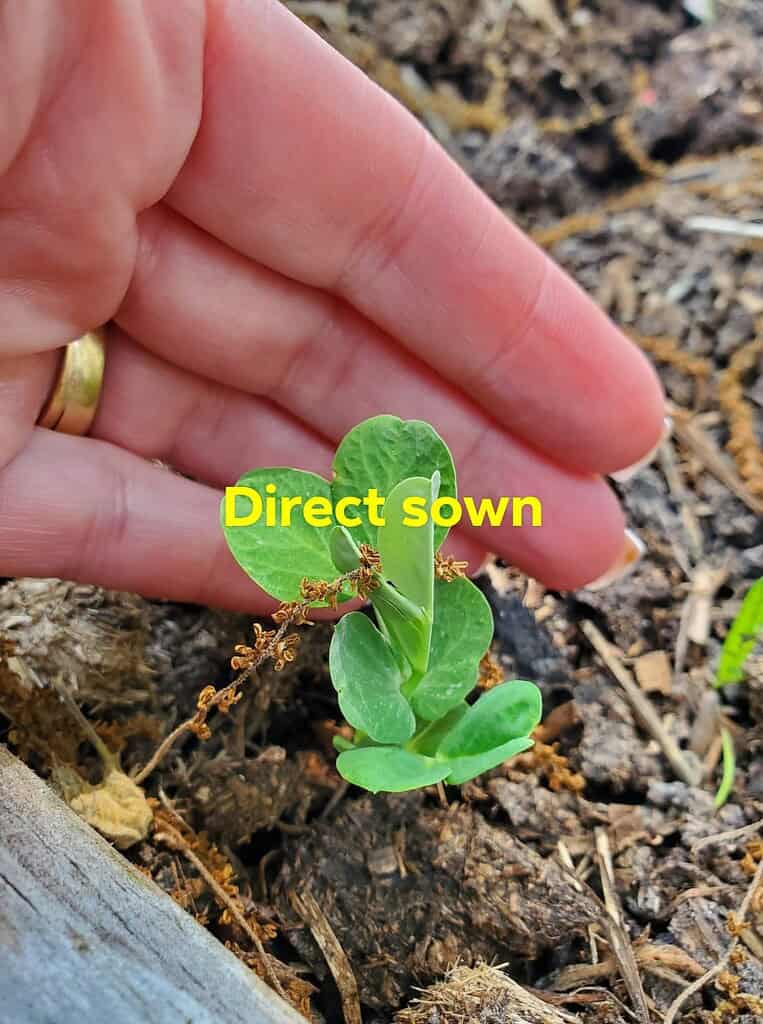
Focus: Cool Season Expansion
Direct sow outdoors:
- Spinach
- Lettuce (leaf, romaine, butterhead)
- Peas
- Radishes
- Carrots
- Beets
- Turnips
- Swiss chard
- Parsnips
- Dill
- Cilantro
Transplant outdoors:
- Broccoli
- Cabbage
- Cauliflower
- Kale
- Brussels sprouts
Start indoors:
- Tomatoes
- Basil
- Tomatillos
This is one of the busiest planting months of the year.
Heavy feeders like tomatoes and corn benefit from consistent nutrition this time of year. If you prefer natural inputs, see our best natural fertilizers for vegetable gardens that actually improve soil over time.
April
Focus: Heavy Spring Planting
Direct sow:
- Potatoes
- Onions sets
- More carrots
- More beets
- Mustard greens
- Collards
- Bok choy
- Kohlrabi
- Snap peas
- Shell peas
Late April (warmer areas):
- Green beans
- Cucumbers (if soil >60°F)
Harden off:
- Tomatoes
- Peppers
- Eggplant
Succession sow:
- Lettuce every 2–3 weeks
- Radishes every 2 weeks
May
Focus: Warm-Season Takeover
Transplant (after frost):
- Tomatoes
- Peppers
- Eggplant
- Sweet potatoes (late May)
- Basil

Direct sow:
- Green beans (bush & pole)
- Corn
- Cucumbers
- Zucchini
- Yellow squash
- Pumpkins
- Winter squash
- Okra (late May if warm enough)
- Melons (cantaloupe, watermelon)
If you’re limited on space, remember that many of these crops grow beautifully in containers.
We share options in my guide to vegetables you should be growing in buckets if you’re working with a patio or small yard.
Mulch everything well.
June
Focus: Succession + Maintenance
Direct sow:
- Bush beans (second round)
- Cucumbers (second round)
- Summer squash
- Okra
- Basil
- Swiss chard
Start indoors (for fall):
- Broccoli
- Cabbage
- Cauliflower
- Brussels sprouts
Harvest:
- Peas
- Lettuce
- Early carrots
- Radishes
- Spinach
July
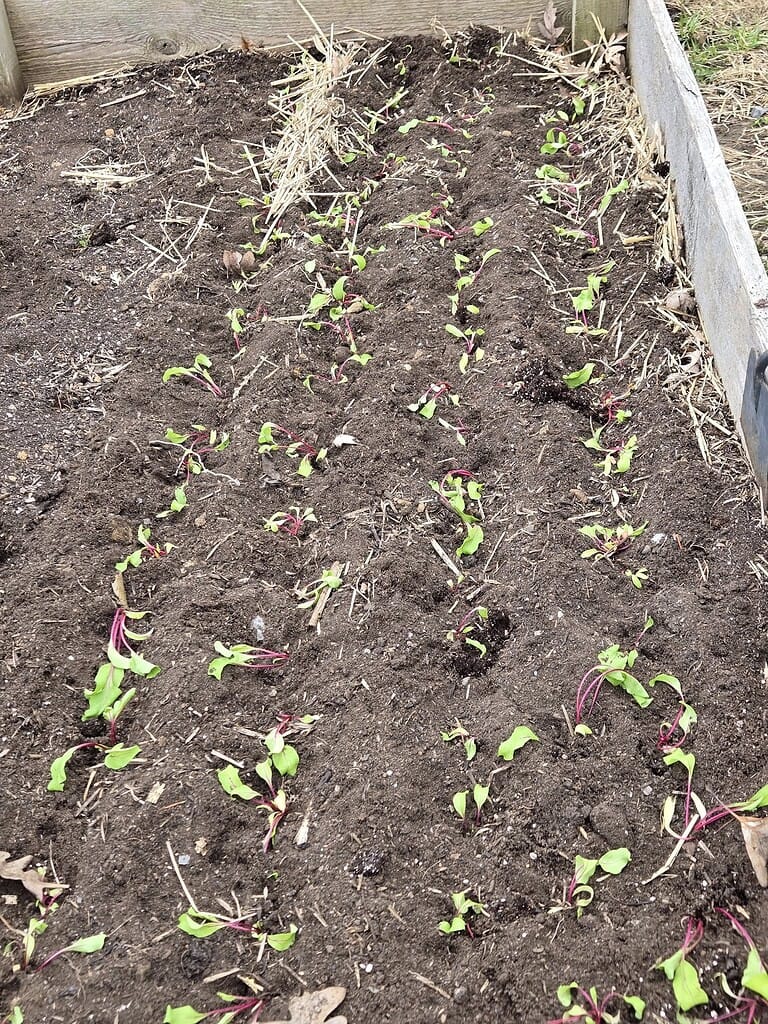
Focus: Fall Garden Begins
Direct sow:
- Carrots (fall harvest)
- Beets
- Turnips
- Rutabaga
- Bush beans (early July only)
- Swiss chard
Start indoors:
- Kale
- Collards
- Cabbage
- Broccoli
Late July:
- Direct sow spinach (cooler areas)
Water deeply and consistently.
August
Focus: Peak Fall Planting
Direct sow:
- Spinach
- Lettuce
- Arugula
- Radishes
- Asian greens
- Mustard greens
- Cilantro
- Dill
Transplant:
- Broccoli
- Cabbage
- Cauliflower
- Kale
- Brussels sprouts
This month often produces the sweetest greens of the year.
September

Focus: Transition + Garlic Prep
Direct sow:
- Spinach
- Mache
- Radishes
- Turnips
- Cover crops (clover, rye, vetch)
Plant:
- Garlic (late September in colder zones)
- Shallots
Harvest:
- Tomatoes
- Peppers
- Squash
- Beans
If you love fall gardening as much as we do, you might also enjoy our full list of cold hardy vegetables to plant in fall for extending your harvest well into cooler months.
October
Focus: Overwintering Crops
Plant:
- Garlic (most zones)
- Shallots
- Onion sets (mild climates)
Sow:
- Winter rye
- Hairy vetch
- Crimson clover
Harvest:
- Kale
- Carrots
- Beets
- Swiss chard
November
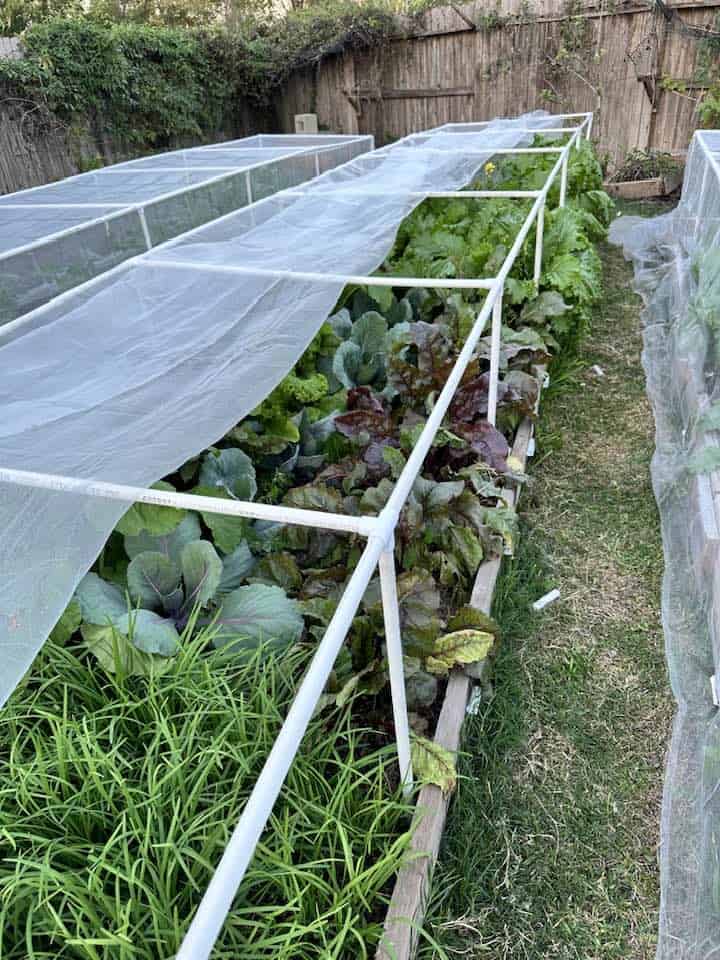
Focus: Protection
Harvest:
- Spinach
- Kale
- Brussels sprouts
- Carrots (with mulch)
Protect:
- Garlic beds
- Fall greens
Add compost to empty beds.
December
Focus: Rest + Strategy
- Pea shoots
- Sunflower shoots
- Radish greens
Plan:
- Succession schedule
- Seed orders
- Crop rotation
How to Customize This Vegetable Planting Calendar for Your Zone
This calendar is a foundation.
To fine-tune it:
- Identify your last spring frost date.
- Identify your first fall frost date.
- Count backward from frost dates using seed packet “days to maturity.”
- Monitor soil temperature, not just air temperature.
Quick reference soil temperatures:
- 40–50°F: Spinach, peas, lettuce
- 50–60°F: Carrots, beets
- 60–70°F: Beans, cucumbers
- 70°F+: Tomatoes, peppers
A simple soil thermometer removes guesswork completely.
The Role of Succession Planting in a Productive Garden
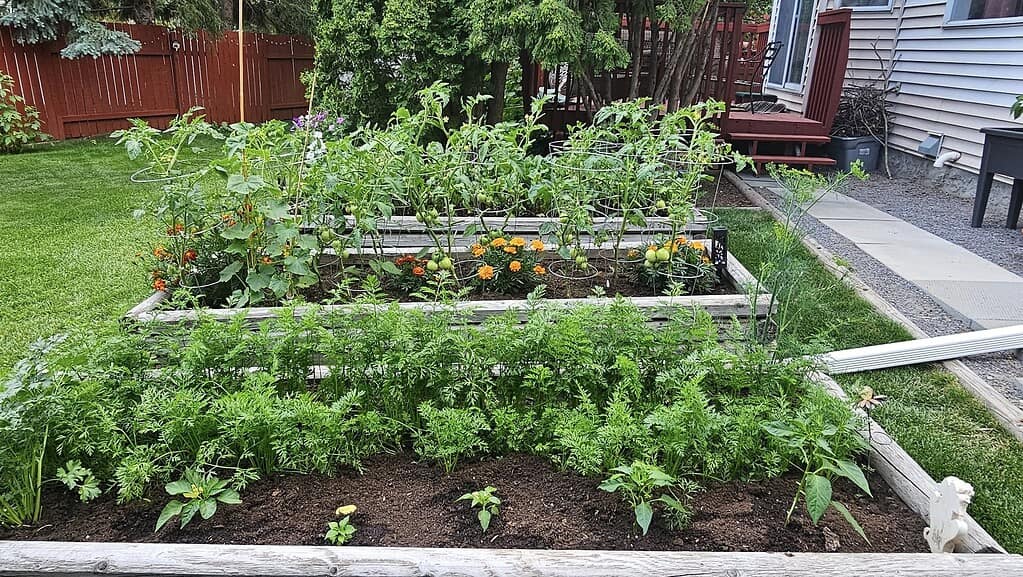
A vegetable planting calendar becomes truly powerful when paired with succession planting.
Succession planting simply means staggering your planting dates instead of sowing everything at once.
Many gardeners make the mistake of planting all their seeds in a single weekend. The result? One huge harvest followed by weeks of nothing.
By spacing out your planting, you create a steady flow of food instead of a feast-or-famine cycle.
Instead of planting everything at once:
- Sow lettuce every 2 weeks
- Plant bush beans twice per season
- Start a second round of cucumbers in midsummer
- Replant radishes every 10–14 days
- Sow carrots in early spring and again in mid-summer for fall harvest
This strategy keeps your garden producing longer and makes better use of your space.
For example, once early peas finish in late spring, you can immediately replace them with green beans. After pulling garlic in mid-summer, that bed can be used for fall carrots or spinach. Empty space is missed opportunity.
Succession planting also helps you manage kitchen workflow. Instead of being overwhelmed with 20 heads of lettuce at once, you harvest a few at a time over several weeks.
When you look at your planting calendar, think in waves – not single dates.
Add small reminders throughout the season to reseed quick-growing crops. It takes just a few extra minutes but dramatically increases overall yield.
Done consistently, succession planting turns an average garden into a continuously productive one.
If you want a simple visual breakdown, we created a full succession planting chart you can reference alongside this calendar to plan your staggered sowings clearly.
Crop Rotation Planning Within Your Calendar
Your vegetable planting calendar is not just about when to plant. It is also about where to plant.
Crop rotation simply means avoiding planting the same plant family in the same garden bed year after year.
Even if your soil looks healthy, repeatedly growing the same crop in the same spot can quietly drain nutrients and increase pest and disease problems over time.
Common plant families to rotate include:
- Nightshades (tomatoes, peppers, eggplant, potatoes)
- Brassicas (broccoli, cabbage, kale, cauliflower, Brussels sprouts)
- Legumes (beans, peas)
- Alliums (onions, garlic, leeks)
Each family has similar nutrient needs and attracts similar pests. For example, tomatoes planted in the same bed every year are more likely to develop soil-borne diseases like blight. Brassicas grown repeatedly in one spot may attract cabbage worms and root maggots more heavily.
A simple rotation method:
- Divide your garden into 3–4 sections.
- Move each plant family to a new section every year.
- Wait at least 3 years before returning a family to its original spot.
Legumes are especially helpful in rotation because they add nitrogen back into the soil, making them a great crop to plant before heavy feeders like tomatoes or corn.
Rotation reduces disease buildup, improves soil balance, and helps your garden stay productive long-term.
It is one of the easiest habits to build into your planting calendar – and one of the most powerful.
Make This Your Most Productive Gardening Year Yet
An actual vegetable planting calendar removes hesitation.
You stop guessing.
You stop planting too early.
You stop missing fall opportunities.
Instead, you plant with intention.
Save it. Adjust it to your zone.
And if you'd like a customized version for your exact growing zone, tell me:
- Your USDA zone
- Your average last frost date
Drop it in the comments below, and I’ll help you fine-tune it.
Plan Your Garden With Confidence!

Ever start planting… and then realize halfway through that things feel a little scattered?
A simple plan changes everything.
When you sketch your layout first, you can see what fits, what flows, and what actually makes sense for your space. It saves time, money, and a whole lot of second-guessing later.
Our free Garden Planner helps you map out beds, organize plant spacing, rotate crops, and keep track of seasonal tasks – all in a clean, printable format you can actually use.
Whether you’re designing a low maintenance front yard or planning your full homestead garden, this gives you a clear starting point.
Less chaos. More clarity. A garden that works.
FAQs
How do I adjust this calendar for containers?
Containers warm up faster in spring and dry out more quickly in summer. You may plant slightly earlier, but you’ll need consistent watering and fertilizing.
What if I don’t know my frost dates?
Search your city plus “average last frost date” or contact your local agricultural extension office. Always monitor short-term weather forecasts before planting tender crops.
Can I plant vegetables earlier using row covers?
Yes. Row covers, cold frames, and low tunnels can extend your season by 2–4 weeks in both spring and fall.
How do I plan a fall vegetable garden properly?
Count backward from your first fall frost date. Choose crops with maturity times that fit within your remaining growing window, and allow an extra 1–2 weeks as daylight decreases.
What vegetables should beginners prioritize first?
Start with reliable, forgiving crops like:
- Lettuce
- Radishes
- Bush beans
- Zucchini
- Cherry tomatoes
These tend to produce well and build confidence quickly.