
There’s something instantly captivating about tropical flowers. Their bold colors, oversized blooms, and unusual shapes don’t look ordinary or familiar. They look rare.
Many of these flowers are native to warm, humid regions where plants grow larger, brighter, and more dramatic than those in temperate climates.
That difference is exactly what makes them so appealing.
People are drawn to exotic tropical flowers because they change the mood of a space. A single plant can turn a plain garden, patio, or room into something that feels lush and vibrant.
Some are known for powerful fragrances, others for architectural forms that look almost unreal, and many for colors that seem too vivid to be natural.
In this post, you'll find 20 exotic tropical flowers that truly feel like paradise. By the end, you’ll know which flowers fit your climate, your space, and the kind of tropical atmosphere you want to create.
Why Tropical Flowers Are So Alluring
Tropical flowers have a natural ability to grab attention. Their colors are brighter, their shapes more dramatic, and their presence often larger than life.
These aren’t background plants – they’re focal points. They bring energy, depth, and character to gardens, balconies, or interior spaces with minimal effort.
What sets tropical flowers apart is a combination of traits: oversized petals, vivid hues, unique structures, and sometimes strong, sweet scents. Many varieties bloom continuously or in long cycles, offering lasting visual interest through warmer months.
Beyond their looks, tropical flowers often carry symbolic meaning.
Some represent love, celebration, or peace. Others are used in rituals, ceremonies, or seasonal holidays. Their cultural significance in many parts of the world adds to their appeal.
For gardeners and plant lovers, tropical flowers offer both beauty and variety. If you’re drawn to truly extraordinary specimens, don’t miss our collection of extraordinary rare flowers.
Whether used in landscaping, container gardens, or indoor decor, they help create a vibrant space that feels alive and full of character.
20 Exotic Tropical Flowers That Feel Straight Out of Paradise
These tropical flowers are anything but ordinary. Each one offers something special – whether it’s eye-catching color, fragrant blooms, unusual form, or cultural significance.
This list brings together 20 of the most striking tropical flowers found around the world. They’re well-suited for gardens, patios, or indoor displays, and many are surprisingly adaptable with the right care.
Here’s a closer look at each one:
1. Plumeria (Frangipani)
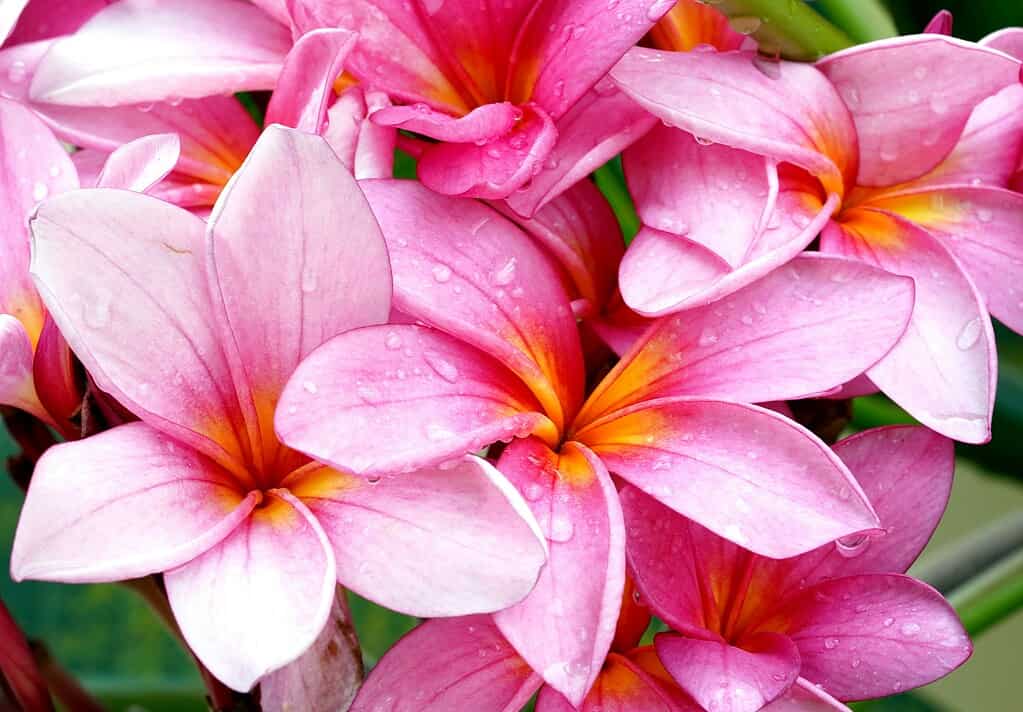
Plumeria is one of the most recognizable tropical flowers, often associated with leis, island ceremonies, and spa-like gardens.
The flowers grow in clusters and range in color from white and yellow to vibrant pinks and deep reds. What makes Plumeria especially alluring is its fragrance – soft, sweet, and more noticeable in the evening.
This flowering tree or shrub thrives in warm climates and well-drained soil. It’s drought-tolerant once established and often grown in containers in cooler regions, where it can be overwintered indoors.
Symbolically, Plumeria represents grace and devotion in many cultures.
- Color range: White, yellow, pink, red
- Fragrance: Strong, especially in the evening
- Growing tips: Needs full sun, well-draining soil, minimal watering
Read related post: 15 Dreamy White Flowers That Create a Serene Garden Look
2. Tropical Hibiscus
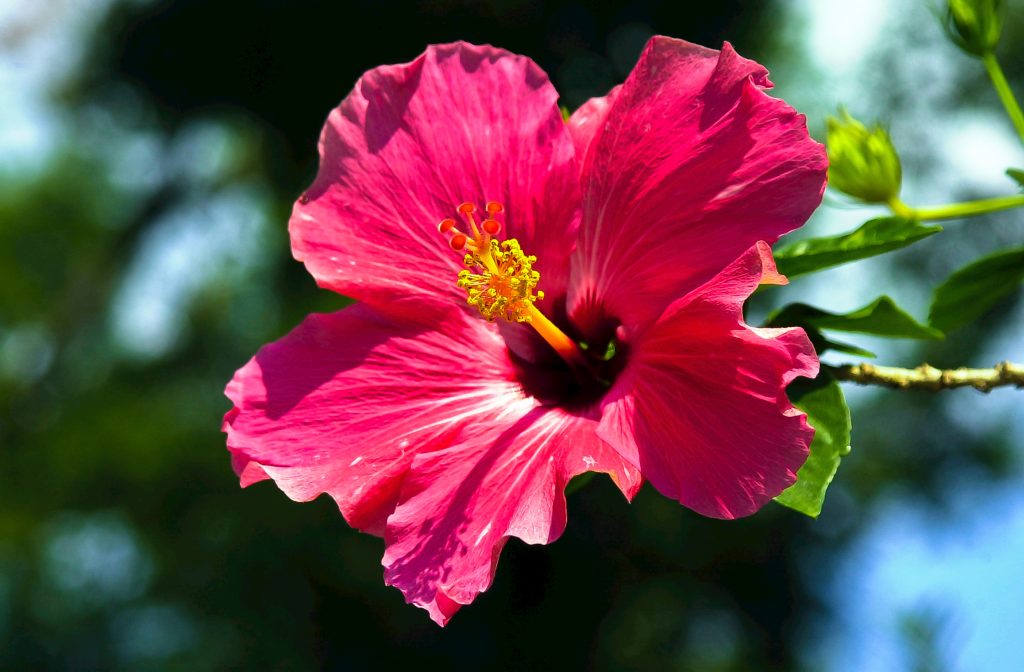
Tropical hibiscus is a standout for its massive blooms and bold color palette. The flowers can reach 6 inches across and come in fiery reds, bright oranges, sunny yellows, cool purples, and soft whites.
These blooms last just a day or two, but the plant produces them in steady succession throughout the warm season.
Hibiscus shrubs are popular in warm-climate landscapes and also thrive in pots on patios and decks. They’re often used to add instant tropical character to a space.
While the plant prefers consistent moisture, it must be in soil that drains well to avoid root issues.
If you’re curious about making the most of your hibiscus, check out our guide on how to grow hibiscus easily.
- Color range: Red, orange, yellow, white, pink, purple
- Size: Large blooms up to 6 inches wide
- Growing tips: Needs sun, frequent watering, protection from cold
3. Orchid
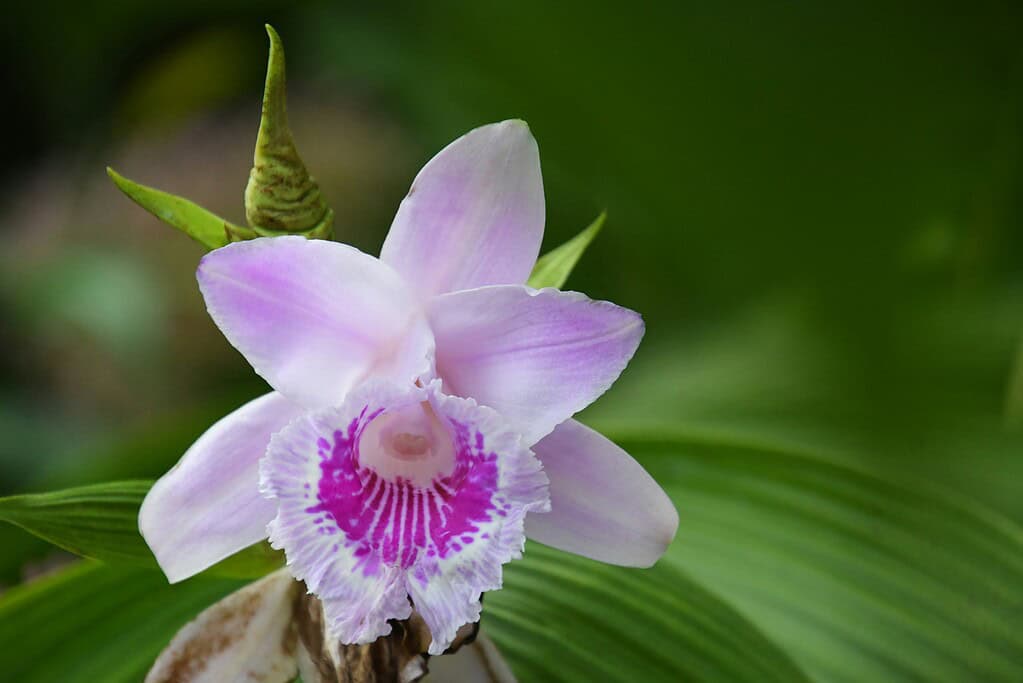
Orchids are widely admired for their elegant structure and incredible variety. With thousands of species and hybrids, orchids can range from delicate and simple to exotic and intricate.
Their long-lasting blooms come in nearly every color and often display detailed patterns that add to their appeal. Some varieties also offer a mild, pleasant fragrance.
Orchids are often grown indoors in bright, indirect light with high humidity.
They’re epiphytic by nature, meaning they grow on other plants in the wild, so they do best in a loose, airy growing medium. Their symbolic meanings include refinement, beauty, and strength.
For more detailed guidance, check out our must-know orchid care tips to help your orchids thrive.
Color range: Nearly every color, often multi-toned
Fragrance: Light to strong, depending on variety
Growing tips: Bright indirect light, high humidity, well-draining orchid mix
4. Bird of Paradise (Strelitzia reginae)

Bird of Paradise is famous for its vivid flowers that resemble a bird in flight.
With bright orange petals and a blue tongue-like center, this plant adds strong architectural shape and tropical energy to any space.
The large, banana-like leaves also bring a lush, bold backdrop even when the plant isn't in bloom.
Native to South Africa, it thrives in warm, sunny locations and can be grown outdoors in frost-free climates or indoors with enough light. It prefers rich, well-drained soil and needs space to spread.
Color range: Orange and blue (main species), some hybrids in white
Structure: Resembles a bird in flight
Growing tips: Full sun, regular watering, protect from frost
Read related post: 15 Show-Stopping Yellow Flowers for a Sunny Outdoor Space
5. Heliconia (Parrot Heliconia / Hanging Lobster Claw)
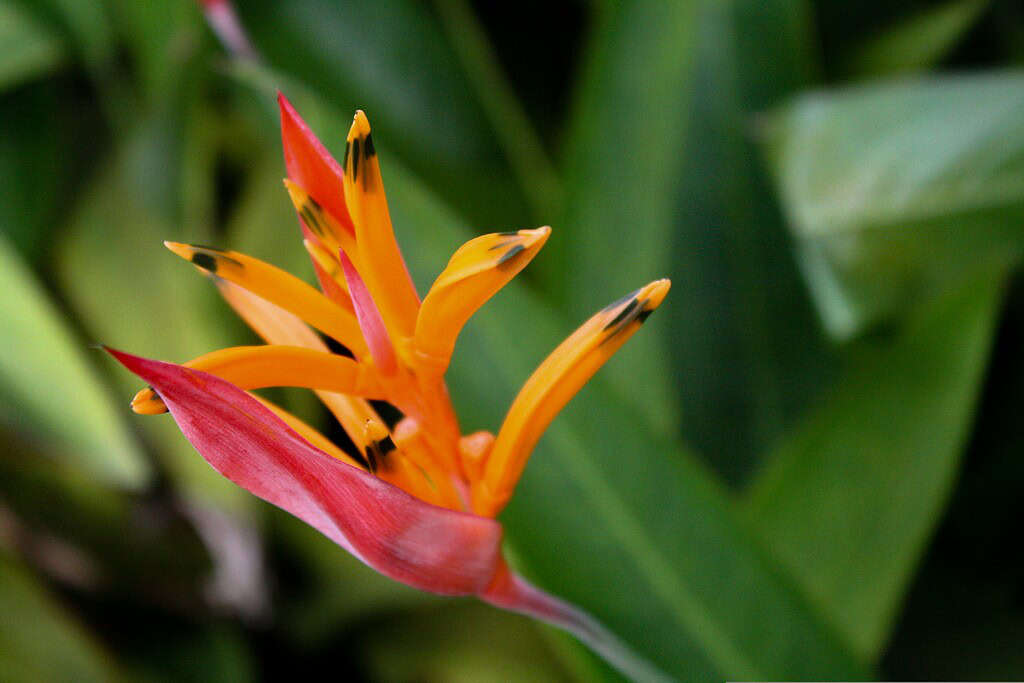
Heliconia is known for its bold, upright or hanging flower structures that look like lobster claws or parrot beaks.
These flowers come in vivid shades of red, orange, yellow, and green, and they stand out for their unusual shapes and strong presence in the landscape. Pairing them with other tropical blooms can create eye-catching displays – check out our stunning flower bed ideas for inspiration.
Some varieties grow upright, while others have long, hanging inflorescences. Heliconias require warmth, humidity, and consistent moisture to thrive.
They’re often used as focal points in tropical gardens or cut flower arrangements because of their size and durability.
Color range: Red, orange, yellow, green
Form: Upright or hanging, lobster claw-like bracts
Growing tips: Needs full sun to partial shade, rich moist soil, and high humidity
6. Angel’s Trumpet (Brugmansia)
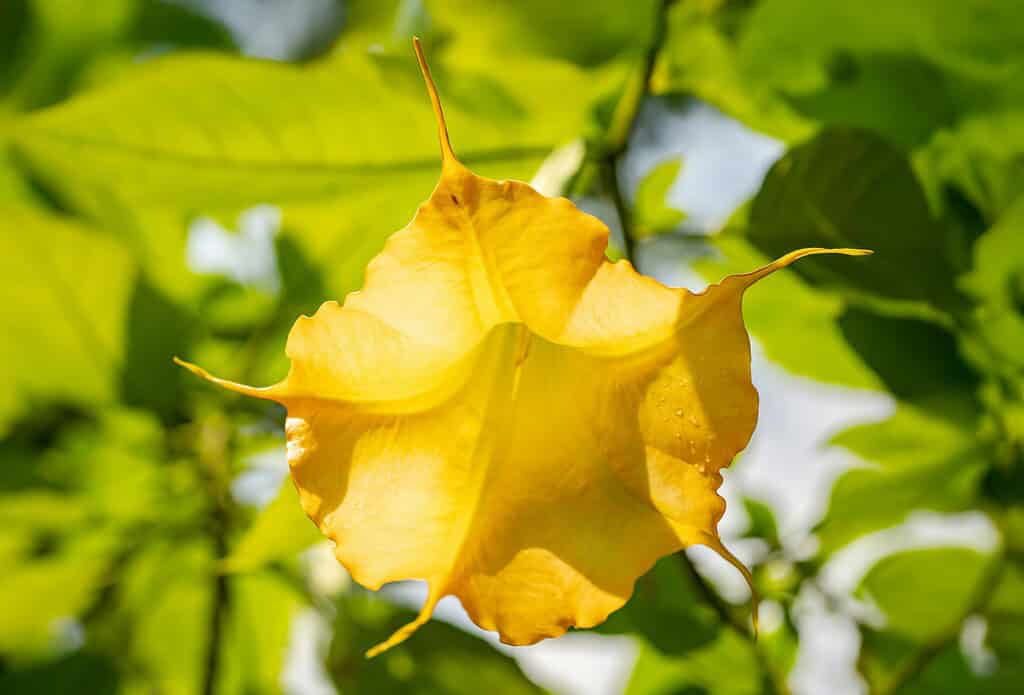
Angel’s Trumpet features large, pendulous, trumpet-shaped blooms that hang down from woody shrubs or small trees.
These flowers are available in soft shades like white, peach, yellow, and pink, and their sweet fragrance intensifies in the late afternoon and evening.
Angel’s Trumpet grows well in containers or garden beds in warm climates and can be overwintered indoors in colder zones.
While beautiful, it’s important to note that all parts of this plant are toxic if ingested, so it should be placed away from pets and children.
Color range: Cream, white, pink, peach, yellow
Fragrance: Strongest at sunset
Growing tips: Needs full sun or filtered light, regular watering, protect from frost
Read related post: 15 Stunning Orange Flowers to Brighten Your Garden
7. Climbing Jasmine (Jasminum sambac)
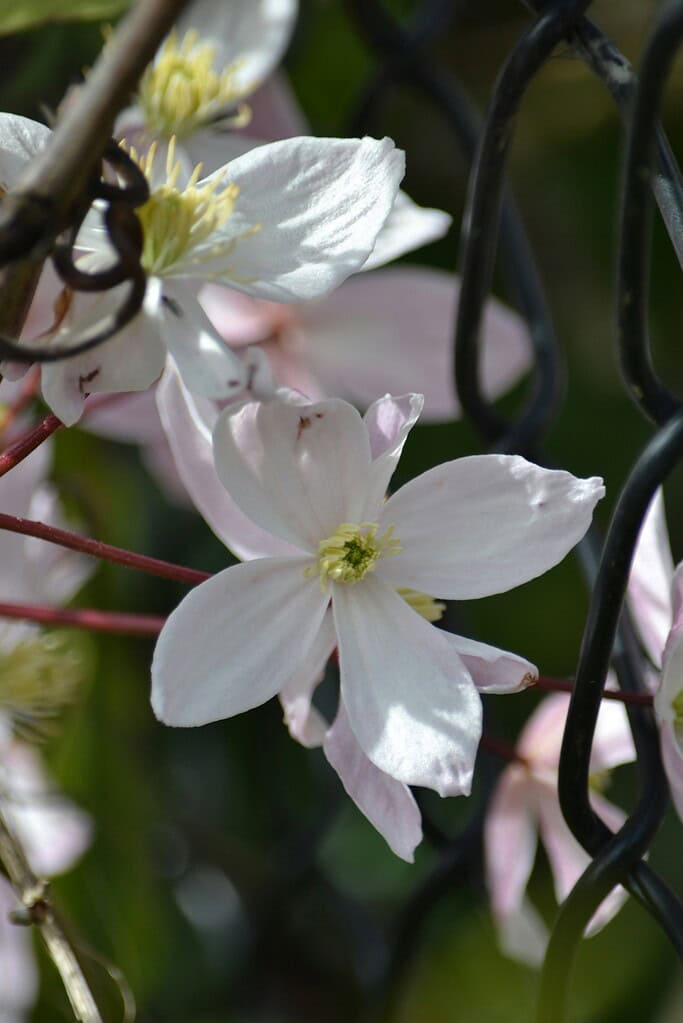
Climbing Jasmine is valued for its highly fragrant, white flowers that bloom repeatedly in warm weather. The scent is rich and intoxicating, especially in the early morning and evening.
This climbing plant is widely used in tropical gardens and is culturally significant in many parts of Southeast Asia, where it is used in ceremonies and traditional garlands.
It can be trained on trellises, fences, or arbors and does well in containers. Climbing Jasmine prefers a warm, sunny location and consistently moist soil.
Color range: White
Fragrance: Strong and sweet
Growing tips: Needs full sun, support for climbing, regular watering
8. Bougainvillea
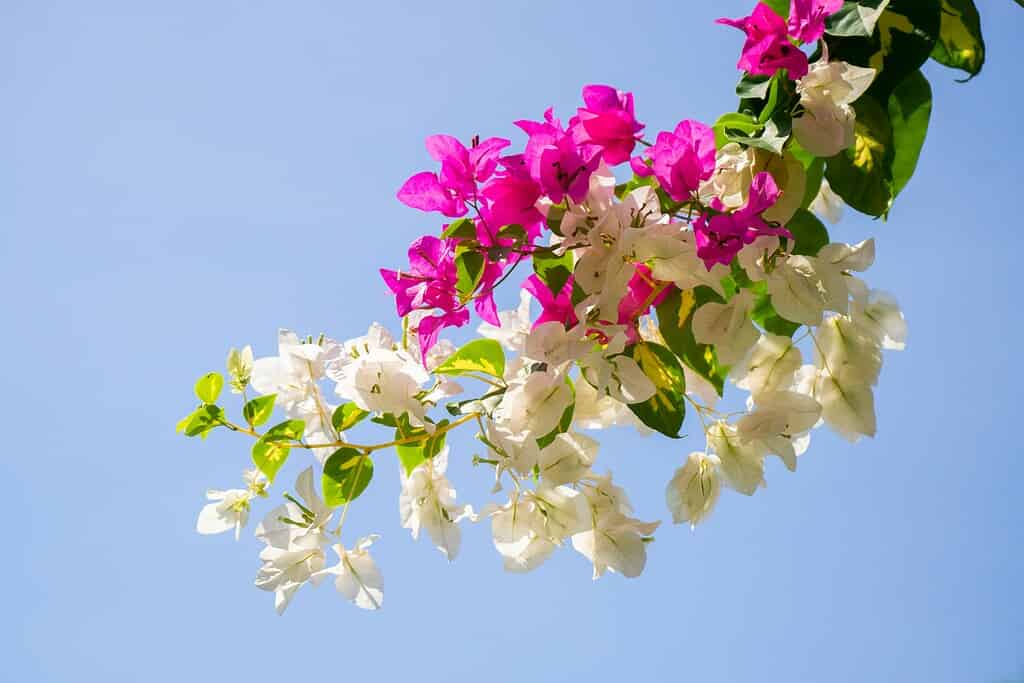
Bougainvillea is a fast-growing, evergreen climber known for its paper-thin, colorful bracts that surround small, inconspicuous flowers.
These bracts come in bright shades of magenta, red, orange, purple, pink, and white, often covering the plant so densely that the foliage is barely visible.
Bougainvillea thrives in full sun and is drought-tolerant once established. It’s ideal for covering fences, pergolas, or trellises, adding a vibrant, tropical splash to vertical spaces.
Color range: Magenta, red, orange, purple, pink, white
Structure: Woody climber with colorful bracts
Growing tips: Needs full sun, well-drained soil, and infrequent deep watering
If you love purple blooms, be sure to explore our list of enchanting purple flowers for more inspiration.
Read related post: 15 Stunning Pink Flowers to Brighten Your Garden Year-Round
9. Calla Lily (Zantedeschia)
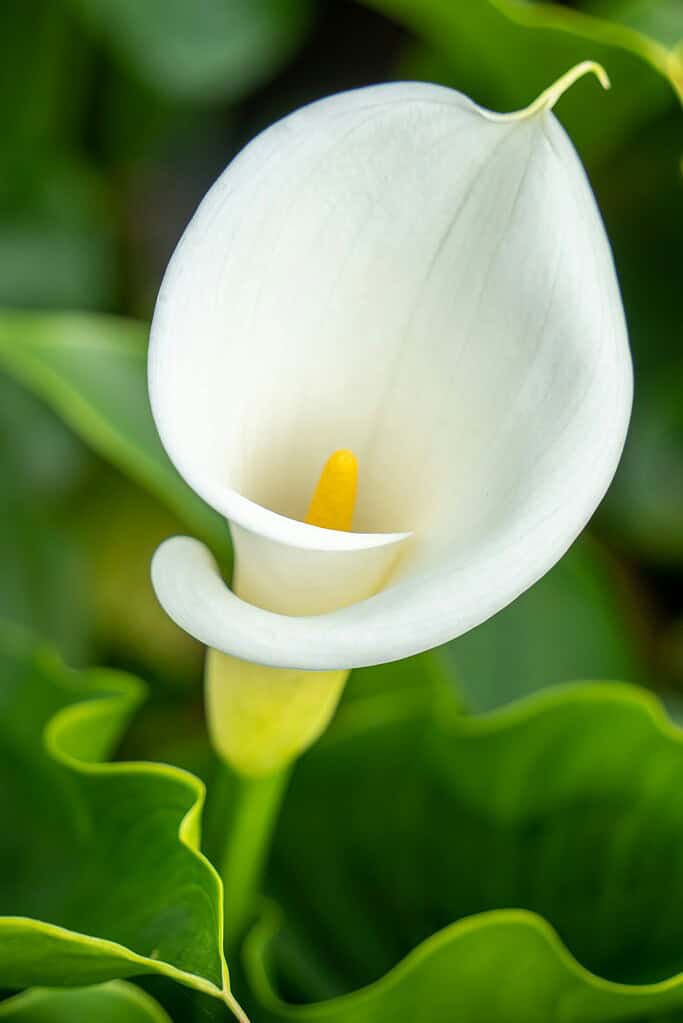
Calla Lilies are elegant, sculptural flowers with a smooth, trumpet-like shape. Their modern, architectural look makes them popular in both gardens and floral arrangements.
The spathes come in shades of white, pink, yellow, orange, and deep red, often paired with dark green or spotted foliage.
These perennials grow best in moist, well-drained soil and prefer partial shade in hotter climates. Though often associated with formality, they’re also suited for tropical garden borders and containers.
Color range: White, pink, yellow, orange, red
Form: Smooth, trumpet-shaped spathes
Growing tips: Moist, well-drained soil; partial shade to full sun depending on climate
10. Canna Lily (Canna indica)
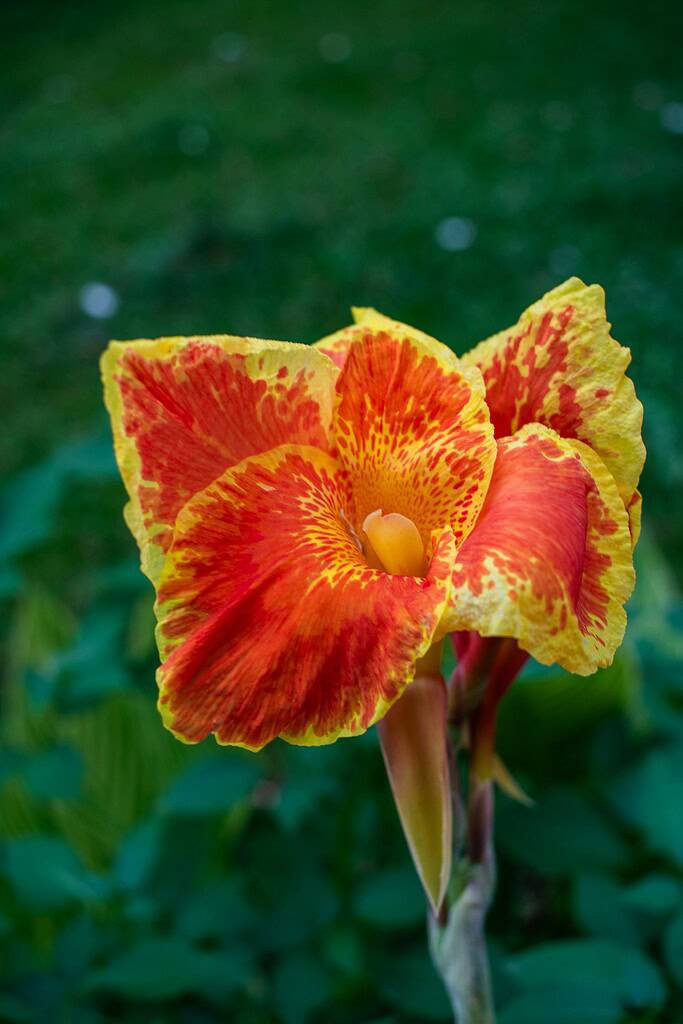
Canna Lilies offer large, bold foliage and vivid blooms in shades of red, orange, yellow, and pink.
The broad, paddle-shaped leaves can also be variegated or deep burgundy, giving this plant strong visual appeal even when not in bloom.
Cannas thrive in warm, sunny environments and need regular watering. They're great for tropical borders, large containers, or water-adjacent plantings.
While not a true lily, their shape and scale make them a standout tropical plant.
Color range: Red, orange, yellow, pink
Foliage: Green, bronze, or variegated leaves
Growing tips: Full sun, rich soil, and consistent moisture
11. Pentas (Egyptian Star Flower)
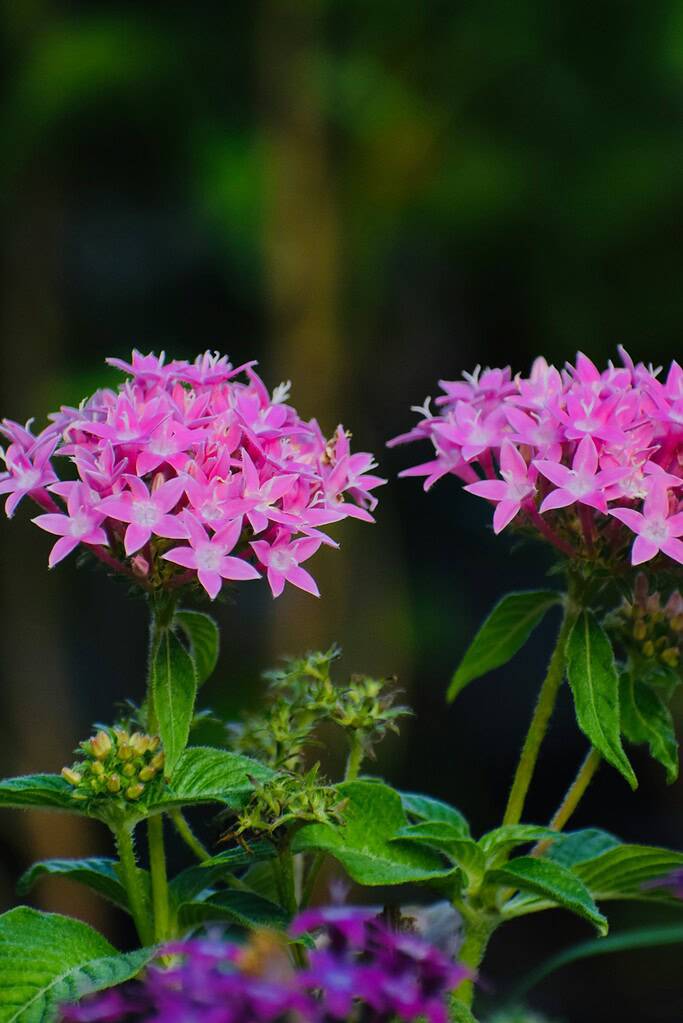
Pentas are compact, flowering plants that produce clusters of small, star-shaped blooms in vibrant colors.
These flowers are known for attracting butterflies and hummingbirds, making them ideal for pollinator-friendly gardens.
They bloom continuously in warm weather and do well in containers, borders, or as bedding plants. Pentas prefer full sun and thrive in hot, humid climates with well-drained soil.
Color range: Red, pink, white, lavender, purple
Pollinators: Attracts butterflies and hummingbirds
Growing tips: Full sun, regular watering, and well-drained soil
Read related post: 20 Tough Winter Flowers That Can Handle Frost and Still Bloom
12. Anthurium (Flamingo Flower)
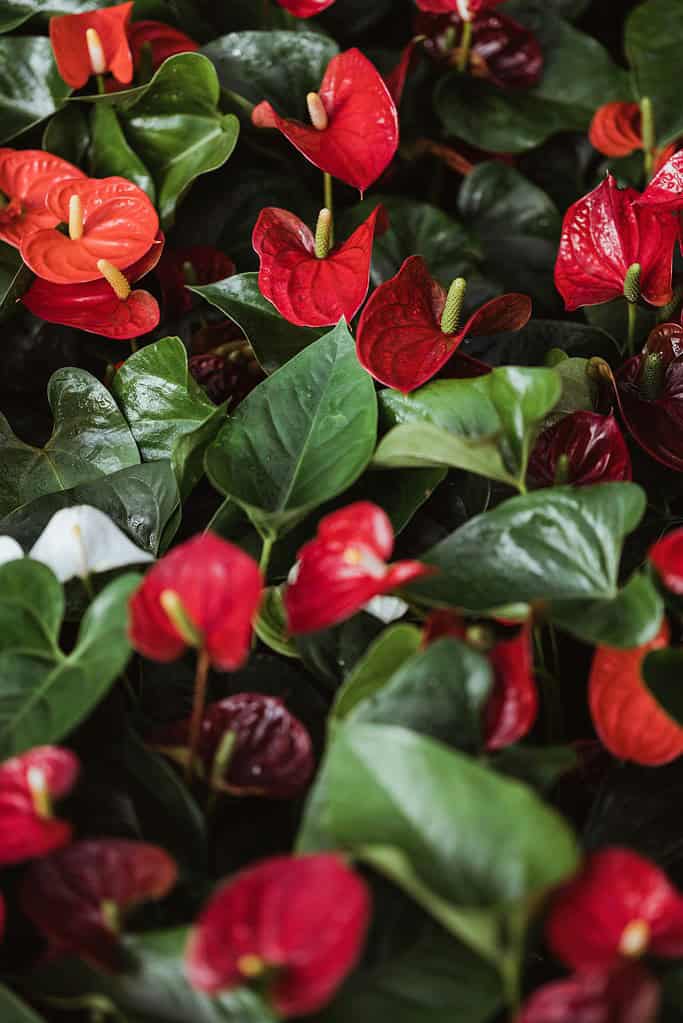
Anthuriums are known for their glossy, heart-shaped spathes that come in red, pink, orange, and white, often with a shiny, lacquered appearance.
The central spike (spadix) adds a vertical accent to the flower’s design. Anthuriums are popular in tropical arrangements and also grown as houseplants due to their long-lasting blooms.
They prefer indirect light and high humidity and should be protected from cold drafts and direct sun exposure.
Color range: Red, pink, orange, white
Texture: Glossy, waxy finish
Growing tips: Bright, indirect light; warm, humid environment; well-draining soil
13. King Protea (Protea cynaroides)
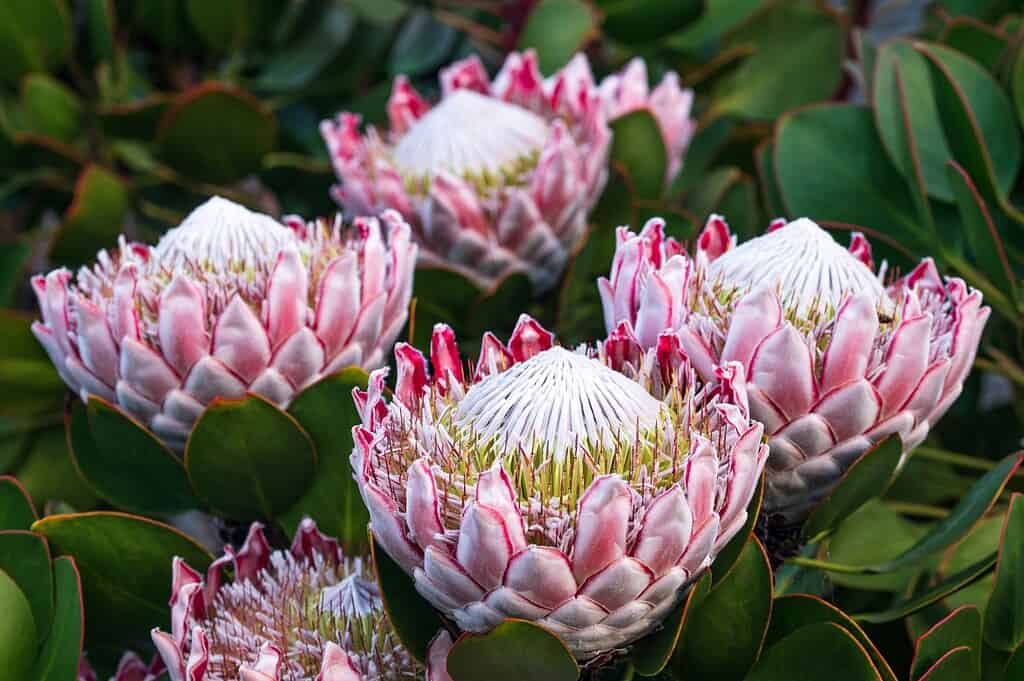
The King Protea stands out with its massive, bowl-shaped flower heads surrounded by stiff, colorful bracts. These blooms come in shades of pink, red, and creamy white, often with a velvety texture.
Native to South Africa, King Protea is prized in floral arrangements for its size, structure, and long vase life. It grows well in sandy, well-drained soil and needs full sun.
This plant is both drought-tolerant and wind-resistant once established.
Color range: Pink, red, greenish-white
Form: Large, rounded, artichoke-like flower heads
Growing tips: Full sun, sandy well-drained soil, minimal watering once established
14. Torch Ginger (Etlingera elatior)
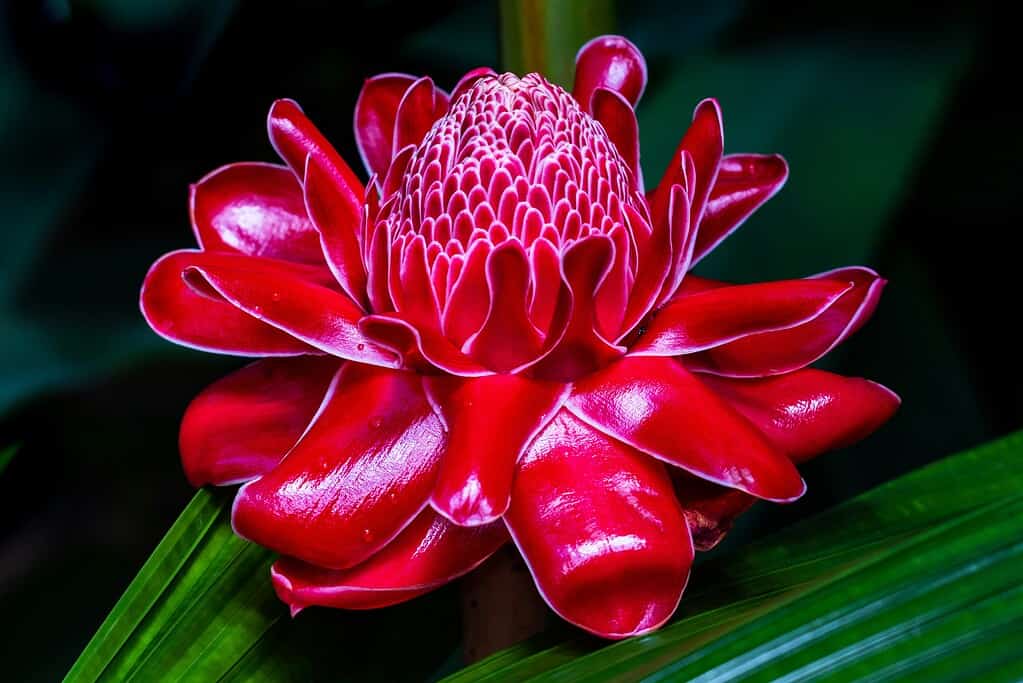
Torch Ginger produces dramatic, torch-like flower spikes in bold red or pink tones that rise above tall, tropical foliage.
The flowers emerge from thick, waxy stems and are often used in exotic floral arrangements due to their size and striking appearance.
This plant prefers consistently warm and humid environments and needs space to grow. In tropical regions, it’s used as a showy focal point in large gardens or along walkways.
Color range: Bright red, deep pink
Structure: Tall torch-shaped inflorescences
Growing tips: Partial shade to full sun, moist rich soil, warm humid conditions
Read related post: Planting Flowers for Beginners (Start Growing Beautiful Blooms Today!)
15. Hedychium Gingers (Ginger Lily)

Ginger Lilies are tropical perennials known for their butterfly-like flowers in white, yellow, or coral-pink hues.
The blooms are fragrant and grow on tall stalks, adding vertical interest and scent to tropical gardens.
Some varieties, like Yellow Ginger Lily, are especially prized for their luminosity. These plants thrive in filtered light and moist soil and are often used near water features or in shaded beds.
Color range: White, yellow, coral pink
Fragrance: Sweet and noticeable
Growing tips: Partial shade, moist soil, regular watering
16. Blue Passion Flower (Passiflora caerulea)
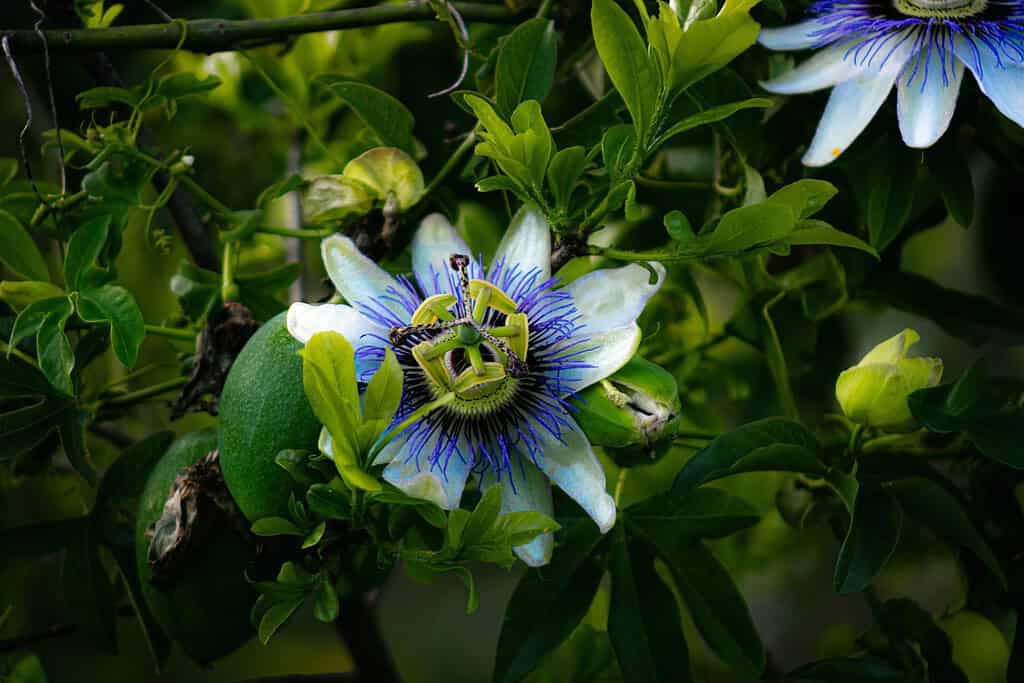
The Blue Passion Flower is a fast-growing vine with exotic, multi-layered flowers in blue, white, and purple.
Its unusual structure features a ring of filaments that gives the flower a spiky, intricate appearance. Often described as otherworldly, this flower is also lightly fragrant and produces small fruit.
Its striking blue tones make it a standout – see our breathtaking blue flowers for more show-stopping options
It climbs rapidly and works well on fences, trellises, or arbors. While it prefers warm climates, it’s one of the more cold-tolerant passion flower species.
Color range: Blue, white, purple
Structure: Unique layered filaments
Growing tips: Full sun to partial shade, regular watering, support for climbing
17. Coffee Flower (Coffea arabica)
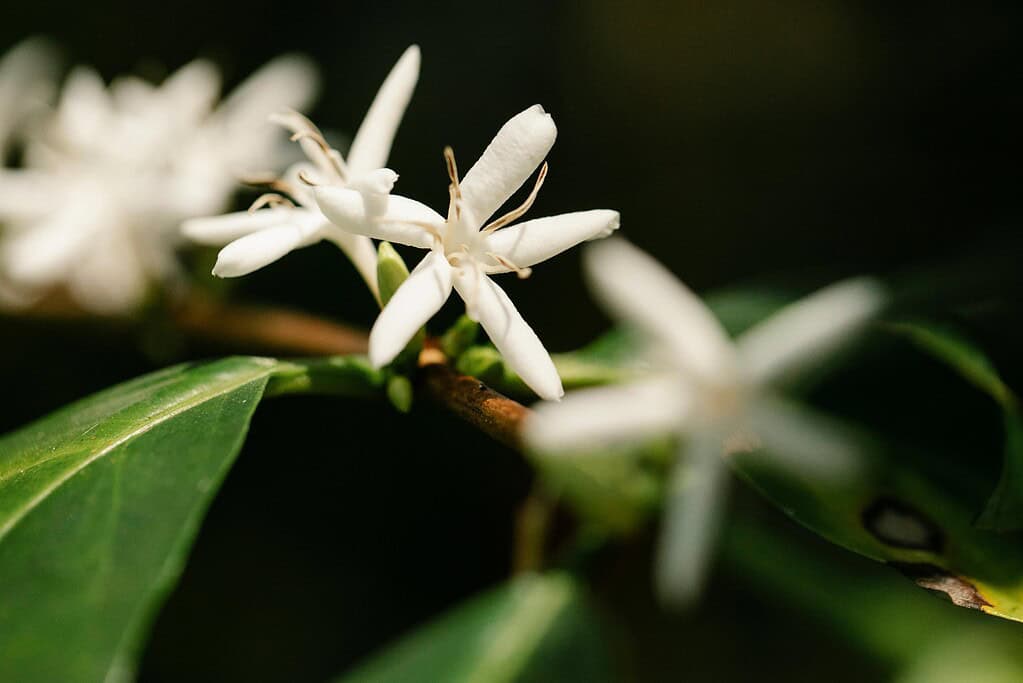
While best known for producing coffee beans, the Coffea arabica plant also offers clusters of small, star-shaped white flowers with a sweet, jasmine-like scent.
The flowers bloom along the branches, often all at once, filling the air with a citrusy fragrance. This evergreen shrub can be grown as a houseplant or outdoors in warm climates.
In addition to its ornamental value, it provides fruit and glossy green foliage year-round.
Color range: White
Fragrance: Jasmine-citrus scent
Growing tips: Bright indirect light or partial sun, regular watering, rich soil
Read related post: 20 Spectacular Spring Flowers You’ll Want in Your Garden
18. Poinsettia (Euphorbia pulcherrima)
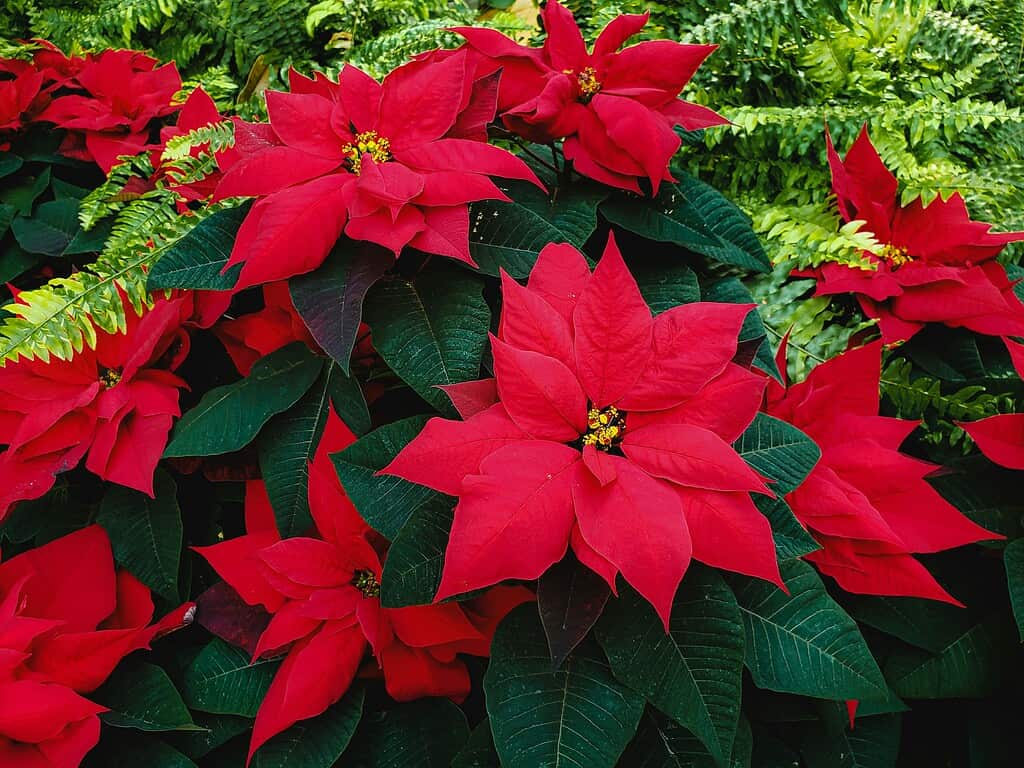
Poinsettias are tropical shrubs most famous for their red and green appearance during the winter holidays.
The showy parts of the plant are not petals but colorful bracts surrounding small yellow flowers. They can also appear in pink, cream, or variegated varieties.
If you want to keep your poinsettias thriving year after year, check out our guide on how to grow and care for poinsettia.
While often grown as seasonal houseplants, they can be cultivated outdoors in warm climates as shrubs. Poinsettias prefer bright, indirect light and careful watering to avoid root rot.
Color range: Red, pink, cream, variegated
Bloom time: Winter (under short daylight conditions)
Growing tips: Bright light, avoid overwatering, protect from drafts
If you love bold red blooms, check out our jaw-dropping red flowers for more inspiration.
19. Princess Flower (Tibouchina urvilleana)
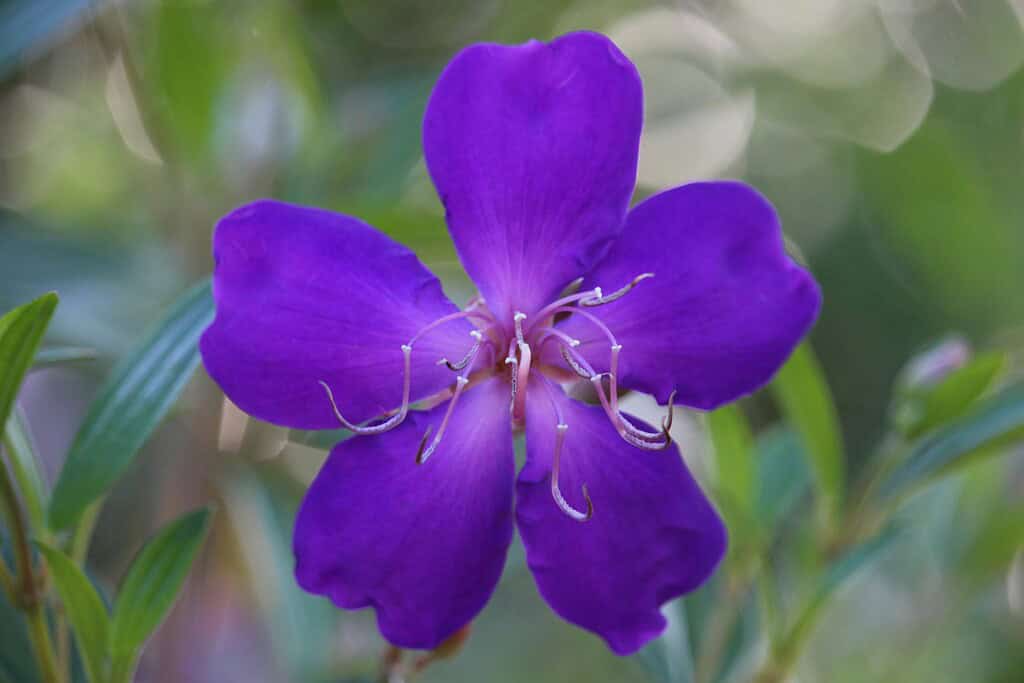
The Princess Flower is a tropical shrub known for its large, vivid purple flowers that bloom from late spring through fall.
Each bloom can be 3 to 5 inches wide, with velvety petals and prominent stamens. It grows quickly and can reach several feet in height, forming a dense, flowering bush.
This plant does well in containers or planted directly in garden beds and attracts pollinators like bees and butterflies.
Color range: Deep purple
Size: Large blooms up to 5 inches wide
Growing tips: Full sun to partial shade, well-drained soil, regular watering
20. Moonflower (Ipomoea alba)

Moonflower is a fast-growing vine with large, trumpet-shaped white flowers that open at dusk and close by morning.
The blooms release a sweet fragrance in the evening, making them ideal for nighttime gardens or outdoor sitting areas.
It’s a close relative of the morning glory and shares the same vigorous climbing habit. Moonflowers grow quickly in warm weather and need a support structure to climb.
Color range: White
Fragrance: Sweet, strongest at night
Growing tips: Full sun, regular watering, support for climbing
How to Grow and Care for Exotic Tropical Flowers
Growing tropical flowers successfully depends on mimicking the conditions of their native environment – warmth, humidity, and consistent care.
While some of these plants are suited for outdoor gardens in tropical and subtropical zones, many can be grown in containers or indoors in cooler climates with the right setup.
Temperature and Light
Most tropical flowers thrive in temperatures between 65°F and 85°F. Cold temperatures, especially frost, can damage or kill many tropical species.
Outdoors, they prefer full sun to partial shade, depending on the species. Indoors, bright indirect light is essential, especially for flowering.
- Full sun lovers: Canna Lily, Bird of Paradise, Bougainvillea
- Partial shade tolerant: Ginger Lily, Torch Ginger, Anthurium
- Indoor growers: Orchid, Coffee Plant, Calla Lily
Soil and Drainage
Good drainage is crucial. Most tropical flowers prefer rich, loamy soil that retains some moisture but doesn’t stay soggy.
In containers, use a well-draining potting mix tailored to the plant’s needs – such as orchid bark mix or cactus soil mixed with compost for drier species.
- Moisture-loving: Heliconia, Jasmine, Hibiscus
- Well-draining needs: Plumeria, Poinsettia, Bougainvillea
Watering and Humidity
Tropical plants typically need consistent moisture, but overwatering can lead to root rot.
Water when the top inch of soil begins to dry out. Many of these plants also appreciate high humidity, especially indoors where air is often dry.
- Keep humidity up: Use a tray of water with pebbles, mist leaves, or use a humidifier for indoor plants like orchids and anthuriums
- Reduce watering in winter: Especially for potted plants in dormancy or low-light conditions
Fertilizing
During the active growing season (spring through early fall), feed tropical plants every 2 to 4 weeks with a balanced, water-soluble fertilizer.
Flowering species benefit from fertilizers high in phosphorus, while leafy plants may need more nitrogen.
Pest and Disease Management
Common issues include aphids, spider mites, whiteflies, and fungal diseases in humid, poorly ventilated areas. Check leaves regularly, use insecticidal soap as needed, and avoid overhead watering to reduce fungal risks.
Container Growing and Overwintering
For regions with frost, container gardening allows tropical flowers to be moved indoors during colder months. Place them in a bright, warm area and reduce watering until spring.
Some may go dormant and lose leaves, but will regrow with warmth and light.
Best Uses of Tropical Flowers in Landscaping and Design
Tropical flowers do more than add color – they change the entire mood of a space.
Their bold textures, unique shapes, and vivid blooms can turn a plain garden into something that feels lush and intentional.
Whether you have a small balcony or a full backyard, tropical flowers can be used in a variety of ways to create strong visual impact and layered beauty.
Focal Points in Garden Beds
Large, eye-catching flowers like Bird of Paradise, King Protea, and Canna Lily are excellent as centerpieces in landscape beds.
Their height, structure, and dramatic blooms draw attention and set the tone for the surrounding plants.
- Best choices: Bird of Paradise, King Protea, Torch Ginger, Heliconia
Layering and Borders
Use medium-height tropical plants like Pentas, Princess Flower, and Hibiscus to create colorful mid-level layers in mixed garden beds.
They pair well with broad-leaved plants and ground covers and offer long blooming seasons.
- Best choices: Hibiscus, Princess Flower, Canna Lily, Pentas
Vertical Interest and Climbers
Climbing tropical flowers bring height and dimension to fences, walls, or trellises. These are ideal for creating privacy screens or softening harsh structures.
- Best choices: Bougainvillea, Climbing Jasmine, Blue Passion Flower, Moonflower
Container and Patio Displays
For patios, balconies, or small gardens, tropical flowers in containers provide flexibility and bold design. They can be easily moved for sun exposure or brought indoors during colder months.
- Best choices: Calla Lily, Anthurium, Plumeria (dwarf varieties), Orchids
Fragrance Gardens or Nighttime Spaces
Fragrant flowers are perfect for sitting areas, entryways, or nighttime gardens where their scent is most appreciated.
Evening bloomers like Moonflower or Angel’s Trumpet also add interest when other plants have closed for the day.
- Best choices: Jasmine, Angel’s Trumpet, Moonflower, Coffee Flower, Plumeria
Cut Flower Arrangements
Some tropical flowers last long after cutting, making them excellent for indoor vases or event arrangements. Their unusual forms and bold colors stand out in floral designs.
- Best choices: Heliconia, Anthurium, Torch Ginger, King Protea, Calla Lily
Where to Source Tropical Flowers (Seeds, Plants, or Cut Flowers)
Finding healthy tropical flowers starts with choosing the right source.
Depending on whether you're starting from seed, planting live specimens, or looking for cut flowers, the quality and care of your purchase will affect your success.
Here’s what to know when sourcing tropical flowers for your garden or home.
Buying Live Plants or Seedlings
For most gardeners, starting with young plants or rooted cuttings is the easiest way to grow tropical flowers. These are widely available through nurseries, both local and online. When buying live plants:
- Look for signs of health: vibrant leaves, no spotting, no visible pests.
- Check root systems (if possible): avoid root-bound plants in undersized containers.
- Choose plants adapted to your USDA zone if growing outdoors.
Where to buy:
- Local garden centers (especially in warmer climates)
- Specialty tropical plant nurseries
- Reputable online retailers that ship regionally or nationally
Growing from Seeds
Some tropical flowers (like passion flower or ginger lily) can be grown from seed, but germination can take time and patience. Seeds should be fresh, viable, and preferably from a trusted supplier.
Seed-buying tips:
- Choose suppliers that specialize in tropical or exotic plants
- Look for detailed germination instructions and temperature recommendations
- Avoid bulk seed sites with unclear sourcing or labeling
Reliable sources include:
- Botanical garden seed exchanges
- Dedicated tropical seed companies
- Well-reviewed online seed suppliers with transparent sourcing
Buying Cut Flowers
If you're interested in tropical flowers for events or arrangements, cut flowers can be purchased from florists or wholesalers.
Tropical cut flowers tend to have a long vase life and often retain their structure and color well.
Popular for arrangements: Heliconia, Anthurium, Torch Ginger, King Protea, Orchids
Buying tips:
- Use a florist experienced with tropicals or order directly from flower farms
- Request overnight or express shipping to prevent wilt
- Choose flowers that are shipped with water picks or hydration wraps
Additional Considerations
- Check climate compatibility before purchasing plants intended for your garden
- Avoid wild-collected specimens, which can contribute to habitat loss
- Read customer reviews for online sellers to avoid poor-quality plants or delays
- Inspect upon arrival – immediately remove plants from packaging and water them
Start Creating Your Own Tropical Paradise
Tropical flowers bring more than just color – they create a strong atmosphere, whether you're planting a full garden or adding a few pots to your patio.
From fragrant night bloomers to architectural statement plants, each flower on this list adds something different.
With the right growing conditions and careful sourcing, you can bring that lush, paradise-like look to your own space – no matter where you live.
Pick a few species that match your climate and available space, and start small. Many tropical flowers adapt well to containers and indoor conditions, making it easier than you think to get started.
Which tropical flower is your favorite? Comment down below and share your top picks or ask a question – we’d love to hear from you.
FAQs
What are the best tropical flowers for container gardening?
Tropical flowers like Plumeria (dwarf varieties), Calla Lily, Anthurium, and Bougainvillea thrive in containers. Choose compact or slow-growing species, use well-draining soil, and ensure pots have drainage holes.
How can I keep tropical flowers alive indoors during winter?
Place them in bright, indirect sunlight away from cold drafts. Reduce watering, maintain humidity with trays or humidifiers, and avoid fertilizing until spring. Some plants may go dormant but will return with warmth and light.
Are there low-maintenance tropical flowers for beginners?
Yes. Canna Lily, Pentas, Hibiscus, and Anthurium are relatively easy to care for. They tolerate a range of conditions, recover quickly from stress, and bloom generously with basic care.
Can tropical flowers be grown from cuttings?
Many tropical plants like Bougainvillea, Plumeria, and Jasmine root well from cuttings. Use clean, sharp tools, dip the cutting in rooting hormone, and place it in moist, well-draining soil under indirect light.
How often should I fertilize tropical flowers?
During the growing season (spring through early fall), fertilize every 2–4 weeks using a balanced or bloom-boosting fertilizer. Stop feeding in winter when growth slows, especially for container plants kept indoors.
Ready To Transform Your Garden?

Are you looking for the best way to layout your garden beds? Maybe you're feeling a bit stuck on how to make the most of your space?
We’ve got you covered! Check out our 101+ Garden Bed Layout Ideas for your next raised bed project. This guide is filled with creative and practical ideas that can help you design a garden that fits your style, whether you’re just starting out or have been gardening for years.
Get your copy today and get inspired to bring your gardening dreams to life.