
Backyard chickens have two core hobbies:
- finding snacks, and
- redecorating your yard with chaos.
If you’d like to encourage hobby #1 without turning your garden beds into a post-apocalyptic scratch zone, you need a chicken tunnel – often called a “chunnel.”
A chicken tunnel is basically a narrow, enclosed run that lets your flock roam and forage in a controlled path (think: chicken highway).
It’s a favorite trick for keepers who want more movement, more enrichment, fewer escaped hens, and fewer “why is there a chicken in my tomatoes?” moments.
In this article, we’ll cover the best chicken tunnel options for every backyard flock, including:
- Portable tunnels
- Pop-up tunnels
- DIY tunnels
- Walk-through / walk-in tunnel setups
- Fenced “tunnel-like” corridors
Why Chicken Tunnels Are Worth It (Even If You Swore You’d “Keep It Simple”)

Chicken tunnels help you do three big things:
1) Give chickens enrichment without full free-ranging
They still get grass, bugs, sunshine, and new scenery – without you playing “hawk lookout” 24/7.
2) Protect gardens and landscaping
A tunnel can run along the edge of a garden like a living, pecking security patrol. (Bonus: they’ll trim weeds and hunt pests along the border.)
3) Add safe space without rebuilding your whole run
Instead of building a massive new enclosure, you can add a tunnel lane that connects spaces or expands grazing territory.
If you’ve got a small yard (hello, urban chicken keepers), tunnels can be a space cheat code – long and skinny beats “one tiny square pen” almost every time.
5 Best Chicken Tunnel Types
If you’ve ever watched chickens roam your yard, you know they love to explore – but left unchecked, they can turn your garden into a mud pit in no time. That’s where chicken tunnels come in.
These “roaming lanes” let your birds scratch, peck, and graze safely while giving you control over where they go.
Whether you’re after something budget-friendly, a modular setup, or a full walk-in runway, there’s a tunnel style to fit every backyard, flock size, and level of DIY enthusiasm.
Here’s a roundup of the top options to consider.
1) Portable Chicken Tunnels: Best for Rotating Fresh Grass
Portable tunnels are pre-made sections you can move around your yard. They’re a great fit if you:
- want to rotate grazing (less mud, less bare dirt),
- like rearranging layouts,
- or need something semi-permanent but flexible.
VEVOR Chicken Tunnels for Yard

- Portable & Large Activity Area: 157.48″ wide and 24.2″ tall, allowing chickens to roam freely while protecting your garden.
- Durable & Stable: Made with Q195 steel and rust-proof coating, thick wire and reinforced frame protect against predators.
- Easy Setup & Mobility: Includes locks, ground stakes, and zip ties for quick assembly; foldable design saves space.
- Protective & Waterproof Cover: Silver cloth blocks rain and UV rays while keeping ventilation for all-weather protection.
- Multi-shape Corner Frame: Flexible tunnel combination adapts to small urban or large rural spaces.
VEVOR sells purpose-built chicken tunnel sections in sizes like 157.5″ x 39.4″ x 24.2″, designed for poultry roaming while protecting garden areas.
Why it’s good:
- More “real tunnel” than a standard pen
- Wider than many DIY tunnels, so birds don’t feel cramped
- Modular vibe (start small, expand later)
Watch-outs:
- Like most tunnels, it still needs smart anchoring (stakes, level ground, etc.)
- Check your predator pressure – lightweight tunnels are safer when supervised or paired with secure housing at night
LANEVAN Chicken Tunnel DIY Kit (Modular Cube Runway)
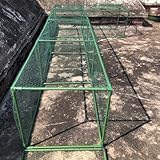
- DIY Kit: Frame and chicken wire need assembly. Follow instructions or contact LANEVAN for help.
- More Running Space: Twice the space of a triangular run for happy, healthy chickens without crowding.
- Effective Protection: Thick frame and high-density mesh block predators like hawks, mice, snakes, and raccoons.
- Easy to Expand: Supports multiple set combinations. 90° corner allows a chicken runway around your yard.
- Perfect for Outdoor Use: PVC-coated metal is rust-proof and UV-resistant; durable without frequent reassembly.
- Rich Accessories: All-in-one kit, no extra trips to the hardware store needed.
- 100% Money-Back: 30-day refund/return policy covering quality issues, dissatisfaction, and more.
If you like the idea of “LEGO, but for chickens,” this is a modular tunnel/run kit style listing on Amazon.
Best for: people who want a system they can reconfigure into corridors, corners, and longer lanes.
2) Flexible “Net Tunnel” Options: Best Budget-Friendly Starter Tunnels
These are typically hoops + netting style kits. They’re lighter, often cheaper, and quick to set up—more like a garden tunnel frame than a fortress.
Large Chicken Tunnel Coop Run, 157 × 31.5 x 25.5 Inch (net + hoops)

- Complete Kit Ready for Assembly: Includes poles, connectors, clips, stakes, and grazing net – everything needed for setup.
- Protect Your Garden and Yard: Keeps chickens contained while allowing free movement, protecting vegetable plots and flower beds.
- Simple Setup and Take Down: Detachable hoops connect easily without tools; clear instructions ensure a sturdy structure.
- Secure Outdoor Grazing Space: Small mesh netting deters predators, providing a safe area for chickens, ducks, or rabbits.
- Durable Construction for Longevity: Coated steel frame resists rust, stakes are sturdy, and polyethylene netting lasts over time.
This style listing describes a longer tunnel length with netting and hoop connectors for quick setup.
Why people choose it:
- Fast setup
- Lightweight
- Easy to store
Net tunnels can be great for supervised grazing and low predator areas, but they’re not the same as welded wire + hardware cloth security.
3) Pop-Up Chicken Tunnels: Best for Urban Yards and “I Need It Today” Setups
Pop‑up chicken tunnels are portable, lightweight enclosures that give your flock an instant roaming space you can set up in minutes. They’re ideal if you:
- have limited space,
- want something you can fold and stash,
- or want to give chickens “field trip time” while you garden nearby.
UNIFAMILY Chicken Tunnel for Outside 12FT, Flexible Chickens Runs for Yard

- Upgraded Chicken Tunnel: Denser mesh with drawstring ends for shade, sun protection, and easy chicken access; stable and durable.
- Protect Your Garden: Keeps chickens out of vegetable plots while allowing safe tunnel movement for poultry.
- Effective Chicken Protection: Fine mesh deters predators like eagles, coyotes, hawks, and foxes; ensures safe foraging and play.
- High Quality: Plastic-coated steel frame resists rot; 11mm thick posts withstand impact; durable nylon netting.
- Flexible & Easy to Carry: Poles secure to netting; quick assembly and relocation without full disassembly.
- Package Content: 10 curved hoops, 10 straight hoops, 15 connectors, staples, zip ties, heavy-duty net, and instructions included.
It’s essentially a portable tunnel‑style run you set up in your yard to give chickens (or other small poultry) space to roam while staying contained.
Pros:
- Instant setup and storage
- Great for chicks (supervised), bantams, or small flocks
- Awesome “temporary solution” for renters
Cons:
- Not a long-term predator solution
- Wind can be an issue (stake it well)
- Some birds may hop out depending on height and flap power
4) DIY Chicken Tunnels: Best for Custom Layouts (and People With Zip Ties)

DIY chunnels are beloved because they’re:
- customizable,
- inexpensive (especially if you have leftover fencing),
- and weirdly satisfying.
A classic DIY method is arched welded wire fencing with an optional smaller mesh layer on top, built in sections and staked down.
A great step-by-step example uses welded wire fencing + chicken netting built into overlapping sections and anchored with landscaping staples (and yes, zip ties make frequent appearances).
Simple DIY Chunnel (Beginner-Friendly Build)
Materials:
- Welded wire fencing (roll)
- Optional: chicken netting or hardware cloth layer
- Zip ties or wire twists
- Landscaping staples / ground stakes
- Wire cutters + gloves
Steps:
- Decide your size: For standard hens, aim roughly 18–24 inches tall (bigger if you have larger breeds/roosters).
- Cut and curve welded wire into an arch.
- Layer smaller mesh on top if needed (especially for smaller birds or added security).
- Stake every 12–18 inches so chickens can’t shove it aside and predators can’t nose under.
- Connect sections with overlap + zip ties.
- Add a gate point (an access panel or removable section).
- Walk the perimeter regularly to check for gaps, sharp edges, or lifting.
Pro tip for gardens: Run your tunnel along a garden edge like a “chicken moat.”
Chickens patrol the perimeter, snack on bugs, and (usually) leave your plants alone because they can’t access the bed itself.
5) Fenced “Tunnel-Like” Corridors: Best for Temporary Perimeter Grazing
If your goal is more “controlled roaming lane” than “enclosed roofed tunnel,” poultry netting can create long corridors fast.
RentACoop Electric Poultry Netting

- Protect Your Flock & Property: Keeps chickens, ducks, and other poultry safe from predators, gardens, and roads.
- 168 Feet of Coverage: 48″ tall roll covers over 1,700 sq. ft. with pre-attached FRP posts and triple-braided wire.
- Powerful Yet Safe: Works with a 0.25J low-impedance energizer (sold separately) to deter predators safely.
- Easy Setup & Weather-Resistant: Durable, flexible, and simple to install or relocate; withstands all seasons.
- Rugged & Ready for Any Terrain: Includes double-spiked posts, mini-posts, corner guy lines, and repair kit for uneven ground.
- What's in the Box: 48″ x 168′ fence, stakes, mini-posts, repair kit, instruction booklet, warning sign; energizers sold separately.
RentACoop electric poultry netting is sold on Amazon in long lengths (common listing shows 168′ length variants; energizer not included).
Best for:
- creating temporary lanes
- rotating areas of the yard
- training birds to respect boundaries
Netting by itself isn’t a roofed tunnel – so it doesn’t stop aerial predators the same way.
But it can be used to form “tunnel-like” corridors when paired with timing (supervised roaming) or additional overhead netting.
How to Choose the Best Chicken Tunnel for Your Backyard
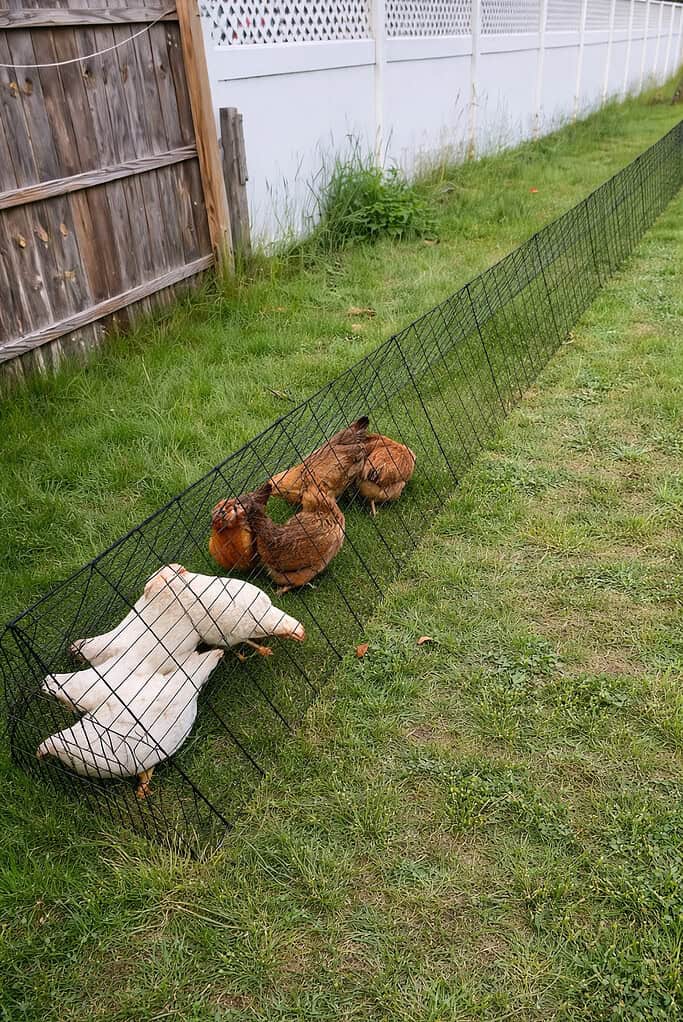
The best option depends on your priorities – whether it’s keeping predators out, giving your flock plenty of space, sticking to a budget, or setting up quickly.
Choose based on your #1 priority
- Maximum safety (predators): Walk-in run systems + strong wire mesh (PawHut / Omlet)
- Maximum flexibility: Modular tunnel sections (VEVOR / LANEVAN)
- Lowest cost: DIY welded wire chunnel
- Fastest setup: Pop-up pens and net tunnels
Match the tunnel to your flock size
- 2–4 hens: pop-up + small tunnel sections can work well
- 5–10 hens: longer lanes + wider tunnels reduce traffic jams
- 10+ hens: prioritize width/height and multiple access points (or multiple lanes)
Think about your yard’s layout
- Long narrow side yards = perfect tunnel lanes
- Garden beds = perfect perimeter chunnels
- Small urban yards = portable + pop-up rotation
Choose Your Tunnel and Let Your Chickens Explore
As you can see, there’s a chicken tunnel solution for every backyard flock.
From ultra-portable pop-up pens to sturdy DIY chunnels and permanent fenced runs, each option helps keep your hens healthy, busy, and safely out of trouble.
The best chicken tunnel for you depends on your setup and needs.
Maybe you’ll start with a simple DIY wire tunnel along the garden to see how your birds like it, or perhaps you’re ready to invest in a high-quality portable kit from a brand like Omlet or PawHut.
Whatever you choose, your chickens are sure to appreciate the extra freedom and foraging time a tunnel allows.
So go ahead and pick a tunnel option that fits your style, set it up, and let your feathered friends hit the road (or rather, the tunnel)!
Have you tried any of these chicken tunnel ideas, or do you have a creative “chunnel” setup of your own? We’d love to hear your experiences and tips!
Share your thoughts or questions in the comments below, and let’s help each other create the best backyard chicken paradises possible.
Happy tunneling and happy chickening!
FAQs
Are chicken tunnels safe from predators?
It depends on the tunnel type and your predator pressure. Stronger systems (walk-in runs, sturdy wire tunnels) provide better protection than net-only or pop-up options.
If predators are common where you live, prioritize rigid frames, secure mesh, and excellent anchoring – or use lighter tunnels only during supervised roaming.
What’s the easiest chicken tunnel to set up from Amazon?
For fastest setup, pop-up runs and net tunnels are the easiest (they’re built for quick assembly).
Can I connect a tunnel to my coop?
Yes. Many keepers attach tunnels to a pop door or run entrance. With modular tunnel kits, you can align the tunnel end with an existing door and secure the connection so there are no gaps. Always make sure you can close it off at night.
How wide should a chicken tunnel be?
Wider is usually better. If you can, aim for enough room for two hens to pass – especially for larger flocks. Narrow tunnels can create traffic jams (and chickens take traffic personally).
Do I need a roof on a chicken tunnel?
If hawks or climbing predators are a concern, a roof is strongly recommended. True tunnels (wire/mesh overhead) offer much better protection than open-top fences or netting alone.
Planting Guides for This Article
Get exact planting dates, frost schedules, and growing tips for your zone: