
Red flowers instantly grab attention, making them one of the most striking choices for any garden or landscape.
They can be used to highlight key areas in your yard, create eye-catching focal points, or fill dull corners with vibrant life.
This list features 15 carefully selected red flowers – ranging from classic perennials to vibrant annuals – that are easy to grow and suited for different light levels, climates, and spaces.
Whether you need something for full sun, shade, drought resistance, or attracting pollinators, you’ll find the right red flower here.
Each plant comes with growing zone information, care requirements, and practical notes to help you choose the best ones for your garden.
15 Stunning Red Flowers to Make Your Garden Pop
Red flowers come in many shapes and sizes (from bold, dramatic blooms to delicate accents) and they can thrive in a range of growing conditions.
Whether you're designing a pollinator garden, looking for low-maintenance choices, or simply want a splash of rich color, the following flowers offer beauty along with practical benefits.
Here's a closer look at 15 red flowers worth adding to your garden.
1. Coreopsis (Coreopsis hybrid/spp.)
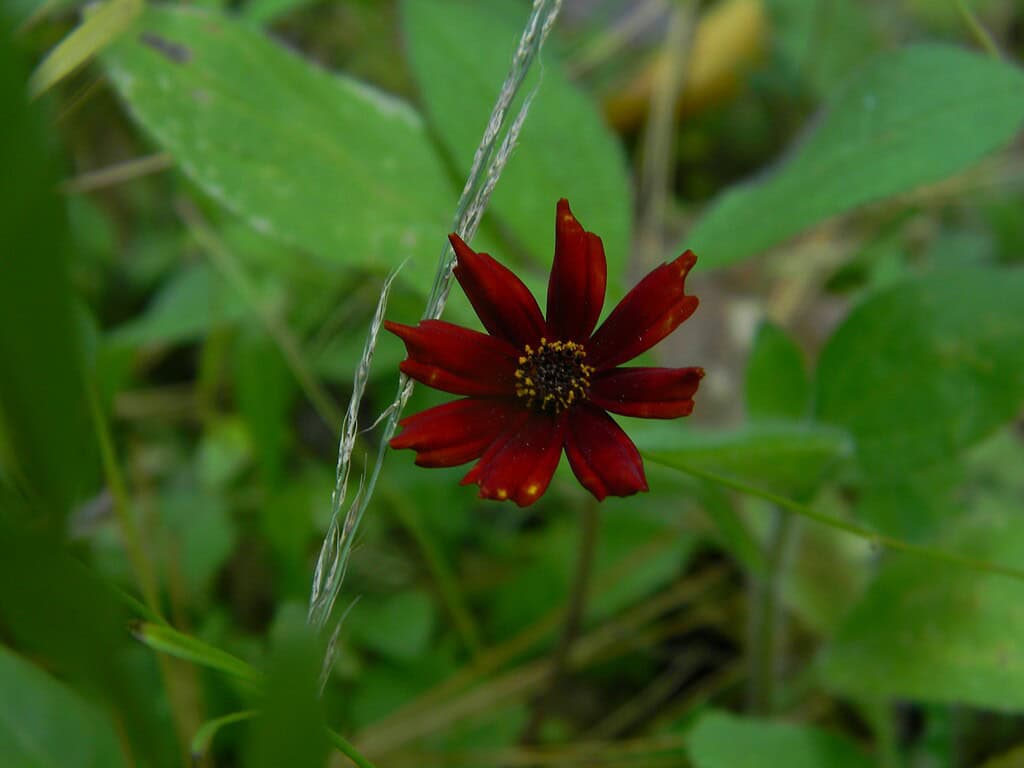
Coreopsis is a tough and reliable plant known for its long bloom season and ability to thrive with very little care.
Varieties like Li'l Bang™ Red Elf produce deep burgundy-red flowers that bloom continuously through the summer months.
- Zones: 2–11
- Sunlight: Full sun
- Soil: Well-drained soil, average fertility
- Watering: Low to moderate; drought-tolerant once established
- Best for: Borders, mass plantings, pollinator gardens
This upright perennial grows in neat clumps, making it ideal for creating clean edges along walkways or flower beds.
It also attracts butterflies and doesn’t require deadheading to keep blooming, making it a great choice for low-maintenance gardens.
For a stunning contrast in your garden, pair these with breathtaking blue flowers.
2. Daylily (Hemerocallis hybrid/spp.)

Daylilies are dependable, fast-growing plants that work well in almost any garden setting.
The ‘Ruby Spider' variety stands out with its large, bright red petals and golden throat, adding bold texture and color.
- Zones: 3–10
- Sunlight: Full sun to part shade
- Soil: Adaptable to most soil types
- Watering: Moderate; tolerates short dry spells
- Best for: Borders, foundation beds, beginner gardens
This perennial is ideal for gardeners who want vivid color without much effort.
It’s not affected by heat or poor soil, and each bloom lasts just one day (hence the name) but plants produce many buds for weeks of flowering.
Pair it with vibrant purple perennials for a striking color combination in your garden.
3. Yarrow (Achillea millefolium)
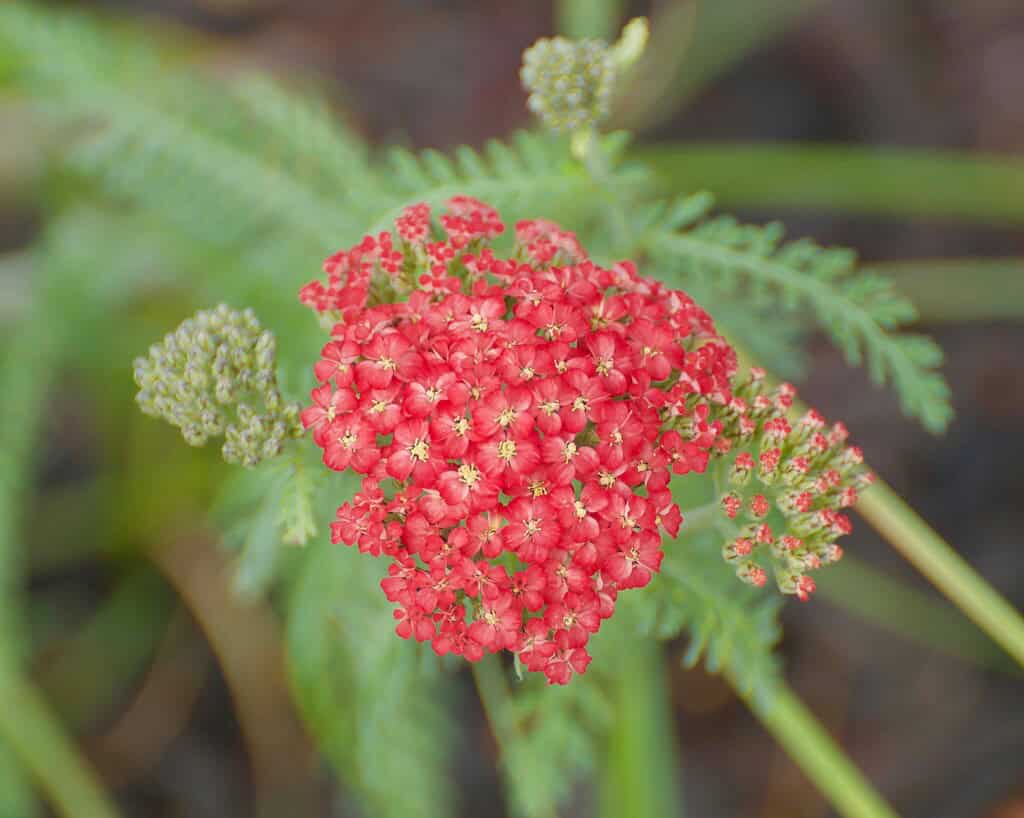
Yarrow brings both structure and charm to sunny garden spaces.
The Sassy Summer Sangria variety features rich red flower clusters held on upright stems, contrasting beautifully with its silvery green foliage.
- Zones: 3–9
- Sunlight: Full sun
- Soil: Well-drained; tolerates poor soil
- Watering: Low; very drought-tolerant
- Best for: Pollinator gardens, dry slopes, cut flower arrangements
Flat-topped flower heads serve as landing pads for butterflies and other beneficial insects. Yarrow is also a favorite in dried flower crafts, offering color even after its time in the garden is done.
Read related post: 15 Beautiful Shade-Loving Perennials for Vibrant Low-Light Gardens
4. Hardy Hibiscus (Hibiscus hybrid/spp.)
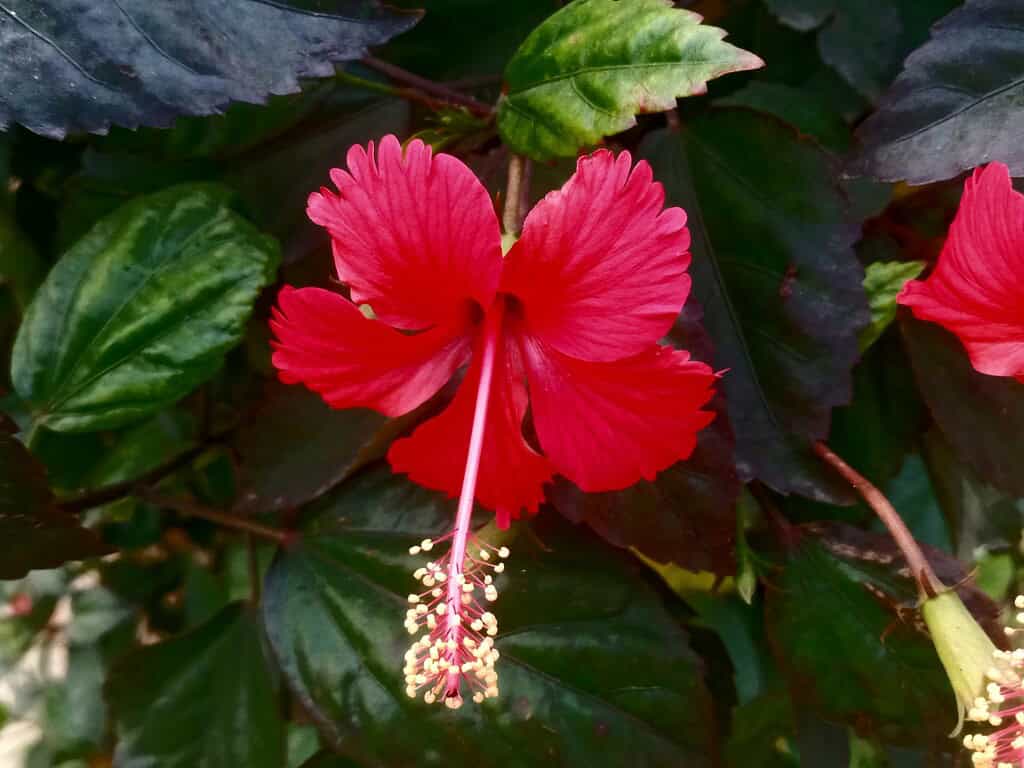
Hardy hibiscus brings a tropical feel to temperate gardens, thanks to its enormous, plate-sized blooms. The Summerific® ‘Holy Grail' variety offers deep red flowers up to 9 inches across.
- Zones: 4–9
- Sunlight: Full sun
- Soil: Moist, rich, and well-drained
- Watering: Moderate to high; prefers consistent moisture
- Best for: Focal points, large borders, statement plantings
Despite their exotic look, hardy hibiscus varieties are built for cold climates and return reliably each year. Their oversized flowers make them a dramatic centerpiece in any sunny bed or garden.
If you love vibrant blooms, you might also enjoy our list of stunning pink flowers.
5. Coneflower (Echinacea hybrid/spp.)
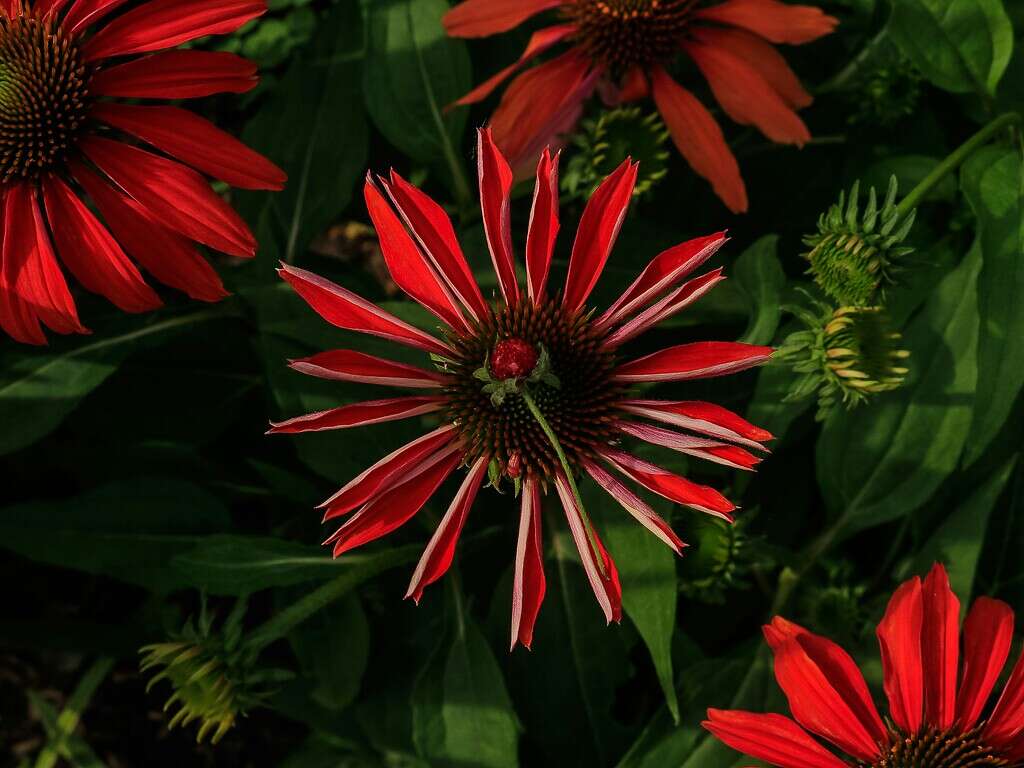
Coneflowers are well-known for their resilience and ability to bloom for long periods.
The Color Coded® ‘Frankly Scarlet' variety offers bold red petals surrounding a dark cone, adding intensity and structure to any planting.
- Zones: 4–8
- Sunlight: Full sun
- Soil: Well-drained, average to dry
- Watering: Low once established
- Best for: Pollinator gardens, prairie-style plantings, cut flowers
These perennials are heat- and drought-tolerant, and they bloom for months. Coneflowers are also a magnet for bees and butterflies and will often self-seed, creating natural drifts over time.
If you’re looking for plants that thrive in the heat, don’t miss my roundup of drought-tolerant favorites for a flourishing summer garden.
6. Bee Balm (Monarda didyma)
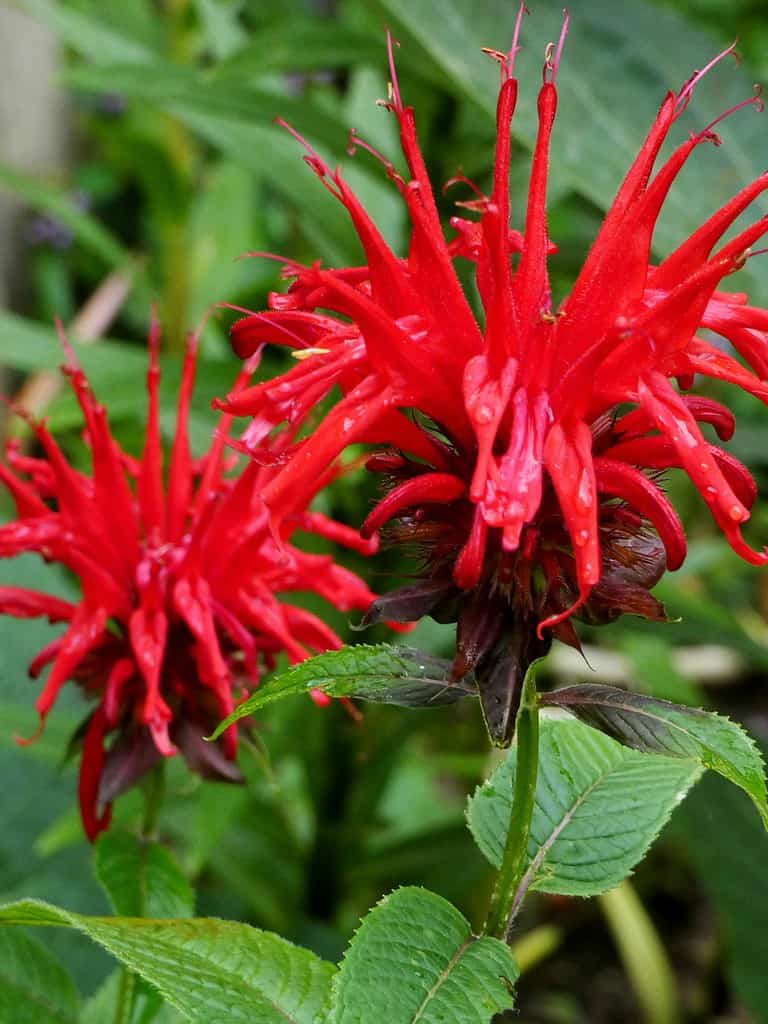
Bee balm offers rich color and wildlife value in a compact form. The ‘Pardon My Cerise’ variety displays cherry red, spiky blooms that add texture and movement to garden beds.
- Zones: 4–9
- Sunlight: Full sun to part shade
- Soil: Moist, rich, well-drained
- Watering: Moderate; avoid letting soil dry out completely
- Best for: Pollinator gardens, cottage-style plantings, small spaces
This perennial is a favorite of bees, butterflies, and hummingbirds. It has a tidy habit, resists mildew, and performs well in tighter planting areas.
7. Blanket Flower (Gaillardia hybrid/spp.)
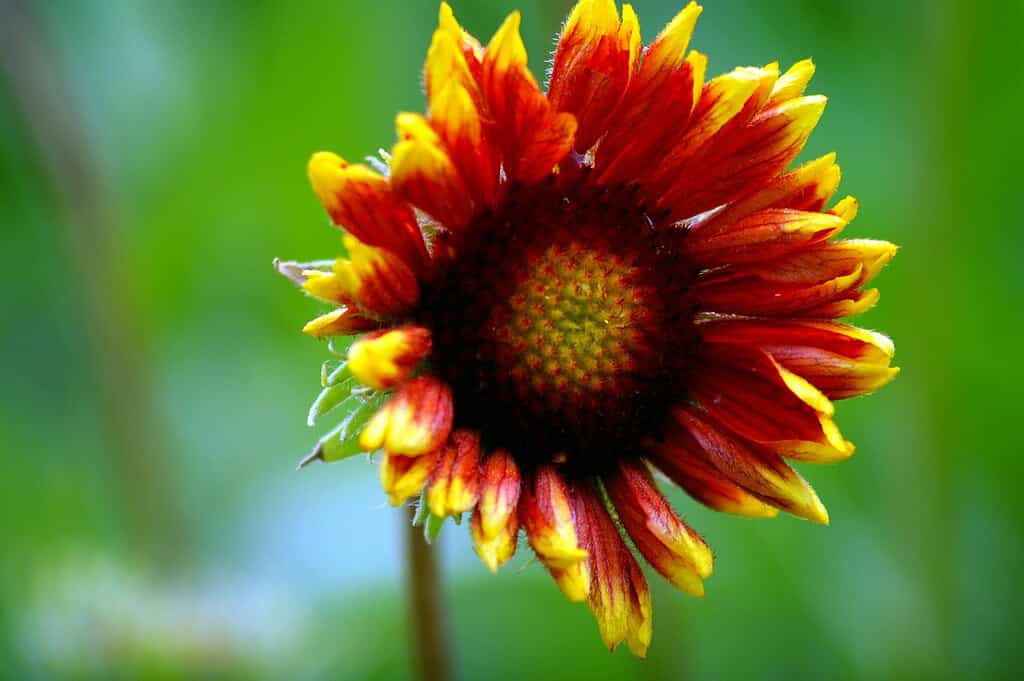
Blanket flower provides season-long color with daisy-like blooms that often blend red with orange or yellow.
While often grown as a short-lived perennial, it self-sows easily and performs like an annual in some zones.
- Zones: 3–10
- Sunlight: Full sun
- Soil: Well-drained, sandy or average
- Watering: Low; thrives in dry spots
- Best for: Hot, sunny beds, informal gardens, wildflower meadows
This plant requires little maintenance and handles heat, wind, and drought with ease. It blooms from early summer until frost, making it one of the most reliable choices for extended color.
If you like lively blooms, you’ll also love my roundup of eye-catching wild flowers.
8. Dianthus / Carnation (Dianthus hybrid/spp.)
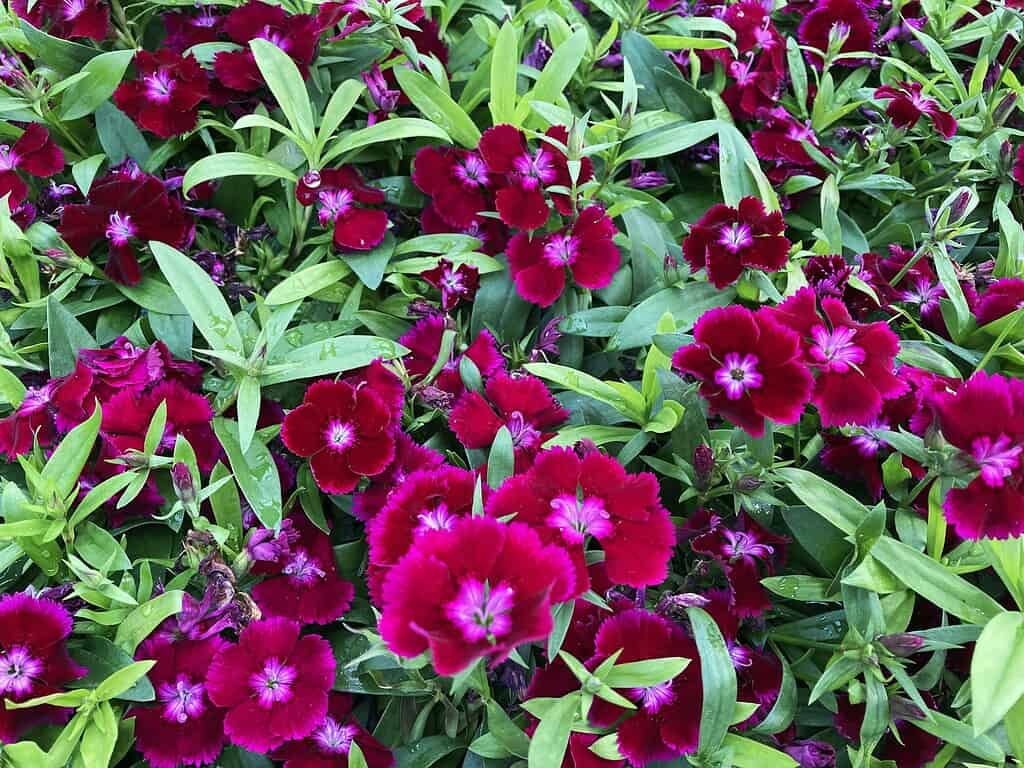
Dianthus, including border carnations and hybrids, adds a refined, cottage-garden look with its compact form and colorful blooms.
The Fruit Punch® ‘Cherry Vanilla' variety offers red-edged petals with a contrasting center.
- Zones: 4–9
- Sunlight: Full sun to part shade
- Soil: Well-drained, neutral to slightly alkaline
- Watering: Moderate; avoid soggy soil
- Best for: Edging, rock gardens, small borders
This plant is known for its sweet fragrance and long flowering season. It thrives in cooler weather and reblooms with minimal care if spent blooms are trimmed.
9. Rose (Rosa hybrid)
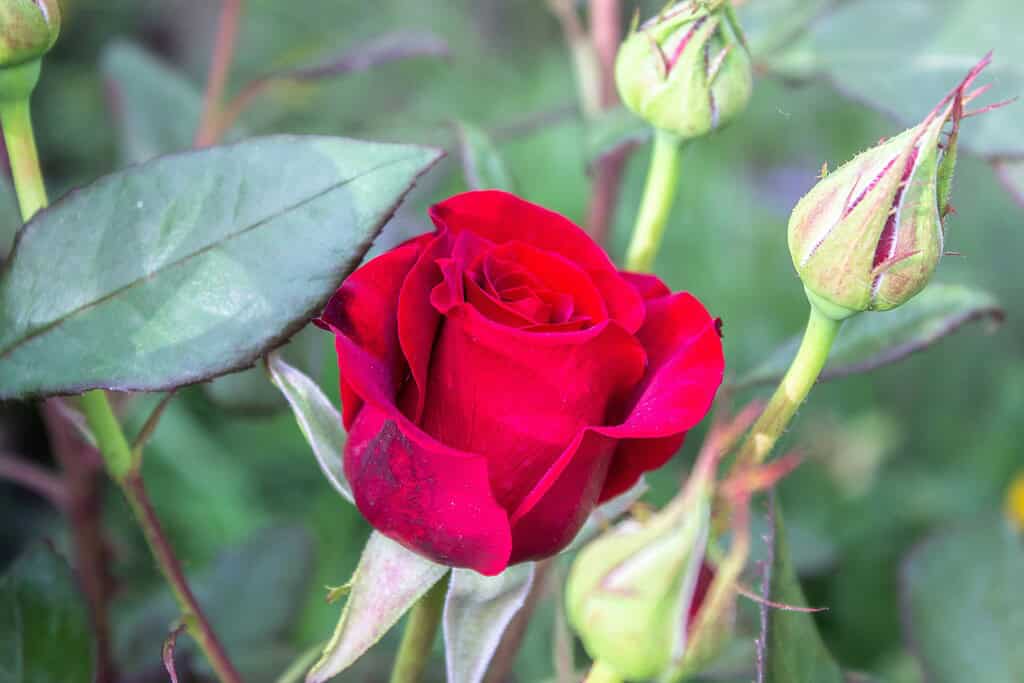
The red rose is a garden staple, and modern shrub varieties like Oso Easy Double Red® offer vibrant color with very little effort.
These compact plants bloom continuously and resist common rose diseases.
- Zones: 4–9
- Sunlight: Full sun
- Soil: Rich, well-drained
- Watering: Moderate; water deeply, especially during dry spells
- Best for: Borders, foundation plantings, containers
Unlike high-maintenance hybrid tea roses, this variety is self-cleaning and needs no special care to keep blooming all season.
Want to keep your roses looking their best? Check out my guide on how to prune roses.
10. Petunia (Petunia hybrid)
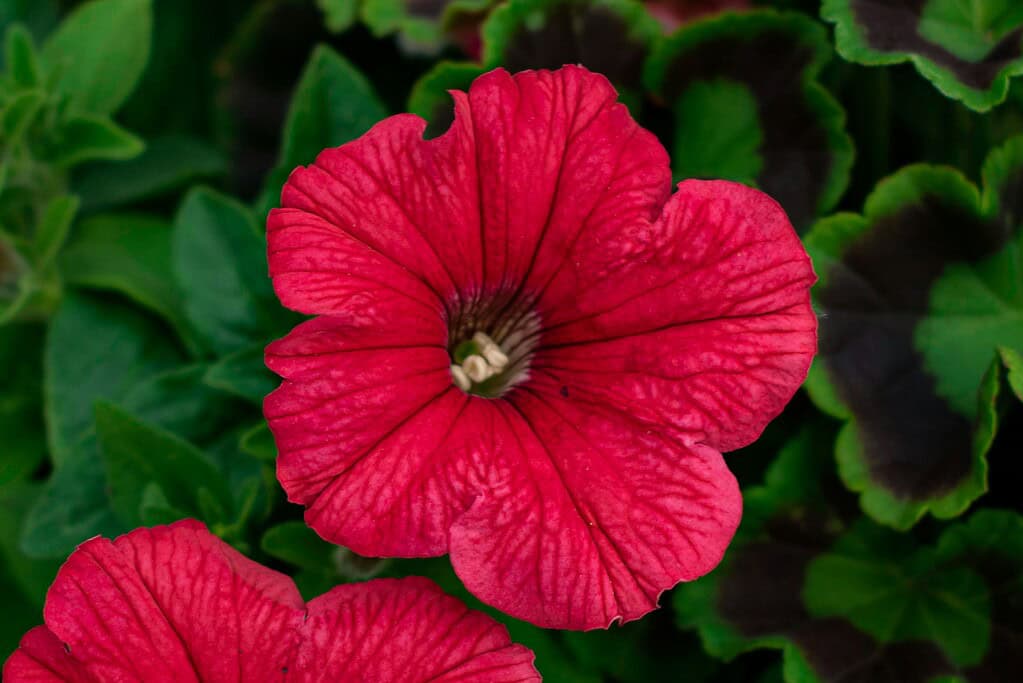
Petunias are one of the most popular annuals for containers and bedding.
The Supertunia® Really Red variety produces deep red blooms nonstop from spring through frost.
- Zones: Grown as annual
- Sunlight: Full sun
- Soil: Well-drained, fertile
- Watering: Moderate; allow soil to dry slightly between waterings
- Best for: Hanging baskets, window boxes, garden borders
This petunia doesn’t require deadheading and continues to flower heavily without much attention, making it ideal for busy gardeners.
11. Geranium (Pelargonium interspecific hybrid)
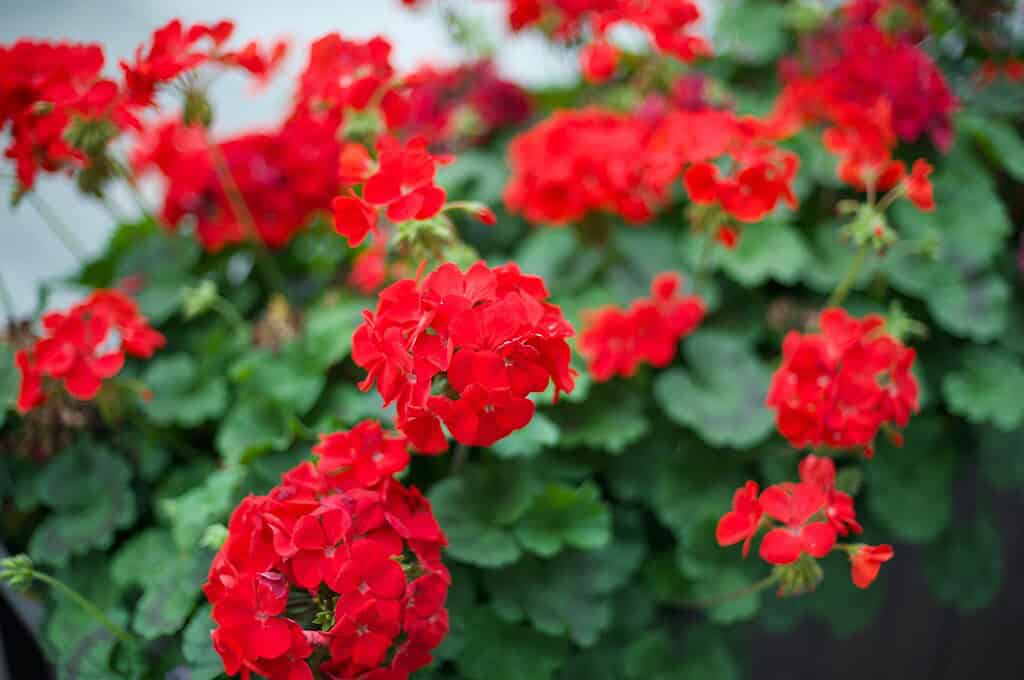
Red geraniums like Boldly® Dark Red are classic choices for summer pots and planters. Their bold flower heads and sturdy stems make them a long-lasting favorite.
- Zones: Grown as annual
- Sunlight: Full sun to part shade
- Soil: Well-drained, rich in organic matter
- Watering: Moderate; let topsoil dry before watering again
- Best for: Patio containers, window boxes, porch planters
They offer consistent color, tolerate summer heat well, and are easy to maintain with minimal deadheading.
Read related post: 15 Gorgeous Long-Blooming Perennials You’ll Want in Your Garden
12. Zinnia (Zinnia elegans)
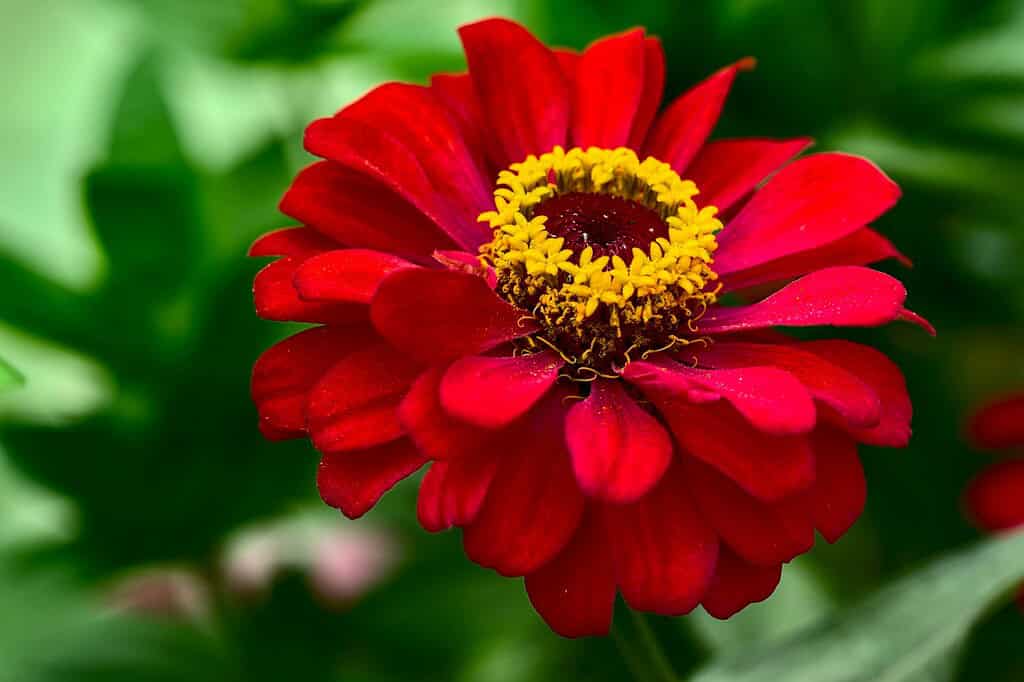
Zinnias are fast-growing, sun-loving flowers that offer a wide range of vibrant colors, including vivid reds. Their daisy-like blooms are a go-to choice for summer gardens and cutting beds.
- Zones: 3–10 (grown as annual)
- Sunlight: Full sun
- Soil: Well-drained, average fertility
- Watering: Moderate; water at the base to prevent mildew
- Best for: Cutting gardens, borders, butterfly gardens
Zinnias bloom from summer to frost and are easy to grow from seed or transplant. They’re also favored by pollinators, especially butterflies.
13. Wax Begonia (Begonia benariensis)
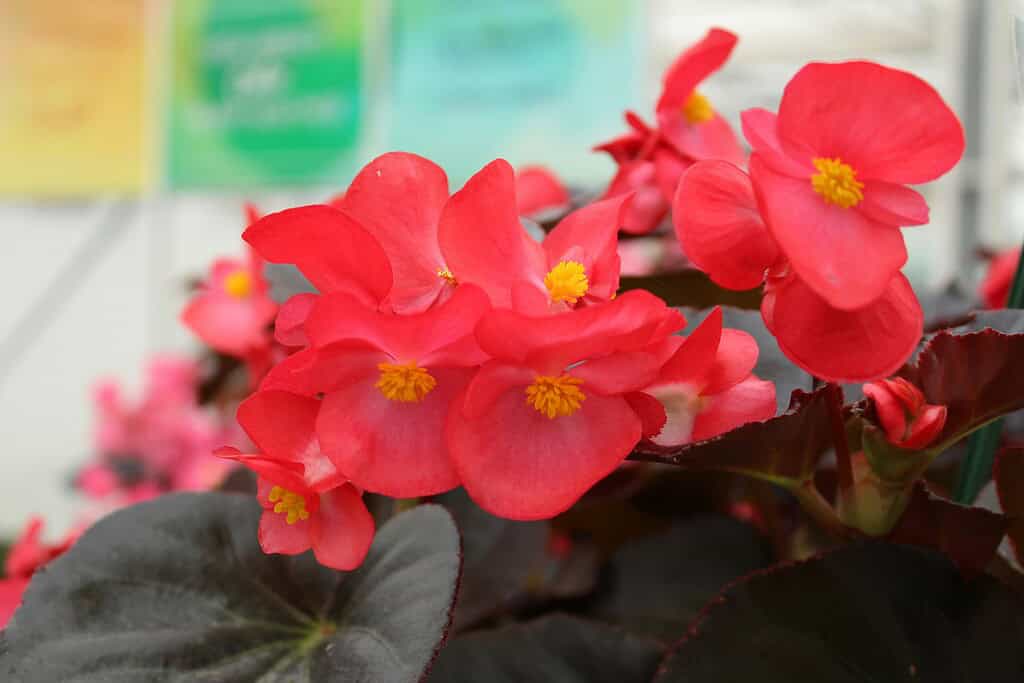
Wax begonias, like the Surefire® Red variety, are versatile, durable, and bloom non-stop from planting until frost. Their glossy leaves and compact form make them a good choice for tight spaces.
- Zones: Grown as annual
- Sunlight: Full sun to full shade
- Soil: Moist, well-drained
- Watering: Moderate; keep soil evenly moist
- Best for: Shade beds, containers, mixed planters
These begonias thrive in heat and humidity and are especially useful for spots with less sunlight where other flowers may struggle.
14. Impatiens (Impatiens walleriana)
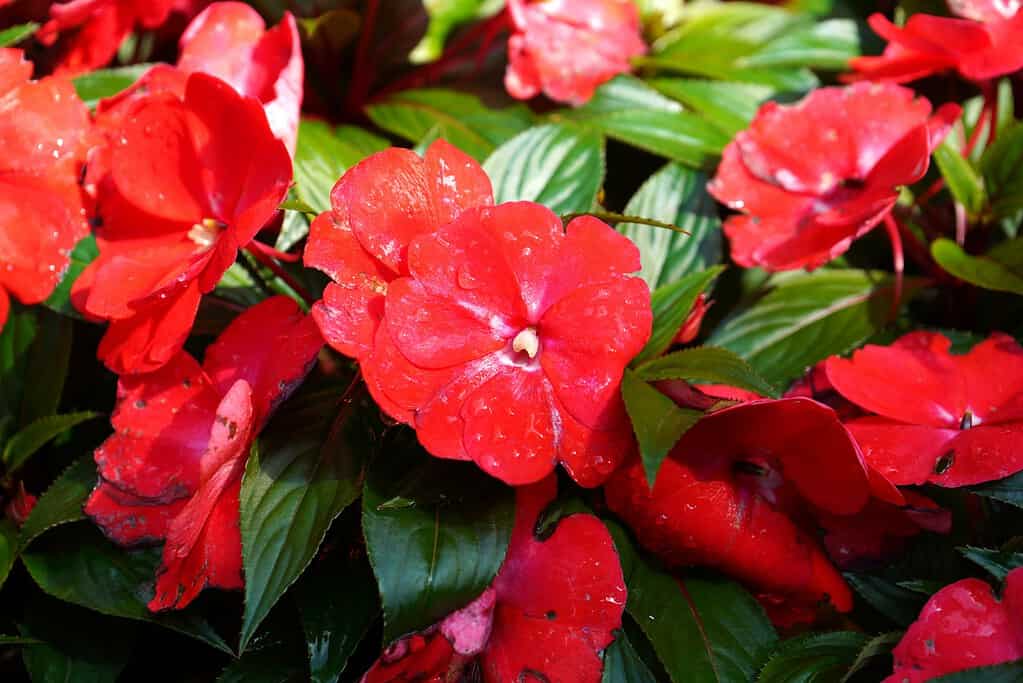
Known for thriving in shade, impatiens like Rockapulco® Red offer densely packed, double red blooms that brighten dim corners and understory areas.
- Zones: Grown as annual
- Sunlight: Part shade to full shade
- Soil: Moist, rich, well-drained
- Watering: Consistent; prefers evenly moist soil
- Best for: Shady beds, borders, container groupings
These are one of the few bright red flowers that thrive with limited sunlight and bloom continuously from spring through fall.
Read related post: 15 Best Perennials to Plant in Fall for Easy, Beautiful Spring Growth
15. Verbena (Verbena hybrid)
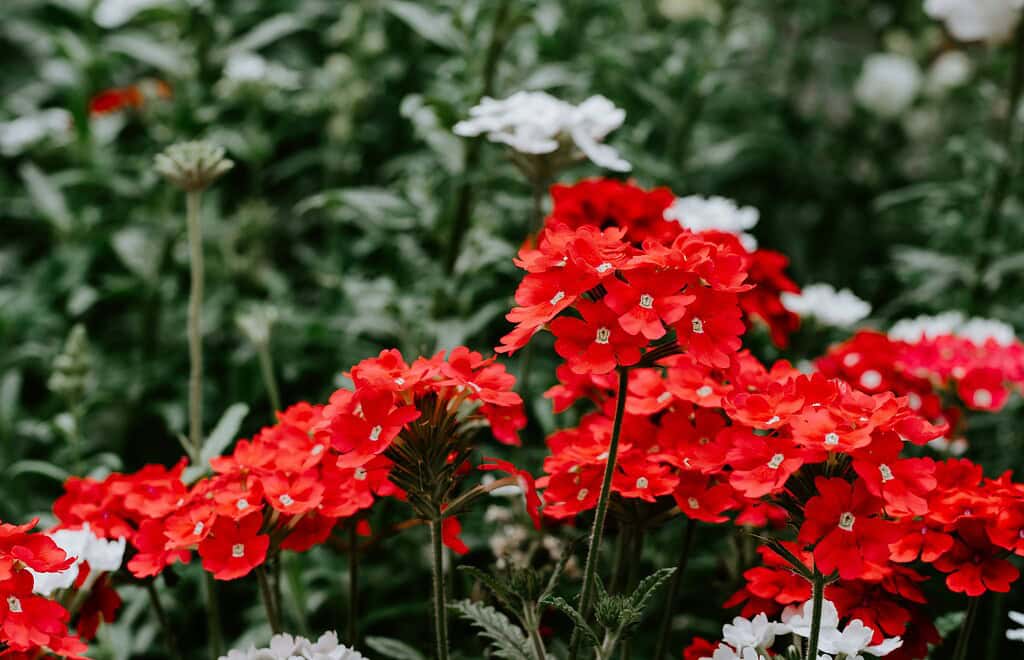
Superbena® Red verbena is a tough, trailing plant that delivers clusters of scarlet blooms from early summer to frost. It spreads quickly, making it excellent for filling gaps or spilling over containers.
- Zones: Grown as annual
- Sunlight: Full sun to part shade
- Soil: Well-drained
- Watering: Low to moderate; drought-tolerant
- Best for: Hanging baskets, groundcovers, containers
With minimal care, verbena blooms reliably and resists mildew, even in hot, dry conditions.
How to Choose the Right Red Flower for Your Garden
Selecting the right red flower depends on more than just color preference.
The best results come from matching each plant’s needs and growth habits to your specific environment and goals.
Here are the key factors to consider before deciding which red flowers to grow:
Know Your Hardiness Zone
Each flower has a preferred growing zone range, based on how well it tolerates winter temperatures.
- If you live in a colder area (Zones 3–5), look for hardy options like daylily, yarrow, coreopsis, or rose.
- In warmer zones, you have more flexibility, including tender plants like geraniums, petunias, and zinnias.
Check the USDA Hardiness Zone Map to identify your zone before planting.
Match Sunlight Requirements
Some red flowers thrive in full sun, while others do better in part shade or full shade.
- For full sun locations: zinnia, verbena, coneflower, blanket flower, and petunia are strong performers.
- For shady spots: choose impatiens, wax begonia, or bee balm (for part shade).
- If your garden has mixed conditions, consider flexible varieties like geranium and dianthus.
Consider Bloom Time and Longevity
Different plants bloom at different times and for different durations.
- For season-long color, go with continuous bloomers like petunia, verbena, rose, or wax begonia.
- For short bursts of color, daylilies and hardy hibiscus make dramatic statements even if they bloom for a shorter period.
Combining early, mid, and late-season bloomers can keep red flowers in your garden from spring through fall.
Decide Between Permanent and Seasonal Plants
- If you want a perennial that returns each year, pick flowers like coreopsis, bee balm, or coneflower.
- If you prefer instant impact and are okay replanting each year, annuals like geraniums, impatiens, and zinnias offer fast growth and heavy blooming.
Perennials require more planning but less annual maintenance, while annuals are great for quick results.
Plan Based on Purpose and Placement
- Want to attract pollinators? Go with yarrow, bee balm, or zinnia.
- Need flowers for cutting? Choose rose, zinnia, or coneflower.
- Filling containers or hanging baskets? Use petunia, verbena, or geranium.
- Looking for a low-maintenance option? Pick daylily, coreopsis, or blanket flower.
Think about how and where the plant will be used to make sure it serves its role in your space.
Do Red Flowers Attract Pollinators?
Many red flowers aren’t just visually striking – they also help support healthy pollinator populations.
Bees, butterflies, and hummingbirds all visit red blooms, depending on the flower’s shape, scent, and nectar content.
Red Flowers That Attract Pollinators
From the list, these flowers are especially valuable for attracting pollinators:
- Bee balm, zinnia, coneflower, and yarrow draw a wide variety of bees and butterflies.
- Bee balm and petunia are particularly attractive to hummingbirds.
- Blanket flower and verbena offer nectar over a long bloom season, supporting pollinators from summer into fall.
Red Blooms Appeal to Hummingbirds
Hummingbirds are naturally drawn to red and orange flowers due to their strong color vision, which helps them locate nectar-rich blooms from a distance.
Many red flowers have tubular shapes (like those of bee balm and petunia) that match the shape of a hummingbird’s beak, making nectar easy to access.
Designing a Pollinator-Friendly Garden With Red Flowers
- Group multiple plants of the same type to create strong visual cues for pollinators.
- Mix red flowers with native plants and other bloom colors to support a range of insects and birds.
- Plant in sunny areas where pollinators are most active.
- Avoid pesticides and choose varieties known for nectar production rather than only ornamental appeal.
Start Growing Red Flowers That Match Your Garden’s Needs
Red flowers can add depth, drama, and energy to any garden.
Whether you’re aiming for low-maintenance beds, pollinator-friendly borders, or eye-catching container displays, there’s a red flower that fits your goals, space, and climate.
From easy-care choices like geranium and daylily to long-bloomers like verbena and petunia, this list offers options that are not just beautiful but also practical.
Choose the varieties that align with your zone, sun exposure, and time commitment – and enjoy a season full of bold, unforgettable color.
Which red flowers are your favorites? Comment down below and share what’s growing in your garden.
FAQs
What red flowers are safe to grow around pets?
Some flowers, like zinnia and coreopsis, are generally considered non-toxic to pets. However, others (such as geraniums and roses) may cause mild reactions if ingested. Always check with reliable sources like the ASPCA for toxicity details before planting near pets.
Can I grow red flowers from seed instead of buying transplants?
Yes. Zinnia, coreopsis, and yarrow grow well from seed and are cost-effective for mass plantings. Direct sow after the last frost or start indoors a few weeks before planting time.
How do I keep red flowers from fading in strong sun?
Choose varieties known for strong color retention, like petunia, geranium, and blanket flower. Regular watering and avoiding midday sun exposure (where possible) can also reduce fading, especially in lighter red tones.
Do red flowers need different care than other flower colors?
Not specifically. Care requirements are based on the plant species, not flower color. However, dark red blooms can show sun damage or drying faster, so keep an eye on moisture levels in hotter climates.
Which red flowers work best in windy or exposed areas?
Blanket flower, yarrow, and coreopsis have sturdy stems and a low profile, making them ideal for breezy or open spaces. Avoid taller varieties like hibiscus in these conditions unless well-supported.
Ready To Transform Your Garden?

Are you looking for the best way to layout your garden beds? Maybe you're feeling a bit stuck on how to make the most of your space?
We’ve got you covered! Check out our 101+ Garden Bed Layout Ideas for your next raised bed project. This guide is filled with creative and practical ideas that can help you design a garden that fits your style, whether you’re just starting out or have been gardening for years.
Get your copy today and get inspired to bring your gardening dreams to life.