Indoor plants have become more than just decorative accents – they’re a lifestyle statement.
From cozy apartments to modern homes, greenery adds warmth, improves air quality, and instantly makes a space feel alive. But placing your plants directly on the floor or windowsill doesn’t always do them (or your décor) justice.
That’s where DIY plant stands come in.
Creating your own plant stand is a cost-effective, creative, and highly customizable way to elevate your plants – literally and stylistically.
Whether you love minimalist interiors, boho vibes, or rustic charm, there’s a DIY plant stand project that fits your space perfectly.
In this article, you’ll discover 10 stunning DIY plant stands that instantly elevate your space, along with design tips, material suggestions, and styling advice.
10 Stunning DIY Plant Stands That Instantly Elevate Your Space
Plants can instantly brighten up a room, but the right plant stand can take your greenery from “nice” to “wow.”
Building your own DIY plant stand is easier than you think, and it’s a fun way to add personality to your space.
From minimalist designs to rustic charm, these 10 DIY plant stands will help your plants shine while giving your home a stylish boost.
1. Minimalist Wooden Box Plant Stand
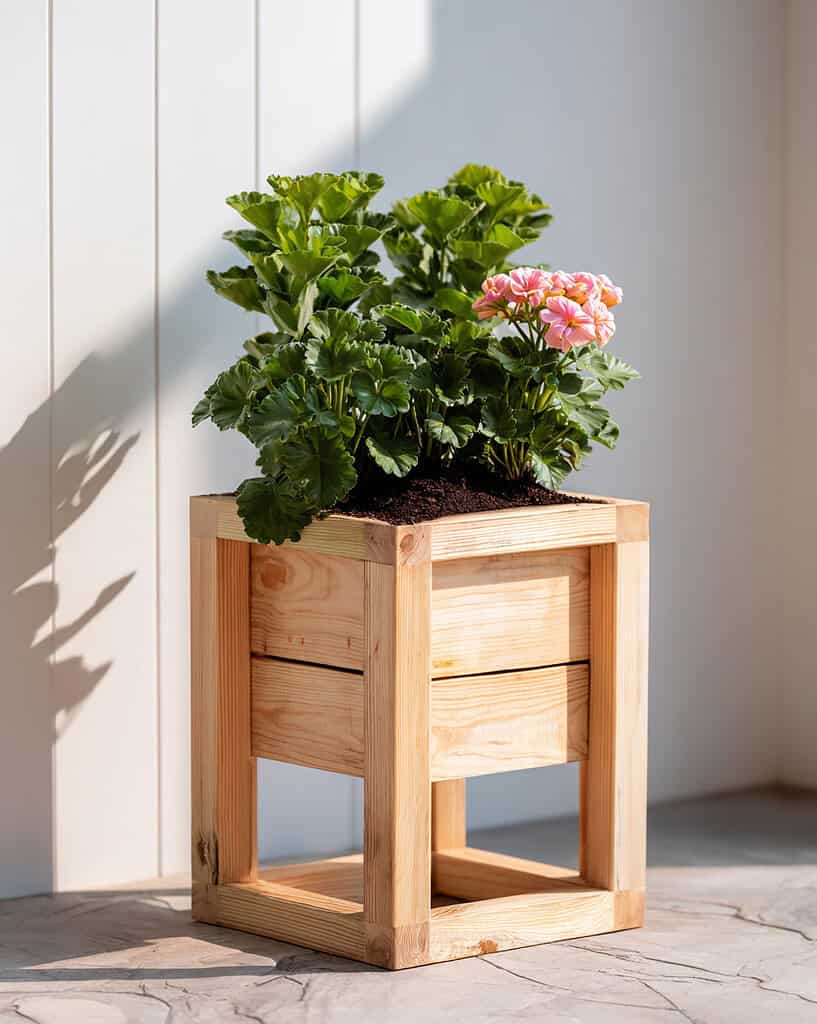
A wooden box plant stand is one of the simplest yet most versatile DIY options, making it ideal for beginners and seasoned DIYers alike.
Typically built from plywood, pine, or reclaimed wood, this cube-style stand provides a clean, structured base that instantly elevates your plant – both physically and visually.
This design works exceptionally well in minimalist, Scandinavian, and modern interiors where clean lines and natural materials take center stage.
You can customize the dimensions to fit specific planters, stack multiple boxes for a modular look, or even add hidden casters for mobility.
Finish it with a clear sealant, light stain, or matte paint to protect against moisture while maintaining a polished appearance.
You can customize the dimensions to fit specific planters, stack multiple boxes for a modular look, or even add hidden casters for mobility.
Pair it with a DIY self-watering planter to make plant care even easier, especially for indoor spaces.
2. Mid-Century Modern Hairpin Leg Stand
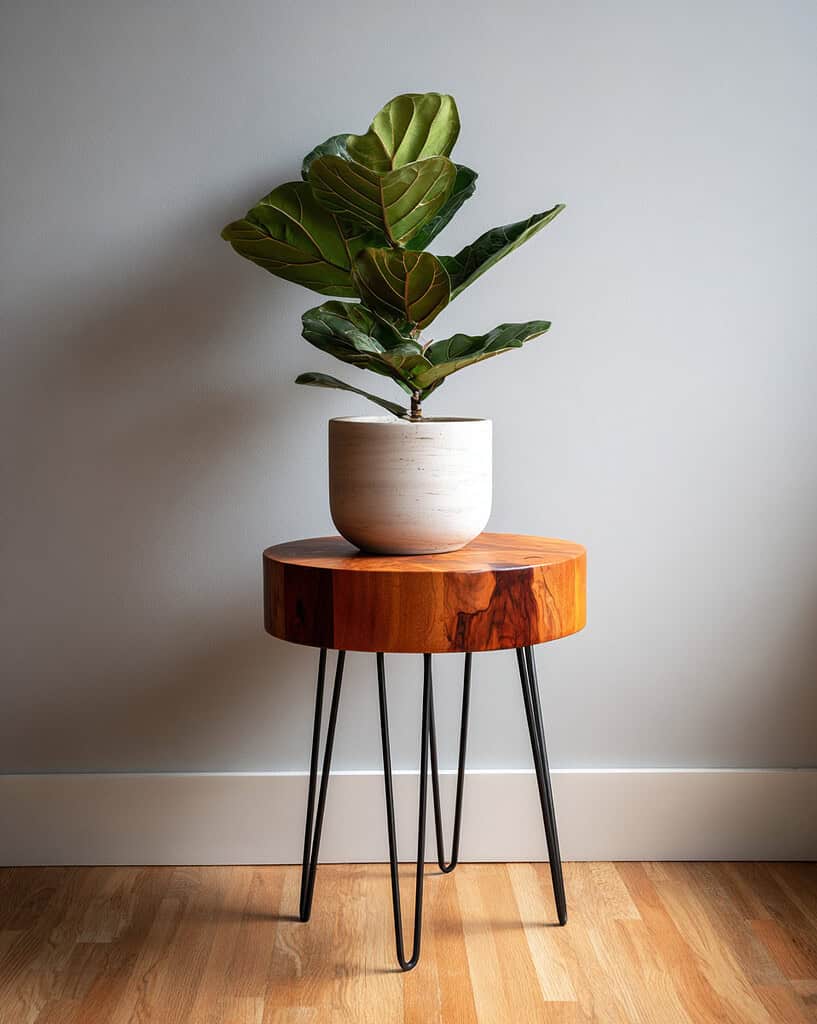
Inspired by classic mid-century modern furniture, this DIY plant stand pairs a solid wooden top with sleek metal hairpin legs.
The contrast between warm wood tones and thin metal legs creates a timeless aesthetic that works beautifully in living rooms, bedrooms, or home offices.
This style is particularly effective for showcasing statement plants such as fiddle leaf figs, monsteras, or rubber plants.
You can experiment with round, square, or hexagonal tabletops depending on your design preference.
For added durability, consider using hardwood or thick plywood and applying a water-resistant finish to prevent warping.
3. Tiered Ladder-Style Plant Stand
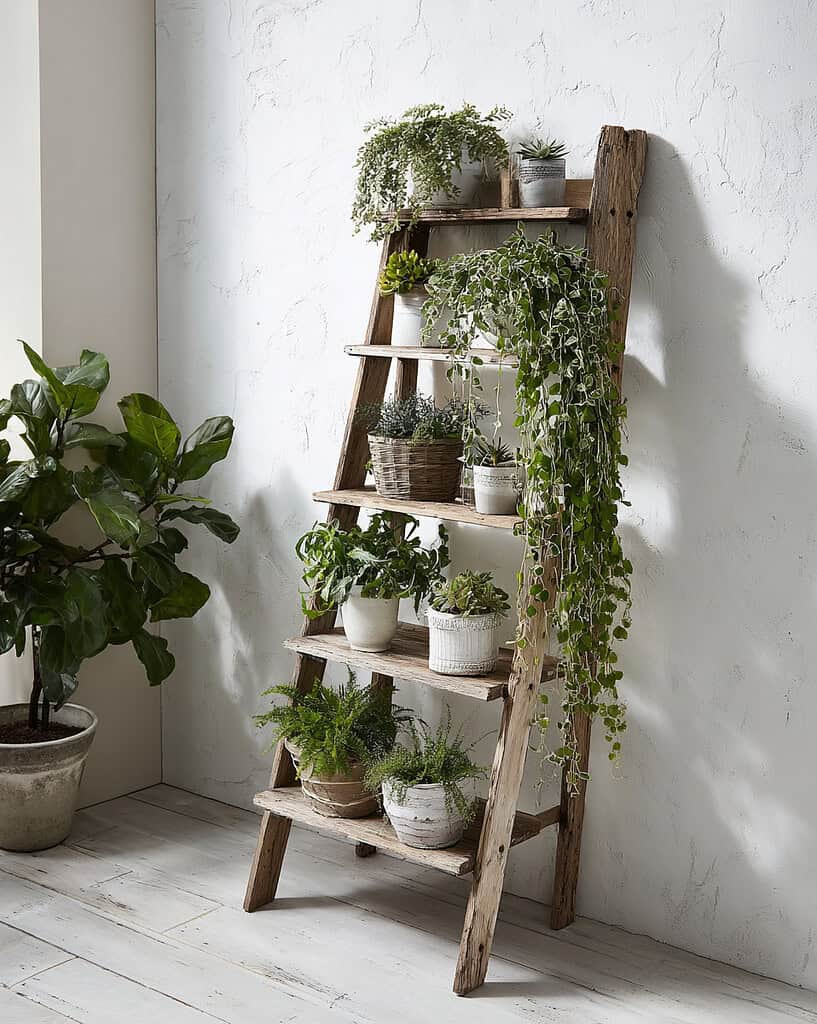
A tiered ladder-style plant stand is a smart and stylish solution for displaying multiple plants without taking up too much floor space.
Its vertical structure draws the eye upward, making rooms feel taller and more dynamic.
This design is perfect for small apartments, balconies, or corners that feel underutilized. You can use reclaimed wood for a rustic look or painted lumber for a more modern aesthetic.
Ladder stands are especially well-suited for a mix of trailing, medium, and small plants, allowing each one to receive adequate light while creating a layered, curated display.
This design is perfect for small apartments, balconies, or corners that feel underutilized. For additional tips on making the most of compact spaces, see our post on how to design a small garden.
4. Concrete and Wood Hybrid Stand
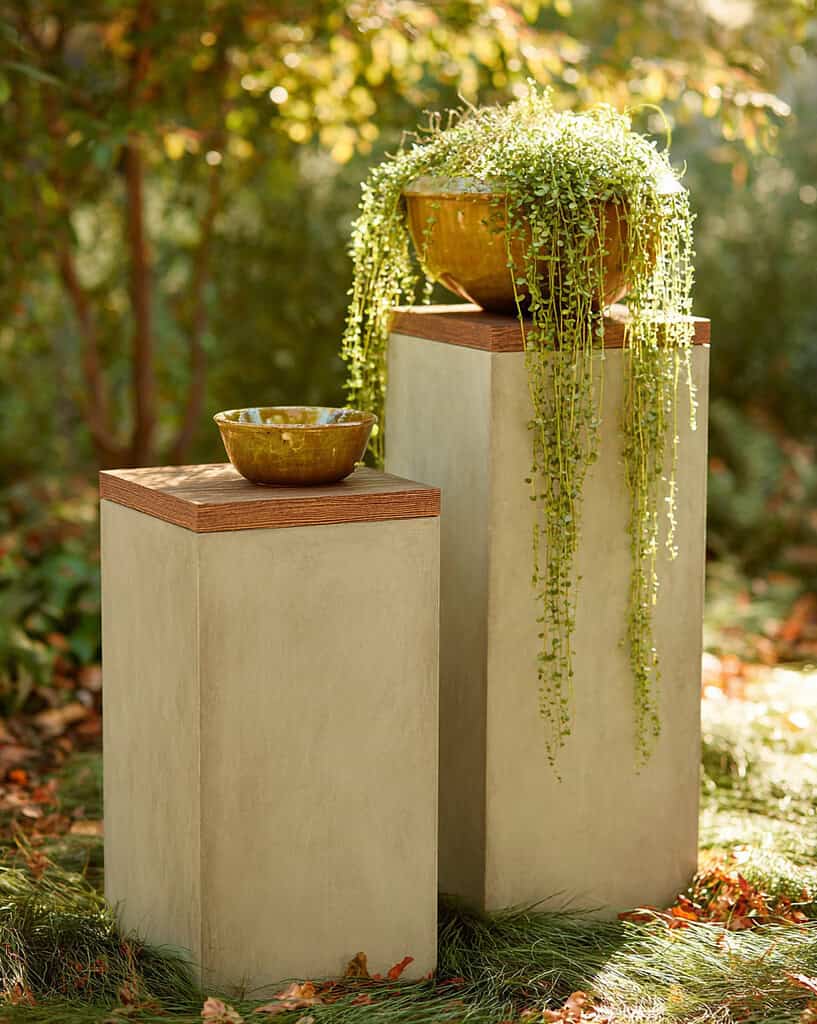
Concrete and wood hybrid plant stands offer a bold, contemporary look that blends industrial strength with natural warmth.
Typically featuring a concrete base and a wooden platform or column, these stands are incredibly sturdy and ideal for heavier planters.
They work best in modern homes, loft apartments, or spaces with industrial accents like exposed brick or metal fixtures.
While concrete may seem intimidating, many DIYers use quick-setting concrete mixes and simple molds to achieve professional-looking results.
Sealing both the concrete and wood components is essential for longevity and easy maintenance.
5. Hanging Macramé Plant Stand
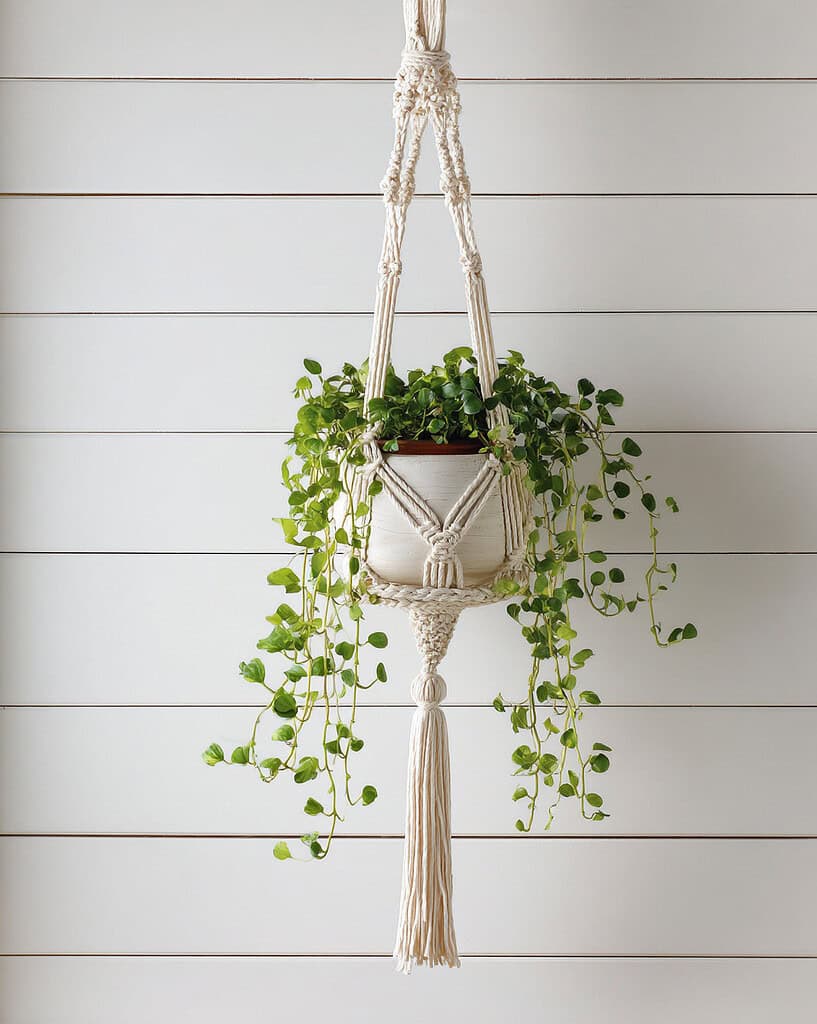
Hanging macramé plant stands are a favorite among plant enthusiasts who love bohemian, eclectic, or coastal décor styles.
Made using cotton cord or rope, macramé holders add texture, softness, and visual interest without occupying valuable floor space.
These stands are ideal for trailing plants such as pothos, string of pearls, or philodendrons. They’re also one of the most budget-friendly DIY plant stand options, requiring minimal tools and materials.
Whether hung from ceilings, wall hooks, or curtain rods, macramé plant stands help create a relaxed, airy atmosphere.
You might also like our tips on how to water plants indoors to keep your trailing greenery thriving.
6. Repurposed Stool or Side Table Stand
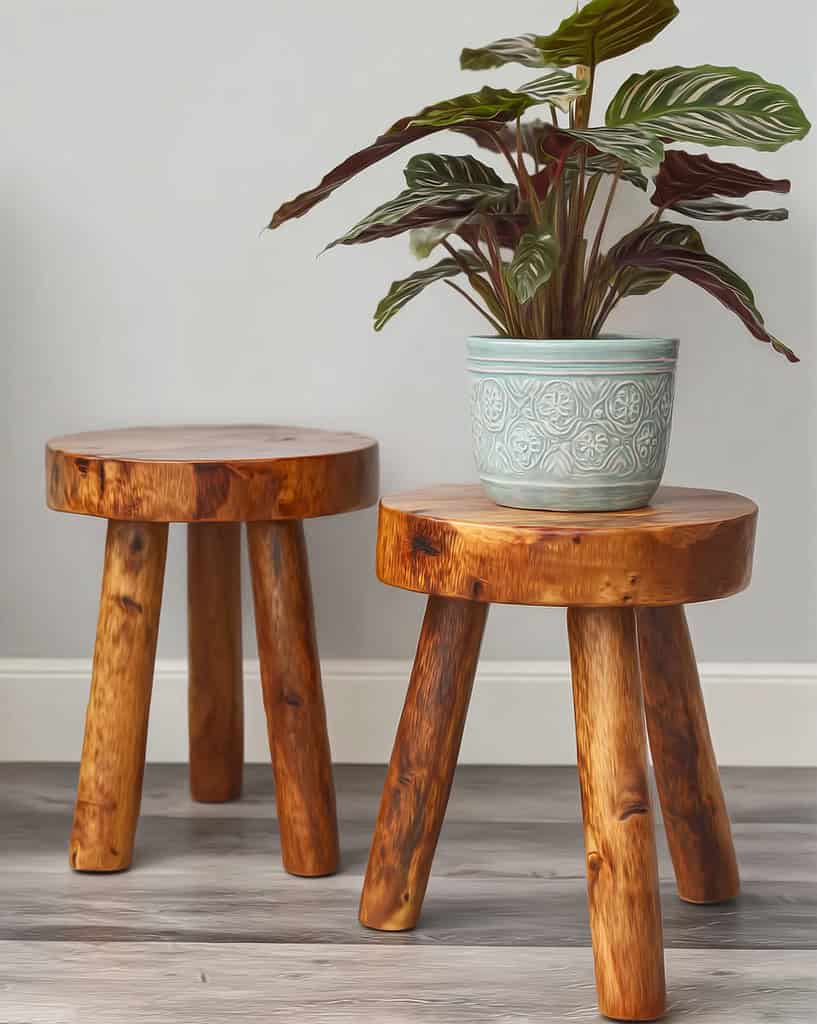
Turning an old stool or side table into a plant stand is a creative way to upcycle furniture while adding character to your space.
This approach is perfect for those who enjoy vintage, rustic, or farmhouse-style interiors.
You can leave the piece as-is for a weathered, lived-in look or give it new life with sanding, paint, or stain.
Repurposed furniture stands are especially great for highlighting a single plant as a focal point, such as placing one next to a sofa, entryway, or reading chair.
7. Copper Pipe Plant Stand
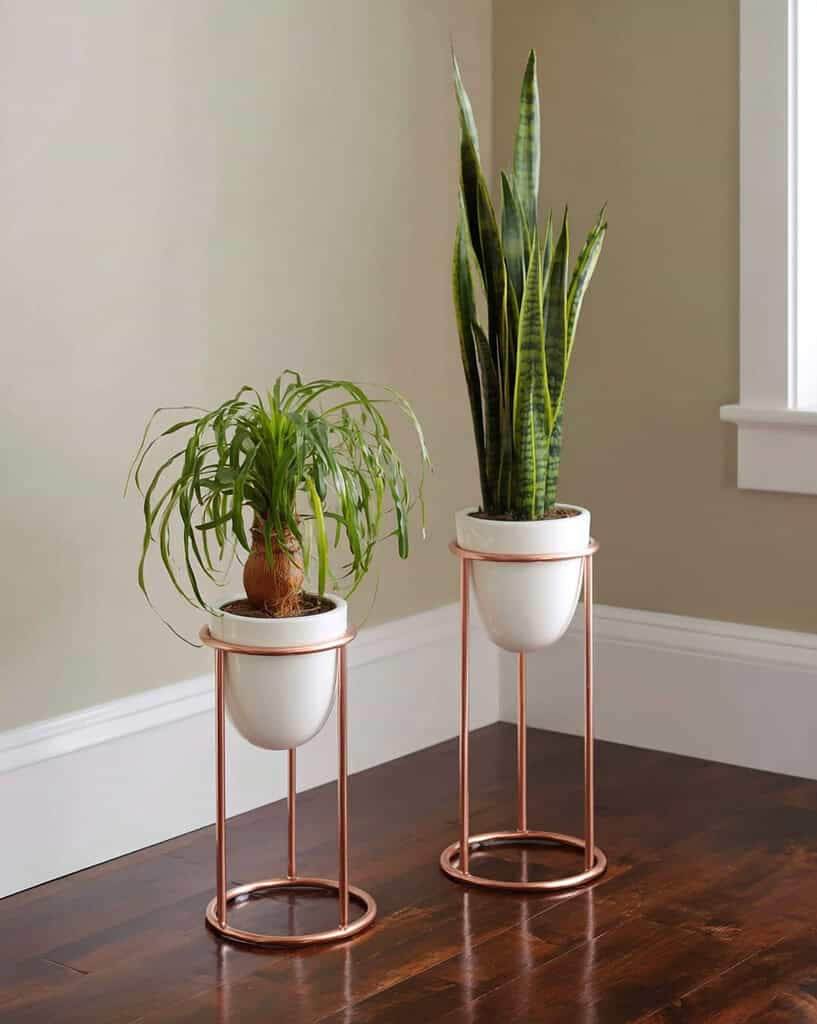
Copper pipe plant stands offer a unique blend of modern elegance and industrial charm.
Using standard plumbing pipes and connectors, you can create custom frames in various shapes and heights.
Copper is naturally resistant to moisture, making it a practical choice for indoor plant displays (see here our list of best indoor plants).
Over time, it develops a patina that adds depth and character, though it can also be polished to maintain a shiny finish.
These stands pair beautifully with neutral pots and lush green foliage, creating a striking visual contrast.
8. Floating Wall-Mounted Plant Stand
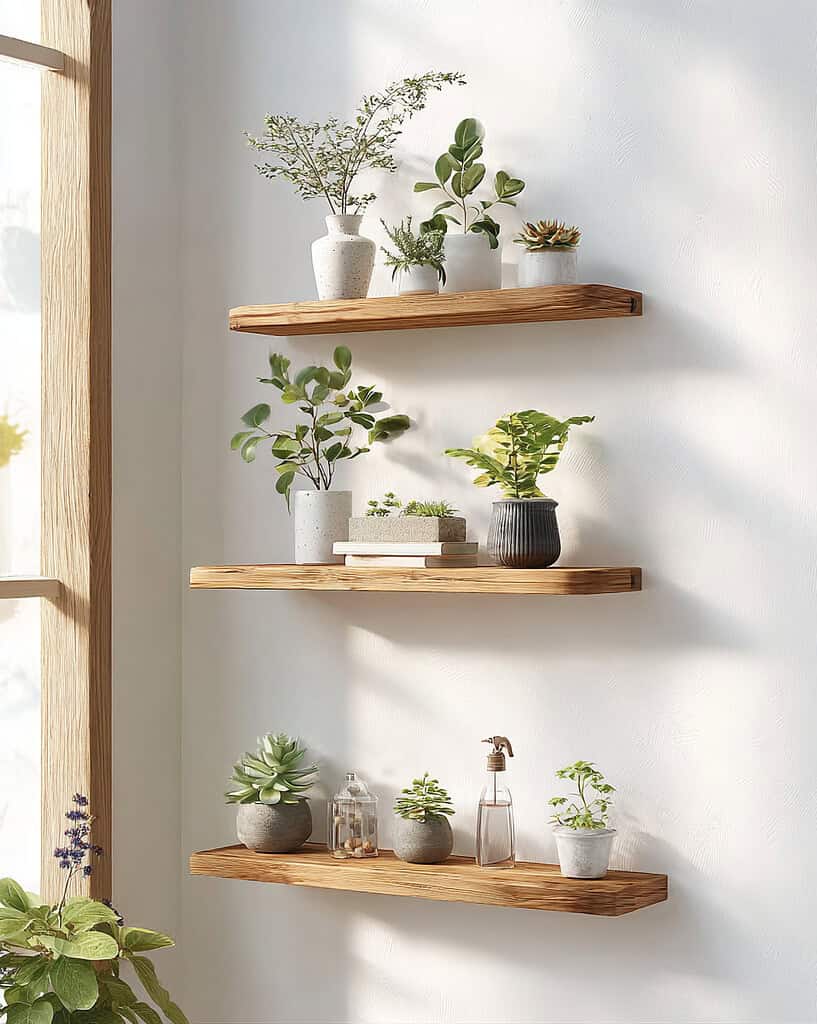
Floating wall-mounted plant stands are ideal for homes where floor space is limited but wall space is abundant.
These stands can range from simple floating shelves to custom brackets designed specifically for planters.
They’re especially useful in kitchens, bathrooms, and home offices, where plants can soften hard surfaces and improve ambiance.
Proper installation is crucial – always use wall anchors or studs to ensure the stand can safely support the plant’s weight. When styled thoughtfully, wall-mounted stands can double as living wall art.
9. Rustic Crate Stack Plant Stand
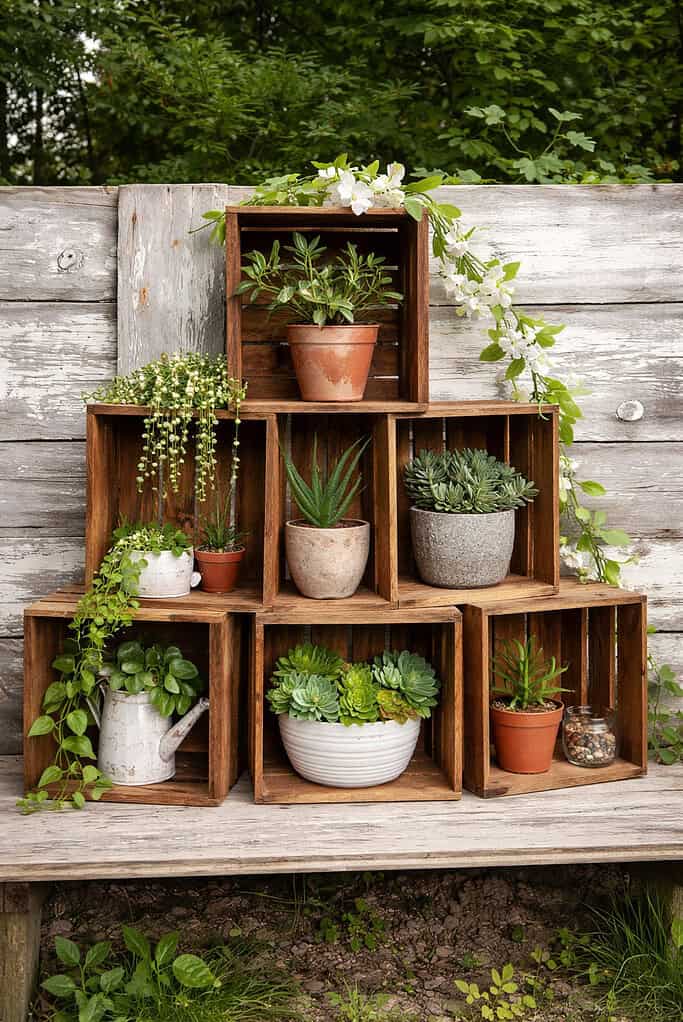
Rustic crate stack plant stands bring warmth and charm to any space, particularly those with farmhouse or cottage-style décor.
Wooden crates can be stacked vertically or arranged asymmetrically to create a dynamic plant display.
This DIY project is highly customizable – you can stain crates for a cohesive look, leave them unfinished for a vintage feel, or add wheels for easy rearrangement.
Crate stands work well for a mix of plants and decorative objects, making them both functional and visually engaging.
10. Geometric Metal Frame Stand
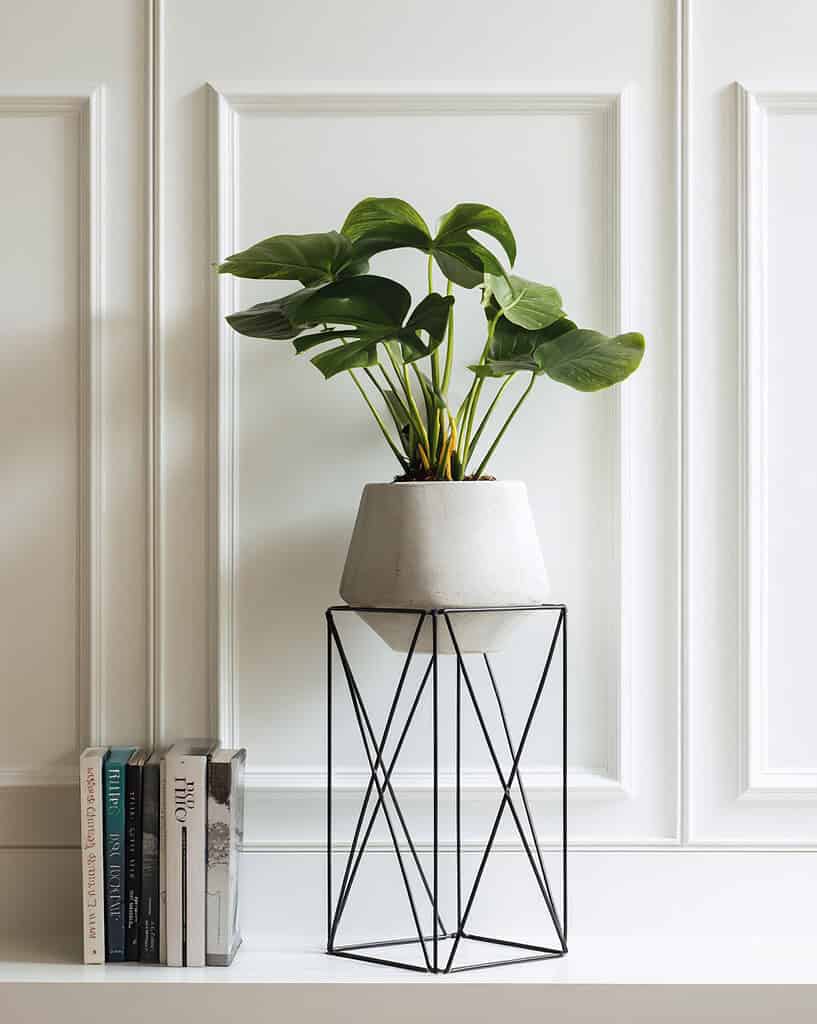
Geometric metal frame plant stands are perfect for those who love bold, architectural design.
Often made from metal rods, rebar, or welded frames, these stands act as sculptural elements within a room.
Their clean lines and strong structure make them ideal for modern, minimalist, or contemporary interiors.
While they may require more advanced tools or skills, the end result is a durable, eye-catching stand that elevates both the plant and the overall design of the space.
Garden Planner
The 22-page planner timed to your county's real frost dates. Planting windows, monthly checklists, and a harvest log you'll fill with pride by August.
Your Free 22-Page Garden Planner
Built for your exact ZIP code — planting dates, harvest log, and a month-by-month plan. 15-second sign-up.
How to Choose the Right DIY Plant Stand for Your Space
Before starting your DIY project, consider your space, plant size, and overall interior style. A large plant may need a sturdy base, while smaller plants benefit from vertical or hanging designs.
Key factors to consider:
- Weight capacity
- Available floor or wall space
- Exposure to sunlight and moisture
Matching your plant stand to your décor ensures a cohesive and intentional look.
Best Materials for Long-Lasting DIY Plant Stands
Choosing the right materials can significantly extend the life of your plant stand. Wood, metal, and concrete are popular choices, but each has its pros and cons.
Material comparison:
- Wood: Warm, customizable, but needs sealing
- Metal: Durable and modern, may rust if untreated
- Concrete: Extremely sturdy, heavier and less portable
Always seal or treat materials to protect against water damage.
For healthier, more resilient plants to display on your stands, check out our must-know organic gardening tips to boost soil, growth, and overall plant health naturally.
Miss it by a week and you lose the crop. The free 22-page planner pins down your exact dates — last frost, first frost, and the weekly steps between — so you plant on the days that actually work for your ZIP.
Styling Tips to Elevate Your Plant Stand Display
A plant stand is more than a functional item – it’s a design feature. Pairing the right plant with the right stand enhances the overall aesthetic.
Pro styling tips:
- Vary plant heights for visual interest
- Use decorative pots that complement your stand
- Group plants in odd numbers for a balanced look
Adding lighting nearby can further highlight your plant display.
How Hard Is It to Garden in Your County?
Every county has a unique Gardening Difficulty Score based on frost risk, soil quality, drought, altitude, and climate trends. Find yours — plus personalized frost dates, planting calendars, and soil data.
Check Your County's Score →Start Building Your DIY Plant Stand Today
DIY plant stands are an easy and rewarding way to elevate your space while showcasing your love for plants.
Whether you prefer modern, rustic, or bohemian styles, there’s a design that fits your home and skill level.
By choosing the right materials, following smart design principles, and adding your personal touch, you can create a plant stand that’s both functional and visually stunning.
Which DIY plant stand idea inspired you the most? Share your thoughts, tips, or questions in the comments below – we’d love to hear from you!
Best gardening planner I've used in 10 years — and I keep coming back to it every season.
FAQs
Are DIY plant stands safe for heavy plants?
Yes, as long as you choose sturdy materials and ensure proper construction. Always test weight capacity before placing heavy planters.
What tools do I need to make a basic DIY plant stand?
Most projects require basic tools such as a drill, screws, measuring tape, and a saw. Some designs may require additional tools depending on complexity.
Can I use DIY plant stands outdoors?
Yes, but you should use weather-resistant materials like treated wood, metal, or concrete, and apply protective sealants.
How tall should a plant stand be?
The ideal height depends on your space and plant type. Most indoor plant stands range from 12 to 36 inches tall.
How do I protect my floors from water damage?
Use saucers, trays, or waterproof liners under your pots to prevent excess water from damaging floors or stands.
Level Up Your Garden
Our most popular gardening guides