
Feeding birds is one of the simplest ways to support local wildlife and enjoy more nature right from your yard.
Whether you’re hoping to attract colorful songbirds, give kids a hands-on outdoor project, or just make something useful out of materials you already have, making your own bird feeder is a great place to start.
In this article, I'll feature ten creative, low-cost designs that use items like mason jars, pinecones, plastic bottles, and fruit.
These feeders are easy to build, safe for birds, and effective in all seasons!
Why Make Your Own Bird Feeder?
Making your own bird feeder is an easy way to turn everyday materials into something useful.
It costs less than buying one, and in many cases, you can make it for free using items you already have at home.
From old mugs to fruit scraps and plastic containers, many common things can be repurposed into feeders with just a few simple tools.
DIY feeders are also more flexible. You can adjust the size, shape, and placement based on the birds in your area or the space available in your yard.
If you want to attract specific types of birds, you can choose the right food and design to suit their habits.
These projects also make great activities for kids and families.
They’re simple enough for beginners and offer a chance to learn about local bird species, seasons, and how small efforts can support wildlife.
And since most feeders use recycled or natural materials, they help reduce waste and support a more sustainable backyard.
For even more ways to care for your backyard birds and poultry, try our homemade chicken feed recipe for a natural, budget-friendly option your feathered friends will love.
10 Creative DIY Bird Feeders You Can Make at Home Today
You don’t need to buy expensive equipment to enjoy birdwatching in your own backyard. These ten DIY bird feeder ideas use simple materials – many of which you probably already have at home.
Each one is easy to make, budget-friendly, and designed to attract a variety of wild birds.
Whether you're looking for a fast project, a kid-friendly craft, or something that blends naturally into your garden, there's an idea here for you.
1. Mason Jar Bird Feeder

Materials Needed:
- Mason jar (pint or quart size)
- Chicken feeder base or shallow tray
- Twine or wire for hanging
- Optional: decorative wire for wrapping or securing
Estimated Time & Difficulty: Under 10 minutes | Very easy
Best Season to Use: All year
Birds Attracted: Finches, sparrows, wrens, chickadees
How to Make It:
Screw a chicken feeder base onto a mason jar or place the jar upside-down in a shallow tray. Wrap the jar securely with wire or twine to create a hanger.
Make sure the seed flows freely from the jar into the base or tray, and hang it from a branch or hook where birds can easily access it.
Tips:
- Choose a clear jar so you can easily see when it needs refilling.
- Add small drainage holes if using a tray, to prevent water buildup.
- Secure the jar tightly to avoid tipping in wind or when birds land.
2. Pinecone Bird Feeder

Materials Needed:
- Large pinecone
- Peanut butter or nut butter (unsalted, no xylitol)
- Bird seed
- String or twine for hanging
- Optional: plate or paper for rolling the seed
Estimated Time & Difficulty: 10–15 minutes | Very easy
Best Season to Use: Winter
Birds Attracted: Chickadees, titmice, woodpeckers, nuthatches, warblers
How to Make It:
Tie string securely around the top of the pinecone for hanging. Spread peanut butter or nut butter deep into the open spaces of the pinecone using a spoon or butter knife.
Roll or press the coated pinecone into bird seed until it’s well covered.
Hang the finished feeder from a branch, preferably near tree cover, where birds feel safe.
Tips:
- Use a plate or tray under the pinecone when applying seed to reduce mess.
- Refrigerate the feeder for a few minutes if the butter is too soft.
- Reapply nut butter and seeds as needed to keep it stocked during the season.
If you’re interested in starting a small farm, check out our guide on raising turkeys for meat to get practical tips and advice.
3. Upcycled Milk Jug Feeder
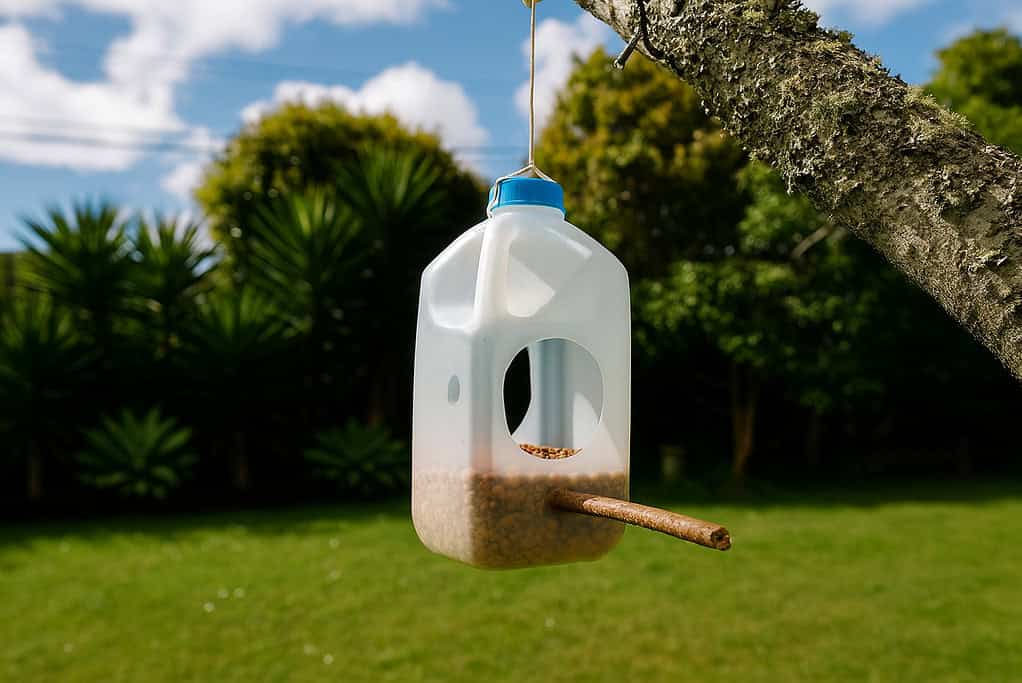
Materials Needed:
- Clean, empty plastic milk jug (1 or 2 liter)
- Scissors or utility knife
- Twine or string for hanging
- Bird seed
- Optional: sticks, leaves, chalk pens, or paint for decoration or camouflage
Estimated Time & Difficulty: 15–20 minutes | Easy
Best Season to Use: All year
Birds Attracted: Sparrows, finches, cardinals, chickadees
How to Make It:
Cut one or two large openings on the sides of the milk jug to create access points for birds. Leave the bottom portion intact to hold the seed.
Poke a few small holes in the bottom for drainage. Tie string or twine around the jug’s handle or through the cap to create a hanger.
You can glue or insert small sticks below the openings to create natural perches, or decorate the outside with chalk markers or paint for a more colorful look.
Tips:
- Avoid sharp edges where you cut the openings – smooth them with sandpaper or by folding back with tape.
- Hang in partial shade to prevent overheating the seed inside.
- Use found materials like sticks and leaves to help the feeder blend into its surroundings.
4. Coffee Mug Suet Feeder
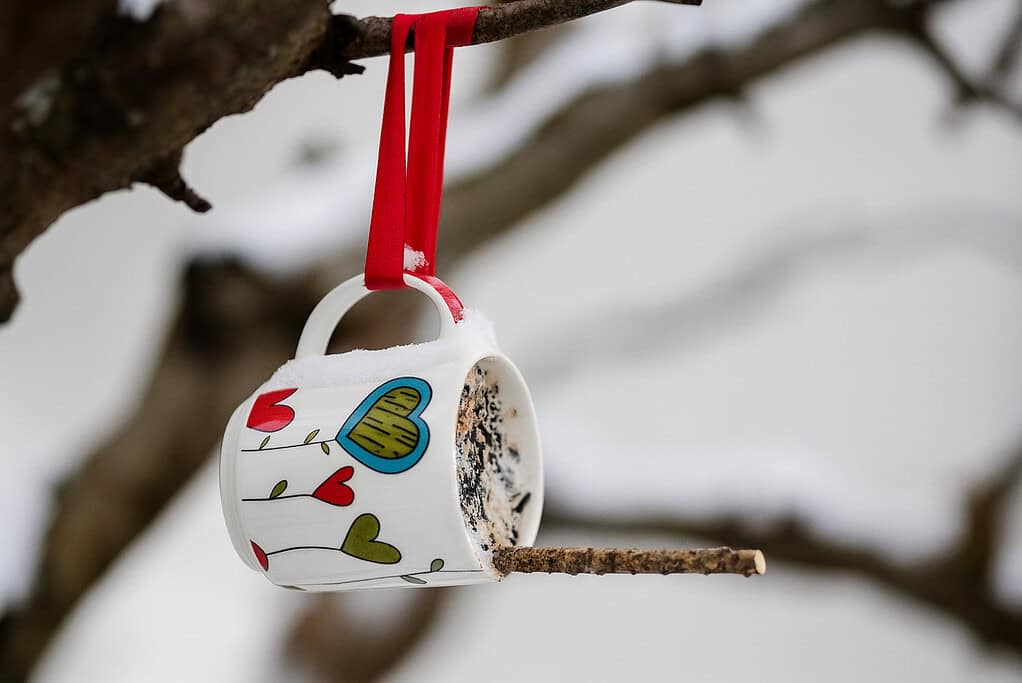
Materials Needed:
- Unused ceramic coffee mug
- Suet or nut butter mixed with cornmeal (for warm weather)
- Bird seed
- Small stick or twig for perch
- Twine or wire for hanging
Estimated Time & Difficulty: 15–20 minutes | Easy
Best Season to Use: Winter (or cooler months)
Birds Attracted: Woodpeckers, chickadees, nuthatches, starlings, jays
How to Make It:
Fill the mug with a suet and seed mixture, pressing it in firmly so it holds together. Insert a small stick or twig into the mixture near the opening to act as a perch.
Wrap twine or wire around the handle to hang the mug sideways, with the opening facing slightly upward so the contents stay in place.
If you’re making this feeder in warmer months, substitute the suet with nut butter mixed with cornmeal to avoid melting or spoilage.
Tips:
- Choose a heavy ceramic mug to prevent tipping in the wind.
- Avoid using suet during hot weather, as it can melt and harm birds’ feathers.
- Refill the mug as needed and clean thoroughly between uses.
Want to improve your chickens’ digestion? Check out our guide on how to ferment chicken feed.
5. Orange Bowl Hanger
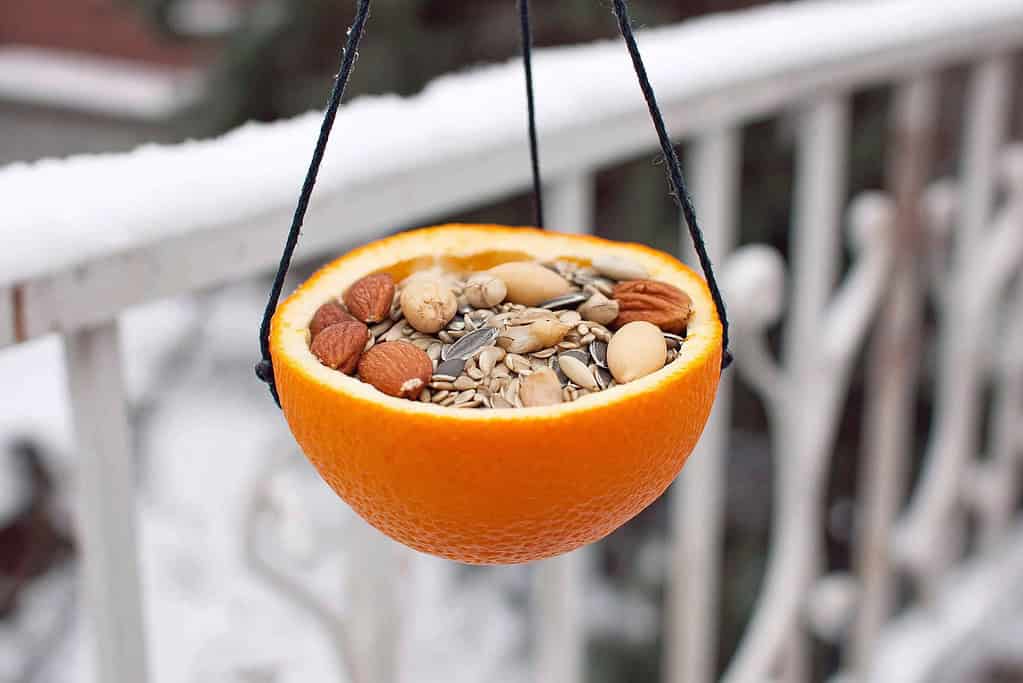
Materials Needed:
- One large orange (cut in half)
- Bird seed
- String or twine for hanging
- Optional: cranberries, small berries, nut butter
Estimated Time & Difficulty: 10 minutes | Very easy
Best Season to Use: Winter, early spring
Birds Attracted: Finches, sparrows, titmice, chickadees
How to Make It:
Slice the orange in half and scoop out the pulp to create a bowl-shaped shell. Poke three or four evenly spaced holes near the edge and thread string or twine through them to create a hanger.
Fill the orange bowl with bird seed and hang it from a tree branch.
For a variation, press cranberries or small berries into the outer rind or coat the inside with a thin layer of nut butter before adding seed for extra winter energy.
Tips:
- Hang close to branches so birds can perch nearby.
- Use fresh, firm oranges so the bowl holds its shape.
- Replace the orange every few days to prevent spoilage or mold.
6. Plastic Bottle Feeder with Wooden Spoon Perches

Materials Needed:
- Clean, empty plastic water or soda bottle (16 oz to 2 liter)
- Two wooden spoons
- Bird seed
- Utility knife or sharp scissors
- String or twine for hanging
Estimated Time & Difficulty:
15–20 minutes | Easy
Best Season to Use: All year
Birds Attracted: Finches, sparrows, nuthatches, chickadees
How to Make It:
Using a knife or scissors, cut small holes in the sides of the bottle to insert wooden spoons – one near the bottom, the other a few inches above.
Make each hole large enough for the spoon handle to go through, and slightly widen the hole above each spoon bowl so seed can trickle out.
Fill the bottle with bird seed and screw the cap back on. Tie string around the neck of the bottle to hang it vertically from a branch or hook.
Tips:
- Make sure the spoon bowls are level to hold falling seed properly.
- Use a clear bottle so you can see when it needs refilling.
- Cut small drainage holes at the bottom to prevent moisture buildup.
7. Apple Feeder (Core or Studded)

Materials Needed:
- Whole apple (firm, any variety)
- Bird seed (black oil sunflower seeds work best)
- Nut butter (optional, for added stickiness)
- Twine or string for hanging
- Knife or corer
Estimated Time & Difficulty: 10–15 minutes | Very easy
Best Season to Use: Fall and winter
Birds Attracted: Cardinals, finches, chickadees, titmice
How to Make It:
here are two simple methods for this feeder:
Cored Method: Slice the apple in half and scoop out the core. Fill the center with nut butter and press bird seed into it. Add string through the top to hang it.
Studded Method: Keep the apple whole and use a knife or skewer to poke small holes around the surface. Press individual seeds into each hole.
Tie string around the stem or skewer a hole through the top for hanging.
Tips:
- Use black oil sunflower seeds to attract the widest variety of birds.
- Choose firm apples so they hold their shape longer outdoors.
- Replace every few days to avoid spoilage or pests.
8. Popsicle Stick Bird Feeder
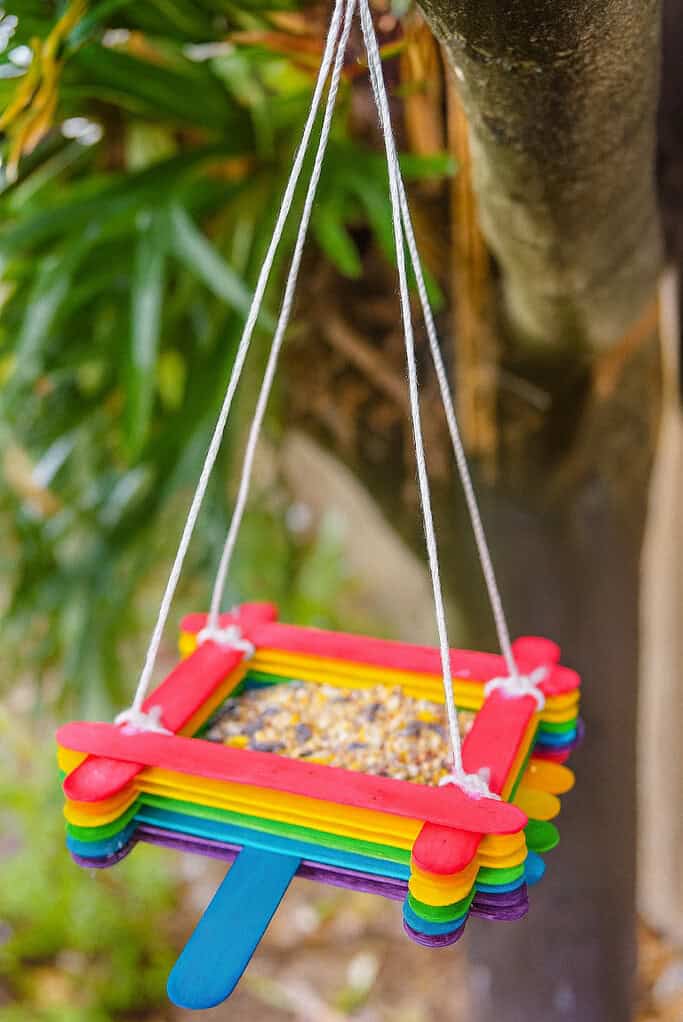
Materials Needed:
- Popsicle sticks (clean and unused)
- Non-toxic glue or hot glue gun
- String or twine for hanging
- Bird seed
- Optional: non-toxic paint or markers for decoration
Estimated Time & Difficulty: 20–30 minutes | Easy (kid-friendly)
Best Season to Use: All year
Birds Attracted: Finches, sparrows, chickadees
How to Make It:
Start by gluing popsicle sticks in a square base shape. Stack and glue additional sticks around the edges, layering them in alternating directions (like a log cabin) to create walls.
Leave the top open and build up the sides to hold a shallow amount of seed.
Attach string or twine to opposite corners for hanging, or place it on a flat surface like a windowsill or railing.
Tips:
- Use non-toxic paint if decorating the sticks.
- Let glue dry completely before adding seed.
- A great supervised craft for kids or classrooms.
New to backyard birds? Start with our simple guide to raising quails for easy tips.
9. Scrap Wood Feeder (Budget Build)
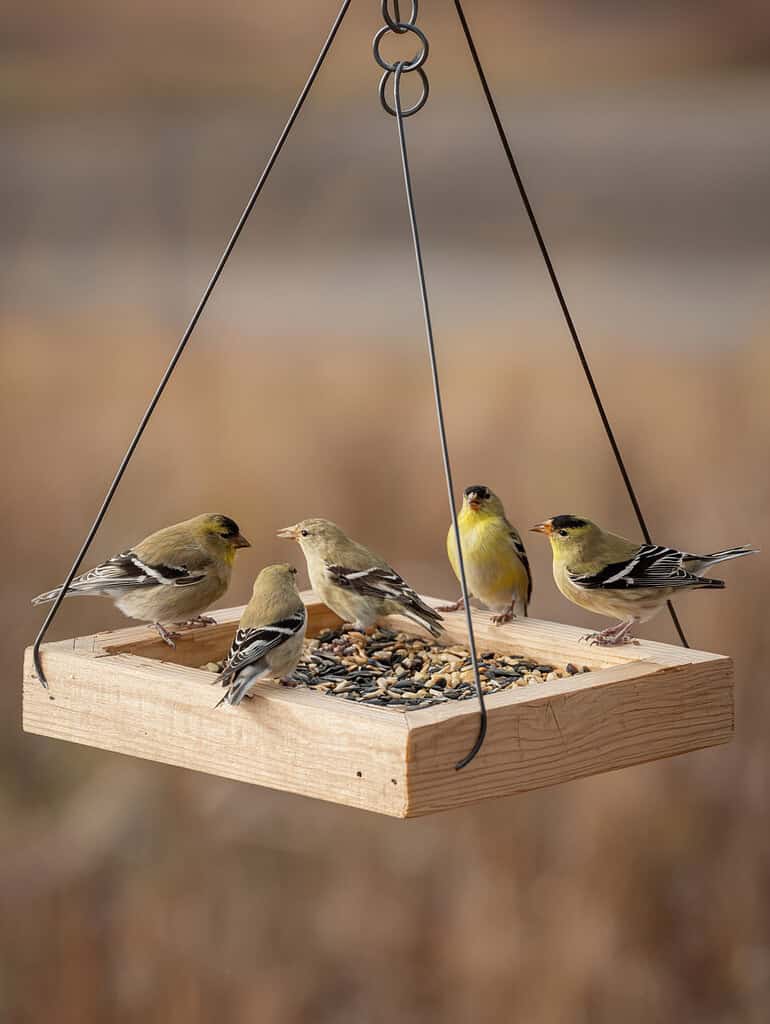
Materials Needed:
- Scrap wood pieces (untreated)
- Wood glue or nails/screws
- Saw and drill (if cutting or assembling)
- Bird seed
- Optional: non-toxic paint, twine for hanging
Estimated Time & Difficulty: 20–60 minutes | Moderate (basic tools required)
Best Season to Use: All year
Birds Attracted: Sparrows, cardinals, finches, jays, doves
How to Make It:
Use leftover or reclaimed wood to build a simple tray-style or box-style feeder. Cut a flat base and attach small side walls to keep seed from spilling.
Add drainage holes to prevent water buildup. You can hang it with sturdy twine or mount it to a post or railing.
Painting is optional – if you do, use outdoor-safe, non-toxic paint. This feeder is durable and refillable, making it a practical option for regular feeding.
Tips:
- Avoid pressure-treated or painted scrap wood that may contain harmful chemicals.
- Sand rough edges to prevent splinters.
- Use what you have – even a few boards nailed together can do the job.
10. Birdseed Ice Ornaments / Frozen Feeders
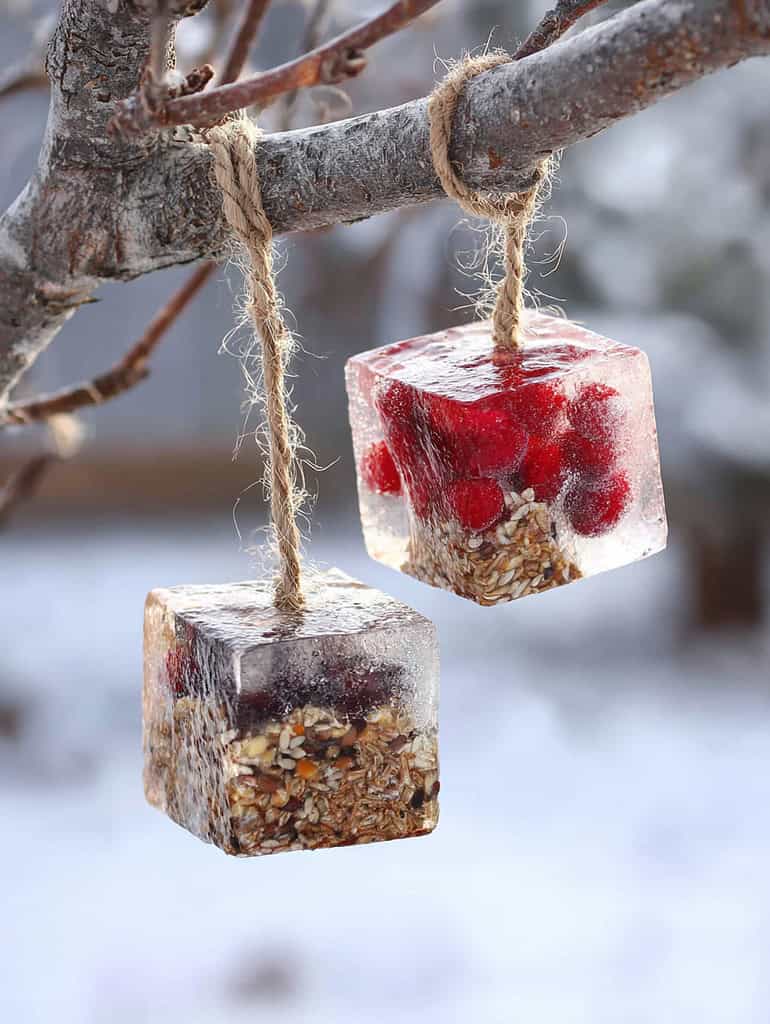
Materials Needed:
- Bird seed
- Water
- String or twine
- Ice cube trays, silicone molds, or shallow containers
- Optional: cranberries, small berries, chopped nuts
Estimated Time & Difficulty: 10 minutes prep + freezing time | Very easy
Best Season to Use: Winter (freezing temperatures required)
Birds Attracted: Finches, chickadees, sparrows, cardinals, titmice
How to Make It:
Mix bird seed with water and pour into molds or trays. Add cranberries or chopped nuts for extra color and nutrition.
Place a loop of string into each mold before freezing so you can hang the ornaments later. Freeze until solid, then remove from the molds and hang from branches or hooks outside.
As temperatures fluctuate, the ice slowly melts, exposing more food to visiting birds.
Tips:
- Works best during consistently cold weather to prevent early melting.
- Use natural fiber twine (avoid plastic) to hang.
- Try different mold shapes for visual interest – hearts, stars, or circles.
Tips for Success with DIY Bird Feeders
To make the most of your homemade bird feeders and keep visiting birds safe and well-fed, keep these key tips in mind:
Use Safe, Bird-Friendly Materials
Always avoid using treated wood, toxic paints, or adhesives that could harm birds. Choose untreated wood, natural fibers, and non-toxic glues or paints when decorating or assembling your feeder.
Place Feeders Strategically
Hang feeders in quiet areas with some cover nearby (like shrubs or branches) where birds can perch and feel safe.
Keep them away from windows, heavy foot traffic, or areas where cats or other predators can reach them.
Keep Feeders Clean
Clean feeders every 1–2 weeks using hot water and a mild soap or vinegar solution. Moldy or wet seed can make birds sick. In wet or humid climates, clean more frequently.
Match Seed Types to Local Birds
Different birds prefer different foods. Black oil sunflower seeds attract the widest variety, while nyjer seed is favored by finches.
Add suet or nut butter mixtures during colder months for high-energy feeding.
Avoid Suet in Hot Weather
In warm temperatures, suet can melt and spoil, potentially damaging bird feathers. If you want to offer fatty food in summer, use nut butter mixed with cornmeal as a safer alternative.
Monitor and Refill Regularly
Check feeders often to ensure seed is dry, fresh, and accessible. Remove clumps or wet seed, and refill as needed – birds may return daily once they know food is available.
Start Building and Feeding Birds Today
You don’t need to spend money or buy anything fancy to bring more birds into your backyard. These DIY bird feeders are easy to build, affordable, and a great way to reuse everyday items.
Whether you choose fruit, wood, recycled containers, or craft materials, each project can turn into a reliable food source for local birds.
Pick the idea that matches what you have on hand, hang it in the right spot, and watch as your space becomes more active with chirping, feeding, and flapping wings.
These feeders don’t just feed birds – they offer a chance to slow down and enjoy nature at home.
Which one will you make first? Comment below and share your favorite!
FAQs
What’s the best height to hang a bird feeder?
Most feeders do well when hung 5–6 feet off the ground.
This keeps them out of reach of ground predators while making them easy to refill and maintain. If you're feeding larger birds like jays or doves, platform feeders mounted lower may also work.
How can I keep ants and bugs out of my bird feeder?
Use an ant moat or apply petroleum jelly to the hanging wire.
Avoid sugary foods in your feeders, and clean them often. If you're hanging fruit-based feeders, replace them regularly to avoid attracting insects.
Do I need to provide water near my bird feeder?
Yes, adding a water source can attract even more birds.
A shallow dish, bird bath, or even a hanging water bottle can help. Make sure to clean the water container every few days to prevent algae or mosquito larvae.
Can I make a bird feeder without hanging it?
Yes, tray-style or ground feeders are simple to place on railings, stumps, or stands.
These are ideal if you don’t have trees or hooks, but be aware they may attract more squirrels or larger birds.
How do I know which birds are visiting my feeder?
Use a simple bird guide or app to identify them by size, color, and behavior.
Apps like Merlin or Audubon Bird Guide are helpful for quick ID. You can also keep a journal to track which feeders attract which birds over time.