
Keeping a chicken coop chicken-safe and functional is every keeper’s first priority, but that doesn’t mean you can’t have fun with it!
In fact, adding a little charm to your coop can benefit both you and your hens. The ideas below blend rustic, farmhouse décor with practical enhancements that keep your hens happy.
Whether you’re a beginner backyard chicken keeper or a small-scale homesteader, these tips will help you create a coop that’s cozy, charming, and chicken-approved.
If you’re new to raising chickens, these décor ideas are a great way to start while keeping your flock safe and comfortable.
(Before we dive in: remember that any coop décor should be safe for chickens – no sharp edges, toxic paints, or small parts they could swallow. Practicality comes first, cuteness second!)
Why a Well-Designed Coop Benefits Your Hens
A well-decorated chicken coop isn’t just about aesthetics – it can actually improve your hens’ well-being.
Chickens are curious creatures, and a thoughtfully arranged space can reduce stress, encourage natural behaviors, and make daily care easier for you.
Adding perches, cozy nesting areas, or even fun seasonal touches can make your coop feel welcoming for your flock.
Plus, a charming coop is a joy for you as the keeper. It turns a functional space into a focal point of your backyard or homestead, where you can enjoy watching your hens thrive.
With a few practical and creative tweaks, you can have a coop that’s both stylish and fully functional. Check out these practical chicken coop ideas for inspiration that balances charm with function.
Now, let’s dive into 9 functional chicken coop décor ideas your hens will love.
9 Functional Chicken Coop Décor Ideas Your Hens Will Love
Here are 9 chicken coop décor ideas that balance style and practicality.
1. Cozy Nesting Box Curtains for Privacy
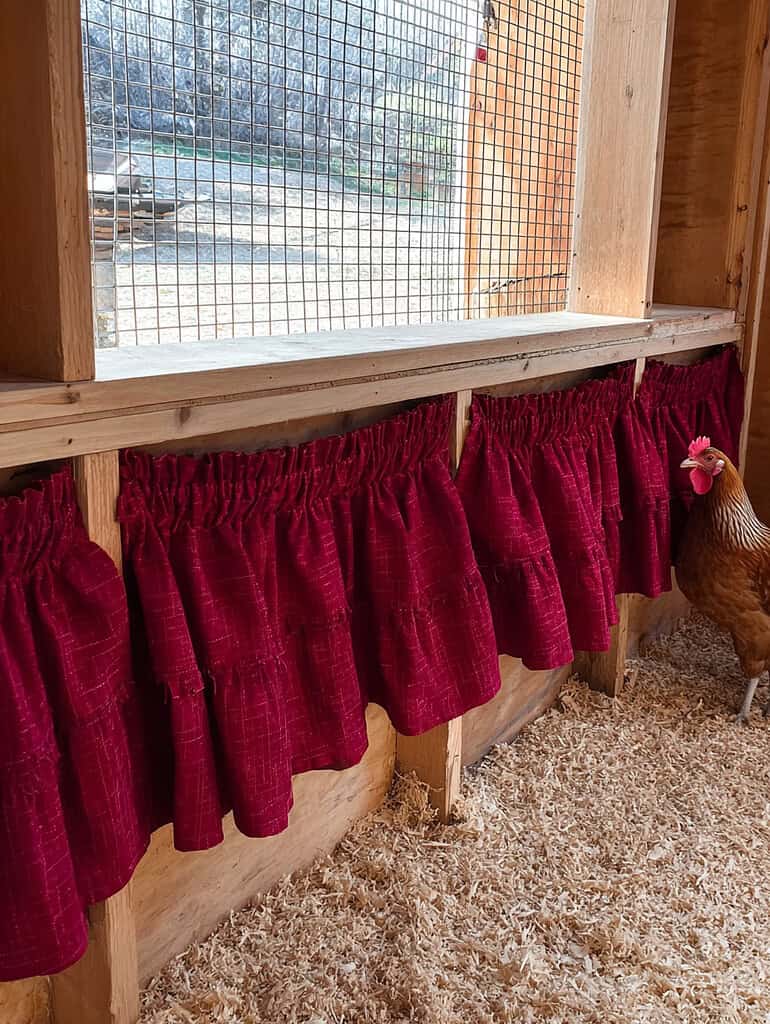
One of the simplest DIY décor touches also has a big benefit for your hens. Adding small curtains in front of nesting boxes gives your girls a secluded, cozy spot to lay eggs.
Hens instinctively seek out a private, dark area to nest. Old-time farmers would hang burlap sacks over nest box openings for this reason, but you can use any chicken-safe fabric.
- DIY Tip: Cut up old pillowcases or use burlap/linen scraps to make mini-curtains. Attach a little tension rod or staple the fabric above the nest box entry. You can even tie each curtain back with ribbon or twine for that farmhouse flair.
The curtains make hens feel safe and hidden when laying. This can encourage them to lay eggs in the nest boxes instead of secret spots in the yard. Plus, it looks absolutely adorable to boot!
- Maintenance: When the curtains get dusty (and they will), simply take them down and give them a wash, or swap in a fresh set. Clean curtains not only look nice but also keep the coop hygienic.
(Nothing says “rustic charm” like a hen poking her head out of a little curtained nook to announce she’s laid an egg!)
2. Multi-Level Perches and Chicken Swings
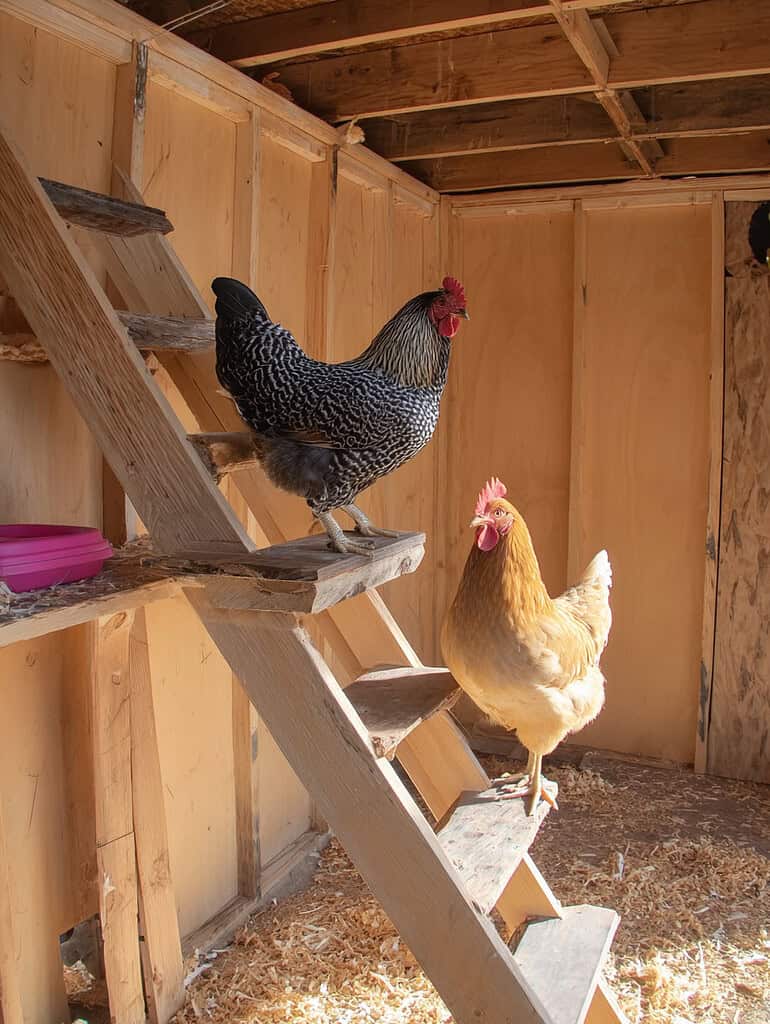
Chickens love to perch – it’s an instinctual behavior that makes them feel safe. So why not make perches a decorative feature?
Try adding a multi-level roosting ladder or even a playful chicken swing in the coop or run.
A swing hanging from the coop ceiling or a branch set diagonally as a perch can give a whimsical, rustic look while providing fun enrichment.
- DIY Tip: Use a sturdy tree branch or a thick wooden dowel to create a perch or swing. Secure it with strong rope or chains (make sure metal links won’t pinch toes). Start with the swing low to the ground until your hens get the hang of it, then raise it gradually. A simple wooden ladder (even an old re-purposed bunk bed ladder) propped against a wall also makes a great multi-level perch.
Perches let chickens exercise their natural acrobatic skills. Some hens will eagerly hop onto a swinging perch and learn to enjoy a gentle swing – it can keep them entertained and active.
Multiple height options also allow each hen to choose her favorite roosting spot. It’s like a chicken jungle gym!
- Safety: Ensure any swing is hung where it won’t hit walls or feeders if it moves. The perch should be rough or wide enough for a good grip (no slippery PVC pipes). For ladders, make sure they are stable and won’t tip over.
For more inspiration, check out easy chicken playground ideas to keep your flock active and happy.
(Picture your chickens as tiny trapeze artists – some may be hesitant at first, but once they learn, you’ll have a swinging good time in the coop!)
3. Hanging Mirrors for Hen Entertainment
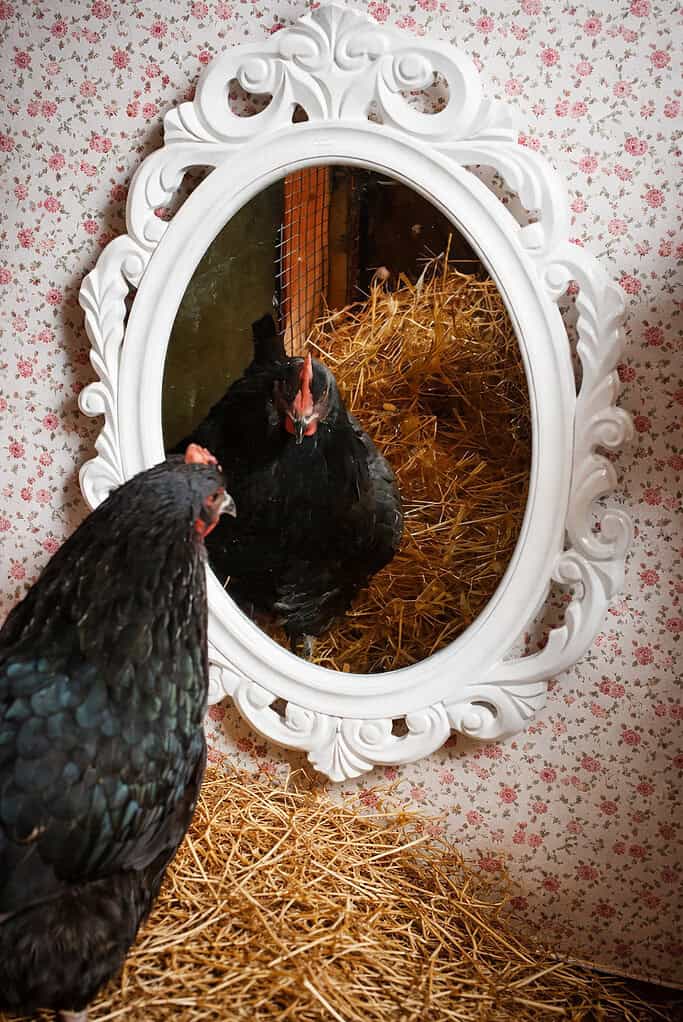
It turns out chickens can be a bit vain (or at least curious)!
A small hanging mirror in the coop can serve as both décor and distraction.
Chickens are attracted to shiny, reflective objects, and a mirror gives them something to examine – especially useful during long winter days when they’re cooped up.
- Setup: Securely fasten an unbreakable mirror (plastic or acrylic is safer than glass) to the coop wall at chicken eye-level. An old hand mirror tied with twine or a mirrored tile with smooth edges works well. Make sure it’s hung securely so it won’t fall and shatter.
A mirror can relieve boredom. Hens will enjoy watching themselves and may curiously peck or preen in front of their reflection.
It’s like their version of a TV! This mental stimulation keeps them occupied, which can help reduce pecking or other stress behaviors when they’re stuck inside.
- A Caution: If you have a rooster, be observant at first. Roosters might see their reflection as an “intruder” rooster and could get aggressive. If your rooster starts puffing up at the mirror, it’s best to remove it to avoid any mid-coop boxing matches (and potential broken glass).
(Shiny old CDs hung on strings are another safe alternative – they spin and catch the light, providing visual entertainment for curious hens.)
4. A Dust Bath “Spa” Corner
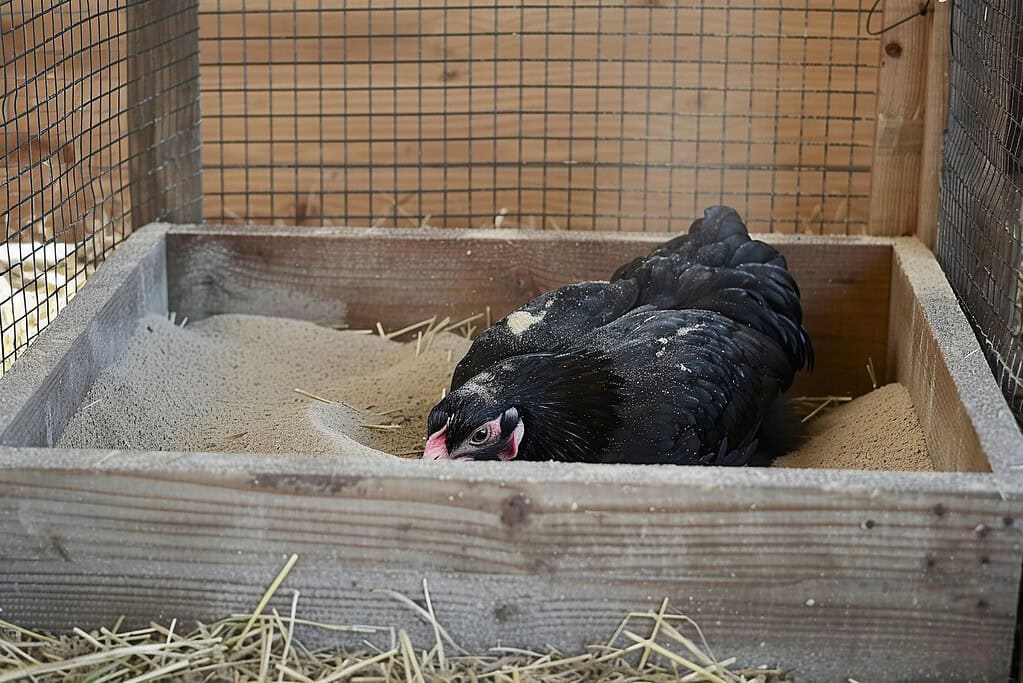
Every happy hen needs a good spa day – and by spa, we mean a dust bath.
Creating a designated dust bath area in or next to the coop can actually become a cute décor element with a little creativity. Think of it as the chickens’ own rustic “spa corner.”
- Dust Bath Basics: Set up a medium-sized container or just a framed-off section on the coop floor or run filled with fine, dry dirt (sand, wood ash, or a mix of these with soil works too). It could be an old wooden crate, a half wine barrel, a sturdy rubber tub, or simply a square of ground bordered by logs or bricks.
- Decorative Touch: Add a little sign that says “Spa” or “Dust Bath” for humor, or decorate the container with a painted pattern (using non-toxic paint). Plant some shrubs or flowers nearby to make the area blend into a cozy garden aesthetic. You can even place a small rustic stool or log next to it, where hens can perch after their “spa treatment.”
Chickens adore dust bathing – it’s how they clean themselves, regulate oils, and ward off parasites. They will flop into the dust, wriggle, fluff their feathers and have a grand time.
Providing a designated dust bath keeps them happy and healthy (and keeps them from digging craters all over your yard!). It’s truly enrichment that they need and enjoy.
- Maintenance: Keep the dust bath dry (cover it in heavy rain or move it under shelter) and occasionally refresh the dirt or sand. Remove clumps of poop or mud so it stays clean. You might also sprinkle some food-grade diatomaceous earth or dried herbs in the dirt occasionally to help deter mites (just a little, as DE can be irritating in large amounts).
(Watching hens take a dust bath is surprisingly entertaining – they’ll look like little feathered divas at the spa, kicking up “dust clouds” of joy.)
5. Treat Toys: The Chicken Piñata
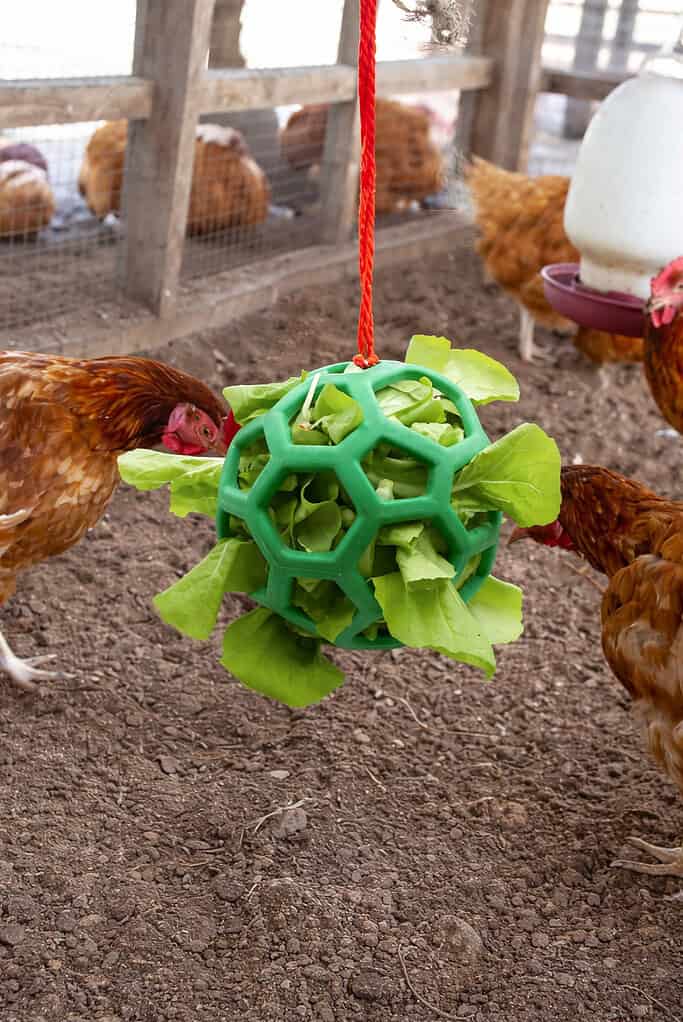
Who says décor can’t be delicious? A hanging treat dispenser or “chicken piñata” is a fun, temporary decoration you can put up to keep hens busy.
It basically turns snack time into playtime and looks amusing hanging in the run like a little rustic feeder toy. This is a purely DIY enrichment that also decorates the space.
- DIY Treat Ball: Take a cabbage, head of lettuce, or bundle of leafy greens and hang it by a string in the coop/run (like a tetherball). Alternatively, use a mesh produce bag or a suet cage, fill it with vegetable scraps or treats, and hang it at chicken head-height. Some people use a Hol-ee roller dog toy stuffed with produce as a durable treat ball.
It’s an interactive snack! The hens will peck at the hanging treat, which swings around, making them work a bit for their food.
This reduces boredom and encourages natural foraging behavior, keeping them active. You’ll find them jumping and pecking – essentially playing with their food (for once that’s a good thing).
- Coop Décor Aspect: A vibrant green cabbage or a colorful treat ball hanging in the coop adds a splash of color and whimsy. It signals to any visitor that these are some pampered, spoiled chickens (the best kind!). It’s not a permanent fixture, but while it’s up, it certainly livens up the coop atmosphere.
- Tips: Hang the treat in the morning and take down any leftovers before nightfall. You don’t want rotten food or a treat attracting rodents overnight.
Also, hang it at a height where chickens can reach by stretching a bit, but not so low that it gets dirty on the ground.
(Imagine a hen jumping to peck a swinging cabbage – it’s both practical entertainment and a scene straight out of a “Chicken Olympics” highlight reel.)
6. Chicken-Safe Plants Around the Coop
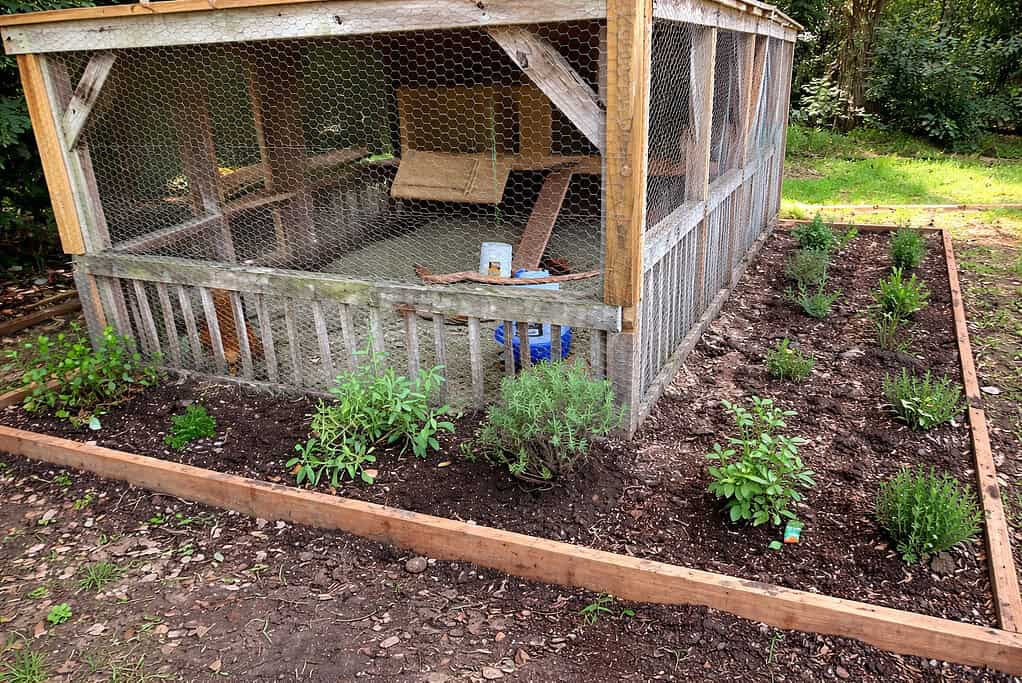
Extend your décor to the outside of the coop by planting some greenery or flowers around it.
A coop surrounded by blooms and foliage can look straight out of a farmhouse magazine. But beyond looks, strategically chosen plants can provide shade, snacks, or pest control for your flock.
- Decorative Plantings: Consider planting marigolds, nasturtiums, or geraniums in window boxes or planters attached to the coop (out of the chickens’ immediate reach). These add a pop of color. Marigolds are said to help repel insects, and nasturtiums are actually edible for chickens (vitamin-rich treats!). Just be sure any plants within pecking range are non-toxic to chickens.
- Herb Garden: Planting herbs like basil, sage, lavender, and mint near the coop can make the whole area look and smell lovely. As mentioned, herbs can help deter mites and other pests. You can position pots of herbs around the coop perimeter or create a little herb bed adjacent to the run. Chickens will peck at herbs for a nibble, which is fine – it’s like them picking out their own seasoning!
- Shrubs and Vines: Sunflowers, rose bushes, or chicken-safe shrubs (like blueberry bushes) around the coop provide seasonal beauty and sometimes tasty treats (berries). Climbing roses or trumpet vine growing on the coop (if you have a run with a fence to climb) can give a storybook cottage vibe. They also offer a bit of shade and predator cover, making chickens feel secure when they roam.
Plants create a nicer environment – shade on hot days, interesting scents, and occasionally a yummy petal or fruit falls into the run.
If you choose insect-repelling varieties (like mint, rosemary, citronella grass), you also help keep mosquitoes and mites at bay.
Just remember, anything inside the run will likely get eaten or scratched up, so outside planters or protected placements work best.
(Your coop can become the centerpiece of a charming little garden. A white coop with climbing roses and a few clucking hens underneath – now that’s homestead heaven, and the hens will be happily hunting bugs among the flowers.)
7. Bright Paint and Easy-Clean Interiors
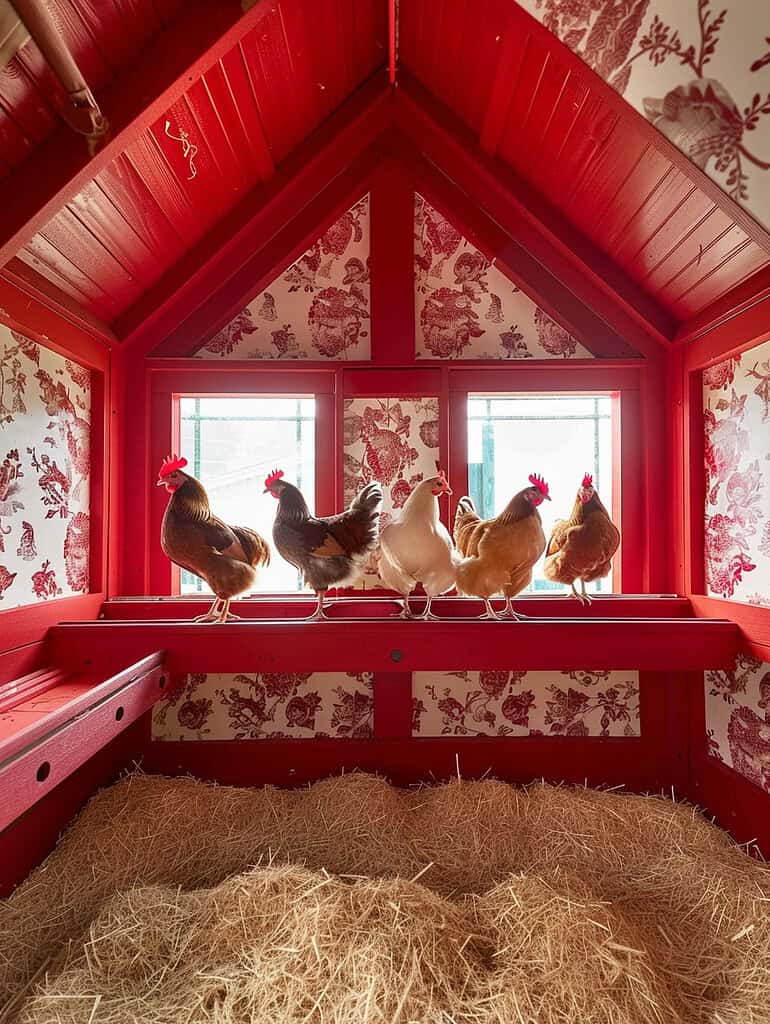
Here’s a décor idea that’s as much about function as form: paint or line the inside of your coop with chicken-safe materials.
A lick of paint or some vinyl wall liner can really brighten up a coop’s interior and give it a cheerful, clean look – think light pastel walls for a farmhouse cottage feel.
More importantly, a smooth painted or lined surface is much easier to clean and can help keep your hens healthy.
- Pick Safe Paint: If you decide to paint, use a non-toxic, low-VOC paint (no peeling lead paint, please!). Chalk paint or milk paint are great choices that come in lovely rustic colors and have low fumes. Whether you go with classic white, a soft robin’s egg blue, or sunshine yellow, a lighter color inside the coop will make it feel more open and also help you spot any mites or dirt.
- Why Paint/Line? Painting the exposed wood or using vinyl contact paper on walls helps seal the surface. This makes it less attractive to mites and wood-burrowing insects, and makes cleanup a breeze. A quick wipe with a damp sponge can clear off dust or droppings on a painted/lined wall, whereas bare wood can stain and harbor pests. Additionally, paint can prevent the wood from rotting due to moisture.
- Flooring Ideas: You can also put down a piece of linoleum or vinyl flooring on the coop floor. It doesn’t have to be pretty – even a remnant piece from a home improvement store will do – but it can add a pop of color or pattern and let you mop out the coop easily. No more scrubbing poo off plywood!
- Personalize It: Get creative with stencils or hand-painted motifs once you’ve base-coated the interior. Little painted chicken footprints, flowers, or the names of your hens above their nesting boxes can add a sweet personal touch. Just make sure to seal any artwork with a non-toxic sealant so it doesn’t chip away too quickly.
(Your hens might not appreciate the designer color scheme as much as you do, but a cleaner, brighter coop will definitely keep them healthier – and you happier when it comes time to clean!) Plus, who doesn’t love a pop of color in their morning egg-collection routine?
8. Farmhouse Flair with Signs and Accessories
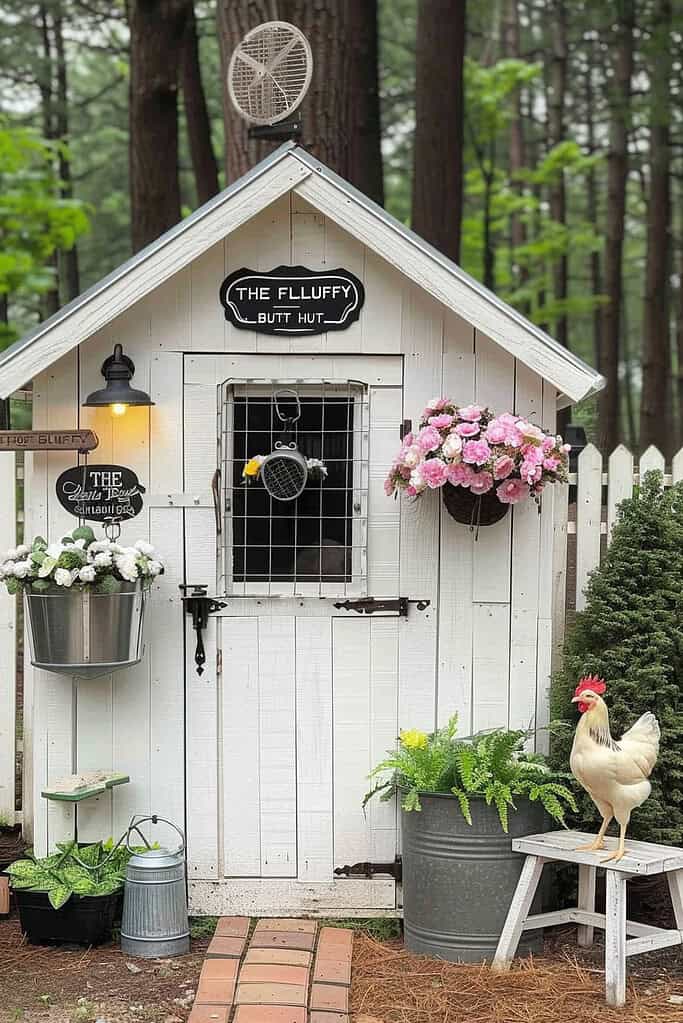
Time to channel that rustic farmhouse style! Little accessories can give your coop tons of character without sacrificing practicality.
Think vintage signs, chalkboards, old egg baskets, or a cute thermometer on the wall. These items can be both decorative and useful.
- Coop Signs: Nothing says cozy farmhouse like a wooden sign. You could hang a sign with your coop’s name (“Clucking Cottage,” anyone?), a funny saying (“Eggs This Way →”), or simple labels (“Hens”, “Roost”, etc. as Lisa Steele does in her coop). You can buy custom signs or paint your own on reclaimed wood for that weathered look. Just be sure to sand any old wood to remove splinters and use non-toxic paint or sealer.
- Chalkboard: Mount a small chalkboard sign near the coop door. You can use it to write notes (like when the coop was last cleaned or how many eggs collected each day), or just a cute message. It’s functional for you and charming to see. (Tip: an old thrifted framed chalkboard painted in pastel and lightly distressed looks great.)
- Vintage Egg Baskets: Hang one or two metal egg baskets or wire baskets inside the coop. Not only do they scream “farmhouse chic,” but they’re handy when you forget your regular egg basket – you’ll have one right there to gather the day’s haul. Similarly, old metal feed scoops or galvanized buckets can be hung as decor that you can actually use for feed or water in a pinch.
- Thermometer: A large, decorative wall thermometer adds a nice touch (maybe something antique-looking). Chickens are sensitive to heat, so it’s useful to monitor the coop temperature. Why not make it a focal point? The chickens don’t mind how fancy it is, as long as you keep them comfy.
- Other Knick-Knacks: Consider an old clock (for purely decor purposes, or to know feeding time), a hanging lantern (doesn’t even have to work, it can just look cool), or even framed photos or art in the coop (chickens might not care, but it can make you smile when you visit). Some folks even add fake windows with shutters on the coop exterior for charm, or hang a horseshoe above the door for luck.
(These little touches make your coop feel like an extension of your home – a hen house with true farmhouse soul. Plus, when your friends come to visit your “posh” coop, they’ll see those egg baskets and witty signs and know just how loved your ladies are.)
9. Soft Lighting for a Cozy Coop
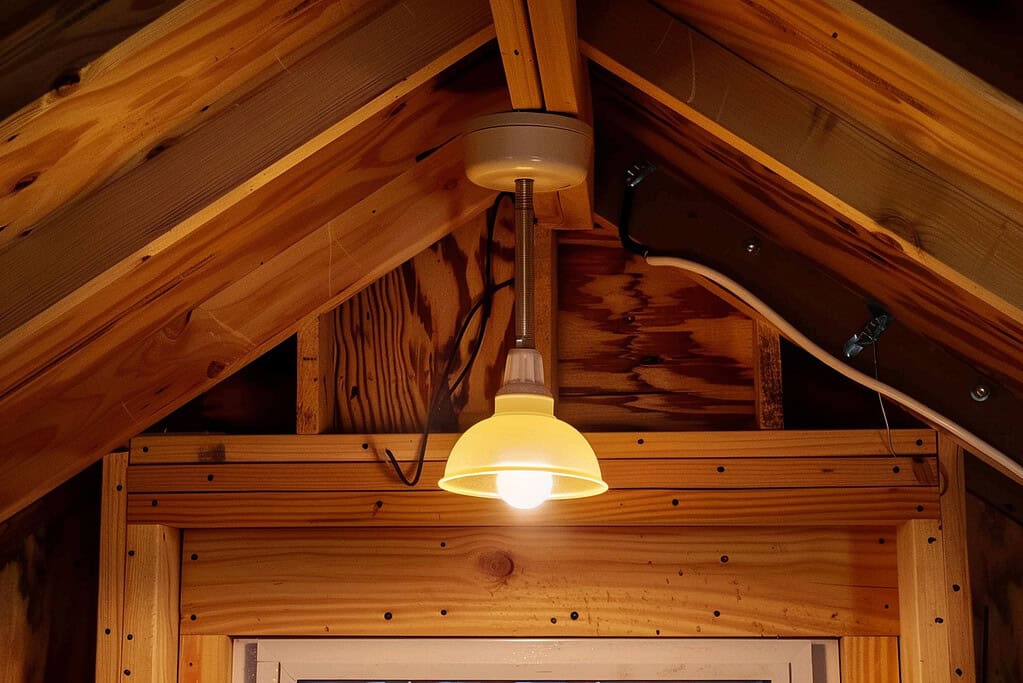
Lastly, consider adding a bit of soft lighting to enhance the coop’s ambiance.
While chickens prefer to sleep in the dark at night, a gentle light in the early evening or a decorative outdoor light on the coop can be both practical and pretty.
- Solar-Coop Chic: Hang a string of solar-powered fairy lights or outdoor string lights around the exterior of the coop or along the run fencing. As dusk falls, your backyard will have a warm glow – think of it as mood lighting for your chicken yard. It looks magical and requires no cords or electricity (solar is key so it auto-turns off and doesn’t disturb the hens later).
- The Chandelier Move: If you want to channel full farmhouse glam, you can hang a small chandelier or ornamental light fixture inside the coop. This can be purely decorative or wired to actually light up. Many chicken keepers find a chandelier hilarious and charming – it’s the ultimate “posh coop” statement. If it does light up, use it as an evening light on a timer, not all night. A bit of light during winter late afternoons can extend laying, but darkness at night is crucial for chickens to sleep.
- Why (and Why Not) Lights: A little light helps if you need to check on chickens after dark or do nightly egg collection in winter. It can also make the coop inviting and deter some predators (some people play radios or lights to discourage nighttime prowlers). However, chickens do not need light at night to sleep – in fact, they sleep best in complete dark, following natural day/night cycles. So any interior coop light should be off during true night time hours (or use a very dim red bulb if absolutely necessary for heat). Exterior lights or path lights are fine as long as they aren’t shining into the coop.
- Safety: Use battery or solar lights, or properly installed outdoor-rated wiring to prevent any fire hazard. Secure cords out of reach of pecking beaks. If using open-flame lanterns or candles (for a photo shoot or something), never leave them unattended near the coop – we want rustic, not risky!
(A cozy glow around the coop on a summer evening can make your backyard feel like a scene from a country fairytale. Just remember to give the girls their beauty sleep in darkness – they’ll be happier and you’ll get better egg production when their sleep isn’t disturbed.)
Create a Happy Home for Your Hens
Your chicken coop can be a reflection of your style and a haven for contented hens. The nine ideas above prove that practical can also be pretty.
From privacy-enhancing curtains to herb garlands and chicken swings, each décor idea adds a dash of charm while keeping your flock’s well-being in focus.
DIY creativity and a little rustic flair can transform your coop into a cozy farmhouse retreat for your birds.
Ultimately, a happy hen house leads to happy hens – and we all know pampered chickens lay the freshest eggs! So roll up your sleeves, pick an idea or two, and have fun with decorating your coop.
Your chickens may not comment on the décor, but you’ll notice them enjoying those perches, pecking at herbs, and fluffing in their dust spa with gusto.
Ready to get started? Even one small change, like hanging a mirror or planting a flower box, can make a difference in your coop’s vibe.
Get creative, involve the family in some coop crafts, and most importantly, observe what your hens enjoy the most.
Their behavior will tell you if they love something (or if they could do without the chandelier – hey, to each her own!).
Have you tried any of these suggestions, or do you have a unique way of sprucing up the chicken coop? Let us know in the comments below!
We’re excited to hear how you keep your hens happy in style.
FAQs
1. What materials or items should I avoid when decorating a chicken coop?
Prioritize safety. Avoid small items hens could choke on (nails, staples, peeling paint). Never use lead-based paint or treated wood where chickens peck or roost.
Secure any glass or replace with shatterproof plastic. Avoid fabrics or ropes that could tangle, and check plants for toxicity.
Stick to durable, non-toxic materials like low-VOC paint, untreated wood, and hardware cloth.
2. Will coop decorations or treats attract predators or rodents?
Decorations alone usually don’t attract predators. Food-based items (treat balls, hanging veggies) can attract rodents or wild birds if left out overnight.
Offer treats during the day and remove leftovers before dusk. Keep the coop secure with latches and hardware cloth – decorations don’t replace proper predator-proofing.
3. Can I use lights or a chandelier in the coop without disturbing the hens?
Yes, but avoid constant light at night. Use timers or low-intensity red bulbs for nighttime checks or extra winter daylight.
For decorative lights, keep them dim or outside; hens need darkness to sleep properly.
4. How often should I clean or replace coop décor items like curtains, herbs, or toys?
Check fabric items weekly; wash every 1–2 months. Replace dried herbs every couple of weeks. Clean hanging toys or treat balls when dirty.
Always inspect décor during regular coop cleaning to prevent mold, mites, or bacteria.
5. Do chickens notice or appreciate decorations in their coop?
Chickens don’t care about aesthetics, but they do enjoy functional décor. Perches, toys, herbs, and cozy nesting spots enrich their environment and reduce stress.
Even if they don’t admire the style, they benefit from a safe, engaging, and comfortable coop.
Planting Guides for This Article
Get exact planting dates, frost schedules, and growing tips for your zone: