
Blue flowers are some of the rarest and most eye-catching additions to any garden.
They bring a sense of calm, depth, and contrast that few other colors can provide.
Whether you're looking to add bold accents, soften a border, or attract pollinators, blue blooms offer a wide range of options for different garden styles.
This list highlights 12 blue-flowering plants, each with its own character – from sky-colored clusters and ruffled petals to spiky spheres and misty textures.
No matter your space or experience, these selections can help turn an ordinary garden into an unforgettable one!
Why Blue Flowers Are So Unique in the Garden
Many so-called blue flowers lean toward violet or purple, but the ones with genuine blue tones add a color that’s hard to replicate with any other plant.
This rarity gives blue blooms a special place in garden design.
Visually, blue creates a cooling effect. It calms busy borders, pairs well with green foliage, and balances warm colors like red, orange, and yellow.
In small spaces, it gives an impression of openness and depth. Because blue doesn’t compete for attention like bolder shades, it can make surrounding plants look even better.
They also contrast beautifully with stunning pink flowers if you want to create a soft but eye-catching color palette.
Blue flowers also carry through multiple seasons. Some, like Virginia bluebells and Brunnera, bloom early in spring.
Others, such as hydrangeas and salvias, provide color into summer and fall. This makes it easy to weave blue tones throughout a full growing season, either as the main attraction or as quiet background support.
When used thoughtfully, blue flowers can help shape a garden’s mood, structure, and balance – without overwhelming it.
12 Stunning Blue Flowers That Elevate Any Garden
This list includes options for sun or shade, small containers or wide borders.
You’ll find flowers that are easy to grow, others that reward more attention, and all with one thing in common: striking blue blooms.
1. Delphinium (Delphinium spp.)
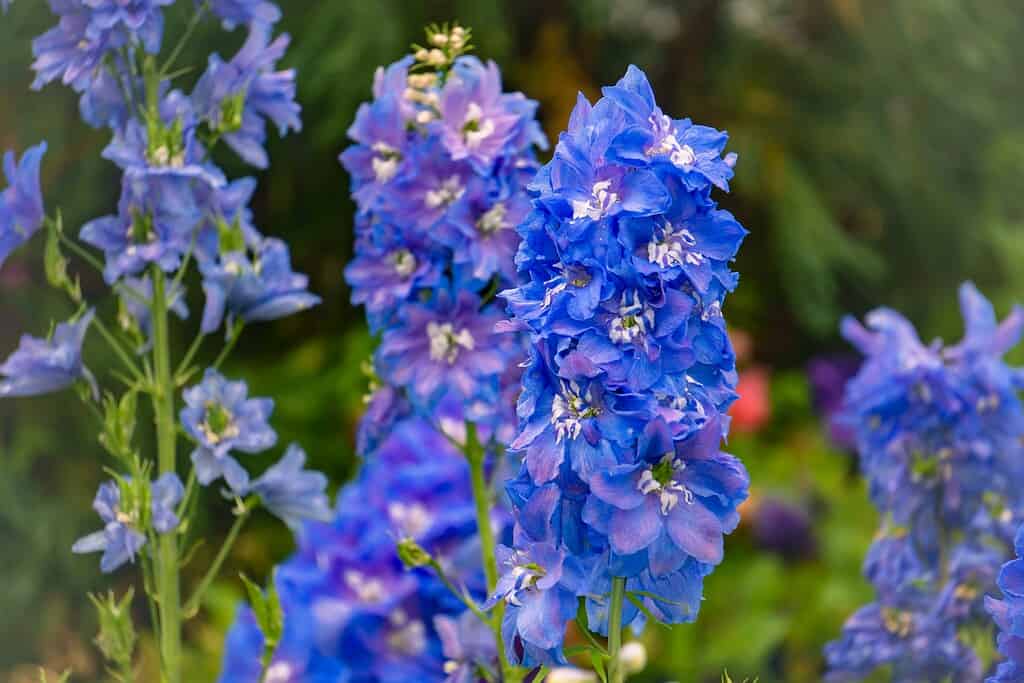
Delphiniums are known for their tall, upright flower spikes packed with dense blooms in shades of rich blue.
They add strong vertical interest to cottage gardens, perennial beds, and large containers. These flowers are often used as the “thriller” in mixed arrangements due to their height and color intensity.
Varieties like ‘Summer Cloud’ bloom through the summer and can reach several feet tall. Delphiniums prefer full sun and fertile, well-drained soil.
They do best in cooler climates and may need staking to support their tall stems. Plant them near a fence or wall for added support and backdrop contrast
Read related post: 14 Eye-Catching Wild Flowers You’ll Want to Add to Your Garden
2. Globe Thistle (Echinops spp.)
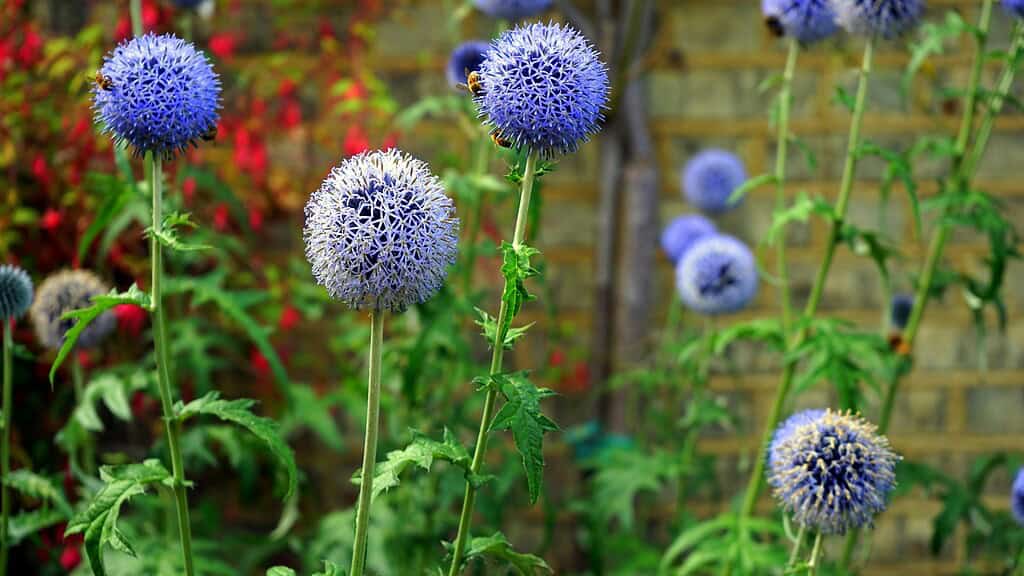
Globe thistles produce perfectly round, golfball-sized flowers in vivid shades of electric blue.
Their spiky texture and silver-blue stems make them look almost unreal. They bring bold structure to the garden and work especially well in modern or drought-tolerant designs.
These perennials thrive in poor, dry soil and full sun. They require very little maintenance once established and attract bees and butterflies throughout their bloom period.
Their unique shape also makes them excellent for fresh or dried flower arrangements.
3. Lobelia (Lobelia erinus)
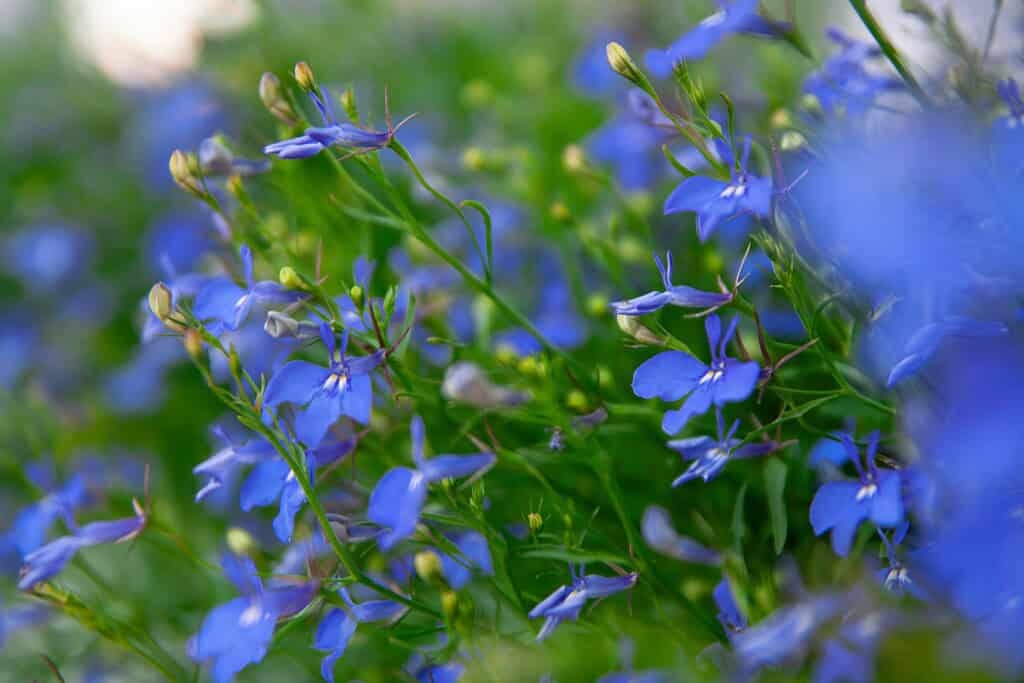
Lobelia offers clouds of small, bright sky-blue flowers that cascade over the edges of containers, raised beds, or hanging baskets.
Its compact size and spreading habit make it a perfect spiller in layered plantings. Varieties like ‘Crystal Palace’ and ‘Regatta Sky Blue’ are known for their true blue tones.
This annual prefers cool weather and consistently moist, well-drained soil. It thrives in partial shade to full sun, depending on the climate.
In hot areas, it benefits from afternoon shade. Deadheading helps extend the bloom time, although many newer varieties are self-cleaning.
4. Hydrangea (Hydrangea spp.)

Hydrangeas are among the most popular blue-flowering plants, especially varieties with large mophead blooms.
Bigleaf (Hydrangea macrophylla) and mountain (Hydrangea serrata) types can develop vibrant blue flowers when grown in acidic soil with a pH below 6.0.
Varieties like Let’s Dance® Rhythmic Blue® bloom all summer and can adapt to containers or garden beds. Hydrangeas prefer partial shade, rich soil, and regular moisture.
They make excellent foundation plants, border accents, or statement shrubs. Their flower color can be adjusted over time by altering the soil’s pH and aluminum availability.
Read related post: How to Grow (and Care) for Carnation Flowers
5. Iris (Iris germanica, Iris sibirica)
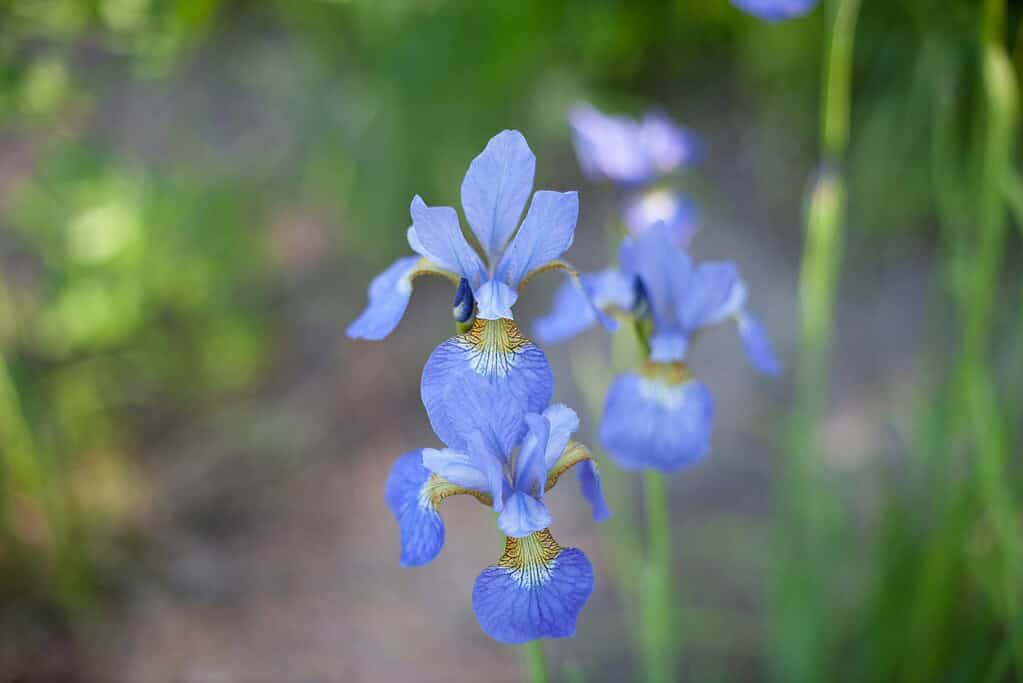
Irises bring dramatic flair to gardens with their ruffled petals, sword-like foliage, and bold color contrasts.
Bearded iris varieties like ‘Blue Suede Shoes’ offer large sapphire-blue blooms accented with golden yellow beards, adding texture and movement to the garden.
German bearded irises prefer full sun and well-drained soil, thriving in borders, slopes, or near pathways.
Siberian irises, on the other hand, are more moisture-tolerant and work well near ponds or in rain gardens. Both types are reliable perennials that multiply over time and require little care beyond occasional division.
They also pair beautifully with vibrant purple perennials if you want rich, layered color in your garden beds.
6. Love-in-a-Mist (Nigella damascena)
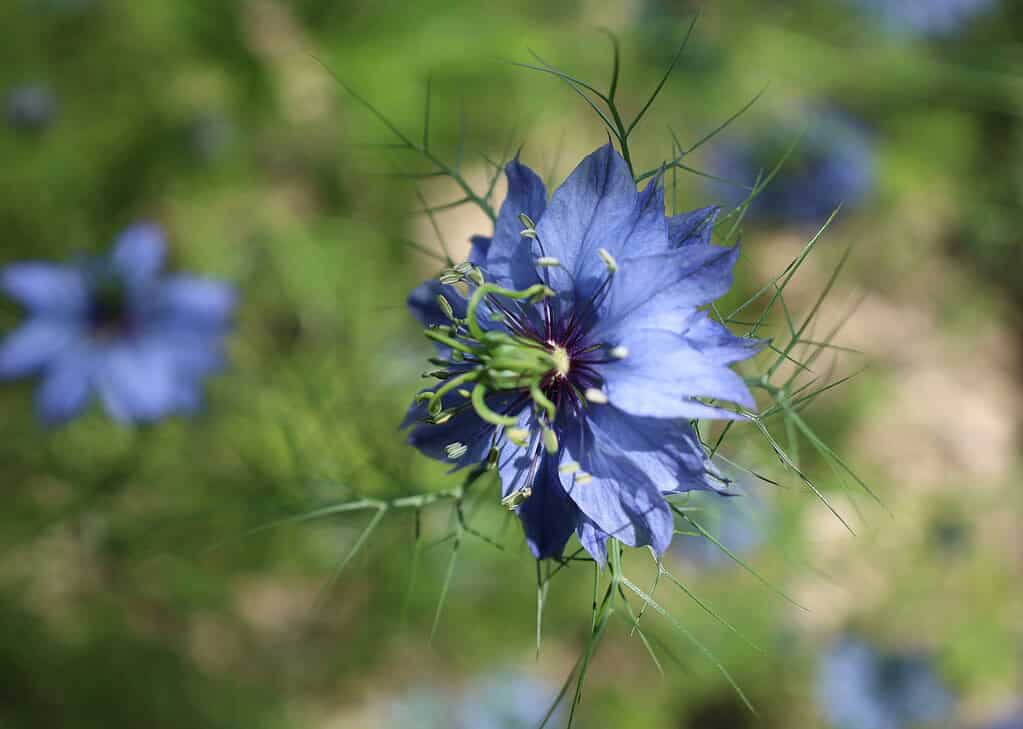
Love-in-a-Mist lives up to its name with pale blue blooms nestled in fine, thread-like foliage that gives the appearance of a flower floating in mist.
Its soft look and self-sowing nature make it a favorite in informal or cottage-style gardens.
This annual is easy to grow from seed and thrives in full sun with average soil. It blooms in late spring to early summer and produces ornamental seed pods that are useful in dried flower arrangements.
Once established, it often returns year after year without replanting, making it both beautiful and low-maintenance.
7. Salvia (Salvia spp.)
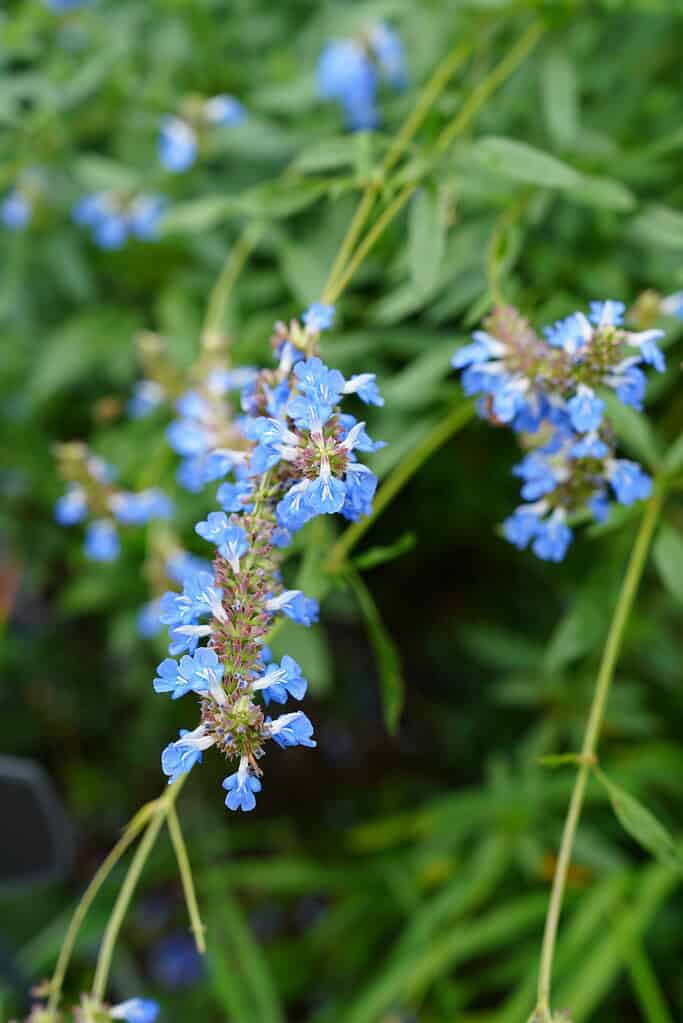
Salvia is a dependable choice for adding color and life to garden beds and containers.
The variety ‘Black and Blue’ is especially striking, with deep cobalt-blue flowers held on contrasting black stems and sepals. It’s a favorite among hummingbirds and other pollinators.
These heat-tolerant perennials thrive in full sun and well-drained soil. They bloom throughout the warmer months and are often used in borders, mass plantings, or pollinator gardens.
Cutting them back after a bloom cycle can encourage more flowers and keep the plant tidy.
Read related post: How to Grow and Care for Snowdrop Flowers
8. Bluebeard (Caryopteris × clandonensis)

Bluebeard is a compact, deciduous shrub known for its soft gray-green foliage and clusters of true blue flowers.
Blooming in late summer through fall, it offers color when many other plants have finished for the season. Cultivars like ‘Beyond Midnight’ are valued for their deep, fragrant blooms and compact form.
This drought-tolerant plant thrives in full sun and well-drained soil. It works well in mixed borders, along pathways, or as a low hedge.
Prune in early spring to encourage fresh growth and better flowering.
9. African Lily (Agapanthus spp.)

Agapanthus produces tall, sturdy stalks topped with large, rounded clusters of blue flowers.
These globe-like blooms can rise above surrounding plants, adding height and a clean, architectural look to garden beds or borders.
The compact variety ‘Little Galaxy’ is especially known for producing dense, vibrant blue heads.
This plant grows best in full sun to partial shade and prefers well-drained soil. It’s also attractive to butterflies and other pollinators.
In colder zones, it may need winter protection or container growing so it can be moved indoors when temperatures drop.
If you enjoy working with bulbs or bulb-like plants, you may also like this guide on how to grow lilies successfully.
10. Borage (Borago officinalis)

Borage is a fast-growing annual with clusters of bright, star-shaped blue flowers.
It has a slightly wild appearance, making it well-suited for cottage gardens, pollinator zones, or herb beds. Its flowers are also edible and commonly used as a garnish or frozen in ice cubes.
Borage grows easily from seed and doesn’t require rich soil or special care. It prefers full sun and moderate water.
As a bonus, it self-seeds readily, returning the following year without replanting. The plant also supports bees throughout its bloom cycle.
Read related post: 20 Tough Winter Flowers That Can Handle Frost and Still Bloom
11. Virginia Bluebells (Mertensia virginica)
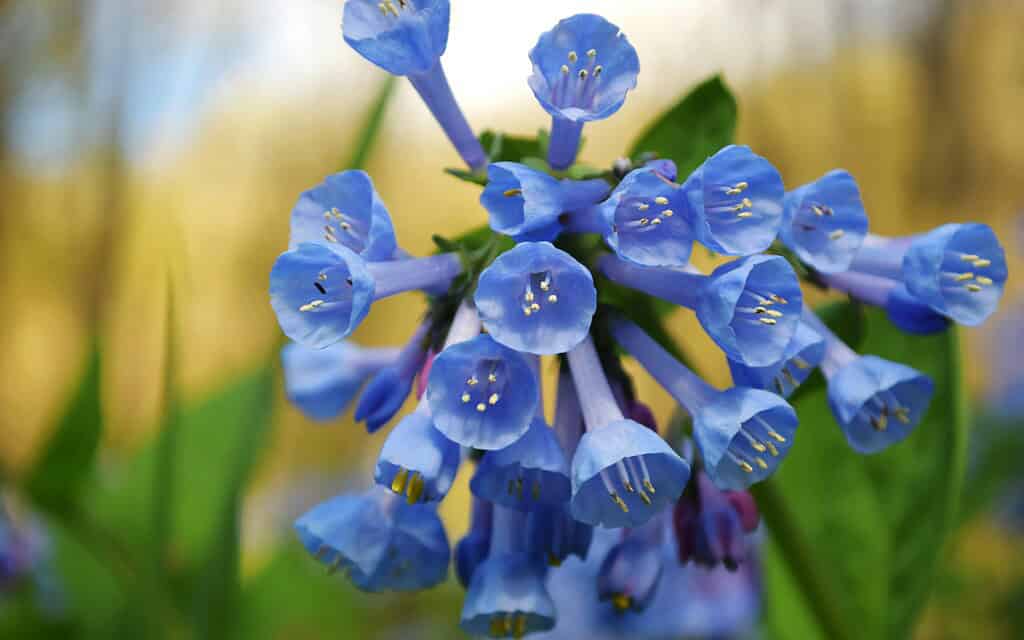
Virginia bluebells are native wildflowers known for their bell-shaped, sky-blue flowers that emerge in early spring.
The blooms start as pink buds before opening into soft blue clusters. These plants naturalize well in shady or woodland garden areas.
They thrive in moist, well-drained soil and dappled light. Because they go dormant by summer, it’s best to plant them alongside later-blooming perennials to maintain continuous coverage.
Their early blooms are valuable for early pollinators and seasonal interest.
12. Brunnera (Brunnera macrophylla)
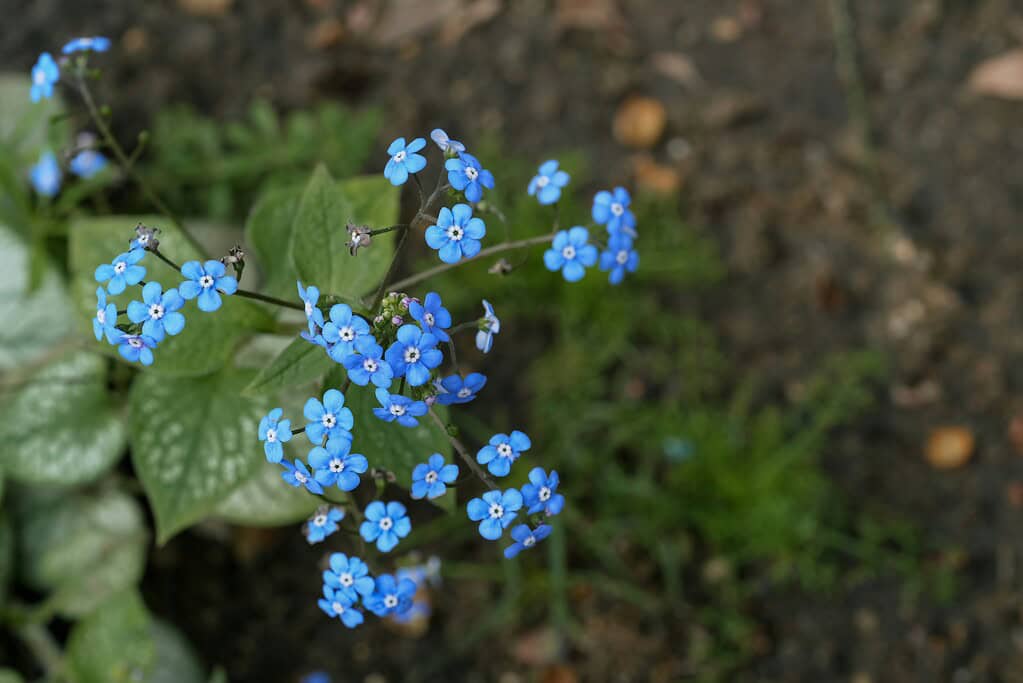
Brunnera is a shade-loving perennial that offers both beautiful foliage and small, bright blue flowers.
The blooms closely resemble those of forget-me-nots and appear in sprays above large, heart-shaped leaves. It's ideal for groundcover in shaded beds or under trees.
This plant does well in moist, humus-rich soil and cool, shady locations.
It’s often chosen for its foliage – especially in varieties with silvery or variegated leaves – but the springtime flowers add a light, delicate touch that contrasts nicely with its bold texture.
Bring More Beauty Into Your Garden with These Blue Bloomers
Blue flowers add something rare and visually calming to a garden, whether you're designing a bold border or filling in shaded corners.
From the tall spikes of delphiniums to the spring charm of Virginia bluebells, there’s a blue flower that can fit into nearly any growing condition or design goal.
Think about the light levels, soil type, and bloom season in your space, then mix a few of these plants to create layers of interest across the growing year.
Whether you're drawn to bold textures or soft sprays, these blue flowers can help you build a garden that stands out in a beautiful, balanced way.
Which blue flower is your favorite, or do you have one that we didn’t include? Comment down below and let us know how you use blue blooms in your garden.
FAQs
What soil pH is best for getting true blue hydrangea flowers?
Hydrangeas develop blue blooms when the soil is acidic – generally with a pH between 5.0 and 5.5. Adding aluminum sulfate or organic materials like pine needles can help lower the pH over time.
Can I grow these blue flowers from seed, or do I need to buy plants?
Several on this list grow well from seed, including borage, love-in-a-mist, and lobelia. Others, like delphinium and bluebeard, are better started from nursery plants or divisions for quicker results and more reliable blooms.
Which of these blue flowers are best suited for small container gardens?
Lobelia, salvia, compact agapanthus varieties, and dwarf hydrangeas can all work well in containers. Choose varieties bred for smaller growth habits and make sure the container has proper drainage.
Are any of these blue flowers deer-resistant?
Yes. Globe thistle, salvia, and brunnera are typically avoided by deer due to their scent or leaf texture. However, no plant is entirely deer-proof, especially in areas with heavy browsing pressure.
Do any of these plants grow well in poor or rocky soil?
Globe thistle and borage thrive in poor, well-drained soils and don’t need much fertility to bloom. Bluebeard is also well-adapted to drier, lean soil conditions.
Ready To Transform Your Garden?

Are you looking for the best way to layout your garden beds? Maybe you're feeling a bit stuck on how to make the most of your space?
We’ve got you covered! Check out our 101+ Garden Bed Layout Ideas for your next raised bed project. This guide is filled with creative and practical ideas that can help you design a garden that fits your style, whether you’re just starting out or have been gardening for years.
Get your copy today and get inspired to bring your gardening dreams to life.