
Growing star jasmine (Trachelospermum jasminoides) on a trellis is easier than you might think – even for beginner gardeners.
In this article, we’ll walk you through how to grow star jasmine on a trellis, from choosing the right support to planting, training, and caring for your vine.
By the end, you’ll be ready to create a show-stopping vertical display that delights the senses and elevates your garden’s beauty.
Whether you live in a warm climate or plan to grow it in a container, star jasmine can thrive with a little guidance.
It’s an evergreen climbing plant in USDA Zones 8–11 (tolerating down to about 10–15 °F), which means it keeps its glossy green leaves year-round in mild areas.
In cooler regions, you can still enjoy star jasmine by planting it in a pot and bringing it indoors during frosty weather.
Now, let’s dive into why this blooming trellis plant deserves a spot in your garden and how to help it flourish.
Why Grow Star Jasmine on a Trellis?
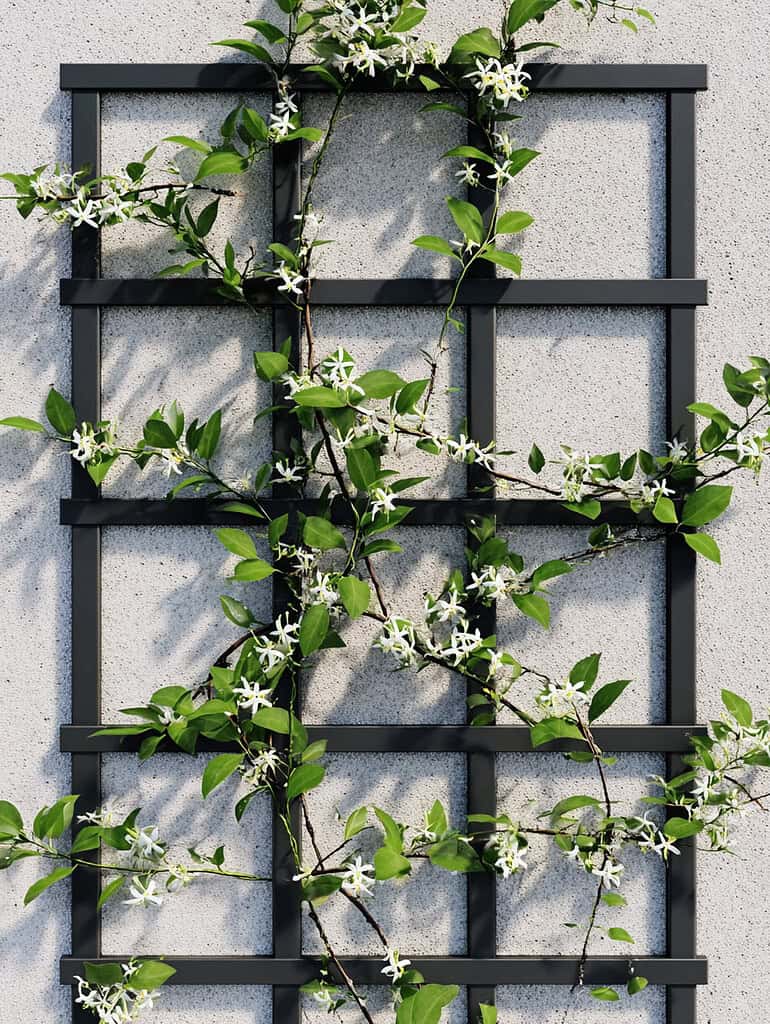
Star jasmine is one of the most rewarding garden vines you can grow, especially when trained on a trellis. Here are a few reasons this vine is so popular among gardeners:
- Heavenly Fragrance: Star jasmine produces clusters of white, pinwheel-shaped flowers that have an intoxicating sweet scent. A single vine in full bloom can perfume an entire patio or yard on warm evenings. It’s no wonder gardeners love planting this fragrant vine near windows, entryways, or outdoor seating areas for maximum enjoyment.
- Lush and Evergreen: In warm-temperate and subtropical climates, star jasmine is evergreen, providing a backdrop of glossy green foliage even when it’s not flowering. This means your trellis won’t look bare in winter (in zones 8–11), and the vine will be ready to burst into bloom again come late spring.
- Show-Stopping Blooms: When star jasmine blooms in late spring to early summer, it puts on a show-stopping display. A mature vine can be covered in hundreds (if not thousands) of starry white flowers for weeks on end. It truly turns a plain fence or arbor into a stunning focal point.
- Space-Saving Vertical Interest: Training star jasmine on a trellis allows you to grow garden vines upward, saving ground space. It’s perfect for small gardens, balconies, or any area where you want to add height and privacy. You can use it to cover an unsightly wall, create a fragrant privacy screen, or arch it over a gateway for a dramatic entrance.
- Beginner-Friendly: Despite its exotic look, star jasmine is relatively easy to grow and low-maintenance once established. It’s not as heavy or aggressive as some climbers, making it easier to manage on a modest trellis. With basic care (which we’ll cover below), your vine will thrive and reward you each year with more growth and flowers.
Choosing the Right Trellis and Location
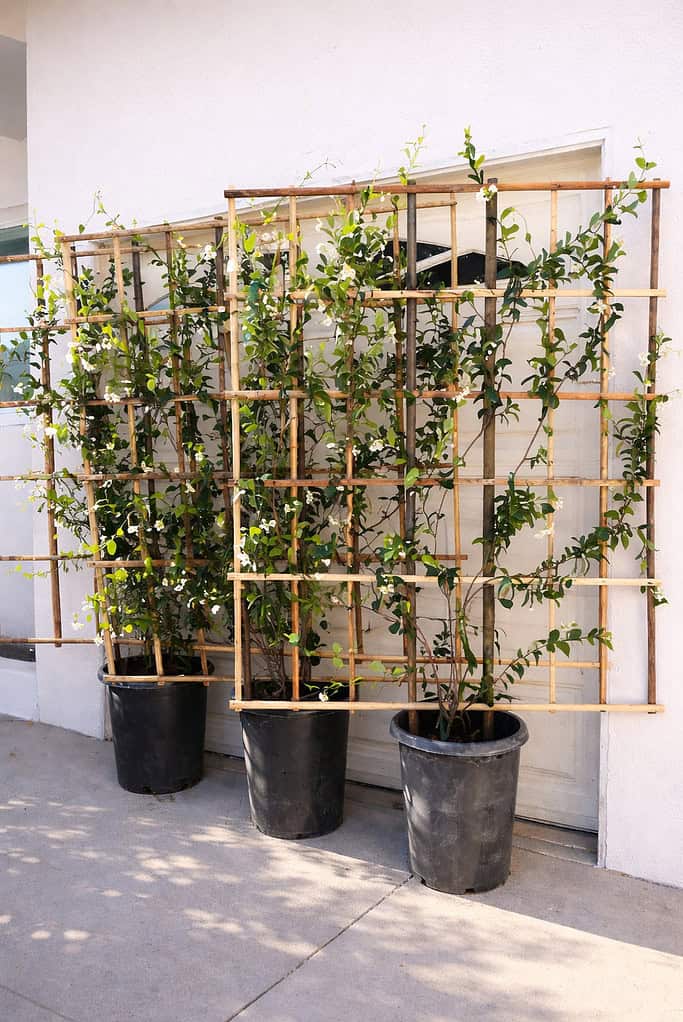
Choosing a suitable support and the ideal location is key to success with star jasmine. Here’s what to consider when planning your garden trellis ideas for this vine:
Trellis Type
Star jasmine climbs by twining, which means it wraps its new growth around supports. It will happily twine up thin poles, wire, or lattice.
Traditional trellises with very thick wood slats may be harder for the vine to grab onto. In fact, wires or thin supports are ideal – the vine’s slender stems can coil around them easily.
If you have a wide wooden trellis, you can add strings or wire mesh to give the jasmine something to grip. Arbors, pergolas, chain-link fences, or even an espalier wire system on a wall all make great supports for star jasmine.
Just ensure whatever structure you use is securely anchored, because a mature vine can become quite dense and heavy.
Sturdy and Tall Enough
While star jasmine isn’t a massive woody vine like wisteria, it can still reach 20–30 feet tall if left unpruned.
Your trellis or support should be tall enough for the vine’s intended use or be prepared to prune the plant when it reaches the top.
Many gardeners let it climb 6–8 feet on a fence or trellis, but it’s capable of more. The support should also be strong; a flimsy plastic trellis might collapse under the weight of a vigorous, mature vine.
Opt for wood, metal, or heavy-duty vinyl structures that can handle wind and a foliage load.
Location – Sunlight
Plant your star jasmine in a spot that gets plenty of sun for the best bloom show. Full sun (at least 6 hours a day) is ideal to get abundant flowers.
In very hot summer climates (like the desert Southwest), provide partial shade in the harsh afternoon hours so the plant doesn’t scorch.
In moderate climates, star jasmine can tolerate partial shade (it will still grow, but flowering may be less profuse with too little sun).
A bright, sunny wall or a south/southwest-facing trellis is usually perfect.
Location – Soil and Spacing
Star jasmine isn’t very fussy about soil as long as it’s well-draining. In the ground, mix some compost into the soil to ensure it’s rich and drains well.
Avoid areas where water pools after rain – the roots don’t like standing water and can rot in poorly drained soil.
If you’re planting multiple star jasmine plants to cover a large fence or pergola, space them about 3–4 feet apart.
This gives each plant enough root room and ensures even coverage without overly crowding them (they’ll fill in fast by twining and branching out).
Also consider the convenience of the location – you’ll want to plant it where you can enjoy the fragrance (near a patio or window perhaps) and where you can easily access it for training and pruning.
Once you’ve picked the perfect spot and support, it’s time to plant!
Planting Star Jasmine: Step-by-Step Guide
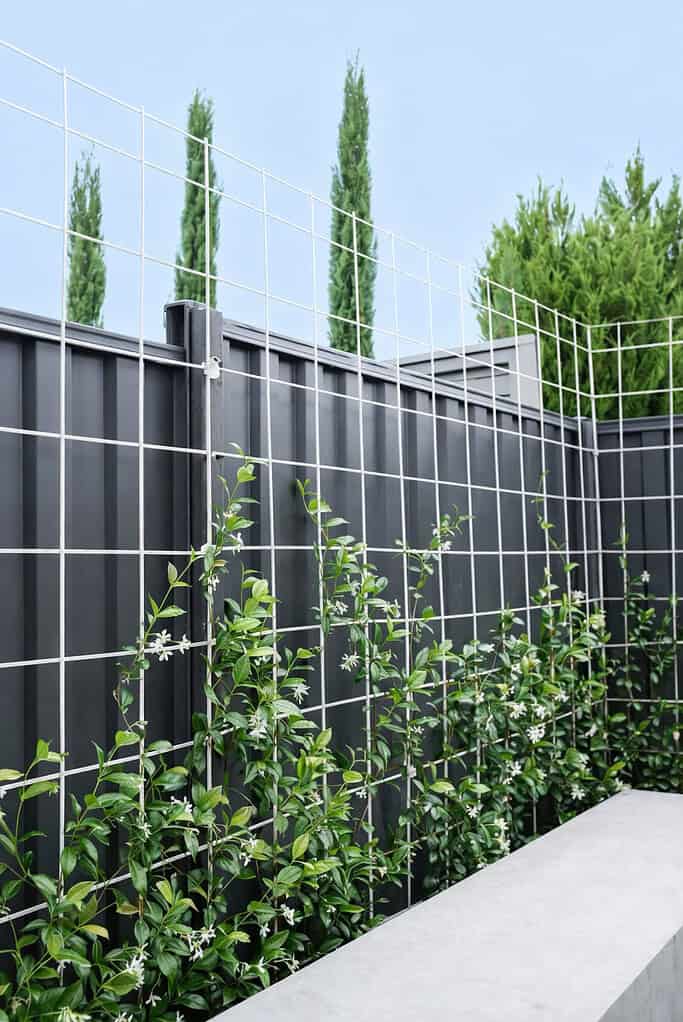
Planting star jasmine is straightforward.
Whether you’re planting in the ground at the base of a trellis or in a pot with a small trellis, follow these steps to get your star jasmine off to a great start (preferably in spring or fall when the weather is mild):
1. Prepare the Soil and Site
Clear the planting area at the foot of your trellis. Star jasmine likes loamy, fertile soil, so dig in some organic matter (like compost or well-rotted manure) to enrich the soil and improve drainage.
Aim for a spot about 6 inches away from the trellis base – planting a few inches out from the support rather than right against it will give the roots room and make training easier.
2. Dig the Planting Hole
Dig a hole about twice as wide and a bit deeper than the root ball of your star jasmine plant. This loosened area makes it easier for roots to grow out.
If the plant is pot-bound, gently tease or loosen the roots before planting so they aren’t circling tightly.
Place the star jasmine in the hole so that the top of the root ball is level with the surrounding ground (you don’t want it buried too deep).
3. Set Up the Trellis (If Needed)
Ideally, have your trellis or support installed at planting time. It’s much easier to train the vine from day one than to add a support later.
If you’re using a freestanding trellis or arbor, make sure it’s firmly in place. For a wall, install eye hooks and wire in the desired pattern before planting.
Having the structure ready means you can immediately start attaching the jasmine’s stems to guide them in the right direction.
If you’re looking for some easy options, check out our top-rated trellis kits for climbers to get your vine off to a strong, beautiful start.
4. Backfill and Water
Refill the hole around the plant with the soil (mix in a bit of compost with the backfill if you haven’t already).
Pat the soil gently to eliminate air pockets. Water the planting area thoroughly until the ground is evenly moist. This initial deep watering helps settle the plant in its new home.
After watering, you can add a layer of mulch (like bark or straw) around the base, keeping it a couple of inches away from the stem.
Mulch will help retain moisture and suppress weeds, creating a healthier root environment.
5. Planting in a Container (Optional)
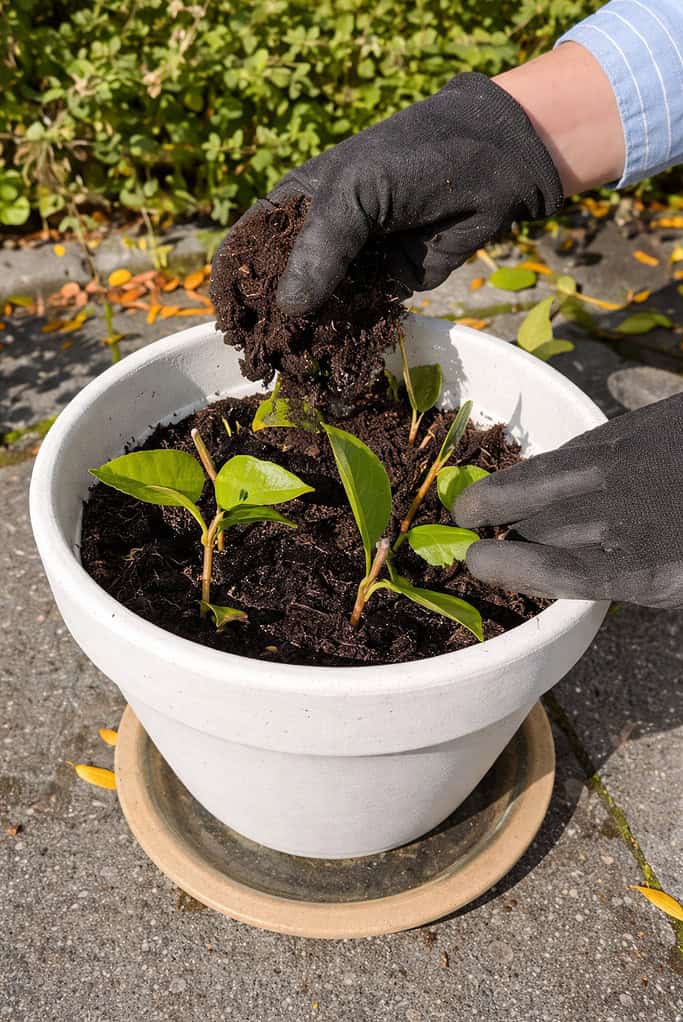
If you’re in a cooler climate or only have patio space, you can absolutely grow star jasmine in a pot.
Choose a large container (at least 14–18 inches wide for a young plant, larger if possible) with good drainage. Use a high-quality potting mix augmented with some compost for nutrition.
Plant the star jasmine at the same depth it was in its nursery pot. Insert a small trellis or obelisk into the pot (or place the pot against a railing or wall with a support) to give the vine something to climb.
Water well and be prepared to water potted jasmine more frequently, as containers dry out faster than garden soil.
In cold winter areas, you can move the pot indoors to a bright, cool location before the first frost to overwinter the plant.
With your star jasmine planted, you’re ready for the fun part – helping it climb and grow into a spectacular trellis display!
How to Train Star Jasmine on the Trellis
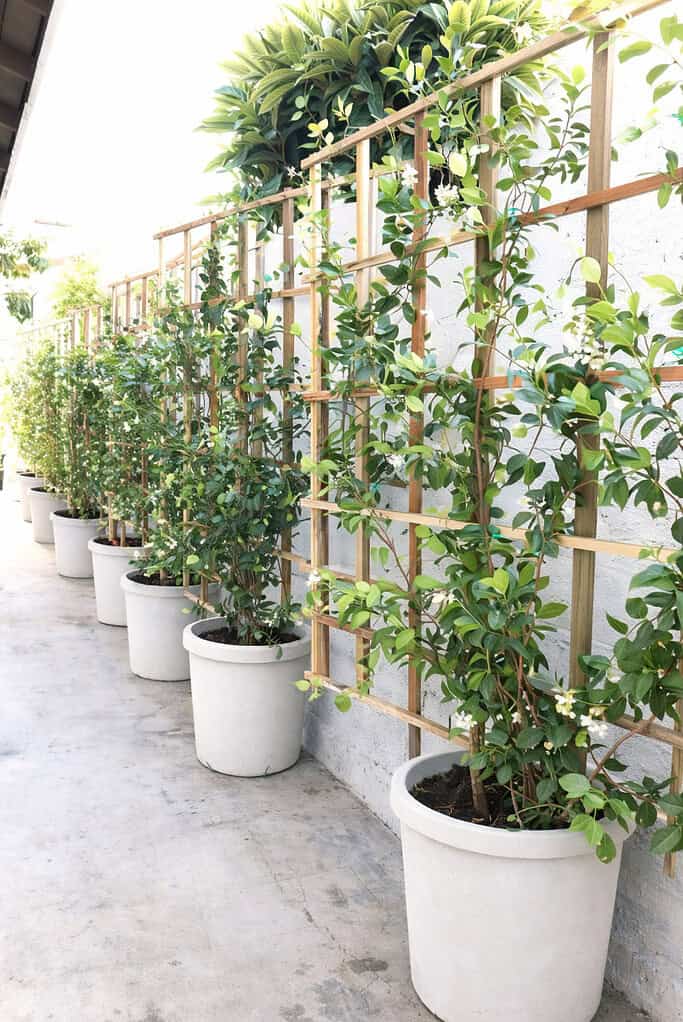
One of the joys of growing a climbing plant like star jasmine is guiding its vines as they reach upward.
In the beginning, your star jasmine will need a little coaching to latch onto the trellis, but soon it will twine and climb enthusiastically on its own.
Here’s how to train your star jasmine for a beautiful trellis coverage:
Guide the Stems
Right after planting (or as new growth emerges on an established plant), take the longest, most flexible shoots and gently attach them to the trellis.
You can weave stems through the lattice or tie them loosely to the support.
Use soft garden twine, plant ties, or even small zip ties to secure the vines – just make sure ties are not too tight, as you need to allow room for the stem to thicken.
Start by fixing the vine near the base of the trellis so it doesn’t flop over, then continue to tie on lengths of vine as they grow.
Aim to spread the stems out in a fan shape or evenly across the trellis, so the coverage will be uniform.
Regular Check-ins
For the first year, check your vine every week or two and train any new shoots in the direction you want them to grow.
New star jasmine vines can be a bit wayward – if a side shoot is heading away from the trellis or crawling in a wrong direction, simply redirect it back toward the support or prune it off if it’s not needed.
Consistent guidance early on will encourage a tidy growth habit. Remember, overcrowding vines can lead to sparse growth and pest issues, so spacing out the vines on the trellis is worthwhile.
Twining Takes Over
After a little initial help, your star jasmine will start to get the hang of climbing. This vine naturally seeks support and will twirl its new tendrils around whatever it touches.
Once the stems find the trellis, they’ll wrap around on their own. You’ll notice that new shoots begin to coil around lattice slats or wires without needing to be tied.
Star jasmine’s twining habit means it doesn’t have sticky pads or aerial roots – it won’t cling to a flat wall by itself – but give it a wire or slender stick and it will grip it firmly.
Over time, the vine will anchor itself in place. Just keep an eye on progress and do a bit of tidying or tying here and there to fill any gaps.
Be Patient and Enjoy
In the first season, your star jasmine might only cover part of the trellis as it establishes roots. But don’t worry – it’s a fast-growing vine once it gets going.
By the second year, expect a surge of growth. Soon, you’ll have a trellis cloaked in green, and when flowering season comes, it will be covered in starry blossoms.
For example, with adequate sun and water, star jasmine can easily reach the top of an 8-foot trellis by its second year and continue to thicken from there.
Given enough time (and a tall support), it can even climb 20–30 feet high and create a wall of fragrance and color.
Creative Designs
Feel free to get creative with how you train your star jasmine. You can espalier it in a crisscross pattern on a fence, arch it over a doorway, or even shape it into a spiral on a topiary frame.
As long as there’s something for it to twine around, you can guide it into all sorts of decorative forms (garden trellis ideas are endless!).
Just remember to keep the structure sturdy and prune as needed to maintain the shape.
With your vine happily climbing, the next step is keeping it healthy.
Let’s look at caring for your star jasmine through the seasons.
Easy Care and Maintenance Tips for Star Jasmine

Star jasmine is relatively low-maintenance, but consistent care will ensure it stays healthy and blooms its best.
Here are the key aspects of caring for your star jasmine on a trellis:
Watering and Feeding
Like many beautiful flowering vines, star jasmine appreciates regular watering, especially during its first year and in hot weather. Keep the soil evenly moist but not waterlogged.
A good rule of thumb is to water when the top inch or two of soil has dried out.
In moderate climates, that might be about once per week; in scorching summer heat, you may need to water 2–3 times a week.
Star jasmine isn’t a “water hog,” but it’s also not very drought-tolerant, so don’t let it dry to the point of wilting.
Mulch at the base can help retain soil moisture so you can water a bit less often. In containers, you’ll likely water more frequently (container soil dries faster) – check the soil every few days.
When it comes to plant food, star jasmine is fairly undemanding. If you prepared the soil well with compost, your vine may not need any fertilizer its first year.
Many gardeners find that an annual top-dressing of compost in late winter or early spring is enough to keep the plant happy.
This slow release of nutrients mimics the natural enrichment of soil and can lead to plenty of growth and flowers. If you do choose to fertilize, use a balanced, slow-release fertilizer in spring, following package instructions.
Avoid giving too much nitrogen-rich fertilizer – star jasmine that gets excessive nitrogen may produce lots of lush green leaves at the expense of blooms.
Generally, feeding once a year (after flowering, or in early spring) is plenty. Always fertilize lightly on potted jasmines, since they can be more sensitive to buildup in the soil.
Pruning and Seasonal Care
Pruning star jasmine is important to encourage branching, control its size, and promote flowering. The best time to do a significant prune is right after the main flowering period each year.
Once those lovely white blooms start to fade (usually in late spring or early summer), take your pruners and trim back the vine as needed.
You can cut back long, wandering stems to keep the plant in bounds or thin out sections that have become too dense.
Star jasmine blooms on the new growth of the season, so pruning after flowering gives it time to produce fresh shoots that will set flower buds for the next cycle.
If you prune very late (e.g. in early spring), you might accidentally remove the wood that would have bloomed, so try to do major cuts right after flowering ends.
When pruning, always use clean, sharp pruning shears. The vine’s stems emit a milky sap when cut, which can be sticky and might irritate sensitive skin.
It’s a good idea to wear gloves and long sleeves if you’re doing a lot of pruning, and wash off any sap from tools and hands afterward.
The good news is star jasmine can handle even a fairly hard pruning if needed – it will resprout from old wood. So if your vine gets overgrown or bare at the base, don’t be afraid to cut it back to refresh it (ideally in late winter or after bloom).
Light touch-up pruning can also be done in autumn to remove any tangled vines or to shape the plant before winter, but avoid cutting too much late in the season.
Seasonal care for star jasmine is minimal. In its hardiness range, it doesn’t need winter protection beyond basic mulching.
If you notice some leaves turning red or bronze in winter, don’t worry – that’s a normal response to cooler temperatures, and those leaves will drop off in spring as new growth arrives.
If you live at the cooler end of its range (zone 8), a cold snap might cause some dieback, but the roots usually survive brief freezes (down to ~10 °F). Just trim any frost-damaged parts in spring.
For vines in containers, remember to bring them into a sheltered spot (garage, greenhouse, or indoors near a sunny window) before hard frost.
Potted star jasmine can be semi-dormant indoors (water sparingly in winter) and then moved back out after the last frost in spring.
Pest and Problem Prevention
One reason star jasmine is beginner-friendly is that it’s relatively resistant to many pests and diseases. However, like any plant, it has a few potential issues to watch for:
Insects
The most common pests you might encounter are mealybugs or scale insects.
These sap-sucking bugs often hide on the stems or undersides of leaves, sometimes leaving behind sticky residue (honeydew) or sooty mold.
Check your vine occasionally, especially in the dense inner foliage, for any signs of infestation. If you see cottony white fluff (mealybugs) or brownish little bumps on stems (scale), treat early.
You can dab small infestations with an alcohol-soaked cotton swab, or spray the plant with insecticidal soap or neem oil to control the pests.
Japanese beetles can also be an issue in some southern regions – they may chew on the leaves or flowers. Hand-pick beetles if you see them, or use traps/organic insecticides as needed.
Diseases
Star jasmine isn’t prone to serious diseases if grown in well-drained soil and with good air circulation. Avoid overhead watering late in the day (to keep foliage dry overnight) to prevent fungal leaf spots.
Root rot can occur in waterlogged conditions, so proper drainage is your best defense.
If you ever notice a section of the vine looking wilted or stunted despite watering, check that the roots are healthy and not sitting in soggy soil.
Yellow Leaves or No Blooms
If your star jasmine’s leaves are turning yellow, it could be a sign of overwatering, nutrient deficiency, or simply some older leaves dropping.
Make sure you’re not keeping the soil too wet and consider a light feed of balanced fertilizer if it hasn’t been fed in a long time.
If the plant looks healthy but isn’t blooming, consider the amount of sunlight it’s getting. A star jasmine in deep shade will have lovely leaves but few flowers.
Move it to a sunnier spot or thin out surrounding growth that’s casting shade. Also, remember that new plants might take a year or two to start blooming heavily – patience is key.
Avoid high-nitrogen fertilizers as mentioned, since those can cause lots of green growth but inhibit flowering.
Overall, with regular watering, a bit of spring compost, and pruning after flowering, your star jasmine will largely take care of itself. The vine will continue to twine and climb, filling in your trellis nicely.
Ready to Create Your Show-Stopping Jasmine Trellis?
You’ve learned all the basics of how to grow star jasmine on a trellis – from picking the perfect support and planting your vine, to training it upward and keeping it healthy year after year.
Now the fun part begins: putting these tips into action in your own garden. With its ability to turn a plain fence into a fragrant flower wall, star jasmine is truly a show-stopping garden addition.
So roll up your sleeves and get planting – a gorgeous, sweet-scented trellis awaits!
Are you growing star jasmine, or planning to start? We’d love to hear your experiences, tips, or any questions you have.
Leave a comment below and join the conversation – let’s help each other create gardens that smell as amazing as they look!
FAQs
Can I grow star jasmine in a container in a cold climate?
Yes! Star jasmine does well in containers, making it ideal for colder zones. Plant it in a large pot with a trellis, enjoy it outdoors in summer, and bring it inside to a bright, cool spot during fall and winter. Water sparingly indoors and give it plenty of light. In spring, gradually move it back outside to resume growth and flowering.
Will star jasmine grow or bloom in shade?
Star jasmine prefers full sun but can grow in partial shade, though blooms may be limited. In full shade, it will survive but mostly produce foliage. For best results, give it at least half a day of sun. In very hot climates, some afternoon shade can prevent leaf scorch.
How fast will star jasmine cover my trellis?
Star jasmine grows quickly once established. Expect modest growth in the first year and rapid expansion by year two. Under ideal conditions, it can reach the top of an 8–10 foot trellis within 2–3 years, and over 20 feet long over time. Proper watering, feeding, pruning, and horizontal training can speed up coverage.
Is star jasmine safe for pets and children?
Yes! Star jasmine is non-toxic to cats, dogs, and humans according to the ASPCA. It’s safe to plant in a family garden, though it has sticky sap that may irritate sensitive skin, so gloves are recommended when pruning.
Why is my star jasmine not blooming?
Lack of blooms is usually due to insufficient sunlight, too much nitrogen fertilizer, young plant age, incorrect pruning, or water stress. Ensure it gets plenty of light, avoid excessive fertilizer, prune after flowering, and maintain consistent moisture for best results. Patience is key—sometimes your jasmine just needs time to mature.