
Building a small chicken coop for a tiny yard can be both fun and practical.
Even in cramped spaces – urban backyards, small suburban lots or cottage gardens – you can keep a happy flock of backyard chickens.
These DIY coop ideas show how to make the most of limited space using budget-friendly materials (think reclaimed wood pallets, repurposed lumber, hardware cloth and metal roofing).
You don’t need to be a carpenter or have a giant garden to give your hens a good home. Many beginner-friendly breeds (Rhode Island Reds, Plymouth Rocks, Australorps) do well in small flocks.
Ready to get creative? Dive into these compact coop designs and get inspired for your own tiny-yard chicken haven!
12 Small Coop Designs
These 12 small chicken coop ideas are perfect for beginners and DIY enthusiasts alike.
They focus on practical designs, accessible materials, and space-saving solutions, so you can build a functional coop without feeling overwhelmed.
1. Reclaimed Pallet Wood Coop
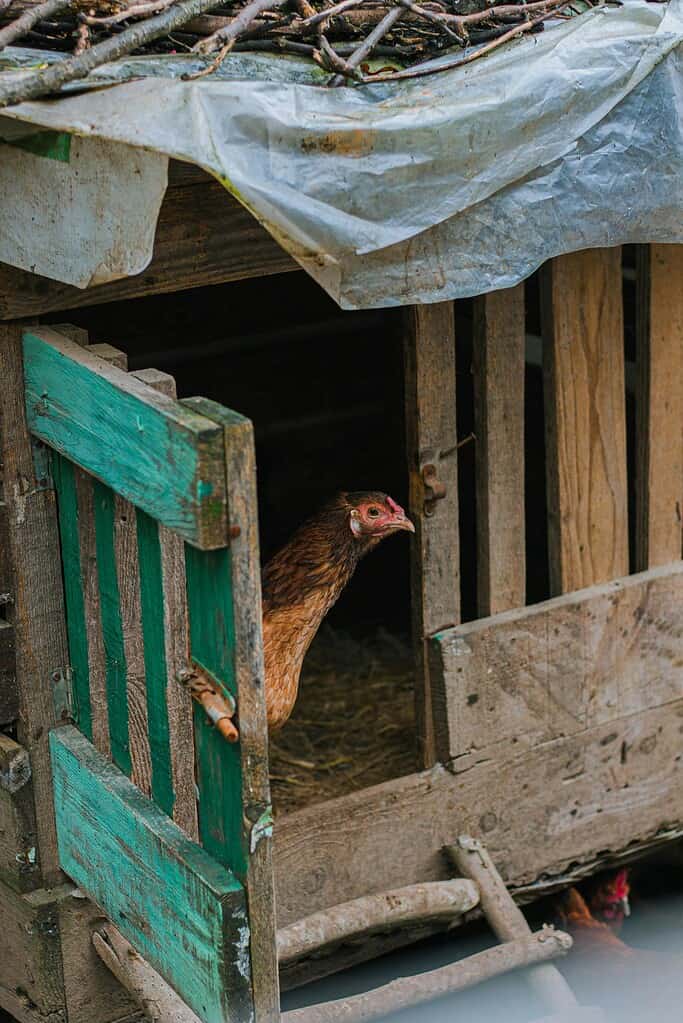
Turn free or cheap wood pallets into a simple coop structure.
You can build an entire “hen house” from 24 untreated pallets (including a pallet base) and leftover scrap planks.
Pallets and reclaimed lumber are perfect for rustic, budget coops. The example here uses salvaged floorboards and even a tongue-and-groove bamboo roof.
This style often looks charmingly rustic. Make sure to use untreated pallets (to avoid chemicals) and staple hardware cloth over any gaps to keep predators out.
Inside, install a few simple nesting boxes and roosts – even a tiny coop can hold 3–5 hens if well-planned.
2. Mobile A-Frame “Chicken Tractor”

A petite moveable coop or “chicken tractor” is ideal for tight spaces. This A-frame coop on wheels lets you roll the chickens to fresh grass and back into the yard.
It’s compact (often 4×4 ft or so) and includes a sloped roof and nesting box. Many models can be built DIY or bought as kits.
The advantage: you optimize space by frequently relocating the coop, enriching ground without a fixed run.
Pair it with a short movable run or chicken tunnel for safe foraging. (Check out our guide on best chicken tunnel options for more on that.)
In tiny yards, a mobile coop also makes cleaning easier – just move it onto newspapers or straw, scrape, and relocate.
The photo above shows a simple lean-to coop on wheels; it “fits well in any backyard” thanks to its compact design.
3. Raised Wooden Coop With Enclosed Space Underneath
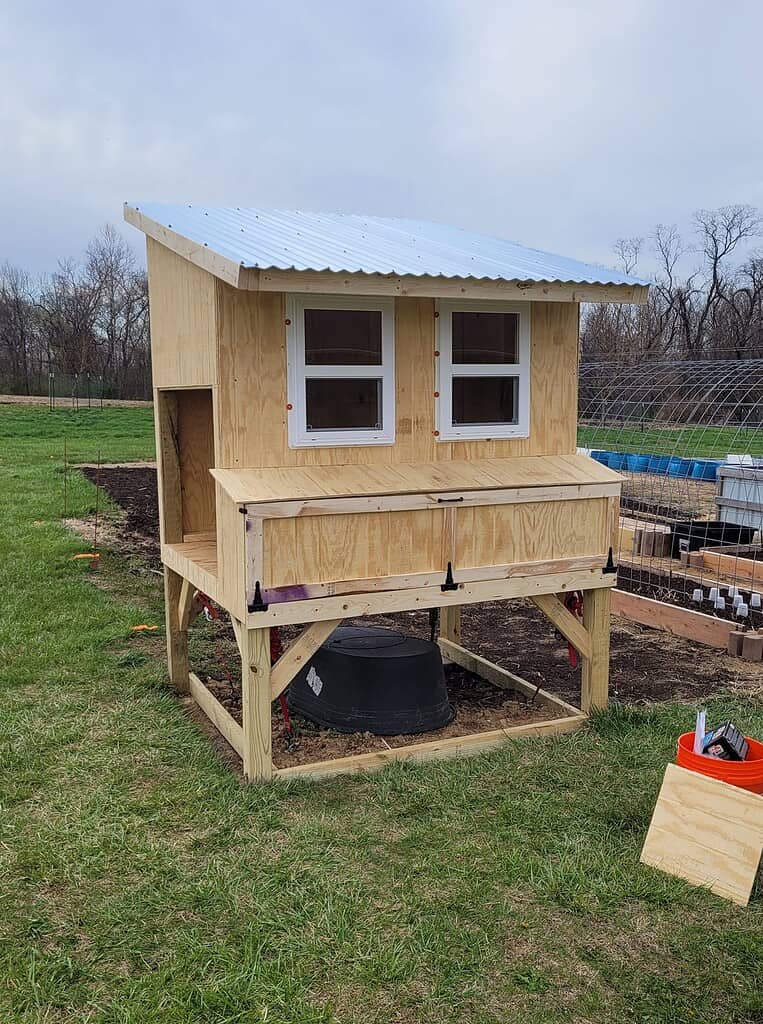
This raised wooden coop design is a great fit for tiny yards that still need good airflow and easy cleaning.
The coop sits high enough off the ground to keep the interior dry and well ventilated, while the open space underneath can be enclosed or partially enclosed for shade and movement during the day. The slanted metal roof helps with rain runoff and keeps the interior cooler during warm weather.
The front access panel makes egg collection and cleaning simple, which is especially helpful for beginner chicken keepers.
Built mostly from plywood or reclaimed lumber, this style works well for small flocks of calm, beginner-friendly breeds like Rhode Island Reds or Australorps.
With hardware cloth added underneath and around openings, this coop stays compact without sacrificing safety.
It’s a clean, practical setup that fits neatly into small backyards without feeling cramped.
4. Lean-To Wall Coop
Building your coop against an existing wall or fence saves ground space. A lean-to coop uses one wall of your yard (shed or house) as a back wall.
The angled roof slopes down for drainage. This design can be as simple as an A-frame shed attached to a fence, with nesting boxes facing outwards. It’s great for narrow garden edges.
Even a small shed can be converted: add a chicken door and mesh windows for ventilation. You’ll still want at least 3–4 sq ft of indoor space per bird, so a 3×3–4×4 ft lean-to can house a few hens.
Don’t forget predator-proofing: staple hardware cloth over vents and use strong latches, since even small coops can attract raccoons and neighbors’ pets.
5. A-Frame Hutch Coop
Think of the classic rabbit hutch design, but scaled for chickens. An A-frame hutch is a triangular coop with a peaked roof.
Inside, it offers easy-clean wire floors or a plywood floor with shavings, plus a roost beam and small nest box. The slope of the A keeps rain off.
A-frame coops are lightweight and simple to build; you can even mount them on rails or wheels for mobility. The small store-bought kits are popular and fit well in any backyard.
For a DIY touch, use reclaimed pallet boards for siding and a metal roof to keep it weatherproof. This design uses minimal space yet still lets 2–4 hens roost comfortably.
6. Patio or Deck Coop
Got a small patio or balcony? Build the coop on your deck! A deck coop sits on the porch or patio railing (secured for safety).
It can be a mini version of a shed coop, with nesting boxes accessible from the outside. Some urban keepers install hanging coops or coop boxes into a railing.
Even a narrow 2×4 ft coop can yield a few eggs if stocked with bantam hens. For example, a 2×2 ft coop on a balcony for 2 bantams, with a secure mesh run on the floor.
Just check any HOA or city rules first!
This idea makes use of unused deck space, and your hens get a view of the neighborhood. Add a small ramp to ground level during the day for a mini-run.
7. Multi-Level Chicken Hutch
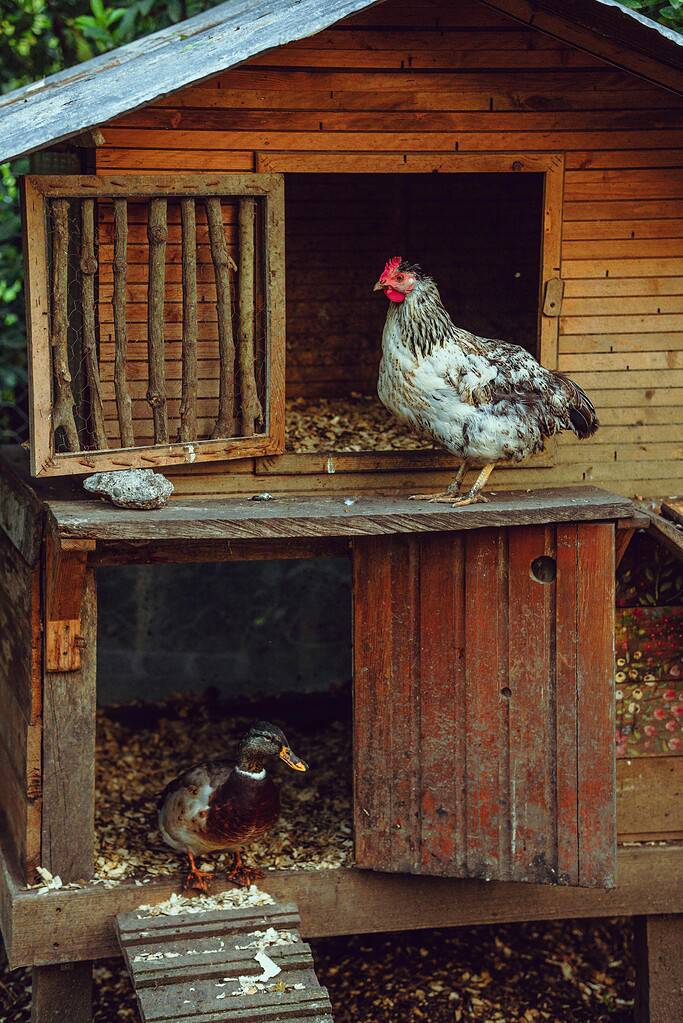
When floor area is tight, go up. A two-story or lofted coop provides extra room vertically. Picture a small coop with a raised upper chamber and a ground-level run.
The upper coop can have nesting boxes and a roost, while the lower area is an open-air roosting/run space (covered on top by the coop floor).
This design can hold 4–6 chickens in a tiny base footprint. It’s like bunk beds for hens – popular in young chicks brooding coops too.
Ensure at least 30–40 inches of clearance for the under-run and good ventilation. Just be cautious: more levels mean more predators can lurk below, so use sturdy hardware cloth all around.
8. Wall-Mounted or Fence Coop
Save ground space by mounting the coop on a wall or tall fence. It’s like a birdhouse for hens!
A wall-hung coop (secured at eye-height) can be 2–3 ft high and perhaps 2×3 ft wide, with an access door on top for egg collecting. Below, you can attach a small run enclosed with mesh.
This design keeps chickens off the ground (great for small yards) and adds a cute feature to your fence line.
Use weatherproof wood (cedar or pine) and sloped roof panels to shed rain. For safety, put chicken wire on the run floor or provide a low perch.
This idea doubles as chicken coop decor – hang flower boxes or paint it to blend with your backyard style (see our [practical chicken coop decor ideas] for inspiration).
9. Garden Planter Coop
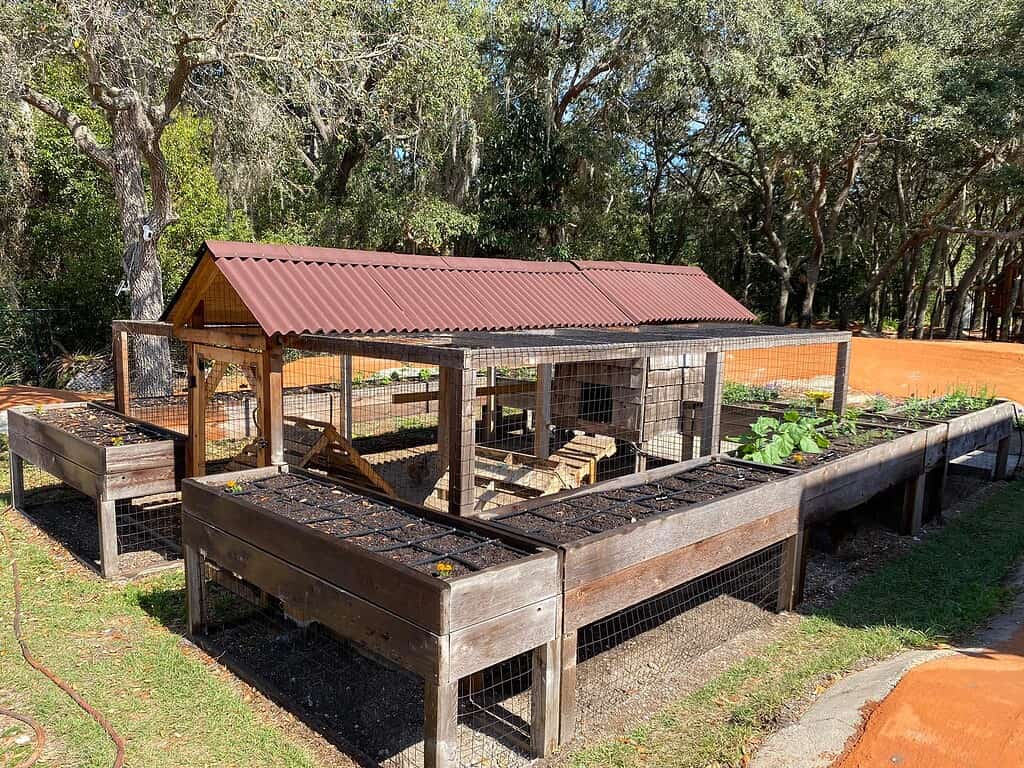
Combine gardening and chicken-keeping! A planter-top coop is built with raised garden beds or planters as part of the structure.
For example, a small coop can sit on two side-by-side raised beds (with soil). The beds provide fresh greens the hens can peck, and their waste fertilizes the plants.
The coop itself might sit in the center with nesting boxes, with a ramp leading into the planter area. Alternatively, you can make the roof of a run out of a shallow garden bed.
This maximizes utility of tiny space. Use sturdy cedar planters and cover them with hardware cloth or a chicken-proof fence on top.
This creative coop brings chickens right into your garden beds, saving space and creating a mini-ecosystem.
10. Repurposed Structure Coop
Give new life to an old shed, dog kennel, or dollhouse. If you have a small structure lying around, convert it into a coop.
For example, an old wooden playhouse or garden shed can be retrofitted with a chicken door, nesting boxes, and wire mesh windows.
A retired plastic dog kennel can also become a cozy coop with some ventilation holes and an attached run.
Look for things like an unused freezer chest (insulated style coop!) or even a tool cabinet.
Repurposed coops save money and materials. Just be sure to seal any gaps (so rats or predators can’t squeeze in) and use hardware cloth on openings.
11. Compartmentalized “Chicken Condo”
Divide a small coop into sections or “apartments” to make it feel larger.
For example, a 3×3 ft coop can be partitioned into two sections: one for sleeping (with perches) and one for nesting (with nest boxes).
Chickens won’t knock each other around and it feels more spacious. Some designs stack nest boxes along one wall so the center floor remains open.
Think of this like a tiny chicken apartment building – it allows a few more birds in the same footprint. No image here, but you might imagine a cube divided into chambers.
The key is to ensure each bird still has at least ~3 sq ft (standard) to spread out.
12. Fully Covered “Aviary” Coop
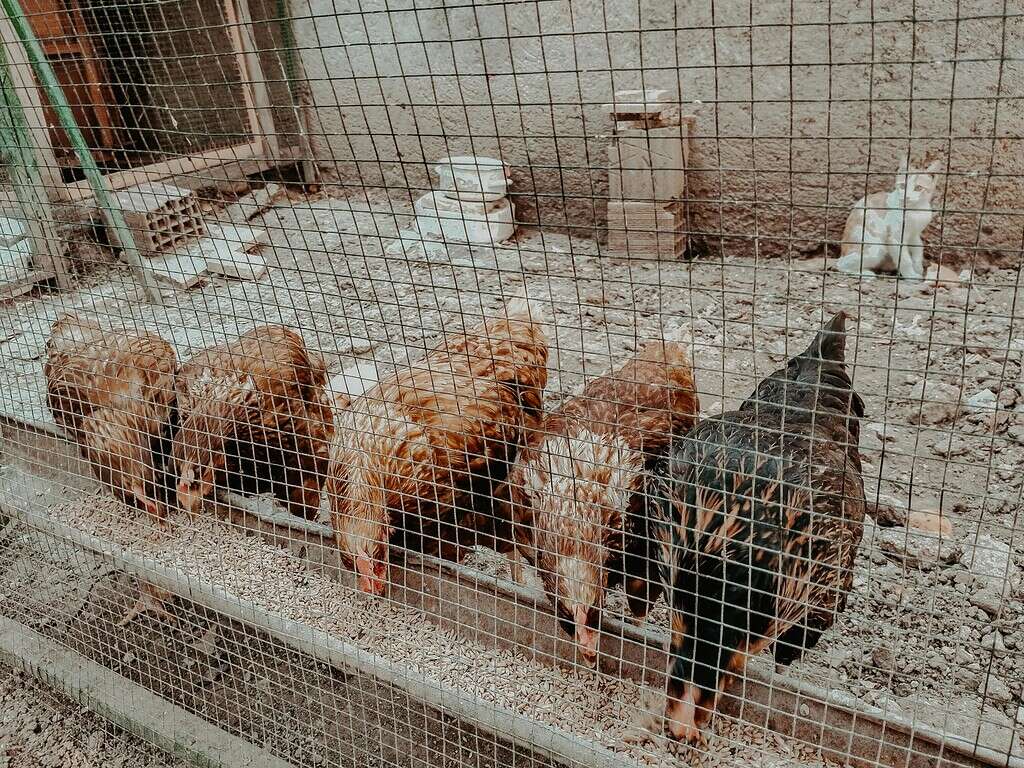
Finally, consider an enclosed-air coop as your small yard project. This is a coop with a full roofed enclosure (like a large chicken wire greenhouse).
The coop itself might only be 3×3 ft, but it connects to an enclosed run that is also roofed (covering a 6×6 or larger area).
In this way, even a tiny coop can support a few chickens since they have a covered run to move around safely. You can attach the run to an existing deck, wall, or frame.
Some designs use old greenhouse frames or hoop houses to cover the run. All sides and top use hardware cloth to keep predators out, while still giving birds room to roam.
This “aviary” setup ensures chickens have space in the yard without enlarging the coop itself.
Planning Your Tiny Coop
When building a coop for a small yard, planning is key. Decide how many hens you want (remember: roughly 3–4 sq ft per standard hen inside the coop, plus about 10 sq ft per hen in the run if possible).
For example, 3 medium hens are comfortable in about a 3×3 ft coop (9 sq ft). Consider vertical space too: taller coops allow more perch levels.
Choose a spot with some natural shade (overheating can stress hens) but also shelter from heavy rain or wind.
Make sure to provide proper ventilation – even small coops need screened vents or windows so air can circulate. This prevents dampness and helps keep hens healthy.
In a tiny yard, you might build up, down, or out: under a deck, against a fence, or on stilts to save footprint.
Also think about access for you: can you reach in to collect eggs or clean easily? A removable panel or pop-door can help.
Materials
Most DIY small coops use affordable, accessible materials. Wood pallets, reclaimed lumber or old fence boards work great for framing and siding.
Use hardware cloth (sturdy welded wire) for all openings instead of flimsy chicken wire. For the roof, metal sheets or corrugated panels give durability and shed rain.
(In one example coop, the builder used metal roofing over plywood.) Recycle old windows for light, and repurpose doors or kitchen cabinet doors for access panels.
Keep it simple: a good cordless drill, saw, and stapler are often all you need. If tools or carpentry intimidate you, look for simple plans or kits for tiny coops.
Many designs even allow indoor pre-assembly then setting the coop outside when it’s done.
Choose the Right Chicken Breeds
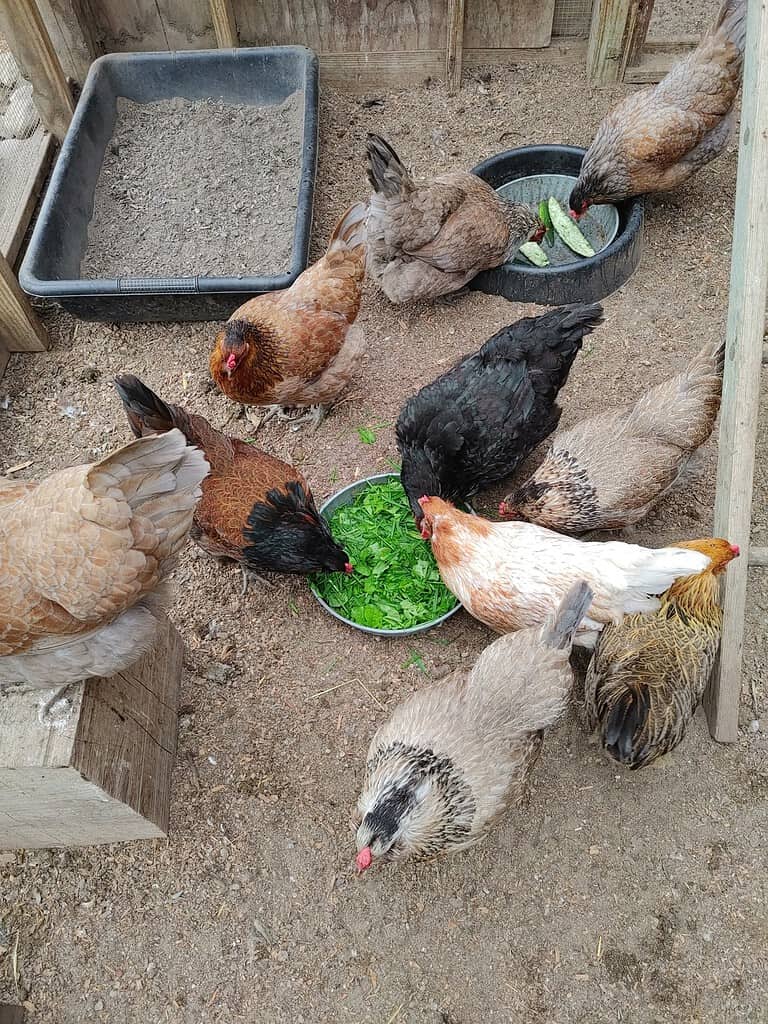
Small coops pair best with smaller or docile breeds. Bantams (miniature chickens) need only ~2–3 sq ft each, saving even more space.
Classic backyard layers like Rhode Island Reds, Plymouth Rocks or Australorps are calm and dual-purpose, making them beginner-friendly.
If you only have space for 3–4 hens, avoid large heritage breeds (they crowd easier) or aggressive roosters.
Note also the difference between layers (eggs) and broilers (meat).
While you can raise meat birds in a small coop, broilers grow faster, eat more, and may overcrowd a small flock setup – see our FAQ below on raising meat chickens.
Coop Accessories and Care
Don’t forget the finishing touches and daily care tips that make a coop truly livable:
- Nesting Boxes: Even a tiny coop should have at least 1 nesting box for every 3–4 hens. A 3-hen flock needs 2 boxes, for example. Mount boxes low on one side of the coop so eggs are easy to collect.
- Roosts (Perches): Hens love to sleep on roosts. Install wooden perches about 4 inches wide, higher than the nests, with at least 8–12 inches of perch length per bird. A multi-tier roost (one above another) can fit more chickens in a tight coop space.
- Dust Baths: Chickens need to dust bathe to stay healthy. In a tiny coop or run, provide a box or shallow pan filled with sand, wood ash, and dirt. We recommend trying a DIY chicken dust bath station idea – it could be as simple as a large planter or plastic tub. Your hens will thank you for the spa treatment.
- Feeders and Waterers: In a small flock (2–5 birds), one gravity feeder and one waterer is usually enough. Hang them off the floor to save space and keep them clean. DIY ideas (like repurposed dog bowls or PVC dispensers) can be found on our DIY chicken feeder ideas post. Just ensure every chicken can eat and drink without crowding, or they’ll peck each other.
- Cleaning: Good hygiene keeps even a tiny coop fresh. Sweep out droppings every day and replace bedding (straw, hemp, or pine shavings) weekly. Deep-clean monthly by replacing all bedding and scrubbing the floor and walls with a mild soap/disinfectant. Make sure the coop dries completely before adding fresh straw – moisture is the enemy of comfort (and increases ammonia smell).
- Comfort: If you’re in a hot climate, add a shaded cover or a solar-powered coop fan. In cold areas, consider adding insulation to the coop walls (styrofoam panels behind plywood can work). As an extra tip, avoid blocking all the roof vents; instead use straw bales or quilts to reduce drafts but still allow some airflow. In winter, keep food and water from freezing by checking regularly; in summer, always provide cool, clean water and shade.
Throughout your planning, focus on predator safety: staple hardware cloth on all windows and vents, use spring-loaded latches on doors, and bury fencing at least 6 inches deep to block digging predators.
(See our predator-proof coop guide for details.)
Even a small coop can face foxes, raccoons or neighborhood dogs, so strong defenses are a must. Motion-sensor lights or an elevated perch-height also help deter night-time prowlers.
Ready to Build Your Tiny Coop?
Building a small chicken coop can be a fun DIY project that makes the most of limited space.
Pick one of these ideas as a jumping-off point, adapt it to your yard, and you’ll be collecting fresh eggs in no time.
Remember to plan for comfort and safety: give each hen her 3–4 sq ft of coop space, secure the run, and choose gentle backyard breeds (Reds, Rocks, Australorps) that thrive in small flocks.
With these tips, even the smallest yard can yield a happy little flock. Now grab some old pallets or lumber and get building!
Which coop idea caught your eye? Have you tried any of these designs? Let us know in the comments below – we love hearing about your chicken adventures!
FAQs
What are bantam chickens, and are they good for small coops?
Bantams are miniature chicken breeds (often half the size of a standard hen). Because they are smaller, each bantam only needs about 2–3 square feet of coop space (compared to 3–4 for full-sized breeds).
This means you can fit more bantams in a tiny coop footprint. Bantams lay smaller eggs but are perfect for backyard flocks when space is very limited.
Popular bantam breeds (like Silkies or Bantam Cochins) are also very docile. If you’re really short on room, raising bantams lets you keep a few happy hens in a very compact home.
How can I keep a small chicken coop warm in winter?
Even a tiny coop needs winter-proofing.
First, ensure the coop is draft-free but ventilated: you want any vents up high (snow won’t blow in) and seal gaps near the floor. Use extra bedding (pine shavings or straw, 4–6 inches deep) to insulate the floor.
Adding a flap over the entrance can cut drafts. For very cold climates, you can install a safe heat source: for example a properly mounted heat lamp or small heated block (common in cold regions) – but use caution with fire risk.
Chickens also stay warmer when huddled together, so don’t overcrowd but don’t leave huge empty spaces. Check on them in subzero weather and keep water from freezing (warm water or solar-heated waterer helps).
In short, good insulation and draft control (plus extra bedding) will keep hens cozier in winter.
Is it practical to raise chickens for meat in a tiny coop?
You can raise meat chickens (broilers) in a small coop, but there are some trade-offs. Meat breeds like Cornish Cross grow very fast and large – they will need plenty of space to avoid stress.
If you want meat birds in a tiny yard, consider smaller dual-purpose breeds (like slow-growing Red Rangers) or limit your flock to 1–2 birds so they aren’t cramped.
Remember, meat birds eat more and produce more waste, so be prepared for a bit more cleaning. Also, broilers only live 8–12 weeks, so you’d turn over space quickly. If you plan to raise chickens for meat, you may also want a separate brooder or fenced run, as little chicks and roasters have different needs.
For most beginner small-flock keepers, focusing on layers (eggs) and occasional bantam chickens makes coop size easier to manage. (See our [raising chickens for meat] guide for more on this topic.)
How often should I clean or maintain a small coop?
Small coops actually benefit from frequent checks.
Aim to remove droppings daily or every other day, since limited space fills up quickly. Replace or stir bedding weekly: wood shavings or straw should be fluffed or topped up at least once a week to stay dry.
At minimum, do a full clean-out (scrub the floor and replace all bedding) once a month. Also inspect bedding and food for signs of mold or buildup. Maintaining cleanliness is easier if you have a removable tray or pop-up floor (some small coops are designed with cleaning in mind).
Regular quick cleans mean better air quality and less work down the road. In short: light daily/weekly touch-ups, and a thorough cleaning monthly.
How do I prevent pests (like mites or mice) in a tiny coop?
Smaller coops can get infested quickly if unchecked.
Prevent mites by using dust baths – add diatomaceous earth (food-grade) into a dust bath mix, since chickens will unknowingly use it to kill parasites. Clean and replace bedding often, as mites thrive in old straw.
Cedar or pine shavings also help repel pests. Seal any tiny holes (rats can squeeze through gaps as small as a coin); elevate the coop or use hardware cloth skirting so mice can’t burrow under the floor. Check for droppings and food spills nightly (these attract rodents).
A final tip: sprinkling food-grade diatomaceous earth around the coop exterior (in non-rainy weather) can deter ants and mites. With vigilant cleaning and a good dust bath, you’ll keep pests at bay even in a pint-sized coop.