
Your front yard is the first thing guests (and neighbors) notice about your home, and the right shrubs can make all the difference.
Whether you’re aiming for classic elegance, seasonal bursts of color, or year-round greenery, the right combination of shrubs can elevate your curb appeal without demanding endless maintenance.
In this article, we’ll highlight 12 beautiful shrubs for front yard curb appeal – a mix of evergreen shrubs (for year-round color) and flowering shrubs (for seasonal wow-factor).
These picks are friendly for beginner and intermediate gardeners alike.
Let’s jump in!
12 Beautiful Shrubs for Front Yard Curb Appeal (Zones 5–9)
Here’s a curated list of 12 beautiful shrubs that thrive in zones 5–9 and are perfect for making your front yard look its best.
1. Boxwood (Buxus) – Evergreen Classic
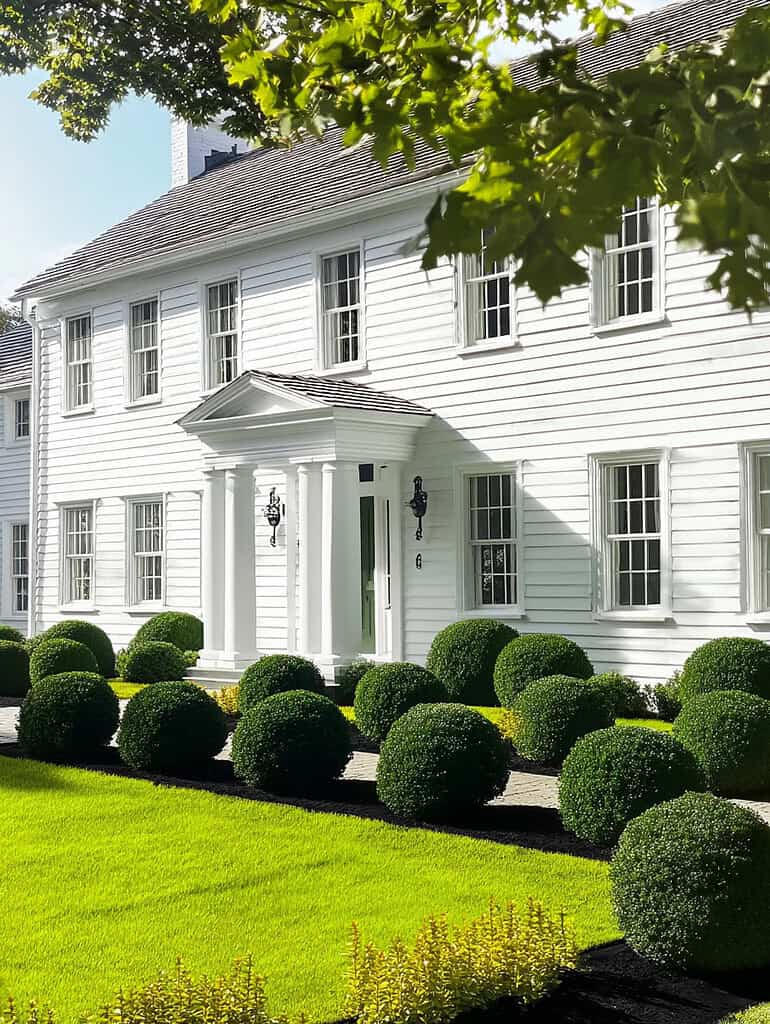
Boxwood is a front yard landscaping staple for good reason. These evergreen shrubs stay lush and green all year, giving your home structure and color even in winter.
There’s a reason boxwoods are considered classic – they’re deer-resistant, tolerant of shade, and can be trimmed into neat shapes or left natural.
Most boxwoods mature around 2–5 feet tall (depending on variety), making them perfect under windows or along walkways.
Hardy in zones 5–9, boxwood requires little maintenance beyond occasional pruning for shape.
Tip: If you prefer a native alternative with a similar look, consider inkberry holly (Ilex glabra) – a zone 5–9 evergreen that provides year-round color and can also be shaped into tidy hedges.
2. Hydrangea – Big Blooms for Curb Appeal
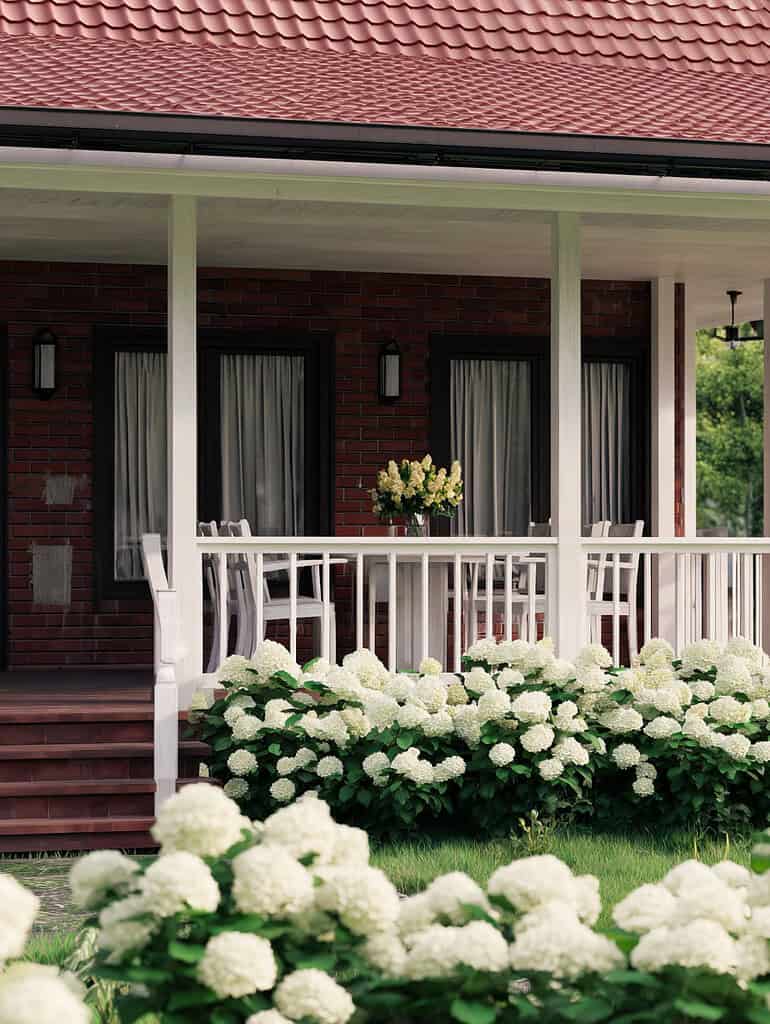
Hydrangeas are beloved shrubs for front yards because of their show-stopping flowers.
A variety like the smooth hydrangea (Hydrangea arborescens) is hardy in zones 3–9 and produces beautiful, large blooms (often in white, green, or pink) even in partial shade.
These mounding shrubs typically reach about 4–5 feet tall and wide, making them great for foundation plantings or flowering hedges.
Plant hydrangeas in well-drained soil and give them morning sun and afternoon shade for best results. They’ll reward you with huge flower clusters in summer, perfect for bouquets or drying.
Plus, some hydrangeas (like ‘Annabelle’) are native to America and support pollinators.
Prune in late winter or early spring, and enjoy their low-maintenance nature – just water during dry spells and they’ll thrive.
3. Azalea (Rhododendron) – Spring Floral Show
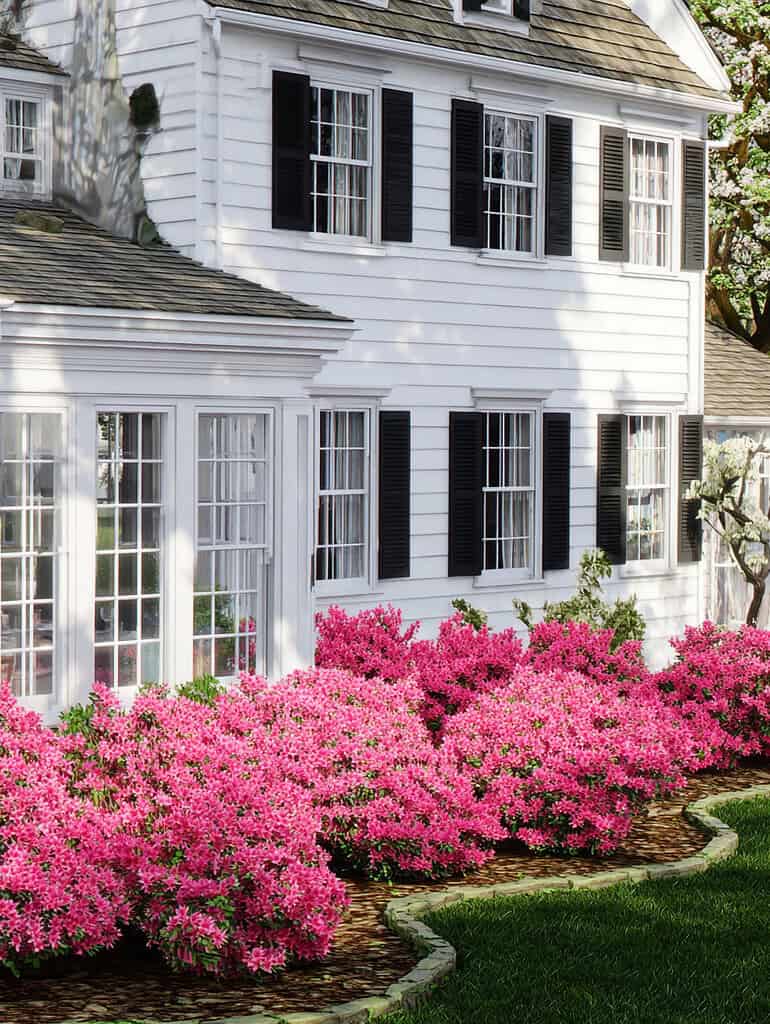
If you want your home to burst with color in spring, azaleas (a type of rhododendron) are a top choice.
There’s a reason azaleas and rhododendrons are beloved landscape shrubs – their vibrant spring blooms can cover the plant in pinks, purples, reds, or whites.
Many azaleas are evergreen or semi-evergreen, giving some year-round presence, and stay relatively compact (2–5 feet tall, though larger rhododendrons can reach 8+ feet if not dwarf varieties).
They thrive in zones 5–9 (check specific varieties) and prefer partial shade with acidic, well-drained soil. Once established, azaleas are low-maintenance shrubs – they usually only need light pruning after flowering and a layer of mulch to keep roots cool.
Plant them in your front foundation beds or under trees (they love dappled shade) for a pop of spring color that will have neighbors stopping to admire.
(Tip: Use an acid-loving fertilizer in spring to keep them happy.)
4. Lilac (Syringa) – Fragrant Cottage Favorite

For many, the sweet fragrance of lilac blossoms is the scent of spring. Lilacs are classic front yard shrubs known for their fragrant purple (or white) flower clusters that bloom in late spring.
They bring an old-fashioned charm and attract butterflies and bees.
Standard common lilac varieties can grow quite tall (8–12 feet), but there are dwarf varieties around 5–6 feet ideal for smaller spaces or foundation planting.
Hardy in zones 3–7 (and into zone 8 for some hybrids), lilacs thrive in full sun and well-drained, slightly alkaline soil.
They are long-lived and low-maintenance – just prune lightly right after blooming (removing spent flowers can encourage more blooms next year).
Plant a lilac by your front porch or fence, and every spring you’ll enjoy both the beautiful blooms and their legendary fragrance wafting through your yard.
If you’re looking for enchanting purple flowers to brighten your front yard, lilacs are a perfect choice.
5. Forsythia – Early Spring Sunshine
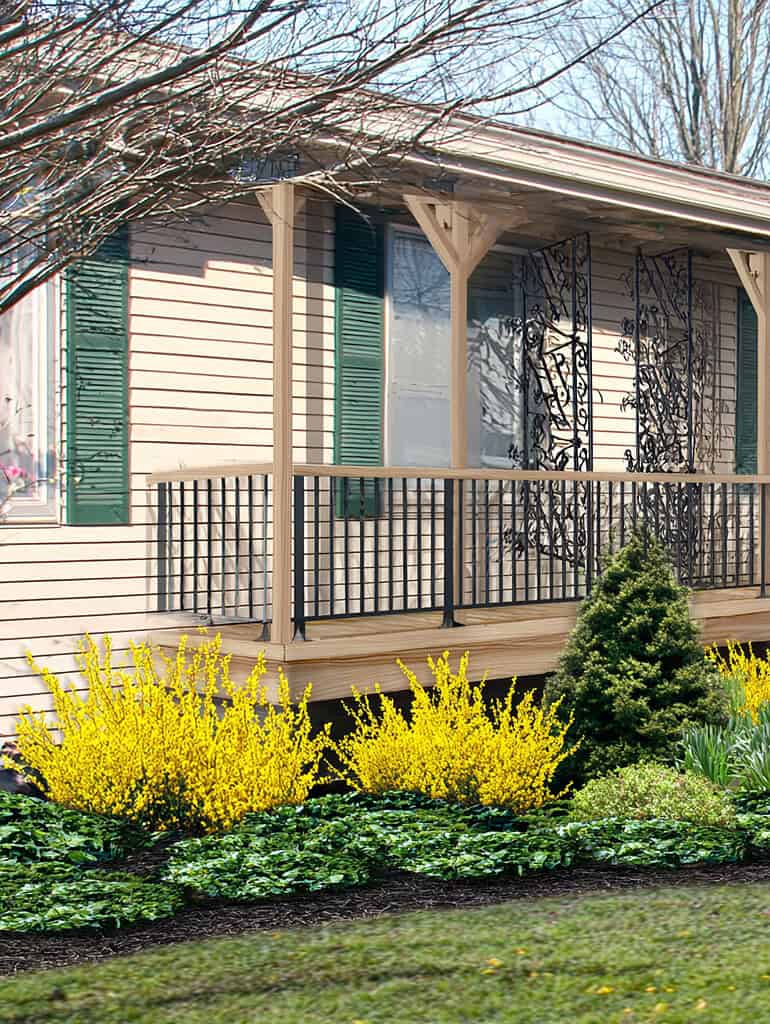
When a forsythia blooms, you know spring has arrived!
Forsythia is the ultimate early-spring flowering shrub with an explosion of bright yellow flowers along its branches in late winter to early spring.
Just one well-placed forsythia in your front yard can have passersby doing double-takes at the cheery profusion of yellow.
These fast-growing shrubs typically reach 5–8 feet tall (there are also compact varieties ~2–3 feet). Hardy in zones 5–8, forsythia loves full sun but can tolerate part sun.
It’s very low-maintenance – prune right after flowering if you need to control its size or shape, otherwise let its arching branches do their thing.
In summer it’s a leafy green backdrop, and in fall the leaves can take on a purplish hue before dropping.
Plant forsythia as a specimen, or create a hedge that literally glows each spring – either way, it’s a front yard showstopper.
6. Spirea – Easy Care and Season-Long Color
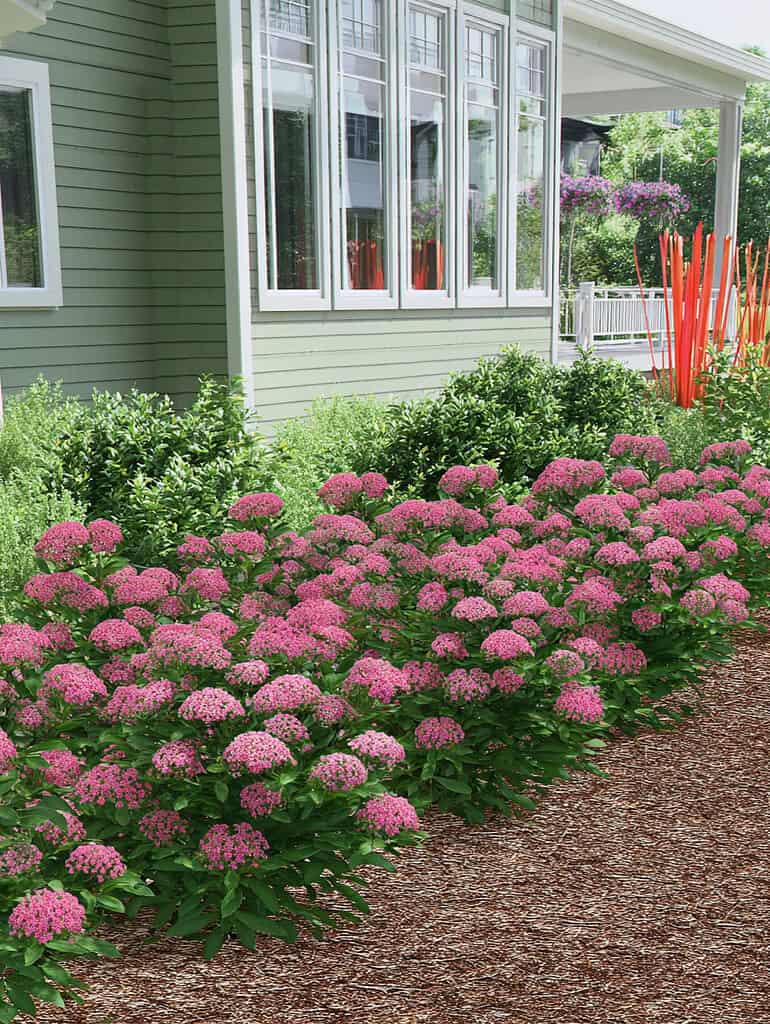
Spirea earns its popularity by being tough as nails yet pretty as a picture.
These low-maintenance shrubs burst with clusters of delicate flowers in late spring to summer – depending on variety, you might get white, pink, or red blooms.
But spirea isn’t just about flowers; many varieties have colorful foliage that starts bronze or crimson in spring, turns green or gold in summer, and then offers red-orange hues in fall.
In other words, spirea gives you multi-season interest. Most spireas stay compact, around 2–4 feet tall and wide (some can be larger, so choose a size that fits your space).
They are hardy (often zones 3–8) and can handle full sun, heat, cold, drought, even urban pollution – truly a plant-and-forget shrub.
Use spirea along pathways or as foundation plants; they form lovely mounded shapes. Just trim them back after flowering (or in late winter) to encourage fresh growth.
With spirea’s vibrant foliage and flowers, your front yard will have pops of color from spring through fall with minimal effort.
7. Weigela – Hummingbird Magnet

If you want your front yard to be buzzing (literally) with excitement, weigela is a fantastic choice.
This deciduous shrub features gracefully arching branches that get covered in bell-shaped blooms of pink, red, or white in late spring attracting hummingbirds and butterflies.
Modern weigela cultivars often rebloom throughout summer, so you get extended color and pollinator action.
Many varieties also have striking foliage – think deep purple or variegated leaves – adding visual interest even when not in bloom.
Weigela generally grows 2–5 feet tall and wide (dwarf types stay under 3 feet, larger ones can hit 5 feet). They thrive in full sun to part shade and are hardy in zones ~4–8.
Maintenance is super easy: weigelas are deer-resistant and easy-care. Just prune after the first major bloom wave (typically early summer) to keep a nice shape and possibly encourage later blooms.
Plant weigela in a mixed border or near your porch – you’ll love watching hummingbirds stop by for a sip from the trumpet-shaped flowers.
8. Viburnum – Versatile and Wildlife-Friendly
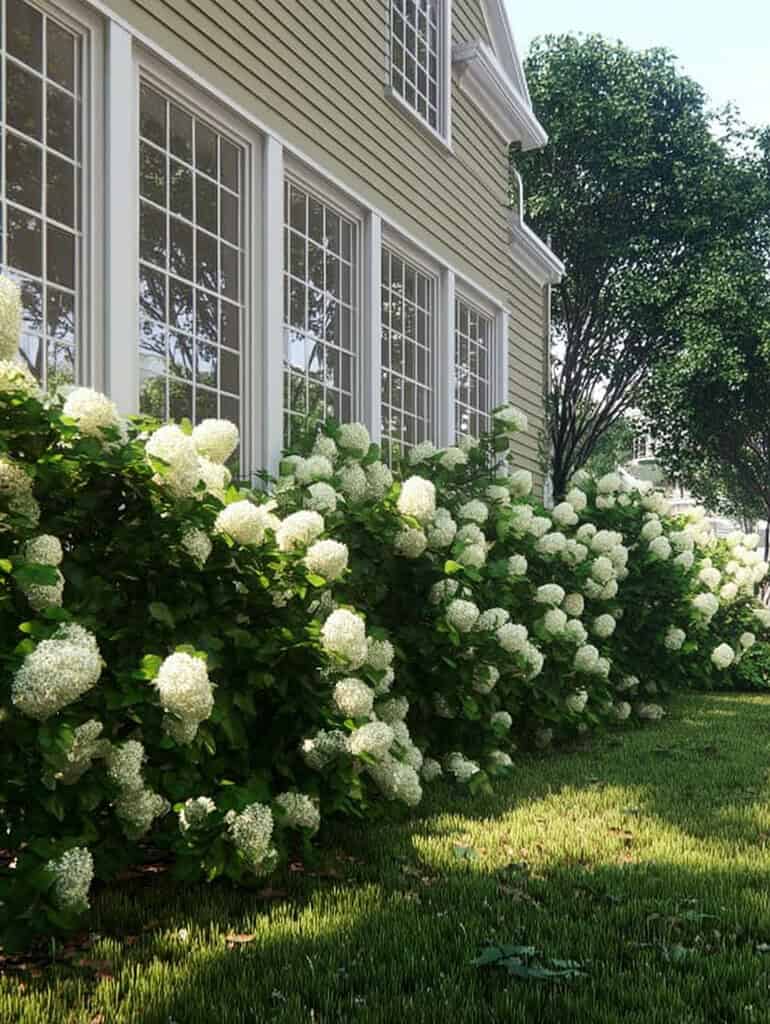
Viburnums are like the all-in-one solution for front yard shrubs.
Versatile and often native, these shrubs are known for showy white flower clusters, attractive berries, and handsome foliage.
Many viburnums can be pruned into a hedge or left as specimens, offering both beauty and structure to your landscape.
For example, Koreanspice viburnum (V. carlesii) has intensely fragrant spring flowers, while arrowwood viburnum (V. dentatum, a North American native) produces blue berries that birds love.
Some viburnums even have burgundy fall foliage. Generally tolerant of some shade and resistant to deer, viburnums are hardy (many from zone 2 or 3 up to 8 or 9, depending on species).
They range in size; you can find compact viburnums ~3–5 ft tall or large ones 8–10 ft. Plant viburnum as an anchor plant at the corner of your house or mixed into a shrub border.
They truly deliver multi-season interest and ecological benefits (pollinators enjoy the blooms, birds enjoy the berries).
Best of all, viburnums are low-maintenance – just give them well-drained soil, and prune if needed for shape. Their natural beauty will shine with very little work on your part.
9. Knock Out Rose (Shrub Rose) – Constant Color with Low Effort
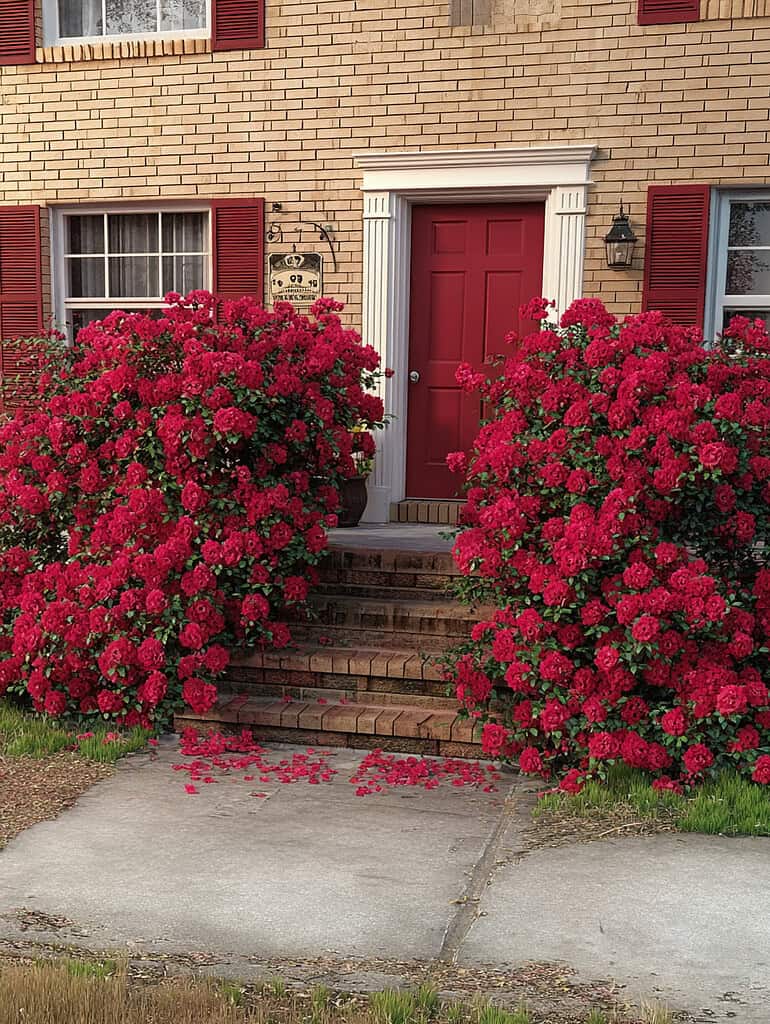
Roses for beginners? Absolutely – if it’s a Knock Out® rose! Unlike fussy hybrid tea roses, Knock Out roses are shrub roses bred to be tough, disease-resistant, and continuous blooming.
They’ll pump out flowers from late spring all the way until frost, providing season-long color with minimal care.
Imagine a row of red, pink, or yellow roses along your front yard, blooming their hearts out for months – talk about curb appeal!
Knock Outs form a tidy shrub about 3–4 feet tall and wide, great for borders or even in containers. They thrive in full sun (6+ hours) and are hardy in zones 5–9.
Maintenance is easy: they’re drought-tolerant once established and highly disease-resistant (no constant spraying needed). Just prune them back to about half in late winter or early spring to encourage fresh growth and many blooms.
Even deadheading (removing spent flowers) isn’t strictly required, as they drop petals and keep reblooming.
For front yard landscaping, Knock Out roses give a classic look with modern ease – your neighbors will be amazed such gorgeous roses require so little work!
10. Ninebark (Physocarpus opulifolius) – Colorful Native Beauty
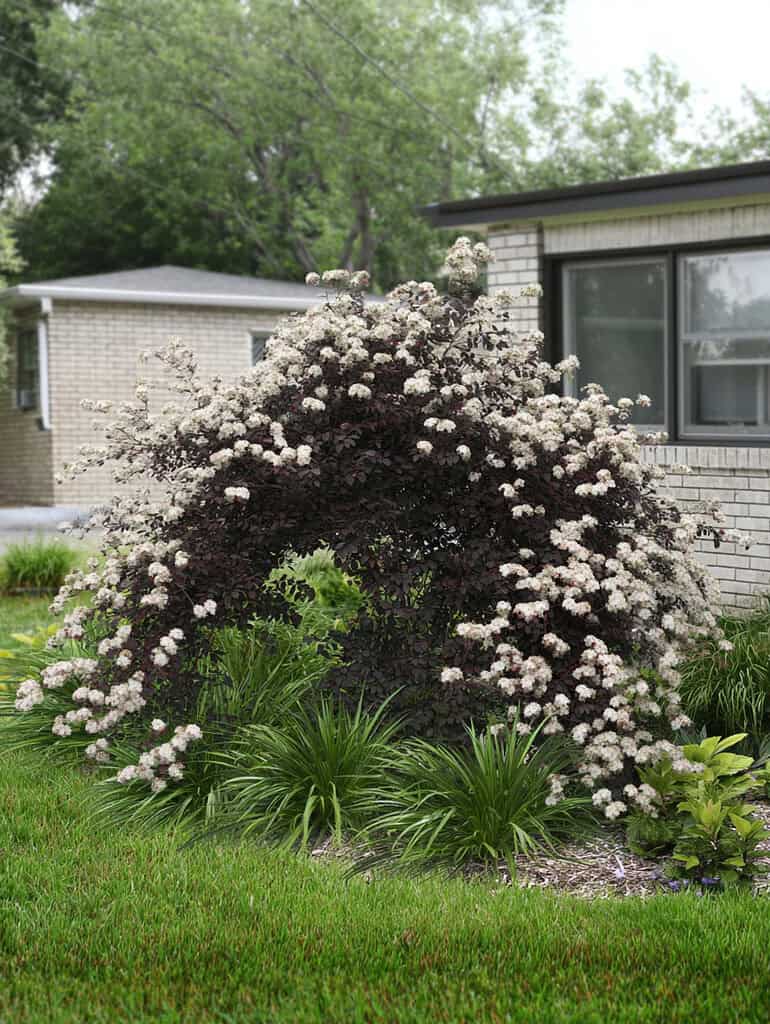
For a shrub that truly does it all, consider ninebark.
This tough native shrub is loved for its multi-season interest: spring brings clusters of white or pink blossoms, summer showcases colorful foliage (many varieties have deep purple, copper, or golden leaves), and winter reveals its namesake peeling bark for texture.
Ninebark is incredibly hardy and low-input – adaptable to various soils, drought-tolerant once established, and generally pest-free. It’s a “plant it and enjoy it” kind of shrub.
Most ninebark varieties grow about 5–8 feet tall, but there are compact cultivars that stay 3–4 feet (‘Little Devil’ is a popular dwarf form).
Hardy roughly in zones 3–8, ninebark can handle cold winters easily. It prefers full sun for the best foliage color, though it tolerates part shade.
Use ninebark as a backdrop in your front yard or a specimen plant that shows off its purple or amber leaves (which look stunning against a lighter house color).
Low maintenance is an understatement – aside from optional pruning to shape or control size, ninebark pretty much takes care of itself.
With its combination of durability and beauty, ninebark will have neighbors asking, “What is that gorgeous shrub?” in every season.
11. Butterfly Bush (Buddleia) – Summer Blooms & Butterflies
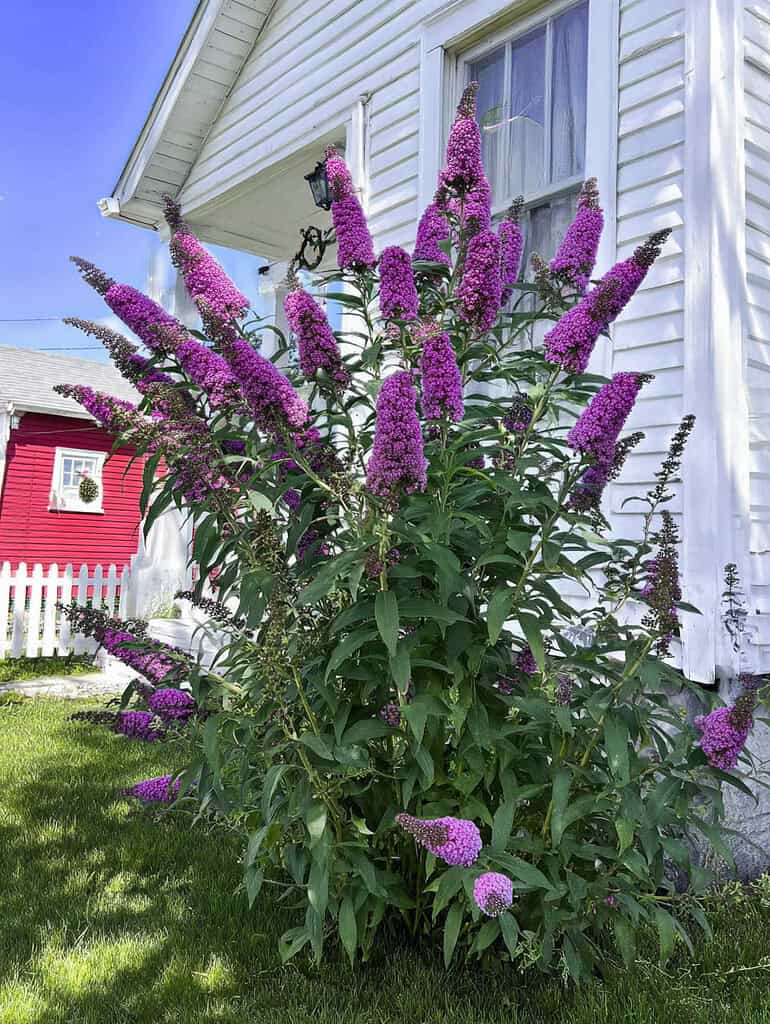
If you love the idea of a front yard filled with butterflies, the butterfly bush is a must-have.
This shrub produces long, cone-shaped clusters of flowers in summer (often purple, but also pink, white, or bi-colored) that are absolute magnets for butterflies and bees.
Blooms start in mid-summer and often continue into fall. Butterfly bush is hardy in zones ~5–9 (some varieties even in zone 5 with protection) and thrives in full sun with well-drained soil.
It typically reaches 5–8 feet tall, though newer dwarf types stay around 3–4 feet. Gardeners adore butterfly bush for its fast growth and prolific blooming – it can make a big impact in just one season.
As for care, it’s fairly low-maintenance: prune it back to about a foot tall in late winter or early spring (it blooms on new wood, so this encourages lots of new flowering growth).
One thing to note: in some regions, butterfly bush can self-seed.
To be environmentally friendly, look for sterile cultivars or be diligent about deadheading spent flowers.
Plant a butterfly bush in your front yard border or near your porch – you’ll enjoy waves of fluttering visitors and bright blooms when many other shrubs have finished flowering.
It’s an easy way to keep the curb appeal going strong through the dog days of summer.
12. Winterberry Holly (Ilex verticillata) – Festive Winter Interest

For year-round beauty, don’t forget winter interest!
Winterberry holly is a deciduous holly native to North America that doesn’t look like much in summer, but come late fall and winter it steals the show.
Bright red berries cover its bare branches, creating a stunning display that lasts into winter and even attracts birds to your yard.
Picture those berry-laden twigs against a backdrop of snow – instant holiday postcard material.
Winterberry usually grows 3–8 feet tall (dwarf varieties are on the smaller end, standard ones on the taller end). It’s hardy in zones 3–9.
Unlike evergreen hollies, winterberry drops its leaves in fall, allowing the berries to really pop. This shrub is incredibly adaptable: it tolerates sun or shade, and even wet soils or periodic flooding (it’s often used in rain gardens), yet it’s also fine in average soil.
Maintenance is minimal – an occasional trim is all that’s needed to keep its shape. Plus, winterberry is deer-resistant and low-maintenance.
Important: To get those gorgeous berries, you’ll need to plant at least one male winterberry shrub nearby to pollinate the fruiting (female) plants. Usually one male can pollinate several females.
Use winterberry in foundation plantings or mixed borders; it’s nice in a spot where you can enjoy its berries from a window or as you come and go.
Your neighbors will definitely comment on the burst of color it brings to an otherwise gray season!
Front Yard Shrub Landscaping Tips (Design & Care)
Choosing the right plants is only half the battle – how you place and care for them will ensure your front yard looks amazing without extra work. Here are some friendly tips to keep in mind:
- Mind the Size and Scale: Always consider a shrub’s mature size (height and width) before planting. It might look cute in its pot, but give it enough space to grow to avoid constant pruning or overcrowding. For example, planting an eight-foot shrub directly in front of a low window is never a good idea – it will soon block your view and overwhelm the space. Instead, use taller shrubs to frame doorways or corners of the house, and shorter shrubs under windows or along walkways. This way, your landscape remains in proportion and doesn’t become a maintenance headache later on.
- Sun vs. Shade – Right Plant, Right Place: Take note of how much sun different parts of your front yard get. Many flowering shrubs for front yards (like lilac and forsythia) bloom best in full sun, whereas others (like azaleas or hydrangeas) prefer partial shade to avoid leaf scorch. Matching your shrub to your site’s light conditions will result in healthier plants and more blooms. Similarly, consider soil conditions – is it well-drained or does it stay soggy? Most shrubs don’t like “wet feet,” so plant accordingly or improve drainage as needed. If you’re unsure about your soil pH or fertility, a simple soil test can help you choose species that will thrive naturally in your soil type (for instance, azaleas need acidic soil).
- Evergreen + Deciduous = Year-Round Appeal: For the most attractive front yard landscaping, mix some evergreens (those that keep foliage year-round) with deciduous flowering shrubs. Evergreens like boxwood or holly provide structure and color even in winter, while deciduous ones like hydrangea or spirea bring seasonal flowers and fall color. A blend of both ensures your front yard looks lively in all seasons. In fact, mixing evergreens with flowering/deciduous shrubs creates a well-rounded landscape with color, texture, and interest all year. For example, you might plant a row of evergreen holly or juniper as a backdrop and have roses or spireas in front for summer blooms. This combo keeps your curb appeal high through every season.
- Low-Maintenance Practices: Even “low-maintenance” shrubs benefit from a little easy care. In the first year or two after planting, be sure to water your shrubs regularly (deep soaks are better than frequent sprinkles) to help them establish strong roots. Adding a layer of mulch around the base (2–3 inches thick, but not touching the trunk) will conserve moisture, suppress weeds, and protect roots – meaning less work and healthier plants for you. Most of the shrubs we listed don’t require much pruning, but if they do, try to prune at the right time: for spring-blooming shrubs, prune just after they flower (so you don’t cut off next year’s buds); for summer-bloomers, late winter or early spring is usually best. And don’t go overboard with fertilizer – many hardy shrubs only need a light feeding in spring, if at all, to do well. By choosing the right shrubs and following some basic care tips, you truly can have a stunning front yard without complicated landscaping or constant maintenance.
Transform Your Front Yard with Gorgeous Shrubs
You don’t need to be a professional landscaper (or spend every weekend yard-working) to have a front yard that turns heads.
By selecting a mix of these beautiful, low-maintenance shrubs for your front yard, you’ll create a landscape that offers year-round curb appeal with minimal effort.
From the year-round green of boxwoods to the seasonal spectacle of hydrangeas and roses, each of these shrubs can help make your home the envy of the neighborhood.
Pick a few favorites that suit your climate and style, get them in the ground, and watch your front yard transform into the talk of the street!
If you have any questions or want to share your own front yard success, drop a comment below.
We’d love to hear what shrubs for front yard beauty you choose and how your landscaping journey goes – happy planting! 🌳🌸
FAQs
When is the best time to plant shrubs?
The ideal time is late fall to early spring. Fall planting allows roots to establish in cool, moist soil before winter, while early spring is also a good window. Summer planting is possible but requires extra watering and care.
How often should I water new shrubs?
New shrubs need 1–2 deep waterings per week during the first season. Once established, water only during extended dry spells. Mulch around the base and a light spring feeding keeps most shrubs healthy with minimal effort.
Do shrubs need regular pruning?
It depends on the shrub:
- Spring bloomers (lilac, forsythia, azalea) – prune right after flowering.
- Summer bloomers/continuous bloomers (roses, butterfly bush) – prune in late winter or early spring.
- Evergreens (boxwood) – light trimming anytime to maintain shape.
What shrubs do well in shade?
For partial or full shade, try azaleas, rhododendrons, hydrangeas, winterberry holly, inkberry holly, and mountain laurel. Deep shade options include yew and Japanese aucuba. Flowering may be reduced in heavy shade, but foliage can still look lush.
Are these shrubs deer- or pest-resistant?
Less resistant: azaleas, hydrangeas.
Most listed shrubs are low-maintenance and disease-resistant. Healthy plants usually fend off pests naturally.
Generally deer-resistant: boxwood, viburnum, weigela, abelia, winterberry holly, spruce, juniper.
Partially resistant: Knock Out roses.