
Purple is a color that brings elegance, richness, and depth to a garden.
Whether you're looking to create a calm and soothing space or something bold and full of contrast, purple flowers offer both versatility and charm.
Some varieties attract butterflies and bees, while others bring fragrance or a dramatic structure to your beds and borders.
From soft lavender to deep violet blooms, these 15 purple flowers offer something for every garden size, style, and climate.
15 Mesmerizing Purple Flowers That Transform Any Garden
The following list includes a mix of annuals, perennials, bulbs, vines, and shrubs.
You can also explore these vibrant purple perennials for more long-blooming options.
Whether you're aiming for a quiet retreat or a vibrant, wildlife-friendly space, these 15 purple flowers bring both visual and practical value to your garden.
1. Lavender (Lavandula angustifolia)
- Type: Perennial
- USDA Zones: 5–9
- Light: Full sun
- Height: 1 to 3 feet
- Bloom Time: Late spring to summer
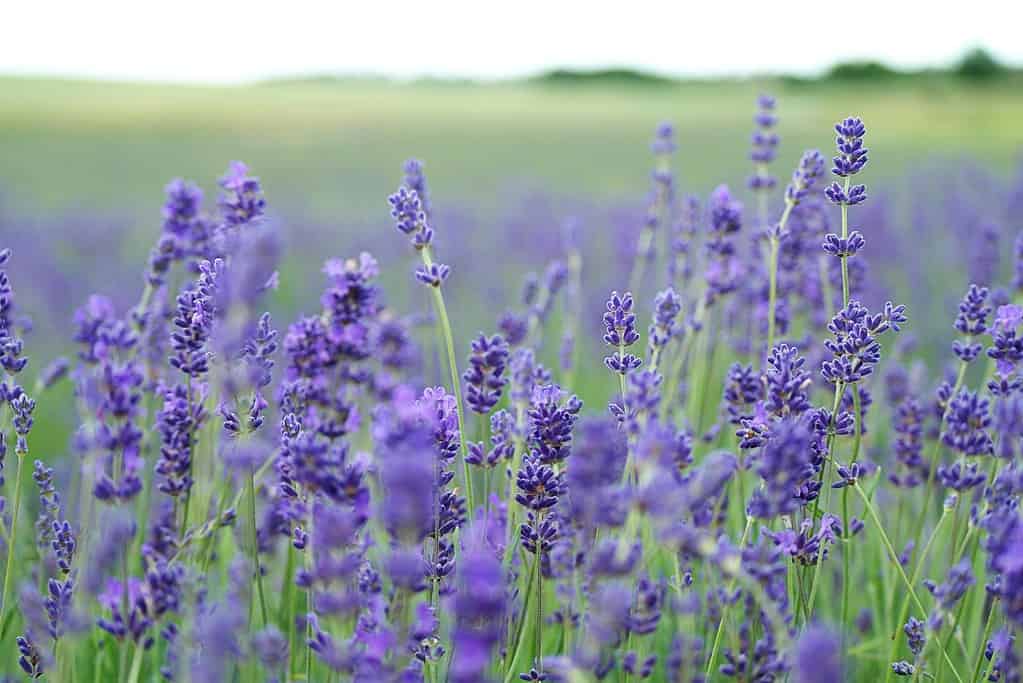
Lavender is one of the most reliable purple perennials for any sunny garden.
It offers fragrant spikes of soft purple flowers and silvery foliage, making it useful not only for its beauty but also for its calming scent.
This drought-tolerant herb thrives in dry soil and is ideal for borders, walkways, and containers. Its compact size and tidy shape also make it a great fit for small-space gardens.
If you’re growing it for the first time, here’s how to plant lavender in 8 easy steps to help you get started.
2. Lilac (Syringa spp.)
- Type: Deciduous shrub
- USDA Zones: 3–7
- Light: Full sun
- Height: 8 to 15 feet (depending on variety)
- Bloom Time: Mid to late spring
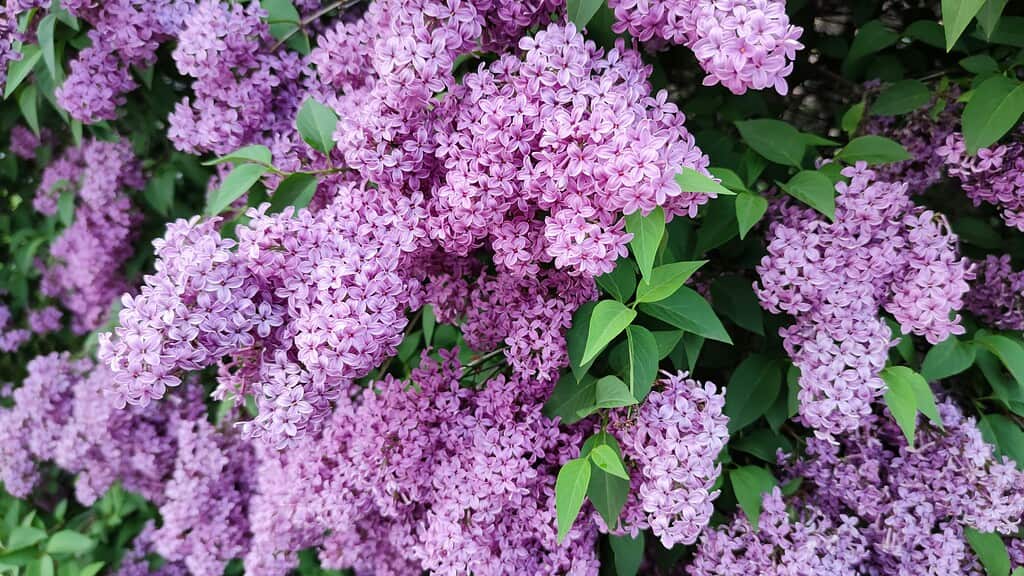
Lilacs are known for their sweet fragrance and classic appeal. Their dense, cone-shaped clusters of purple flowers bloom in spring and fill the air with a scent that’s hard to miss.
Traditional varieties bloom once per year, but newer types like ‘Bloomerang® Dark Purple’ can flower again in late summer and fall.
These shrubs work well as hedges or focal points and prefer cold winters for strong flower production.
3. Salvia (Salvia spp.)
- Type: Perennial
- USDA Zones: 3–8
- Light: Full sun
- Height: 1.5 to 3 feet
- Bloom Time: Late spring through fall
Salvia is a dependable, long-blooming perennial that adds bold color and movement to garden beds.
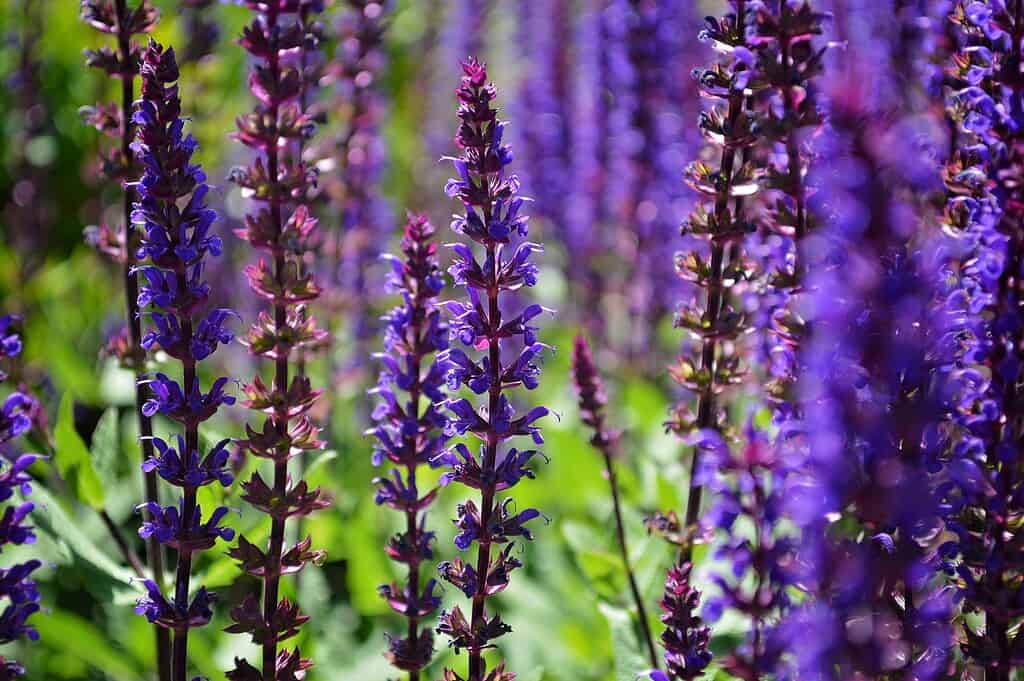
Known for its spiky flower clusters and aromatic foliage, salvia attracts pollinators like hummingbirds and butterflies.
Cultivars such as ‘Caradonna’, ‘May Night’, and ‘Violet Riot’ are especially popular for their rich purple tones.
Salvia grows well in poor soil and requires minimal care once established, making it a smart choice for low-maintenance planting.
4. Clematis (Clematis hybrid)
- Type: Perennial vine
- USDA Zones: 4–9
- Light: Full sun to part shade (roots prefer shade)
- Height: 6 to 12 feet or more (varies by cultivar)
- Bloom Time: Late spring to early fall
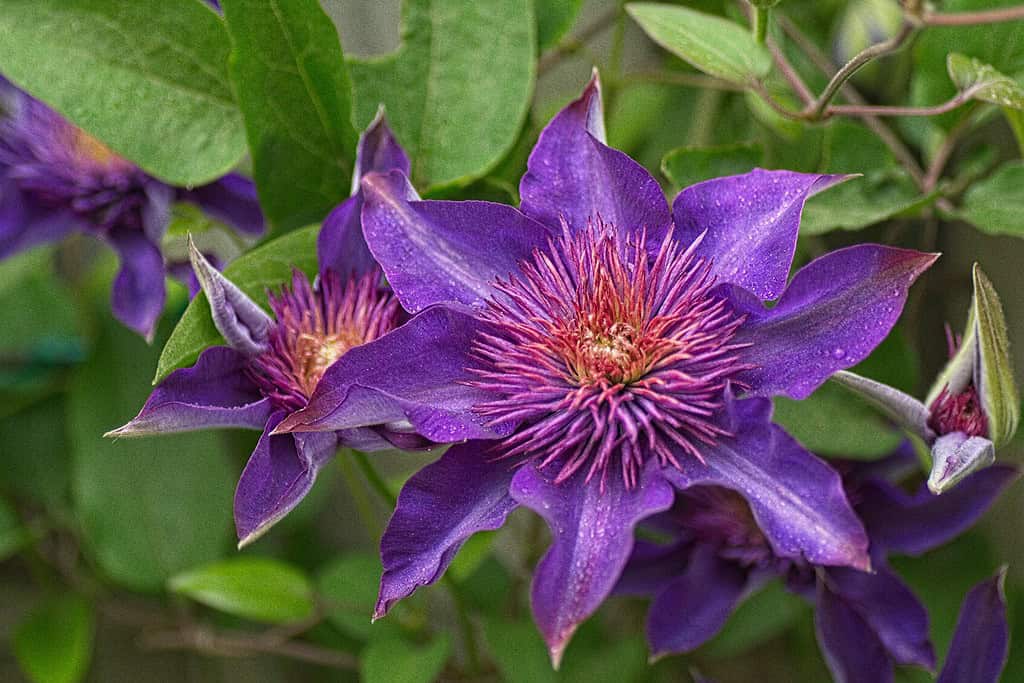
Clematis is a versatile climbing vine known for its dramatic purple blooms and wide range of cultivars.
‘Jackmanii’ is one of the most widely grown, producing deep purple flowers in midsummer. For added fragrance and a longer bloom period, ‘Sweet Summer Love’ is another standout option.
Clematis is ideal for trellises, fences, or arbors, and pairs beautifully with climbing roses or evergreen backdrops.
For best results, keep the base of the plant cool and shaded while allowing the top to receive plenty of sun.
Read related post: How to Grow Hibiscus Flowers Easily at Home
5. Petunia (Petunia x hybrida)
- Type: Annual
- USDA Zones: 10–11 (grown as annual elsewhere)
- Light: Full sun
- Height: 6 to 18 inches
- Bloom Time: Spring to frost
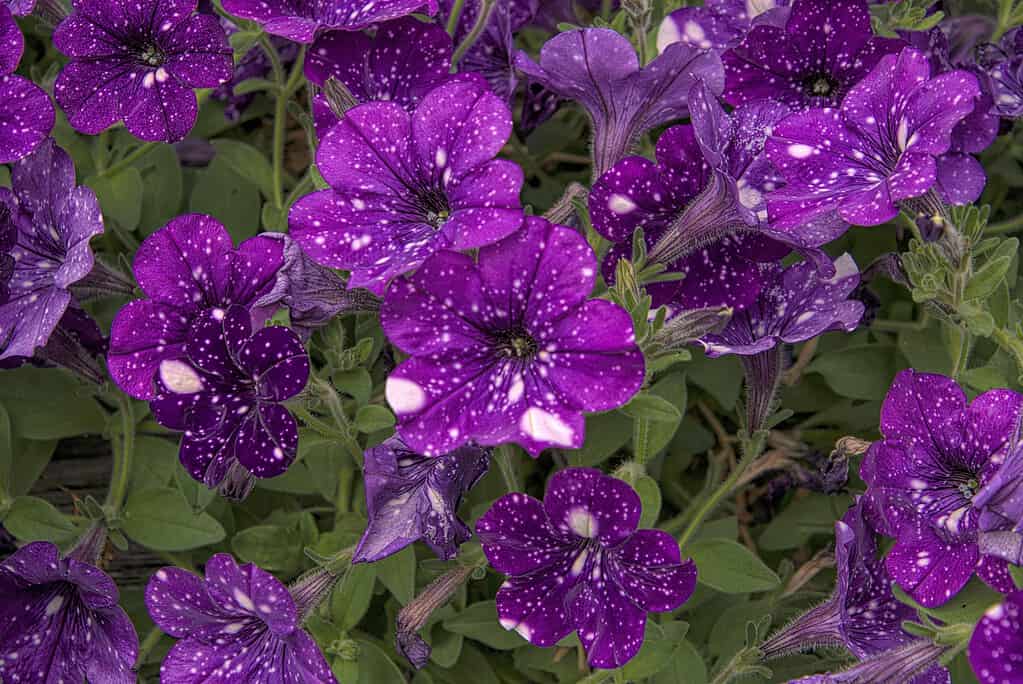
Petunias are a classic summer flower known for their nonstop color and ease of care.
Available in a wide range of purple shades – from soft lavender to deep violet – petunias are especially popular in hanging baskets, containers, and window boxes.
Their trumpet-shaped flowers bloom continuously with minimal maintenance, especially when deadheaded regularly.
Suited for both beginners and experienced gardeners, petunias offer reliable performance all season long.
6. Verbena (Verbena hybrid)
- Type: Annual in most zones
- USDA Zones: 3–8 (as annual), 8–11 (as perennial)
- Light: Full sun
- Height: 6 to 12 inches (trailing varieties may spread wider)
- Bloom Time: Late spring to fall
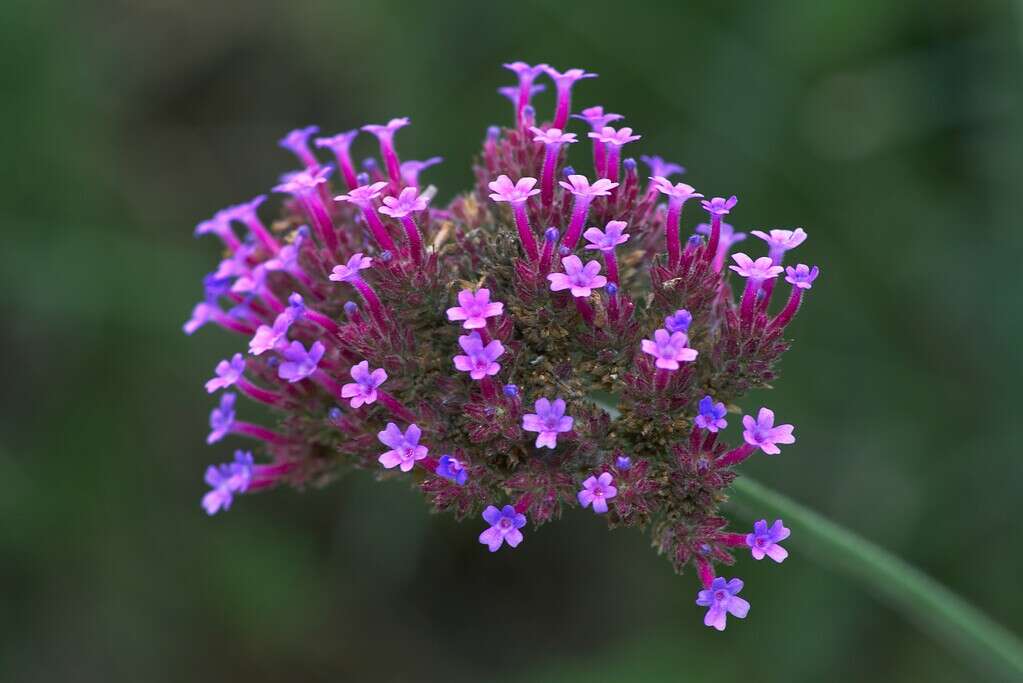
Verbena offers clusters of small, fragrant flowers in various shades of purple, often forming rounded or saucer-shaped heads.
It’s a go-to choice for adding long-lasting color to borders, rock gardens, and containers. Trailing types are especially useful in hanging baskets or as ground cover in sunny spots.
Heat-tolerant and easy to grow, verbena requires little beyond regular watering and occasional deadheading to keep blooms going strong through the season.
If you love low maintenance plants, you might also enjoy these vibrant drought tolerant plants for a thriving summer garden.
7. Heliotrope (Heliotropium spp.)
- Type: Annual in most zones
- USDA Zones: 9–11 (as perennial)
- Light: Full sun to part shade
- Height: 12 to 24 inches
- Bloom Time: Summer to fall
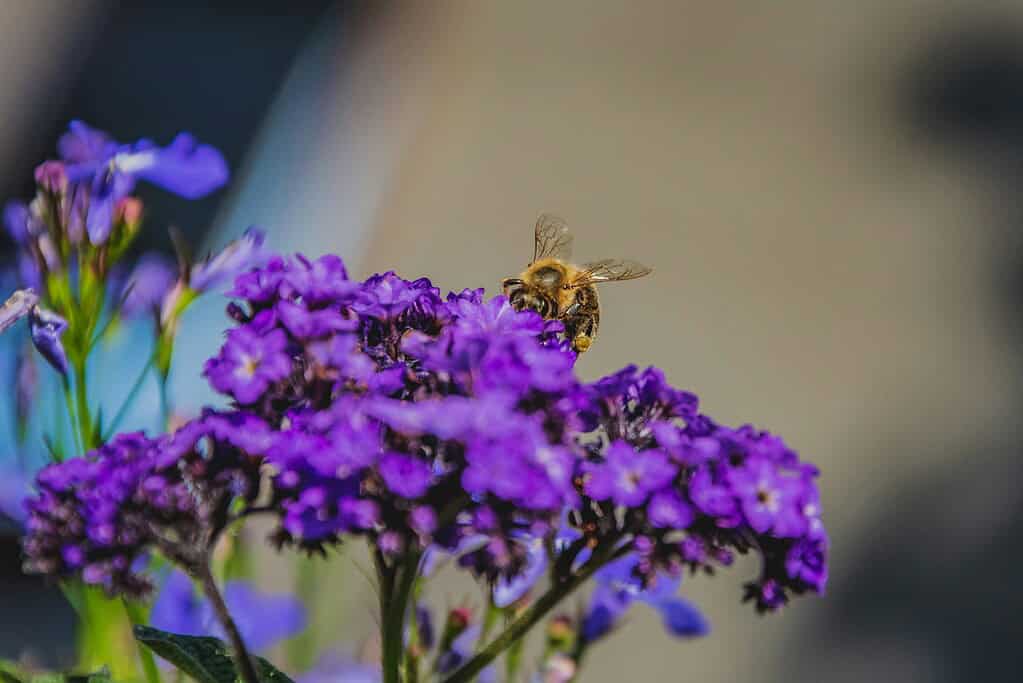
Heliotrope is prized for its deep purple or blue-toned flowers and distinctive vanilla fragrance.
The blooms are small but packed densely into rounded clusters, making them a great choice for containers, raised beds, or spots near walkways where their scent can be appreciated.
Though beautiful, it’s important to note that heliotrope is toxic to pets and children if ingested. It prefers moist, well-drained soil and benefits from regular feeding during the growing season.
For a soft contrast in the garden, pair them with serene white flowers.
8. Catmint (Nepeta faassenii)
- Type: Perennial
- USDA Zones: 3–8
- Light: Full sun to light shade
- Height: 12 to 24 inches
- Bloom Time: Late spring to early fall
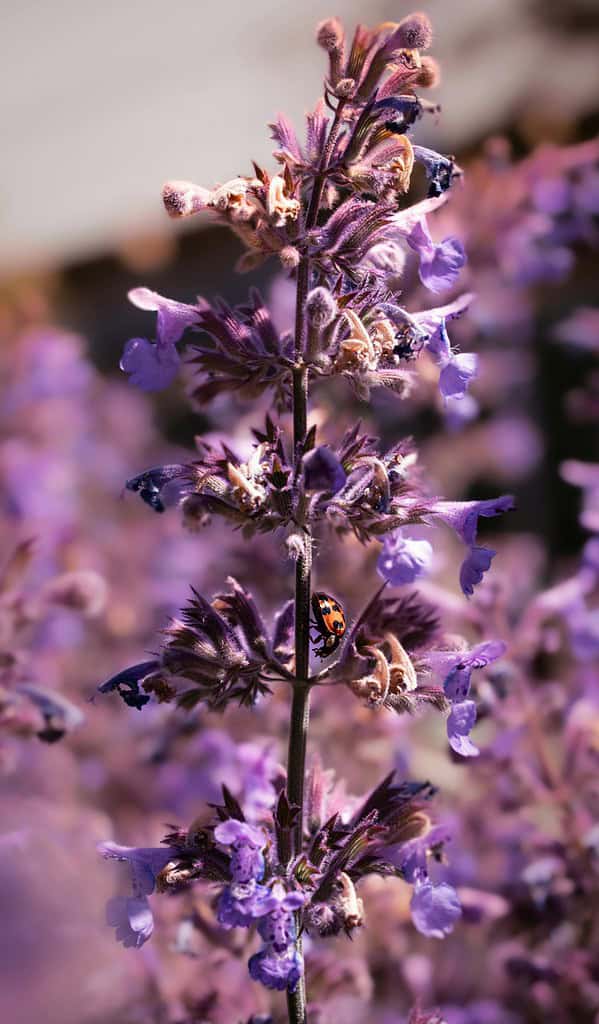
Catmint is a hardy, low-maintenance perennial known for its soft purple flower spikes and fragrant gray-green foliage.
It spreads easily, forming mounds that are ideal for borders and pathways.
Catmint attracts bees and butterflies while resisting deer and drought, making it a reliable choice for wildlife-friendly and xeriscape gardens.
Once the initial blooms fade, trimming the plant back by half often encourages a second flush of flowers later in the season.
9. Coneflower (Echinacea spp.)

- Type: Perennial
- USDA Zones: 3–8
- Light: Full sun
- Height: 2 to 4 feet
- Bloom Time: Summer to early fall
Coneflowers are North American natives valued for their daisy-like shape, upright growth, and ability to support pollinators.
Purple cultivars like ‘Purple Emperor’ are especially attractive and compact, making them suitable even for small spaces.
The large central cones are a food source for birds, especially in late summer and fall. Coneflowers are heat- and drought-tolerant, thriving in a range of soils as long as drainage is good.
Read related post: 15 Beautiful Shade-Loving Perennials for Vibrant Low-Light Gardens
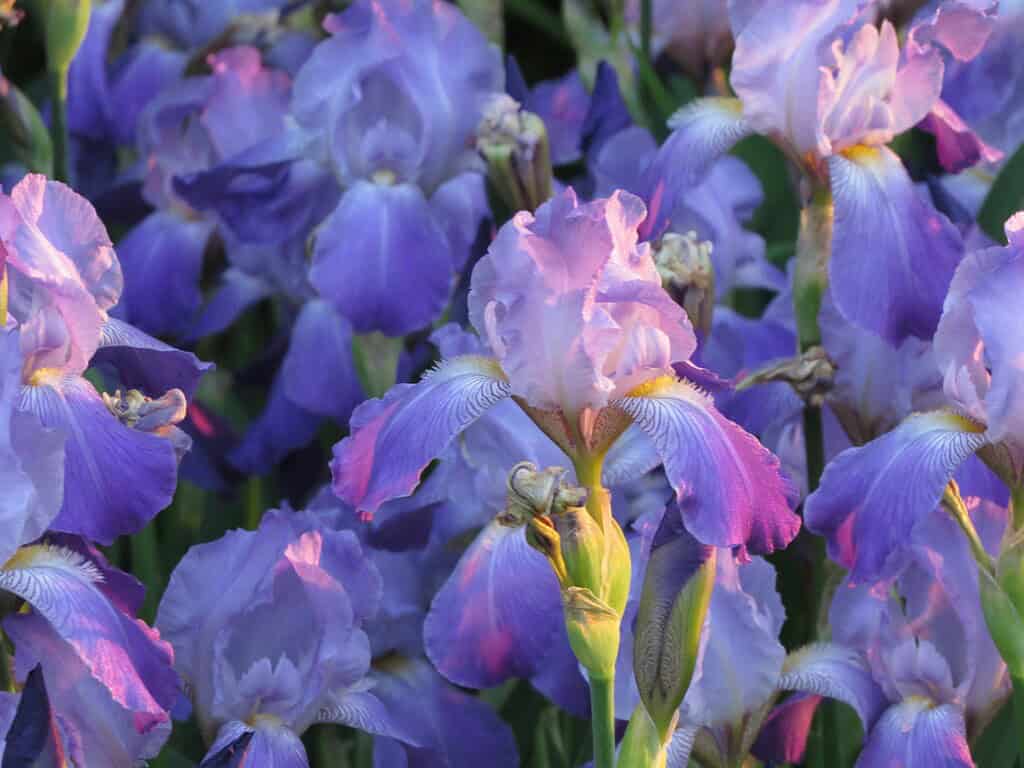
10. Iris (Iris spp.)
- Type: Perennial (rhizome or bulb, depending on type)
- USDA Zones: 3–9
- Light: Full sun
- Height: 1 to 3 feet (varies by species)
- Bloom Time: Late spring to early summer
Iris plants are known for their elegant, sword-like foliage and intricate, ruffled blooms.
Purple varieties are among the most striking, with options ranging from the deep indigo of Tall Bearded Iris to the rich violet of Siberian Iris like ‘Caesar’s Brother’.
These plants add structure and formality to garden beds and are ideal for mass plantings or mixed borders. Good drainage is essential, especially for bulbous types like Dutch or Reticulated Iris.
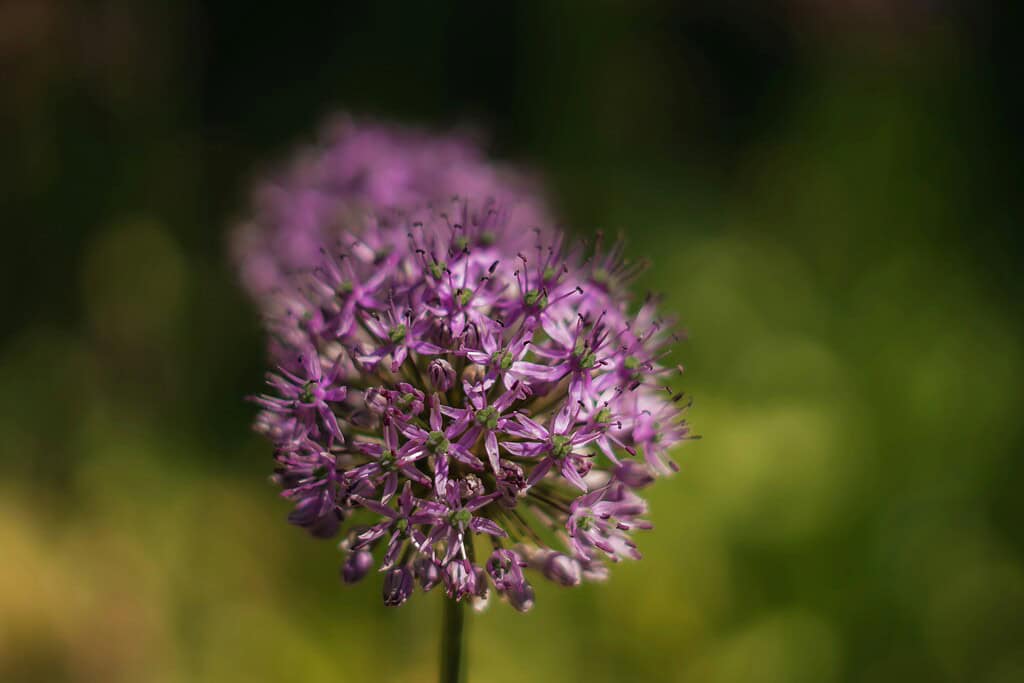
11. Ornamental Onion (Allium hybrid)
- Type: Perennial bulb
- USDA Zones: 4–10
- Light: Full sun
- Height: 1 to 4 feet (depending on variety)
- Bloom Time: Late spring to early summer
Alliums are admired for their large, spherical clusters of tiny purple flowers perched on tall, leafless stems.
These architectural blooms add height and a unique geometric contrast to softer plants like catmint or low-growing perennials.
Popular varieties include ‘Globemaster’ and ‘Purple Sensation’. Aside from their visual appeal, alliums are drought-tolerant, long-lasting, and unappealing to deer and rabbits.
Their dried seed heads can also extend garden interest well past bloom time.
If you want to mix in contrasting hues, try adding a few breathtaking blue flowers nearby.
12. Aster (Symphyotrichum spp.)

- Type: Perennial
- USDA Zones: 3–8
- Light: Full sun
- Height: 1 to 3 feet
- Bloom Time: Late summer to fall
Asters bring a welcome burst of purple color when most other flowers begin to fade. Their star-shaped blooms resemble daisies and attract late-season pollinators like bees and butterflies.
The compact cultivar ‘Sapphire Mist’ is ideal for borders or edging in smaller gardens. Asters prefer well-drained soil and benefit from being divided every few years to maintain vigor.
Their bloom time makes them a valuable addition for continuous seasonal interest.
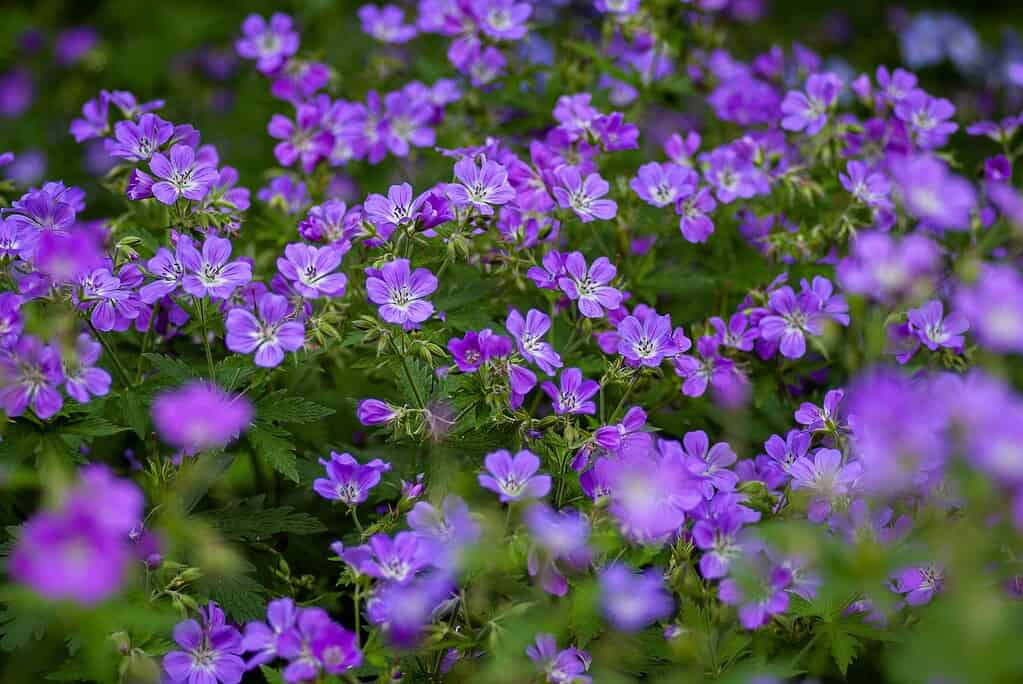
13. Cranesbill Geranium (Geranium spp.)
- Type: Perennial ground cover
- USDA Zones: 3–9
- Light: Full sun to part shade
- Height: 12 to 18 inches
- Bloom Time: Late spring to early fall
Cranesbill Geraniums are not to be confused with the annual pelargoniums commonly sold in pots.
These true geraniums are hardy perennials that form low, spreading mounds covered in cup-shaped flowers. Purple-flowered varieties bring a soft, natural look to borders and underplantings.
They’re known for their resilience and adaptability, tolerating various soil types and light conditions. Once established, they require little care and often rebloom with a light shearing mid-season.
14. Blazing Star (Liatris spicata)

- Type: Perennial
- USDA Zones: 3–9
- Light: Full sun
- Height: 2 to 4 feet
- Bloom Time: Mid to late summer
Blazing Star stands out with tall, vertical spikes of magenta-purple flowers that bloom from the top down – a rare trait among perennials.
These dramatic, upright blooms add strong vertical lines to mixed borders and are especially effective when planted in groups.
Blazing Star is a magnet for butterflies, particularly monarchs, and also attracts bees. It tolerates poor soil and drought, making it a dependable choice for low-maintenance or pollinator-focused gardens.
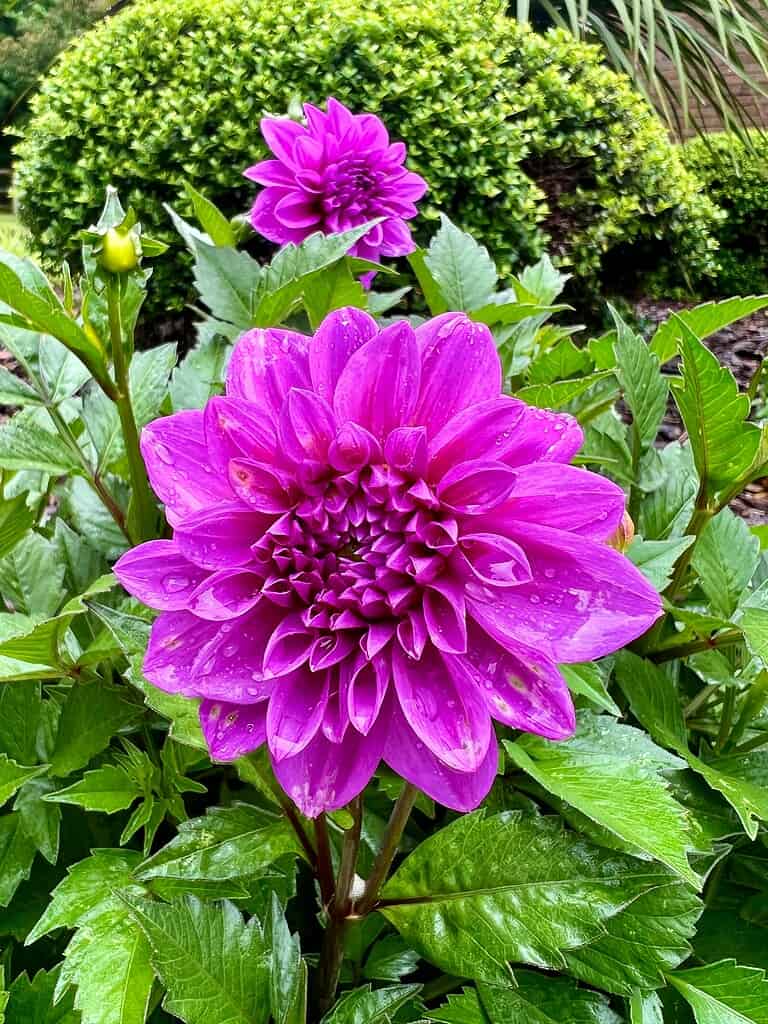
15. Dahlia (Dahlia spp.)
- Type: Tender perennial grown from tubers
- USDA Zones: 8–10 (lift and store in colder zones)
- Light: Full sun
- Height: 1 to 5 feet (varies by cultivar)
- Bloom Time: Midsummer to first frost
Dahlias offer some of the most striking purple blooms in the garden, with large, layered flowers that range from deep plum to bluish violet.
Notable purple cultivars include ‘Thomas Edison’, a tall variety with bold, dark purple petals, and ‘Lilac Time’, which has softer, lavender-toned blooms.
While they require more effort in cooler climates – needing to be lifted and stored over winter – their showy presence and variety of forms make them well worth growing.
Design Tips for Creating a Magical Purple Garden
Purple flowers can shape the entire mood of a garden, but the overall effect depends on how you arrange them. Here are some practical design tips to help you make the most of this versatile color:
Use a Range of Purple Shades
Instead of sticking to a single tone, combine light, mid, and deep purples to create depth.
Pale lavenders work well as background or filler plants, while saturated tones like violet or magenta create natural focal points.
Pair Purple with Harmonious or Contrasting Colors
- Harmonious pairings: Combine purple with blue, white, and silver for a soft, calming look – especially effective in evening light.
- Contrasting pairings: Use yellow, orange, or jaw-dropping red flowers next to purple to create bold color tension that draws the eye. This works well for creating garden focal points or energizing a section of the yard.
Balance Height and Structure
- Use tall varieties like Blazing Star, Clematis, or Allium as vertical elements.
- Mound-forming plants such as Catmint and Geranium can soften hard edges.
- Trailing or low-spreading types like Verbena and Petunia help fill in gaps and provide a layered appearance.
Repeat Colors for Cohesion
Repeating similar purple tones throughout different areas of the garden helps tie the whole space together visually.
This is especially helpful in larger gardens where color unity prevents a cluttered look.
Match Planting to Purpose
- Use fragrant varieties like Lavender or Heliotrope near seating areas or paths.
- For borders or walkways, choose compact plants like Aster or Cranesbill Geranium.
- To create visual impact from a distance, plant bold bloomers like Dahlia or Coneflower in clusters.
Tips for Growing and Maintaining Purple Flowers
Choosing the right plants is just the start – maintaining healthy purple blooms requires a bit of planning and care.
These tips will help you keep your garden thriving through the seasons.
Understand Sun and Soil Needs
Most purple flowering plants prefer full sun (at least 6 hours per day), although some, like Cranesbill Geranium and Clematis, can tolerate partial shade.
Well-drained soil is important for nearly all varieties. Avoid planting in areas where water collects or where the soil stays soggy after rain.
Water Consistently – but Don’t Overdo It
Newly planted flowers need consistent moisture until they’re established.
Once mature, many varieties like Lavender, Catmint, and Salvia become drought-tolerant. Always water at the base of the plant to reduce fungal problems and leaf spotting.
Support for Tall or Climbing Varieties
Vining plants like Clematis need something to climb on – a trellis, fence, or arch.
Taller varieties like Dahlia or Blazing Star may need staking, especially in windy areas. Add supports early so the plant can grow into them naturally.
Extend Bloom Time with Deadheading
Remove spent flowers from plants like Petunia, Salvia, and Verbena to encourage continuous blooming.
Some perennials, such as Catmint, will flower again later in the season if lightly sheared after the first flush.
Know What’s Toxic
If you have pets or small children, avoid or carefully place plants like Heliotrope and Dahlia, which can be toxic if ingested.
Check plant safety before placing them in high-traffic or accessible areas.
Overwintering Tender Plants
In zones colder than their range, tender plants like Dahlia and Heliotrope won’t survive winter outdoors.
Dig up dahlia tubers after the first frost, let them dry, and store in a cool, dry place until spring.
Start Planting Purple and Bring Color, Texture, and Life to Your Garden!
Adding purple flowers to your garden doesn’t just enhance its color – it brings in structure, scent, pollinators, and a unique mood.
Whether you’re working with a few containers on a patio or designing a full landscape bed, this list gives you plenty of choices that fit different zones, conditions, and design styles.
Use these flowers to create contrast, tie areas together, or simply to enjoy the variety of textures and fragrances they offer through the growing season.
Which of these purple flowers will you add to your garden this year?
Comment down below and share your favorite pick or ask a question – we’d love to hear from you.
FAQs
What purple flowers grow well in shade?
While most purple flowers prefer full sun, some can tolerate partial shade. Cranesbill Geranium, Clematis, and certain varieties of Aster can handle lower light, especially if they receive a few hours of morning sun.
How can I prevent purple flowers from fading in color?
Color fade is usually caused by excessive heat, harsh sunlight, or poor soil conditions.
To reduce fading, make sure the soil stays consistently moist but not soggy, apply mulch to regulate temperature, and avoid planting in spots with harsh afternoon sun.
Can I grow purple flowers in pots year-round?
Yes, but only if the plants are suited for container life and the pots are moved or protected during cold seasons. Lavender, Petunia, and Verbena do well in pots, but perennials may need to be overwintered indoors or replanted each spring in colder zones.
Which purple flowers work best as ground cover?
Cranesbill Geranium and Catmint are excellent choices for ground cover. They spread easily, suppress weeds, and maintain a soft look that works well around borders, pathways, or under taller plants.
What are low-maintenance purple flowers for beginner gardeners?
Lavender, Salvia, Coneflower, and Catmint are great for beginners. They require minimal watering once established, resist common pests, and don’t need constant pruning or feeding to stay healthy.
Ready To Transform Your Garden?

Are you looking for the best way to layout your garden beds? Maybe you're feeling a bit stuck on how to make the most of your space?
We’ve got you covered! Check out our 101+ Garden Bed Layout Ideas for your next raised bed project. This guide is filled with creative and practical ideas that can help you design a garden that fits your style, whether you’re just starting out or have been gardening for years.
Get your copy today and get inspired to bring your gardening dreams to life.