Have you noticed a white, powdery coating creeping over your plant leaves?
That powdery mildew might be slowly draining the life from your beloved plants.
Powdery mildew is one of the most common fungal diseases affecting home gardens and houseplants.
The good news is that it doesn’t have to spell doom for your greenery.
In this article, we’ll show you how to get rid of powdery mildew on plants using natural remedies first, then stronger treatments if needed, plus tips on powdery mildew prevention to keep this fungus from coming back.
What Is Powdery Mildew?
Powdery mildew is a common fungal disease that affects a wide variety of plants, from vegetables and fruits to ornamentals and houseplants.
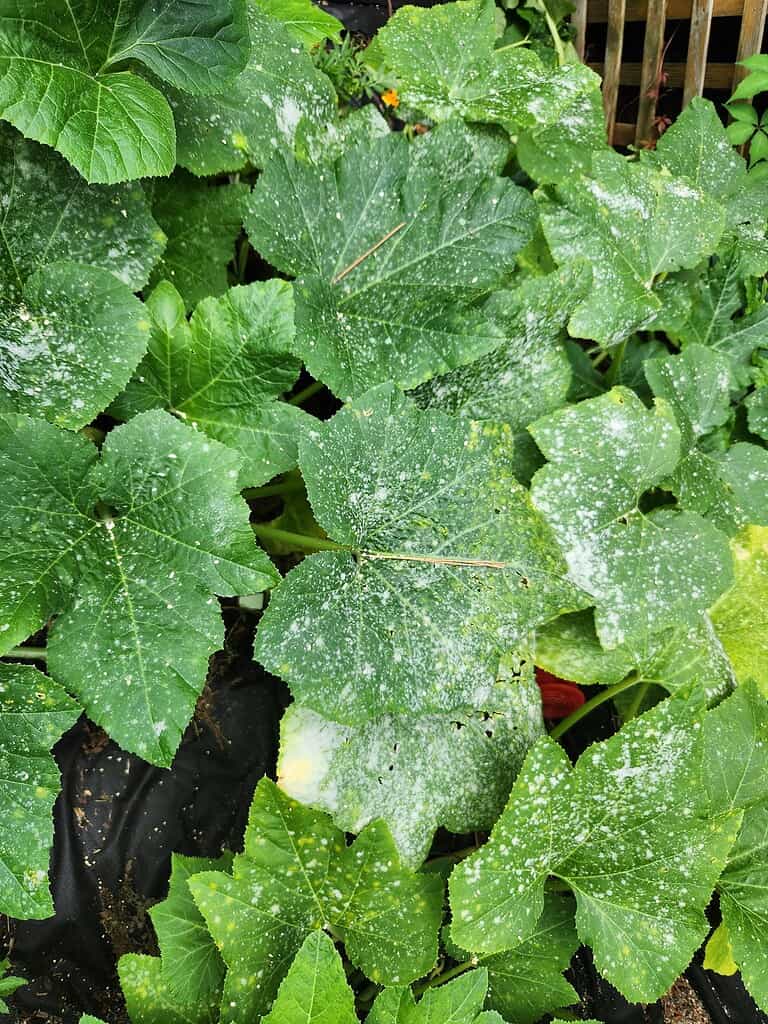
It’s characterized by white or grayish-white powdery spots or patches that appear on leaves, stems, and sometimes flowers.
You might initially mistake it for dust or flour on your plant, but it’s actually a living fungus feeding off the plant tissues.
Powdery mildew thrives in certain conditions: warm days and cool, humid nights (around 70–80 °F) create the perfect environment for it to spread.
The fungus produces airborne spores that travel by wind or insects and land on other plants, ready to infect any susceptible foliage.
This disease usually starts as small white spots and then quickly spreads into a fuzzy coating that can cover large portions of the plant.
While powdery mildew is rarely fatal outright, it weakens the plant by siphoning off nutrients and reducing photosynthesis, which in turn stresses the plant and lowers its vigor.
In severe cases or if left untreated, it can kill the plant or lead to other problems (like making the plant more prone to pests and other diseases).
(For help managing other garden pests like aphids, see our effective ways to get rid of aphids naturally.)
That’s why it’s important to address powdery mildew promptly once you spot it.
When Should You Plant in Your Area?
Enter your ZIP code for personalized frost dates, planting schedules, and growing tips.
Signs of Powdery Mildew on Plants

White, powdery spots on leaves are the telltale sign of powdery mildew.
This fungal disease often first appears as dusty white or gray patches on the upper sides of leaves (though it might initially start on the undersides or stems where it’s less noticeable).
Early on, you’ll see faint circular white spots that look like someone sprinkled talcum powder or flour on the foliage.
These spots can be wiped off with a finger, which might tempt you to rub them away – but don’t do this! Rubbing the spots can inadvertently spread the spores to other leaves or nearby plants.
How Powdery Mildew Spreads and Progresses
As the infection progresses, those white patches expand and join together, quickly covering much of the leaf surface.
A heavily infected plant looks like it’s been dusted with powdered sugar. You may also notice leaf distortion or curling; leaves can become twisted or start to yellow and wither as the fungus siphons nutrients. Infected buds or flowers might become discolored, stunted, or fail to open.
Over time, affected leaves often turn yellow and drop off the plant prematurely. This defoliation is serious because fewer healthy leaves mean less photosynthesis to fuel the plant’s growth.
Damage Caused by Powdery Mildew
Powdery mildew doesn’t usually destroy a plant overnight, but it spreads fast.
If conditions are right, the fungus can cover an entire plant in just a few days and potentially spread to other nearby plants within weeks.
A mild case might not do much harm, but a severe powdery mildew outbreak can stress the plant, reduce blooming or fruiting, and even cause fruits or vegetables to have less flavor (since the plant can’t produce as many sugars when its leaves are compromised).
For example, melon or squash fruits from a mildew-infested vine may be smaller or lack sweetness.
The bottom line: if you see that characteristic white powder on your plant, it’s time to take action before it spreads further.
How to Get Rid of Powdery Mildew: Effective Treatment Options
Tackling powdery mildew early is key to saving your plants.
Fortunately, there are effective powdery mildew treatment methods you can use, starting with organic solutions that are safer for you and your garden.
Here’s how to get rid of powdery mildew step by step:
1. Isolate & Inspect
If possible, move the affected plant away from others to minimize spreading (this is especially helpful for thriving indoor plants).
Inspect all your plants to see how far the mildew has spread, and identify which ones need treatment.
2. Remove Infected Leaves
Prune off the worst infected leaves or plant parts and dispose of them in the trash – do not compost them!
This fungus can overwinter in debris, so you don’t want it in your compost heap. Removing diseased leaves cuts down the number of spores and helps stop the spread.
3. Clean Tools & Hands
After pruning, sanitize your pruning shears (wipe them with rubbing alcohol or a bleach solution) and wash your hands thoroughly.
This prevents you from accidentally carrying fungal spores to healthy plants.
4. Apply a Treatment
Next, treat the remaining foliage with a suitable powdery mildew treatment. It’s best to start with a natural remedy (see the next section for options).
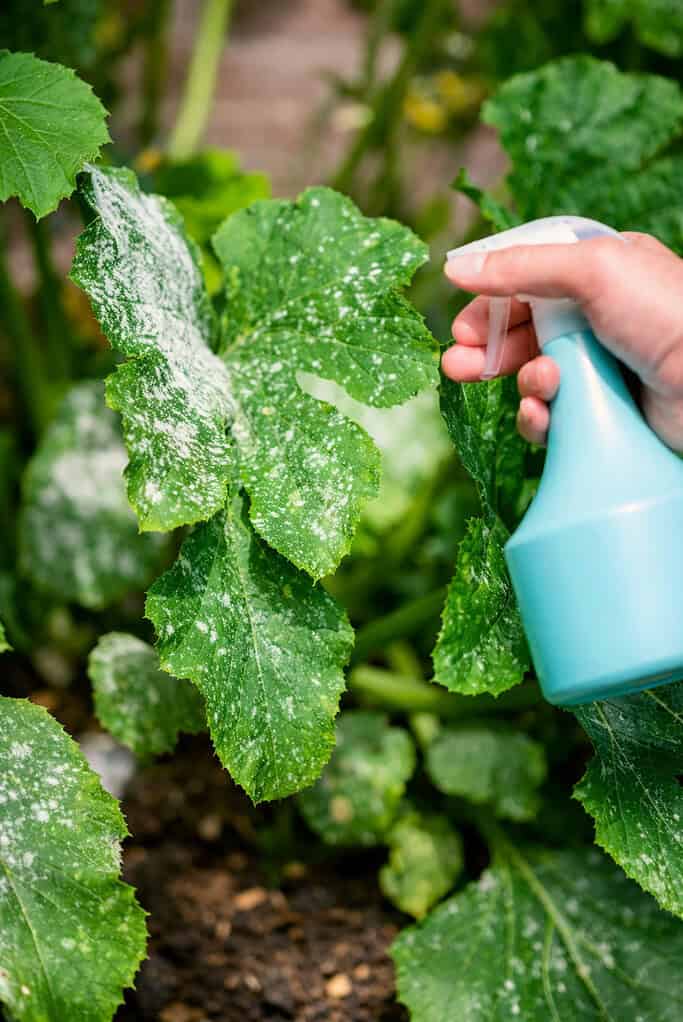
Use a garden sprayer or spray bottle to thoroughly coat all affected leaves – top and bottom – as well as stems.
Complete coverage is important to ensure the fungus comes into contact with the treatment.
5. Repeat & Monitor
Most treatments will need to be reapplied periodically. Check your plants in a few days to see if new powdery spots are appearing.
Continue to reapply your chosen remedy every 7–14 days (or as directed) until the mildew is gone.
Also, keep monitoring throughout the season – if you catch any new powdery mildew early, it’s much easier to control.
Now, let’s look at some natural remedies for powdery mildew and other treatment options in detail.
Free Planting Guides for This Article
Get exact planting dates, frost schedules, and growing tips for your zone:
Natural Remedies for Powdery Mildew
Often, you can control powdery mildew with common household or organic solutions.
Many home gardeners prefer these natural remedies before resorting to chemical fungicides:
Milk Spray

Milk isn’t just for the kitchen – it can both treat and prevent powdery mildew.
Studies and gardening trials have shown that a milk solution can be as effective as chemical fungicides on mild to moderate infections.
The typical recipe is to mix roughly 1 part milk to 2–3 parts water (about a 40% milk solution) in a spray bottle.
Spray this liberally on affected leaves until they’re dripping (do this in morning or early evening, not in hot sun).
Milk works by activating the plant’s defenses and possibly by the natural compounds in milk reacting to sunlight to create an antiseptic effect.
Reapply the milk spray once or twice a week. (Note: using milk can leave a slight sour odor as it dries, but it’s harmless to the plant.)
Baking Soda Spray

Baking soda (sodium bicarbonate) is a well-known natural fungicide for powdery mildew.
On its own, baking soda can help change the pH on the leaf surface, making it less hospitable to the fungus.
However, it works best combined with other ingredients. A popular formula is to mix 1 tablespoon of baking soda, 1 teaspoon of mild liquid soap (not detergent), and 1 gallon of water.
You can also add a tablespoon of horticultural oil or even a bit of milk to boost effectiveness. Spray this solution on infected plants weekly.
Important: Baking soda is more of a preventative measure or for very early infections – it won’t magically cure a badly infested plant overnight.
Also, test it on a small area first and avoid spraying during the heat of day, as it can sometimes cause leaf burn on sensitive plants.
Neem Oil
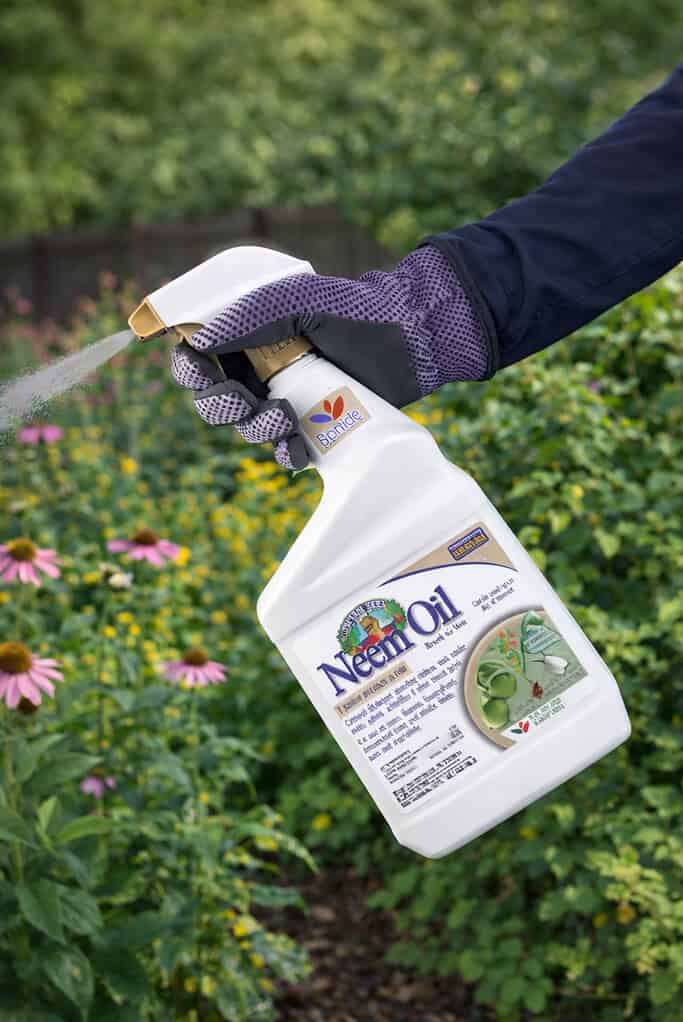
Neem oil is a natural oil extracted from the neem tree and is a favorite organic remedy for many plant problems.
It acts as a mild fungicide by preventing fungal spores from germinating and spreading. You can buy ready-to-use neem oil sprays or concentrates.
Follow the label to dilute it properly (usually neem is mixed with water and a few drops of soap as an emulsifier).
Spray neem in the evening or early morning to avoid leaf burn (and because neem can harm beneficial insects if applied in direct sun).
Coat the affected plant thoroughly, and repeat every 7 days or so. Neem oil not only helps with powdery mildew, but it also repels some pests – a bonus for your garden.
Just be aware that pure neem oil can sometimes be hard to find (many products are mixed with other ingredients), but any garden-safe neem solution should help.
Vinegar Solution
A mild vinegar spray can fight powdery mildew because the acetic acid in vinegar slightly lowers the leaf surface pH, creating a hostile environment for the fungus.
Use ordinary white vinegar (5% acidity). A good mix is 3–4 tablespoons of vinegar per gallon of water. Spray it on infected areas, making sure to cover all surfaces.
Reapply every 3–4 days initially, as vinegar is quite a gentle treatment. Be careful with higher concentrations – too much vinegar can burn plant tissue.
Always test-spray a small section of your plant first. If you notice leaf burn, dilute the solution with more water.
Vinegar is also effective for controlling unwanted plants – learn more about how to prevent weeds naturally for a healthier garden.
Potassium Bicarbonate
This is a close cousin of baking soda (which is sodium bicarbonate), and it’s an even stronger fungicide against powdery mildew.
In fact, potassium bicarbonate can actually kill powdery mildew spores on contact. You can find it as a key ingredient in some organic commercial fungicide products, or buy it as a powder.
A DIY mix is 1 tablespoon of potassium bicarbonate, 1/2 teaspoon liquid soap, and 1 gallon of water, sprayed onto the plant.
It’s safe for most plants and can eradicate mild infections quickly. Use it similar to the baking soda spray – weekly applications, with good coverage.
…
Treating powdery mildew with a spray – thoroughly coat both tops and bottoms of leaves for best results.
Natural remedies like the ones above work best if you catch the problem early. They are gentle on plants, organic, and avoid harsh chemicals in your garden.
Always cover as much of the foliage as possible, and don’t forget to spray the undersides of leaves and even the stems where powdery mildew lurks.
If one remedy doesn’t seem to be working after a couple of weeks, you can try another or move to a stronger solution.
Organic and Chemical Fungicides (When Necessary)
If the infestation is severe or the natural methods aren’t enough, you might consider commercial fungicides for powdery mildew.
There are both organic and synthetic options available:
Sulfur or Copper Fungicides
These are classic organic treatments for powdery mildew used in gardens for decades.
Products containing sulfur or copper are usually approved for organic gardening and can be effective at preventing powdery mildew from spreading.
They work best when used at the first sign of disease or even as a preventative if you know your plants often get mildew.
Follow the product instructions carefully – generally, you’ll dust or spray the foliage with a sulfur powder or copper soap solution.
Be cautious: sulfur can burn plants in hot temperatures, and copper can accumulate in soil with overuse. Use these only as directed and not too often.
Bio-Fungicides
Some newer organic products use beneficial microbes (like Bacillus subtilis) or plant extracts to combat fungal diseases.
For example, there are garden sprays based on beneficial bacteria that inhibit powdery mildew without harmful residues.
These can be a good next step if home remedies aren’t enough, and they are safe for people, pets, and pollinators.
Synthetic Fungicides
For the toughest cases, there are chemical fungicides specifically formulated to treat powdery mildew on plants.
Look for active ingredients like myclobutanil, propiconazole, or chlorothalonil, which are found in many common garden mildew sprays.
Always make sure any product is labeled for the type of plant you’re treating (ornamental vs. vegetable, for example) and for powdery mildew.
Keep in mind that fungicides don’t “cure” existing mildew – they stop new fungus growth and prevent spores from germinating.
Thus, you still need to remove or prune out the worst of the existing mildew and then use the fungicide to protect new growth.
Also, if you’re treating edibles, observe the waiting period on the label (the time you should wait after spraying before you harvest any produce).
And as always with chemicals, follow all safety guidelines (wear gloves, etc.).
Synthetic fungicides should be a last resort after trying the friendlier methods above, but they can save a plant from a bad infection.
…
No matter which treatment you use, the key is persistence. Fungal issues like powdery mildew can require multiple treatments.
Continue to keep an eye on your plants even after they look clear – spores can travel and new spots might appear if conditions are right.
By being vigilant and acting quickly, you can rescue your plants from powdery mildew and minimize the damage.
How Hard Is It to Garden in Your County?
Every county has a unique Gardening Difficulty Score based on frost risk, soil quality, drought, altitude, and climate trends. Find yours — plus personalized frost dates, planting calendars, and soil data.
Check Your County's Score →Powdery Mildew Prevention Tips

Once you’ve battled powdery mildew, you’ll surely agree: prevention is easier than cure!
While you can’t control the weather, you can make your plants’ environment less welcoming for powdery mildew.
Here are some powdery mildew prevention tips to practice in your garden and home:
Give Plants Room to Breathe
Crowded, dense plantings create the stagnant, humid air that powdery mildew loves. Follow recommended spacing when planting, and thin out overly crowded areas.
For existing plants, do some selective pruning to improve airflow through the foliage. Good air circulation helps leaves dry faster and stops spores from settling.
This goes for indoor plants too – don’t jam all your houseplants together on one shelf; space them out a bit or use a small fan to keep air moving.
Learn more about how to water plants indoors to prevent excess moisture that can encourage mildew.
Avoid Excess Moisture on Leaves
Although powdery mildew can thrive in dry climates, humidity and moisture on leaves can encourage it (and other fungi).
Avoid overhead watering late in the day – if leaves stay wet overnight in a cool environment, it can spur fungal growth.
It’s better to water at the base of plants (use a watering can or soaker hose) to keep foliage dry.
If you must spray foliage (for example, when misting houseplants or using foliar fertilizer), do it in the morning so leaves dry out by afternoon.
Some gardeners also avoid misting susceptible indoor plants entirely, since high humidity can trigger mildew indoors.
Keep Plants Healthy & Stress-Free
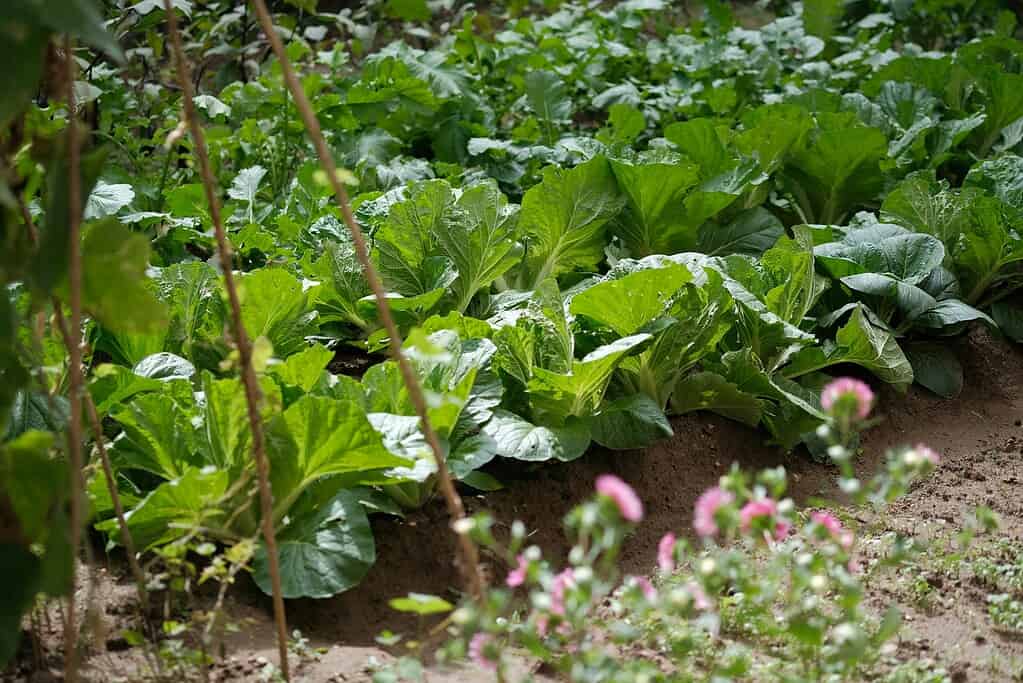
Just like us, healthy plants have stronger “immune systems.” Provide proper water and nutrients to avoid stress.
However, avoid heavy nitrogen fertilization when mildew is present – a flush of tender new growth can be extra susceptible to infection.
If your plants are drought-stressed or nutrient-starved, they’re more likely to succumb to diseases like powdery mildew.
Keep them in their ideal sun exposure (many mildew-prone plants like squash, zinnia, roses prefer full sun – too much shade can promote mildew).
Choose Mildew-Resistant Varieties
If you’ve had chronic powdery mildew issues, consider switching to plant varieties bred for resistance.
Many trusted seed companies and nurseries offer cultivars labeled “PM resistant” (PM for powdery mildew).
For example, there are mildew-resistant cucumbers, squash, roses, and lilacs available.
While resistance isn’t a guarantee, these varieties are much less likely to get sick, or will only have mild cases.
Clean Up Garden Debris
At the end of the growing season, be diligent about cleaning up fallen leaves and diseased plant material.
Powdery mildew fungi can overwinter in dead leaves, plant debris, or in dormant buds and re-infect plants the next year.
Rake up and dispose of (or burn) any infected debris.
For annuals that were infected, consider rotating your crops or planting something different in that spot next year to break the disease cycle.
Monitor and Act Early
Make a habit of checking your plants regularly (at least once a week) for any signs of disease. Early detection is crucial.
If you catch a tiny patch of powdery mildew on a leaf, remove it or treat it right away – this can prevent a minor speck from turning into a full-blown outbreak.
A weekly “garden walk” to inspect plants can save you a lot of headaches down the road.
By following these preventive measures, you’ll greatly reduce the chances of powdery mildew taking hold.
Your plants will be happier and healthier, and you’ll save yourself the trouble of constant combat against that white fuzzy foe.
Take Action to Protect Your Plants from Powdery Mildew
Powdery mildew might be a common adversary in the gardening world, but with the right knowledge, you can defeat it.
The keys are early intervention, consistent treatment with natural or chemical remedies as needed, and smart preventive practices to keep the fungus from gaining a foothold.
Don’t let powdery mildew continue to lurk on your leaves – as soon as you spot that white powder, jump into action with a milk spray or baking soda solution, prune out the worst bits, and give your plant some TLC.
Your plants will reward you with healthy green leaves, beautiful blooms, and a good harvest once they’re free of this disease.
Have you battled powdery mildew on your plants?
Let us know your experiences or any questions in the comments below! We’d love to hear how you handled it or if you have a favorite remedy or tip to share.
FAQs
Is it safe to eat vegetables or herbs that have powdery mildew?
Yes. Powdery mildew mainly affects leaves and stems, not the fruit. Wash produce thoroughly before eating. Fruits from infected plants may be smaller or less flavorful, but are generally safe unless visibly spoiled.
Can I compost plants infected with powdery mildew?
It’s risky. Spores can survive in compost and reinfect your garden. Bag and dispose of infected plant material. Only use hot compost (consistently high temperatures) if you are experienced.
Will powdery mildew spread to my other plants?
Yes. Spores are airborne and can infect nearby plants of the same family. Check and treat all susceptible plants, even if only one shows symptoms.
How often should I apply natural powdery mildew treatments?
Apply weekly for best results. In humid or severe conditions, every 5–7 days. Reapply after rain and continue for at least 2 weeks after new spots stop appearing.
Can powdery mildew survive the winter and come back next year?
Yes. Spores can overwinter in debris, soil, or on perennials. Remove infected material in fall and consider dormant sprays on shrubs. Crop rotation also helps reduce future outbreaks.
Level Up Your Garden
Our most popular gardening guides