
Your mailbox is often the first thing visitors and passersby notice, so why not make it stand out?
The mark of a well-designed home is leaving no detail overlooked – including your mailbox.
With a little creativity (and some soil under your fingernails), you can transform the space around your mailbox into a mini garden that reflects your style.
From colorful flowers to rustic hardscapes, the possibilities are endless.
Grab your gardening gloves, a sturdy spade, and a bag of mulch, and get ready to boost your curb appeal with these 12 creative mailbox landscaping ideas for an eye-catching entrance!
12 Creative Mailbox Landscaping Ideas
Here are 12 fun and inspiring mailbox landscaping ideas to get you started:
1. Flower Power Mailbox Garden
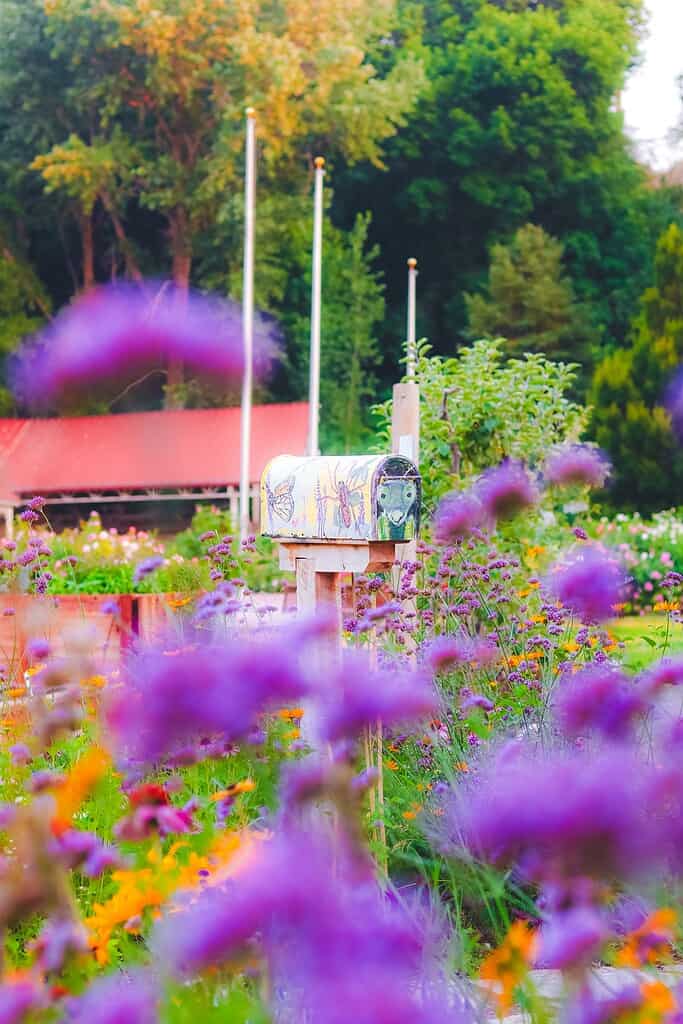
Nothing says “welcome home” like a burst of colorful blooms around your mailbox. Create a flower bed at the base of the post and fill it with easy-growing flowers that thrive in your area.
Think of hardy favorites like petunias, marigolds, or daylilies for a low-maintenance splash of color.
Mix perennials and annuals for season-long blooms – for example, yellow coreopsis and purple petunias make a vibrant combo that can withstand heat (and even a bit of road salt).
Don’t forget to enrich the soil with compost and add a layer of mulch to help retain moisture and keep weeds at bay.
This floral frame around your mailbox will instantly brighten your front yard and put a smile on your face every time you check the mail.
For more ideas on creating lush shade gardens, check out our beautiful hostas landscaping ideas.
2. Pollinator Paradise
Turn your mailbox area into a mini pollinator garden buzzing with life. Mailboxes are typically in full sun, making them perfect for nectar-rich flowers that attract butterflies and bees.
Plant coneflowers, black-eyed Susans, salvias, or lavender around the post to create a lively, eco-friendly display.
These blooms not only add brilliant color but also boost your garden’s ecological value by supporting local pollinators.
As a bonus, many of these plants (like lavender and salvia) are drought-tolerant and wonderfully fragrant, so you and your mail carrier will enjoy a sweet scent each day.
A pollinator-friendly mailbox garden proves that even a small curbside plot can make a big difference for bees, butterflies, and other beneficial critters.
3. Rustic Cottage Mailbox Garden
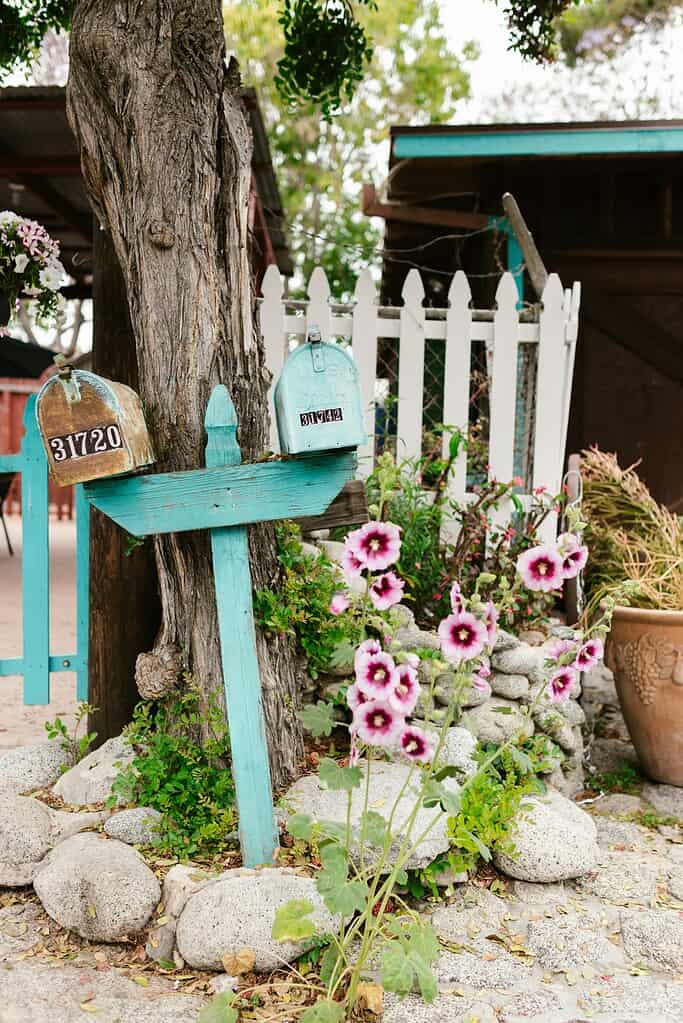
This charming mailbox setup combines a rustic, weathered wooden post with a pair of quaint, teal-painted mailboxes, creating a welcoming and whimsical entrance.
Surrounded by smooth river rocks and delicate pink-and-white blooms, the arrangement feels effortlessly natural yet thoughtfully curated.
A white picket fence in the background adds a classic cottage touch, making this mailbox corner not just functional, but a delightful little garden feature that sets the tone for the home beyond.
If you want more tips for combining rocks and plants, see our brick garden landscaping ideas for inspiration.
4. Rock Garden Charm
For a natural and low-maintenance vibe, consider landscaping your mailbox with decorative rocks and groundcovers instead of a traditional flower bed.
Start by clearing a small area around the mailbox and lay down a base of gravel or river stones for texture.
Then, plant hardy groundcover plants in between the rocks – creeping thyme, sedum, or creeping phlox are great choices that will spread and soften the look.
The contrast of lush green groundcovers against the stones creates a mini rock garden that looks polished and purposeful.
You can also add a couple of larger accent rocks or boulders to give height and interest.
The result is a tidy mailbox landscape that withstands tough conditions (rocky soil, heat, little watering) while still looking beautifully zen and organized.
5. Cottage-Inspired Mailbox for Whimsical Curb Appeal
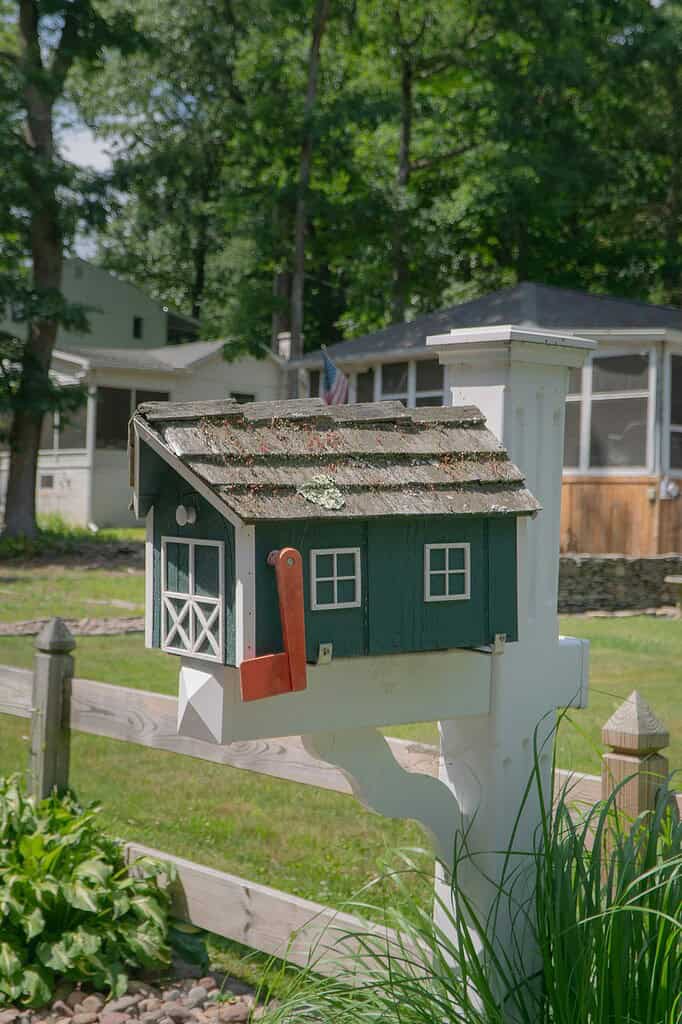
Add a touch of storybook magic to your front yard with this cottage-style mailbox.
Designed to mimic a cozy miniature farmhouse, the mailbox features rustic shingles, barn-style doors, and crisp green siding with white trim.
Mounted on a classic white post and surrounded by lush greenery, it creates a warm, welcoming vibe that instantly boosts curb appeal.
Perfect for DIY lovers who want something fun and functional, this unique mailbox design is a creative way to express personality while making your home’s entrance unforgettable.
Want more ideas for small decorative spaces? Check out our cool garden she shed ideas for inspiration.
6. Ornamental Grasses for Texture

For an elegant look that sways in the breeze, plant a cluster of ornamental grasses around your mailbox.
Grasses are tough, low-maintenance, and add wonderful texture and movement to the landscape. Varieties like fountain grass, muhly grass, or feather reed grass can thrive in hot, sunny curbside spots and require little care.
In fact, landscape experts often choose grasses for mailbox areas because they tolerate reflective heat and even the occasional trampling from mail delivery.
Try pairing a tall grass (like Muhlenbergia or switchgrass) with a couple of colorful perennials at its base for contrast. The grasses will provide height and year-round structure, turning golden and feathery in the fall for seasonal interest.
Come winter, many ornamental grasses still look lovely dry (or you can trim them back and watch them regrow in spring). It’s a modern, serene approach that still packs curb appeal.
7. Climbing Vines on the Post
Take advantage of that sturdy mailbox post by inviting a climbing vine to call it home. A flowering vine can wind around the post and create a romantic, cottage-garden effect.
One popular choice is clematis, a vine that produces abundant blooms in shades of purple, pink, or white in summer.
Train the clematis by adding a small trellis or wire support on the post for it to wrap around. You could also consider a climbing rose or morning glory for a similar effect (just be prepared for a bit of pruning to keep them tidy).
At the base, plant some easy-care companions like yarrow, salvia, or ornamental grass to fill out the garden without stealing the vine’s thunder.
Test Garden Tip: Be sure to trim and guide the vine so it doesn’t block your mailbox door, and keep the base of the post clear. With a little training, you’ll have a storybook-worthy mailbox draped in blossoms.
8. Warm Welcome Garden with Modern Minimalist Charm

This mailbox landscaping design combines minimalism with a heartfelt message.
A bold, yellow mailbox stands proudly atop a dark-stained post, clearly marked with house numbers for curbside visibility.
It’s anchored in a clean, rectangular raised bed filled with rich soil, colorful flowers, and tropical-style foliage.
A wooden welcome sign with the words, “No matter where you're from, we're glad you're here,” adds a personal and inclusive touch.
This design is perfect for homeowners who want a modern, low-maintenance mailbox garden with a meaningful twist.
9. Hand-Painted Floral Mailbox
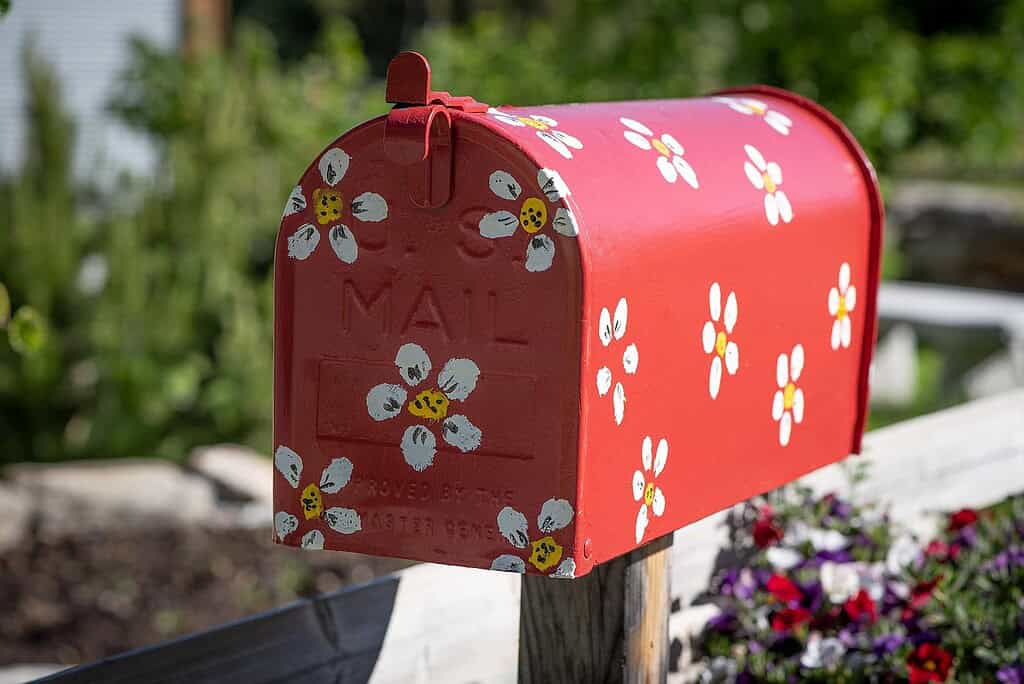
This vibrant red mailbox is a showstopper, hand-painted with cheerful white and yellow daisy-like blooms that radiate personality.
Mounted on a rustic wooden post and paired with colorful flowers below, it brings instant joy to any front yard.
Perfect for DIYers looking to add a homemade touch, this floral mailbox design is a budget-friendly way to showcase creativity and charm.
Pair it with a flower bed of petunias or daisies to echo the design and boost your home's welcoming curb appeal.
10. Native Plant Beauty
One surefire way to have a thriving mailbox garden with minimal effort is to use native plants from your region.
Native flowers and shrubs are adapted to your local climate, meaning they’ll likely handle the sun, rain, and soil conditions with less pampering.
For exposed street-side spots, experts recommend hardy natives like purple coneflower (Echinacea), yarrow (Achillea), or black-eyed Susans (Rudbeckia) which are resilient and support pollinators.
These plants can take heat, drought, and poor soil in stride once established. If you’re in a coastal area, consider salt-tolerant natives; in a desert area, go for natives that love sand and sun.
Not only will native flora be easier to care for, they also tie your mailbox landscape into the natural local scenery for a cohesive look. Your mailbox will look like it truly belongs in the environment.
To get started, check with a local nursery for native plant suggestions that stay compact enough for a small garden bed, or explore our guide to vibrant drought-tolerant plants for more resilient, eye-catching options.
You’ll be rewarded with a vibrant, sustainable mailbox garden that butterflies and neighbors alike will appreciate.
11. Planter Boxes and Hanging Baskets
No ground space? No problem! Mailbox planters and hanging baskets let you add flowers even if your mailbox is surrounded by pavement or you prefer not to dig up the lawn.
You can attach a small planter box to the mailbox post or hang a basket from the crossarm (where the box sits) – fill these with colorful annuals or trailing vines for instant charm.
For example, a hanging basket of petunias or trailing ivy can spill over with blooms at eye level, complementing any plants you have on the ground.
If your mailbox post is sturdy, consider mounting two side planters on it and planting cascading flowers like calibrachoa or verbena.
Ensure any attached planters are secured tightly so they don’t tip, and use good potting mix for container plants. Remember to water these planters a bit more often, as containers dry out faster than ground soil.
This idea is also perfect for renters or those who can’t dig up the yard – you still get a lush mailbox look with just a few planters and your favorite blooms.
12. Light It Up with Accents
For an extra welcoming touch, add lighting and decor around your mailbox to make it shine day and night.
A pair of small solar-powered landscape lights staked on either side of the mailbox can illuminate your beautiful plants after sunset (and help your mailman spot the right address on dark evenings).
Solar lights are easy to install with no wiring needed – they charge by day and glow automatically at night.
Along with lights, you can express your personality with a couple of tasteful accents: think a tiny birdhouse mounted on the post, a decorative sign with your house number, or a weather-proof garden flag for holidays.
Just keep accessories to a few key pieces so it doesn’t look cluttered (you want the plants to still take center stage). A fresh coat of paint on the mailbox or post itself can also do wonders – choose a color that complements your home and flowers.
By day, the decor adds charm; by night, the solar lights add a cozy glow. These finishing touches truly tie together your mailbox landscaping, making your entrance eye-catching 24/7.
Mailbox Landscaping Tips for Any Climate and DIYer
Every mailbox and yard is a little different, so here are some quick tips to help your project succeed no matter where you live:
Match Plants to Sun and Climate
Observe how much sun your mailbox gets and pick plants accordingly.
If your mailbox bakes in all-day sun, choose heat-tolerant stars (lavender, sedum, coreopsis, daylilies, etc.) that won’t be bothered by roadside heat or salt.
If it’s in partial shade or you have more moisture, plants like hostas or ferns might do better.
Also consider your winters – in very cold areas, look for hardy perennials that can survive frost and snow (for instance, sedum and coneflower are hardy into zone 3).
Tailoring your plant choices to your curb’s conditions means less work for you and happier plants.
Start Small & Simple
It’s okay to begin with a modest design. A small 2-3 foot flower bed or a single planter is easy to manage.
You can always expand later! Keeping the mailbox garden small and easy to maintain at first will ensure you don’t get overwhelmed.
Remember, even a little pop of color around the post can make a big impact.
Use Quality Soil and Mulch
Mailbox areas can have compacted or poor soil (especially if near a road). Before planting, loosen the soil and mix in a bit of compost or garden soil for better root growth.
After planting, spread a couple of inches of mulch on top. Mulch conserves moisture, suppresses weeds, and gives a clean, finished look.
Plus, it means you won’t have to weed or water as often in the summer heat.
Maintenance Made Easy
Curbside gardens should ideally be low-maintenance. Opt for tough, self-sufficient plants that don’t need constant deadheading or pampering.
Still, be prepared to water deeply during dry spells (keep a watering can handy for quick trips to the curb). Plan to weed the bed occasionally and trim any overzealous plants so they don’t block the mailbox door or walkway.
A quick check once a week is usually enough to keep things tidy. Watering regularly and doing light pruning will go a long way – but no need for intensive chores in a well-planned mailbox garden.
Safety and Accessibility
Always keep your mailbox easily reachable for both you and your mail carrier.
When planting, maintain some clearance in front of the mailbox so you can open it freely and postal workers can deliver mail without wading through bushes.
If you live in a snowy area, position plants a bit back from the street so they won’t be damaged by snow plows or piled snow.
And remember to follow any local guidelines – for example, the post office often recommends the mailbox be about 6-8 inches from the curb and at a standard height off the ground.
So, avoid super tall plantings that could impede delivery or violate regulations. With a sensible layout, you’ll have a gorgeous yet functional mailbox landscape.
By keeping these tips in mind, you’ll ensure that your new mailbox landscaping not only looks fantastic but also thrives with minimal fuss, no matter the weather or region.
Ready to Transform Your Mailbox Entrance?
Your mailbox may be a small part of your property, but it has a big impact on your home’s first impression.
With these creative landscaping ideas, you can turn that humble post into a show-stopping eye-catching entrance that reflects your personal style.
Remember, the key is to choose plants and decorations that make you smile every time you check the mail.
So go ahead – pick an idea (or two) from this list, grab your tools and get started on your mailbox makeover. Your neighbors will surely notice the difference, and you’ll love coming home to a more beautiful front yard.
Which mailbox landscaping idea is your favorite, and how do you plan to make it your own? Drop a comment below to share your thoughts or any creative twists you’d add.
We can’t wait to hear your ideas and experiences – happy landscaping!
FAQs
What are the best plants for around a mailbox?
Choose hardy, low-maintenance plants that handle sun, heat, and possibly salty soil. Perennials like sedum, coneflowers, daylilies, black-eyed Susans, and lavender work well. Add annuals like petunias or zinnias for extra color. For shady spots, try ferns or hostas.
How do I maintain my mailbox garden?
Water deeply once or twice a week, mulch to retain moisture and reduce weeds, and pull any intruding grass. Trim plants that block the mailbox and feed flowers mid-season to keep them blooming.
Can I landscape around a mailbox in a cold-winter climate?
Yes! Use frost-tolerant perennials like sedum, coneflowers, Russian sage, or daylilies. Shrubs like dwarf spruce or holly add winter interest. Mulch in late fall and avoid plants sensitive to road salt.
How do I edge or define a mailbox flower bed?
Use bricks, stones, or plastic/metal edging to form a border, or cut a clean trench with a spade. Edge helps keep grass out and gives a tidy look. Keep mulch fresh and trim spreading groundcovers as needed.
Are there any rules or precautions to follow?
Check local or HOA rules. USPS recommends mailbox openings 41–45 inches high and 6–8 inches from the curb. Avoid blocking the mailbox door or flag and skip thorny or stinging plants. Call utility services before digging near underground lines.
Planting Guides for This Article
Get exact planting dates, frost schedules, and growing tips for your zone: