
If your backyard flock is growing – or if you're starting out with the intention of keeping a larger number of birds – your coop needs to keep up.
A cramped, poorly designed space leads to stressed hens, lower egg production, more disease, and a whole lot of extra work on your end.
That's exactly why investing in a well-thought-out large chicken coop design makes all the difference.
Whether you're housing 10, 20, or even 50 chickens, having the right setup matters far beyond just square footage.
If you're still figuring out the basics of flock management, start with our guide on backyard chicken farming for beginners before diving into coop design.
In this guide, you'll find 12 large chicken coop ideas that go beyond the basics – each one designed to help you build a smarter, more functional setup that works for both you and your birds.
12 Large Chicken Coop Ideas Worth Stealing for Your Backyard
These 12 large chicken coop ideas will give you practical inspiration to build a setup that actually works for you and your birds.
1. The Classic Walk-In Barn-Style Coop
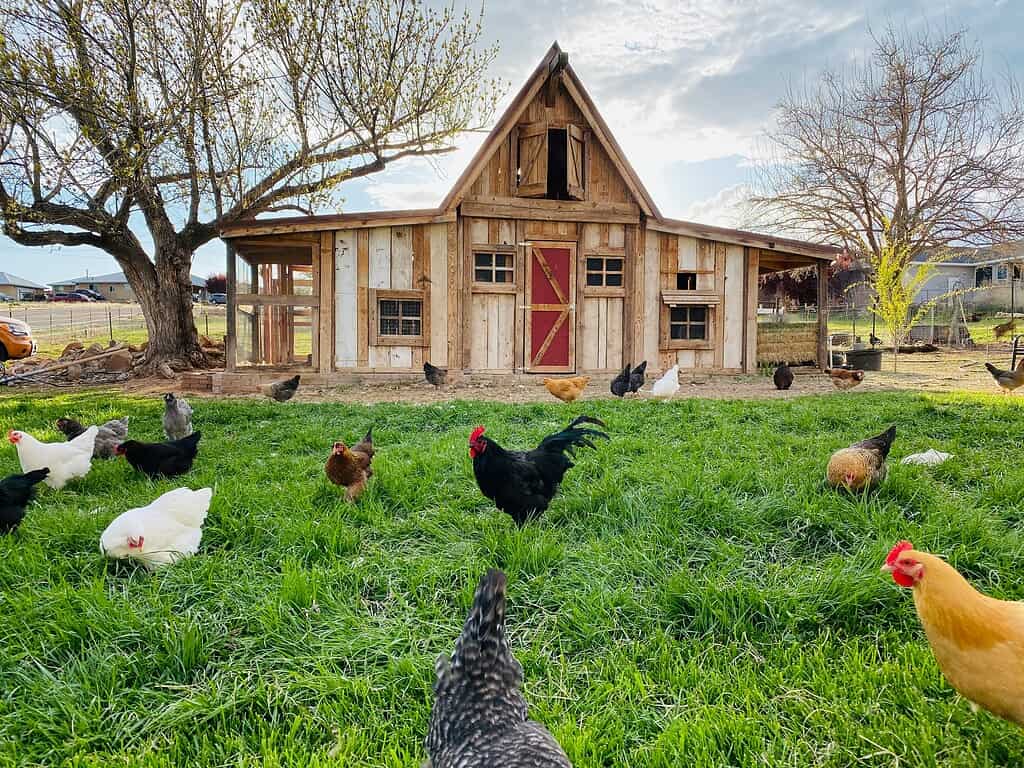
A barn-style coop is the gold standard for large flocks.
With tall ceilings, wide double doors, and a pitched roof that sheds rain and snow, this design gives you plenty of room to work comfortably without hunching over.
The interior can be divided into sections – one for nesting, one for roosts, and a feeding station – keeping everything organized.
The large footprint also means better air circulation, which is critical for flock health year-round.
2. The A-Frame Walk-In with an Attached Run
A-frame coops scaled up for large flocks combine structural simplicity with smart space use. 4The angled roofline naturally channels rainwater away and provides extra wall stability.
When you add a generous attached run – fully enclosed with hardware cloth – your birds get safe outdoor access without the risk of predators.
This design works especially well if you want to give your chickens supervised access to fresh forage areas.
3. The Raised Platform Coop with Underneath Run Space
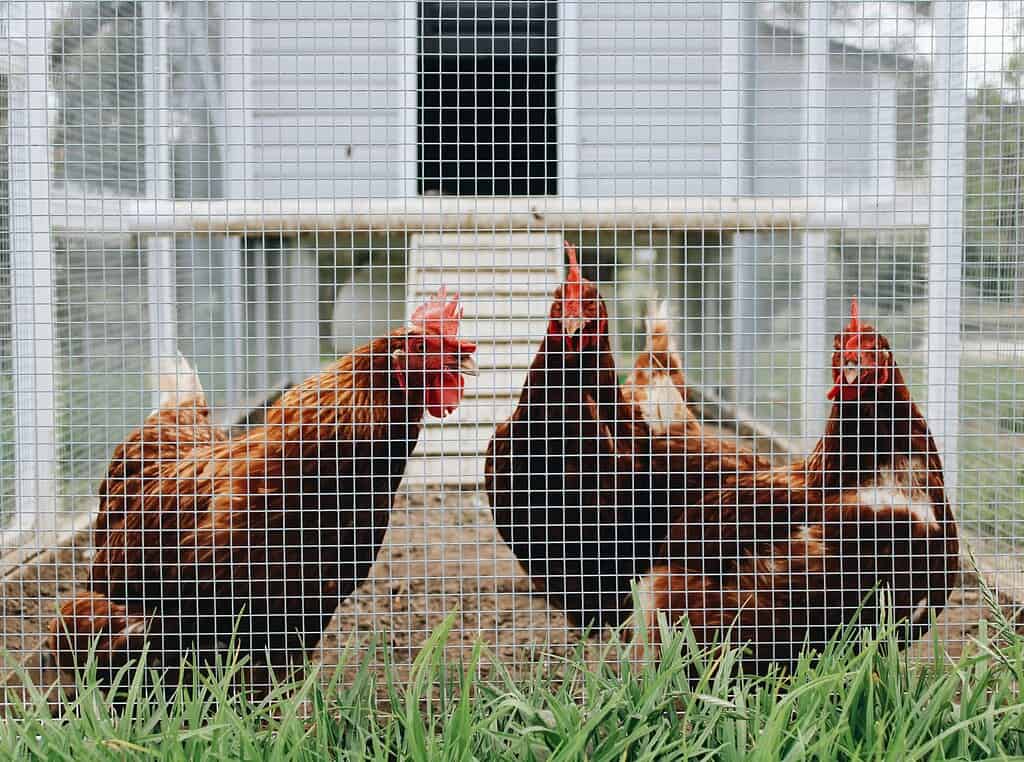
Elevating the coop on sturdy posts creates usable space underneath, which doubles as a shaded run area your birds can use even in rainy weather.
The raised design also protects the floor from moisture and rot, and it deters predators like rats from nesting beneath it.
Ramps with grip strips allow easy access, and the height makes egg collection and coop cleaning far more comfortable than a low-clearance design.
4. The Modular Expandable Coop System
If your flock size tends to fluctuate – or if you're planning to grow your operation gradually – a modular coop design is the smartest approach.
These systems are built in sections that can be added on as needed. Start with a base structure that houses 10–15 birds, then bolt on additional nesting or roosting modules as your flock grows.
This approach saves money upfront while giving you long-term flexibility.
5. The Converted Storage Shed or Garage
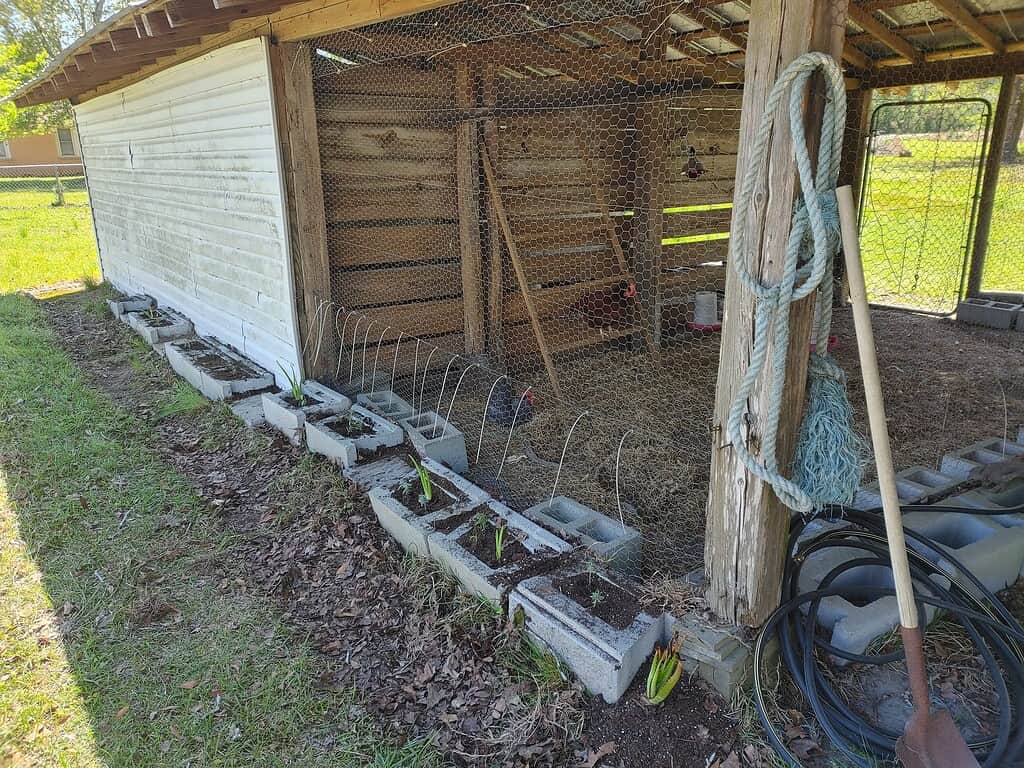
Repurposing an existing outbuilding is one of the most cost-effective ways to house a large flock.
A standard 10×12 or 12×16 shed can comfortably house 15–25 chickens when fitted with proper ventilation, nesting boxes, and roosting bars.
You'll still need to make modifications (adding vents, hardware cloth windows, and predator-proof latches) but the structural work is already done.
Check out our detailed tips on predator-proofing your coop to make sure any converted building keeps your flock safe.
6. The Three-Season Coop with Insulated Winter Panels
In climates with cold winters, a large coop that can be adapted seasonally is a smart investment.
The base structure is open and well-ventilated for spring through fall, with framed openings that accept insulated panels during winter months.
Combined with a heated chicken waterer and deep-litter bedding, this design keeps your birds comfortable without heavy heating costs.
Proper winterization is a topic we cover in depth in our step-by-step guide to winterizing your chicken coop.
7. The Long Corridor Coop with Multiple Nest Box Stations
For large laying flocks, a long rectangular coop with nest boxes positioned along both interior walls maximizes nesting capacity without wasting floor space.
A central aisle gives you easy walking access to collect eggs, change bedding, and check on individual birds.
This layout also makes it simple to install multiple automatic waterers and feeders without crowding.
Pair this with our recommendations for DIY chicken feeders to keep feeding stations efficient and waste-free.
8. The Greenhouse Hybrid Coop
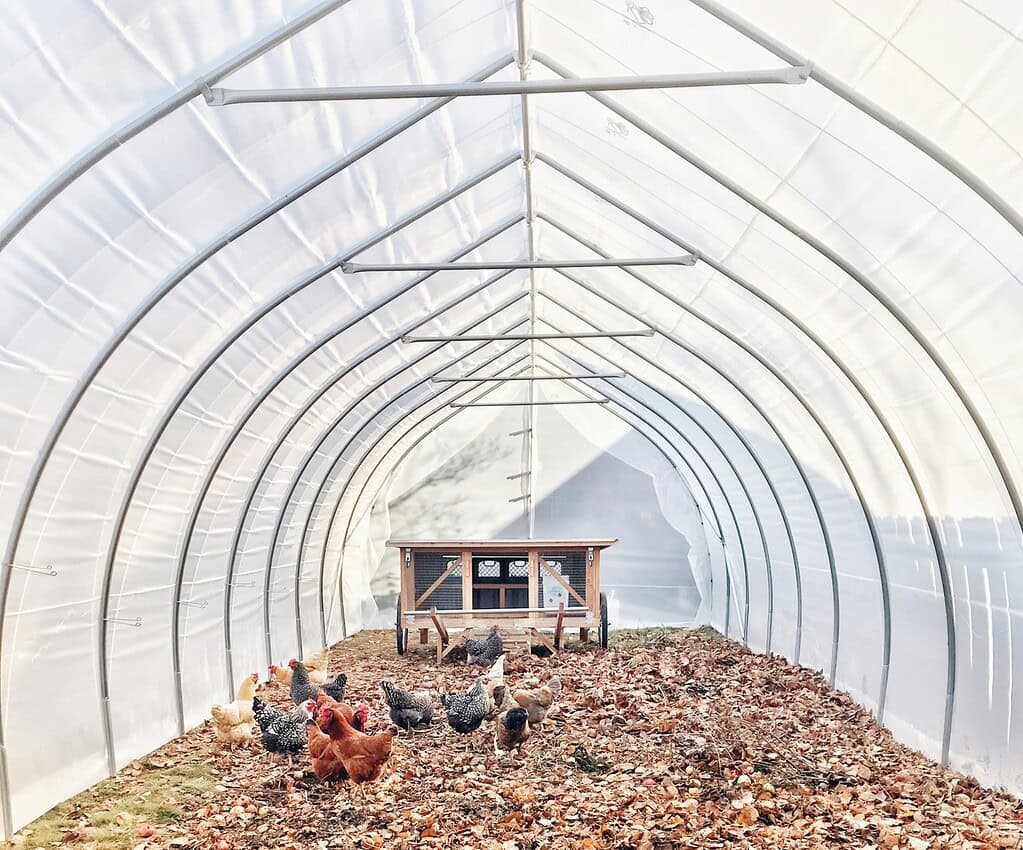
A greenhouse-style coop uses polycarbonate panels or clear corrugated roofing to let in natural light while maintaining an enclosed environment.
This is especially valuable during winter, when shorter days reduce natural light exposure and, in turn, egg production.
The light-filled interior promotes a more natural laying cycle, reduces stress on birds, and even warms the space passively during sunny days.
Add adequate ventilation to prevent overheating in summer.
9. The Two-Story Coop with Ground-Level Run Access
A two-story design puts the sleeping and nesting area on an upper level while the lower level serves as a protected indoor run. Birds move between levels using built-in ramps.
This vertical use of space is ideal for smaller backyard plots where horizontal expansion isn't an option but you still need room for a larger flock.
The upper level stays clean and dry while the lower level handles the daily traffic and mess.
10. The DIY Timber Frame Coop with a Large Covered Run
Timber frame construction produces a sturdy, long-lasting coop that looks as good as it functions.
Using dimensional lumber or reclaimed wood, you can build a structure that will stand for decades with minimal maintenance.
The key here is pairing the coop with a large, fully covered run so birds can be outside regardless of weather conditions.
A covered run also significantly reduces the amount of mud your chickens track into the coop.
For build inspiration and step-by-step planning, our DIY chicken coop plan guide is a great starting point.
11. The Portable Large Coop on Wheels (Mega Chicken Tractor)
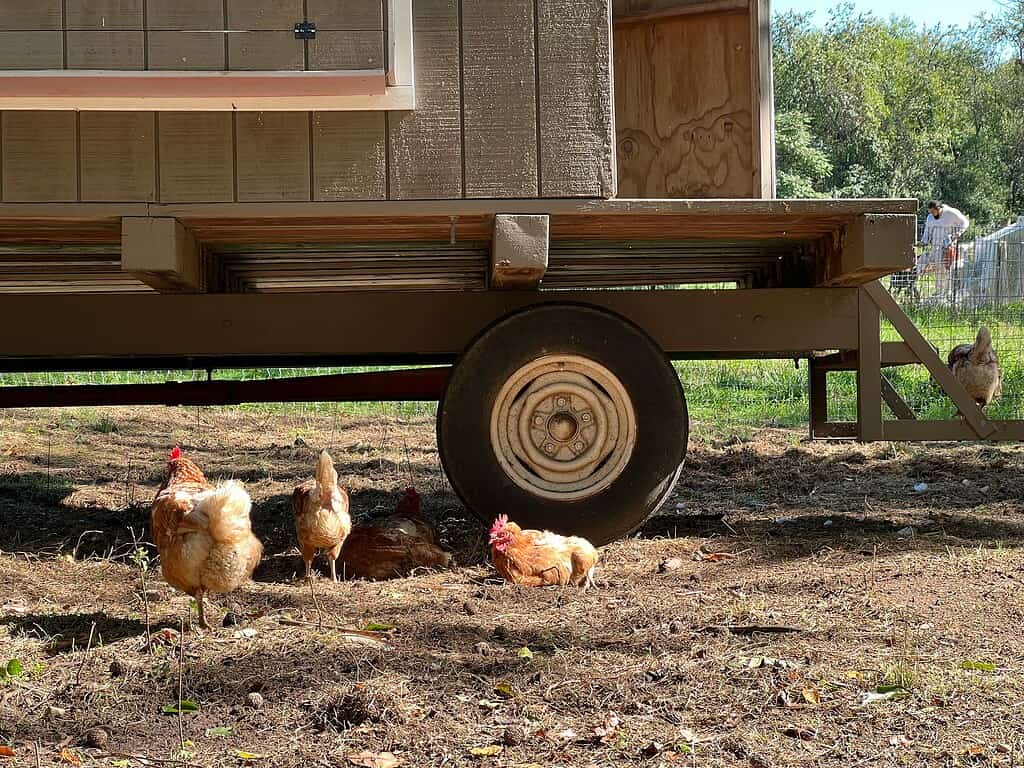
Chicken tractors aren't just for small flocks.
A scaled-up tractor design – mounted on large wheels or a skid frame – lets you move your flock to fresh pasture regularly, which benefits both the birds and your land.
Regular rotation prevents the ground from becoming bare and compacted, reduces parasite load, and gives your chickens consistent access to insects and green forage.
We've put together a full list of affordable chicken tractor ideas that can be adapted to larger flock sizes.
12. The Integrated Coop and Garden Setup
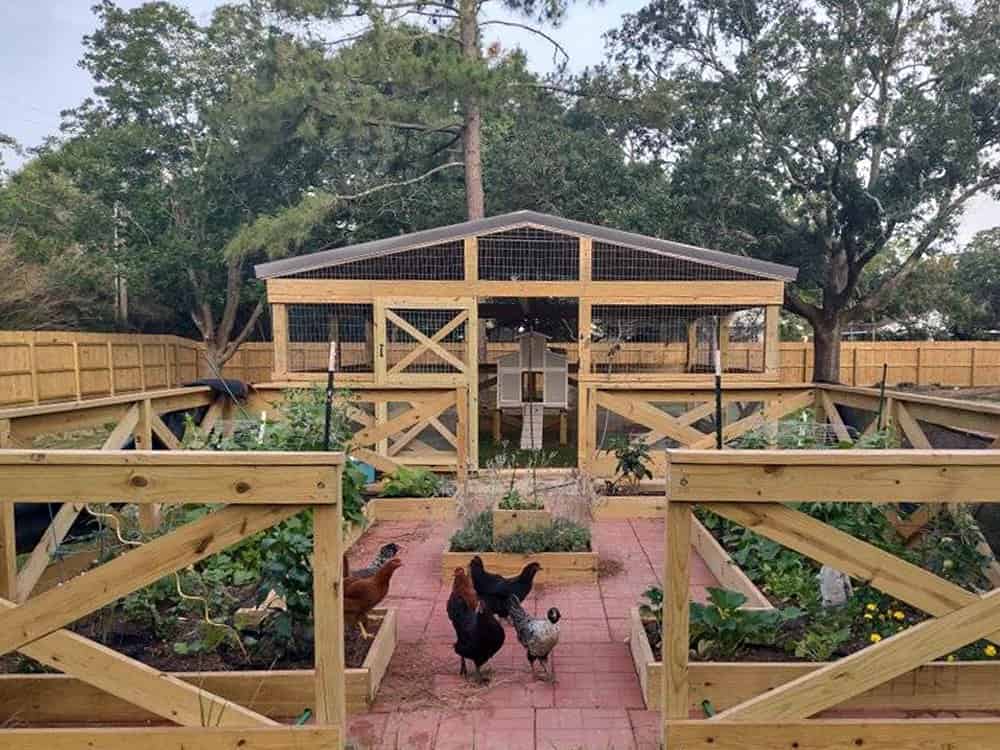
One of the most efficient homestead designs integrates the chicken coop with a garden space so the birds work for you.
Chickens scratch through spent garden beds in the off-season, clearing weeds and pests while fertilizing the soil.
A well-planned layout uses secure fencing to rotate birds through garden sections without giving them unsupervised access to active growing areas.
Pairing the right plants nearby also benefits the flock – see our guide on plants your chickens will love for ideas on what to grow close to the coop.
What to Think About Before You Build Your Large Chicken Coop
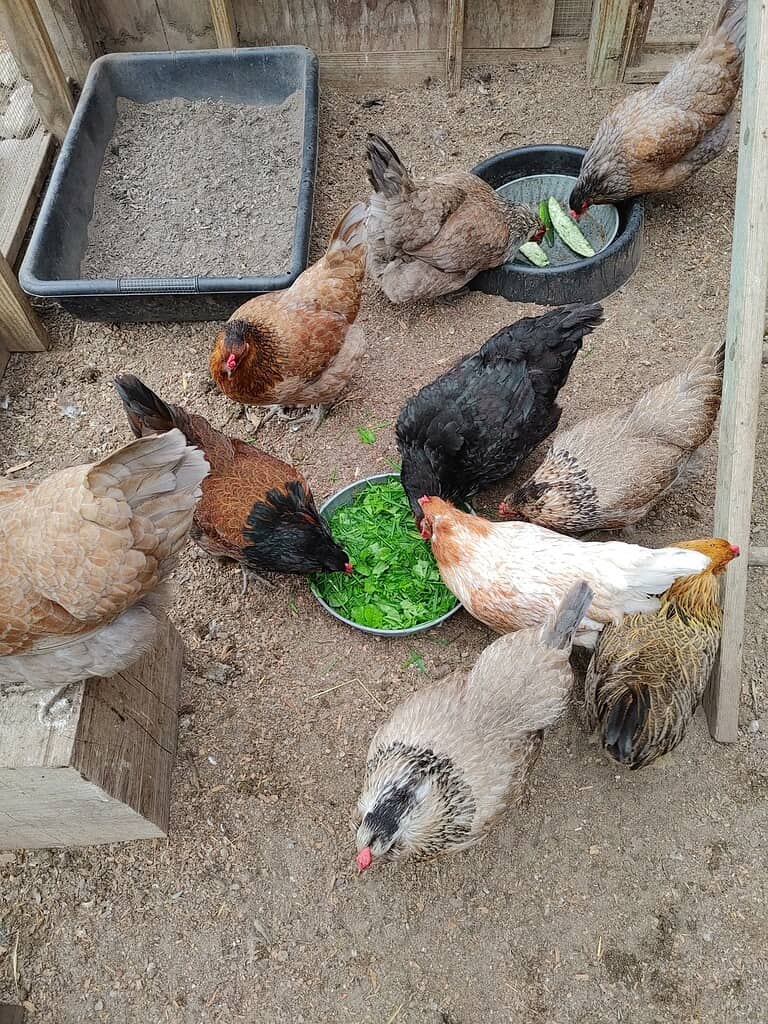
A big coop sounds exciting, but planning it properly from the start saves you from costly mistakes later. The most common issue people run into is undersizing.
The general rule is a minimum of 4 square feet of indoor coop space per bird, plus at least 10 square feet of run space per bird.
For large breeds, go higher – heavy birds like Buff Orpingtons or Jersey Giants need more room to move comfortably and roost without crowding.
Ventilation is the other critical factor most people underestimate.
Without adequate airflow, moisture and ammonia from droppings build up fast, leading to respiratory illness and frostbite in cold climates.
Your coop should have vents near the roofline that stay open year-round – not just windows. Cross-ventilation on opposite walls makes a dramatic difference in air quality.
Don't forget about roost space either. Each bird needs roughly 12 inches of roosting bar length, and bars should be positioned at the same height to prevent dominant hens from monopolizing the best spots.
Our in-depth post on roosting bars for chickens walks you through spacing, height, and materials so you get it right the first time.
How to Plan Nesting Boxes for a Large Flock
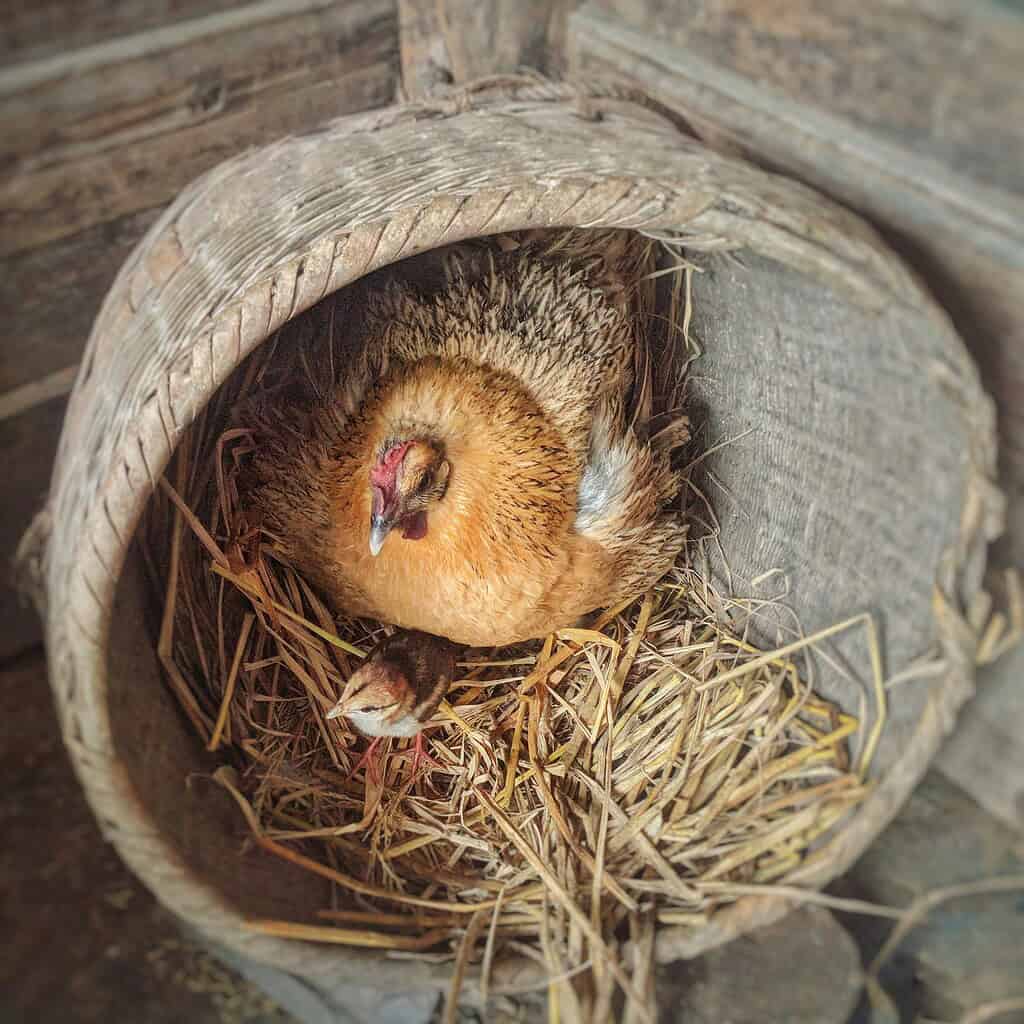
A common mistake when scaling up is not adding enough nesting boxes – or adding too many. The sweet spot is one box for every 4–5 hens.
Oversupply creates wasted space; undersupply leads to hens fighting over boxes, broken eggs, and chickens laying on the floor.
Boxes should be positioned lower than the roost bars so birds aren't tempted to sleep in them, which keeps nesting material cleaner.
Size matters too. Standard nest boxes work for most breeds, but if you're raising larger birds, you'll want boxes at least 14 inches wide and deep.
Easy access from outside (via a hinged egg collection door) is one of the best upgrades you can make to any large coop. It saves you from walking into the coop multiple times a day just for egg collection.
For creative and budget-friendly nesting solutions, check out our post on DIY nesting box ideas.
Keeping the Coop Clean Without It Taking Over Your Life
A large coop can become a cleaning nightmare without the right system in place.
The deep litter method is one of the most popular strategies for larger operations – you layer organic material like straw, wood shavings, or leaves and allow it to compost in place throughout the season, then clean it out once or twice a year.
Done correctly, it actually generates a small amount of heat in winter and keeps ammonia levels low.
For the run area, drainage is everything. Muddy, compacted runs are a breeding ground for bacteria and parasites.
Grade the ground slightly so water drains away from the coop, and consider adding a layer of gravel or sand to the high-traffic areas.
Your flock will also benefit from having a proper dust bath station – it's essential for feather health and parasite control, and it keeps birds occupied and active throughout the day.
If you're building a chicken run alongside your large coop, make sure you plan it properly from the start. Our post covering must-know tips before building a chicken run covers everything from sizing to predator-proofing the perimeter.
Start Building a Coop Your Flock Will Actually Thrive In
A well-designed coop pays you back in healthier hens, better egg production, and far less daily frustration.
Pick one of these 12 large chicken coop ideas that fits your space and budget, sketch out your plan, and take it one step at a time. The flock you've worked hard to raise deserves a setup built to last.
Have you already built a large coop, or are you in the planning stages? Drop a comment below and share what design you're working with – we'd love to hear what's working for your flock!
Plan Your Garden With Confidence!

Ever start planting… and then realize halfway through that things feel a little scattered?
A simple plan changes everything.
When you sketch your layout first, you can see what fits, what flows, and what actually makes sense for your space. It saves time, money, and a whole lot of second-guessing later.
Our free Garden Planner helps you map out beds, organize plant spacing, rotate crops, and keep track of seasonal tasks – all in a clean, printable format you can actually use.
Whether you’re designing a low maintenance front yard or planning your full homestead garden, this gives you a clear starting point.
Less chaos. More clarity. A garden that works.
Frequently Asked Questions
How much ventilation does a large chicken coop actually need?
A good rule of thumb is 1 square foot of ventilation for every 10 square feet of floor space, though more is generally better.
The vents should be placed near the roofline so warm, moist air can escape without creating cold drafts directly on the birds.
Even in winter, these vents should stay open – moisture buildup from respiration and droppings is more dangerous to chickens than cold temperatures.
What flooring material works best for a large coop?
Concrete is the most durable and easiest to sanitize, but it's cold and hard on birds' feet without adequate bedding.
A compacted dirt floor with 4–6 inches of absorbent bedding works well for most backyard setups and is far cheaper to install.
Wooden floors work too but require more maintenance – they need to be sealed and inspected regularly for rot or damage. Whatever you choose, prioritize drainage and the ability to deep-clean the space at least once or twice a year.
Can you keep roosters in a large coop without constant fighting?
Yes, but the ratio matters. A general guideline is one rooster per 10–12 hens to minimize competition and stress.
In a large coop with clearly defined space, roosters are less likely to fight than in a cramped setup because subordinate males can establish their own territory.
If you're on the fence about whether a rooster is right for your flock, our post on the pros and cons of keeping a rooster covers everything you need to weigh before deciding.
How do I prevent mites and lice in a large flock without treating every bird individually?
Preventing mites and lice at a flock level starts with the environment, not individual treatment.
Keep bedding dry and change it regularly, add food-grade diatomaceous earth to dust bath areas, and inspect roosts and corners for early infestations.
A properly built dust bath station – separate from the feeding area – is one of the most effective preventive tools you can provide. At the coop level, whitewashing the interior walls with agricultural lime kills mite eggs hiding in wood grain and crevices.
Is it cheaper to build or buy a large chicken coop?
Building is almost always cheaper for large coops, especially when you factor in the cost of commercially available structures that can comfortably house 20 or more birds.
A DIY build using dimensional lumber and basic materials can cost a fraction of a pre-built kit of comparable size – often 40–60% less.
The tradeoff is time and skill, but with a solid plan and basic carpentry tools, most homesteaders find it well within reach. Repurposing an existing building like a shed or small barn brings the cost down even further.