
If there's one flower that delivers maximum color with minimum fuss, it's the marigold.
Whether you're planting your very first garden or you've been growing for years, marigolds are one of those plants that almost always reward you with a stunning, vibrant display – and they do it fast.
From the moment you tuck a seed into the soil to the moment those bright orange, yellow, and gold blooms pop open, you can expect flowers in as little as 6 to 8 weeks.
But “easy” doesn't mean there's nothing to learn.
Getting the most out of your marigolds – the thickest blooms, the longest flowering season, the healthiest plants – comes down to a few key decisions made early in the process.
In this guide, we're covering everything you need to know: the best varieties to grow, how to start from seed or transplant, soil and sun requirements, watering habits, pest-fighting superpowers, and how to keep them blooming from spring all the way to frost.
Why Marigolds Deserve a Spot in Every Garden
Marigolds (genus Tagetes) are one of the most versatile flowering plants you can grow.
They're annual flowers, which means they complete their entire life cycle – from seed to bloom to seed – within one growing season.
This is actually great news for gardeners because it means you get a fresh, energetic plant every year that's focused entirely on producing as many blooms as possible.
Beyond their beauty, marigolds are workhorses in the garden. They're well-known as companion plants because they produce a compound in their roots that deters nematodes – microscopic soil pests that can destroy vegetable crops.
Plant them near tomatoes, peppers, squash, or beans and you get a natural pest deterrent that doubles as a flower border.
Speaking of companions, if you're growing squash this season, be sure to read our guide on how to grow squash successfully and discover how marigolds can protect your harvest.
They also attract pollinators like bees and butterflies while repelling aphids, whiteflies, and even mosquitoes to some degree.
And because they thrive in hot, sunny conditions and tolerate drought once established, marigolds are an ideal plant for gardeners who don't want to babysit their flower beds.
Choosing the Right Marigold Variety for Your Garden
Not all marigolds are created equal. There are three main types grown in home gardens, and each has its strengths depending on what you're looking for.
African Marigolds (Tagetes erecta)
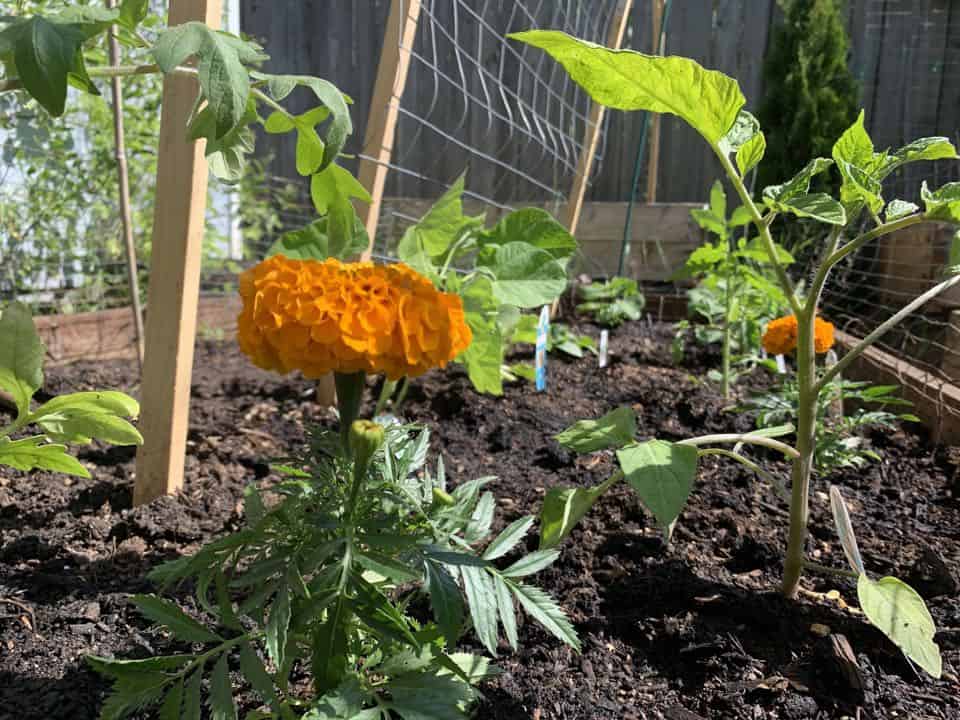
African marigolds are the giants of the marigold world. They grow 2 to 4 feet tall and produce large, pompom-like flowers that can reach 3 to 4 inches across.
They come in bold shades of yellow, orange, and gold.
These are the ones you want for dramatic visual impact – as a tall border planting, a backdrop in a cutting garden, or a statement piece in containers.
They do take a little longer to bloom (10 to 12 weeks from seed), so start them early indoors if you want flowers by early summer.
French Marigolds (Tagetes patula)
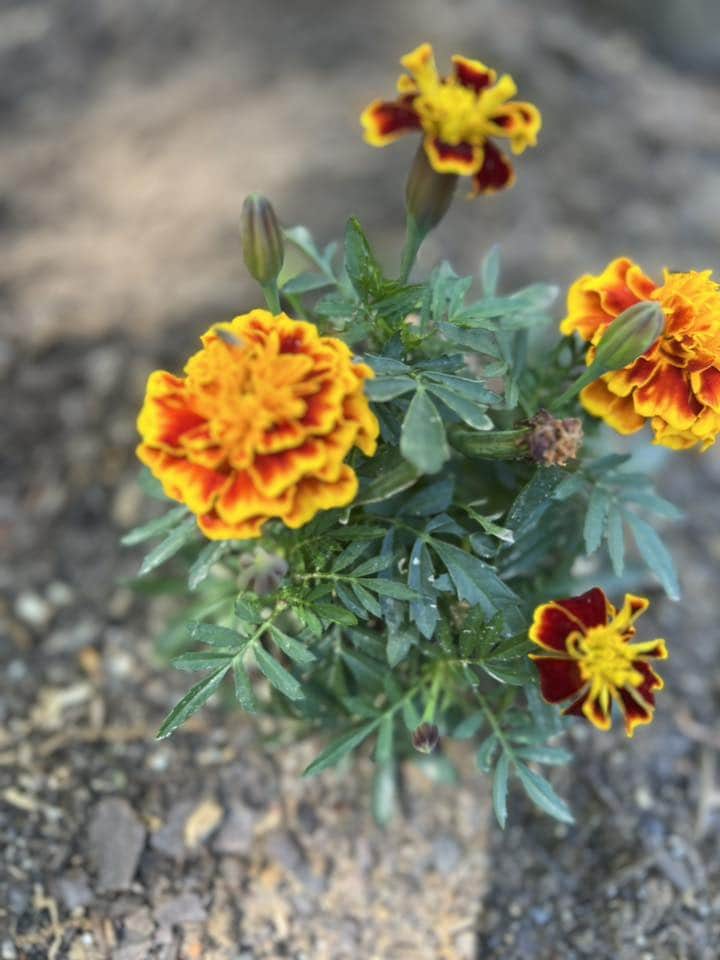
French marigolds are the compact, fast-blooming variety most gardeners reach for. They typically grow 6 to 12 inches tall and bloom in just 6 to 8 weeks from seed – sometimes even faster.
Their flowers are smaller but more numerous, and they come in a wider range of colors including bicolored red-and-orange combinations.
French marigolds are especially effective as companion plants because of their strong root secretions, and they're the most popular choice for container gardening.
For more ideas on what thrives in containers and pots, see our guide to garden pots for beginners.
Signet Marigolds (Tagetes tenuifolia)
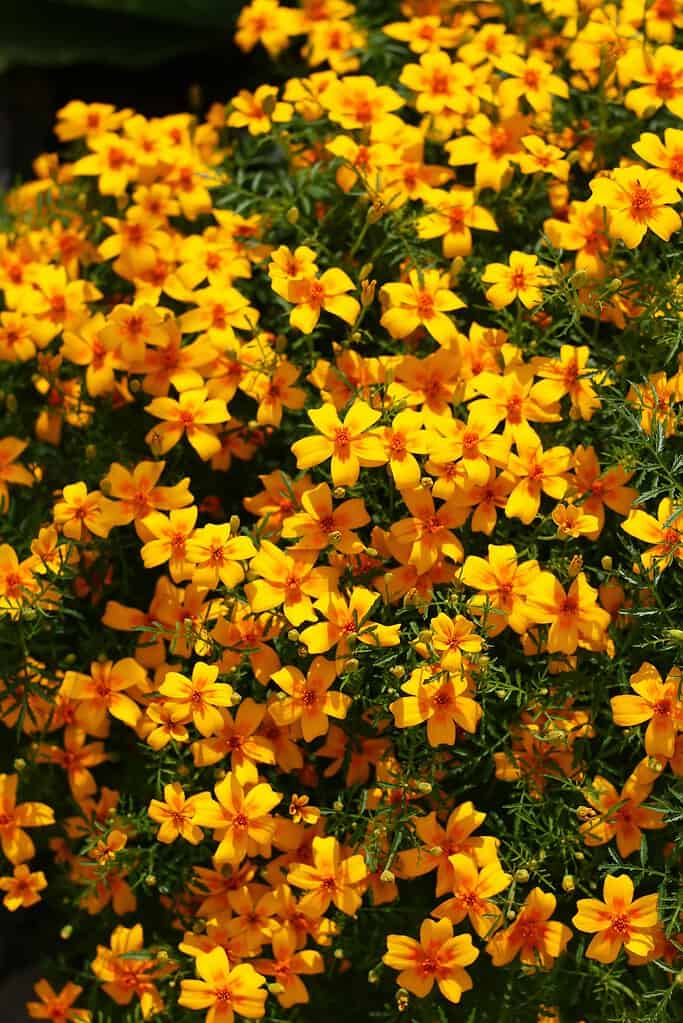
Signet marigolds are the most delicate-looking of the three, with feathery, lacy foliage and masses of small, single-petaled flowers.
They're edible – the petals have a mildly citrusy flavor – and they make beautiful additions to herb gardens and edging.
They're also heat-tolerant and deer-resistant, and they bloom prolifically all season long with very little deadheading required.
When and How to Plant Marigolds for the Fastest Blooms
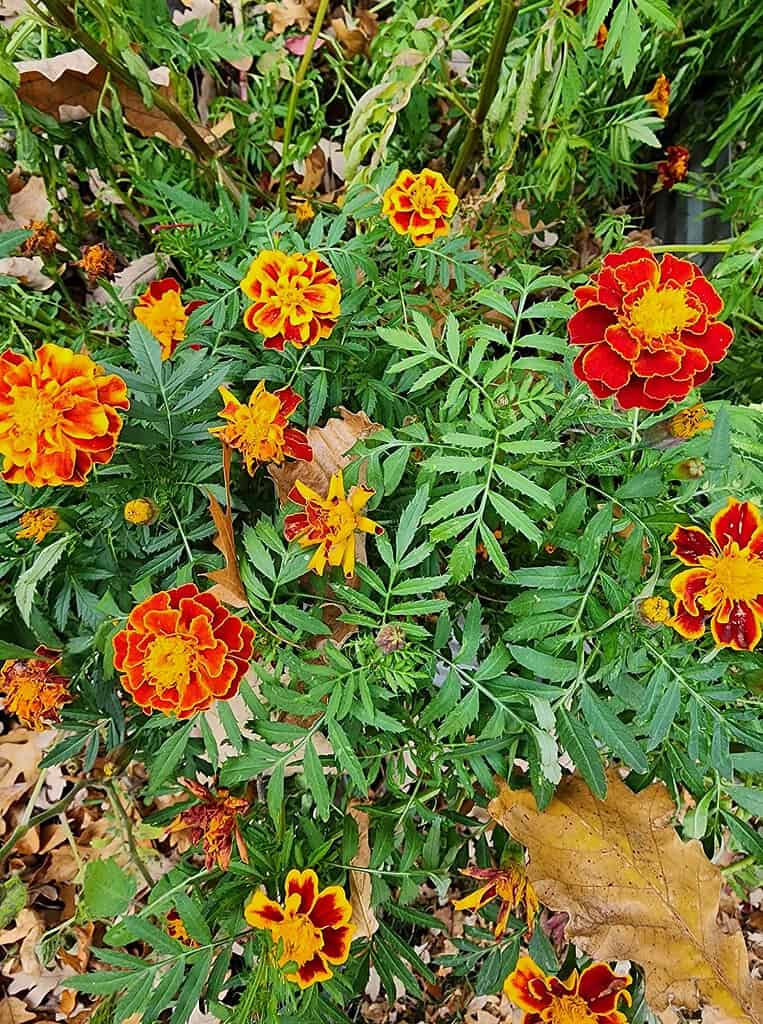
Timing and technique matter when it comes to getting marigolds blooming as quickly as possible. Here's exactly what to do.
Starting Marigolds from Seed Indoors
If you want the earliest possible flowers, start marigold seeds indoors 4 to 6 weeks before your last frost date.
Marigold seeds germinate quickly – usually within 5 to 7 days – when kept in warm conditions (70–75°F).
Use a seed-starting mix in small cells or pots, plant seeds about ¼ inch deep, and keep the soil moist but not soggy. Place them under grow lights or in a bright south-facing window.
Once seedlings have two sets of true leaves, they're ready to be transplanted outdoors after the danger of frost has passed.
Direct Sowing Marigolds in the Garden
The great news about marigolds is that they're one of the easiest flowers to direct sow straight into the ground. Wait until after your last frost date when soil has warmed to at least 60°F.
Scatter seeds ½ inch deep and thin seedlings to 8–12 inches apart (for French marigolds) or 12–18 inches apart (for African types). You'll have blooms in as little as 6 weeks from direct sowing.
This makes marigolds one of the fastest-reward flowers you can grow from seed.
If you're also working with raised beds, our article on metal raised garden beds has great tips on optimizing your setup for fast-growing flowers and vegetables.
Transplanting Nursery Starts
Buying transplants from a nursery or garden center is the fastest route to blooms.
Look for compact, bushy plants with strong green stems and avoid any that are already heavily flowering (they tend to struggle with transplant shock).
Harden off transplants by setting them outside in a sheltered spot for a few days before planting in the ground. Space them according to variety and water them in well.
Soil, Sun, and Watering: Getting the Basics Right
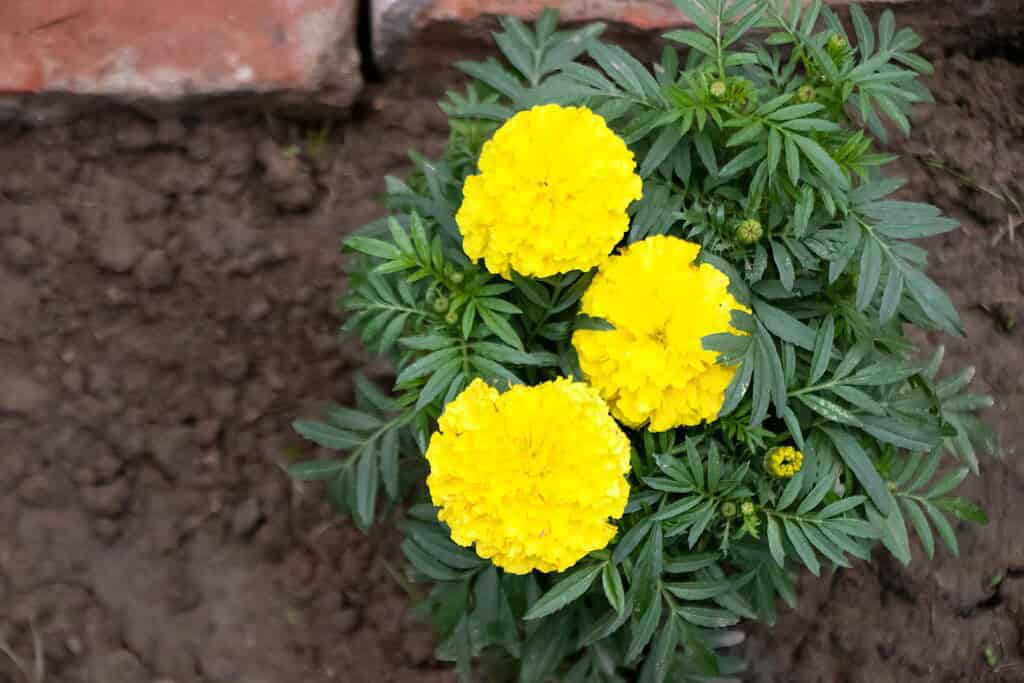
Marigolds are not demanding, but giving them the right conditions from the start will mean the difference between a decent plant and a spectacular one.
Sunlight Requirements
Marigolds are full-sun plants, plain and simple. They need at least 6 hours of direct sunlight per day, and 8 hours is even better.
In shady conditions, marigolds get leggy, produce fewer flowers, and become more susceptible to disease.
If your garden has some challenging sun spots, marigolds pair beautifully with other full-sun performers – for inspiration, check out our list of full sun container plants that thrive in heat.
Best Soil for Marigolds
Marigolds prefer moderately fertile, well-draining soil. One of the most common mistakes gardeners make is enriching the soil too heavily with compost or fertilizer before planting marigolds.
Too much nitrogen causes lush, green, leafy growth at the expense of flowers. A balanced, loamy soil with average fertility is all they need.
If your soil is heavy clay, amend it with sand or compost to improve drainage. If it's very sandy, a light addition of compost will help retain just enough moisture.
Watering Marigolds Correctly
Water newly planted marigolds regularly to help them get established – about 1 inch of water per week is ideal.
Once established, marigolds are surprisingly drought-tolerant and prefer to dry out slightly between waterings.
Always water at the base of the plant rather than overhead, as wet foliage can lead to powdery mildew and botrytis (gray mold).
During extended hot, dry spells, check soil moisture every few days and water deeply when the top inch of soil feels dry.
Marigolds as Natural Pest Repellents: A Gardener's Secret Weapon
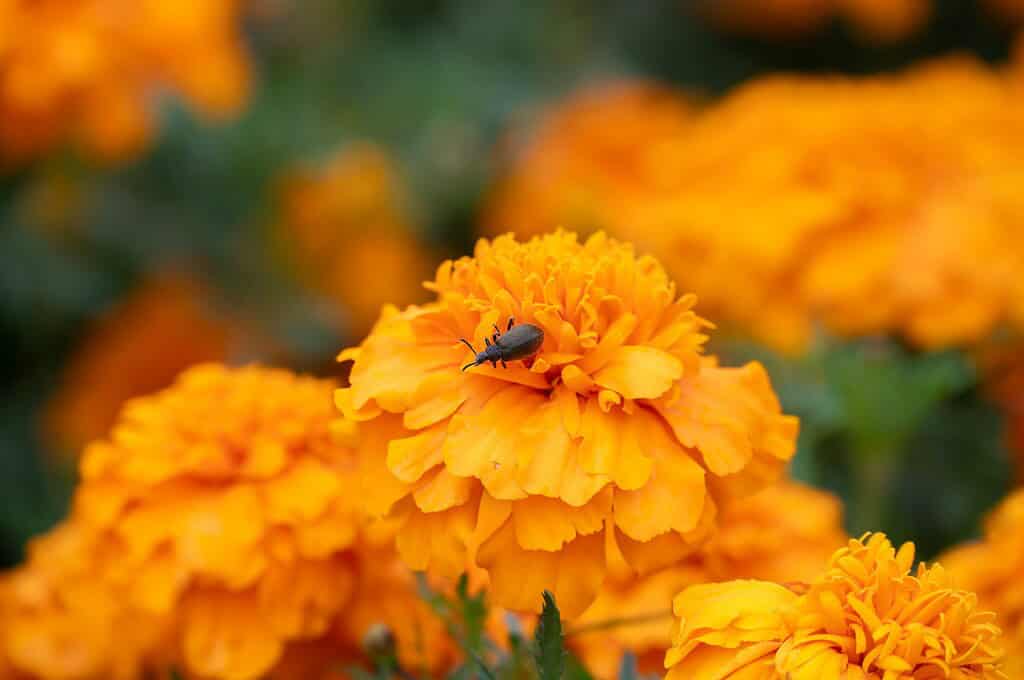
One of the most compelling reasons to plant marigolds in your garden goes beyond their beauty – they are genuinely effective pest deterrents, and understanding how to use them strategically can improve your entire garden's productivity.
The roots of French marigolds (Tagetes patula) excrete a substance called alpha-terthienyl, which is toxic to soil nematodes – tiny worms that feed on plant roots and can devastate vegetable crops.
Studies have shown that planting a dense stand of French marigolds for a full season can significantly reduce nematode populations in the soil for subsequent plantings.
Above ground, marigolds deter aphids, whiteflies, Mexican bean beetles, and squash bugs. Their strong scent can also confuse and repel pests that locate host plants by smell.
Interplanting marigolds throughout your vegetable garden – not just on the border – creates a more effective protective barrier.
They work especially well alongside tomatoes, peppers, eggplant, and beans.
If you're designing a backyard space where beauty and functionality go hand-in-hand, marigolds are a perfect fit.
For more ideas on creating a cohesive, beautiful outdoor space, our guide on how to create a backyard oasis offers plenty of planting inspiration.
How to Keep Marigolds Blooming All Season Long
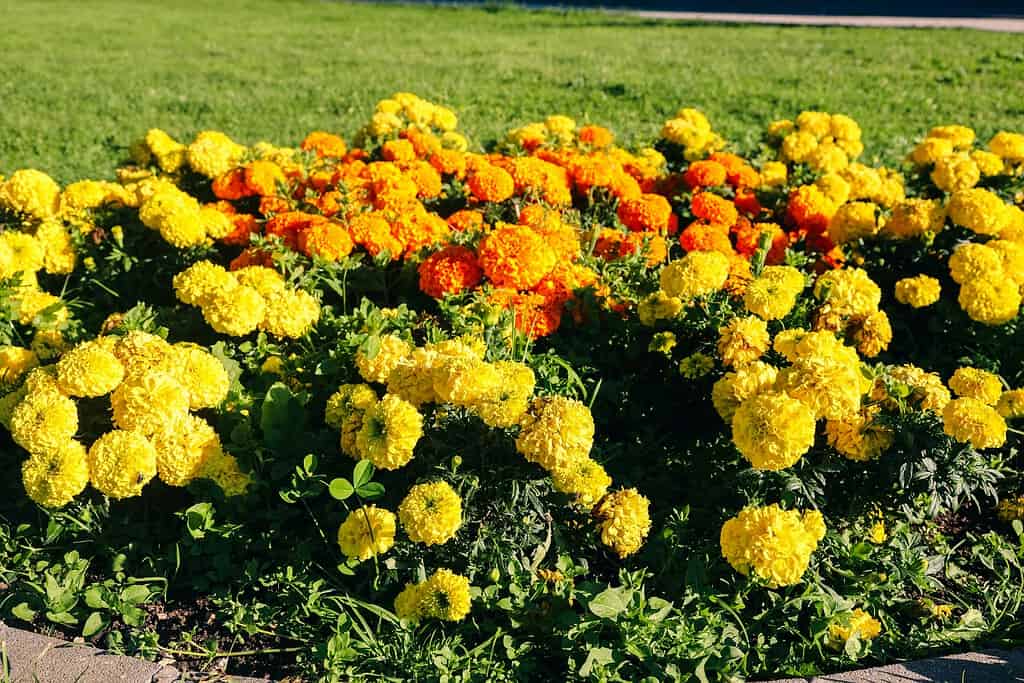
Marigolds are naturally generous bloomers, but with a few simple practices, you can dramatically extend their flowering season and keep them looking their best from late spring all the way to the first hard frost.
Deadheading: The Single Most Important Habit
Deadheading (removing spent flowers before they go to seed) is the most impactful thing you can do to keep marigolds blooming.
When a flower fades and sets seed, the plant's energy shifts toward seed production rather than making new blooms.
By snipping off faded flowers (right at the base of the flower head, just above a set of leaves), you signal the plant to keep producing flowers.
Make this a weekly habit throughout the growing season. It takes only minutes and pays off with weeks of additional bloom time.
Fertilizing for Continuous Flowering
As mentioned earlier, marigolds don't need heavy feeding. However, a light application of a balanced, slow-release fertilizer (like a 10-10-10 granular formula) at planting time can give them a good start.
Mid-season, if your plants start to look tired or their flowering slows, a diluted liquid fertilizer applied once every 3 to 4 weeks can revive them.
Avoid high-nitrogen fertilizers, which push leafy growth. Look for formulas that are balanced or slightly higher in phosphorus (the middle number) to encourage flower production.
Dealing with Common Marigold Problems
Marigolds are generally tough and disease-resistant, but a few problems can crop up.
Powdery mildew appears as a white, powdery coating on leaves, usually in humid conditions or when plants are too crowded – improve air circulation and avoid overhead watering.
Botrytis (gray mold) can cause flowers and buds to turn mushy and gray in wet, cool conditions – remove affected parts immediately and improve drainage.
Aphids occasionally attack young marigold shoots; a strong blast of water or insecticidal soap will take care of them quickly.
Spider mites become a problem in hot, dry weather – increase watering and use a miticide if infestations are severe.
For more help with common garden pests, our post on how to get rid of gnats and common garden pests offers practical, proven solutions.
Growing Marigolds in Containers and Small Spaces
No ground space? No problem.
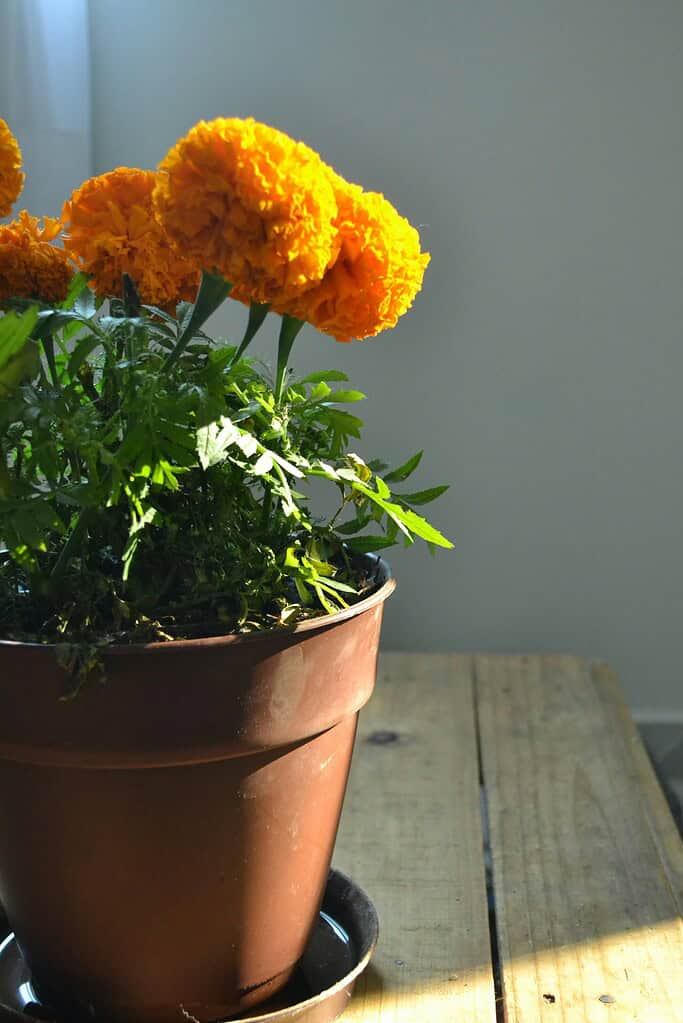
Marigolds are outstanding container plants, and they're one of the best flowers for brightening up patios, balconies, porches, and window boxes.
French marigolds and Signet marigolds are the most compact and are especially well-suited to container growing.
When growing marigolds in pots, choose a container with good drainage holes – at least 6 to 8 inches deep for French varieties, and 10 to 12 inches for African types.
Use a good-quality potting mix (not garden soil, which can compact and hinder drainage).
Container-grown marigolds dry out faster than in-ground plants, so check moisture levels more frequently – daily during heat waves. Feed container marigolds every 2 to 3 weeks with a liquid fertilizer, as nutrients get depleted faster in pots.
Marigolds also look stunning in mixed container plantings alongside other sun-lovers.
For container garden inspiration, explore our post on gorgeous patio plants that are easy to grow - marigolds are a top recommendation for summer color.
Saving Marigold Seeds for Next Year
One of the best things about growing marigolds is that saving seeds is incredibly easy, and it's one of the most satisfying gardening skills you can develop.
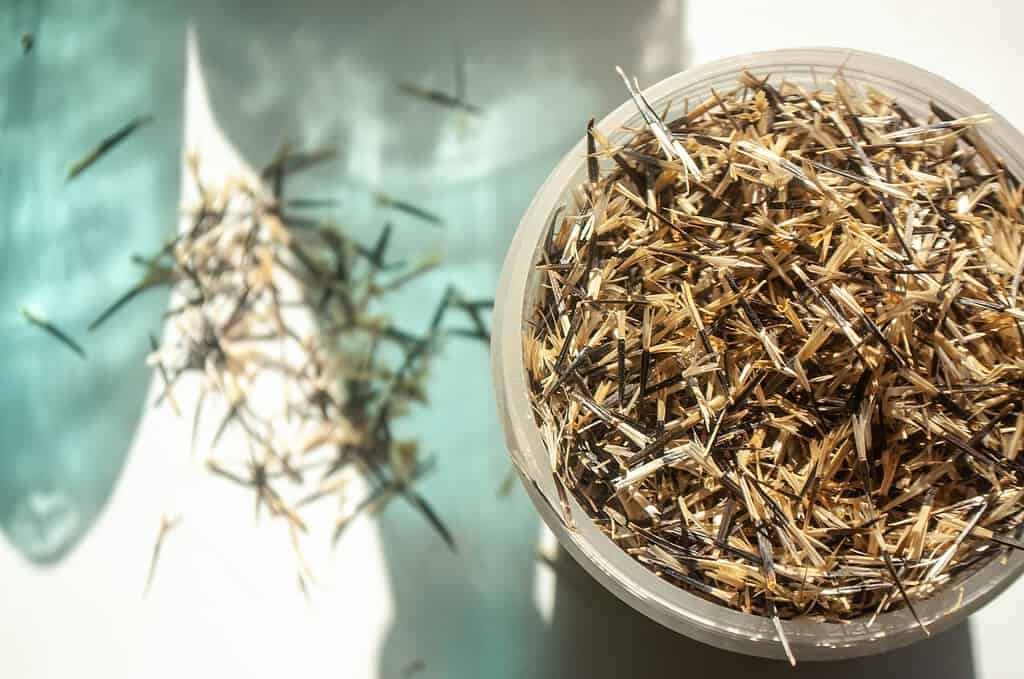
Toward the end of the season, allow a few of your favorite flowers to fully mature and dry on the plant. The flower head will fade, dry out, and the base of the petals will begin to form elongated, black-tipped seeds.
Once the seed head is completely dry (this takes about 3 to 4 weeks after the flower fades), pluck it from the plant and pull it apart over a sheet of paper.
You'll find dozens of thin, elongated seeds – each one pointy at one end and covered in dried petals at the other.
Separate the seeds from the chaff, spread them on a paper towel to dry for a few more days, then store in a labeled paper envelope in a cool, dry location.
Stored properly, marigold seeds remain viable for 2 to 3 years.
Designing with Marigolds: Color, Height, and Garden Pairings
Marigolds aren't just functional – they're genuinely beautiful, and with a little thought about color and placement, you can create stunning garden displays that look professionally designed.
Use tall African marigolds (2–4 feet) as a dramatic back-of-border planting behind shorter annuals and perennials.
Mid-height French marigolds (8–12 inches) work beautifully as edging plants along pathways or as the front tier in a layered border.
Mix warm tones – deep orange, golden yellow, and rusty red – for a vibrant, cottage-garden feel, or pair soft yellow marigolds with white alyssum and blue salvia for a cooler, more refined look.
Marigolds are also naturals in a cutting garden. Their long stems and long vase life (up to 2 weeks in water) make them excellent cut flowers.
For landscape design ideas that incorporate flowering plants beautifully, take a look at our post on jaw-dropping ways to landscape along your fence - marigolds are perfect for creating colorful, low-maintenance borders.
In shade gardens, marigolds won't thrive – they need full sun. But if you have a partly shaded area nearby that needs color, our guide on beautiful shade garden ideas will help you find the perfect companion plants for those tricky spots.
Start Growing Your Best Marigolds This Season
Marigolds are one of those rare plants that punch far above their weight. They're inexpensive, fast-growing, gorgeous, and genuinely useful in the garden – a combination that's hard to beat.
Whether you're planting them to brighten up a window box, protect your vegetable patch from pests, attract pollinators, or simply because you love their warm, sunny colors, marigolds will deliver season after season.
The key takeaways: choose the right variety for your space and goals, give them full sun and well-draining soil, water at the base, deadhead regularly, and let a few flowers go to seed at the end of the season so you can do it all over again next year – for free.
Drop a comment below and tell us: what's your favorite marigold variety, or do you have a tip that's helped your marigolds thrive? We'd love to hear from you!
Plan Your Garden With Confidence!

Ever start planting… and then realize halfway through that things feel a little scattered?
A simple plan changes everything.
When you sketch your layout first, you can see what fits, what flows, and what actually makes sense for your space. It saves time, money, and a whole lot of second-guessing later.
Our free Garden Planner helps you map out beds, organize plant spacing, rotate crops, and keep track of seasonal tasks – all in a clean, printable format you can actually use.
Whether you’re designing a low maintenance front yard or planning your full homestead garden, this gives you a clear starting point.
Less chaos. More clarity. A garden that works.
Frequently Asked Questions
Can marigolds survive a light frost, and what should I do if one is forecast?
Marigolds are frost-tender annuals and will be damaged or killed by freezing temperatures. A light frost (28–32°F) can damage or blacken foliage and blooms.
If a frost is forecast, you can protect your marigolds by covering them overnight with a frost cloth, old bedsheet, or even an overturned bucket.
Remove the cover in the morning once temperatures rise above freezing.
At the end of the season, marigolds that have been killed by frost can be pulled and composted, or you can harvest seeds before the first hard freeze.
Why are my marigold plants growing tall and leggy instead of bushy?
Leggy marigolds are almost always a sign of insufficient light. Marigolds need at least 6–8 hours of direct sun per day; in lower light they stretch toward the light source and produce fewer blooms.
If you've planted them in a spot that gets less sun than expected, try transplanting them somewhere sunnier. You can also pinch back leggy stems by about one-third early in the growing season – this encourages bushier, more compact growth and more branching, which leads to more flower buds.
Do marigolds really repel deer and rabbits?
Marigolds have a strong, pungent scent that many gardeners report deters deer and rabbits, though results vary.
Their effectiveness as a deer repellent depends largely on how hungry the local deer population is – a very hungry deer will eat almost anything, including marigolds.
That said, marigolds are considered a deer-resistant plant and are a good choice for gardens in areas with moderate deer pressure.
Signet marigolds tend to have the strongest scent and may be more effective at deterring browsing animals than French or African varieties.
Can I grow marigolds indoors or on a windowsill year-round?
Technically yes, but with some caveats. Marigolds need a lot of light to thrive — more than most windowsills can provide during winter months.
If you want to grow them indoors successfully, you'll need a south-facing window with full sun exposure, or more realistically, a dedicated grow light setup that provides 12–14 hours of bright light per day. In these conditions, compact French marigolds can bloom indoors.
They won't be as vigorous as outdoor plants, but they'll provide some cheerful color during the off-season and can be transplanted outside once spring arrives.
How do I know when marigold seeds are ready to harvest, and how long do they stay viable?
Marigold seeds are ready to harvest when the flower has fully faded, dried down to a papery, straw-colored seed head, and the base of the flower feels dry and crinkly rather than soft or green.
This typically takes 3 to 4 weeks after the flower petals drop. Pull the seed head gently from the plant and peel it apart – the seeds are the elongated, dark, pointed structures inside.
Spread them on a paper towel to air-dry for another week before storing in a labeled paper envelope.
Kept in a cool, dark, dry location, marigold seeds remain viable for 2 to 3 years, with germination rates gradually declining after the first year.