A low-maintenance front yard garden is not “no work.” It’s a garden designed so the inevitable work stays small, simple, and predictable – because the layout, materials, and plants are doing most of the heavy lifting for you.
The big secret is planning: when you plan well, you stop fighting your yard every weekend.
One note up front: your climate zone isn’t specified. That’s totally fine.
In this guide, you’ll see adaptable design rules and plant categories that work almost anywhere, plus a simple way to choose plants that actually fit where you live.
(If you’re in the U.S., the USDA Plant Hardiness Zone Map is the standard reference, based on average annual extreme minimum winter temperatures, and you can look up your zone by ZIP code.)
Low-Maintenance Front Yard Design Principles
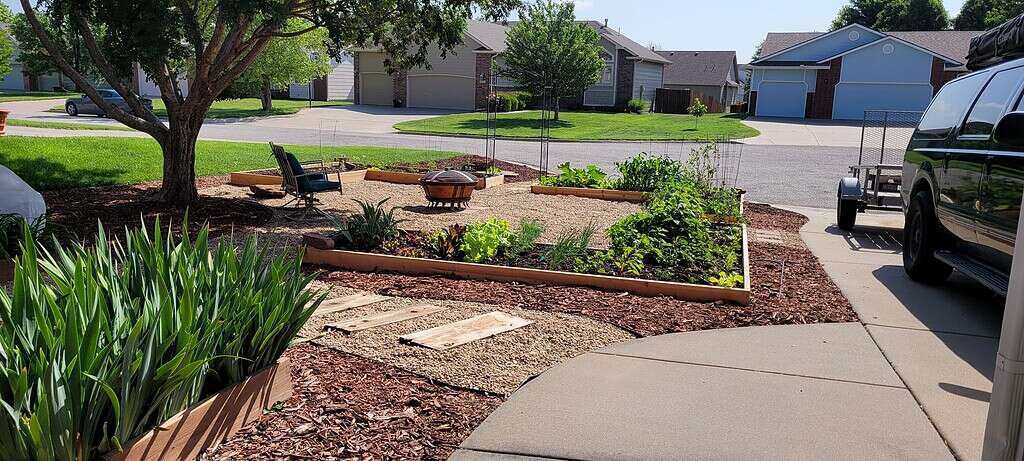
A “low maintenance” front yard is really a set of decisions that limit the number of tasks you’ll face later. Start with these principles and your design choices get easier.
Make a plan that matches your real life
Busy households do best with fewer plant types, larger planting “masses,” and clear, mowable edges (or no-mow areas).
Creating a low-maintenance landscape starts with planning and with deciding which areas need a manicured look versus areas you can simplify.
A practical rule: design for your worst month, not your best. If July (or the rainy season, or winter) is when you’re least available, that should be the yard’s easiest season.
Choose “right plant, right place” over constant fixing
We emphasize “right plant, right place,” because plant water needs vary and mismatches create extra work (and extra watering).
The goal is not a “dry” yard – it’s a yard where plants naturally thrive with fewer inputs.
Group plants by water needs (hydrozones)
Hydrozoning means grouping plants with similar irrigation needs so you can water efficiently without “over-loving” drought-tolerant plants or under-watering thirsty ones.
We recommend planning irrigation and plant placement around water needs (including keeping higher-water “oasis” plants closer to the house if you want them).
Use mulch and groundcovers as your weed-control system
Mulching is one of the highest-return, lowest-effort moves you can make.
Mulching is used to conserve water, suppress weeds, improve soil, and reduce time spent on tasks like watering and weeding.
Groundcovers help, too – they can form dense cover that retards weeds and prevents erosion.
When Should You Plant in Your Area?
Enter your ZIP code for personalized frost dates, planting schedules, and growing tips.
Step-by-Step Design Process
This is the workflow that keeps you from redoing your yard twice.
1. Do a simple site assessment before you buy anything
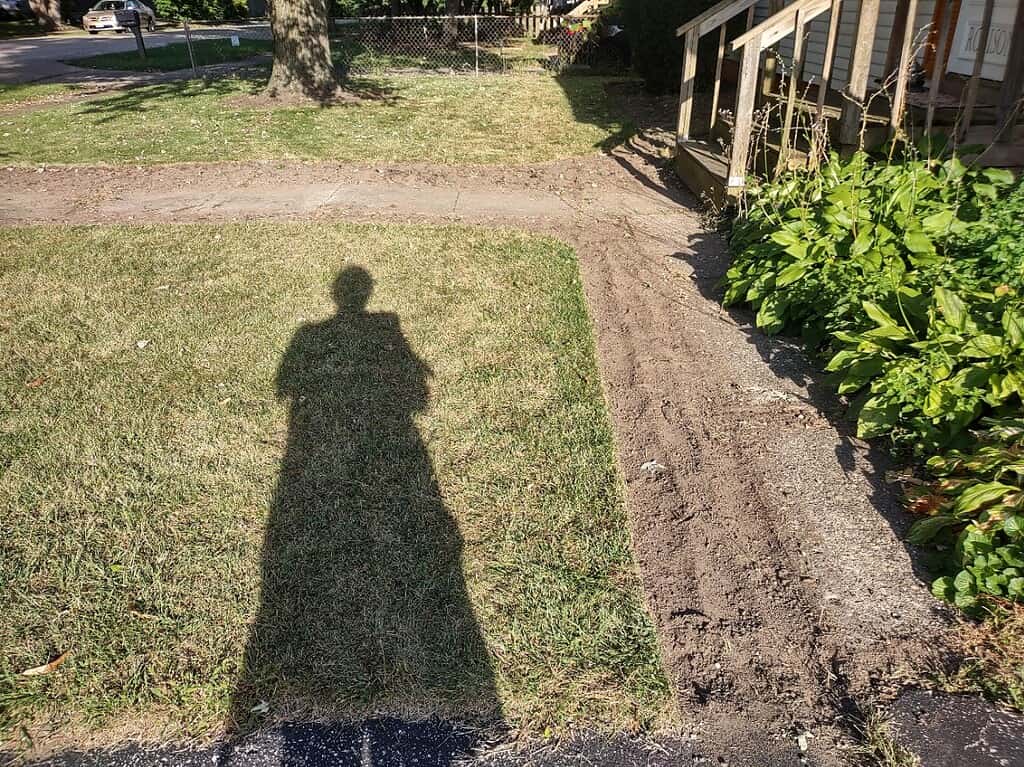
Walk outside with a notebook (or your phone) and capture these observations:
- Sun pattern (morning vs. afternoon): many plants tolerate “full sun” differently depending on heat intensity.
- Drainage: where does water pool after rain, and where does soil dry out first?
- Slope + runoff: front yards often shed water toward sidewalks/driveways; consider capturing it.
- Wind exposure: corners and open lawns dry faster.
- Views: what do you see most from the street and from inside the house? Put your “best stuff” there.
- Utilities: before any digging (even shrubs/trees), use the free 811 service to have underground utilities marked.
2. Make a base map
You don’t need fancy software. A simple sketch with measurements is enough:
Measure property boundaries, driveway, walkway, porch, windows, and existing trees/shrubs you’re keeping.
Mark “no-plant” zones (meter boxes, utility access, sight lines for drivers).
Keep paths functional: plan where people actually walk.
If you like a structured planning approach, see our guide on homestead garden layout that lean heavily on observation + mapping before planting – because it prevents wasted effort.
3. Test soil (or at least learn what you’re working with)
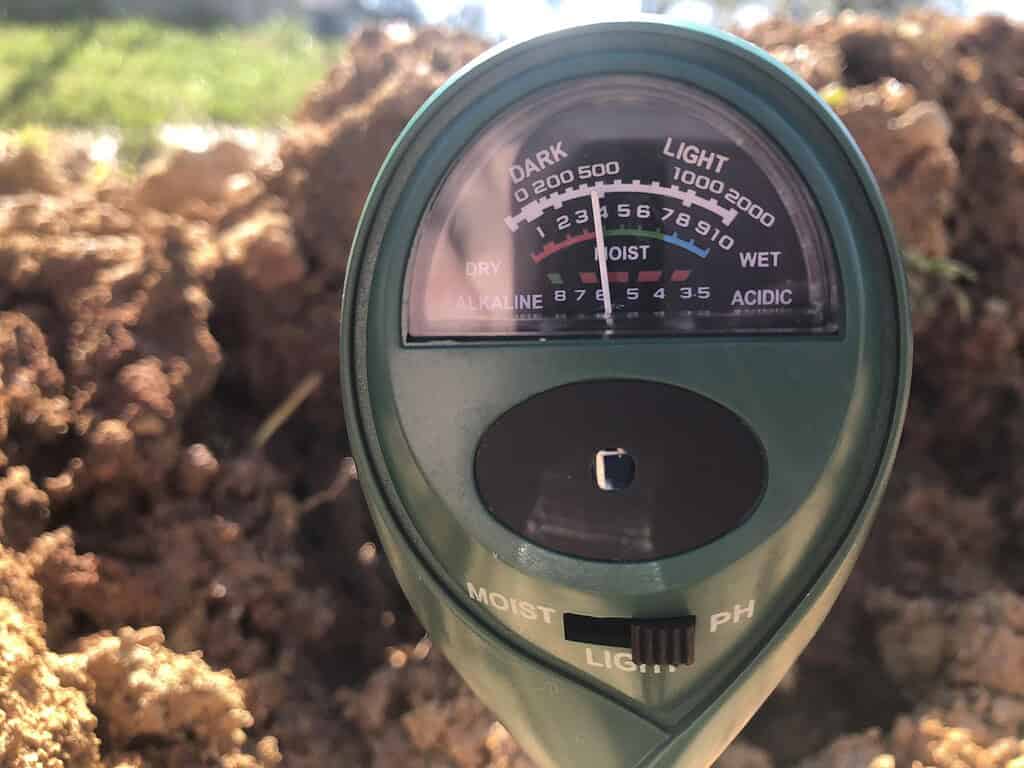
Soil doesn’t need to be perfect – just understood.
A soil test is the most effective way to determine nutrient status and pH in a home landscape.
For accurate results, sample different areas separately (front yard lawn area vs. shrub bed vs. garden bed).
You can start with one of our must-have soil test kits to get a general idea of what you’re working with.
What to look for in your results (practical angle):
- If pH is way off, plant performance suffers. Fixing pH is usually more impactful than adding random fertilizer.
- If organic matter is extremely low, you’ll rely more on mulch/compost top-dressing to stabilize moisture.
4. Decide on hardscaping first
Hardscape is the “skeleton” that makes a front yard look tidy even when plants are small.
Low-maintenance hardscape choices:
- A clear walkway edge (stone, metal edging, brick) so grass doesn’t creep into beds.
- A small sitting pad (even a 4'×6′ gravel pad) if you want the yard to feel intentional.
- Permeable surfaces or a shallow swale where runoff is an issue (see rain garden note below).
If you’re dealing with runoff or soggy zones, a rain garden can be a smart, low-maintenance upgrade.
5. Choose a layout template that stays neat with minimal upkeep
Most low-maintenance front yards fall into a few reliable layouts.
Foundation band + focal point (classic curb appeal)
You create a continuous bed along the house, then anchor it with one small tree or tall shrub away from the foundation to draw the eye.
Corner beds (best “bang for effort”)
Instead of a lot of small planting areas, you mass plants in two big zones. Bigger masses usually mean less weeding and a calmer look.
Low-water courtyard look (reduce turf, reduce mowing)
A few stepping stones + groundcover + drought-tolerant shrubs can look intentional with minimal weekly work.
If you want more inspiration visuals, browse stunning flower bed ideas and shrub roundups for design patterns you can borrow.
Plant Palette Options for Different Climates
Because your planting zone wasn’t provided, use this section in two layers:
First, pick a structure plan (trees/shrubs + groundcovers).
Then, swap in region-appropriate species (especially natives).
How to quickly adapt plant choices to your area
If you’re in the U.S., find your USDA hardiness zone (based on extreme minimum winter temperature) and use it to filter perennial/shrub/tree choices.
If you’re outside the U.S., use your local hardiness/climate reference system and, ideally, your local extension service or botanical garden plant lists.
Also consider using native plants where possible – USDA notes that native species offer benefits like conserving water, protecting soil from erosion, and creating habitat/food for wildlife.
Recommended starter set of low-maintenance plants

The table below is a “mix-and-match” palette built around durability + simple care + strong garden structure.
| Plant (Common Name) | Type | Sun | Water Once Established | Maintenance Level | Why It’s Low-Maintenance |
|---|---|---|---|---|---|
| Serviceberry (Amelanchier canadensis) | Small tree | Full sun–part shade | Medium (more in full sun) | Low | Multi-season interest; adaptable to varied sites. |
| Eastern redbud (Cercis canadensis) | Small tree | Full sun–part shade | Medium | Low | Tolerates a range of soils; strong spring show. |
| Inkberry holly (Ilex glabra) | Evergreen shrub | Full sun–part shade | Medium | Low | Minimal pruning unless hedged; tolerates moist soils. |
| Ninebark (Physocarpus opulifolius) | Shrub | Full sun–part shade | Low–medium | Low | Tolerant of heat, drought, and soil compaction. |
| English lavender (Lavandula angustifolia) | Subshrub / Perennial | Full sun | Low (needs drainage) | Low–medium | Thrives in dry, well-drained sites; prune lightly. |
| Catmint (Nepeta × faassenii) | Perennial | Full sun–part shade | Low | Low | Drought tolerant once established; shear after bloom. |
| Purple coneflower (Echinacea purpurea) | Perennial | Full sun–part shade | Low–medium | Low | Drought tolerant once established; tough and resilient. |
| ‘Autumn Joy’ stonecrop (Hylotelephium ‘Autumn Joy’) | Perennial | Full sun (tolerates light shade) | Low | Low | Likes lean, well-drained soil; minimal attention. |
| ‘Goldsturm’ black-eyed Susan (Rudbeckia ‘Goldsturm’) | Perennial | Full sun–part shade | Low–medium | Low | Long bloom window; more drought tolerant over time. |
| Creeping thyme (Thymus praecox) | Groundcover | Full sun | Low | Low | Needs full sun and drainage; very little upkeep. |
| Creeping juniper (Juniperus horizontalis) | Groundcover shrub | Full sun | Low | Low | Drought tolerant; forms dense mat; urban-tough. |
| Pennsylvania sedge (Carex pensylvanica) | Groundcover / Sedge | Sun–shade (adaptable) | Low–medium | Low | Excellent low-maintenance option for shade areas. |
Expanded plant lists by role
Use these lists to fill out your design (and swap in region-appropriate native equivalents).
Small trees (front-yard scale)
Serviceberry (Amelanchier) for edible/wildlife value and multi-season interest.
Redbud (Cercis canadensis) for spring bloom and adaptable siting.
Shrubs for structure (less pruning, more payoff)
Ninebark (Physocarpus opulifolius) for a tough, drought/heat-tolerant backbone.
Inkberry holly (Ilex glabra) when you want evergreen shape without constant trimming.
For more shrub ideas specifically for curb appeal, pull from our list of shrubs for front yard and choose varieties suited to your local zone and sun exposure.
Perennials (repeat in groups for an “intentional” look)
- Coneflower (Echinacea) is drought tolerant once established and handles sun to partial shade in many settings.
- Catmint (Nepeta) gives long color and stays easy with a shear after flowering.
- Stonecrop (Hylotelephium ‘Autumn Joy’) thrives in well-drained soils and is built for “leave it alone” gardens.
- Black-eyed Susan types (like ‘Goldsturm’) provide season-long flowers and increasing drought tolerance once established.
Groundcovers (the low-maintenance weed blocker)
Groundcovers can significantly reduce weeding by forming a dense layer over the soil.
When established properly, they block sunlight from reaching weed seeds and help prevent erosion, especially on slopes or open areas.
Over time, they create a stable, low-maintenance living mulch that protects the soil and reduces the need for constant upkeep.
If you want to take it a step further, combining groundcovers with other natural ways to prevent weeds makes your front yard even easier to manage long term.
Free Planting Guides for This Article
Get exact planting dates, frost schedules, and growing tips for your zone:
Watering, Mulch, and Low-effort Upkeep
This is where you lock in the “low maintenance” part.
Irrigation that saves time (and usually saves water)

If you want to water less often and with less effort, design around efficient delivery.
Drip irrigation is widely described as a slow, measured application through emitters, and the most efficient way to irrigate.
Practical ways to apply that in a front yard:
- Use drip for beds (shrubs, perennials, groundcovers).
- Use a smart timer if you travel or forget – newer controllers can even be operated from your phone, which helps streamline watering.
- Hydrozone your irrigation: don’t water lavender like a hydrangea.
Mulch the right way (so it actually reduces work)
Mulch is supposed to reduce work – unless it’s applied incorrectly.
- We recommend 2–4 inches of mulch; too much can cause problems (including reduced oxygen/water penetration).
- Keep it off trunks/stems: RHS advises leaving a ~10 cm (4 in) mulch-free circle around woody stems to prevent rot issues.
- Mulch should never touch the bark of a plant.
Also: you usually don’t need landscape fabric. Correctly applied mulch doesn’t require fabric and that fabric can be detrimental in many situations.
Landscape fabric may suppress weeds initially, but over time it can create secondary issues and can become just as weedy once debris accumulates.
A Simple Low-Maintenance Schedule You Can Actually Follow
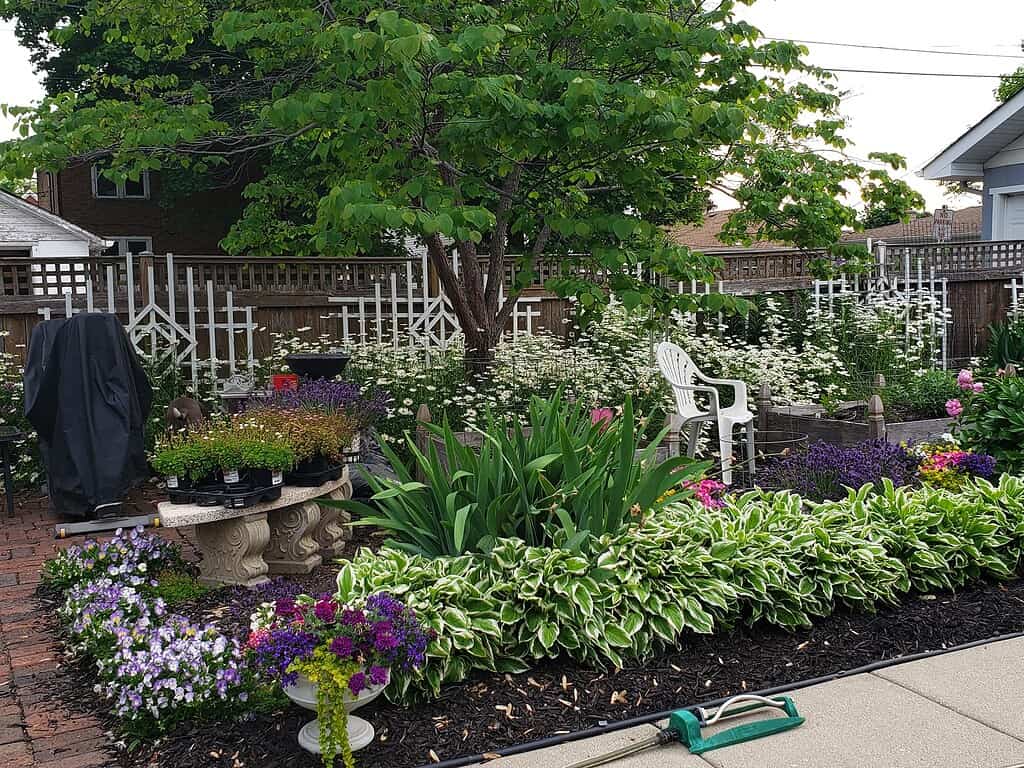
Keep the schedule short and repeatable. (The goal is consistency, not perfection.)
Weekly (10–20 minutes):
- Walk the beds and remove small weeds before they seed.
- Check irrigation emitters for clogs/leaks in hot periods.
- Do a 2-minute “edge check” on bed borders for grass creep.
Monthly (20–45 minutes):
- Refresh mulch where it has thinned (don’t “volcano mulch” around trunks).
- Deadhead only where it truly improves appearance (or leave seed heads for birds, depending on your style).
- Inspect shrubs for crossed branches or damage.
Seasonally (1–3 hours, once per season):
- Spring: top-dress compost if your soil needs it (use soil test results to guide).
- Early summer: shear catmint after flowering to encourage a tidy second flush.
- Fall: clean up only what looks messy; many perennials can stand for winter interest.
- Pruning: follow flowering timing – many spring bloomers are pruned right after flowering, while later bloomers are often pruned in late winter.
If you’re building on a budget, check out our guide on budget gardening ideas for simple path and reuse concepts you can adapt for front-yard hardscaping
How Hard Is It to Garden in Your County?
Every county has a unique Gardening Difficulty Score based on frost risk, soil quality, drought, altitude, and climate trends. Find yours — plus personalized frost dates, planting calendars, and soil data.
Check Your County's Score →Ready to Plan It and Make It Real?
A low maintenance front yard garden comes down to a few smart choices: plan first, reduce high-input areas, group plants by water needs, mulch correctly, and choose plants that actually match your sun and soil.
When you design with intention from the beginning, you avoid years of unnecessary pruning, watering, and constant fixes.
We'd love to hear from you – are you starting from scratch, or redesigning an existing front yard? What’s the biggest maintenance headache you’re hoping to eliminate?
Drop a comment below and let’s talk through it!
Plan Your Garden With Confidence!

Ever start planting… and then realize halfway through that things feel a little scattered?
A simple plan changes everything.
When you sketch your layout first, you can see what fits, what flows, and what actually makes sense for your space. It saves time, money, and a whole lot of second-guessing later.
Our free Garden Planner helps you map out beds, organize plant spacing, rotate crops, and keep track of seasonal tasks – all in a clean, printable format you can actually use.
Whether you’re designing a low maintenance front yard or planning your full homestead garden, this gives you a clear starting point.
Less chaos. More clarity. A garden that works.
FAQs
Can a front yard garden still look “neat” without weekly pruning?
Yes – if you design for it. Choose naturally tidy forms (mounded shrubs, clumping perennials, dense groundcovers), repeat plants in groups, and use crisp edging so the garden has clean lines even when plants are relaxed.
How long until a low-maintenance front yard looks “full”?
Most gardens hit a satisfying “filled in” look between year 2 and year 3, especially if you prioritize shrubs and groundcovers early. Year 1 is establishment: more watering, more weeding, and smaller plants.
What if I have mostly shade in my front yard?
Lean into shade-tolerant structure: evergreen shrubs suited to shade and groundcovers that thrive under trees. Pennsylvania sedge is one example that can handle a wide range of light conditions and stays low maintenance.
Is it okay to use stones or gravel instead of mulch?
It can be, but it’s not always “lower maintenance” in real life—leaves and debris still collect, weeds can still appear, and gravel can be hard to clean out. Many xeriscape recommendations still prefer organic mulch around plants (and emphasize matching plant needs to site conditions).
What’s the biggest mistake people make when trying for low maintenance?
Planting without a plan – especially buying plants first and then trying to “fit” them later. Extension guidance on low-maintenance landscapes stresses planning and wise choices upfront for exactly this reason.
Level Up Your Garden
Our most popular gardening guides