
So, you want a small patio garden that truly thrives?
Great news: you don’t need a big backyard to grow a lush garden. Even if you’re a renter with only a tiny patio or balcony, you can cultivate herbs, veggies, and flowers successfully in limited space.
In this post, we will walk you through patio gardening for beginners – from planning your space to picking the right plants – all in a friendly, no-fuss way.
By the end, you’ll see that creating a productive little garden is totally doable (and fun!), no matter how small your outdoor area is.
Plan Your Patio Garden (Assess Your Space)

Before you buy plants or pots, take a good look at your patio space and make a simple plan.
Ask yourself a few questions: How much area do you have for pots or planters? How many hours of sunlight does your patio or balcony get per day?
Most edible plants and herbs grow best with 6–8 hours of sun daily. If you have a sunny spot (like a south or west-facing area), that’s perfect for a small patio garden.
Don’t worry if you don’t literally have a “patio” – a balcony, deck, porch, or even a sunny doorstep can work just as well.
Patio gardening for beginners is flexible: any relatively level, sunny spot can become your garden.
- Start Small: It’s easy to get excited and want to grow everything, but begin with just a few containers in your first season. You can always expand as you gain experience. A couple of well-tended pots will yield more than a dozen neglected ones. Plus, starting small keeps the work manageable and not overwhelming.
- Check Water Access: Think about how you’ll water your plants. Is there a faucet or hose hookup nearby, or will you be carrying watering cans? Try to place your garden near a water source if possible – lugging heavy watering cans back and forth gets old fast. Having water handy makes it easier to keep up with frequent watering in hot weather.
- Notice Sun and Shade: Observe the sun pattern on your patio. Do buildings or trees cast shade part of the day? If you get at least ~6 hours of sun, you can grow tomatoes, peppers, and most herbs. If you have less (say 4 hours of sun), you can still garden, but you’ll want to choose shade-tolerant plants like leafy greens or certain herbs (more on that in the FAQ!). The key is to match your plant choices to your patio’s light conditions.
- Consider Wind and Privacy: If you’re high up or in a windy spot, think about a windbreak (like a railing, screen, or taller plant) to protect delicate seedlings. Also, check if you have any overhead covering – patios under an eave or balcony might not get much natural rain, which means you’ll be doing all the watering. That’s fine, just something to be aware of.
- Measure Your Space: Jot down your patio’s dimensions. This helps you figure out how many and what size containers can fit. Remember to leave yourself a little room to walk or sit outside! It’s okay to use corners and vertical space (walls, railings) for plants to maximize your area – we’ll discuss some small patio garden ideas for space-saving in a bit.
By planning out these basics – sun, water, and space – you’re setting your future garden up for success. A little planning now will make the next steps (choosing containers and plants) much easier.
Container Gardening for Small Spaces: Choosing the Right Pots

One of the best strategies for a flourishing small patio garden is container gardening.
Containers give you flexibility and control: you can place them anywhere – on the patio floor, a shelf, hanging from a wall – and even move them around if needed.
Here’s how to pick the right pots and planters for your mini garden:
Size Matters: Use containers large enough to accommodate your plants’ roots. Cramming a big plant into a tiny pot will stunt it.
For example, a tomato plant needs a deep, roomy pot (at least 5 gallons, ~12+ inches diameter) to thrive, whereas herbs can do well in smaller pots.
When in doubt, go one size bigger. Larger pots hold more soil, which means they won’t dry out as fast and give roots more room – a win-win for a healthy plant.
Drainage is Essential: Always choose containers with drainage holes in the bottom. Good drainage prevents waterlogged soil and root rot.
If a cute pot you love has no holes, you can often drill holes yourself. (Tip: Putting a layer of small rocks or gravel at the bottom of pots can also help excess water drain away from roots.)
The surest way to kill a container plant – especially water-sensitive herbs – is to let its roots sit in stagnant water. So drainage, drainage, drainage!
Pot Material: Containers come in all materials – plastic, terra cotta clay, ceramic, wood, fabric grow bags, even repurposed items like buckets or crates. Each has pros and cons:
- Plastic pots are lightweight, inexpensive, and hold moisture better (less evaporation), but they may not last as long in sun.
- Terra cotta (clay) pots are breathable and classic looking, but they dry out faster (porous walls) and can crack in freezing weather.
- Ceramic or glazed pots hold moisture well and are sturdy, but can be heavy to move.
- Wooden planters or barrels are attractive and insulate roots from heat, but make sure they’re not treated with harmful chemicals if you’re growing edibles.
- Fabric grow bags are super breathable for roots and easy to store when not in use, but may need more frequent watering.
Use whatever fits your budget and style – just ensure there are drainage holes, or that you can add some.
You can even get creative and repurpose household items as planters (with holes added): for example, an old galvanized tub or bucket makes a great container garden for herbs or salad greens.
Consider Depth and Shape: For most veggies and herbs, a pot about 8–12 inches deep is a good minimum. Some plants need more depth (carrots or tomatoes love deep soil), while shallow-rooted greens (like lettuce) can grow in bowl-like containers.
If space is tight, use vertical planters or tiered pots (stacking upward instead of spreading out). We’ll talk more about vertical gardening soon, but keep it in mind when picking containers.
Raised Bed Option: If you have room, you might also consider a small raised bed or planter box on your patio. Raised beds are essentially larger containers that create a defined garden area and provide excellent drainage and soil control.
For example, a wooden trough or a DIY planter box can host multiple plants together (like a mini garden bed on legs).
Just make sure any raised planter is deep enough (8–12 inches minimum soil depth) and has drainage holes or a gravel layer for excess water.
Raised planters can be fantastic for small spaces because they neatly organize your garden and can be easier on your back, too!
Container gardening for small spaces is all about flexibility.
Whether you use classic pots, railing planters, hanging baskets, or unconventional containers, you’re creating the perfect little homes for your plants.
Arrange your pots in a way that makes the most of your space and looks nice to you – clustered groups often create a lush, cohesive feel instead of scattering pots everywhere.
In fact, clustering a variety of pot sizes together can make a small patio feel like a intentional garden retreat.
Now that you have containers in mind, let’s fill them with the good stuff: soil, water, and of course plants!
Soil, Drainage, and Watering Basics
Small patio gardens thrive or fail largely based on how well you prepare the soil and drainage, and how you water.
In containers, your plants rely entirely on the potting mix and your watering routine for their needs, so let’s get those right:
Use Quality Potting Mix
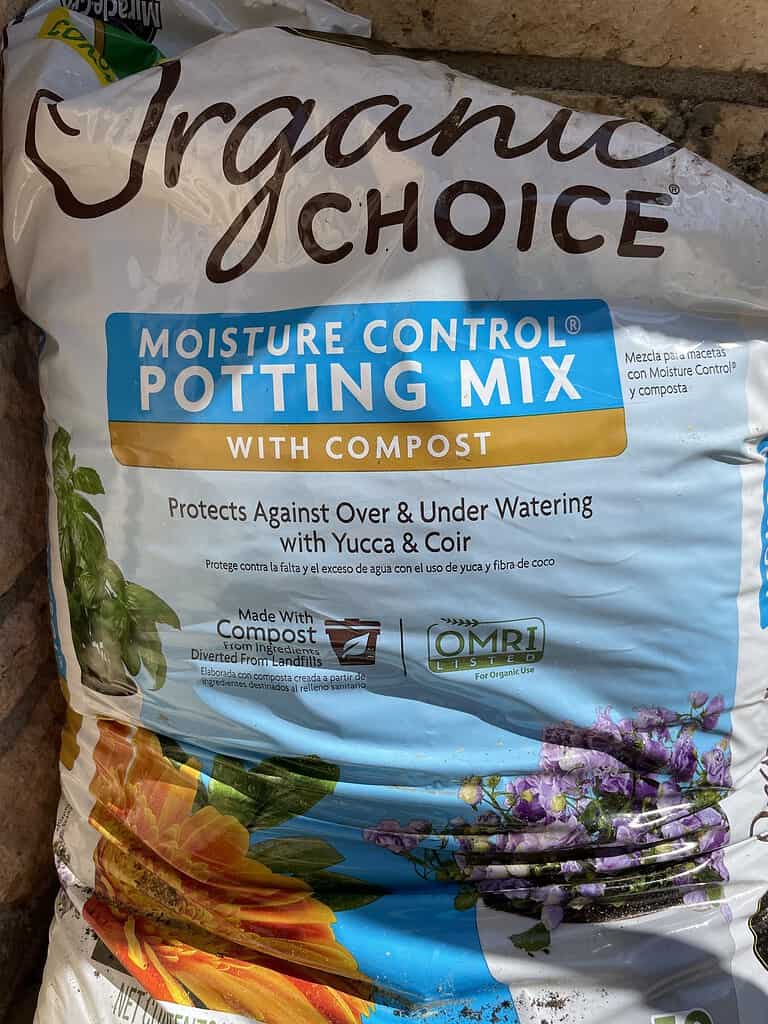
Don’t just dig up soil from the ground and plop it in a pot – garden soil is usually too heavy and doesn’t drain well in containers.
Instead, buy a good potting mix (sometimes labeled container mix). These mixes are light and fluffy, often containing ingredients like peat moss or coco coir, perlite, and compost.
A quality organic potting soil plus some compost or worm castings will give your plants a nutrient-rich, well-draining environment.
The mix should hold moisture but not stay soggy. If you want to DIY, you can mix equal parts compost, peat/coir, and perlite or sand to create a loose, fertile medium.
Ensure Drainage
We’ve said it before, but it’s so important – make sure each container has good drainage. If you’re reusing a container, double-check the holes aren’t blocked.
You can put a piece of mesh or even a bit of burlap over the holes on the inside before adding soil, to prevent soil from washing out.
Adding a thin layer of gravel or small stones at the bottom of the pot can further help water flow out and keep the soil from becoming a swamp.
Remember, overwatering + poor drainage = dead plants, especially in small pots.
Watering Routine
Containers often dry out faster than in-ground gardens, so be prepared to check your plants daily, especially in hot summer weather.
As a rule of thumb, water when the top inch of soil feels dry to the touch. When you do water, water deeply until you see excess trickle out the drainage holes – this ensures the roots get a good drink.
In hot months, that might mean watering once (or even twice) a day for small pots. In cooler or cloudy weather, it could be every 2-3 days.
Water in the morning if you can; morning watering gives plants a drink to face the day and any wet leaves will dry off in the sun, which helps prevent mold or disease.
Try to water the soil, not the leaves, to keep foliage dry and healthy.
Conserve Moisture
To help soil stay moist longer, you can add a thin mulch on top of your pots – like a layer of shredded bark, straw, or even decorative pebbles.
This isn’t required, but it can reduce evaporation (and looks tidy).
Another trick is grouping pots together; clustered containers can shade each other’s soil a bit and maintain humidity in that area, so they may not dry out as quickly as lone pots.
Self-Watering Containers
If you have a busy schedule (or plan to be away occasionally), consider self-watering planters.
These have a water reservoir that the soil wicks moisture from, keeping the soil consistently damp for longer. They’re great for beginners because they provide a buffer against forgetting a watering.
You still need to refill the reservoir, but not as often as top-watering. You can also DIY self-watering setups with a wine bottle or use irrigation spikes – but that’s optional if you want to keep it simple.
Avoid Overwatering
While regular watering is crucial, beginners sometimes love their plants too much with water.
Overwatering can drown roots and cause rot. Signs of overwatering include yellowing leaves or a constant wet, swampy soil smell.
If in doubt, stick your finger about an inch into the soil – if it’s still moist, hold off on watering. Most plants (succulents and herbs especially) prefer a brief dry-out between waterings than sitting in mud.
Remember: The surest way to kill an herb or any plant is to overwater it in a pot without good drainage. So when in doubt, check drainage and scale back on the H₂O.
Feeding Your Plants
Nutrients in containers get used up or washed out over time because you’re watering frequently.
So, plan to fertilize your patio garden regularly. A gentle approach for beginners is to mix a slow-release organic fertilizer into the potting mix at planting time, which will feed for a few months.
Or, use a diluted balanced liquid fertilizer (like an all-purpose plant food or fish emulsion) every 2-4 weeks during the growing season.
Herbs generally need less fertilizer (too much can dilute their flavor), whereas heavy-feeding veggies (tomatoes, peppers) appreciate monthly feeding.
Always follow the product instructions – more is not better with fertilizer. We’ll cover more care tips in the maintenance section, but just note that soil fertility is part of keeping a patio garden thriving.
By giving your plants good soil to grow in, ensuring they have drainage, and watering them consistently (but not too much), you’re building a strong foundation for a healthy patio garden.
Now the fun part: choosing what to grow!
Patio Gardening for Beginners: Choosing the Right Plants
Now let’s talk about what to grow in your small patio garden.
The best plants for a compact space are those that stay fairly small, do well in containers, and give you a good harvest or bloom for the space they take.
As a beginner, it’s wise to start with easy, reliable plants. Here are some top picks (and small patio garden ideas for plant varieties) to get you started:
Herbs
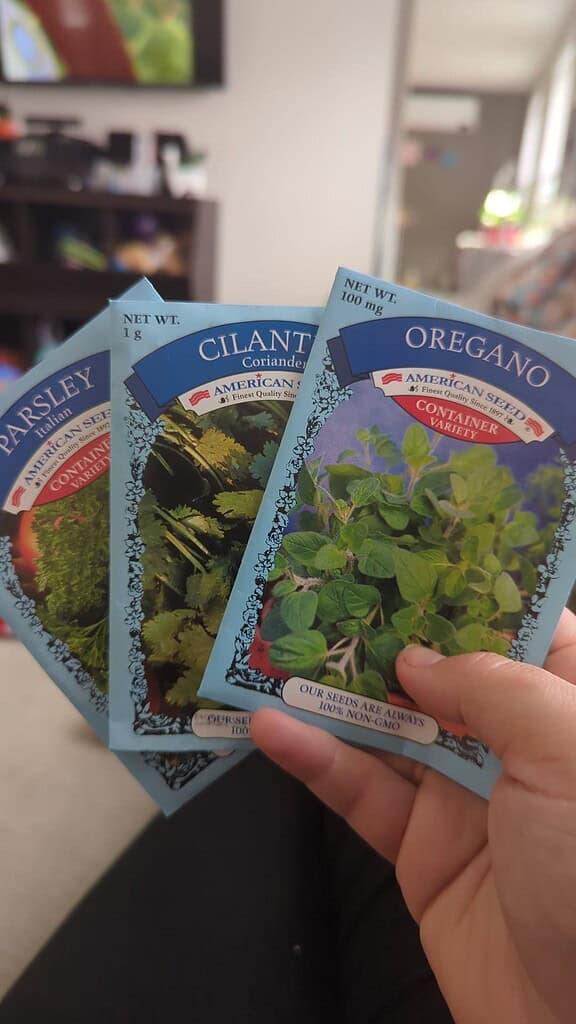
If you’re only going to grow one thing, grow herbs. Many culinary herbs are compact, productive, and almost tailor-made for container life.
Basil, parsley, thyme, mint, chives, oregano, cilantro – these are all great choices for pots. They don’t need huge containers, and you can snip fresh herbs for your cooking, which is so rewarding.
(A heads-up: mint spreads aggressively, so give it its own pot or it will overtake others – mint is the one herb that doesn’t like roommates!).
Herbs generally love sun and regular watering, and the more you harvest most of them, the bushier they get.
We’ll dive a bit deeper into herbs in the next section, because they truly are all-stars in small patio gardens.
Check out our guide on how to start an herb garden for tips on containers, soil, and care.
Vegetables
Yes, you can grow vegetables on a patio! The key is to choose compact or dwarf varieties whenever possible, and pots big enough for them.
Many trusted seed companies actually have strains called “patio” or “bush” versions of veggies bred for small spaces. Here are some easy veggies for containers:
- Tomatoes: Choose cherry tomatoes or patio tomatoes, which are smaller plants. A single cherry tomato plant in a large pot (5 gallons or more) can give a big yield of sweet tomatoes. Try varieties like ‘Tiny Tim’ or ‘Sweet 100’. Stake or cage them for support even in the pot.
- Peppers: Most bell peppers or chili peppers do great in 2-5 gallon containers. They look pretty too (especially when fruiting). One pepper plant per pot is best.
- Salad Greens: Lettuce, spinach, arugula, kale, chard – leafy greens actually prefer partial sun, so they’re happy even on patios that don’t get a full 8 hours of sun. You can grow cut-and-come-again salad mix in shallow bowls or window boxes. Plant seeds thickly and snip baby greens, or grow head lettuce with a few per pot.
- Root Vegetables: Radishes and green onions are super quick growers and thrive in pots. Carrots and beets can be grown too – pick shorter varieties (like ‘Parisian’ round carrots or small round beets) or use a deep container for standard types. As long as the pot is deep enough for the roots and you keep the soil loose, you’ll get results.
- Bush Beans & Peas: Bush-type green beans can grow in broad, low containers – they’ll stay bushy and produce a nice little crop of beans. Peas (like sugar snap peas) can be grown in a pot with a small trellis or sticks for them to climb. They don’t take much space and are fun to snack on.
- Others: Baby zucchini (courgette) varieties or bush cucumbers can be grown in larger containers (they will spill over the edges). Spring onions, pak choi, or even a compact eggplant (there are dwarf varieties) could be tried in moderate to large pots. Have fun, but start with just a couple of different veggies so you don’t overwhelm yourself.
Fruits
In a truly small patio, you might skip fruit trees (though dwarf citrus or figs in pots are possible if you have the space and a big container).
But one easy win is strawberries. They grow beautifully in hanging baskets or strawberry pots and don’t need much room. Plus, who doesn’t love fresh strawberries?
You can also try a dwarf blueberry bush in a pot (just remember it needs acidic potting mix and a buddy for cross-pollination).
Flowers and Companion Plants
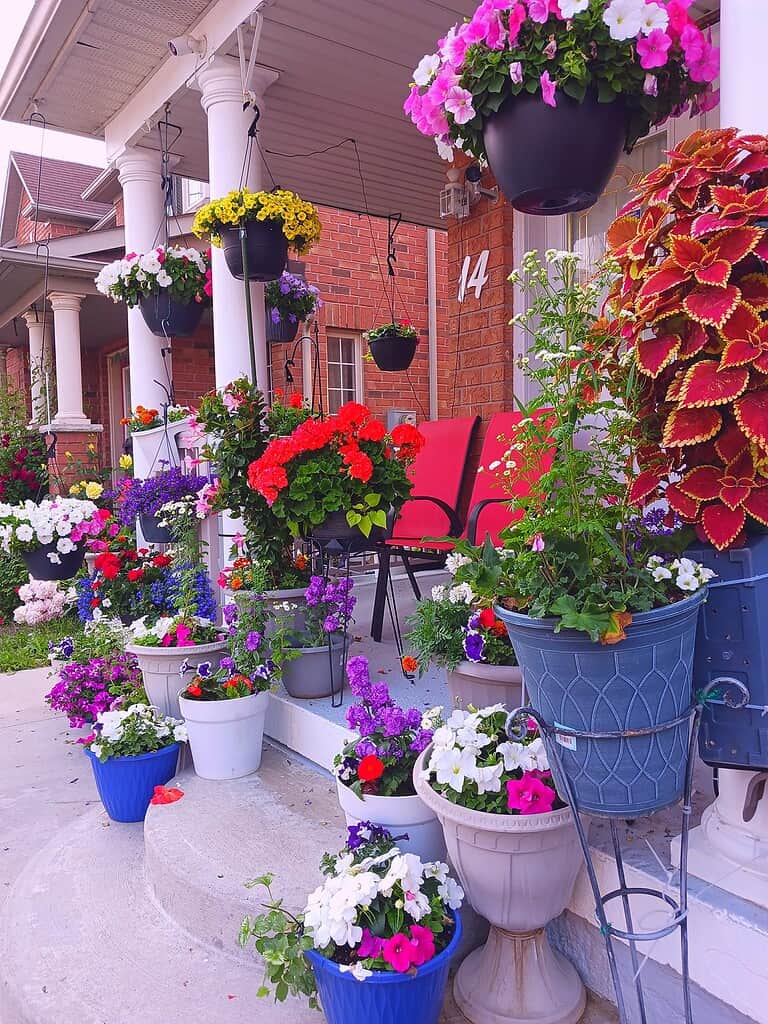
Don’t forget flowers! They not only add color and beauty, but can attract pollinators to help your veggies and can even repel pests.
Marigolds are a classic companion flower – they’re easy, compact, and their scent may help deter certain pests.
Nasturtiums are lovely trailing flowers that are also edible (peppery leaves and blossoms for salads) and can climb or trail from a pot.
Other patio-friendly blooms include petunias, pansies, calendula, or dwarf zinnias. Mix a few flowers into your herb and veggie containers or dedicate one pot to a burst of color.
It makes your garden look lush and inviting.
For more inspiration, check out our full list of flowers by color for yellow, pink, orange, white, purple, red, blue, and green blooms.
Plant Spacing
A quick note – avoid the temptation to overcrowd lots of plants into one container.
While it might look full at first, plants need adequate spacing to thrive and not compete too much for water and nutrients. Check the plant tag or seed packet for how far apart to space them.
For example, in a 12” wide pot, you might grow one tomato or 3-4 bush bean plants or 6 lettuce heads – but not all of those together.
If you combine different plants in one big container (which can be beautiful, like a mini mixed garden), pair plants with similar needs and make sure the pot is large enough for all (add up their recommended pot sizes).
It’s often simpler as a beginner to do one plant per pot, or a few plants that you know play nicely (like a few herbs together).
As a beginner at patio gardening, stick to these friendly plants that forgive small mistakes and flourish in pots. You’ll learn a lot in your first season about what grows well on your patio.
And trust us, nothing beats the thrill of picking a tomato or snipping basil from a plant you grew yourself.
Next, we’ll shine a spotlight on herbs – because they truly are the patio gardener’s best friend.
Herbs in Small Patio Gardens: A Perfect Choice
For newcomers and seasoned gardeners alike, herbs in small patio gardens are a match made in heaven.
Herbs are generally easy to grow, stay manageable in size, and provide a continuous reward in the form of fresh flavors.
Here’s why herbs deserve a special place in your patio garden, plus tips to help them thrive:
A compact container of mixed herbs can provide a bounty of flavors. You don't need a ton of space – just a couple of pots on your patio can supply you with fresh herbs for your meals.
Big Flavor, Small Space
Most herbs are naturally compact plants with shallow roots, which makes them ideal for container life.
You can grow a lot of herbs in a little space – even a single long planter box or a few small pots can host several herb varieties together.
For example, you might plant basil, parsley, and chives in a single 18” wide window box. Or dedicate separate small pots to thyme and oregano.
As long as they get their sun and water, they’ll happily produce leaves for you to harvest.
Easy and Forgiving
Herbs are generally quite forgiving. Did you forget to water your rosemary one day? It will probably be fine (many herbs, like rosemary and thyme, even prefer slightly drier soil between waterings).
Did you give your basil a bit too much water? It will recover if it has drainage. In fact, herbs truly only have a few simple needs: sun, decent soil, and not too much water.
They don’t demand heavy feeding or fussing. And many common herbs are also naturally pest-resistant thanks to the oils that give them their scent – bonus!
Herbs to Start With
If you’re not sure which herbs to try first, consider the ones you use most in the kitchen or that smell wonderful to you. Some beginner-friendly herbs include:
- Parsley: Either curly or flat-leaf, parsley does well in part shade or sun. It has relatively deep roots for an herb, so give it a pot about 8-10 inches deep. Consistent moisture keeps it happy.
- Thyme & Oregano: These Mediterranean herbs are drought-tolerant and low-growing. They’re perfect for the edges of containers or even in a hanging pot. They’ll trail nicely and survive occasional neglect.
- Mint: As mentioned, mint is a vigorous grower – always pot it alone or it will spread. Mint tolerates part shade and likes plenty of water. Great for teas and garnishes. You might even sink a pot of mint into a larger planter for decoration, but keep it contained.
- Chives: These onion-family herbs are super tough. They grow in clumps and produce cute purple flowers. A small pot is fine for chives, and they’ll come back every year (they’re perennial).
- Rosemary & Sage: Woody herbs that prefer it on the drier side. Rosemary in particular likes a bigger pot and excellent drainage. If you have a sunny wall, rosemary will thrive in a clay pot there. Sage is pretty hardy too and has lovely velvety leaves.
- Cilantro (Coriander) & Dill: These are fast-growing annual herbs that prefer cooler weather. They can be grown from seed easily. Do succession planting (sowing new seeds every few weeks) for a continuous supply, since they bolt (flower) relatively quickly.
Basically, any common culinary herb can be grown in a container. Feel free to try more unusual ones like lemongrass, lavender, or lemon balm if you have interest – just check their container needs.
Herb Care Tips
Herbs generally want about 6 hours of sun (morning sun + some afternoon shade can be fine, especially for parsley or mint).
Use a well-draining potting mix (herbs hate soggy roots). Harvest often – this is key. Snip your herbs regularly to use in cooking or even just pinch them back and dry/freeze the extras.
Regular harvesting encourages new growth and keeps herbs from getting leggy or going to seed. For example, when your basil has 6-8 leaves on a stem, pinch off the top set of leaves; it will branch and produce even more.
With woody herbs like rosemary or thyme, trim sprigs here and there to stimulate new shoots.
If any herb does flower and you’re not interested in the seeds, clip off the flowers to refocus the plant’s energy on growing leaves.
Overwintering Herbs
Some herbs are perennials (they live for multiple years) – like rosemary, thyme, chives, mint, oregano – and can potentially survive mild winters outdoors, especially if kept in a sheltered spot.
If you live in a cold climate, consider bringing a pot of herbs like rosemary inside to a sunny windowsill for the winter, or be ready to start anew in spring.
Annual herbs (basil, cilantro, dill) you’ll replant each year.
The good news is many herbs can also be grown indoors in winter if you have a bright window, so you can keep the flavor going year-round with a little effort.
Enjoy the Experience
One of the joys of a patio herb garden is sensory – rub a leaf of mint or rosemary between your fingers and the aroma will instantly make you smile.
Place your herb pots near your kitchen door if possible, so you can quickly snip a few while cooking.
You’ll find that stepping outside to clip fresh herbs for dinner is a tiny luxury that makes all the effort worth it.
Herbs connect you to your garden daily, even if your “garden” is just a couple of containers on a balcony.
In short, herbs are MVPs of small patio gardening. They’re low-maintenance, high-reward plants that will boost your confidence as a gardener.
Plus, your cooking will get a delicious upgrade!
Now that we’ve covered our plants, let’s look at some clever ways to arrange your patio garden to make the most of every inch.
Small Patio Garden Ideas to Maximize Space
When space is at a premium, a little creativity goes a long way.
Designing a small patio garden is like arranging furniture in a tiny apartment – you want to use vertical space, multifunctional pieces, and smart layout to fit more in without feeling cluttered.
Here are some space-maximizing ideas to help your patio garden actually feel like a garden oasis, not just random pots:
Stacking pots into a tiered “plant fountain” is a brilliant way to pack lots of plants into a small footprint. This vertical planter idea lets you grow herbs, greens, and even strawberries in cascading tiers.
Go Vertical
Look up – do you have walls, railings, or even a fence around your patio? Those are all opportunities to grow upward. Install some hanging planters or baskets for trailing plants and herbs.
For example, thyme and oregano are great trailing herbs, and strawberries or even cherry tomatoes can cascade from hanging baskets.
You can also mount planters on walls or railings (make sure they’re secure and have trays for water catchment if against a wall).
A vertical garden ladder or shelf is another idea – basically a stand that lets you put multiple pots on different rungs.
This creates a tiered effect that uses height instead of floor space. There are even vertical planters with pockets or stackable layers where you can grow dozens of plants in a few square feet.
Want a full walkthrough? Check out our simple guide to vertical gardening for tips on planters, plant choices, and maximizing your small space.
Tiered “Fountain” Planters
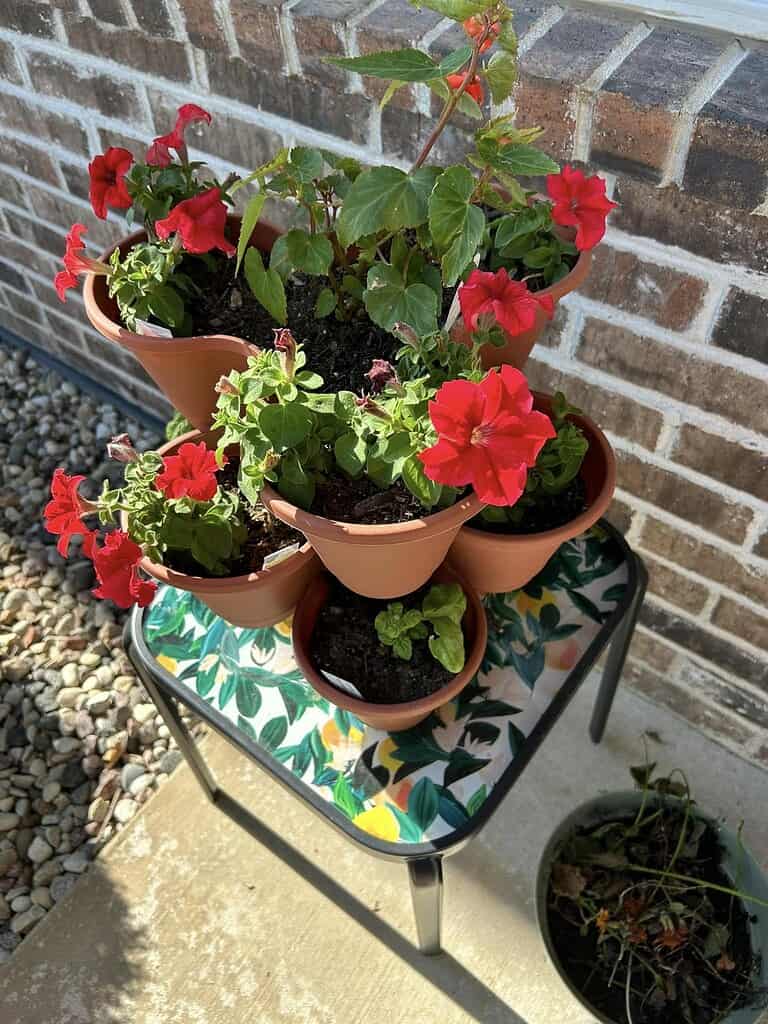
As shown in the image above, you can nest different sized pots to create a tower of plants.
For instance, place soil and plants in a large wide pot, then center a slightly smaller pot on top of the soil of the large one (support it well), and continue stacking 3-4 levels high.
Each tier can hold different plants – maybe herbs on top, flowers on the sides, salad greens spilling over. It becomes a living sculpture of plants and is fantastic for small spaces.
You might come across tiered planter products, or you can DIY with pots you have.
Use a Trellis or Climbing Supports
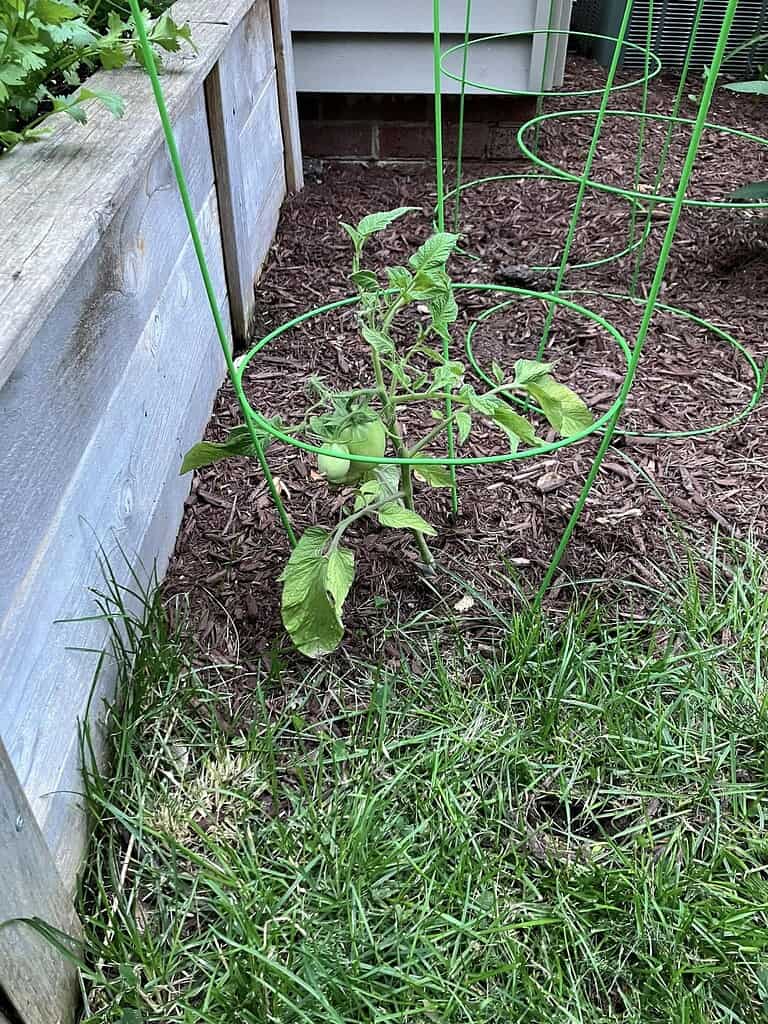
If you grow any vining or climbing plants (like pole beans, peas, or cucumbers), give them vertical supports.
A simple bamboo teepee or a decorative metal trellis in a pot allows those plants to grow up rather than sprawl out.
You can even put a narrow trellis against a wall and train a decorative climber like a jasmine or climbing nasturtium – it adds greenery up high and can create a privacy screen effect.
Group Pots for Impact
Instead of scattering individual pots all over (which can make a small space feel busy), cluster your containers into a few groups or an arranged cluster.
For example, maybe have one corner of your patio dedicated to a cluster of pots of varying heights – a tall tomato in the back, medium pots in the middle, and small herb pots in front.
Grouping not only looks more intentional and lush, but the plants kind of create their own micro-environment, shading the soil and each other a bit.
You can also elevate some pots on stands or stools to add levels within a cluster. An old bench or shelf can hold a row of smaller pots, freeing floor space.
Aim for an interesting mix of heights and textures to give the eye a focal point (like a mini jungle in one area, rather than sparse bits everywhere).
Think Multi-Purpose
In tiny patio setups, it helps if things can serve more than one role.
For instance, a sturdy rectangular planter box can double as a bench if it’s low and wide enough (just top it with a cushion when not watering).
Or use a bar cart or rolling kitchen cart as a mobile mini-garden: the shelves can hold pots, and you can wheel it around to chase the sun or out of the way when you need the space.
Some people use hanging shoe organizers on walls as pocket planters for herbs – an unconventional but effective vertical hack!
Lighting and Decor

This might not be about plant growth, but consider adding a little flair that doesn’t take space – like string lights overhead or along a railing.
A well-placed mirror on a wall can visually expand the space and reflect light (just be careful it doesn’t direct harsh light onto plants excessively).
A small decor piece like a garden gnome, or a pretty watering can left on display, can make the patio garden feel like your personalized haven.
The idea is to make your small garden space so cozy and welcoming that you’ll want to spend time there among your plants.
For more ideas on sprucing up your outdoor space on a budget, see our affordable outdoor patio ideas.
Keep Pathways Clear
Ensure you can still move around easily.
If you have a door that opens onto the patio, group your plants in a way that the door can swing freely and you have a clear path to walk or even a little spot to sit.
Sometimes less is more; a few thriving, well-placed plant groupings will look better and be easier to care for than an overcrowded jumble.
Remember, you also need to reach all your plants for watering and harvesting, so don’t tuck anything completely out of reach.
By maximizing vertical space and thoughtful arrangement, you can turn even a small patio into a green sanctuary packed with plants.
The key is creativity: use shelving, hangers, and grouping to get more plants in without sacrificing all your floor space.
Now that your garden is set up and planted, let’s cover how to care for it so it truly thrives through the seasons.
Caring for Your Small Patio Garden (Maintenance Tips)
You’ve planned, planted, and arranged your mini garden – wonderful! Now, let’s talk about keeping those plants happy and productive.
Maintenance for a small patio garden isn’t too daunting, but consistency is key. Here are some simple tips to ensure your patio plants thrive:
Water Consistently
We discussed watering basics earlier, and this remains your number one task. Check your containers daily, especially during hot or windy weather.
It’s normal for container plants to need frequent watering – even daily – once summer heat hits. Try to water in the morning and water thoroughly (until excess drains) so that roots get a deep drink.
If you notice leaves wilting in the afternoon, that’s often heat stress (the sun is strong); check the soil and if it’s still moist, the plant might just be heat-droopy and will perk up in the evening.
Avoid shallow, frequent sprinkles – deep watering is better for roots. That said, don’t overwater on cool or cloudy days; always gauge by the soil moisture.
Feed Your Plants
In a small container, nutrients get used up quickly. Regular feeding will keep your garden growing strong. A balanced, water-soluble fertilizer applied every few weeks works for most plants.
You can also top-dress with organic compost or worm castings every month or two, which adds nutrients slowly. Yellowing leaves or lackluster growth can be a sign your plants are hungry.
However, don’t go overboard – too much fertilizer (especially high in nitrogen) can cause lots of foliage but few fruits/flowers. Follow the product instructions.
For an organic approach, consider a fish emulsion or seaweed extract feed; they’re gentle and add micronutrients.
Also, some herbs (like thyme or oregano) actually prefer less feeding, as rich soil can dilute their flavor – so you might fertilize those less often than heavy feeders like tomatoes.
Prune and Pinch
Pruning isn’t just for big gardens – your patio plants benefit from a little grooming too. Pinch off any dead, brown, or diseased leaves whenever you spot them.
This tidies the plant and prevents any potential spread of disease. Many herbs (basil, mint, etc.) love to be pinched back regularly; it makes them grow fuller.
If your flowers (like marigolds or petunias) fade, deadhead (snip off) the spent blooms to encourage more flowers to form.
Tomato plants may grow suckers (extra side shoots) that you can pinch off to direct energy to fruits – but that’s optional.
Overall, spending a few minutes each week checking over and lightly pruning your plants will work wonders in keeping them productive and in good shape.
Harvest Regularly
This is the fun part! Harvest from your garden often. Pick herbs as you need them (morning is a great time when their oils are strongest).
Many herbs, as mentioned, grow bushier with frequent harvesting.
For veggies, pick them at their peak ripeness – cucumbers before they get too seedy, beans when tender, peppers when they reach full size or color.
Regular harvesting not only gives you produce, it also signals the plant to try to produce more (especially true for things like beans, peas, cucumbers – the more you pick, the more they attempt to set new fruits).
Even leafy greens should be picked continuously – take the outer leaves of lettuce or cut entire baby greens and let them regrow.
A plant that sits with overripe produce (like an oversized zucchini or a tomato that fell and rotted) might slow down further production, so keep the goodies picking.
Pest Patrol
A small patio garden can still attract pests, so keep an eye out. Check under leaves for aphids or whiteflies, and around the soil for slugs if they’re common in your area.
The good news is, in containers it’s easier to manage pests without chemicals. If you see aphids (tiny green/black bugs) on a stem, spray them off with water or wipe them with a bit of soapy water on a cloth.
For caterpillars or beetles, simply pick them off by hand (and relocate or dispose of them).
If you spot powdery mildew or fungus (white powdery spots on leaves, common on squash or mint), remove the affected leaves and improve airflow (maybe your plants are too cramped).
Companion planting can help here – remember those marigolds and basil? They naturally deter some pests with their smell, so having them around your veggies can offer some protection.
Also, encourage beneficial insects: if you have some flowers, you’ll attract ladybugs and lacewings that eat pests like aphids.
In a small garden, you likely won’t get huge infestations, and a quick response is usually effective. Stay observant and you can nip problems early.
Staking and Support
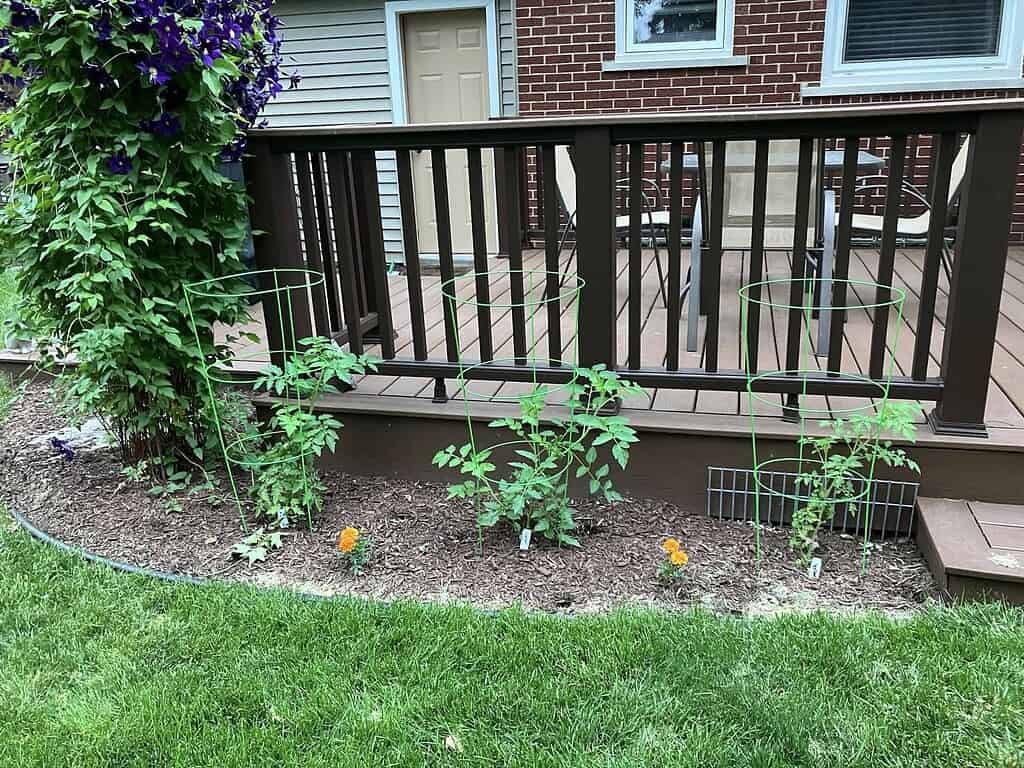
As plants grow, some might need a little support. If your tomatoes or peppers start leaning, tie them gently to a stake.
If your bean vines reach the top of your trellis, you can extend it or redirect the vines back down in a loop. Keeping plants supported prevents breakage and helps them get better sun exposure.
Seasonal Care
Depending on your climate, your patio garden will have seasons. In spring, you’ll be planting new seedlings or sowing seeds. In summer, it’s peak growth and production (also peak watering!).
As fall arrives, some plants will slow down. You might plant a second crop of cool-weather greens in early fall if your climate allows.
Clean up any plants that are past their prime – don’t let dead plants just sit and mold.
In winter, if you have perennials in pots and you live where it freezes, try to move those pots against the house wall or into a sheltered spot to protect roots from deep freezes (or bring them into a garage). Also, take the time to dream and plan for next spring!
Enjoy and Learn
Lastly, remember to enjoy your patio garden. It’s easy to focus only on the chores, but spend time out there relaxing too.
Admire the growth, watch the bees visit your flowers, savor the scent of your herbs. Gardening is a journey, and every season you’ll learn more about what works in your specific space.
Maybe your first try with strawberries fails – that’s okay, perhaps they needed more sun or a different pot; you can adjust next time. Celebrate the successes (no matter how small).
Even a handful of cherry tomatoes or a constant supply of basil for pesto is something to be proud of.
By keeping up with basic maintenance and observing your plants, you’ll become a confident patio gardener in no time.
With these care tips, your small patio garden will not only start strong but continue to thrive. Consistency – in watering, feeding, cleaning – is your secret weapon.
But don’t worry, these tasks will soon become a relaxing routine rather than a burden. Now, let’s wrap up with some encouragement to get your patio garden project started!
Start Your Own Small Patio Garden Today
Creating a thriving small patio garden is absolutely within your reach.
Now the only step left is to get your hands a little dirty and start planting!
So, roll up your sleeves and give it a go! Visit a local nursery or home improvement store and pick out a few plants or packets of seeds that excite you.
Set up your containers as we discussed, and watch life on your patio take root.
Gardening is a wonderful mix of learning and reward – each day you’ll see small changes, and in a few weeks or months you’ll be harvesting the benefits (literally!).
Don’t be afraid to experiment and make the space your own little green haven.
We’re excited for you to start your patio gardening journey. If you have questions or want to share how your small patio garden is coming along, we’d love to hear from you.
Drop a comment below! What are you planning to grow, and how have you made use of your small space? Let’s swap ideas and cheer each other on – happy gardening!
FAQs
What can I grow on a small patio that doesn’t get much sun?
For shady patios (3–5 hours of sun or mostly bright indirect light), focus on partial-shade plants.
Leafy greens like lettuce, spinach, kale, arugula, and chard do well, as do root veggies like radishes, beets, and carrots.
Herbs such as mint, parsley, cilantro, and chives thrive too. You can also add shade-tolerant decoratives like ferns, begonias, or impatiens.
Avoid sun-loving fruiting plants unless you use reflective surfaces or grow lights for extra light.
How often should I water the plants in my small patio garden?
Container plants dry out faster than in-ground plants. Check soil daily by sticking your finger about 1 inch deep – water if it feels dry.
Small pots may need watering daily or twice a day in hot weather; larger pots every couple of days. Water slowly and deeply so roots get enough moisture.
Morning is best, and adjust based on weather and plant type.
What should I do with my patio garden in the winter?
In mild climates, some herbs (rosemary, thyme) can stay outside. In cold areas, bring tender plants indoors to a sunny windowsill or under a grow light.
You can insulate outdoor pots with burlap or straw. Some gardeners overwinter plants in an unheated garage or shed, watering sparingly.
Annuals can be removed, pots cleaned, and spring planting planned. Winter is also a good time to plan and start seeds indoors.
How can I keep pests away from my patio plants without using harsh chemicals?
Inspect plants regularly and remove pests by hand. Use water sprays or mild soapy water for soft-bodied insects. Neem oil or homemade garlic/chili sprays can help.
Plant pest-repelling companions like marigolds, basil, or lavender, and encourage beneficial insects like ladybugs.
Keep pots clean, and use physical barriers for birds or slugs. Healthy plants are naturally more resistant, so consistent care helps prevent infestations.
Is it better to start plants from seeds or buy seedlings for a small patio garden?
Both work. Seedlings give a fast start and are easy for beginners, especially for tomatoes, peppers, or herbs.
Seeds are cheaper and offer more variety – ideal for leafy greens, root veggies, and fast-growing herbs.
Many gardeners combine both: seedlings for quick results, seeds for succession planting. Follow seed packet instructions, keep seeds moist, and thin crowded seedlings for best results.