
Green flowers bring a quiet elegance to any garden. While most blooms shout with color, these plants soften the space with natural texture and subtle charm.
A green-themed garden creates a sense of calm and balance, perfect for those looking to build a peaceful outdoor retreat.
In this article, you'll find 15 lush green flowers that add beauty, structure, and character to your garden.
From rare varieties to familiar favorites with a green twist, each one includes key growing details to help you choose the right plants for your climate and layout.
What to Consider When Designing a Green-Themed Garden
Designing a green-themed garden goes beyond choosing plants by color. It’s about building a space that looks calm, feels balanced, and functions well through the seasons.
Green flowers, with their unusual tones and textures, can soften bold landscapes or become a subtle focal point. Here's what to think about before planting:
1. Purpose of the Garden
Start by deciding how the space will be used. Is it for quiet reflection, attracting pollinators, or filling a shady area with interest? Knowing the garden’s purpose helps guide plant choices, layout, and maintenance.
2. Light Conditions
Green flowers grow in a range of light conditions. Some, like tulips and zinnias, need full sun.
Others, such as hellebores or Jack-in-the-Pulpit, thrive in part or full shade. Match plant needs with available light to avoid poor growth or stress.
3. Bloom Timing
Mix early-, mid-, and late-season bloomers to keep the garden interesting year-round.
Spring bulbs like Green Spirit tulips, summer bloomers like zinnias and gladiolus, and winter plants like hellebores can all work together for long-lasting impact.
4. Texture and Height
Green flowers vary in structure. Some, like Sweet William ‘Green Ball,’ offer round, compact blooms. Others, like amaranthus or milk vetch, provide height and movement.
Use a mix of low, mid, and tall plants to create layers and avoid flat or empty-looking areas.
5. Pollinator and Wildlife Benefits
Several green-flowering plants attract butterflies, bees, and birds.
Coneflowers, flowering tobacco, and zinnias are not just beautiful – they also support a healthy garden ecosystem. Choose pollinator-friendly options if you want more life and activity in your yard.
6. Maintenance and Growing Conditions
Some plants are low-maintenance and tolerate drought or shade. Others need more attention.
Always check the growing zones, water needs, and sunlight preferences to ensure plants will thrive in your location.
7. Color Pairing and Surroundings
Green blooms pair well with deep purples, soft whites, and burgundy tones.
Use them as a background for colorful plants or combine several green varieties for a more muted, natural look. Think about how each plant fits with its neighbors in both color and texture.
Read related post: 15 Show-Stopping Yellow Flowers for a Sunny Outdoor Space
15 Lush Green Flowers to Enrich a Peaceful Garden
Green flowers add subtle charm and natural texture to the garden. Instead of bold color, they offer softness, balance, and depth.
Whether planted for structure, shade, or quiet visual appeal, the green blooms below can enrich any outdoor space with their unique presence.
1. Little Lime Hydrangea (Hydrangea paniculata)
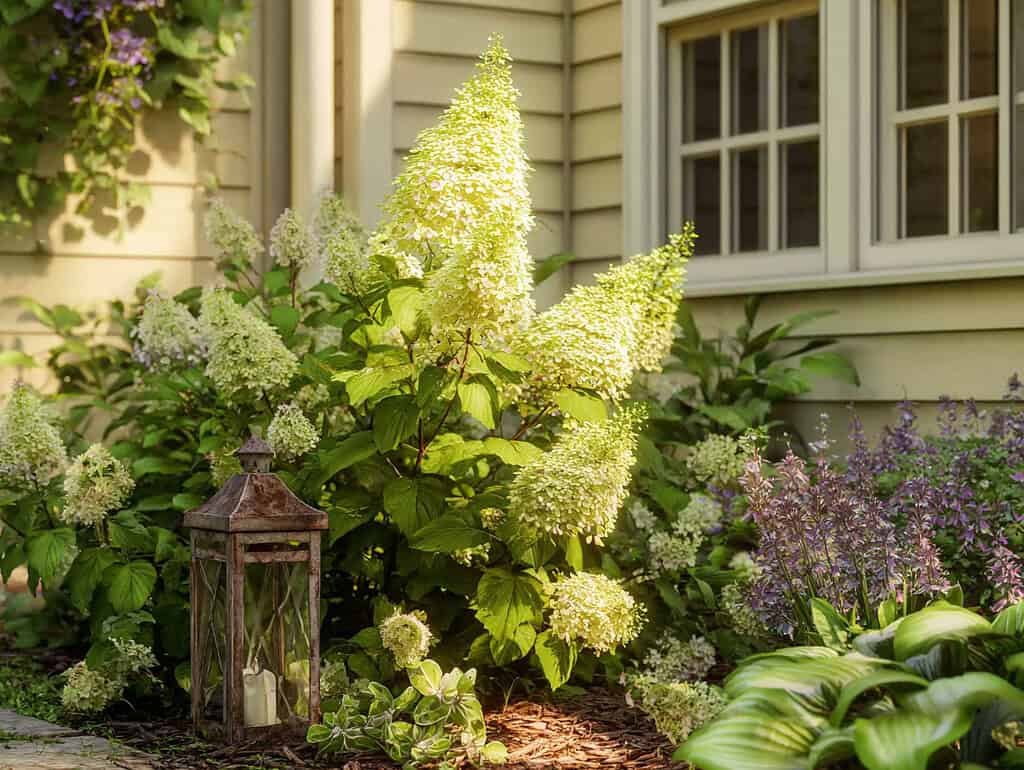
This compact shrub brings soft structure to the garden with its rounded clusters of pale green blooms that gradually shift to soft pink as the season changes.
It’s a great fit for small spaces, foundation plantings, or border edges where larger hydrangeas might overwhelm. The blooms are long-lasting and look just as good on the plant as they do in a vase.
- Type: Perennial shrub
- USDA Zones: 4 to 8
- Height: 3 to 5 feet
- Light: Full sun to part shade
- Maintenance: Low; prune in late winter or early spring
- Bonus: Drought-tolerant once established and very adaptable to soil types
2. Green Star Gladiola (Gladiolus)
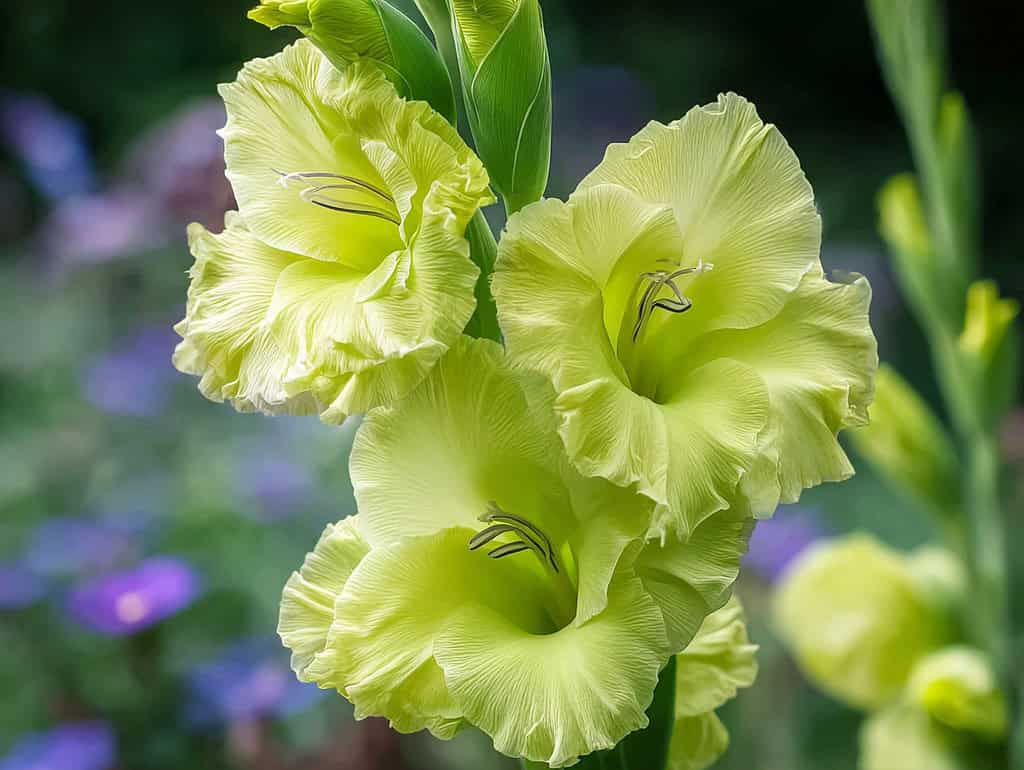
With tall, upright stalks topped by apple-green blossoms, Green Star Gladiolas bring a strong vertical accent to beds and borders. Their striking color adds contrast to darker plants like burgundy dahlias or deep purple salvia.
These gladiolas are also a favorite in floral arrangements, where their vibrant green can stand out or act as a cool-toned backdrop.
- Type: Bulb (tender perennial)
- USDA Zones: 8 to 11 (treat as annual or lift bulbs in cooler zones)
- Height: 4 feet or more
- Light: Full sun
- Maintenance: Requires regular watering and well-drained soil
- Bonus: Attracts butterflies and makes excellent cut flowers
3. Bells of Ireland (Moluccella laevis)
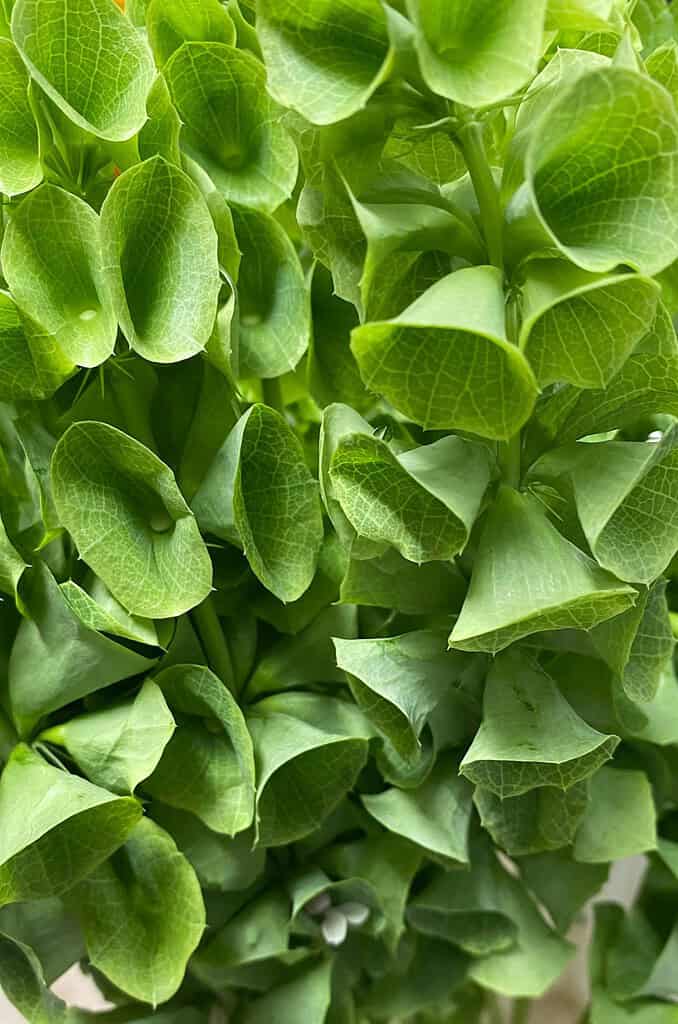
This unusual annual grows in tall spires covered with bright green, bell-shaped calyxes that form around small white flowers hidden inside.
The overall effect is bold but calming, and the tall form makes it useful for background planting or vertical interest in a border.
Bells of Ireland are also known as symbols of good luck and have a light, fresh fragrance.
- Type: Annual
- USDA Zones: Grown as annual in most zones
- Height: 2 to 4 feet
- Light: Full sun, best in cooler climates
- Maintenance: Prefers cool weather and well-drained soil; pinch young plants for bushier growth
- Bonus: Long-lasting in cut flower arrangements and dries well for crafts
4. Envy Zinnia (Zinnia elegans)
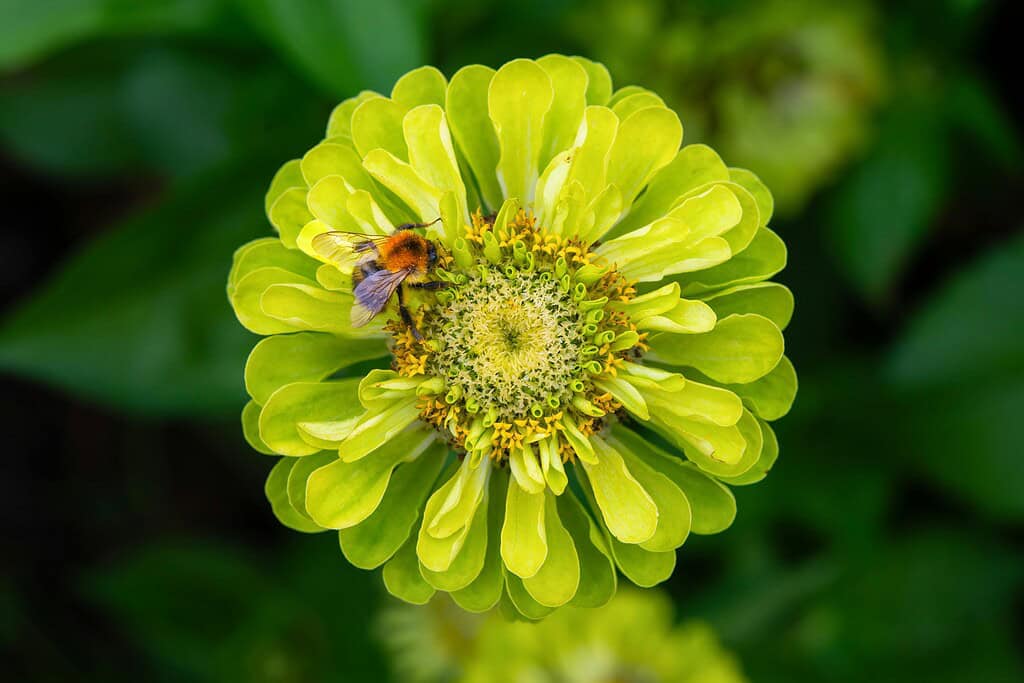
Envy Zinnia stands out with its bright chartreuse blooms that appear throughout the summer.
The flowers are typically 2 to 3 inches wide and can be either double or semi-double, adding color and structure to sunny garden beds.
These zinnias grow quickly from seed and are a reliable option for gardeners who want fast results with minimal effort. Their bright green tone offers a fresh look and pairs well with warm-colored blooms.
- Type: Annual
- USDA Zones: Suitable for all zones as an annual
- Height: About 2 feet
- Light: Full sun
- Maintenance: Easy to grow from seed; deadhead regularly for more blooms
- Bonus: Attracts hummingbirds and butterflies; excellent for cut arrangements
Read related post: 15 Enchanting Purple Flowers That Create a Magical Garden Feel
5. Green Gambler Hellebore (Helleborus spp.)
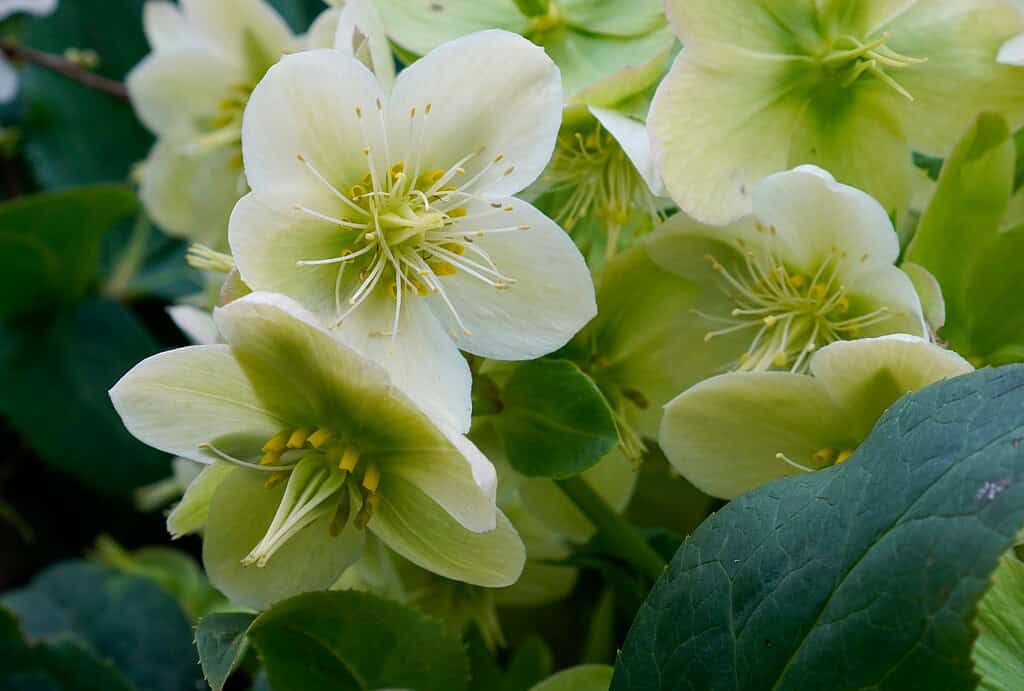
This hellebore variety is known for its soft green flowers that appear in late winter or early spring, often before snow has even melted.
It’s a low-growing, shade-loving perennial that adds life and interest during the quiet months of the garden. The blooms are long-lasting and can remain attractive for several weeks.
Green hellebores are an excellent choice for woodland borders, under trees, or in shaded front yard beds.
- Type: Perennial
- USDA Zones: 4 to 9
- Height: 12 to 18 inches
- Light: Partial to full shade
- Maintenance: Minimal; mulch in summer and keep soil moist but well-drained
- Bonus: Deer-resistant and evergreen in mild climates
6. Lime Green Flowering Tobacco (Nicotiana alata)
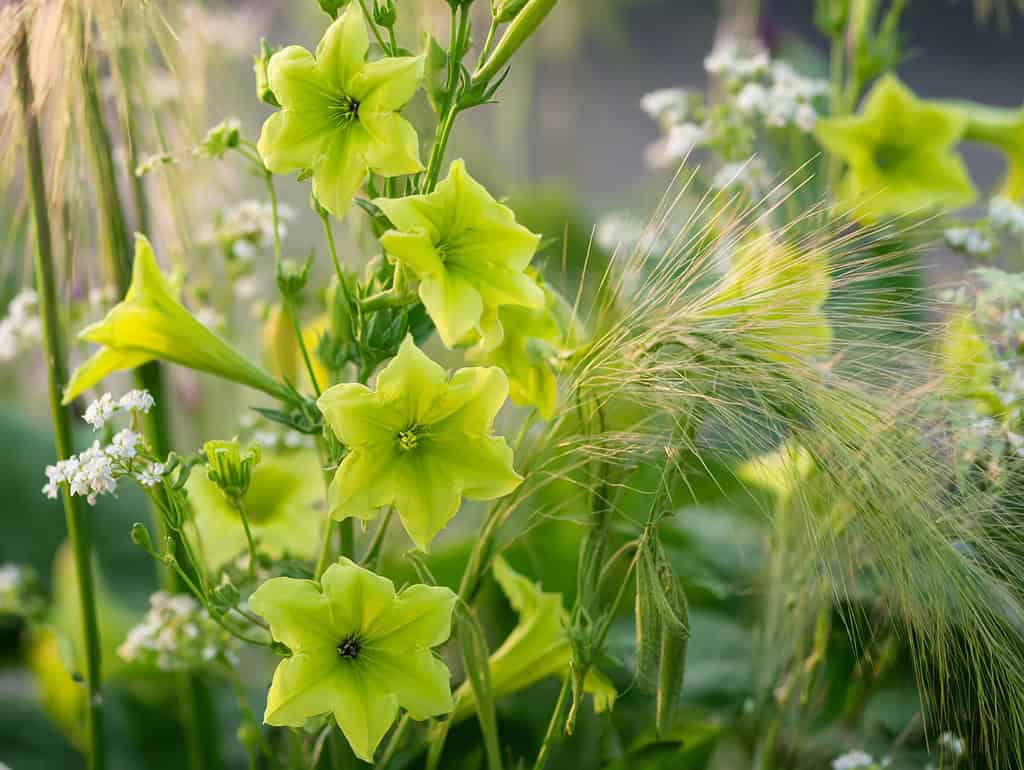
Flowering tobacco adds a dreamy, relaxed feel to the garden with its star-shaped lime green blooms that become most fragrant at dusk.
The plant grows in a loose, airy shape, making it a good filler among more structured plants. It performs well in sun or partial shade and continues blooming from summer into fall.
This plant is ideal for sensory gardens or moon gardens, where its sweet evening scent can be appreciated most.
- Type: Annual
- USDA Zones: Grown as annual in most zones
- Height: About 3 feet
- Light: Full sun to part shade
- Maintenance: Easy to grow; keep soil moist but not soggy
- Bonus: Fragrance intensifies at night and attracts moths and other evening pollinators
7. Green Jewel Coneflower (Echinacea purpurea)
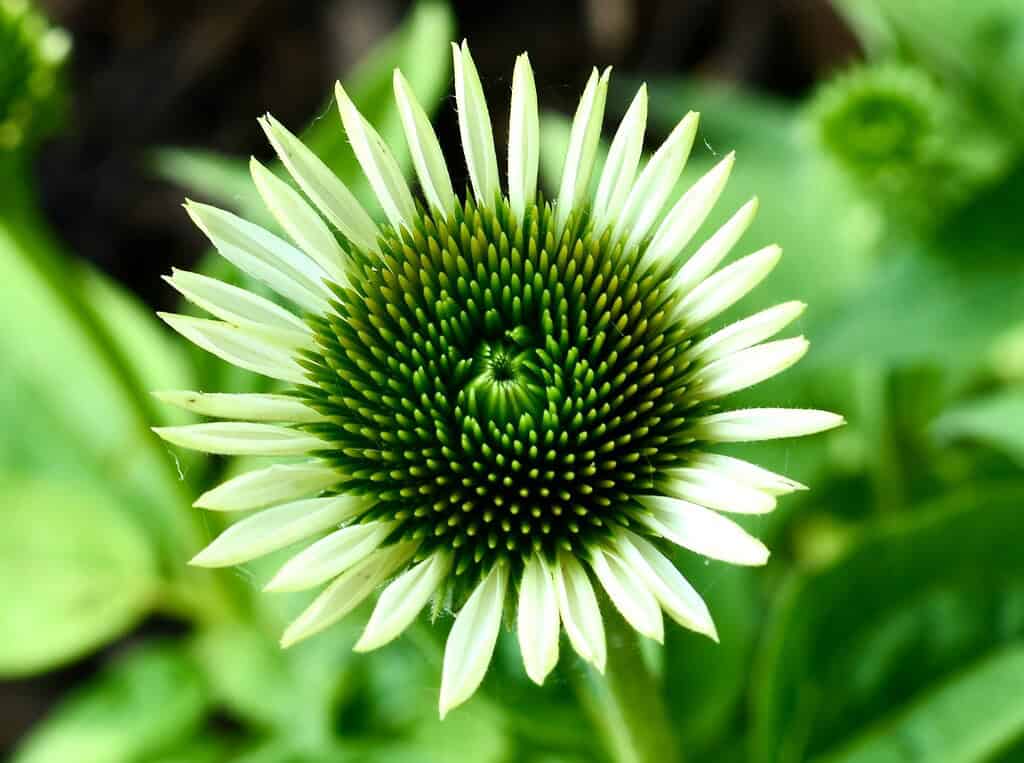
This unique coneflower offers a green twist on a garden favorite. Its sturdy stems support rounded, daisy-like blooms with lime green petals surrounding a central cone.
The flowers appear throughout summer and into early fall, making them a long-lasting presence in the garden.
Beyond their looks, they serve an ecological role – pollinators love them, and birds feed on the seed heads once the blooms fade.
- Type: Perennial
- USDA Zones: 3 to 9
- Height: Up to 24 inches
- Light: Full sun to partial shade
- Maintenance: Drought-tolerant once established; deadhead for continuous blooming
- Bonus: Attracts bees, butterflies, and birds; works well in wildflower or cottage-style gardens
8. Lady’s Mantle (Alchemilla mollis)

Lady’s Mantle is a soft, mounding plant with chartreuse-green flower clusters that bloom above scalloped, fuzzy leaves.
Its foliage holds dew and rainwater in droplets that glisten in the morning sun, giving it an added ornamental touch.
It’s highly adaptable and tolerates a range of growing conditions, making it a reliable option for filling in shaded spots or softening path edges.
- Type: Perennial
- USDA Zones: 3 to 8
- Height: 12 to 18 inches
- Light: Full sun to full shade (does best with some afternoon shade in hotter climates)
- Maintenance: Low-maintenance; divide clumps every few years if needed
- Bonus: Ideal for borders and underplanting; drought-tolerant once established
9. Sweet William ‘Green Ball’ (Dianthus barbatus)
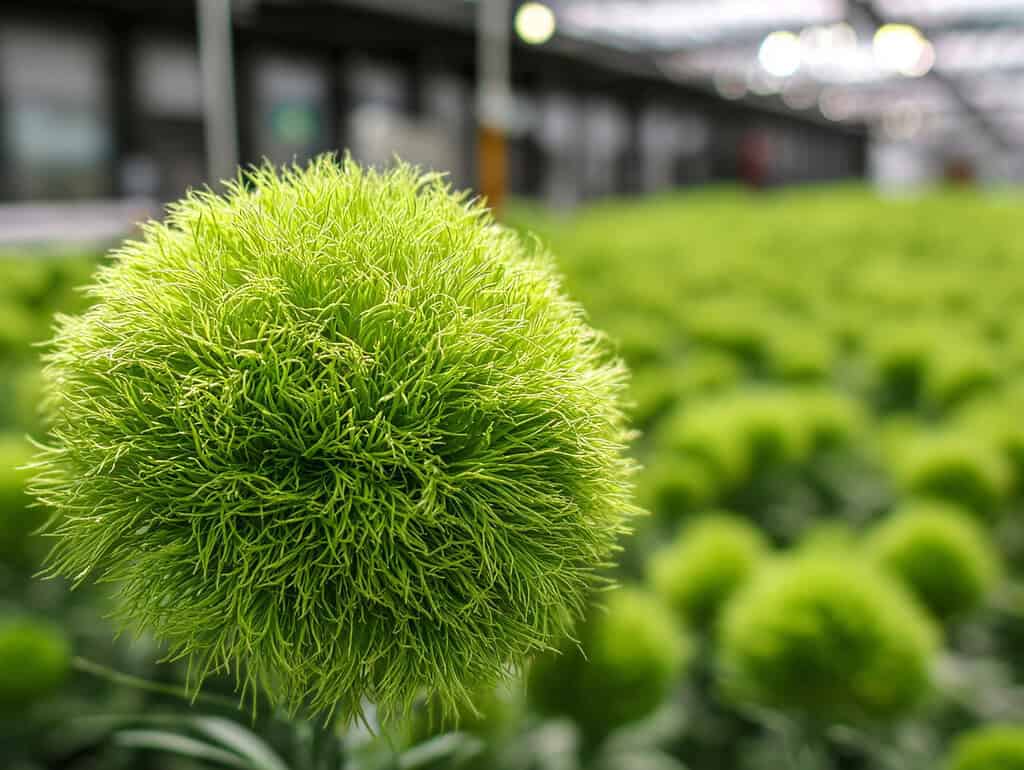
This playful variety of Sweet William adds unexpected texture to the garden. Its flowers form tight, fuzzy lime-green spheres that resemble soft moss or small pom-poms.
The unusual form makes it a standout in beds or floral arrangements.
Despite its whimsical appearance, it’s sturdy and easy to grow, with a compact shape that fits well into both formal and relaxed garden designs.
- Type: Usually grown as an annual or biennial
- USDA Zones: Hardy in zones 6 to 9; often treated as annual elsewhere
- Height: 12 to 24 inches
- Light: Full sun (afternoon shade in hot climates)
- Maintenance: Moderate; keep soil evenly moist
- Bonus: Long-lasting in bouquets and a great conversation piece in mixed plantings
10. ‘Emerald Tassels’ Amaranthus (Amaranthus caudatus)
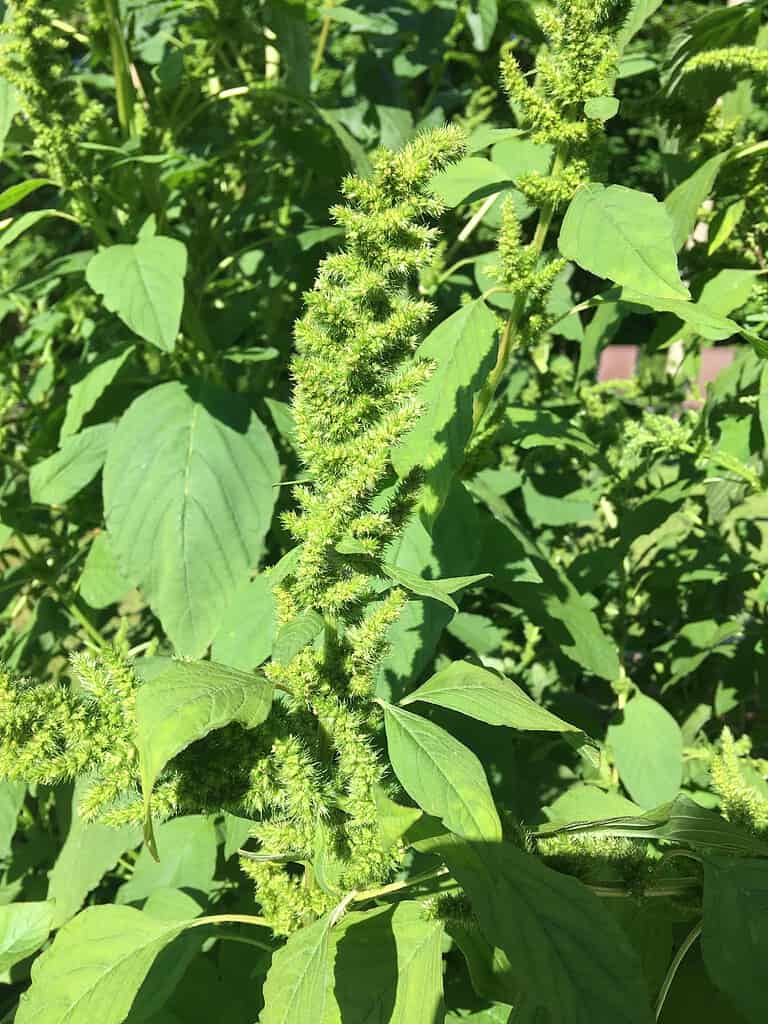
This variety of amaranth brings drama and movement to the garden with its long, trailing lime green blooms that cascade from tall stems.
The flower tassels are soft and textured, creating a striking effect in large containers or the back of garden beds.
They’re especially eye-catching when planted in groups or allowed to spill over raised edges.
- Type: Annual
- USDA Zones: Grown as annual in all zones
- Height: Up to 5 feet
- Light: Full sun
- Maintenance: Minimal; prefers well-drained soil and regular watering
- Bonus: Works well in fresh or dried arrangements; adds vertical and textural interest
Read related post: 12 Breathtaking Blue Flowers That Make Any Garden Look Extraordinary
11. Jack-in-the-Pulpit (Arisaema triphyllum)
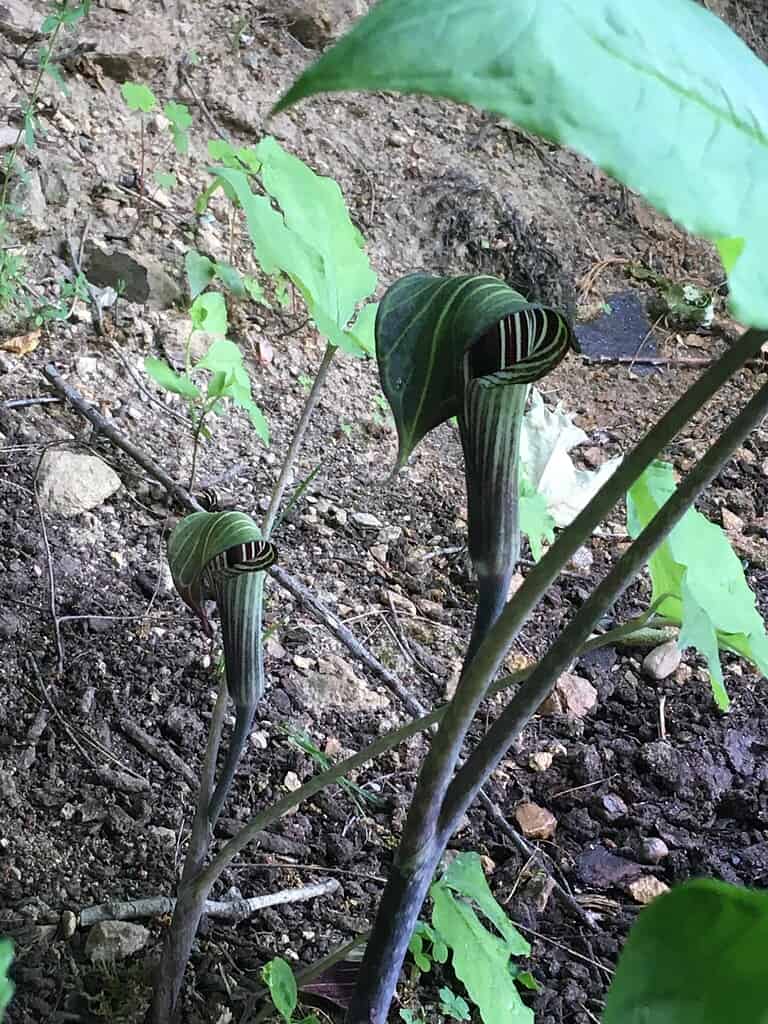
Native to woodland areas in North America, Jack-in-the-Pulpit is a shade-loving perennial known for its unusual, hooded flower structure.
The curved green “pulpit” covers a central upright stalk, creating an architectural shape that stands out among typical blooms.
It's deer-resistant and thrives in moist, rich soil, making it perfect for naturalized or forest gardens.
- Type: Perennial
- USDA Zones: 3 to 9
- Height: Up to 24 inches
- Light: Partial to full shade
- Maintenance: Low; prefers moist, organically rich soil
- Bonus: Native plant that supports local biodiversity and adds woodland character
12. Canada Milk Vetch (Astragalus canadensis)
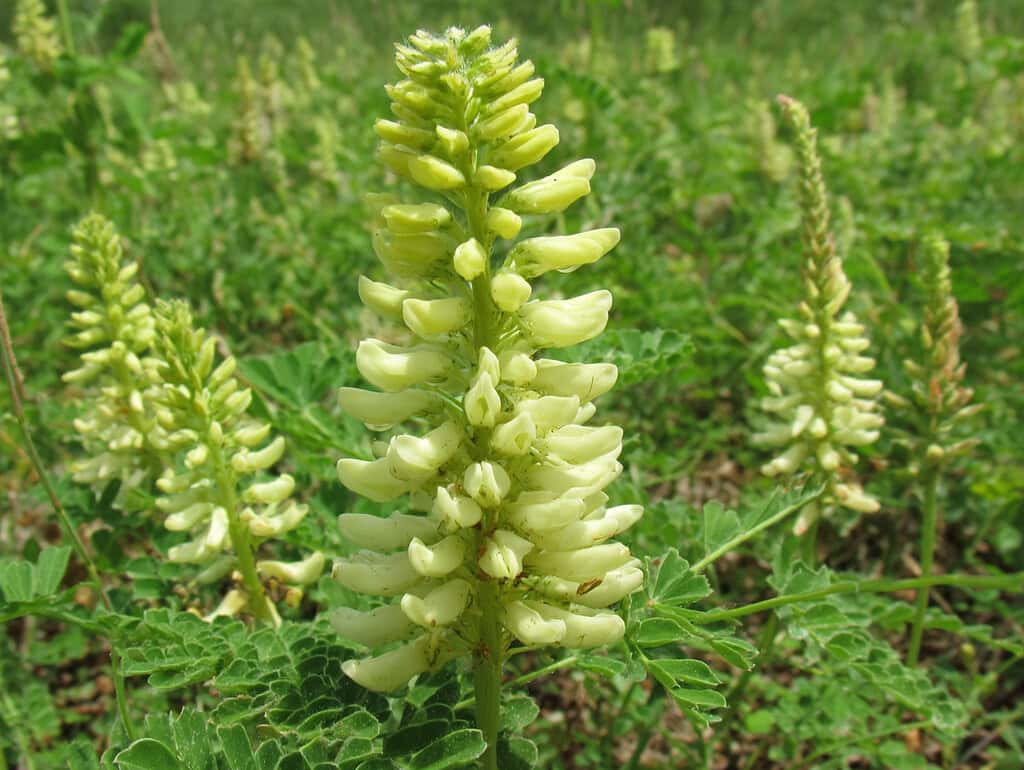
This tall, green-flowering native perennial adds height and a wildflower feel to the garden.
Its spiked clusters of soft green to pale cream flowers bloom in mid to late summer, attracting bees and other pollinators.
It’s often used in naturalized plantings or prairie-style landscapes and grows well in full or partial sun.
- Type: Perennial
- USDA Zones: 3 to 8
- Height: Around 36 inches
- Light: Full sun to partial shade
- Maintenance: Low; thrives in average, well-drained soils
- Bonus: Supports pollinators and adds soft vertical accents to native plantings
13. ‘Green Halo’ Peonies (Paeonia lactiflora)
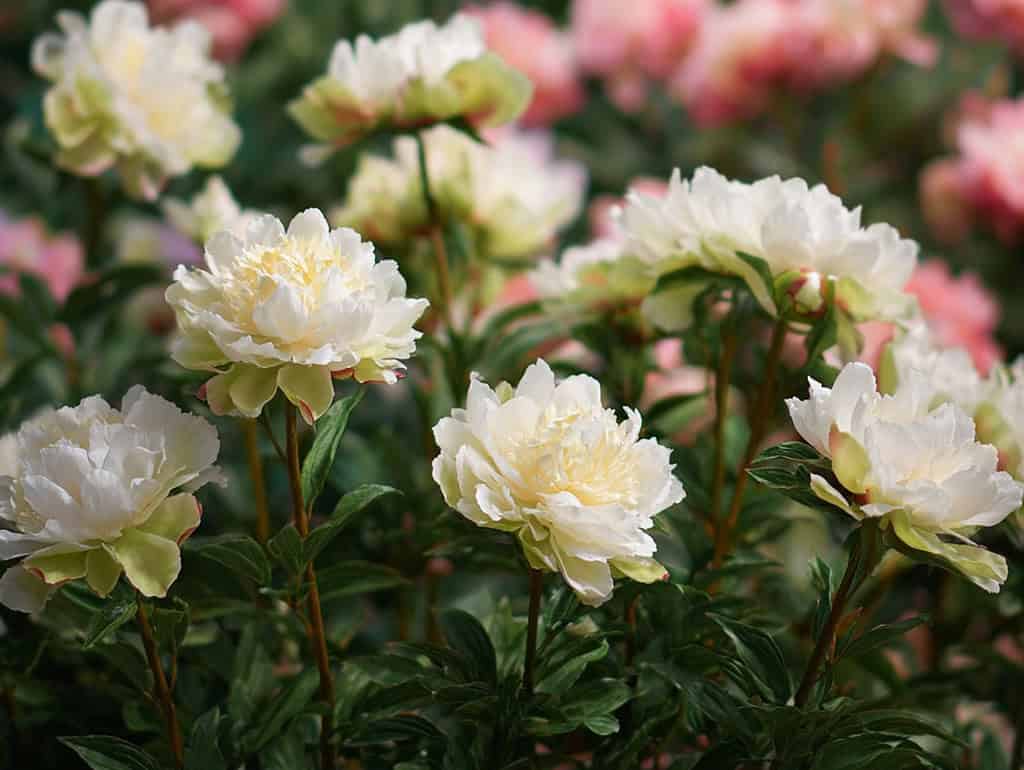
‘Green Halo’ is a rare and visually striking peony with large, layered blooms that feature a pale green base surrounded by creamy white petals.
The soft green tones give the flower a glowing appearance, making it a standout in any perennial bed.
Like most peonies, it’s long-lived and low maintenance once established, rewarding gardeners with showy blooms each spring. Learn more about how to grow peonies.
- Type: Perennial
- USDA Zones: 3 to 8
- Height: About 30 inches
- Light: Full sun
- Maintenance: Easy-care; requires well-drained soil and minimal watering once established
- Bonus: Makes an excellent cut flower and returns reliably year after year
14. Green Spirit Tulip (Tulipa)
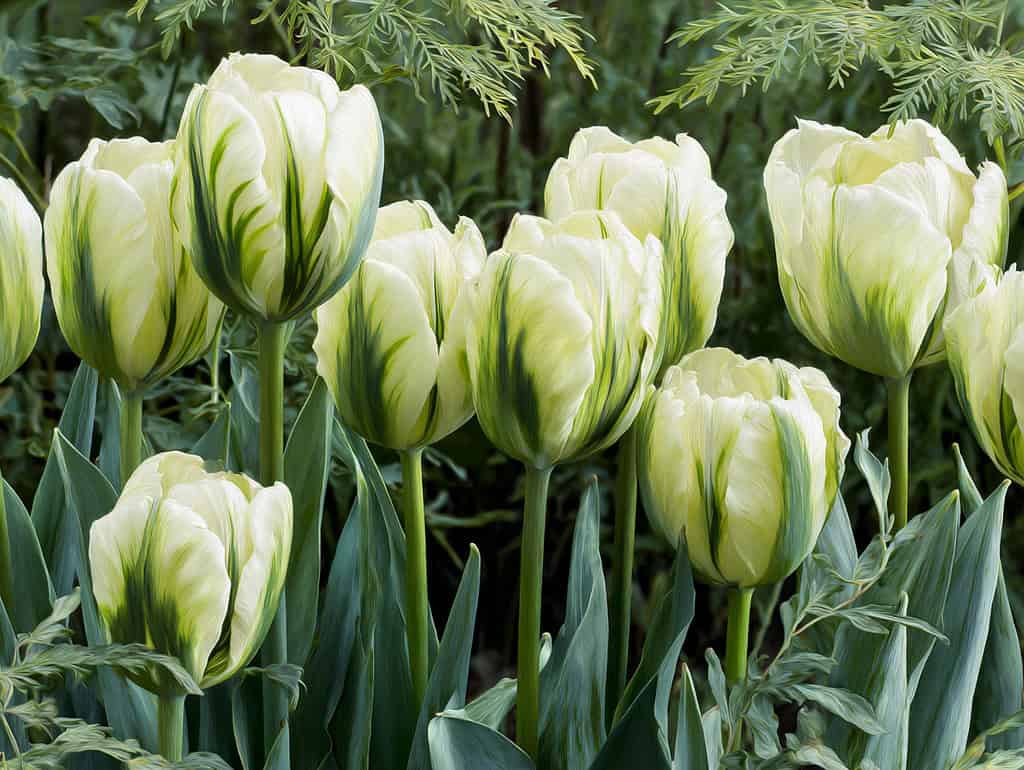
This elegant tulip variety blooms in early spring with ivory-white petals accented by crisp, vertical green stripes.
Its upright form and unusual coloring make it a refined addition to mixed bulb displays or monochromatic planting schemes.
The bloom's freshness pairs well with soft pinks, whites, or purples for a clean, calming look.
- Type: Spring-blooming bulb
- USDA Zones: 3 to 8
- Height: Around 24 inches
- Light: Full sun to partial shade
- Maintenance: Plant bulbs in fall; allow foliage to die back naturally after blooming
- Bonus: Adds early-season color and vertical interest to flower beds
Read related post: 15 Jaw-Dropping Red Flowers You’ll Fall in Love With
15. Green Rose (Rosa chinensis ‘Viridiflora’)
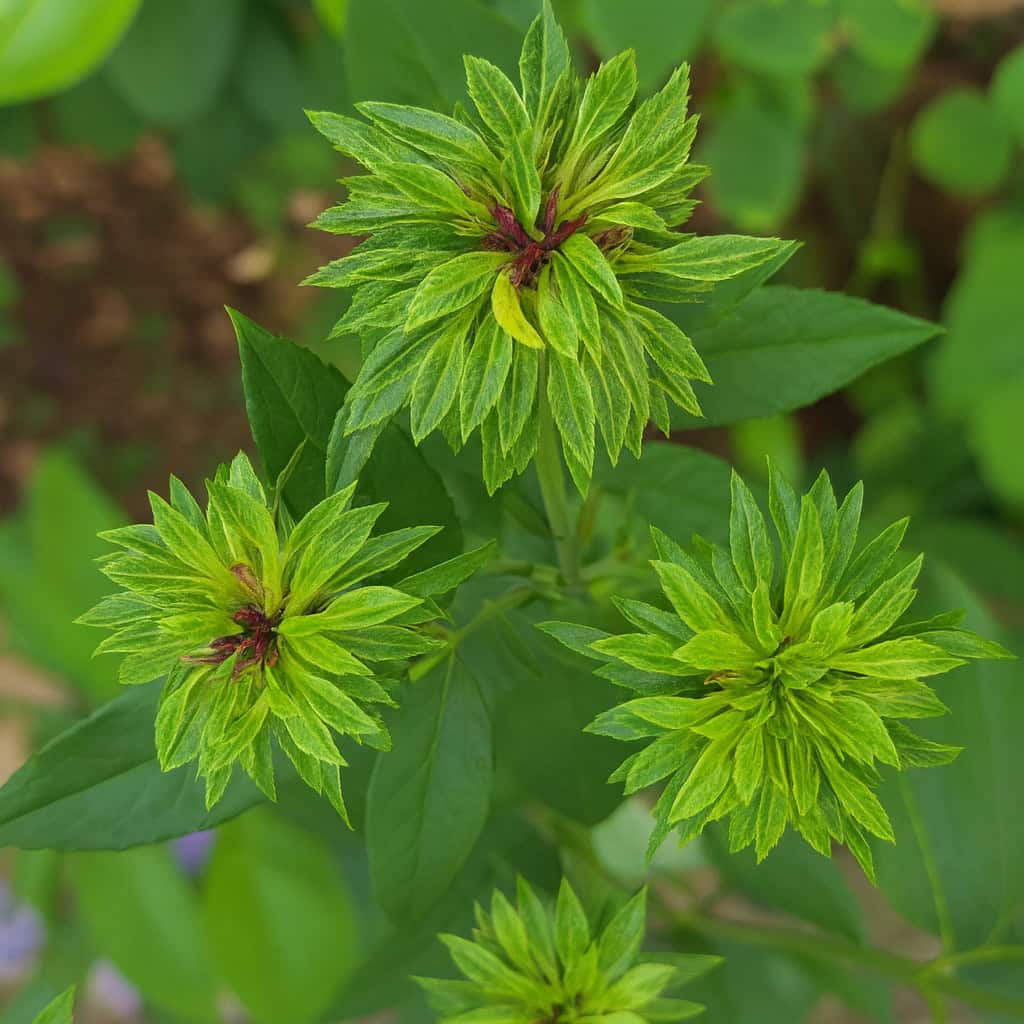
Unlike traditional roses, this rare heirloom variety produces green blooms made up of leaf-like structures instead of true petals.
The result is a textured, unusual flower that adds visual intrigue to a peaceful garden.
Occasionally streaked with soft pink or brown, the flowers are subtle yet striking, especially in mixed perennial borders.
- Type: Shrub rose
- USDA Zones: 5 to 11
- Height: Up to 4 feet
- Light: Full sun
- Maintenance: Regular pruning and feeding promote healthier blooms
- Bonus: A conversation piece for gardeners who enjoy unique, antique varieties
Bring Calm to Your Garden with the Right Green Flowers
Green flowers offer more than color – they bring texture, balance, and a peaceful feel that’s hard to achieve with brighter blooms alone.
By choosing varieties that match your light conditions, bloom times, and maintenance preferences, you can create a space that stays interesting through the seasons while staying calm and cohesive.
Whether you’re building a shaded woodland garden, filling a quiet backyard corner, or refreshing your perennial borders, adding just a few of these lush green options can completely shift the mood of your outdoor space.
Which green flower will you try first? Comment below and let us know how you plan to use it in your garden.
FAQs
Can I grow green flowers in containers or pots?
Yes, many green-flowering plants grow well in containers. Choose compact varieties like Little Lime Hydrangea, Envy Zinnia, or Sweet William ‘Green Ball.’ Make sure the container has good drainage and use quality potting soil suited to each plant’s needs.
Do green flowers bloom as long as more colorful flowers?
Some do, especially varieties like zinnias, coneflowers, and flowering tobacco, which bloom for several weeks or even months. Others, like tulips and peonies, have shorter bloom periods but can still play a valuable role in seasonal design.
Are there green flowers that are safe for pets?
Most of the flowers listed are not considered toxic, but a few – like hellebores and flowering tobacco – can be harmful if ingested by pets. Always check the ASPCA’s toxic plant list before planting if you have cats or dogs in the garden.
How do I prevent green flowers from fading too early?
Keep the plants healthy by matching them with the right growing conditions: proper sunlight, watering, and soil. Deadhead spent blooms regularly, and avoid overcrowding to reduce stress and disease. For cut flowers, harvest early in the morning and place them in water right away.
Can I start any of these green flowers from seed?
Yes, several options grow well from seed. Envy Zinnia, Bells of Ireland, and flowering tobacco can all be started from seed either indoors or directly sown outdoors after the last frost. Follow seed packet instructions for timing and spacing.
Ready To Transform Your Garden?

Are you looking for the best way to layout your garden beds? Maybe you're feeling a bit stuck on how to make the most of your space?
We’ve got you covered! Check out our 101+ Garden Bed Layout Ideas for your next raised bed project. This guide is filled with creative and practical ideas that can help you design a garden that fits your style, whether you’re just starting out or have been gardening for years.
Get your copy today and get inspired to bring your gardening dreams to life.