
Creating beautiful flower beds in front of your house can dramatically boost curb appeal without demanding constant upkeep.
The key is thoughtful design and plant choices – favoring hardy perennials (which return each year) and easy-care annuals – so your yard looks vibrant through the seasons with minimal effort.
By choosing the right plants for your climate and yard conditions, you set yourself up for success.
The following ten ideas focus on classic and cottage-style flower beds that are adaptable to most regions, emphasizing low-maintenance beauty.
We’ll highlight design aesthetics and include brief care tips or climate adjustments so you can enjoy a stunning front yard without spending all your free time weeding and watering.
Planning Your Front Yard Flower Beds
Before digging in, it helps to think about what you want from your front yard flower beds.
Are you looking for year-round structure, seasonal pops of color, or a mix of both?
Consider the amount of sun or shade your yard gets, how much time you want to spend on maintenance, and the style that fits your home whether classic, cottage, modern, or whimsical.
A little planning goes a long way.
Choosing the right plants for your climate and grouping them by height, color, or bloom time ensures your front yard stays beautiful throughout the seasons with minimal effort.
10 Charming Flower Bed Ideas for Your House Entrance
Below, we’ve rounded up ten stunning flower bed ideas for the front of your house, complete with design tips and simple care advice so you can enjoy a vibrant, eye-catching yard without spending all your free time on maintenance.
1. Layered Perennial Border for a Lush Look
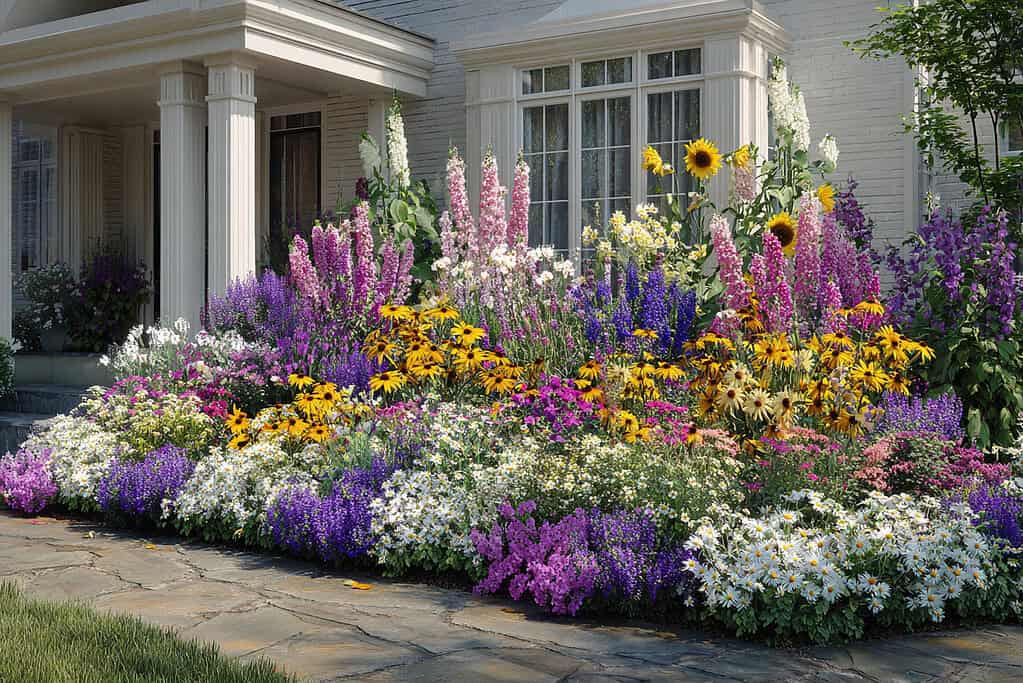
One timeless approach is a layered border flower bed along the front of your house, fence, or walkway.
Layering plants by height creates a rich tapestry of textures and colors, giving the bed a full, established look.
Taller plants go in the back (against your house or along a fence), medium-height blooms in the middle, and low growers in front, naturally drawing the eye and adding depth.
For example, you might plant tall hollyhocks or sunflowers at the back, mid-height perennials like daises or coneflowers in the center, and ground-hugging plants such as creeping phlox or sweet alyssum at the front edge.
This classic arrangement works especially well bordering a front foundation or walkway, softening hard edges with waves of greenery and blooms.
Recommended Low-Maintenance Plants
Choose reliable perennials for each layer so the display returns every year.
Great options include sedum (Stonecrop), black-eyed Susans, coreopsis, lavender, and yarrow, which all thrive with minimal care.
These hardy plants offer long-lasting color and typically only require basic upkeep like occasional deadheading or dividing every few years.
You can tuck a few easy annuals (like marigolds or zinnias) in gaps for extra season-long color, but the perennials will do most of the work.
Care Tips
Prepare the soil well with compost so roots establish deeply (rich soil helps retain moisture and nutrients). Apply a layer of mulch to suppress weeds and conserve moisture, which means less weeding and watering for you.
In colder climates, choose perennials rated for your hardiness zone (such as daylilies or phlox for Zone 4 and up), and in hot dry climates, opt for heat-tolerant varieties (like Russian sage or gaillardia) that won’t fry in full sun.
With the right plant selection, a layered border bed will reward you with a lush, colorful frontage that needs only occasional pruning and watering to stay beautiful.
2. Cottage-Style Flower Bed (Whimsical Charm)
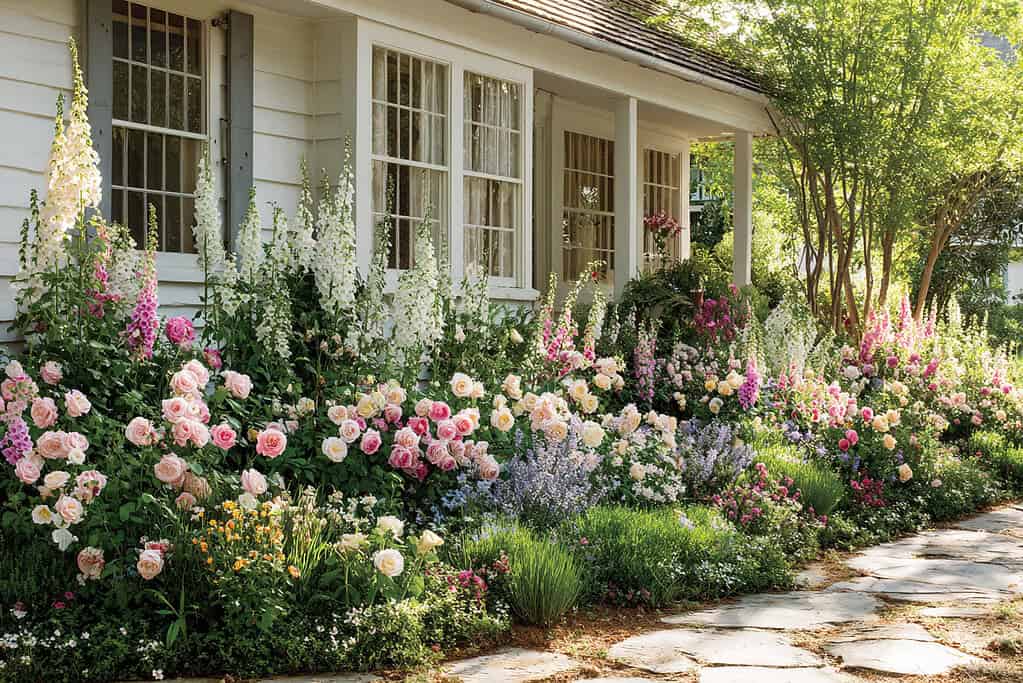
If you love a romantic, overflowing cottage garden look, consider a cottage-style flower bed.
These beds are characterized by a charming jumble of flowers in soft, harmonious colors, often set off by quaint touches like a white picket fence or rustic edging for extra storybook appeal.
To achieve this style, plant old-fashioned favorites closely together: think fragrant roses (shrub or climbing varieties), cheerful daisies, peonies, foxgloves, and sweet peas vining up trellises.
Mix in some height with hollyhocks or delphiniums at the back, and even sprinkle in herbs like sage or lavender which not only fit the cottage aesthetic but also attract pollinators.
The effect is a whimsical tapestry of color and texture, with plants spilling and mingling freely – a look that feels welcoming and nostalgic.
For a complete outdoor retreat, pair your cottage-style flower bed with affordable outdoor patio ideas to create a cozy spot to enjoy your garden without spending a fortune.
Design Aesthetics
The beauty of cottage beds is in their informal, “organized chaos” appearance. Let plants self-sow a bit and don’t worry about strict order; a slightly overgrown look actually enhances the cottage charm.
Incorporate features like a curving stone path, an arbor with climbing roses, or even an antique bench or watering can as decor to reinforce the cozy, lived-in feel.
Low-Maintenance Perks
Surprisingly, a cottage-style bed can be quite low-maintenance. Many cottage perennials (like coneflowers, phlox, and daylilies) are hardy and come back every year with little fuss.
Because the plants are densely packed, they crowd out many weeds for you. You’ll want to deadhead some spent blooms to encourage continuous flowering, but you won’t need to obsess over perfect pruning – these gardens are supposed to be a bit wild and free.
If your climate is very hot or dry, choose cottage-style plants that can handle it (for instance, zinnias or lantana instead of water-loving sweet peas) and water deeply but infrequently to encourage deep roots.
In cooler climates, select cold-hardy cottage staples (like lupines or dianthus) and mulch well to protect roots in winter. With a cottage bed, you get an enchanting, color-filled front yard that largely takes care of itself beyond some seasonal tidy-ups.
3. Native Wildflower Garden (Natural & Eco-Friendly)
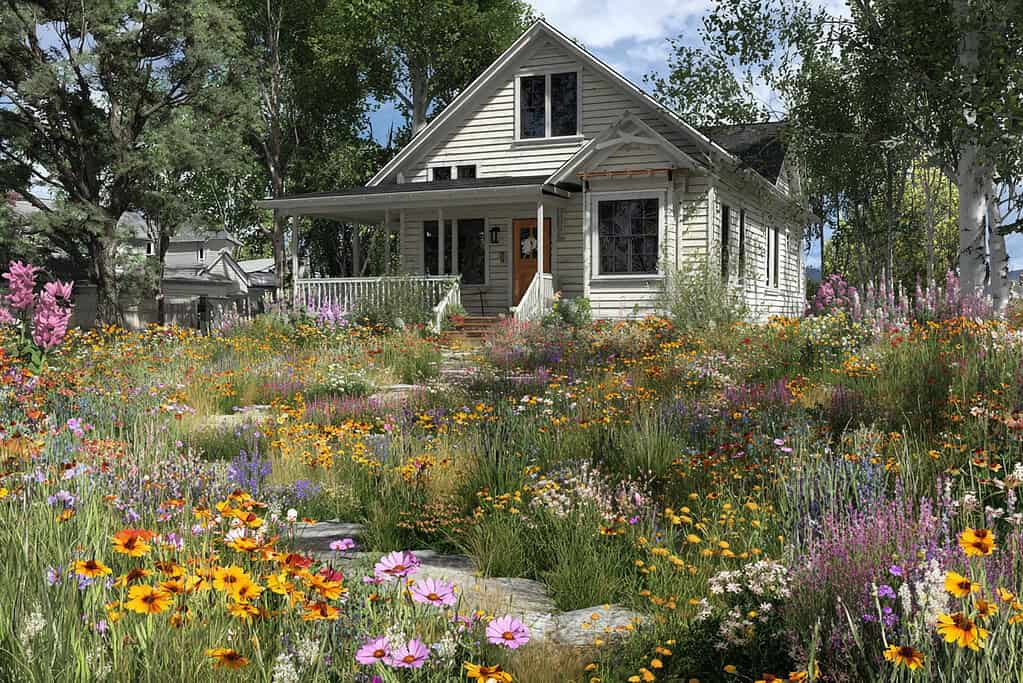
For a front yard that’s both stunning and sustainable, you can’t go wrong with a native wildflower flower bed.
This style embraces the local flora of your region – wildflowers and grasses that occur naturally – to create a meadow-like display that benefits local pollinators and requires minimal care.
An untamed wildflower garden celebrates the natural beauty of native blooms in a relaxed, meadow-inspired arrangement.
Imagine bright black-eyed Susans, purple coneflowers, cheerful blanket flowers, and whimsical bachelor’s buttons swaying together in the breeze.
Because these plants evolved in your area, they’re well adapted to the local climate and soil, meaning they’ll thrive with less water, less fertilizer, and fewer pest problems than fussier non-natives.
Why Natives = Low Maintenance
Native plants are accustomed to your region’s rainfall and temperatures, so they typically won’t need special coddling.
They often have deep root systems that make them drought-tolerant and resilient against extreme weather. They also tend to resist local pests and diseases better, reducing the need for chemical sprays.
Once established, a native wildflower bed might need only occasional weeding and perhaps an annual trim or mow (many gardeners simply cut down the dried stems at the end of the season or in early spring).
Design and Plant Selection
To plan your wildflower bed, you can use seed mixes tailored to your region or plant clusters of nursery-grown natives.
Aim for a natural look – drifts or clumps of each flower rather than rigid rows. Include a mix of bloom times so something is always flowering (e.g., spring bloomers like lupine, summer stars like black-eyed Susan or bee balm, and fall-blooming asters and goldenrod).
You might also mix in native grasses for texture and movement. The result will be an ever-changing tapestry that looks a bit like a piece of wild prairie or countryside right in your front yard.
It’s charming and wildlife-friendly too, supporting bees, butterflies, and birds. Just be sure to choose varieties that stay reasonably compact if your front yard is small – your local extension service or native plant society can recommend the best front-yard-friendly native species for your area.
With the right choices, your wildflower bed will be a low-maintenance showstopper that blends beauty and eco-conscious gardening.
4. Shade-Loving Woodland Bed (Under-Tree Oasis)
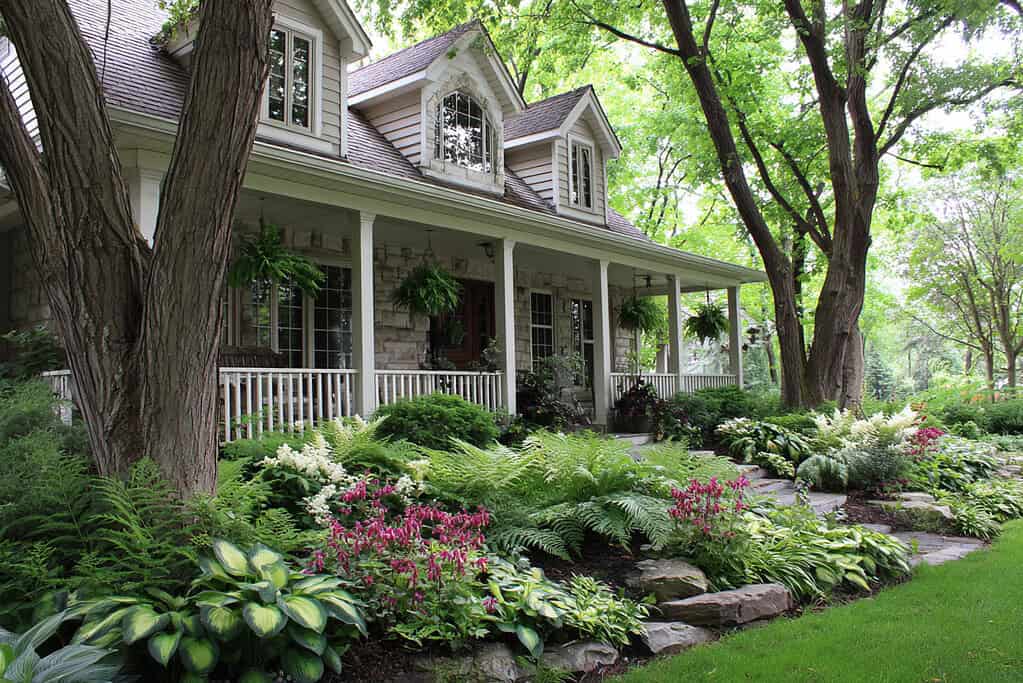
Not every front yard enjoys full sun – many have large trees or shaded porches. But you can still have a stunning flower bed in those shady areas by designing a woodland-inspired shade garden.
Instead of sun-loving blooms, think of lush foliage and pops of color that thrive in partial to full shade. A shady front-yard bed can feel like a calm, green oasis, evoking a woodland retreat right at your doorstep.
Focus on plants known for their beautiful foliage and shade tolerance: hostas with their broad, textured leaves in various greens and blues; delicate ferns that add feathery texture; and coral bells (Heuchera) which offer colorful leaves and tiny flowers.
For blossoms in shade, include astilbe or bleeding hearts (for spring blooms), and maybe some impatiens or begonias for summer color in deeper shade.
You can explore more beautiful shade-loving perennials to find the perfect mix for your woodland bed.
These plants will carpet the ground under trees or along the north side of your house, turning formerly bare, dark spots into a soothing garden space.
Design Tips
Mimic nature by layering your shade plants too. Taller shrubs or small trees that like shade (like azaleas, rhododendrons, or hydrangeas if there’s dappled light) can provide structure at the back.
In front of those, mass some medium-height plants like hostas or ferns. Nearest to the border, low groundcovers such as wild ginger, periwinkle (vinca), or lungwort can edge the bed prettily.
Include elements like a natural stone border, a log or two, or a garden bench to enhance the woodland feel.
A winding flagstone path through a larger shady bed can also invite exploration, if space allows.
Low-Maintenance Care
Shade gardens are often inherently low-maintenance because they demand less watering—shade means cooler soil and reduced evaporation.
To keep it easy, choose predominantly perennial shade plants that come back yearly. Many shade perennials, like hostas and ferns, are very long-lived and spread gradually, filling in space (which means fewer weeds).
They generally only need care like mulch to conserve moisture and maybe dividing every few years if they become too large.
One consideration: if your shade is from trees, those tree roots will compete for water, so give new plantings extra water the first season and use mulch to help them along.
In very cold climates, select shade plants with appropriate hardiness (many ferns and hostas are hardy to Zone 3 or 4).
In very warm climates, ensure some afternoon shade or choose heat-tolerant varieties of ferns and hostas, and remember to water during dry spells since they prefer consistent moisture.
Overall, a shade-loving flower bed can be a peaceful, low-care corner of your front yard, proving you don’t need full sun to have a stunning garden.
5. Drought-Tolerant Succulent or Rock Garden
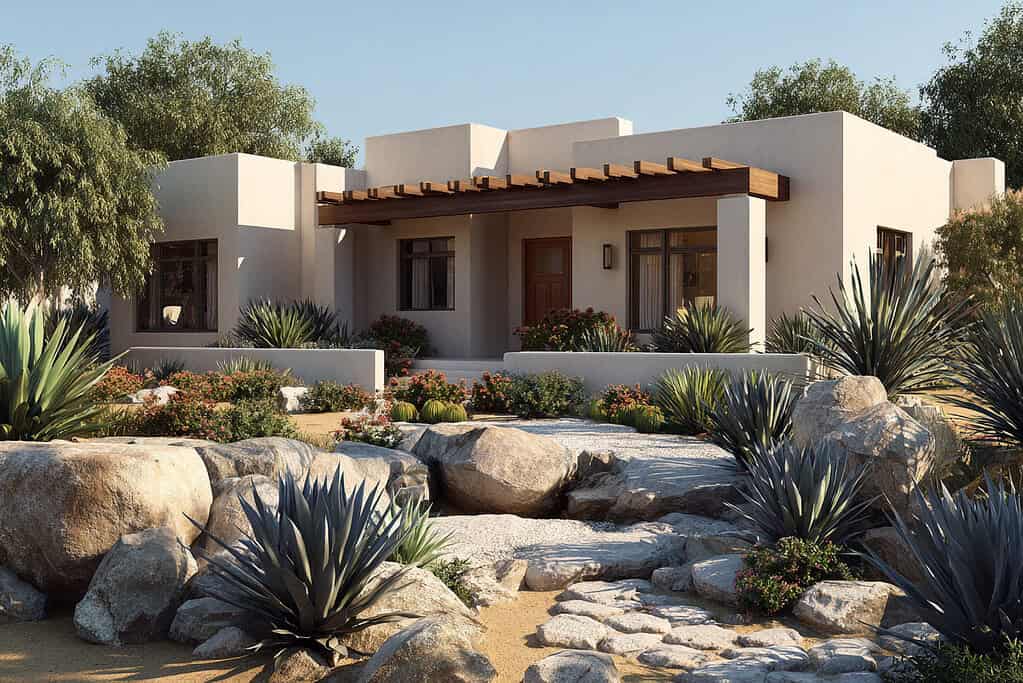
For those in hot, dry climates – or anyone who wants a striking front yard bed that uses very little water – a drought-tolerant garden bed is the way to go.
These beds feature hardy succulents, cacti, and other plants that thrive in arid conditions, often accented by rocks and gravel for a natural desert or Mediterranean vibe.
The aesthetic is one of sculptural simplicity and serene beauty, sometimes called a rock garden or gravel garden design.
Plant a selection of eye-catching succulents such as agave, yucca, sedum, and ice plant, or easy-care natives like sage and lavender that love dry soil. You can even include a few ornamental grasses (like blue fescue or feather grass) for texture among the fleshy succulents.
Explore more vibrant drought-tolerant plants to find the best options for your front yard.
Arrange decorative rocks, pebbles, or a layer of gravel as mulch around the plants to complete the look, which also helps prevent weeds.
The result is an oasis-like front yard bed that looks modern and neat, with silvery greens, blues, and perhaps pops of bloom from hardy desert flowers.
Plants and Features
Choose plants known to thrive on neglect and minimal water. Many succulents and Mediterranean herbs fit this bill. For example, cacti and agaves store water and only need occasional watering in prolonged drought.
Sedum (stonecrop) and ice plant will spread to cover ground and burst into bright pink, yellow, or purple blooms in season, all while handling heat and poor soil. Lavender and rosemary are flowering shrubs that prefer it on the dry side and bring color and fragrance.
When planting, ensure excellent drainage (for instance, by mounding soil or using a gravelly soil mix) so that any rare heavy rain doesn’t waterlog your succulents.
You can also incorporate a dry stream bed with pebbles or a few larger boulders for a naturalistic touch. These not only look great but reduce the area that needs watering.
Minimal Maintenance
A drought-tolerant bed is about as low-maintenance as it gets.
After establishing the plants (which might need a bit of regular watering in the first few weeks until their roots take hold), your ongoing chores are few.
Water sparingly – often normal rainfall is enough, and overwatering is more a concern than underwatering for these plants. You’ll also notice fewer weeds, since the gravel mulch and dry conditions discourage them.
If you live in a wet or cold climate but love this look, consider adapting it: choose tough perennials like Russian sage, yarrow, or echinacea that like well-drained soil, and still use rocks and gravel for style.
Just be prepared to amend soil for drainage if you get a lot of rain. In frost-prone areas, select cold-hardy succulents (many sedums and sempervivums survive deep freezes) or be ready to cover/protect more tender cacti in winter.
With the right plant choices, your front yard rock garden will remain a beautiful, worry-free zone, even when the weather is scorching or you’re too busy to water.
6. Raised Flower Bed for Easy Care and Structure
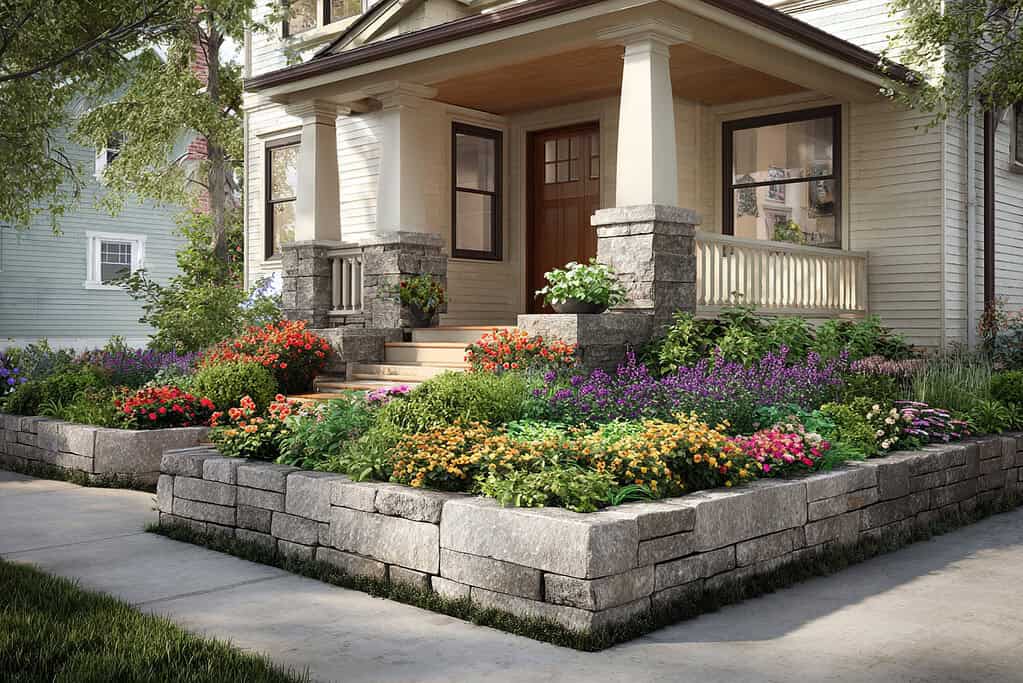
Give your front yard a bit of architectural flair (and make gardening easier on yourself) by installing a raised flower bed.
Raised beds are essentially large container gardens built right on your front yard: think of a framed bed made of wood timbers, stone blocks, or brick, filled with soil and lush plantings. They add height and definition to your landscape, instantly drawing the eye.
A raised bed can be a focal point in an open yard or provide a clean, structured edge along your house. Besides looks, raised beds have practical benefits: improved soil drainage, less soil compaction, and easier access for planting and weeding (since they’re higher off the ground).
This makes maintenance a breeze and is especially useful if your native soil is poor or if you get heavy rains that tend to waterlog plants.
Design Ideas
Match the style of your raised bed materials to your home for a cohesive look. For a classic home, you might use red brick or natural stone for a timeless feel.
For a cottage or farmhouse, wooden beds made from cedar or rustic logs could complement nicely. Modern home? Try sleek metal or painted wood for a contemporary take. The shape can be anything from a simple rectangle to curved or tiered beds for added flair.
Once built, fill the bed with quality soil mix (rich in compost for fertility and some sand or perlite for drainage). Then plant it just as you would any flower bed – tall plants in the center or back, trailing ones spilling over the sides for a lovely effect, and so on.
Raised beds are great for mixed planting: combine small shrubs, perennials, and annuals freely. For example, a raised bed by the front porch could have a dwarf evergreen in the middle for year-round structure, surrounded by mounding perennials like daylilies or salvia, and edged with seasonal annuals for color.
Maintenance Perks
Because you control the soil contents, you can avoid many issues like poor fertility or improper pH, meaning plants will grow healthier with less fuss.
The raised height means fewer weeds (and those that do sprout are easier to spot and pull) and simpler pest control. It’s also easier on your back and knees since you won’t have to bend as far to tend the plants.
In wet climates, raised beds ensure your flowers’ roots never sit in waterlogged soil, preventing rot. In dry climates, raised beds can be edged with water-efficient drip irrigation or simply watered by hand more efficiently right at the plant bases.
One tip: raised beds can dry out faster in hot weather, so mulch and occasional deep watering are important. But overall, a well-planned raised front yard bed will be a showpiece that’s both gardener-friendly and attractive year-round.
7. Classic Foundation Plantings with Evergreens and Flowers
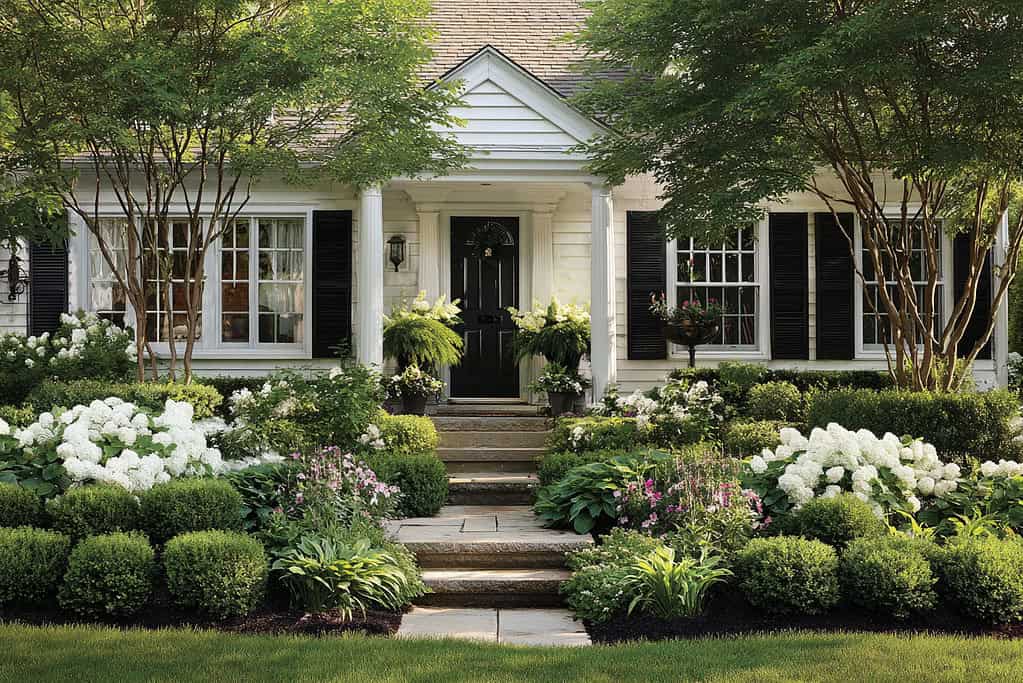
For a timeless front-of-house look, design a flower bed that combines evergreen shrubs with flowering plants.
Often used along the front foundation of a house or to flank an entryway, this idea gives you the best of both worlds: evergreen plants (like boxwoods, hollies, or junipers) that provide year-round green structure, and perennial or seasonal flowers that add pops of color and softness.
The evergreen shrubs act as the “bones” of the landscape – they’ll look neat even in winter – while the flowers and ornamentals bring curb appeal throughout the growing season.
A classic example is a row of low boxwood shrubs or dwarf hollies lining the house, with colorful blooms like roses, hydrangeas, or lavender planted in front and between them.
This layered effect is very traditional and appealing, instantly boosting that manicured, well-designed vibe of your home’s exterior.
Design and Plant Selection
Symmetry often plays a role in classic foundation beds. You might plant evergreens at the corners of your house or entry (for instance, a pair of conical dwarf spruce or ornamental trees), then a balanced arrangement of shrubs and perennials along the wall.
Choose compact or slow-growing evergreen varieties so they don’t require constant pruning – for example, dwarf boxwood or globe arborvitae that naturally keep a tidy shape.
In front of or between evergreens, add forgiving perennials like daylilies, sage, or heuchera, or flowering shrubs like knockout roses or reblooming hydrangeas for summer color.
You can also incorporate annuals for a continuous border of color (impatiens or begonias in shade, petunias or marigolds in sun).
Don’t forget to consider foliage contrast: the deep green of evergreens pairs well with silvery leaves of lavender or the blue-green of hostas, for example.
The overall look should complement your house style – formal layouts with straight lines suit traditional or colonial homes, while looser groupings fit a cottage or ranch-style home.
Low-Maintenance Strategy
The combination of evergreens and perennials is inherently low-maintenance if you plan it right. Evergreens, once established, need very little care – maybe light trimming once a year or just every few years if you chose dwarf types.
Perennials like the ones mentioned will come back each year; just cut them back in fall or early spring. To keep it simple, group plants with similar needs (sun vs. shade, moist vs. dry soil) so you can water and care for them en masse.
For example, plant sun-loving, drought-tolerant lavenders and sages together away from thirstier plants like hydrangeas. Use mulch around the shrubs and flowers to reduce weeds and help soil moisture.
If you have a porch or pathway, this design can be extended to those areas too: put an evergreen on either side of the steps and surround it with flowering bedding plants to welcome guests.
The result is a classic, elegant front yard bed that retains structure all year and shines with color in the growing season, with maintenance largely limited to seasonal pruning and the occasional watering in dry spells.
8. Welcoming Entryway and Walkway Beds

The journey to your front door can be just as delightful as the destination with a flower bed lining your entry path or driveway.
Curved flower beds along a front walk create a friendly, inviting atmosphere and guide visitors right to your door with natural beauty.
Instead of hard, straight edges, designing your flower bed with soft curves alongside a walkway can soften the overall look of your front yard and add visual interest.
For instance, if you have a front walk from the driveway, you can border one or both sides of it with gently curving beds filled with colorful plants.
This not only adds tons of curb appeal but also makes arriving at your home feel like strolling through a small garden.
Design Elements
Start by planning a path if you don’t already have one – it could be stepping stones, brick, pavers, or even a simple gravel path leading to your front door. Then, design the adjacent bed(s) to complement it.
A classic approach is to put taller plants or even small trees toward the back of the bed (nearest the house or walkway curve apex) and lower plants near the path edge so they don’t overwhelm the walkway.
For example, along a path you might use flowering shrubs like hydrangeas or roses set slightly further back, with lower mounding perennials like salvia, Russian sage, or nepeta in front of them, and finally a border of creeping plants like thyme or blue star creeper right near the path to give a tidy edge.
This layering ensures an interesting mix of heights and continuous blooms. If space allows, consider planting on both sides of a path to create an immersive floral walkway (just be mindful to leave enough room to walk without brushing into prickly or bee-attracting plants too much).
Additionally, you can incorporate features like solar pathway lights among the plants, or a low decorative fence if you want a more formal separation between path and garden.
Plant Choices and Care
Some great plants for entryway beds include daylilies or dwarf lilies (sturdy and colorful), petunias or geraniums for season-long color, hostas or ferns if it’s a shaded path, and evergreen shrubs for year-round structure (like dwarf azaleas or boxwood balls).
Fragrant plants are a wonderful touch by a front walk – think lavender, roses, or gardenias (if your climate permits) so guests get a gentle scent as they approach your door.
Maintenance-wise, walkway beds benefit from the same general low-maintenance tactics: use mulch to keep weeds down and moisture in, pick mostly perennials and shrubs that won’t need replanting each year, and group plants by their sun and water needs.
If your region is very hot, ensure walkway plants can handle the heat radiating off pavement (succulents or heat-loving annuals like vinca are good for that).
In colder zones, choose hardy varieties and consider lining the path with spring bulbs like tulips or daffodils that can pop up for an early show of color after winter.
Properly planned, an entryway flower bed will be high-impact yet easy-care, making every homecoming a pleasure for you and a delight for visitors.
9. Monochromatic or Color-Themed Flower Bed

For an eye-catching and sophisticated front yard statement, try designing a flower bed around a tight color scheme.
A monochromatic bed (using different shades of a single color) or a limited palette (two to three complementary colors) can look incredibly elegant and intentional.
For example, imagine a “pink and purple” garden filled with lavender, pink roses (see our list of stunning pink flowers for inspiration), purple salvia, and lilac asters, all blooming together for a coordinated sea of color.
Or a pure white garden in front of a darker-colored house can really pop—think white roses, white impatiens, dusty miller, and silver Artemisia foliage for contrast.
By focusing on a consistent color theme, you create unity in the design that is immediately pleasing to the eye.
An added bonus: if you limit the plant varieties, maintenance can actually be easier since you can mass one or a few types of plants rather than many different ones.
Design Strategy
Start by picking a color you love or one that complements your house’s exterior (for instance, shades of blue and purple flowers against a yellow house, or warm oranges and yellows to brighten a gray stone facade).
Then select mostly plants that bloom in that color range. You can vary the heights and types of plants for interest—mix spiky flowers like liatris with mounded ones like marigolds, and some airy ones like gaura, for instance, but keep to your color theme.
Foliage can serve as a color too: silver, burgundy, or variegated leaves can enhance a theme (e.g., deep burgundy coral bells in a bed of red and pink flowers). Using repetition is key in color-themed beds: plant in groups or swaths of the same color for more impact, rather than dotting single plants.
In fact, a mass planting of one type of plant can be very striking and tidy.
Landscape designers often repeat a single shrub or perennial many times for a clean, cohesive look – for example, a row of blue flowering catmint along the entire bed, with a backdrop of white roses, achieves a simple two-color scheme that looks classic and is easy to maintain (since catmint is a hardy perennial and roses can be chosen in easy-care varieties).
Edging the bed with a uniform material (stone, metal, or even a trim of low plants like lamb’s ear) will further reinforce the clean lines of the design.
Maintenance Benefits
Limiting your palette often means limiting the number of different species, which can simplify care. If you pick plants with similar needs, you can water and fertilize them on the same schedule.
A monochromatic bed might also mean you’re using a lot of one proven performer in your area (for instance, if purple is your theme, maybe you rely heavily on lavender or salvia which are both tough, drought-tolerant perennials).
Large swaths of the same groundcover or perennial will cover soil efficiently, reducing weeds (as opposed to many small gaps between diverse plants). To keep a color garden looking its best, deadhead the spent flowers (especially in a one-color display, browned flowers will stand out – for example, removing spent blooms from white petunias keeps it fresh).
Also, pay attention to bloom times: if all your chosen plants bloom simultaneously and then nothing, the effect will fizzle. Try to have a mix so that as one plant’s peak ends, another’s begins, or plan to swap in some annuals mid-season.
For instance, a spring white bed could have tulips and white daffodils, then transition to summer white daisies and petunias, then mums or pansies in fall.
Overall, a color-themed flower bed is a chance to express your style and create a designer look with little more effort than a conventional bed – and it’s sure to make your front yard stand out.
10. Vertical Accents with Climbing Flowers
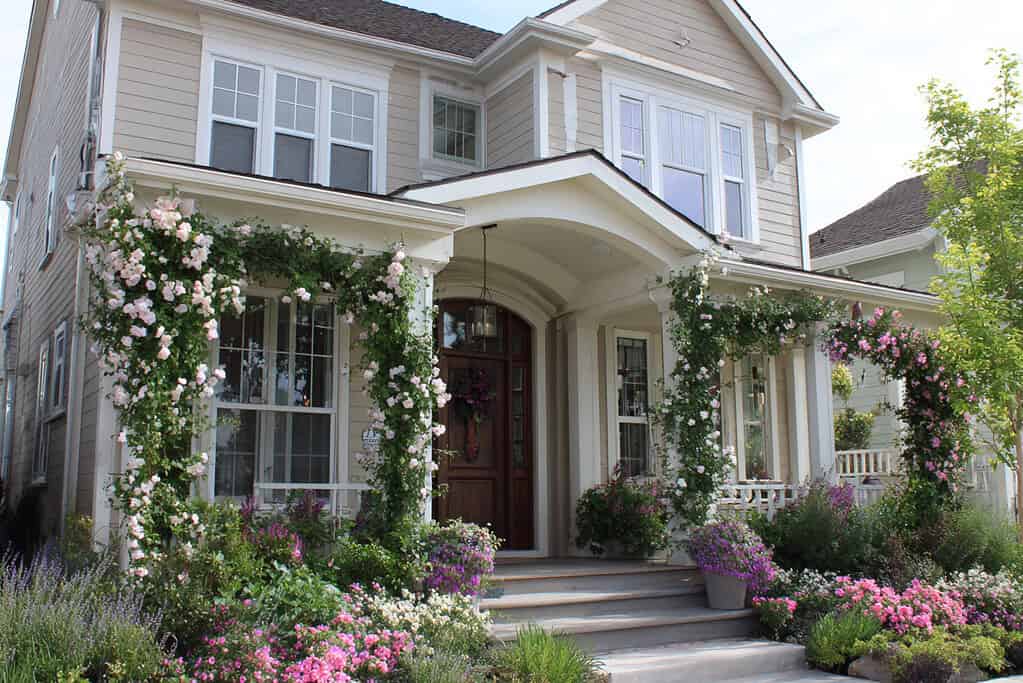
Don’t forget to look upwards in your front yard design! Incorporating climbing plants on an arbor, trellis, or along your porch can turn a simple flower bed into a vertical garden showpiece.
Climbers like climbing roses, clematis, jasmine, or morning glories can be trained to grow up supports, adding height and enchantment to the front of your house.
For example, you might install a pretty arch or arbor over the start of your front walk and plant a climbing rose at its base, creating a flowering gateway to your home.
Or place a trellis on a blank wall by your entrance and let a fragrant jasmine or vibrant clematis twine its way upward. The base of these climbers can be surrounded by a small flower bed, essentially combining a vertical element with a traditional bed.
The result is a lush, dynamic display that draws the eye up and can even provide a bit of shade or privacy if needed (like vines on a pergola by a front patio).
Classic Climbers and Their Care
Climbing plants can suit both cottagey and classic formal styles. A cottage front yard wouldn’t be complete without a heirloom climbing rose or a cascade of clematis blooms. More modern design? Try a sleek trellis with evergreen ivy or fragrant star jasmine for a cleaner look.
When choosing a climber, consider your climate and structure. For cold climates, hardy clematis and climbing roses (like the famous Zephirine Drouhin rose, which is thornless and shade-tolerant) are good choices. In warm regions, bougainvillea or mandevilla vine might flourish and give tropical flair.
Make sure you have a sturdy support – a mature climbing rose, for instance, can get heavy. Plant the climber in well-prepared soil at the base; many will benefit from some compost and a good watering schedule their first year as they establish.
Once they take off, most climbers are fairly self-sufficient. Pruning is usually the main maintenance: for example, clematis vines get trimmed annually in late winter (how much depends on the variety), and climbing roses are pruned and tied back after their bloom flush.
This annual task pays off with a flush of flowers year after year.
Design Integration
To make a climbing feature look intentional, integrate it with the surrounding flower bed. You could plant complementary flowers at the climber’s base – for instance, purple clematis growing up a white trellis with pink peonies and catmint in the bed below for a romantic palette.
Or perhaps a wrought-iron trellis against the house with climbing jasmine, underplanted with white impatiens and ferns for a classic green-and-white shady nook by the porch.
Climbers also pair well with entryway plantings – a vine framing the front door or twining around porch columns instantly boosts charm. And here’s a secret to low maintenance with climbers: choose the right vine for the right place, so you aren’t constantly reining it in.
Some vines like wisteria or trumpet vine can grow very aggressively (beautiful, but a lot of work to prune); if “low maintenance” is the goal, opt for tamer climbers like some modern climbing roses, clematis, or slow-growing evergreen vines.
With minimal care – mostly guiding their tendrils and a once-a-year trim – climbing plants will add a vertical burst of color and character to your front-of-house flower beds, making your home’s facade truly memorable.
Flourishing Front Yards Made Easy
Transforming the front of your house with stunning flower beds is entirely achievable without a full-time gardening commitment.
Remember that a beautiful garden is meant to be enjoyed, not labored over every day.
Tactics like mulching to suppress weeds, using drought-tolerant plants or shade-loving plants where appropriate, and creating simple structures like raised beds or trellises all help reduce maintenance while enhancing visual appeal.
Whether you adore the fairy-tale look of a cottage garden, the clean lines of a modern bed, or the ecological benefits of a native wildflower patch, there’s a low-maintenance idea here to inspire you.
Soon you’ll be coming home to a front yard that makes you smile, and your neighbors might be asking for your secret to such a gorgeous yet easy-care garden.
Enjoy your blooming, beautiful front yard – it’s sure to brighten the whole neighborhood!
FAQs
How do I choose plants for my front yard flower beds?
Start by considering your climate, sun exposure, soil type, and how much maintenance you want to do. Choose hardy perennials for low upkeep, and mix in a few annuals for extra seasonal color. Group plants by height, bloom time, and water needs for the best visual impact.
How much maintenance do front yard flower beds really need?
With thoughtful plant selection and design, maintenance can be minimal. Most perennials need occasional deadheading, pruning, and seasonal trimming. Mulch helps with weed control and moisture retention, cutting down on daily chores.
Can I grow a flower bed in a shady front yard?
Absolutely! Shade-loving plants like hostas, ferns, coral bells, and astilbes thrive in partial or full shade. Layering them and adding small shrubs or low trees can create a woodland-inspired oasis that’s low-maintenance and visually appealing.
What’s the easiest flower bed style for beginners?
Layered perennial borders, native wildflower beds, and raised beds are beginner-friendly. They require less precise care, are forgiving if plants are crowded, and generally return year after year without constant attention.
How can I make my flower beds look good year-round?
Combine evergreens for structure with perennials and seasonal flowers for pops of color. Using plants with different bloom times, textures, and foliage colors keeps your bed attractive in every season. Mulch and occasional maintenance complete the picture.
Ready To Transform Your Garden?

Are you looking for the best way to layout your garden beds? Maybe you're feeling a bit stuck on how to make the most of your space?
We’ve got you covered! Check out our 101+ Garden Bed Layout Ideas for your next raised bed project. This guide is filled with creative and practical ideas that can help you design a garden that fits your style, whether you’re just starting out or have been gardening for years.
Get your copy today and get inspired to bring your gardening dreams to life.