If you’ve got a bunch of apples sitting around and don’t want them to go to waste, canning applesauce is one of the simplest ways to put them to good use.
It’s easy, it stores well, and you don’t need anything fancy to get started.
Whether you’re just starting out in canning (see this guide on canning for beginners) or you’ve been canning a while and need a refresher, this guide walks you through the whole thing from start to finish.
I’ll cover the safe methods, optional tweaks, and real-world tips you actually need – no gimmicks, just what works in a real home kitchen.
How to Can Applesauce
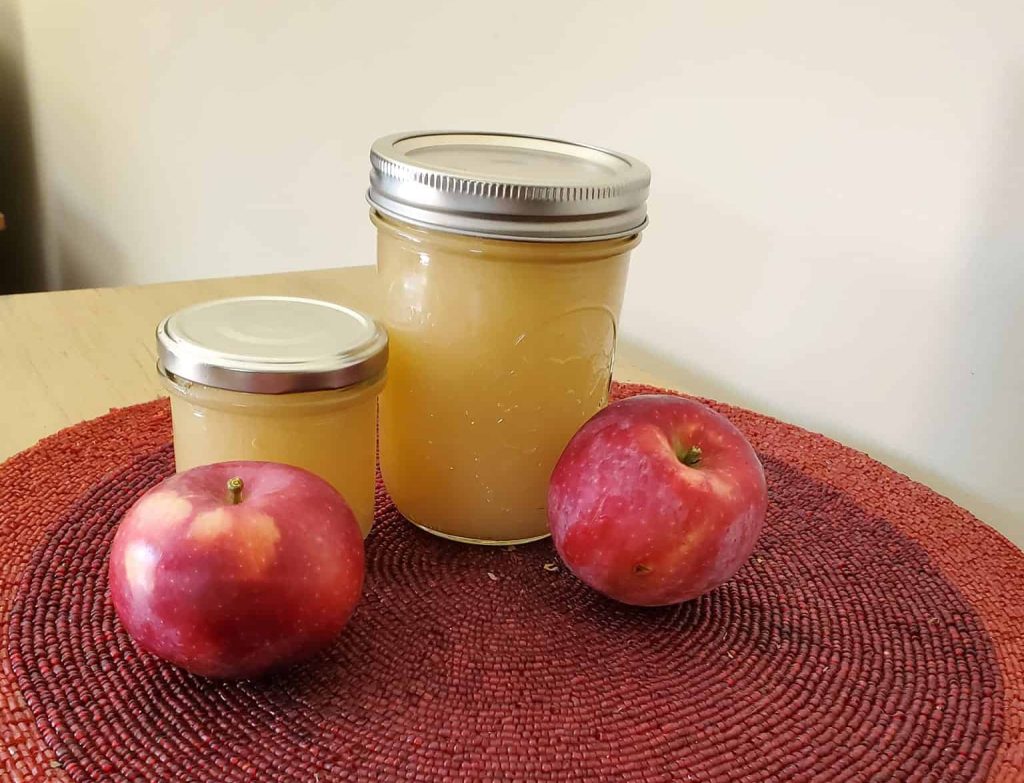
Never canned anything before? No problem.
This method walks you through everything – from prepping the apples to sealing the jars. For more detailed safety guidelines, you can also check the National Center for Home Food Preservation.
Let’s get into it.
1. Choosing Apples for Canning Applesauce

For safe, high-quality applesauce, start with firm, mature apples. They don’t need to look perfect – misshapen apples or those with minor bruises are fine, as long as you trim away any damaged spots.
Do not use apples that are rotten, moldy, or worm-infested. Also avoid “drops” (apples that have fallen to the ground), since they may carry harmful bacteria that can survive canning.
For the best flavor, mix different apple varieties. A blend of sweet apples (like Fuji, Gala, or Golden Delicious) with some tart apples (like Granny Smith or McIntosh) gives a balanced sauce.
This is a matter of taste – sweetness and texture will vary, but safety is not affected.
Need more info on home canning?
I’ve put together a whole series of step-by-step guides to help you fill your shelves:
Quick Reference: Yield Guide
Wondering how many apples you’ll need? Here’s a handy rule of thumb from tested recipes:
- 3 pounds of apples = about 1 quart of applesauce
- 21 pounds of apples = about 7 quarts of applesauce (a full canner load)
- 1 bushel (about 48 pounds) = 14–19 quarts of applesauce
This way you can scale your batch up or down depending on how many apples you have on hand.
Garden Planner
The 22-page planner timed to your county's real frost dates. Planting windows, monthly checklists, and a harvest log you'll fill with pride by August.
Your Free 22-Page Garden Planner
Built for your exact ZIP code — planting dates, harvest log, and a month-by-month plan. 15-second sign-up.
2. Preparing Apples for Cooking

Wash, Peel, and Core
Rinse apples thoroughly under running water (especially if they’re freshly picked) to remove dirt or residue. Then peel and core each apple.
Prevent Browning (Optional but Helpful)
To maintain the bright color of your apples if you’re prepping in batches, slice them into a bath of cold water with a small dash of ascorbic acid or lemon juice. This helps prevent browning.
Using a Food Mill or Sieve
If you have a food mill or fine sieve, you can cook apples with their skins on and run the softened mixture through the equipment later.
This can save time on peeling and add extra flavor and nutrients – but note that the official method still recommends peeling.
For Chunky Applesauce
If you prefer a chunky texture and don’t have a food mill, peel the apples to avoid pieces of skin in the final product. Unpeeled skins may remain chewy.
Bonus Tip (Optional Craft Use): If you like making use of everything, save cores and peels for homemade vinegar or compost – but keep in mind this isn’t part of tested canning procedures.
3. Cooking the Apples

After washing, peeling, coring (and optionally slicing into ascorbic‑acid water to prevent browning), move the drained apple slices to a large 8– to 10‑quart pot.
Add ½ cup water – just enough to prevent sticking and scorching while cooking.
Bring the mixture to heat, stirring occasionally to avoid burning.
Cook quickly until the apples are tender, typically 5 to 20 minutes, depending on the apple variety and how ripe or firm they are.
Miss it by a week and you lose the crop. The free 22-page planner pins down your exact dates — last frost, first frost, and the weekly steps between — so you plant on the days that actually work for your ZIP.
4. Achieving Your Preferred Applesauce Texture
Once the apples are tender, decide what texture you’d like your finished sauce to have:
- Smooth sauce: Press the hot apples through a sieve or food mill. This removes skins and seeds while giving you a uniform texture.
- Chunky sauce: Skip the pressing step and simply stir or lightly mash the softened apples with a potato masher. If you didn’t peel the apples first, pressing is strongly recommended—skins stay tough in chunky sauce.
Optional Adjustments:
- If you want added sweetness, stir in about 1/8 cup sugar per quart of sauce, tasting and adjusting as needed. This is for flavor only – sugar is not required for safety.
- If your applesauce seems extremely thick, you may add a small splash of water to make it easier to ladle into jars, but avoid over-thinning. Applesauce should stay thick enough to mound on a spoon.
Free Planting Guides for This Article
Get exact planting dates, frost schedules, and growing tips for your zone:
5. Reheating Before Packing
Once your applesauce is at the texture and flavor you like, return it to a boil before filling jars.
- This step ensures the sauce is hot enough for safe canning and helps drive out trapped air.
- Keep the applesauce at a gentle boil while you ladle it into jars so the temperature stays consistent.
Best gardening planner I've used in 10 years — and I keep coming back to it every season.
6. Preparing for the Canning Process
Before filling jars, take a few minutes to get your equipment and workspace ready. This helps the canning process go smoothly and prevents safety issues.
Tools You’ll Need
- Canning jars (pints or quarts)
- New 2-piece lids (flats and bands)
- Large boiling-water canner with rack
- Jar lifter
- Wide-mouth funnel
- Ladle
- Bubble remover (plastic spatula or other non-metallic tool)
- Clean cloth or paper towel for wiping rims
- Towels or heat-safe surface for cooling jars
Preparing the Jars
- Wash jars, lids, and bands in hot, soapy water. Rinse well.
- Keep jars hot until use by leaving them in simmering water (about 180°F) or in a hot dishwasher. This prevents thermal shock when filling with boiling applesauce.
- Because applesauce will be processed for 15–25 minutes, you do not need to sterilize jars separately.
Filling Jars
- Make sure your applesauce is hot before filling jars (this is a hot-pack recipe).
- Use a funnel and ladle to fill jars, leaving ½-inch headspace.
- Slide a plastic spatula or bubble remover down the inside of the jar to release trapped air.
- Wipe jar rims with a clean, damp cloth to ensure a good seal.
- Apply lids and screw bands fingertip-tight – just until you feel resistance, then give a gentle twist.
Keep jars hot and work steadily, one at a time, to avoid temperature swings that can cause siphoning or broken jars.here.
7. The Water Bath Canning Process (Step-by-Step)
Applesauce is a high-acid fruit product, so it’s safely preserved using water bath canning with a boiling-water bath canner.
Follow these tested steps from NCHFP:
a. Fill your canner or large pot with water.
Fill your boiling-water canner with enough water to cover the jars by at least 1–2 inches. Place a rack in the bottom.
b. Preheat the water to about 180°F.
Keep water at a simmer (about 180°F) while you fill and seal the jars. (This is important for hot-packed foods like applesauce.)
c. Load your filled jars into the canner.
Using a jar lifter, lower hot, filled jars into the canner. Keep jars upright and spaced slightly apart.
d. Ensure full coverage.
The water level should be at least 1 inch above jar tops. Add boiling water if needed.
e. Bring to a rolling boil.
Cover the canner, turn up the heat, and once the water reaches a full rolling boil, start timing the process.
f. Process the jars.
Use the following boiling-water canning times, adjusting for both jar size and elevation:
Pints (Hot Pack):
- 0–1,000 ft: 15 minutes
- 1,001–3,000 ft: 20 minutes
- 3,001–6,000 ft: 20 minutes
- Above 6,000 ft: 25 minutes
Quarts (Hot Pack):
- 0–1,000 ft: 20 minutes
- 1,001–3,000 ft: 25 minutes
- 3,001–6,000 ft: 30 minutes
- Above 6,000 ft: 35 minutes
(Times are from the USDA/NCHFP tested recipe for applesauce. Processing times are the same whether or not sugar is added.)
g. Cooling period.
When time is up, turn off the heat and remove the canner lid. Let jars sit in the hot water for 5 minutes before lifting them out.
h. Remove and cool.
Place them upright on a towel or heat-safe surface. Don’t tilt or wipe them while they’re hot.
- Beans
- Carrots
- Beets
- Lettuce
- Spinach
- Brassicas
How Hard Is It to Garden in Your County?
Every county has a unique Gardening Difficulty Score based on frost risk, soil quality, drought, altitude, and climate trends. Find yours — plus personalized frost dates, planting calendars, and soil data.
Check Your County's Score →Testing Seals & Storing Jars
After your jars have cooled for 12–24 hours, it’s time to check the seals:
- Press down in the center of each lid. A sealed jar will feel firm and won’t flex up and down.
- If a jar didn’t seal, put it in the refrigerator and use within a week, or reprocess it within 24 hours using a new lid.
Storage Guidelines:
- Store sealed jars in a cool, dark place.
- For best quality, use within 12 months.
- Properly canned applesauce may last 12–18 months, but flavor and texture are best in the first year.
- Once opened, refrigerate and enjoy within 7–10 days.
Small-Batch or Freezer Option
If you don’t want to can your applesauce – or you’ve just made a small batch – freezing is a safe and simple alternative.
To use, thaw applesauce in the refrigerator and stir well before serving.
- Cool the applesauce completely before freezing.
- Pack into rigid freezer containers, wide-mouth freezer-safe jars, or heavy-duty freezer bags. Avoid narrow jars, which can crack.
- Leave proper headspace to allow for expansion: ½ inch for pints, 1 inch for quarts.
- Label each container with the date and contents.
- Store in the freezer for up to 8–12 months for best quality. It will remain safe beyond that but may lose flavor and texture.
Make Your Own Applesauce Today!

Canning applesauce doesn’t need to be complicated or intimidating. Once you get through the first batch, the process starts to feel like second nature.
Whether you’ve got a bushel of apples or just a basket from the backyard, putting up jars of applesauce is one of the most useful ways to keep that fruit from going to waste.
Stick with clean tools, follow the water bath method, and adjust your flavors however you like.
You’ll end up with something that tastes better than anything off a store shelf – and you’ll know exactly what’s in it.
Whether you’re feeding kids, stocking the pantry, or just want to get more from your harvest, applesauce is a good place to start.
Have you tried making homemade applesauce before? Share your tips or questions in the comments below – I’d love to hear from you!
FAQs
1. Can I use apples that have bruises or soft spots?
Yes, as long as the apples aren’t rotten or moldy. Cut off the bad spots and use the rest. Don’t use wormy apples or ones that have been on the ground more than a day.
2. Do I really need to add lemon juice or sugar?
Nope. Applesauce is naturally acidic and safe for canning without lemon juice or sugar. Lemon juice is just for flavor and color. Sugar is completely optional.
3. How do I know if my applesauce is too thick or thin for canning?
If it’s very thick and clumpy, stir in a little water to thin it. This helps reduce trapped air and prevents siphoning during the canning process. Avoid starting with too much water, though.
4. What if my jars didn’t seal properly?
If a jar didn’t seal, put it in the fridge and use it within a week. Or you can reprocess it within 24 hours using a new lid and the full canning time.
5. Can I safely can applesauce without peeling the apples?
Yes. If you’re using a food mill or strainer, there’s no need to peel. The skins will be filtered out during puréeing, and you’ll keep more flavor and nutrients.
Level Up Your Garden
Our most popular gardening guides