
Clematis has a way of making a yard feel romantic without trying too hard. One season it is a delicate green vine. The next, it is covered in star shaped blooms climbing confidently toward the sun.
If you have ever admired a flowering wall or a cottage style arbor wrapped in blooms, there is a good chance you were looking at clematis.
In this guide, we will explore 10 charming clematis trellis ideas you can recreate in your own yard.
Whether you have a small suburban backyard, a homestead garden, or a cozy patio space, these ideas will help you showcase clematis beautifully while improving your overall landscape design.
If you're exploring vertical gardening in general, you may also enjoy these trellis ideas for privacy to create living screens that feel both functional and beautiful.
Why Clematis Is Perfect for Trellis Growing
Before we dive into the ideas, let’s talk about why clematis and trellises work so well together.
Clematis is a climbing vine that uses leaf stems to wrap around supports. It thrives when given structure. A trellis not only supports healthy growth but also:
- Maximizes vertical space
- Improves air circulation
- Makes pruning easier
- Turns plain areas into focal points
- Adds privacy without bulky shrubs
Clematis prefers full sun for blooms and cool, shaded roots. A well placed trellis allows you to meet both needs easily.
If you are choosing your structure carefully, browse our top-rated trellis for climbers to help you find sturdy options that support long term growth.
10 Charming Clematis Trellis Ideas
Now let’s explore the most charming ways to use trellises in your yard.
1. Classic Garden Arch Trellis
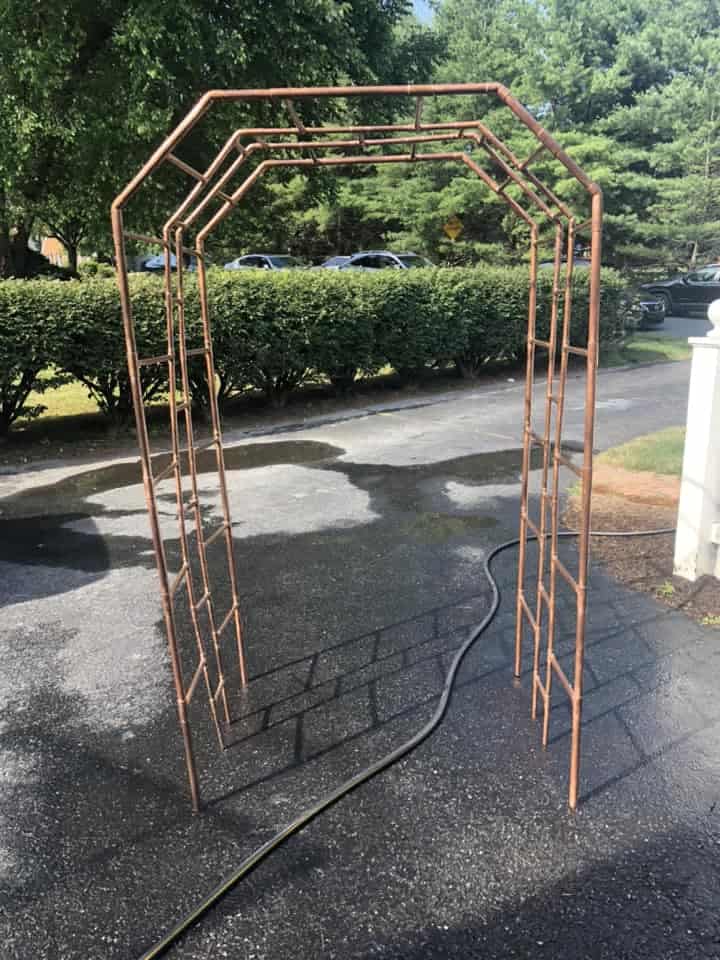
A metal garden arbor arch instantly creates structure and drama in your yard.
With clean lines and an open frame, this style gives clematis plenty of narrow bars to climb while maintaining a light, airy look. As the vine grows, it softens the metal structure and eventually forms a blooming canopy overhead.
This style works beautifully for:
- Entryways to garden paths
- Framing walkways
- Creating transitions between garden “rooms”
- Highlighting a focal point in the yard
Metal arches are especially practical because they:
- Are durable and weather resistant
- Support heavier mature clematis growth
- Require little maintenance
- Provide strong anchoring in the ground
Choose a variety that grows 8 to 12 feet tall so it can fully cover the arch over time. Once established, the effect feels romantic, architectural, and intentionally designed.
2. Wooden Fence Panel Trellis
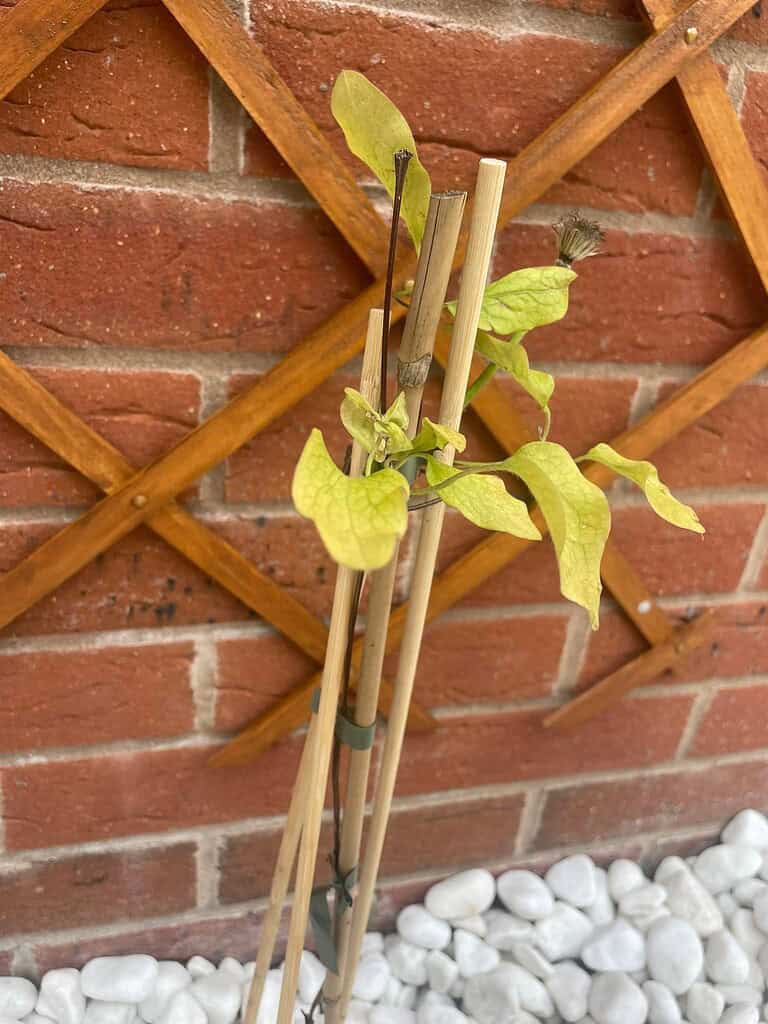
A plain fence can feel flat and harsh. Clematis softens it beautifully.
Attach a decorative lattice or narrow slatted panel to your existing fence. This gives the vine something thin enough to grab onto. As it grows, it transforms a simple boundary into a living backdrop.
This idea works especially well in:
- Small suburban yards
- Side yard spaces
- Backdrops behind garden beds
Plant two or three clematis varieties for layered bloom times. That way, your fence stays interesting from spring through late summer.
If you enjoy training climbers along fences, you may also like learning how to grow star jasmine on a trellis for evergreen fragrance and coverage.
3. DIY Bamboo Obelisk Trellis
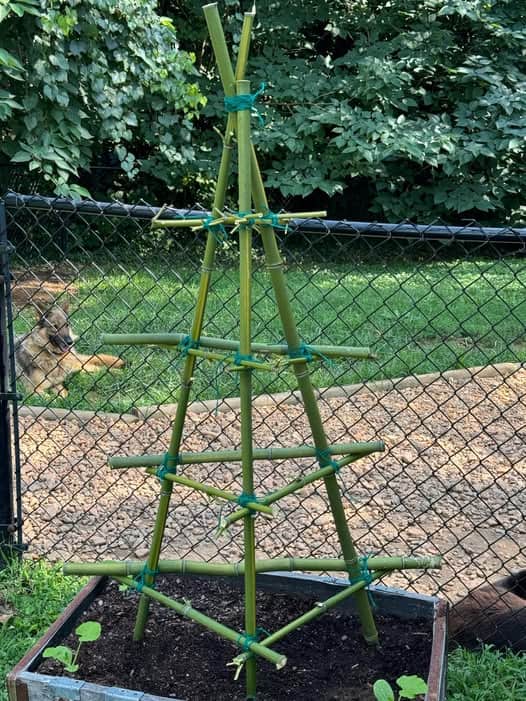
If you love natural materials and simple garden projects, a bamboo obelisk is a beautiful option.
Made from bamboo poles tied into a tapered pyramid shape, this freestanding trellis gives clematis plenty of narrow supports to wrap around. The horizontal cross pieces help guide growth and keep vines evenly distributed as they climb.
This style works especially well in:
- Raised beds
- Vegetable gardens
- Cottage-style landscapes
- Eco-friendly or homestead gardens
Because bamboo blends into the greenery, the flowers become the main feature once the vine fills in.
However, size matters.
The smaller bamboo obelisks often seen in garden centers are best suited for:
- Compact clematis varieties
- Patio or container types
- First-year growth
- Temporary support before upgrading
For full-sized clematis that grow 8 to 12 feet tall, build your bamboo obelisk at least 6 to 8 feet high for proper long-term support. A taller structure prevents overcrowding at the top and keeps the plant looking balanced.
If you are growing other climbers in raised beds or vegetable spaces, you might also explore how to grow squash on a trellis to maximize vertical growing space.
4. Wall Mounted Wire Grid Trellis
If you love clean lines, this one is for you.
Install a simple wire grid or tensioned cable system against a wall. Leave a small gap between the wall and trellis for airflow. Clematis will climb neatly, creating a vertical tapestry of blooms.
This idea works well on:
- Brick walls
- Garage sides
- Patio backdrops
- Exterior house walls
It gives you the look of a flowering wall without heavy construction. Choose a variety with large blooms for maximum visual impact.
5. Pergola Wrapped in Clematis
A pergola covered in clematis feels like something from a European garden.
Train the vines up the pergola posts first. Once they reach the beams overhead, gently guide them across the top. Over time, blooms will hang down, creating filtered light and natural shade.
This setup works beautifully over:
- Outdoor dining spaces
- Garden benches
- Walkways
- Patio lounges
Choose a vigorous clematis variety that can handle climbing 10 to 15 feet. Pair it with climbing roses for an even more romantic effect.
6. Circular Metal Trellis Against Siding
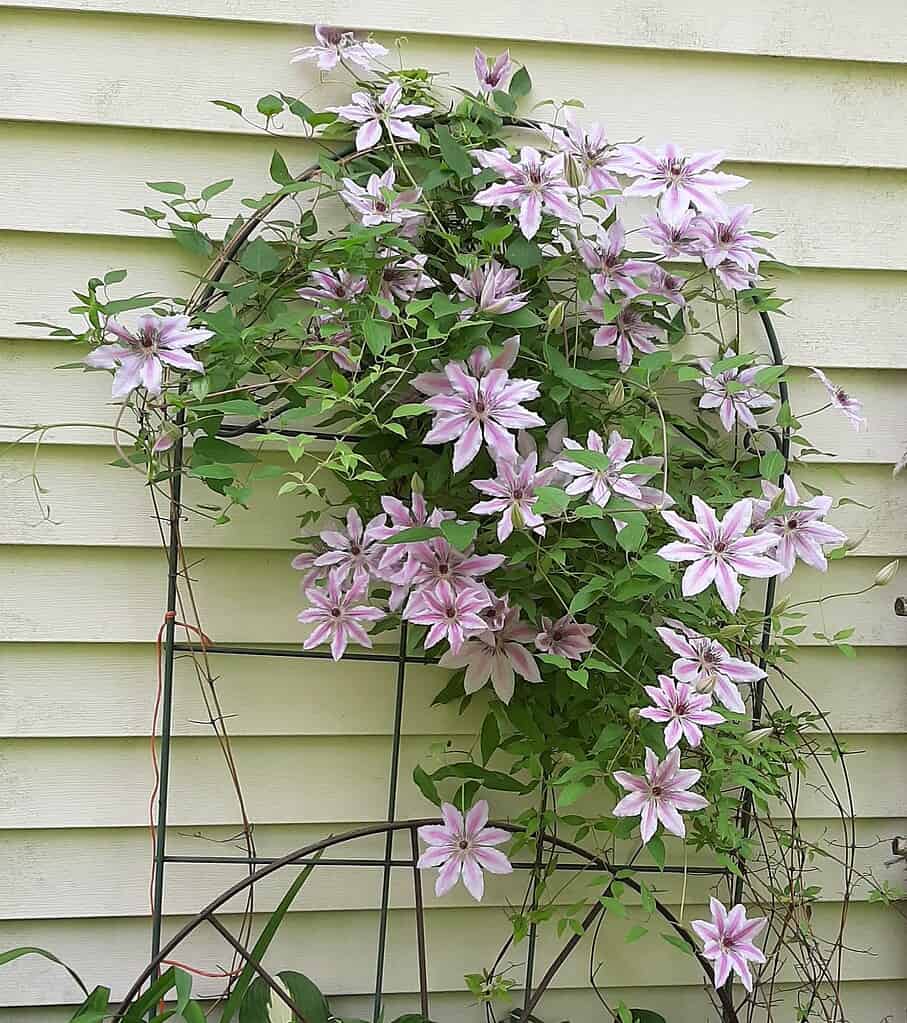
This simple circular metal trellis proves you do not need anything elaborate to create a charming focal point.
Mounted directly against exterior siding, the round shape softens straight architectural lines and gives clematis a graceful frame to climb.
As the vine fills in, blooms naturally follow the curve, creating a wreath-like effect that feels balanced and intentional.
This setup works beautifully for:
- Exterior house walls
- Garage sides
- Garden sheds
- Small backyard spaces
Choose a large-flowering clematis variety in soft pink, lavender, or white for a romantic look.
The circular form keeps growth contained while still allowing the plant to spill slightly beyond the edges for a relaxed feel.
For another flowering climber that performs beautifully on pergolas, see the best trellises for sweet peas to expand your seasonal bloom options.
7. Repurposed Ladder Trellis
If you enjoy rustic or homestead style gardens, this one adds personality.
Lean an old wooden ladder against a shed, barn, or wall. Secure it properly so it does not tip. Clematis will climb each rung, creating layers of blooms at different heights.
This idea works especially well in:
- Vegetable garden areas
- Backyard homesteads
- Informal cottage gardens
You can leave the ladder weathered for character or paint it for a pop of color.
8. Mailbox Post Trellis
Your mailbox is often the first thing people see. Why not make it beautiful?
Install narrow wire supports around the post to help clematis attach. Choose a compact or medium sized variety so it does not overwhelm the structure.
Tips for success:
- Keep vines trimmed away from the mailbox door
- Choose a hardy variety for full sun
- Add mulch at the base for root protection
This small addition dramatically improves curb appeal without major landscaping changes.
9. Raised Planter Box with Built-In Trellis
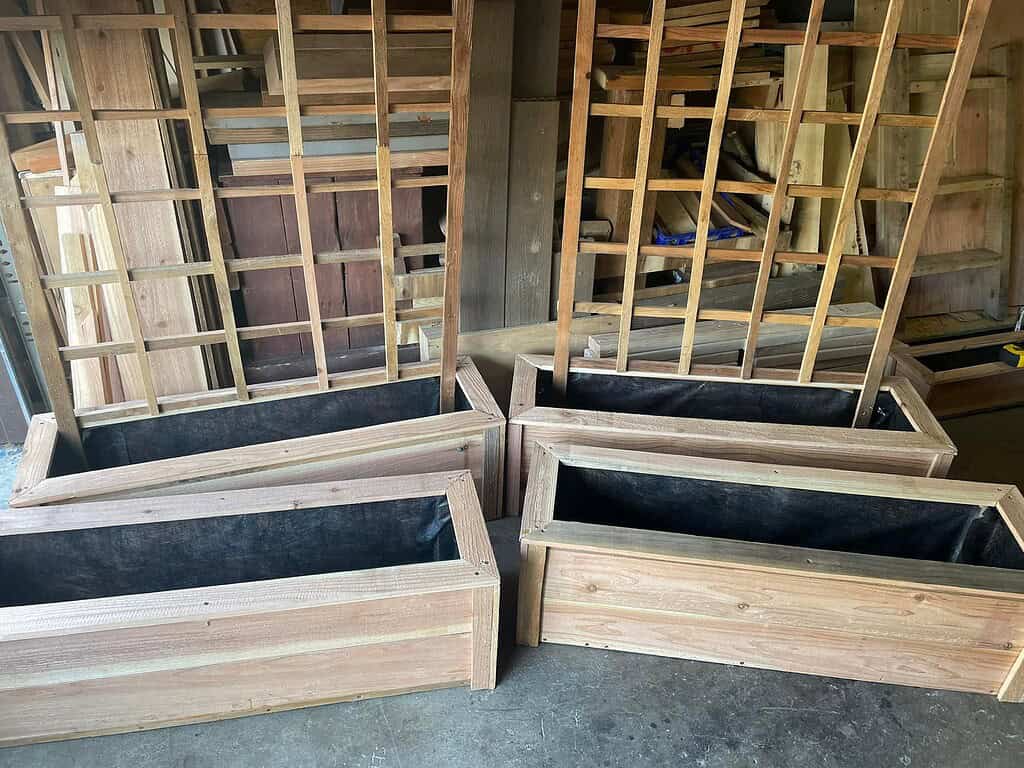
This is one of the most practical and charming clematis trellis ideas for small spaces.
A raised planter box with an attached lattice trellis gives you both structure and planting space in one compact setup. The clematis grows upward from the box, climbing the built-in grid and creating a vertical wall of blooms without needing ground planting.
This idea is ideal for:
- Patios and decks
- Small backyards
- Townhomes
- Renters who cannot drill into walls
- Creating natural privacy screens
Because the planter and trellis are connected, the entire unit feels intentional and cohesive.
It works beautifully placed along a fence line, against a blank wall, or even used to define outdoor seating areas.
10. Tree Trunk Trellis Support
For a natural woodland effect, allow clematis to climb a small tree.
Add discreet wire mesh around the trunk to give vines a surface to grab. Over time, the clematis weaves through branches, creating a layered, fairytale look.
Best practices:
- Use mature, sturdy trees
- Avoid fragile young trees
- Keep the base well mulched
This method blends structure and nature beautifully, making your yard feel established and lush.
How to Plant Clematis at a Trellis
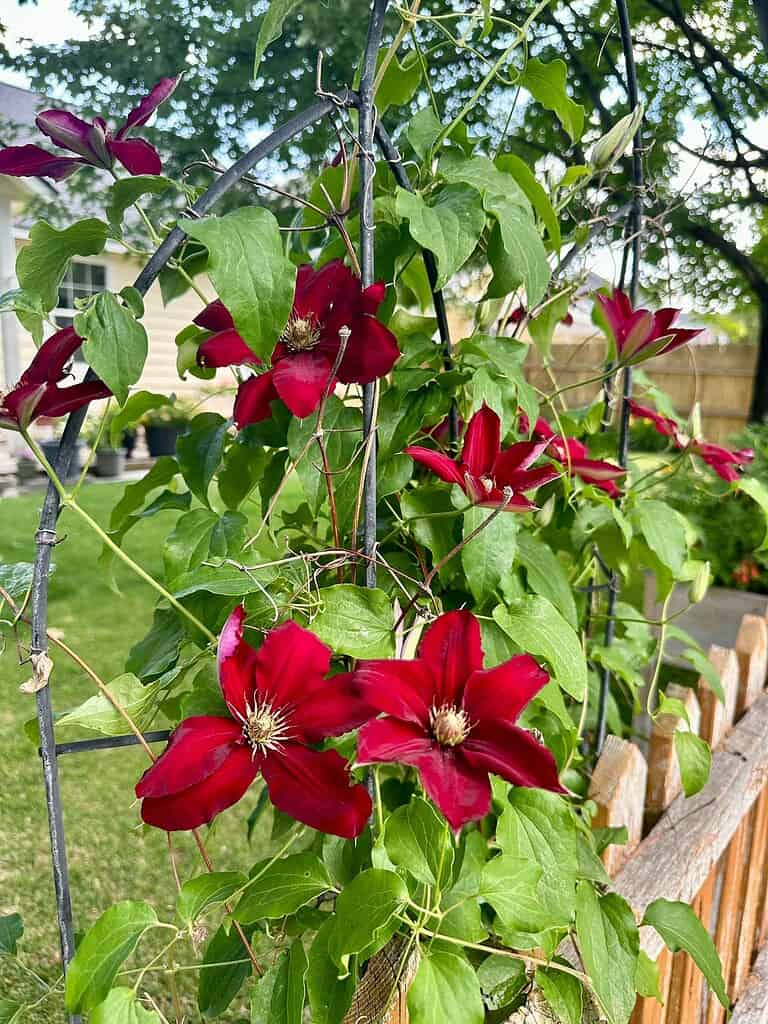
Proper planting ensures long term success.
Follow these simple guidelines:
- Dig a deep planting hole
- Angle the plant slightly toward the trellis
- Keep the crown slightly below soil level
- Add mulch to keep roots cool
- Water consistently during establishment
It may take a season for clematis to truly take off. Patience pays off.
Clematis Trellis Care and Maintenance
To keep your clematis trellis looking beautiful year after year:
- Prune according to variety group
- Tie new growth gently if needed
- Fertilize in early spring
- Check trellis stability annually
- Keep roots shaded with companion plants
Healthy vines mean fuller blooms.
Create Your Own Clematis Statement Piece This Season
Clematis is one of those plants that rewards thoughtful placement. With the right trellis, it becomes more than a vine. It becomes architecture.
Start small if you need to. A simple wall grid or obelisk can transform a plain corner of your yard into something special. Over time, you may find yourself adding arches, pergolas, or decorative panels as your confidence grows.
Which of these clematis trellis ideas would you try first?
Let me know in the comments below. I would love to hear about your garden plans and what style fits your yard best.
Ready to Design Your Dream Garden Bed?
Feeling inspired to build something beautiful?
If you’re ready to go beyond just one garden bed and truly design a space that feels intentional, productive, and charming, I put together something special for you.
Inside 101 Garden Bed Ideas, you’ll find creative layouts, raised bed designs, space-saving solutions, and inspiring setups you can actually recreate in your own yard – whether you’re working with a tiny backyard or a full homestead.
Start planning your dream garden today.

FAQs
How fast does clematis grow on a trellis?
Most clematis varieties grow moderately fast once established. You can expect noticeable growth in the first year, with fuller coverage in years two and three.
Can clematis damage walls or fences?
Clematis is not self clinging like ivy. It uses leaf stems to wrap around supports, so it generally does not damage surfaces if properly supported with a trellis.
How tall should a clematis trellis be?
This depends on the variety. Many grow 6 to 10 feet tall, while some vigorous types can reach 15 feet or more. Always check the mature height before installation.
Does clematis grow well in shade?
Clematis prefers full sun for best blooms but appreciates shaded roots. Too much shade may reduce flowering.
Can I grow clematis in pots with a trellis?
Yes. Choose a large container with good drainage and a compact clematis variety. Add a sturdy trellis and consistent watering for success.